Out of the hundreds of communities that opened over the years in every corner of the world, the spirituality of the Focolare, the one in the Arab Emirates is particularly original and unique. It is in fact, a group composed of members of the Movement who are not natives of the place. There are often entire families from various countries of Asia and the Middle East, and also from Europe and Latin America, who landed in the Persian Gulf for employment purposes, and will leave once their contracts terminate. In fact, 90% of the Emirates population is composed of foreigners who are temporarily based, and the group of the Focolare is part of this section of the country. Last 15 January, in one of the hotels of this world financial capital, around 80 people got together. They belonged to the most varied professions and jobs: construction engineers, embassy clerks, teachers and professors of high schools, nurses, computer staff, university researchers and even humble labourers. Some have been here for years, grew up in this world, and witnessed the vertiginous growth of the country, while others have just arrived. Some of their children were born here, and others will leave soon. The reasons for these transfers are often connected to difficult economic situations in their countries of origin, with salaries they would never have dreamed of. It is a complex and often surreal situation, a life made up of work in the centre of a society at the apex of consumerism. Here the Christians often meet according to their language groups and country of origin, in the Churches of Dubai every Friday, which is a feast day given that this is a Muslim country. The people meeting these days come from every corner of the region: Doha in Qatar or Abu Dhabi, Sharja and Fujera still in the Emirates, and Oman and Bahrain. The occasion for this meeting was the Emirates stopover of Maria Voce and Jesús Morán at the start of the journey in India. It was a moment of sharing with this original community. The morning passed quickly, with the presentation of the history of the presence of the Movement’s members, characterised also by the visits of focolarini from Pakistan, India, the Philippines or other Middle East countries. Then followed some experiences that revealed the true reality of the life lived in this apparent paradise of rampant consumerism, far from one’s own culture, and with the danger of being sucked in by a mentality of commodity, profits and interests. Often, experiences lived in one’s youth and inspired by the spirituality of communion were left aside to find suddenly in these difficult situations, other brothers and sisters who share the charisma of Chiara Lubich. There were situations of difficulty in on-the-job relationships, but also risks of the breakup of families due to consumerism and discarded values of their original countries, and solitude. And yet, even in this corner of the world, a group of people have continued to meet to discuss the Word of Life in the name of the Focolare spirit. Another part of the dialogue withMaria Voce and Jesús Morán focused on these challenges and sufferings, the underlying risks, and the need for a dynamic community that is able to be the nurture the values of Evangelical communion, fraternity, and sobriety. The President and Co-President of the Focolare recalled how the first Christian communities were disseminated in the great Roman Empire and how the Christians, often alone and isolated, were able to resist the temptations of that world thanks to the communities, however small. The image of the desert flowers was often called up during the dialogue, as a reminder of how Chiara in the 1990s, used this image to describe the first members of the Focolare Movement who found themselves in the Arab Emirates. Besides the need to compete for the primacy of love in an environment which was renowned for other types of “firsts,” there was the challenge to remain well-rooted to the present moment. Upon concluding this dialogue, Maria Voce commented that any other method was unthinkable. The country not only guarantees nothing as to long timeframes, since employment contracts may terminate, and a job may be lost due to financial gambling. So what matters ìs to set deep roots also for those who will come, perhaps when those who are living today in the Emirates will have long gone. This community has to continue. At the end of the morning session it was impressive to see the emotions of the faces of many, and also the joy and enthusiasm in having found and rediscovered a spiritual family, and to be aware that also in this place, they are part of this great global family.
Igino Giordani was a forerunner of ecumenism. His sensitivity to ecumenical issues began when in 1927, he embarked on a ship for the USA to study Library Science on behalf of the Vatican. It was there that he discovered that he still was unfamiliar with the various Christian denominations and was deeply struck by their religiosity. In many previous writings, Giordani affirmed that ecumenical dialogue draws inspiration from the model of Trinitarian relationships, because all are set on the same level of love. Communion calls all to dialogue, and in the same measure, all are called to give of themselves to create unity. “In the past, discussions were undertaken to eliminate divisions; today the preferred method is respectful confrontation of ideas, and the effort to reach a convergence and reconciliation. The concept today is that unity is not static but dynamic, and grows in quantity and quality. Dialogue thus marks an innovative “historic turning point,” overcoming controversies, disagreements, excommunication, and likewise sets the grounds for comprehension, approach to the truth and virtues of the others. Dialogue, through which advocates of one or more churches get together, is neither propagandistic nor academic. Possessing the truth does not hinder the inexorable penetration of the mysteries or the real progress of the dogmas which are to be studied in depth, and reinterpreted. “Ecumenical dialogue does not arise from the doctrinal differences between the two (or more) churches, but from unity which already exists among them, from a common heritage. The psychological atmosphere is kindness, or rather, charity. In the words of Maritain: “Perfect charity towards one’s neighbour and perfect fidelity to the truth are not only compatible but refer to one another.” For the prophetic mission of the People of God, the Christian has to convey the truths he possesses and allow the other to convey the truths he holds. For such a prophetic mission, the Christian must not limit dialogue to the theological aspect (making it a task for experts). Unity is not only a technical and theological issue, it is a question of charity. «The interlocutors have to treat each other as peers, and with reciprocal esteem, no insinuations or sly tricks, and no offensive words. This equality does not signify confusion or adjustment of doctrines. It implies for both, awareness of belonging to the Mystical Body of Christ. They have to accept pluralism, recognising every legitimate diversity. What unites the faithful is stronger than what divides them (Gaudium et Spes, 92). Otherwise, dialogue is reduced to an alternated monologue. All Christians are called to practice dialogue which can be enhanced by every encounter (work, tourism, studies, etc.). No fences can be allowed between one confession and the other: but all doors should be opened to reach an encounter and dialogue. The job is long and tedious, but God wants this from us.”
Maria Voce, the president of the Focolare Movement and Jesús Morán, Co-president, will be in India from January 15 to February 10, 2016. Following the trail left by Chiara Lubich in 2001 and 2003, they will visit the Focolare communities in various parts of the country. They are expected to visit New Delhi, Bangalore, Trichy, Coimbatore and Mumbai. The dimension of interreligious dialogue, started by the founder of the Focolare Movement, will be the highlight of their program during these weeks.
The first Focolare had an actual experience which was an application of this “being the first to love”. It was not always easy for a group of girls to live love radically, especially at the beginning. We were like other people, even though we were sustained by a special gift from God. Dust could settle on us as well, on our rapport with one another, and our unity could wilt. That happened for example upon discovering others’ faults and imperfections. When there was judgment, the flow of reciprocal love got cold. One day, we thought of making a pact among us to counter this situation. We called it the “pact of mercy”. We decided to see our neighbor in a very new way when we met him or her each morning (in the Focolare, at school, at work…), really forgetting their imperfections, their defects, covering everything with love. This meant approaching everyone with this complete amnesty in our heart, with this universal forgiveness. Everyone took this strong commitment together. It helped us to always be the first to love, imitating our merciful God who forgives and forgets. We are now sure that the Movement would not even have made it from Trent to Rovereto if it were not for this daily pact of forgiveness. Practically, the Movement would not have had the energy needed to spread. Chiara Lubich, Love of neighbor, to the Muslim friends of the Focolare Movement, Castel Gandolfo, 1st November 2002 (excerpt).
The traditional date for the celebration of the Week of Prayer for Christian Unity in the northern hemisphere is from January 18th to 25th. In the southern hemisphere, where January is during the summer holidays, the churches celebrate the Week of Prayer on other dates, for example during the time of Pentecost. Here you can find the texts prepared by a mixed working group from Latvia, nominated by the Catholic Church and by the Ecumenical Council of Churches. The Christian churches invite all to “find opportunities throughout the year in which to express the level of communion already accomplished and to pray together for the full unity which is the desire of Christ himself,” according to Jesus’ prayer to the Father: “so that all may be one” (Jn 17). The Focolare Movement throughout the world is committed to fostering and supporting the various local events planned for the celebration of the week of prayer, through direct testimonies of ecumenical life among its members. The phrase chosen for the Week of Prayer 2016 also inspired the Word of Life for the month of January: “Called to proclaim the mighty acts of the Lord” (cfr 1 Pt 2:9).
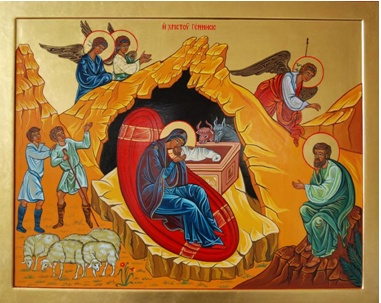
Salvator noster natus est! Our best wishes for a Holy Christmas to all the Christians celebrating the birth of the Saviour on 7 January. MERRY CHRISTMAS BUON NATALE РОЖДЕСТВО ХРИСТОВO ΚΑΛΆ ΧΡΙΣΤΟΎΓΕΝΝΑ عيد ميلاد سعيد!

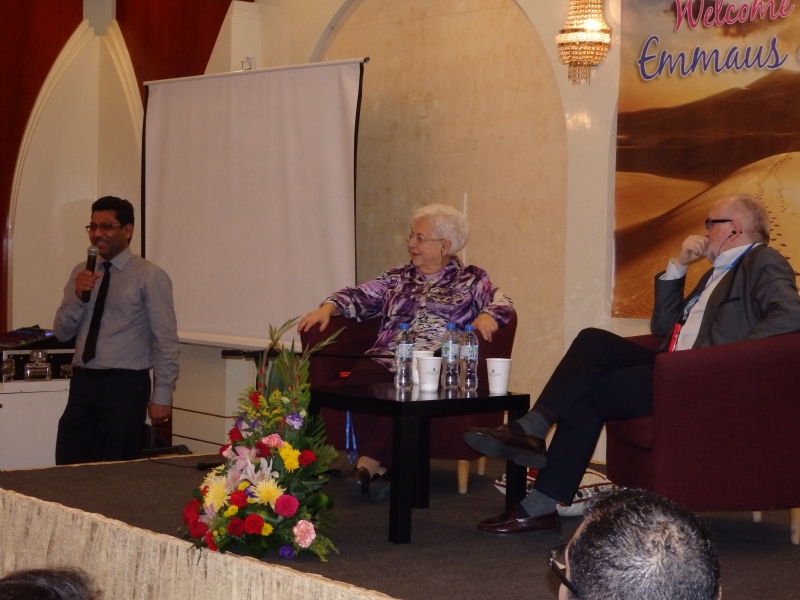
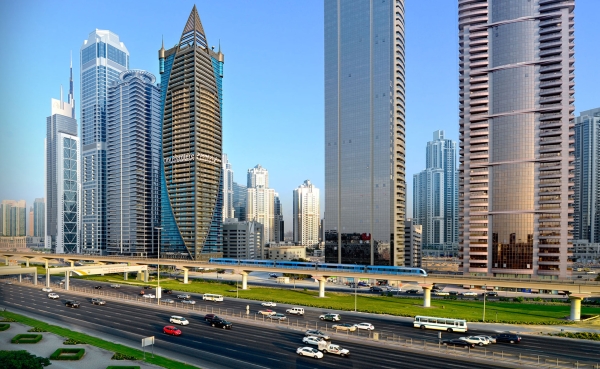 Out of the hundreds of communities that opened over the years in every corner of the world, the spirituality of the Focolare, the one in the Arab Emirates is particularly original and unique. It is in fact, a group composed of members of the Movement who are not natives of the place. There are often entire families from various countries of Asia and the Middle East, and also from Europe and Latin America, who landed in the Persian Gulf for employment purposes, and will leave once their contracts terminate. In fact, 90% of the Emirates population is composed of foreigners who are temporarily based, and the group of the Focolare is part of this section of the country. Last 15 January, in one of the hotels of this world financial capital, around 80 people got together. They belonged to the most varied professions and jobs: construction engineers, embassy clerks, teachers and professors of high schools, nurses, computer staff, university researchers and even humble labourers. Some have been here for years, grew up in this world, and witnessed the vertiginous growth of the country, while others have just arrived. Some of their children were born here, and others will leave soon. The reasons for these transfers are often connected to difficult economic situations in their countries of origin, with salaries they would never have dreamed of. It is a complex and often surreal situation, a life made up of work in the centre of a society at the apex of consumerism.
 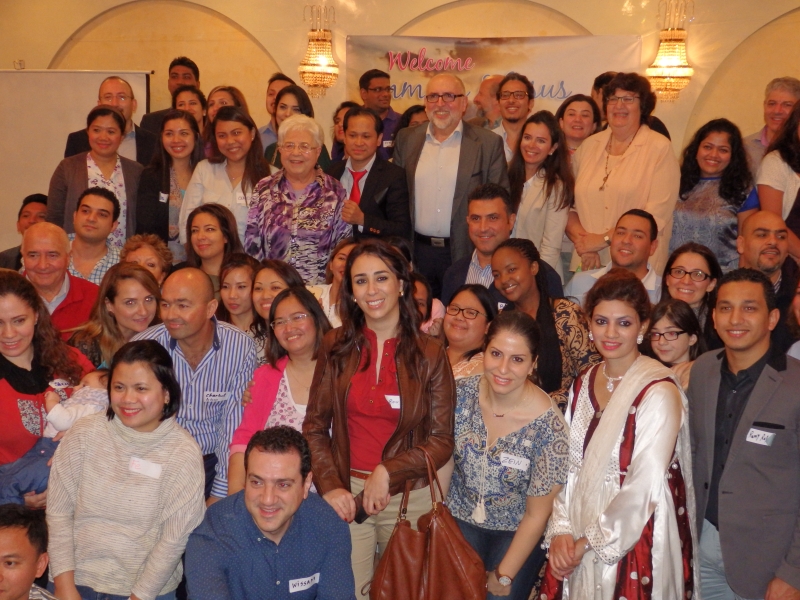 Here the Christians often meet according to their language groups and country of origin, in the Churches of Dubai every Friday, which is a feast day given that this is a Muslim country. The people meeting these days come from every corner of the region: Doha in Qatar or Abu Dhabi, Sharja and Fujera still in the Emirates, and Oman and Bahrain. The occasion for this meeting was the Emirates stopover of Maria Voce and Jesús Morán at the start of the journey in India. It was a moment of sharing with this original community. The morning passed quickly, with the presentation of the history of the presence of the Movement’s members, characterised also by the visits of focolarini from Pakistan, India, the Philippines or other Middle East countries. Then followed some experiences that revealed the true reality of the life lived in this apparent paradise of rampant consumerism, far from one’s own culture, and with the danger of being sucked in by a mentality of commodity, profits and interests. Often, experiences lived in one’s youth and inspired by the spirituality of communion were left aside to find suddenly in these difficult situations, other brothers and sisters who share the charisma of Chiara Lubich. There were situations of difficulty in on-the-job relationships, but also risks of the breakup of families due to consumerism and discarded values of their original countries, and solitude. And yet, even in this corner of the world, a group of people have continued to meet to discuss the Word of Life in the name of the Focolare spirit.