The “golden rule” as the way to build peace and solidarity
https://vimeo.com/148206157

https://vimeo.com/148206157
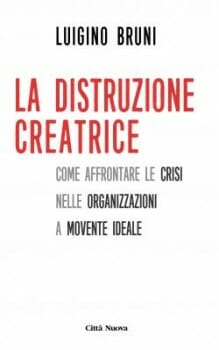
In his introduction to Bruni’s new book entitled, “Creative Destruction,” Marco Tarquinio, Director of the Catholic newspaper wrote: «Bruni was well aware that this line of thought would lead him to the confines separating the human and the inhuman and regrettably, also beyond, to the complex organisations prevalently driven by material objectives. He perfectly knew that in writing about these issues, i.e., about “production” and “marketing” organisations and thus, of the creativity of relationships and employment, he would eventually have to focus on the organisations driven by ideals and other aspirations of the human spirit,» bringing both fields «to face the same challenge of renewal without losing their roots and driving spirit.» Published by New City Press, the book is a collection of selected articles published in 2015 on Avvenire, taken from the series, “The midwives of Egypt,” and “Regenerations.” In the book’s last chapter entitled, “The periphery is where we learn to resurrect,” Bruni comes to the conclusion of his work and the challenges resulting from his reflection which took him some months to delineate. He introduces his proposals with a phrase of the German poet, Friedrich Hölderlin: “God created man the way the sea created the continents: through withdrawal.” Here are some passages which in a way introduce us to the book proper: «A movement that with time has turned into an organisation can undergo a charismatic renewal, if in some marginal zone of the “Kingdom” some creative minorities start reconstituting the conditions needed to revive the same miracle of the charism’s first foundation: the same enthusiasm, joy, and the same fruits. The true process that brings this very same minority to become the majority is called reform. […] It is a decisive process that has to be undertaken unhurriedly, and should involve and activate the dynamic settings of creativity, going out to them “at the confines of the empire.” All this is certainly and firstly, a gift (charis), but also signifies wise organisation, and deep, spiritual, prophetic, and transformative intelligence. […] Many new “evangelisations” come about upon recounting the good news, and we are able to feel it come alive in us, in a new and diverse manner. This is how a new-ancient love story is reborn – a new eros, new desires, new generativity, and new children. […] The charism may thus flourish again and resume its encounter with people in the streets, forgetting its own organisations so as to tend to the wounds and sufferings of the men and woman today, especially of the poorer ones, […] creatively interpreting their own mission in the present time.»
The huge multitude of Christians should be quite visible. But they are so divided that many peopledon’t notice them and so don’t see Jesus through them. Unity is the only sure way to proclaim God’s mighty acts. When the Lord acts, he does mighty things. As soon as he had created the universe he saw it was ‘good’ (Gen1:25). Indeed, after creating the man and the woman, and entrusting the whole of creation to them, he saw it was ‘very good’ (Gen 1:31). But the act of God that exceeds all else was done by Jesus. In his death and resurrection he created a new world and a new people. It is a people to whom Jesus has given the life of Heaven, a genuine fraternity, in mutual welcome, in sharing with one another and in self-giving. Peter’s letter helped the first Christians realize that God’s love had made them ‘a chosen race, a royal priesthood, a holy nation, God’s own people’ (1 Pet. 2:9; see also the whole passage vv. 9-10). If, like the first Christians, we were to become fully aware of what we are, of how much God’s mercy has done in us, among us and around us, we would be amazed. We would not be able to contain our joy and we would feel we want to share with others the need to ‘proclaim the mighty acts of the Lord’. But it is difficult, or virtually impossible, to give witness effectively to the beauty of the new kind of relations in society that Jesus brought about, if we stay isolated from one another. It is normal, therefore, that Peter’s invitation is addressed to the whole people. We cannot show ourselves as argumentative and partisan, or even merely indifferent to one another, and then proclaim that ‘the Lord has created a new people, and has freed us from egoism, from hatred and rancour, giving us mutual love as the law that makes us one heart and one soul…’ Among the Christian people there are indeed differences in our ways of thinking, our traditions and cultures, but these diversities are to be welcomed with respect, recognizing the beauty of this huge variety and aware that unity is not uniformity. This is the journey we will follow during the Week of Prayer for Christian Unity (celebrated in the northern hemisphere on 18-25 January) and throughout the year. The Word of Life invites us among our different Churches and communities to try to get to know one another better, to tell one another of the marvellous works of the Lord. In this way we will be able to ‘proclaim’ these works credibly, giving witness that we are one precisely in our diversity and that we support each another concretely. Chiara Lubich encouraged us with great energy to follow this path:Love is the greatest power on earth: it unleashes the peaceful Christian revolution around those who live it, so that today people can repeat what the early Christians said centuries ago: ‘We were born only yesterday and we have already spread all over the world.’ Love! What a great need there is for love in the world! And in us, Christians! (Tertullian,The Apology, 37:7) All together we Christians of various Churches number more than a billion people. Such a multitude should be quite visible. But we are so divided that many do not see us, nor do they see Jesus through us. He said that the world would recognize us as his own and, through us, would recognize him, by our mutual love, by unity: ‘By this everyone will know that you are my disciples, if you have love for one another’ (Jn 13:35). Our world today asks each one of us for love; it asks for unity, communion, solidarity. And it also calls upon the Churches to recompose the unity that has been torn for centuries.’
Compiled by Fabio Ciardi

Dori Zamboni
«If I should have to leave this world today and you were to ask me for a single word, one last word that sums up our Ideal, I would say – certain of being perfectly understood – ‘Be a family’. Are there among you those who are suffering spiritual or moral trials? Understand them as a mother and more than a mother would, enlighten them with your words or example. Do not leave them alone; indeed, surround them with the warmth of a family. Are there among you those who are suffering physically? They should be your preference. Suffer with them. Seek to understand their sufferings in depth. Share with them the fruits of your apostolic endeavors so that they may realize that they, more than others, contributed to its success. Are there those who are dying? Imagine yourself in their place and do all that you would want others to do to you, to the very last instant. Are there those who are happy because of a particular achievement or for any other reason? Share in their happiness, so that their consolation may not be saddened and their heart closed, but that the joy may be of all.

“Are some people leaving? Let them go, but first fill their heart with this one heritage: a sense of the family, so that they may bring it to their future destination. Never put any kind of activity– neither spiritual, nor apostolic – before the spirit of being a family with the brothers or sisters with whom you live. And wherever you go to bring the ideal of Christ, […] you can do nothing better than to seek to create with discretion, with prudence, but with determination, the spirit of a family. It is a humble spirit, it wants the good of the others, it is not proud… in short, it is charity, true, complete charity. In conclusion, if I should have to leave you, I would have Jesus in me repeat to you: ‘Love one another… so that all may be one‘». Chiara Lubich (La dottrina spirituale – Città Nuova Ed. pp.92-93)
|
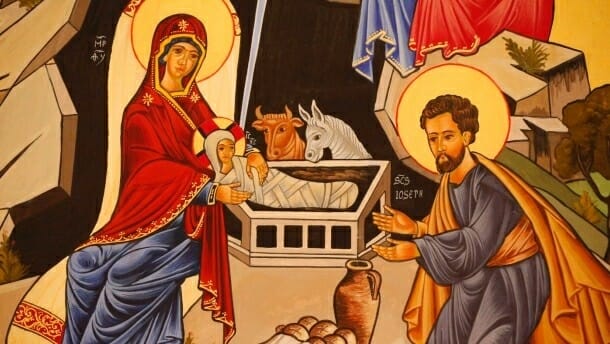
“I wish everyone a Christmas characterised by sharing, remembering Pope Francis’ words: justice, solidarity and a simple lifestyle.Justice means seeking out those who suffer and those without basic needs, not as a category of people to be helped, but brothers and sisters to be loved.Solidarity means not being afraid to open our hearts, empty our pockets, our purses and wallets, so as to live as one family.A simple lifestyle means not spoiling the things that belong to everyone, starting with the beauty of creation.I hope for this and I trust in the grace of Christmas!This is a time when we can all live mercy. God believes in us and puts a spark of His own love into every heart. Christmas can then become something beautiful for everyone.Christmas will be beautiful if it is a Christmas of love.”Maria Voce |