24 Sep 2015 | Non categorizzato
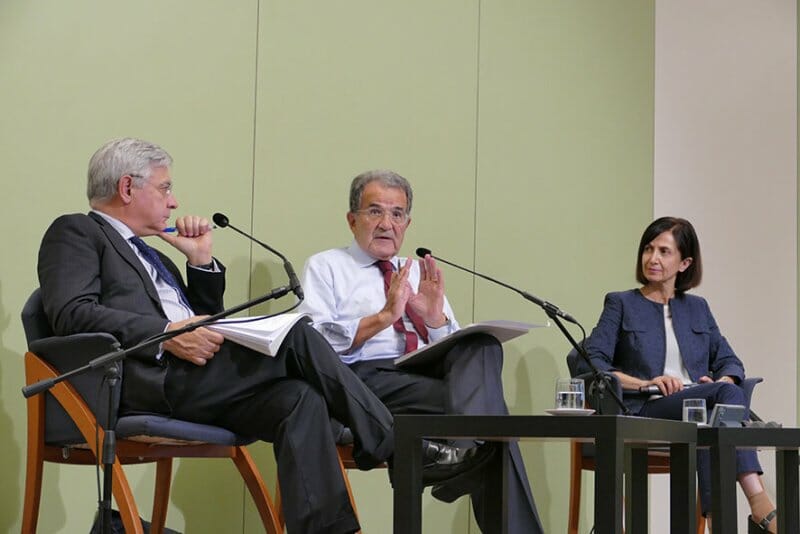
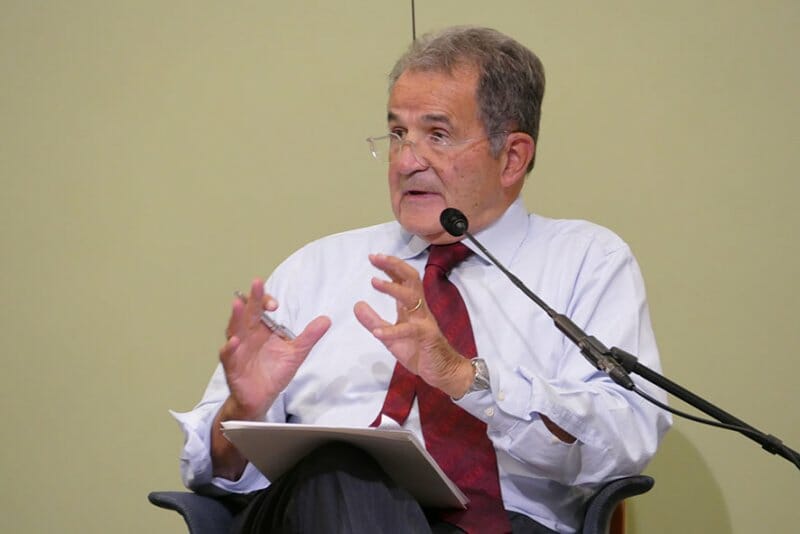 “We can react to this situation through forms of reorganization, even if they are not perfect, but which bring together countries and people from various fields. Our problem in Europe is one of an imperfect unity, but we must keep going with it. And in the context of the migrant crisis we feel that unity is essential to our future,” states Roman Prodi, twice Prime Minister of Italy and former President of the European Commission. As an economist, academic and politician, he gave an interview during the meeting for Focolare regional delegates. He continues, “We must build up reasons for hope in ways that will be different in different parts of the world. We need energy that comes from the base. Instead, in the Middle East we need the major world powers to dialogue with each other because otherwise nothing will be resolved.” The interview took place on 21 September, at the Mariapolis Centre in Castel Gandolfo, during the second week of the convention. The session was entitled: The world is tending towards unity: a socio-political viewpoint. While the subject matter is complex, it’s very much in tune with, and integrated into, the theme of unity which is the focus this year for the Focolare Movement and which has been dealt with throughout the program. Together with Romano Prodi at the interview was session was Pasquale Ferrara, a diplomat, Secretary-General of the European University Institute in Florence, who is involved in academic activities and research in the field of international relations. He commented, “One point we should reflect on is that globalization has positive effects. The problem about globalisation is that it is not universal. Globalisation is about seeking to extend one economic model, liberal economics, to the whole world. On the political level it is the effort to spread liberal democracy.” He went on to invite everyone to “listen to the needs of all peoples in the world” because “peoples can’t be categorised into Series A and Series B. There can’t be members of the Security Council and then all the rest. We must take account of all the needs expressed by all peoples.” The solution he proposed: “To start from the foundations, building up civil and international society. We have too much trust in institutions, governments, organizations and authorities, which are of course important. But in many situations, especially in societies that are internally divided in their own countries, and which need to work through processes of reconciliation for example, it is vital that this work starts from interpersonal and inter-community relations. Those who do this should know that they are actually doing actually political, civil, social and institutional reconstruction.” The dialogue session, held in the presence of audience composed of representatives from the whole world, was stimulating. Each of those present had their own expectations, challenges and inner resources. The two political experts were able to give documented insights into the current global socio-political situation, which is both complex and ever-changing. It was a contribution which enriched the reflection deeply felt by those who embrace the ideals of the Focolare Movement and who wish to work towards universal brotherhood and the building peace.
Video in Italian – transcript in English https://vimeo.com/140062041

22 Sep 2015 | Non categorizzato
 “I accepted this assignment in order to make concrete my choice to live the spirituality of unity, staying connected with other politicians who, like me, commit themselves to seek the common good and to make brotherhood emerge as a political category.” These are the words of Maria Elena Loschiavo, Deputy Mayor responsible for social politics and schools, in a municipality of just over 7,000 inhabitants. The past scholastic year several children and teens who exhibit learning disabilities and who, for various reasons, cannot depend on their families for support, were brought to her attention. “I wanted to invent something for them, but the friends of the Administration reminded me that there were no resources. So I discussed the matter with my husband, and then I spoke with friends and colleagues who are retired, and I called some young people I know. I immediately had at my disposition a good group of people from various cultures and religious traditions. Talking with them, we got the idea for an after-school program, every afternoon, from 3 to 5 pm. It was a bit of a gamble because starting something means carrying it through to the finish. It also means saying goodbye, for months and months, to our afternoon rest time. But we wanted to try, we wanted to enter the hearts of families who feel marginalized.” As soon as the town announcement was made public, many requests arrived, but the limit was 25 students. “For each one of them, there is a story, with troubling family situations which unfortunately do not help their inclusion in the learning process. We barely had time to organize ourselves, and then on March 9th, with great enthusiasm, we began: in a rather naïve way, without knowing exactly what we would encounter. But in the end the results were certainly visible! From the families, who strongly ask that the experiment be repeated next year, and especially from the children and teens.” “As the municipal administrator of a small town, I must admit that creating a team of people who are willing to give, is not easy to do. But neither is it impossible. It has certainly been exciting to see how each person in the group has accepted the chance to work together to love these young people, giving them a piece of his own life. We experienced together that freely giving is a difficult path to take, but it makes you feel you are building universal brotherhood, starting from the town where you live.” In October, the project begins again, this time with new developments, but still at zero cost, both for the administration and for the users. “In this second year,” explains M. Elena, “we can count on a greater number of teachers and therefore a greater number of children who can access the program. The location will be at the school, which facilitates working in synergy with the teacher of the class, who can observe each child’s difficulty, allowing us to immediately begin working to solve the problem. Thanks to the volunteer work we can avail ourselves of a medical-psycho-pedagogical laboratory. The teens will have recreational time (in our town there are many talents, great and small, in the fields of animation, painting, dance, etc…) and for the mothers there will be a yoga class each week. And with the support of the Athletic Associations in the area, there will be activities for motor development education. ” “The ideas that are being fulfilled here are many, but I am sure that many others will come, because as someone told me one day, in the field of solidarity it’s enough to take the first step. Then solidarity itself will guide the next ones.”
21 Sep 2015 | Non categorizzato
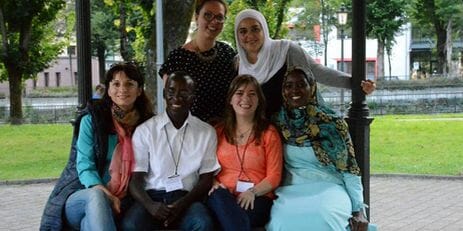
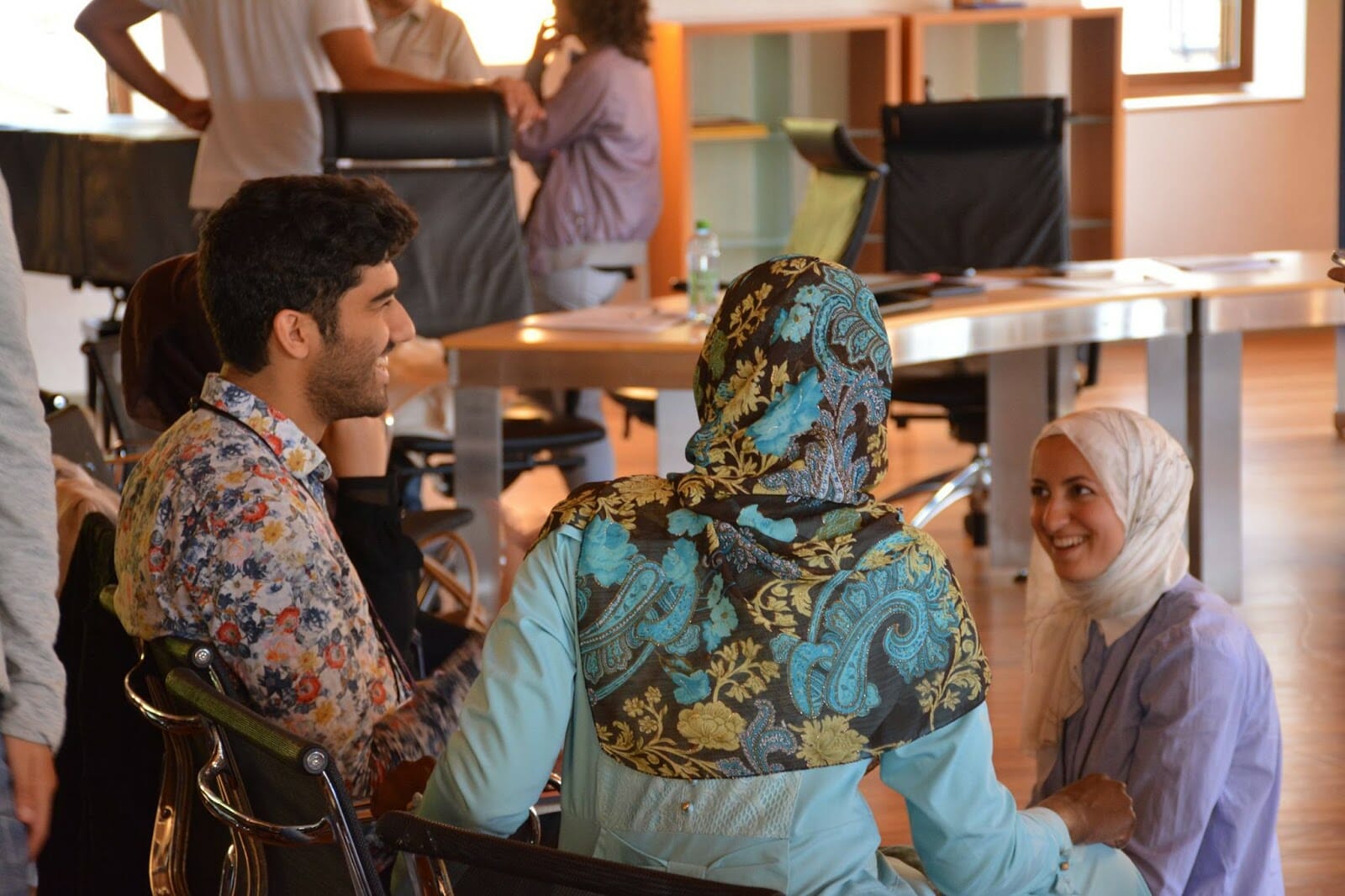 The Summer School was held in Tonadico in the Dolomite Mountains, not only due to the marvelous scenario of the locality, but also for the bond that existed between Chiara Lubich and those mountain districts. It was there, in fact, that in 1949 with some of her young companions, Chiara lived that mystic experience that is central to the history of the Work she had started. The idea of a summer school on “Religions in a global world” sparked up last April, at the end of an interdisciplinary seminar held at the Sophia University Institute. On that occasion a group of experts had started up an interdisciplinary, interreligious reflection (the scholars were Christians, Sciites and Sunnis Muslims, one was an expert on Buddhism and another, a lay thinker) and an intercultural event since there were also scholars from North Africa, Turkey, Iran, China and the USA, besides the European countries. The School program consisted of six general sessions, four of which were reserved for those who enrolled and two were open to the public. The one-to-one lessons were held after the work group discussions. The Sophia spirit lies precisely in uniting the dichotomy between life and thought, spiritual experience and scientific research. This perspective brought out the need to clarify how one’s personal comprehension of the truth harmonizes with that of people of other religions and cultures. A Slovak student highlighted how the research for knowledge can no longer be individual or monodisciplinary, but a community commitment that unites professors and students in the research efforts which should also be ,matched with a life commitment. Slowly, the participants managed to create a setting in which cultural contents and life perspectives harmonized, and solidified not only the traditional dichotomies, but also helped to break down cultural and religious barriers. Also the recreational moments were an occasion to deepen relationships, and delve into the deep differences in the worlds of each one, thus enhancing concrete dialogue where all is possible and sustainable. On the mountain peaks at 2,500 metres, the Christians gathered to celebrate Mass while the Muslims had their prayer rituals. At the closing of the School, the students all felt that they were bound by a sense of profound fraternity. The differences were still there, but now appeared as sources of mutual enrichment. On his way back, a young Shiite student wrote: “I would like to dedicate my first post on Facebook to the extraordinary group I was lucky to pass the Sophia Summer School with. I was able to present my faith in its authentic form, an opportunity that often is not possible in the light of the false image others often transmit of my religion. Likewise, I was also able to delve deeply into their lives, and in the faith of those I consider my brothers and sisters. The experience I had within the magical setting of the Dolomites, helped me to make a new discovery of the Catholic religion: I pray that we can continue this very important work. » Istituto Universitario Sophia
20 Sep 2015 | Non categorizzato
“I see and I find my own light in the other, the true Reality of myself, the real me in the other (perhaps buried or secretly disguised for shame), and once I have found myself, I am reunited by resurrecting myself.” Chiara Lubich, The Resurrection of Rome. “Mercy was the dough with which we kneaded our civilization in past centuries. Without knowing and loving mercy we do not understand the Bible, the Covenant, the book of Exodus, Isaiah, the Gospel of Luke, Francis of Assisi, Teresa of Avila, Frances Cabrini, Don Bosco, Christian social works, the Italian Constitution, the European dream, and life together and love affairs after the concentration camps, families living and staying together until the very end. It is mercy that matures and keeps up our relationships through time, it turns falling in love into love, sympathy and emotional accordance into big and strong projects, it makes our “forever’s” pronounced in youth become a reality, it prevents maturity and old age from becoming just a nostalgic story of broken dreams. Mercy lives of three simultaneous movements: the eyes, the bowel (rachàm in the Bible) and that of the hands, the mind and the legs. Those who are merciful are first and foremost people that are able to see deeper. The first instant of mercy is a look that reconstructs the moral and spiritual figure of the one that arouses mercy in us. Before acting to “take care of him,” the merciful one looks at him and sees him in a different way. The “not yet” is glimpsed beyond the “already” and the “has already been” appears to all involved. Prior to being an ethical action, mercy is a movement of the soul, with which I can see the other in their original design, before the error and the fall, and I love them in order to recreate their truer nature. Mercy can reconstruct the broken image in the soul, it can reconstruct the interrupted storyline. It can see that there is an inter-human solidarity that is deeper and truer than any crime, it believes that fraternity is not cancelled by any fratricide. It sees Adam again, even after Cain. And while it perceives purity in impurity, beauty in ugliness, light within the darkness, it also moves the body, and touches one in the flesh. The whole insides are moved. Mercy involves the whole body, it is a totalistic experience, something like the birth of a new creature – if there was no mercy, the experience of childbirth would remain totally inaccessible to us males; and yet we can understand something of this mystery, the greatest of all, when we give life mercifully. Mercy is something that is felt, it hurts, there is labour in it. It is an embodied experience, it is corporal. For this reason those who know mercy also know disdain: if I do not suffer viscerally from all the injustice and evil around me, I cannot be merciful. The same bowels are moved today by the indignation and anger in front of the children who died locked inside a lorry or drowned in the sea, and tomorrow the betrayal of a friend in need of forgiveness”. (Read more) by Luigino Bruni Published in Avvenire (Italian newspaper) on 06/09/2015
19 Sep 2015 | Non categorizzato
Following the practice that Chiara Lubich began, the Focolare Movement around the world goes into depth on one point of the spirituality of unity each year. After having reflected on and lived a central point which is the Eucharist, the Movement is now focussing on its specific goal: unity. There are a great many writings by Chiara Lubich on this essential point of Focolare spirituality. They give clear reference points and remain as a precious legacy. Here is one. “If we are united, Jesus is among us. And this has value. It is worth more than any other treasure that our heart may possess; more than mother, father, brothers, sisters, children. It is worth more than our house, our work, or our property; more than the works of art in a great city like Rome; more than our business deals; more than nature which surrounds us with flowers and fields, the sea and the stars; more than our own soul. It is he who, inspiring his saints with his eternal truths, leaves his mark upon every age. This too is his hour. Not so much the hour of a saint but of him, of him among us, of him living in us as we build up – in the unity of love – his Mystical Body. But we must enlarge Christ, make him grow in other members, become like him bearers of Fire. Make one of all and in all the One. It is then that we live the life that he gives us, moment by moment, in charity. The basic commandment is brotherly love. Everything is of value if it expresses sincere fraternal charity. Nothing we do is of value, if there is not the feeling of love for our brothers and sisters in it. For God is a Father and in his heart he has always and only his children.” Chiara Lubich, Essential Writings, New City Press, New York 2007, p. 102
18 Sep 2015 | Non categorizzato
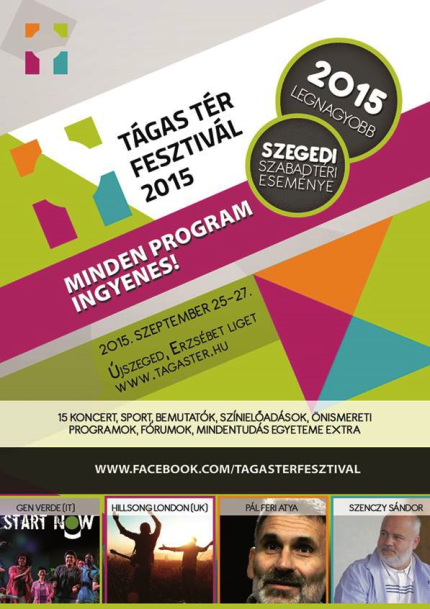
Gen Verde will be in the Hungarian town of Szeged, city which has become a symbol of the humanitarian challenges which Europe and the world are facing today. The message underpinning their workshops: hospitality and solidarity.