25 Feb 2022 | Non categorizzato
Faced with the events that have been shaking the world for days, the Political Movement for Unity, which draws its inspiration from the experience and ideals of the Focolare Movement, affirms its common commitment to peace, which can only be achieved through concrete ‘doing’. “If you want peace, prepare for peace” are the words of Igino Giordani, a pacifist politician of the 20th century. Only a daily and multipronged peace effort can stop war. History has already declared too often that war is a crazy choice. The means of confrontation are outdated and open the way to greater insecurity, both locally and globally. Of this we are convinced, we politicians, officials, citizens and diplomats of the Politics for Unity Movement. From all over the world we express our closeness to the peoples suffering this tragic war, while we strongly support those who, in various capacities, continue to negotiate for peace, the only true solution. It is never too late to reopen negotiation and dialogue, in the short and long term. May the imperative of peace guide us. We single out these three main directions for commitment: 1 – Often the creation of nation states has not been a free choice of peoples, but the result of post-war negotiating tables, legacies of imperialisms. Old and new divisions call for a courageous political effort that gives new meaning to national identities, that challenges continental unions, first and foremost the European Union, beyond their immediate interests. 2- History teaches that economic sanctions leave governments unscathed and impoverish civil society, women, men and especially children. Syria is the latest, most serious example. The choice of sanctions must be pursued cautiously, so that it does not become part of the logic of war and power struggles. Politics must be able to control the arms and carbon industry circuits, and only in this way can true peace be built. 3- In the face of the resurgence of nuclear weapons and their strategic enhancement, today we appeal strongly to our governments to sign and implement the Treaty on the Prohibition of Nuclear Weapons, adopted by only 122 states on 7th July 2017. The political power of the UN must be brought back into action and the voice of governments must be integrated with the voice of the cities of the earth, gathered in a special world assembly, to give more strength to our peoples. In these times when the naked power of force seems to prevail, we do not hesitate to affirm that we still believe, and will always believe, in peacebuilding, in the processes of dialogue, in the tools of politics. It is the components of civil society, with the spiritual and cultural strength of their faiths, and with their many good practices, that will bring to light the great ideals that sustain history. May our representatives silence their weapons as soon as possible and listen to the women and men of peace.
Mario Bruno, president MPPU (Politics for Unity Movement)
24 Feb 2022 | Non categorizzato
We hear from the Focolare communities, present in various cities of Ukraine. They invite us to join them in their worldwide prayer for peace every Thursday at 7.30 pm (Italian time). “In this terrible moment, we are sustained by the faith and love that we are receiving from all over the world through messages, telephone calls and prayers. We would like to thank each and every one. They give us strength and increase the hope that God will give us the gift, the miracle of peace”. With these words Donatella Rafanelli, an Italian focolarina and a teacher, who lives in the Kiev focolare, shared how the Focolare communities in Ukraine are living this frightening time. She continued, “In recent weeks, with the growing tension we felt we were living a truly special moment in our life, even if everyday life flowed as usual. By talking to the people around us, we realized how much fear, worry, sadness and disappointment there has been for months and which now, with the worsening of the situation in the last few hours, is even more accentuated”. She explained, “We too, as a community of the Movement, are certainly not immune from all this. We have wondered and continue to ask ourselves what to do in this situation. We are living this painful moment with everyone. We are aware that we cannot do extraordinary or special things, but we can listen to those around us sharing fears and concerns and try to understand, moment by moment, what is best to do “. Yesterday, Pope Francis invited everyone, believers and non-believers, to join in a choral plea for peace by praying and fasting, especially on 2nd March, the beginning of Lent. Together with him, other leaders of various Christian Churches are inviting people to pray to implore the gift of peace. In the Focolare Movement around the world, the time-out for peace continues every day (at 12:00 in each time zone). It is a moment of silence and prayer for peace in every corner of the globe. Donatella told us, “Here in Ukraine, every Thursday for a year now, at 7:30 pm (Italian time) we have a moment of prayer for peace, in Italian and Ukrainian, at this link We invite everyone to join us for this moment, which recently, has attracted many people from various countries of the world who have peace at heart”. The focolare in Ukraine opened in Kiev in May 2019. Some Focolare communities were already present in the country. People in Ukraine had heard of the charism of unity thanks to many members of the Movement from neighbouring nations who, through visits and various contacts, had introduced this spirituality to several cities. Today the members of the Focolare, of different ages and vocations, are present in Mukachevo, Uzhgorod, Storozhniza, Lviv, Kiev and surroundings.
Anna Lisa Innocenti
24 Feb 2022 | Non categorizzato
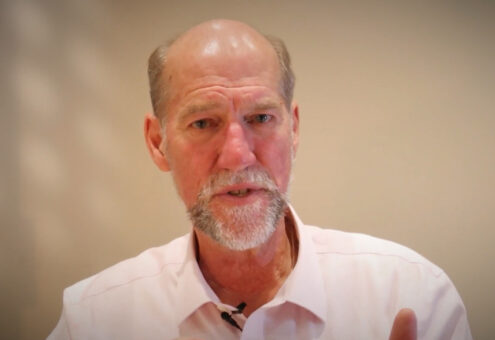
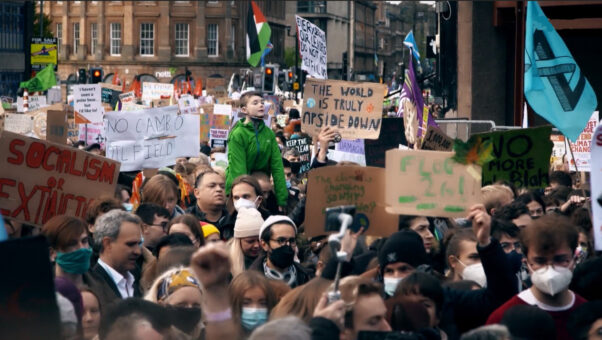
The role of faith communities in limiting climate change and building the future is one of potential, yet humility. Martin Palmer discusses the Faith Plans programme, as well as Focolare’s role. The United Nations Climate Change Conference (COP 26) in Glasgow concluded in November 2021. Martin Palmer, former Secretary General of the Alliance of Religions and Conservation and current CEO of FaithInvest, helps us uncover the potential that faith communities have in limiting climate change and the role that Focolare can play in this context. Martin is an international expert on major religious traditions and cultures, the author of more than 20 books on religious and environmental issues. He is a regular contributor to the BBC and is a lay preacher in the Church of England.
What is the specific role of faith communities in the face of such an unprecedented ecological crisis?
The great faiths are not only sources of ancient spiritual wisdom. They are also among the most important actors on the planet. Without the educational, medical, welfare and charitable work of faith communities through schools, hospitals, youth work, welfare agencies, etc., civil society would collapse in a matter of weeks.  So while the spiritual aspect is vital because it gives us the broader perspective of time, space and meaning, if we ignore our role as stakeholders in building our future, we end up standing on the sidelines, shouting and hoping someone will listen.
An active role for faith communities in driving change is important. Have you noticed a change in attitude in recent years?
I see a huge shift. For the first time, all the major religious environmental groups – like GreenFaith, Eco-Sikh, Daoist Ecological Temple Network, Hazon (the largest Jewish environmental group) and of course now the Vatican through the Laudato Si’ Movement and the Focolare – are working together side by side, bringing the wonderful pluralism of different beliefs, values and networks together, especially through the Faith Plans program.
In October 2021, on the feast of St. Francis of Assisi, Pope Francis and other religious leaders – including Archbishop of Canterbury Justin Welby and Ecumenical Patriarch of Constantinople Bartholomew – issued a call on climate change and a public commitment to create plans for the environment. Why is it important to make a plan?
For faiths to be truly effective, we need not only the wonderful words and wisdom drawn from the great spiritual currents, but we also need to know where they could be architects of change. That means knowing how extensive their role in education is in each place or country, how many clinics and hospitals they have, where their investments are, how much land they own, what range of professional expertise there is in the faith community and so on.
What do you see as the specific contribution of the Focolare in bringing about this ecological conversion?
The role of the Focolare is unique. Not only are you a large organization of laypeople in one of the most hierarchical faiths in the world, you are an inspiration that goes far beyond your members. For decades you have worked through the Economy of Communion on the life and work realities of faith in market practice. Creating new models and initiatives seems to come naturally to you. Your style of sharing what you do is an inspiration. You have decades of interfaith work and a depth and integrity not easily found in the often-superficial interfaith world. Your connections to other faiths show a joy in pluralism not often found in religious organisations of the scale and impact that the Focolare has. Finally, you seem to have already engaged some of the most charismatic, highly motivated, skilled and caring people in the world, who are already active.
Nino Puglisi for cittanuova.it

23 Feb 2022 | Non categorizzato
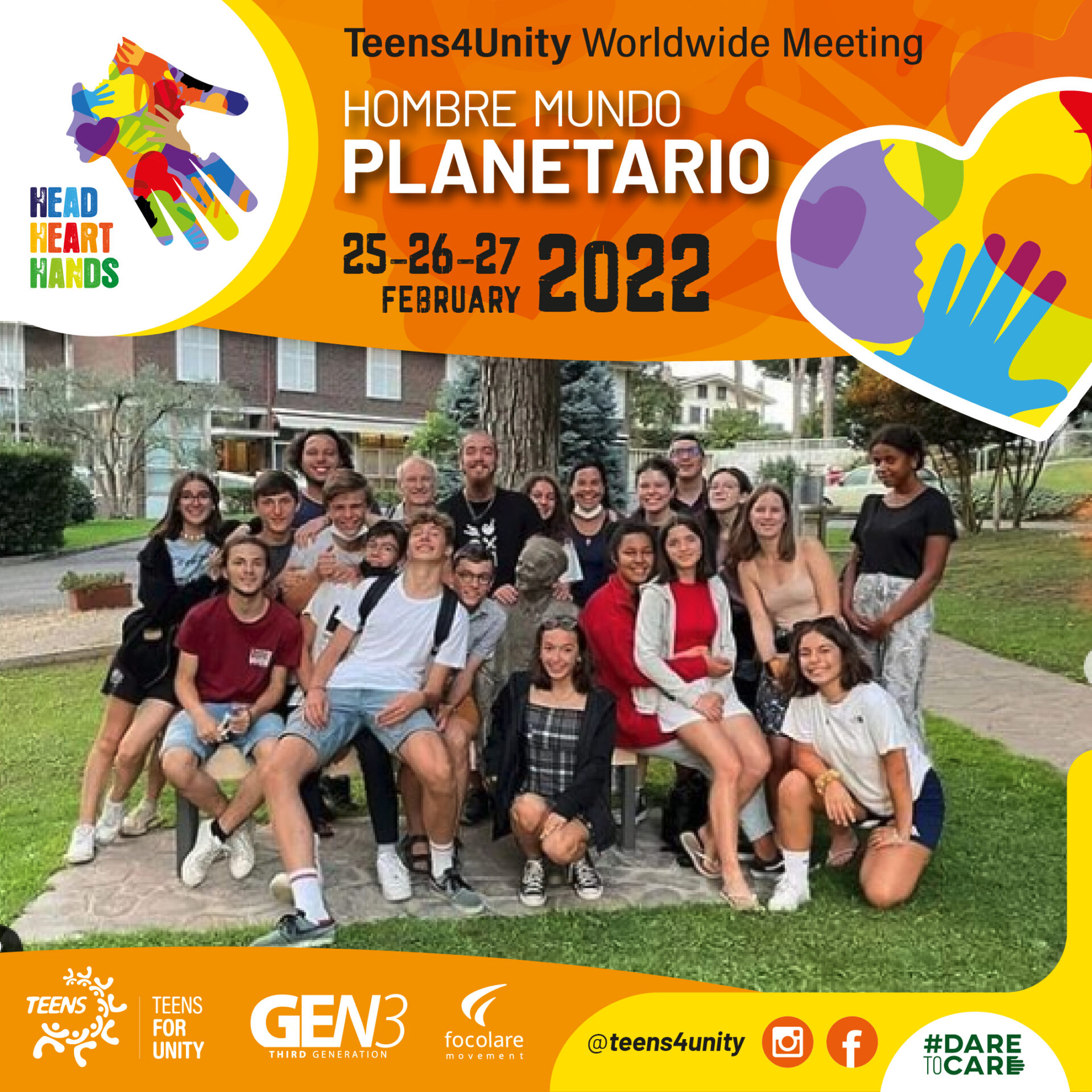
From 25th to 27th February 2022, “Hombre Mundo”, a global project, conceived and implemented by young people as a way to reach universal fraternity, will take place. Local and global actions to foster knowledge between different cultures and religions, develop active citizenship, show the commitment of teenagers to overcoming the major challenges of the planet, from environment to the elimination of hunger and poverty.  Claire Mulimbi, a Gen 3 (the 10 to 17 year olds of the Focolare Movement) who lives in the Democratic Republic of Congo, was one of the organizers of a two day “Hombre Mundo” event in September 2021. She said, “We understood that we have to accept each other, despite our differences, which can actually turn out to enrich us. It is a way to promote true values and ban false values. It was a very nice experience of sharing cultures through songs, dances, poems and guessing games. Experts came to teach us about ecology and then we planted some trees”. “Hombre Mundo” is a project that involves thousands of boys and girls of the Focolare Movement all over the world. The aim is to learn about universal brotherhood, getting to know young people of the same age from other cultures and religions, discovering and sharing the riches of each people, working together for the major challenges of the planet. But “Hombre Mundo” is not only an opportunity for getting to know one another, it is also based on concrete actions to develop active citizenship for the common good of the communities to which the teenagers belong or by twinning with others. “Hombre Mundo” therefore includes actions at local and global levels alongside international events, such as the one to be held from 25th-27th February 2022. The first “Hombre Mundo” workshop took place in 2014 in Argentina, then in 2017, three were held in Eastern Europe (in Croatia, Serbia and Poland): these were international “laboratory” type workshops, to get to know, love and respect the homeland of others as one’s own. The program is designed and carried out by the young people, from the choice of themes to be addressed to the experiences to be shared, to the lyrics of the songs. This edition should have had two central events, in Kenya and in Ivory Coast and many local events in many countries of the world. For the first time, however, due to the pandemic, it will be completely online . The internet was a great help in the preparation. Gašper Jošt, a Gen 3 from Slovenia said: “We split into smaller groups according to time zone and language. From Slovenia, we met up with Malta and Ireland. We wrote a song together. Miha wrote the lyrics and Anja wrote the melody. Through it, we want to encourage people to continue building a more beautiful world and to say that as long as there is even one person trying, they will encourage others and bring them hope”. The Gen 3 from all over the world have also initiated various concrete actions in order to live out and spread a culture of giving and sharing. For example, useful educational material was sent to the young people of some countries of central-eastern Africa, Vietnam, Indonesia and Myanmar. In India, on the other hand, funds were allocated to prevent child labour, to build safe places where children can participate in activities to regain their self-esteem, socialize with others and develop their talents. Becoming more and more “world” men and women, that is people with a heart open to all humanity, with its riches and its challenges, is the goal of this year’s three days. Each day a theme will be explored. They will start from personal life and then broaden their gaze around the communities in which they live and then to the whole planet. February 25th will be dedicated to the lifestyle that characterizes these young people: the art of loving proposed by Chiara Lubich will be at the centre of their reflections and testimonies, with particular reference to the time in which we are living: how can we live it during the pandemic? How can we continue to love in the virtual world and social media? On the second day, the focus will be on integral ecology and the involvement of the Gen 3 for the “Zero Hunger” Goal, the second of the 17 United Nations Sustainable Development Goals for 2030. On the third day the title will be, “May all be one” and the attention will focus on the beauty of peoples coming together and their common commitment to build a world of peace and unity. Our two international bands will also participate in the 2022 “Hombre Mundo”. Gen Verde will give a percussion workshop that will involve 60 boys and girls from the inter-American region and Gen Rosso will give a concert for peace on 26th February at 12:30 (Italian time), live from the Italian island of Lampedusa, famous for welcoming migrants. Before the concert, at 12 noon (Greenwich Mean Time) there will be a worldwide link-up to pray, all together, for peace. Granville from Bangalore (India) told us, “Every person on planet Earth is endowed with aspects, faculties, abilities and skills that make them a unique work of art. Therefore, whenever we stand side by side, supported by a spirit of unity, we compose an amazing art gallery. What does “Hombre Mundo” mean to me? I believe one word perfectly answers this question: unity. There can be no unity without love. Love is the bridge over the abyss of division. Love breaks down the walls that fragment us and love unite us. It is only through love for my neighbour that I can do my part to create a world in which each of us, works of art, come together to create a synergistic art gallery”. For more information visit teen4unity.org
Lorenzo Russo
21 Feb 2022 | Non categorizzato
The words of Chiara Lubich on which we reflect today are remarkably topical and will not leave us indifferent. They will surely lead us to look around and act for the benefit of all our brothers and sisters. … During his life on earth, Jesus always welcomed everyone, especially those who were outcasts, those most in need, or who were furthest away. Jesus’s love conveyed his trust, confidence and friendship to everyone, breaking down, one by one, the barriers of pride and selfishness that had been built up in the society of his time. Jesus was the visible sign of the perfect, welcoming love that the heavenly Father has for each one of us, and of the love which, as a result, we should have for one another. This is what the Father wants first from us. That is why we can render no greater glory to God than by trying to welcome each other in the same way as Jesus welcomed us. (…) Our attention is drawn to one of the aspects of selfishness that is most common and, let’s admit it, most difficult to uproot. It is the tendency to isolate ourselves, to discriminate against and exclude others who are different and who could disturb our tranquillity. Let us try, first of all within our families, associations, communities and working groups, to get rid of our tendency to judge others, discriminate, be prejudiced, hold resentments or be intolerant towards one neighbour or another. These attitudes are common and easy to fall into, but they have a damaging and chilling effect on human relationships. They block the flow of mutual love. Then, let us do the same in society around us, bearing witness to the welcoming love of Jesus with any neighbour the Lord puts next to us – especially with those whom our collective social selfishness tends to exclude or marginalise. The act of welcoming others who are different from ourselves lies at the very basis of Christian love. It is the starting point, the first step to take in building a civilization of love and fostering the culture of sharing that Jesus is calling us to especially today.
Chiara Lubich
(Chiara Lubich, in Parole di Vita, [Words of Life] Città Nuova, 2017, pag. 512-514)
17 Feb 2022 | Non categorizzato
In one of her meditations Chiara Lubich writes “mercy is the ultimate expression of charity, the one that fulfils it[1]. It is not a feeling, therefore, but a concrete action that, united with an inner intention, pushes us to distance ourselves from ourselves and turn our gaze to the other. A revolutionary movement that heals and generates life.” Don’t miss the opportunity At the station, I had just bought a return ticket to a certain city. I rushed to the platform but was disappointed to discover the train had just left. I went back to the ticket office to try and get a refund and further information but the lady in charge told me she couldn’t spend time on me with so many people in the queue. Disgruntled, I walked away feeling really angry but as I was putting my tickets in my diary, a phrase I had written down that morning caught my eye: ‘Don’t miss any opportunities’. I stopped, reflected, then made up my mind: “I must not miss the opportunity to love!”. I walked back to the lady at the ticket office, and when it was my turn I told her I was sorry if I was too demanding with her and that I understood her reaction. The expression on her face and her tone of voice changed and, without persuasion, she started to deal with my situation. She even started looking for alternative routes to enable me to reach my destination in time. It really doesn’t take much to restore harmony in relationships. (R.J. – Romania) The list of enemies As his followers Jesus wants us to love our enemies. He wants us to forgive. For a long time I didn’t think this concerned me. I live a quiet life, have a good position in society and a calm family. We don’t hurt anyone and try to protect ourselves from the negative in society. Nevertheless, that phrase troubled me. Enemies? When I really thought about it, I realised I still did have some but had relegated them to a part of my brain where they would not bother me. One by one, situations came to mind in which, rather than face the opposition of an ‘enemy’, I fled. Running away had become a real habit. But Jesus was asking something else of me. So I made a list of all the ‘enemies’ for whom I had to do something: with a phone call, a message or a meeting to let each of them know they were part of my life. It really wasn’t easy – obstacles and reasonings kept holding me back. Now that I have overcome myself, I can truly say that Jesus’ commandment has achieved its purpose – it has made me feel alive. (G.R. – Portugal)
Edited by Maria Grazia Berretta
(taken from Il Vangelo del Giorno, Città Nuova, year VIII, n.1, January-February 2022) [1] C. Lubich, “When you have known suffering”, in Essential writings, Città Nuova, Rome 2006, pp. 140-141

 So while the spiritual aspect is vital because it gives us the broader perspective of time, space and meaning, if we ignore our role as stakeholders in building our future, we end up standing on the sidelines, shouting and hoping someone will listen.