
25 Jan 2021 | Non categorizzato
General Assembly /25 January 2021 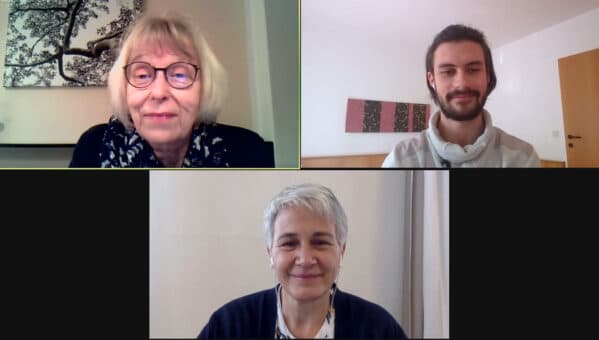 The second day of the General Assembly of the Focolare began with an ecumenical prayer presented by participants from various Churches. It was addressed to Jesus in his forsakenness on the cross, so that he would help each one to “grow in listening to one another”; teach us to “welcome together the Holy Spirit” and “the cry of today’s humanity” so as “to become instruments of unity”. Then there were further votes which had been put off from yesterday and which are necessary for adapting the regulation of the Assembly to an on-line format. So, the spiritual retreat for all the participants started a little late and it will finish on Wednesday 27th January. This is an essential moment in the Assembly, as it says in the Movement’s Statutes, “so that the voters…may be docile to the grace of the Holy Spirit.”
  The first topic chosen, put the participants in front of what could be defined as the entrance key into the mysticism of Chiara Lubich: a solemn pact made by the foundress on 16th July 1949 with the politician and author Igino Giordani, co-founder of the Movement, in the Dolomites. In that pact – as was emphasized by Fr Fabio Ciardi, Oblate of Mary Immaculate and theologian in consecrated life – Chiara Lubich and Igino Giordani, asked Jesus who they had just received in the Eucharist to be the one to create unity between them. They asked him to use their full and mutual readiness to welcome the other, to value the thought of the other and in this way to open up a space to allow the Holy Spirit to enter.

Vicky and Vic

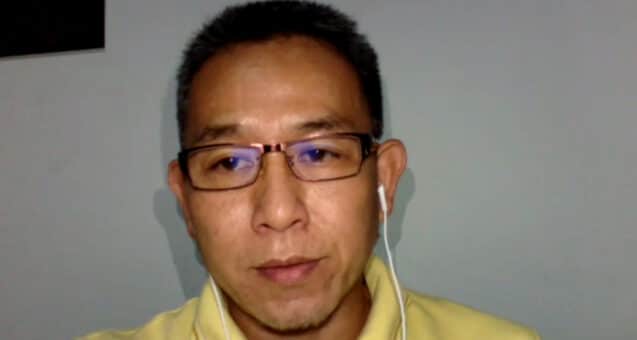
Somjit, a Buddhist from Thailand

Rassim, a Muslim from Algeria
 The second day of the General Assembly of the Focolare began with an ecumenical prayer presented by participants from various Churches. It was addressed to Jesus in his forsakenness on the cross, so that he would help each one to “grow in listening to one another”; teach us to “welcome together the Holy Spirit” and “the cry of today’s humanity” so as “to become instruments of unity”. Then there were further votes which had been put off from yesterday and which are necessary for adapting the regulation of the Assembly to an on-line format. So, the spiritual retreat for all the participants started a little late and it will finish on Wednesday 27th January. This is an essential moment in the Assembly, as it says in the Movement’s Statutes, “so that the voters…may be docile to the grace of the Holy Spirit.” The first topic chosen, put the participants in front of what could be defined as the entrance key into the mysticism of Chiara Lubich: a solemn pact made by the foundress on 16th July 1949 with the politician and author Igino Giordani, co-founder of the Movement, in the Dolomites. In that pact – as was emphasized by Fr Fabio Ciardi, Oblate of Mary Immaculate and theologian in consecrated life – Chiara Lubich and Igino Giordani, asked Jesus who they had just received in the Eucharist to be the one to create unity between them. They asked him to use their full and mutual readiness to welcome the other, to value the thought of the other and in this way to open up a space to allow the Holy Spirit to enter.
 Vicky and Vic
Somjit, a Buddhist from Thailand
Rassim, a Muslim from Algeria
Vicky and Vic
Somjit, a Buddhist from Thailand
Rassim, a Muslim from Algeria

24 Jan 2021 | Non categorizzato
General Assembly: Diary 1 – January 24, 2021 It has begun! The Focolare Movement General Assembly started at 12.30 (UTC +1). It has been long awaited for, and Focolare members and adherents from all over the world have participated in its preparation. It was scheduled to start at the beginning of September 2020, but had to be postponed because of the pandemic . It is now being held electronically. The choice of this date is very significant. Two days ago, on January 22, when it was Chiara Lubich’s birthday, the Movement marked the end of the birth centenary year of its founder.Today, January 24, it recalls the day when in 1944, Chiara ‘discovered’ the reality of Jesus Forsaken who became the ‘spouse of her soul’ and moved her to ‘seek him’ in all the suffering and pain of humanity and to rebuild relationships and bridges of unity. According to what is defined by its rules, the Assembly is “the first and most important governing body of the Focolare Movement”. 360 members are taking part in it; 139 are there by right, 181 have been elected and 40 have been invited by the President. Although these participants are in different places all over the world, they all entered the one big virtual hall, aware of the solemnity and importance of this moment. They are all contributing to build the worldwide lively family atmosphere , which is also present on the virtual platform. Maria Voce, the outgoing president, who is at the end of her second term, opened the Assembly with a solemn appeal. She invited the participants to put themselves in the attitude of Jesus at the Last Supper and wash one another’s feet. She said that this means being ready “to listen to one another, to understand one another, to go beyond differences, to become truly brothers, which means truly equal, truly with the highest dignity, which is the dignity that Jesus gives us because he makes us all children of God and brothers and sisters”. Rules being followed, today’s meeting included several voting sessions. In the first election, the two moderators who will coordinate and lead the work were chosen. They are Uschi Schmitt, a German doctor and Andrea Ponta, an Italian engineer. Then there was the approval of the electoral commission ; its members are Danilo Virdis, Flavia Cerino, Waldery Hilgeman, Laura Bozzi and Sister Tiziana Merletti, all residing in Italy. For legal reasons they are all present at the official seat of the Assembly, the International Focolare Centre in Rocca di Papa (Italy). In subsequent voting sessions, the Assembly approved the programme for these days and an amendment to the Movement’s General Statutes reducing the minimum number of councillors to be elected from 30 to 20. The three days of spiritual retreat for participants will begin tomorrow.
Focolare Communication Office
22 Jan 2021 | Non categorizzato
22 January 2020 -22 January 2021: the Centenary year of Chiara Lubich’s birth ends today. 365 days, marked by the pandemic, quite different from what has been planned, but they were ones that opened new paths and new perspectives. ‘Celebrate to meet’ was the motto chosen for the Centenary of the birth of Chiara Lubich (1920-2020), the founder of the Focolare Movement. A year ago, there were many initiatives planned in different parts of the world to celebrate this event, little thinking that a pandemic would crop up and leave its mark on it, but indeed it did not stop it. In some cases, it has even enhanced the possibilities of ‘meeting’ Chiara. Let us go back to the beginning. The Centenary celebrations started on December 7, 2019 when the exhibition “Chiara Lubich World-City” was inaugurated at the Galleries in Trent, Lubich’s hometown. This inauguration was held under the patronage of the President of the Italian Republic, and it was promoted by the Historic Museum Foundation of the Trent region in collaboration with the Chiara Lubich Centre. Maria Voce, the President of the Focolare Movement was awarded the “Seal of St. Wenceslas” by the Autonomous Province of Trent on that same day. On the following day, a separate section of the exhibition, dedicated to the years 1949-1959, was inaugurated in Tonadico, in the municipality of Primiero San Martino di Castrozza (Italy). In the following weeks, similar exhibitions, enriched with the local touch, were launched in other countries. The exhibition in Nairobi (Kenya) highlights the Movement’s development in Africa, while a section of the one in Jerusalem is dedicated to Lubich’s relationship with this city and her dream that is now becoming a reality: a centre of spirituality, study, dialogue and formation for unity. Chiara Lubich was born on January 22. In 2020, precisely on this date, Rome celebrated her birth centenary through an evening dedicated to her, while it was twenty years before when the Italian capital conferred on her its honorary citizenship. Francesco Rutelli, the former mayor of Rome said: “On that 22nd January 2000, Chiara pronounced her committment to work more and better for Rome, by promoting concrete mutual love everywhere. What could be more beautiful than making her words our own, today?” A few days later, Sergio Mattarella, the President of the Republic addressed the gathering during the Centenary event that was held at the “Chiara Lubich” Mariapolis Centre in Cadine (TN). Besides Maria Voce, the president of the Movement, Jesús Morán, the co-president and the local authorities, there were more than 900 people present. Another 20,000 watched the live streaming transmission. In his speech Mattarella highlighted fraternity, applied to civil and political activity, as the distinctive feature of Chiara Lubich’s spirituality. Trent also provided the setting for the first part of the international conference: “A Charism at the service of the Church and humanity“. 7 Cardinals and 137 Bishops, friends of the Focolare Movement from 50 countries, participated in this conference, the second part of which was held in the international Focolare small town of Loppiano (Incisa Figline in Valdarno – Italy). In his message, Pope Francis warmly welcomed this conference, expressing “gratitude to God for the gift of the charism of unity through the witness and teaching (…) of Chiara Lubich”. During the same days, another event linked to the Centenary took place at the Mariapolis Centre in Castel Gandolfo. More than 400 religious men and women, consecrated and lay Catholics – including a group from the Orthodox Church – from 100 religious families in 33 countries were the protagonists at the event: “Charisms in Communion: Chiara Lubich’s Prophecy“, a workshop for dialogue among different charisms promoting communion between religious families through the spirituality of unity. Then the pandemic began to spread in countries all over the world. And this meant change even for the Centenary: some events had to be cancelled, others were moved to the web. The Trent exhibition has been enriched with a virtual itinerary. Thanks to an intergenerational team, the one planned in Brazil has been transformed, and an itinerary dedicated to Chiara Lubich is now being launched on social media through social profiles @focolaresbrasil (Facebook, Instagram and Youtube). Web-based initiatives have allowed many more people to visit the exhibitions dedicated to Lubich than the ones where one would have actually been able to go to a place to see. But there were other events that could still take place: such as the issue of two postage stamps dedicated to Chiara Lubich in the Czech Republic and the Competition for Italian schools on the theme: “One city is not enough”. A number of schools participated in this competition that was promoted by the Chiara Lubich/New Humanity Centre and by the Foundation of the Historical Museum of Trentino, in collaboration with the Ministry of Education, University and Research. The prize-giving ceremony will be held on February 16, 2021. The lockdown forced the International Focolare Centre in Rocca di Papa (Italy) to close its doors during certain periods in 2020. But since a few months, visits have been made possible in compliance with current health regulations. One of the most important visits was that of His Holiness the Patriarch of Constantinople Bartholomew I, who came to pray at the tomb of Chiara Lubich. There were also various new publications linked to the Centenary and events to present and promote them, both in presence and via web, namely: the twenty-ninth edition of the book “Meditations” by Chiara Lubich; two texts from the series “Works of Chiara Lubich” published by Città Nuova: “Conversations through link-ups” edited by Michel Vandeleene and “Talks in the civil and ecclesial sphere” edited by Vera Araújo; and the new biography about Chiara Lubich, the way of unity, between history and prophecy, written by Maurizio Gentilini. The English edition of the biography by Gentilini was also presented at the Italian Consulate in Mumbai, India, during a web event dedicated to Chiara Lubich’s centenary. Stefania Constanza, the Italian Consul in Mumbai, Vinu Aram, director of the Shanti Ashram in Coimbatore and Maurizio Gentilini took part in this web event. A “mixed” approach was chosen – partly in “presence” at Trent and partly online – for the study meeting about “Chiara Lubich in dialogue with the world. A linguistic, philological and literary approach to her writings”. This was organised by the Chiara Lubich Centre and the Study and Research Group on Linguistics, Philology and Literature of the Abbà School (Interdisciplinary Study Centre of the Focolare Movement) together with experts from various countries. Some of the papers are available in the section “Conference Documents” on the Chiara Lubich Centre website. On January 3, 2021, almost when the centenary year was coming to its end, Rai Uno, the main Italian television network presented the TV-movie “Chiara Lubich. Love conquers all”. The director of this movie was Giacomo Campiotti, while Cristiana Capotondi played the role of Chiara Lubich. 5 million 641 thousand viewers watched the film that was made by Rai Fiction and Eliseo Multimedia. Then, many others in other countries of the world were able to see it thanks to RaiPlay and Rai Italia. And today, January 22, 2021, the Centenary comes to its end. But does it really end? Recently, when Maria Voce, the president of the Focolare Movement spoke about this, she said that ‘the living encounter with Chiara cannot be limited to 100 years, to a centenary year. It is not over; it will continue as long as there are people from Chiara’s family on earth who will continue to witness that Chiara is alive, that Chiara’s charism still has something to say to the world”.
Anna Lisa Innocenti
21 Jan 2021 | Non categorizzato
From 24th January to the 7th February the General Assembly of the Focolare Movement will take place on-line. It will be the moment to renew the roles of President, Co-President, the leadership team and will define the orientations and future projects for the next six years. The Assembly has been preceded by a series of formative and informative webinars in which all the communities of the Focolare world -wide have participated. Next Sunday, 24th January 2021 will mark the beginning of the Third General Assembly of the Focolare since the death of its founder Chiara Lubich. The Assembly which should have taken place at the beginning of September 2020, was postponed because of the pandemic. The Dicastery for the Laity, the Family and Life agreed to its postponement and that the whole event should take place on-line. Participation 362 people from all over the world will participate, representing the different cultures, generations, vocations, church membership and religious faiths that are present in the Focolare Movement. In order to encourage the involvement of as many people as possible, in February 2019, Maria Voce, the actual president, established a preparatory commission. They had the task of collecting suggestions for subjects to be discussed in the assembly, of identifying the names of candidates for the elections and to prepare the program. Elections of the president, copresident and councilors Using a system of on-line voting, on 31st January the election of the President[1] will take place. On February 1st, the Copresident will be elected and on February 4th there will be the elections of the councilors who collaborate with the President in the different roles in the governance of the Movement. She is the one, then, who distributes their different roles. Another task of the General Assembly is to decide on topics proposed by the Centre of the Movement, presented on the initiative of the President, of the General Council, of a section, branch, or movement. Each participant in the Assembly can suggest that other topics should be discussed. What subjects will be addressed? The more than 3,000 proposals that have arrived from the whole world, concerning the subjects to be dealt with in the Assembly and the directions that the Movement should follow in the next six years, are a true reflection of the liveliness of the people of the Focolare. They also demonstrate the awareness of the “change of an era” which is already in action, as Pope Francis said in 2018 when he met the Focolare Community in Loppiano. The many suggestions received have been divided into four main categories: the bringing up to date of the charism that has been handed down by the foundress; the culture that stems from the charism of unity; the answer to the environmental crisis and the pandemic; working together with the new generations. In a recent interview the current Copresident of the Focolare, Jesús Morán, said that there will also be space for dialogue and discussion concerning the topic of abuse, both in the six-yearly report of the President which will open the Assembly and in a specific talk of the Copresident. Although we represent a diversity of voices, yet there is the general need to determine new and up to date pathways of fraternity, capable of answering the challenges and the questions of humanity today at both a global and a local level. News and up-dates on the work of the Assembly will be available daily on the web page of the focolare and through future press releases. Stefania Tanesini – +39 3385658244 [1] As it says in the Statutes, the President of the Movement will always be a woman. This is to emphasise the Movement’s Marian profile and its predominantly lay characteristic and so “to preserve the design that God had on it since he entrusted its beginning and development to a woman.” As it says in the Statutes, “Hers is to be above all, a presidency of love because she must be the first in loving and therefore, in serving her own brothers and sisters, remembering the words of Jesus: “…whoever wishes to be first among you will be the slave of all” (Mk 10:44)
20 Jan 2021 | Non categorizzato
An interview with Jesús Morán Cepedano, co-president of the Focolare Movement since 2014 and, as stated in the Movement’s statutes, responsible for moral and disciplinary issues. (The interview was conducted by Lorenzo Prezzi and Marcello Neri). As co-president of the Focolare Movement, on 18 September 2020 you met victims of abuse in Nantes, France. Can you tell us what happened and how you reacted? We were summoned by three of Jean-Michel Merlin’s victims to go and take stock of the situation and, in as far as it is possible, to conclude matters in the right way for them. Jean-Michel Merlin was a French focolarino who committed abuse and we have we have been in contact with these victims over recent years. It was a very strong experience for all of us in the Movement who were there and for me in particular because I met with living pain, the pure pain of those who have been abused. It was not the first time I had come into contact with victims of abuse but I had never before had such an intense awareness of their suffering. Furthermore, it was very painful for us to see the extent of our shortcomings – especially in the Merlin case. I say this in regard to the way we accompany the victims, accept responsibility for the situation, our disorientation as a Movement and, in this case, the delay in taking steps appropriate to the situation and the facts. In my opinion, it represented a watershed moment. Starting from this personal relationship with the victims, the vision of this drama changed a lot. After the Nantes meeting, the Movement intensified the work already begun in taking appropriate measures in situations of abuse. The president, Maria Voce, spoke and expressed her desire for total clarity. On what occasion? According to the Movement’s statutes, the co-president is the person who must deal with moral and disciplinary matters and ensure that the life in the Movement concurs with the doctrine of the Church. This is his specific task, but this is always done in unity and full agreement with the president. In this sense, Maria Voce has always supported all my work for many years. There have been two particular occasions when we have spoken together. The first time was on 26 March 2019, with a letter written to all the members of the Movement in which we publicly acknowledged our shortcomings, the fact that abuse had occurred within the Work of Mary and affirming our binding commitment, especially with the victims, to repair all that needed to be repaired. A second time, more recently, we spoke together again in a worldwide link up during which we publicly asked for forgiveness from all those who had been abused in the Focolare movement – whether this had been sexual abuse, child abuse or abuses of authority or power. What was the impact on the members of the Focolare and the Movement when they heard about such cases of abuse? The first reaction of many people was almost incredulity and bewilderment: the news made a very strong impact because many people considered it unthinkable that such painful actions could have occurred in a Movement characterised by mutual love, where relationships are of fundamental spiritual importance. There are ideas central to the Movement – such as seeing Jesus in the other and the life of unity – that are so contrary to any form of abuse that it could seem unthinkable. The process of entering into what Catherine of Siena called the “house of self-knowledge” was painful for the members of the Movement: that is, we discovered how inadequate we are in living out unity and our charism. But discovering one’s own weakness and starting again with a trust in God and in others that is no longer naive is a fundamental process. This is what many people in the Movement have experienced – and they have shared this with us in so many different ways. Are the resignations of the leaders of the Movement in France and the widely publicised case of Jean-Michel Merlin symptoms of some weaknesses in its internal formation processes? Obviously, yes. I said the same thing in a recent communication addressed to the members of the Movement. These situations of abuse have highlighted some weaknesses in formation programmes and, therefore, there is a need to take care of all stages of this process and pay great attention to the people involved. In particular, we need to carry out serious and genuine vocational discernment – and here I am referring not only to consecrated members but also to the vocation of anyone who wants to make a strong commitment in the Movement. Another aspect is that of taking better care of and accompanying the people who have roles of responsibility in the Movement – ensuring that they have the essential and holistic formation required, that they have adequate relational skills, that they are able to listen to and welcome other people and show respect. It is a matter of ensuring that our training programmes are effective. I think that for years we have placed total trust in the strength of spirituality and charism but this has sometimes led us to neglecting certain human aspects: we are now more aware of these human elements and take greater care of them. This is true both in view of the progress of human sciences and the advances in this field that are being made within the Church. When the floodgates of testimonies open, they multiply. Do you think that this could happen in the Movement too, i.e. that after the Merlin case, other allegations of abuse could emerge? Yes, we are already seeing this happen and we are preparing for it. More complaints are reaching us and we need the tools for real discernment. In some cases, it is more a matter of tension and conflict in relationships that cannot be considered as real abuse; in other cases, however, abuse of which we were unaware has taken place and such situations must be treated with due rigour and attention. This is a process of “purification of memory” that we want to live with an attitude of both humility and hope. What tools have you put in place to respond to these allegations of abuse within the Movement? We have two commissions to deal with such situations: a Commission for the safeguarding and protection of children and vulnerable adults which has been operating for some years now and is internally regulated – the regulations have recently been revised – and a Commission independent of the governing structures of the Movement for the protection of individuals, i.e. for adults who may suffer abuse with regard to authority, power and even of a sexual nature. This second instrument has been established more recently than the first Commission and, right now, after four years of activity, is drafting a new statute based on experience gained thus far. The final version will be made public as soon as it is ready. These two instruments act at central level; then, as far as the safeguarding of young peope and vulnerable adults is concerned, there are also regional commissions. We may also be going in this direction with regard to the protection of individuals in liaison with the central bodies. We are carrying out all this work in dialogue with the Dicastery for the Laity because we feel the need to constantly improve procedures so that it is clear how to approach these bodies, how to verify the various cases and ascertain if abuse has occured. We should also set up supervisory bodies at all levels. The committee for the safeguarding of young people and vulnerable adults has already done so. In these supervisory bodies there will be people from outside the Movement to ensure greater transparency. Can you say something about the mandate given to GCPS, the British company which has been asked to investigate all possible cases of abuse within the Movement? This is a commitment that we made to the victims with whom we met in Nantes. They asked for a completely independent commission to carry out an investigation – independent not only of the Movement’s own governance and composed of members who do not hold positions of leadership but also independent of the Movement as such, composed of people who are not involved with it in any way. After searching for a couple of months, we identified this British company which, for the moment, will only deal with the Merlin case because it is serious and we can learn from it. We will see how things develop: we have just given the mandate to the British company and we are beginning to work with them. The investigation process will probably take a year to complete: the facts need to be established and we still need to know the real number of cases; decisions will need to be taken and responsibilities will need to be assumed. What is the victims’ role in this internal analysis? The victims’ role is fundamental: for example, they will participate in the survey that we have entrusted to GCPS Consulting – especially in drawing up the operational agenda. The contact with the victims is ongoing and permanent. During this time, I have communicated with them about every step we have taken as a Movement and so they participate in the whole process. In as far as possible, we are always in contact in every case and every situation. Will the next General Assembly of the Movement, opening at the end of January, include some kind of report on these facts? Yes, the topic of abuse is included in the president’s report of her six-year term of office that will open the Assembly and there will also be an ad hoc intervention by the co-president. In this sense, the topic will not only be presented but also discussed in depth during the Assembly. You have emphasised the great trust in Chiara’s founding charism, a trust that, for example, was shared with a very wide audience in the recent television programme about Chiara Lubich. Is this patrimony being put to the test by these events and in what way can it be revived? The television programme about Chiara, although fiction with the limitations and merits of the genre, was a great gift for all of us, especially for the younger members of the Movement who did not know about Chiara Lubich’s early life. I think that the production succeeded in clearly highlighting the true fruit of the charism of unity, that is, a people born of the Gospel who live for universal sister and brotherhood, an emphasis on communion and fellowship, an openness to humanity and attention to the sufferings of the world. I believe these are very topical themes. We saw a fictional account of Chiara’s story but this can be a great stimulus to move forward in the incarnation of the charism both in the Church and in society. Fonte: http://www.settimananews.it/ http://www.settimananews.it/ministeri-carismi/focolari-abusi-uno-spartiacque/

19 Jan 2021 | Non categorizzato
“Abide in my love and you shall bear much fruit” (Jn 15, 5-9) is the Gospel passage chosen for this year. The word ‘abide’ is central because seeking unity is a full time commitment. “It’s not enough to meet together for evangelizing or charitable actions. What lies beneath everything we do together is love. We could make the most wonderful plans, we could bring together Christians from many different groups; but if we don’t have love, none of this has value”. So says the Quezon City Ecumenical Fellowship (QCEF), near Manila (Philippines). Many members of the local Focolare communities are part of this association. This year’s resource material was prepared by the Monastic Community of Grandchamp[1]. The texts for reflection during the Week of Prayer for Christian Unity 2021 (18-25 January) state “Abiding in Christ the fruit of solidarity and witness grows”. And the members of QCEF have years of experience of this. We would like to give voice to some of their testimonies, highlighting their variety and creativity, so they may inspire many to work every day for unity between Churches. Reciprocity Rev Kenneth Aguilera, Regional Superintendent of the Methodist Church with UNIDA explains, “When we launched QCEF many years ago, we really never thought of giving rise to a fellowship community or ecumenical association. It was simply meeting together as friends from different Churches over a cup of coffee. But the informal meeting was so enjoyable that we started to do it regularly. And so QCEF was born. We shared joys and sufferings to the point that we started to care for one another and to love each other’s Churches. We devised occasions and events to be together regularly. So when the Week of Prayer for Christian Unity arrived, it was a great occasion for all of us to walk, work and pray together. And that’s how I understood that true Ecumenism is a kind of competition between us Christians to make our mutual love grow. It’s like working with my own family, and I think there’s a strong presence of Jesus among us”. Solidarity “The pandemic has not prevented us from meeting up regularly,” write Jane and Bert. “We continue to meet Online to reflect on the Word of Life and to share our experiences. We work together on shared sponsorship programs. In order to help many people who are experiencing hard times, we contacted various experts and organized webinars and video-conferences on the different issues we’re having to face in these times, like the management of psychological challenges in times of crisis, such as anxiety and depression; the prevention of domestic violence and abuse of minors; and raising awareness of understanding ecumenism as a journey towards the unity of Christians. We also organized food collections for the victims of the recent typhoons and floods. And through a communion of goods among us, we were able to give emergency financial aid and essential supplies to those affected. We also collected funds for a diocese which suffered particularly bad typhoon damage.” Being Neighbors Hedy Ng and family are Catholic and live next door to a Methodist Church. “Our relationship as neighbours began even before their church was built. Straight away we offered them the opportunity to link into our own water supply and we built a dividing wall between the two properties to grant them some privacy. Every time their minister changes, we do all we can to make friends with them, as they are truly our brothers and sisters. Our children all play together. Recently, Rev Dione Padel participated in our meetings with QCEF and was very happy to be part of the fraternity lived among us. Unfortunately, he recently suffered the loss of his wife, and all of us at QCEF did all we could to be near him. We offered him financial and moral support, and the unity built continues to grow.”
Stefania Tanesini
[1] www.grandchamp.org

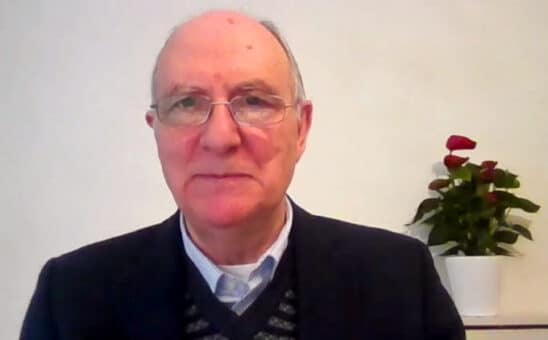 The first topic chosen, put the participants in front of what could be defined as the entrance key into the mysticism of Chiara Lubich: a solemn pact made by the foundress on 16th July 1949 with the politician and author Igino Giordani, co-founder of the Movement, in the Dolomites. In that pact – as was emphasized by Fr Fabio Ciardi, Oblate of Mary Immaculate and theologian in consecrated life – Chiara Lubich and Igino Giordani, asked Jesus who they had just received in the Eucharist to be the one to create unity between them. They asked him to use their full and mutual readiness to welcome the other, to value the thought of the other and in this way to open up a space to allow the Holy Spirit to enter.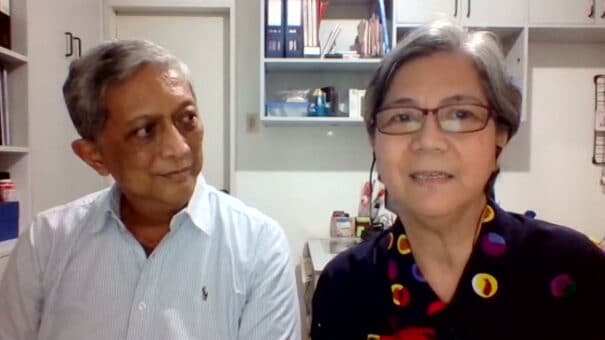
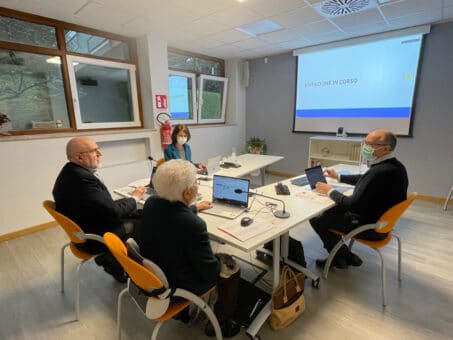
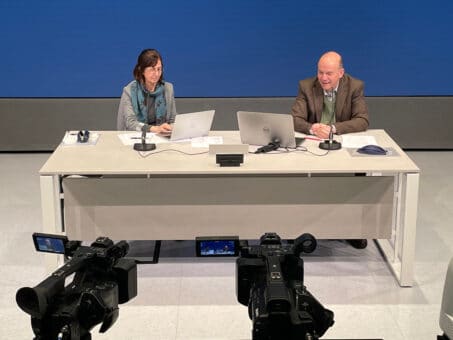 The choice of this date is very significant. Two days ago, on January 22, when it was Chiara Lubich’s birthday, the Movement marked the end of the birth centenary year of its founder.Today, January 24, it recalls the day when in 1944, Chiara ‘discovered’ the reality of Jesus Forsaken who became the ‘spouse of her soul’ and moved her to ‘seek him’ in all the suffering and pain of humanity and to rebuild relationships and bridges of unity. According to what is defined by its rules, the Assembly is “the first and most important governing body of the Focolare Movement”. 360 members are taking part in it; 139 are there by right, 181 have been elected and 40 have been invited by the President. Although these participants are in different places all over the world, they all entered the one big virtual hall, aware of the solemnity and importance of this moment. They are all contributing to build the worldwide lively family atmosphere , which is also present on the virtual platform.
 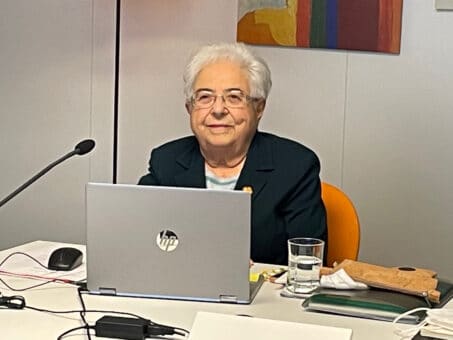 Maria Voce, the outgoing president, who is at the end of her second term, opened the Assembly with a solemn appeal. She invited the participants to put themselves in the attitude of Jesus at the Last Supper and wash one another’s feet. She said that this means being ready “to listen to one another, to understand one another, to go beyond differences, to become truly brothers, which means truly equal, truly with the highest dignity, which is the dignity that Jesus gives us because he makes us all children of God and brothers and sisters”.
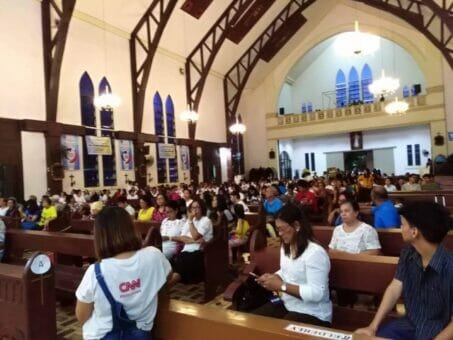 Reciprocity Rev Kenneth Aguilera, Regional Superintendent of the Methodist Church with UNIDA explains, “When we launched QCEF many years ago, we really never thought of giving rise to a fellowship community or ecumenical association. It was simply meeting together as friends from different Churches over a cup of coffee. But the informal meeting was so enjoyable that we started to do it regularly. And so QCEF was born. We shared joys and sufferings to the point that we started to care for one another and to love each other’s Churches. We devised occasions and events to be together regularly. So when the Week of Prayer for Christian Unity arrived, it was a great occasion for all of us to walk, work and pray together. And that’s how I understood that true Ecumenism is a kind of competition between us Christians to make our mutual love grow. It’s like working with my own family, and I think there’s a strong presence of Jesus among us”.