
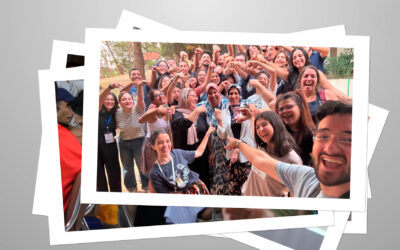
The Islamic-Christian Workshops, which took place in the little town of Loppiano and the city of Trento, deny the current narrations of hatred and mistrust between the two religions. Trento, 7 December 2018. The Week of Unity, which was organized by the Focolare Movement: Sophia University Institute (IUS) and the Center for Interreligious Dialogue, in concordance with the Risalat International Institute of Qum (Iran) has ended. The date, place and research group set-up are not casual. In Fact, the date marks the seventy-fifth anniversary of Chiara Lubich‘s choice to dedicate her life to God, leaving everything to follow him. The protagonists, majority youth, are composed of about fifty people, Shiite Muslims and Catholics, coming from various countries: Lebanon, Egypt, Iran, United Arab Emirates, USA, England, Canada, Argentina, and Italy.  This initiative took shape about less than three years ago, marking the twenty-year long path of friendship between Prof. Mohammad Shomali, his wife Mahnaz, and the Focolare Movement. From this friendship, both intellectual and personal, Prof. Shomali of the Risalat International Institute of Qum and Prof. Piero Coda of IUS, had the idea of leading a small group of Muslim and Christian academics from both institutes, to reflect on a crucial theme: unity of God and unity in God. This brought about the understanding of the Islamic sensibility of absolute monotheism that opens up to the Christian perspective of God as dialogue. There were many voices of reflections, which bring different thoughts and traditions that demonstrate and not impose the Truth, but walk together towards it.
  The lectures touched on key points like the world’s globalized culture and the fundamental truths proposed by the two faiths, but above all, it made an experience of hearts and minds leading to a real Shekinah, which is the presence of God’s peace among the faithful. This experience did not limit itself to the sole participants, but expanded in two precious moments of sharing. The first was in the International Centre in Incisa Val d’Arno (Loppiano), while the second was in the Mariapolis Chiara Lubich Center in Cadine (Trento). Those from Loppiano and Trento did not only listen to an experience that seems to dramatically contradict the current accounts regarding the relations between Christians and Muslims, which speak of fear, rejection, and invasion. They were able to make a profound experience of mutual enrichment, in a climate of peace that makes living and building, what Pope Francis calls, a ‘culture of encounter’ possible.
Roberto Catalano
0 Comments