
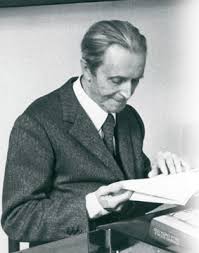
 “Teaching is like lighting a flame, not filling an empty vessel. If it is a flame that needs to be fed, then a learner should be taught to guard and increase the warmth and light. A person needs an education that outlasts childhood and continues from birth to death – and that is the period for giving.” Giordani was a writer and journalist, a man of politics but also a formidable educator. His writings were intended to teach, to teach citizens the path of justice. Many were raised on Giordani’s writings during the difficult period of cultural resistance to Fascism and during the Cold War. Giordani taught by living and then writing. In his opinion education should be a universal endeavour that engages the whole citizenry. The function of education is to instill two fundamental skills: freedom and responsibility. Referring to an image used by Plutarch, for Giordani, teaching meant lighting a flame and creating the conditions for the learner to know how to keep it constantly alive. The focus of the learning process would thus be shifted from teacher to learner and from childhood to the entire lifespan. “In the natural order the teachers are the family and the State; in the supernatural order, the Church. When these collaborate toward the same goal – cooperating rather than bumping into each other – education achieves its full effect. Individuals and crowds are not stupefied and neutral in front of their personal destiny, but they face it with courage and you have those epochal periods of great undertakings for peace and for war, for thought and for action. The family is not a mere roost, orphanage or corporate housing: it is a church and a school. Parents have a natural right – therefore from God – to teach that goes beyond generating and nourishing children; an inalienable right that comes before every other civil right.
 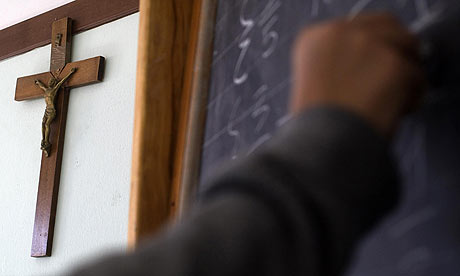 The family will educate if parents are not only educated, but aware of their mission to be teachers; if they are able to nurture in the souls of their children greater ideals than food, board and profession; if they act like a teaching domestic church. Religion is also there to remember, to lift up and protect the teaching obligation of the family. And politics should do likewise. The State is the other great educator and accomplishes its role through the school. Nowadays, States run their own schools, and it is there natural right to do so. But it would no longer be their right if they coerced religious conscience and perverted moral conscience; even worse if they prevented the Church from having her own schools.” “For what regards morality, education should be the same from family to State, from parish to workplace. It should draw on God’s law and construct human laws based on God’s law. The soul of such education is a transcendent faith that snatches individuals from the grip of individualism and joins them to one another with an impulse of justice and charity. As one great educator once said, ‘The real social culture was begun on Golgatha’.” (Igino Giordani, “Educazione e istruzione” in La società cristiana, Città Nuova, (1942) 2010, pp. 108 – 111).
Be generous towards the needy
Be generous towards the needy

0 Comments