21 Aug 2018 | Non categorizzato
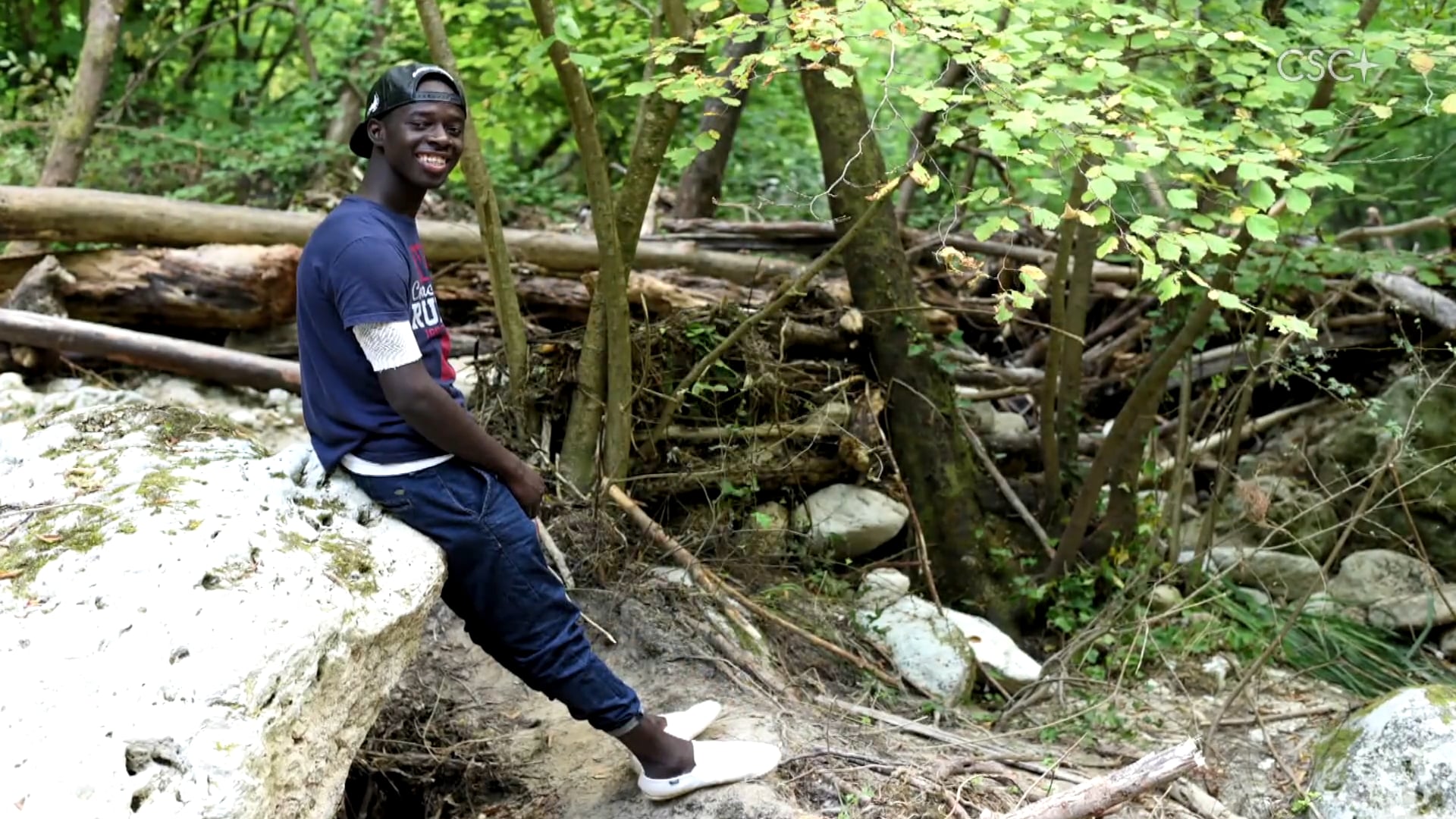 “I thought you were asking for help and stumbled into this embrace. Your large, chilly arms awaited my warmth, an exchange of a kind gesture. Like earth awaits rain, a temple breathes prayer, a smile longs for lips, baggage hopes for a trip.” “This can’t end here, it can’t be. If you have completed this journey and reached my door, I hope you live on, always. If my path ended up with you, I want you to come along for the next stretch. I want to see you grow old, hear you speak my language better and better. I want to hear you confiding with my wife as if she was your mother and laugh with my children as if they were your siblings. I want to be there when you hug your mother, she who gave birth to you, your sisters, your brother. “I beg you. Listen to me. Open your eyes. Smile. I will teach you another magic trick. Put your curdled cells in my hands: I will make them disappear like coins, like paper. In their place I will put them back, healthy. And your body will once again start to work like a delicate, unbelievable mechanism. “I don’t have important things to tell you, thoughts to remember, memorable acts. I have rejected words, concepts that were forgotten even before they were born, meaningless signs. We’re never ready for detachment, it’s never the right time, and we can’t even conceive of absence. Even though you told me how your radiant God awaits, that death is but a natural threshold to cross in order to reach the next phase of existence, and that since you never treated anyone badly you will be rewarded in the afterlife. Even if I strongly believe that dying is going back to one’s origins, as Mary taught me: a marvelous, unending losing oneself in God. “Despite all of this, I don’t want you to go. I need to talk more with you, listen to you, solve problems together. With you I need to dare, to challenge the headwind, to demand, dialogue, and aspire to heaven while living through hell, promising each other, supporting each other. “There’s no point turning back: I am not ready to see you die, to watch you as you turn the dark corner of things we see and enter into that tunnel of light that we do not know. I am not ready and am only able to take you by the hand and guide your lips and mine in prayer to our one Father. Because what is natural to the divine is murky to people. We assign different names, we build up rules. Yet in the end, what counts is love toward others. “We met by chance, through those minimal circumstances that change the direction of our lives, to breathe a bit longer, through a revolving door that opened in a moment like any other. Yet now I feel you are like a brother and, as I hope with all my strength to see you awaken, I start to say with you: ‘Our Father…’”
Watch the video https://vimeo.com/204141968
20 Aug 2018 | Focolare Worldwide
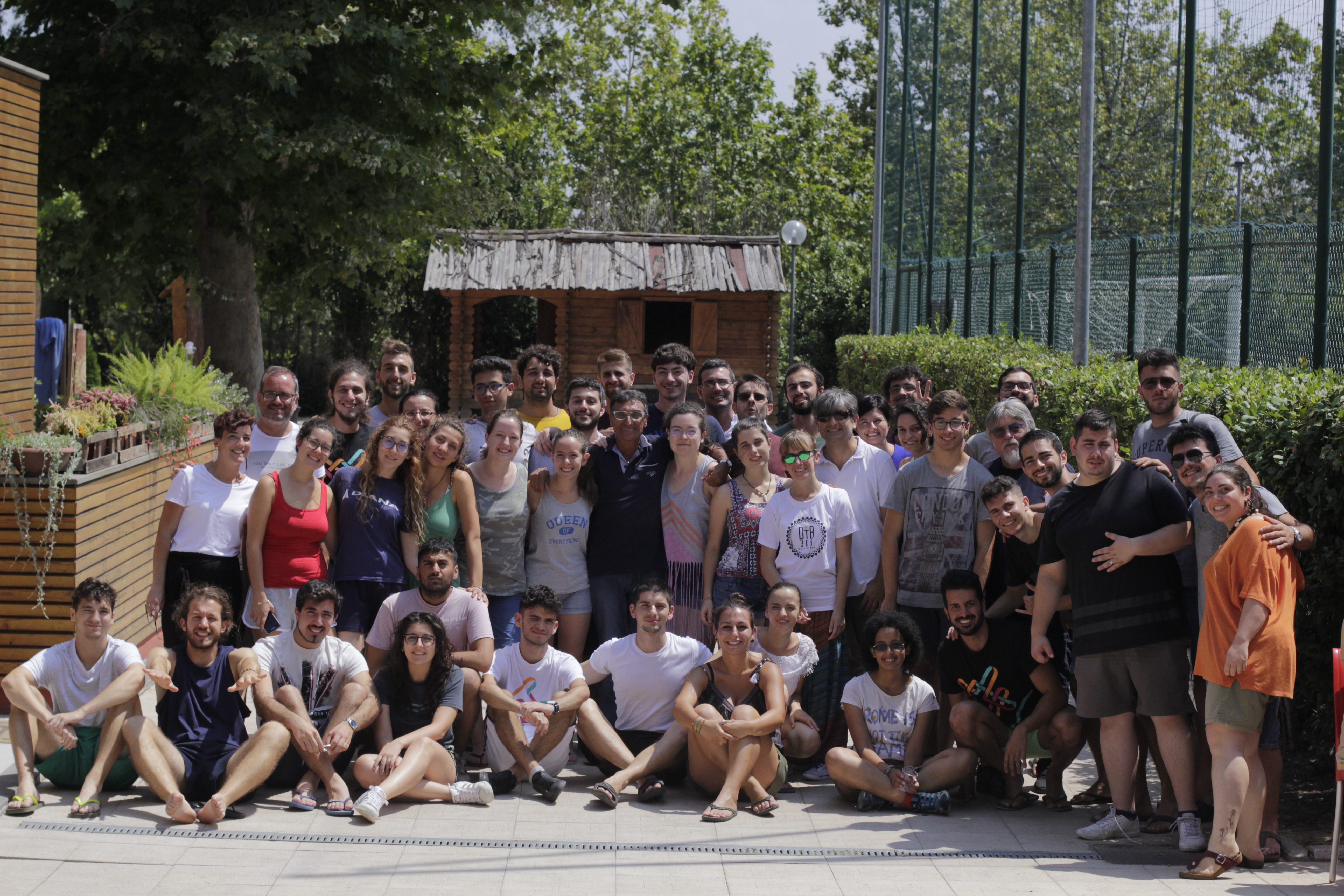 The Paper Mill, former factory at the periphery of Turin, northern Italy, thanks to a development process no longer looks like an abandoned facility. After which, it turned into a place of vitality and fresh air, thanks to the Turin Summer Campus organised by Youth for a United World, from 28 July to 6 August. A newly launched event, ideated to bring the outskirts towards the centre, and which saw an alternation of educational moments and concrete action. The strong point was the participation of the children of the zone, of different nationalities and cultures, who, with the youth of the Campus with simplicity and fun, created a recital, the outcome of the commitment and cooperation that arose during the artistic workshops (recycle-painting, music, theatre, dance, singing). A wealth of talents that upheld the cultural diversities in the neighbourhood, considered not as a motive for social discrimination, but for dialogue and exchange of ideas. Also the themes faced in the educational sessions triggered reflections which called the youths to become active citizens, opening debates on intercultural dialogue, end of life, “green” engineering. In Rome the Summer Campus 2018 was held in the spirit of fun and commitment. The activities proposed in the Corviale district – a kilometre-long building known as the “Snake” – were various types of music workshops, murals and clay activities for the kids, and discussions on current issues, with the participation of experts, to reflect on the daily news and challenges: the peripheries, “grassroots” lawfulness, acceptance of the migrants from the social and juridical standpoints, participation in political life, the uselessness of war and media manipulation, origin and cause of new conflicts.
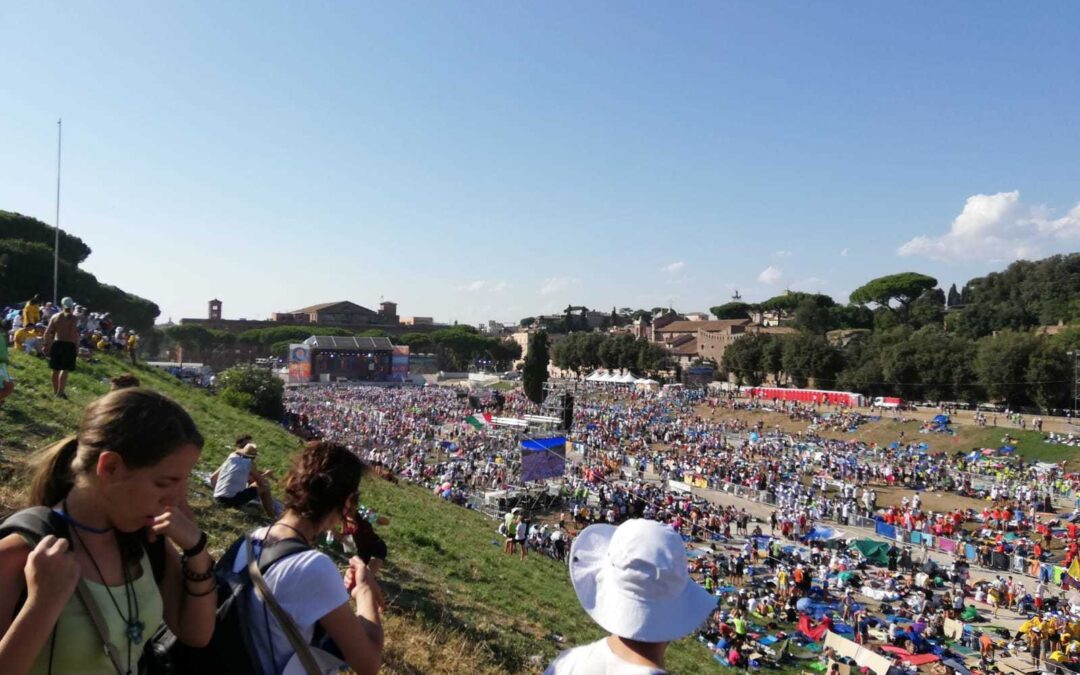
 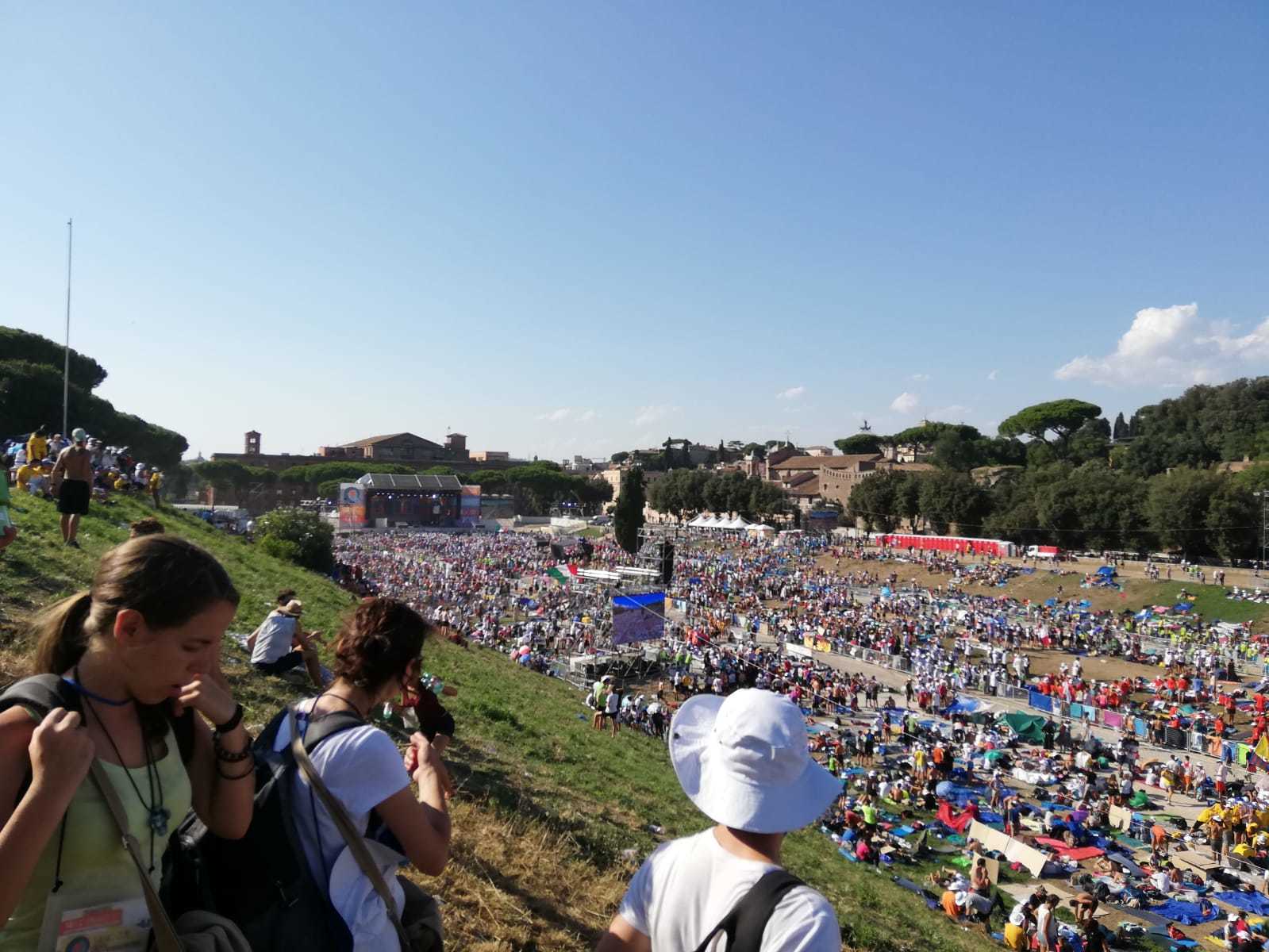 Besides the district associations, also some of the 8,000 families living in the “Snake” opened their doors and recounted their stories of suffering and hope. That which, at first glance seems to be an important building, and the end of which is invisible to the eye, seems to be a beehive of identical homes and windows, from inside is not scary: this is what the young people of the Campus felt, thanks to the encounter with people, countenances and stories which enabled all to go beyond the borders and prejudices, and above all the cement wall each carries within. The youth of the campus, children and families of Corviale worked together to prepare the final celebration in the district parish. It was an occasion to demonstrate the fruits of the workshops but also to build a chain between the realities, often diverging, of the territory and rediscover a sense of community and family. The main path of this campus which ended on 11 and 12 August, at Circo Massimo in Rome, with the meeting of the over 70,000 pilgrim youths from all over Italy, with Pope Francis, then in St. Peter’s, with the Mass and Angelus. The pope invited each one not to be “couch potato youths,” not to aspire tranquility, but take the risk of bravely pursuing their own dreams. The experiences lived in the peripheries of Turin and Rome were engines that pushed each campus participant to take the first steps along this path, challenging but necessary, to make their own dreams a reality.
20 Aug 2018 | Focolare Worldwide
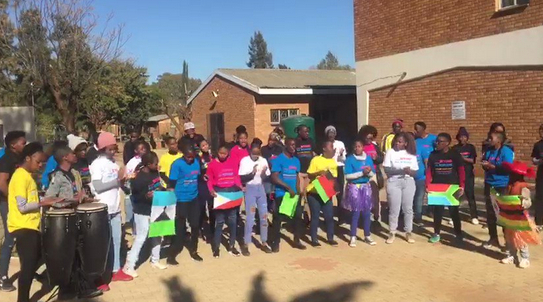 “This year we held our Youth Camp in Mafikeng, South Africa, precisely contemporaneously with the Genfest in the Philippines, with participants from Zimbabwe, Malawi, Zambia, Lesotho and South Africa. The presence of young people from various countries was in itself a visible sign of our desire to overcome the personal and cultural confines.” Mafikeng (Mafeking, up to 1980) is the capital, as well as a commercial centre of the North-west province, founded in 1885 as the British military outpost.It is currently an important stopover on the railway line from Cape City to Zimbabwe. “It was very interesting and funny to discover how our cultures differ and how we can still love one another in our diversities. I have learned many things -wrote Teddy, from Zambia –which I don’t want to keep to myself,but share with my brethren. The Youth Camp – says Nkosiphile from Zimbabwe – opened my eyes. I just can’t wait to put into practice all I have learned.”
  Simultaneously with the event in the Philippines, was also the one held in Albania, with about 120 participants consisting of Christians, Muslims, agnostics coming from various parts and cities of Albania, together with youths from Skopje (Macedonia) and a young girl from Stuttgart. “Like a weft, going from local to global realities, we held four workshops in the field of civil economy and culture of lawfulness, besides themes on prejudice, interpersonal relationships and the social networks, in the presence of Italian and Albanian experts. We visited the homes of disabled and homeless people, and got to meet some ecumenical and interreligious realities of the capital,
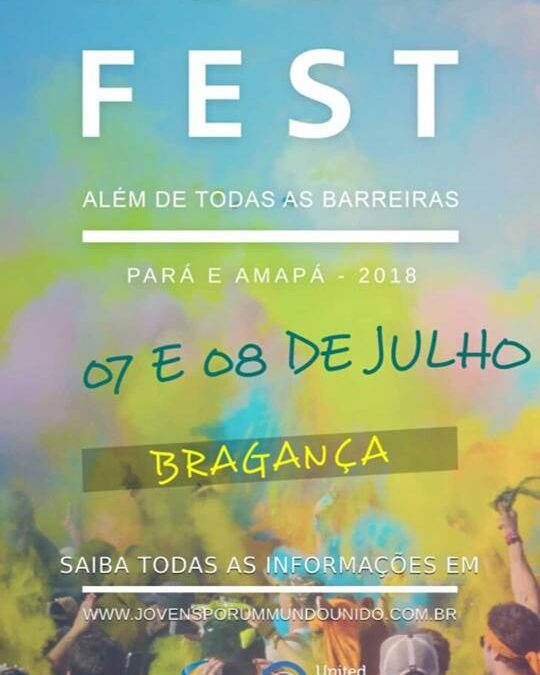
  Tirana. The visits to the cathedral, accompanied by the bishop of the Orthodox Church of Albania, the Mosque and the National Centre of the evangelical Churches were followed by a “flash mob” of all the youths at Parku Rinjain the city centre. Genfest was accompanied by moments of celebrations and prayer, in a joyful atmosphere. It helped to connect the youths from the north and south of the country, and let them experience the international features of the new generations, who inherently tend to overcome all confines. A characteristic that stood out was that of working together with the Church in Albania in the preparation for the Synod of the youth, besides being an important step in reestablishing many relationships with Christians of other churches and Muslims, who now want to continue this path of dialogue.” Bragança, in the north-eastern part of Brazil, is the city where the Genfest was held for 300 young people from various cities of the State of Parà, which hosts a big section of the Amazon National Park. “For many of them – they wrote – it was the first contact with the Focolare communities. The programme consisted of some social projects in the city, like the Fazenda de la Esperança, a hospital, an ecumenical group, and other activities that helped us toenter into the real spiritof this event. So we illustrated the “Mundo Unido Project” and the proposal of Manila, “Paths of unity.” On the opposite bank of the Amazon River estuary in Macapà, there was another Genfest which gathered 140 young people. “It was a unique experience which we were able to concretise thanks to the support of all the members of the Focolare. Despite the difficulties, we believe that our objective, “beyond all borders,” has been reached.
18 Aug 2018 | Non categorizzato
The world renowned Italian tenor, active in various charitable commitments, will take centre stage in the “Festival of Families” in Croke Park Stadium (Dublin). The musical event will be held at the end of the World Meeting of Families with Pope Francis, from 21 to 26 August, on the theme “The Gospel of the family: joy for the world.” Andrea Bocelli who had said that “singing before the Pope is a privilege for the soul, also said: “It is a joy to be able to offer my modest contribution on the occasion of this grand meeting and moment of reflection on the family. The family remains the strongest building block of society, a cluster of affection and privileged space in which one can teach and learn – in every action – how to choose a life that leads to the greater good.”
18 Aug 2018 | Non categorizzato
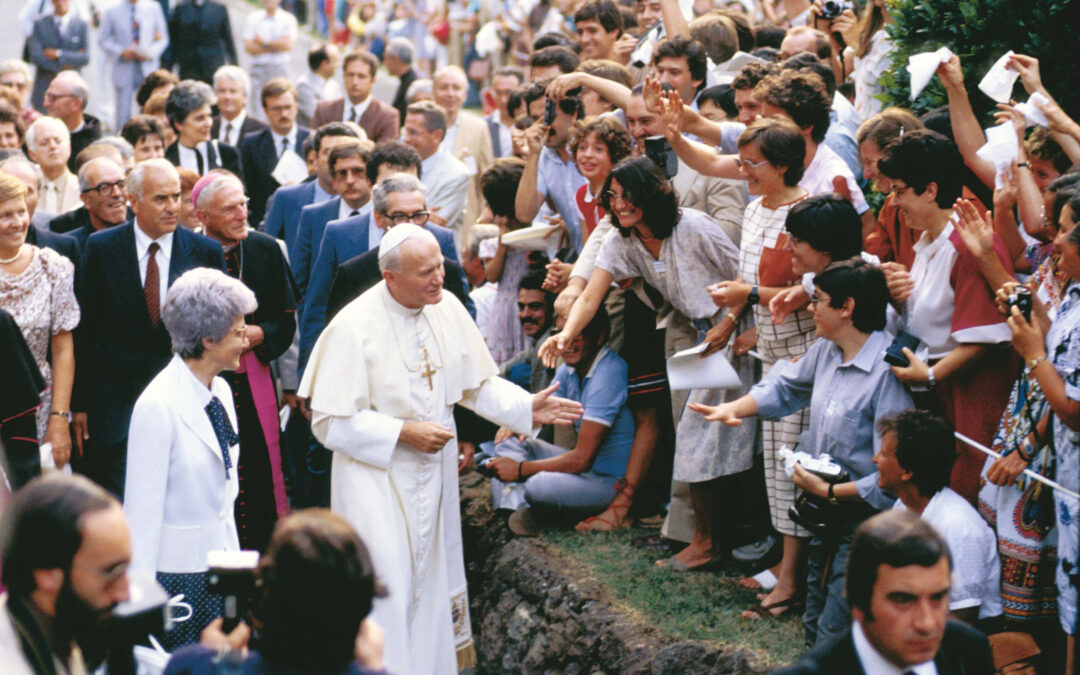
In 1994, in conjunction with the International Year dedicated by the United Nations to the Family, John Paul II announced the “World Meeting of Families”, which took place in Rome 8-9 October of the same year. Since then, the event has been repeated every three years. The past editions were held in Rio de Janeiro (Brazil) in 1997, in Rome in 2000 (during the Jubilee Year), in Manila (Philippines) in 2003, in Valencia (Spain) in 2006, in Mexico City in 2009, at Milan (Italy) in 2012 and finally in Philadelphia (USA) in 2015. A few days before ninth edition, which will take place in Dublin (Ireland) on August 25-26 2018, with the title “The Gospel of the family: joy for the world”, thousands of families from 196 countries of the world are preparing for the meeting with Pope Francis. Half a million people are expected to attend the Mass. Promoted by the new Dicastery for the Laity, the Family and Life, the event will be preceded by a three-day pastoral conference attended by 37,000 families.
17 Aug 2018 | Non categorizzato
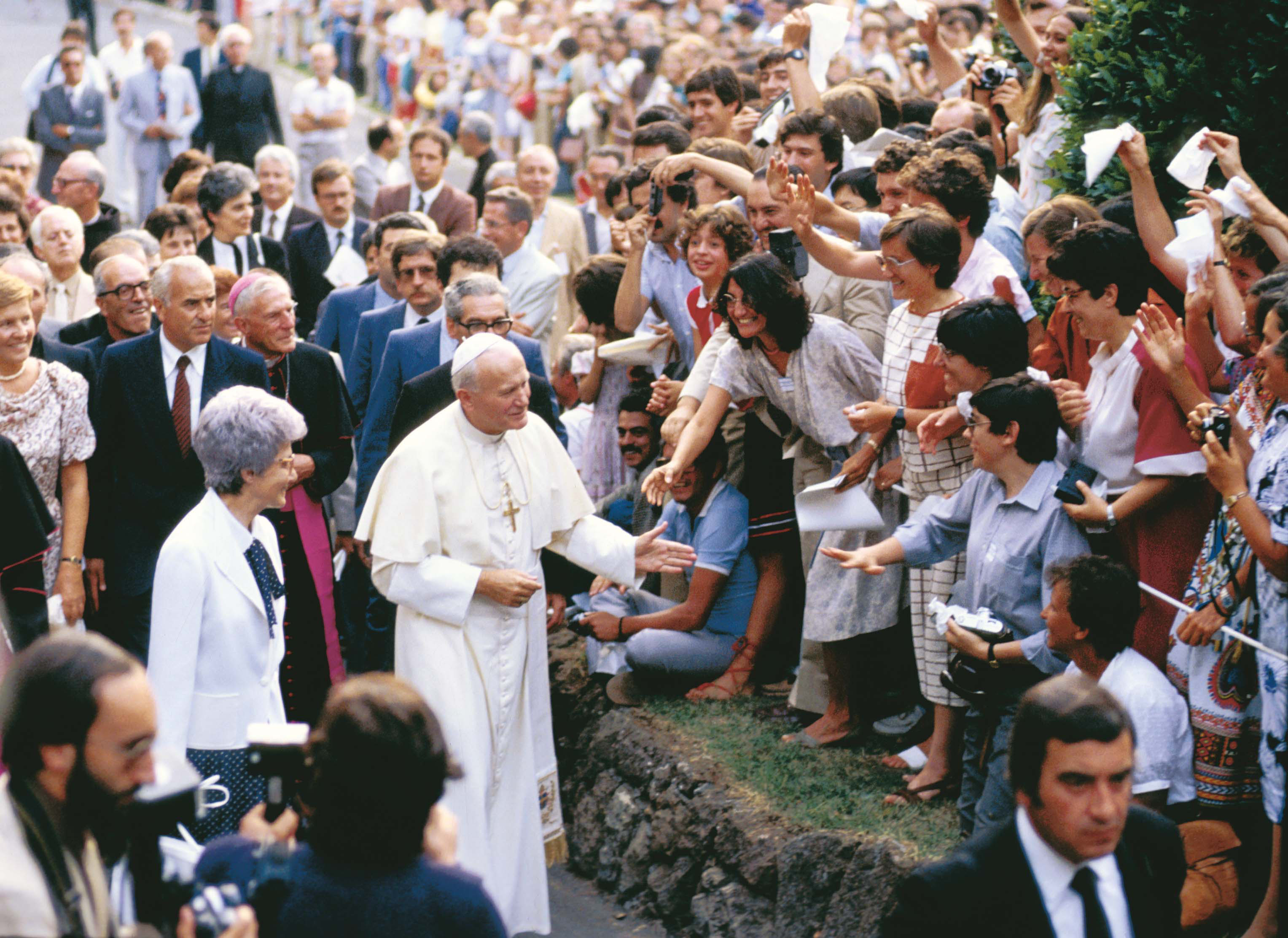
Photo © CSC Audiovisivi
17 Aug 2018 | Non categorizzato
The celebration of the World Humanitarian Day, chosen by the UN Assembly in 2009 on the anniversary of the air raid of 19 August 2003, at the seat of the United Nations in Baghdad, is an occasion to pay tribute to the humanitarian operators who daily risk their lives worldwide to deliver their services in difficult and dangerous conditions. According to international law, this service is based on a series of principles, such as humaneness, impartiality, neutrality and independence. The operators are guaranteed access to countries affected by humanitarian crises, conflicts or climate disasters, to furnish immediate assistance, which for many, makes the difference between life and death, and through time a psycho-social support to rebuild the communities and maintain a durable and sustainable peace in the areas of conflict.
16 Aug 2018 | Non categorizzato
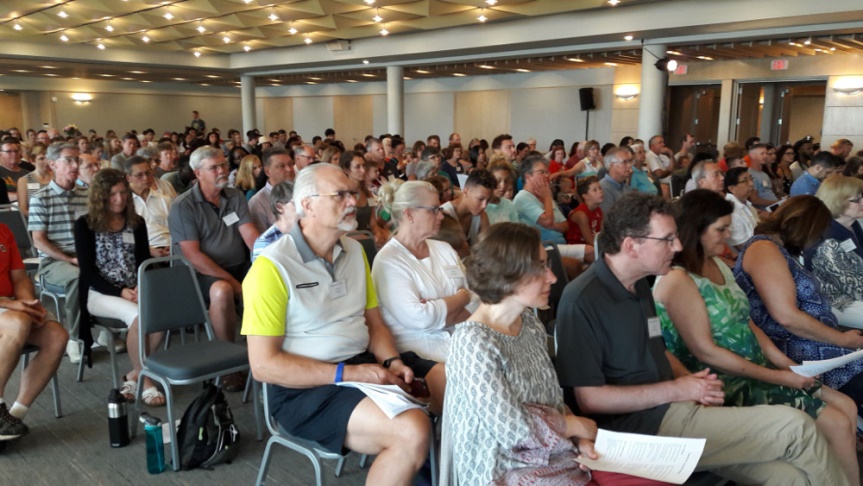
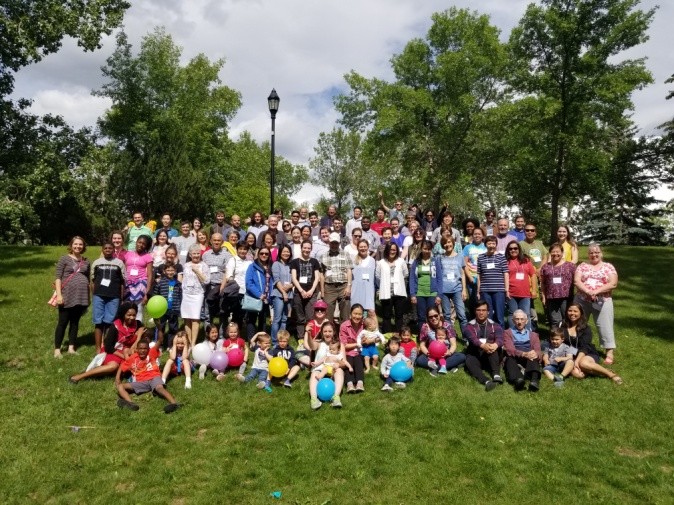 “Our Mariapolis in Calgary,” wrote Alizza and Norio from Canada, “was attended by about 120 people, particularly young people and families, mostly from the provinces of Alberta, Saskatchewan, but also from Manitoba and the British Columbia. The program included the presentation of Pope Francis’s Apostolic Exhortation on the call to sainthood today (“Gaudete et exsultate”), followed by an open dialogue. The presentation, prepared by Rev. A. Martens of the diocese of Calgary, aroused in all the desire to read it personally. Another novelty in the “city founded on faith,” as a participant defined, was the prayer for peace soiree. The community of Chicago wrote: “We are at the conclusion of our Mariapolis which was held for the entire Midwest community. Already last year, we had felt the need to change the location and style of our traditional event, which has been held up to now always in a university campus in the city. The choice fell on the pleasant banks of a lake.
 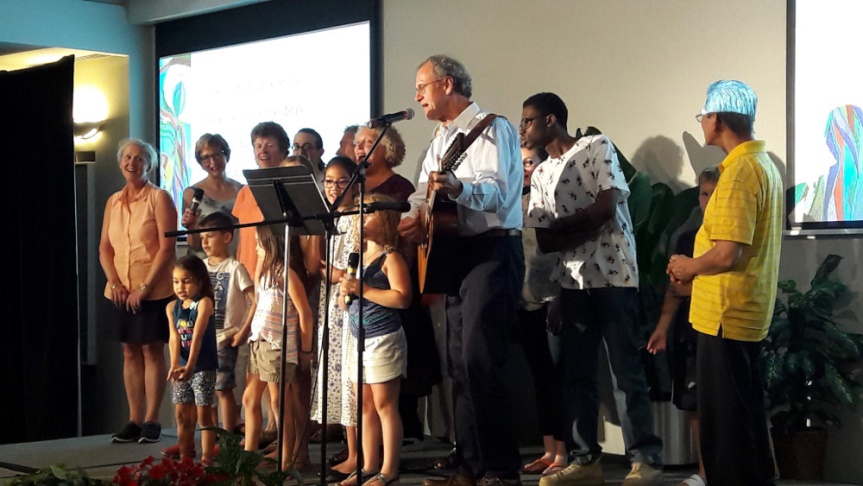 The program entitled: “Mary: her experience, our experience,” reminded us that no one is immune to the trials and uncertainties which Mary of Nazareth had undergone, and showed us how to face them. The results?“The atmosphere of the Mariapolis seemed like that of a family luncheon: relaxed, with a lot of flexibility, improvisation (which also meant having a good sense of humour) and an overall sense of peace.” “The themes focused on and the sharing of experiences helped me to understand Mary more deeply, in the difficult times in which she lived and the way in which she managed to overcome the trials. I liked the group which shared about ’knowing how to lose’. This type of mentality is not popular in today’s world.” “Our Mariapolis was held in West Virginia, wrote the Focolare community of Washington DC, with 160 participants. The youth, who made up more than half of the participants,from being guests turned into protagonists and placed their numberless talents in the technical field at the service of the reception and management of the groups.” In Tennessee, USA, around 70 participants were from various southeastern States: Maryland, Georgia, Tennessee, Arkansas, Alabama, Florida, and Texas, besides those from Indiana and New York. “We dedicated much time to building relationships, and even watched some soccer world championship matches… The presence of the little ones was a gift, and they were always among the first one to recount their concrete acts of love. We delved deeper into Mary’s ‘yes’, and her “bring Jesus to the world.”During the final closing program, a boy who was accommodated in the same centre wanted to give his share of experiences. A Father said: “I was struck by the love of my son, who is 7. While I was busy preparing the final program, he went to fetch dinner for me.”And a child: “Why don’t we stay for a whole month?” From Bulgaria, a letter full of photos arrived: “It is the second time we are holding the Mariapolis in the central Balkan region, with about 80 people from 1 to 85 years of age. Before it started in the next-door Orthodox Monastery, there was a feast dedicated to Our Lady. Upon meeting us there, the Abbot insisted on meeting all the Mariapolis attendants on the next Sunday. We were a sole family: Catholics, Orthodox and Protestants (Baptists).” In Bolivia the Mariapolis, characterized by the numerous presence of young people, concluded with the young people’s Genfest. “The great mutual love between adults and the youth enabled the success of the two events. In the Mariapolis we held workshops on ecology, the economy of communion, dialogue and even choreographed dances and games for the last day’s Genfest, a great occasion to go well beyond our limits as the title of the event said, and to speak of God to many young people!”
15 Aug 2018 | Focolare Worldwide
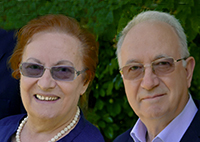 They attended all the World Meetings of Families, since the one held in Rome in1994. And at this year’s gathering in Dublin, they will share their testimony at the Pastoral Congress. They are Anna and Alberto Friso, once responsible for New Families, a branch of the Focolare Movement. They speak to Vatican news about the challenges faced by Christian families in today’s world, and of their expectations for the Meeting in Dublin which will have as its main theme Pope Francis’s apostolic exhortation Amoris laetitia (The Joy of Love). You paricipated as a family in all the World Meetings – a full quarter of a century! What has changed over the past 25 years for Christian families, in your opinion? Anna: The accent put on the new generations, the fact of no longer believing in “forever.” The challenge we must embrace is to get young people to perceive that love is an essential component of life and that it is a wellspring of happiness that married people bring. Turning to marriage doesn’t mean losing your freedom, but obtaining the possibility of a happy life! Alberto: Two things in particular characterize today’s society: individualism and relativism. There seems to be a lack of coesion in front of these two tendencies, the unity of the couple. This has meant that we Christians, we Christian families have to look deeper into God’s plan to see in what way He has called us to live in his image and likeness. As a family that has given such a long witness of Christian living, what would you feel like saying to a young couple that is stepping into marriage concerning eternal love? Alberto: What we feel like saying is: Keep in mind that the love between you that you felt in the first moments you felt these sentiments growing, is of extraordinary importance – eternal! It’s a spark of the deep value that will lie at the basis of your life, for the rest of your life, even when the storms come, and, it’s God’s love. Therefore, it’s not the two of you that get married, but the three of you, because Jesus will be with you! And, thank God, this means answers. The young people themselves become testimonies of this! Anna: The challenge is to not allow yourself be challenged by the dominating culture that focuses on feelings, personal rights that prevail over the other’s rights, or even over the value of the couple itself. God’s plan for marriage has this seal of happiness that it is possible bring to fulfillment precisely because it’s a very part of the person’s destiny, part of the DNA of every human being! In Dublin, The Joy of Love will obviously play an important role. What is this post-synodal exhortation giving to Christian families, and not only Christian? Alberto: Most particularly, it urges us to give witness to Christianity especially through the way we live, the way we give witness to God’s love. When it comes to the world, it’s not so much that we have to defend a ideas, ways of thinking, or a particular value; we have to give witness to the fact that God is Love and that love lies in the depths of the human heart, even hearts that are going through the darkest crises. Anna: We’ve experienced this so so much, precisely because of its luminosity and also its concreteness that doesn’t come to terms with the doctrine, but is able to comprehend and give a hand to those who have been wounded by life. And to these people, most especially, it is able to offer the hope of finding a way to happiness even in the midst of problems. Its beauty lies in its being a hymn to love. Inside this document we can see all of the Church’s tenderness. I believe that it is really a gift for new generations of newlyweds. Source: Vatican News, August 10, 2018
14 Aug 2018 | Non categorizzato
«Mary is not easily understood even though she is greatly loved. In a heart that is far from God, one is more likely to find devotion to her than to Jesus. She is universally loved. And the reason is this: it is Mary’s nature to be Mother. Mothers, in general, are not “understood,” especially by younger children; they are “loved.” And not infrequently, indeed often, one hears that an eighty-year-old man dies saying as his last word: “mother.” A mother is more the object of the heart’s intuition than of the mind’s speculation. She is more poetry than philosophy, because she is too real and profound, close to the human heart. So it is with Mary, the Mother of mothers, who the sum of all the affection, goodness, and mercy of all the mothers in the world cannot manage to equal. Jesus, in a certain sense, confronts us more: his divine and splendid works are too different from ours to be confused with them. Indeed they are a sign of contradiction. Mary is peaceful like nature, pure, serene, clear, temperate, beautiful — that nature which is distant from the world, in the mountains, in the open countryside, by the sea, in the blue sky or the starry heavens. She is strong, vigorous, harmonious, consistent, unyielding, rich in hope, for in nature it is life that springs up perennially generous, adorned with the fragrant beauty of flowers, kind in the abundance of its fruits. Mary is too simple and too close to us to be “contemplated.” She is “sung” by hearts that are pure and in love, who express like this what is best in them. She brings the divine to earth as gently as a heavenly plane sloping from the dizzy heights of heaven to the infinite smallness of creatures. She is the Mother of all and of each human being, who alone knows how to burble and smile at her child in such a way that, even though it is small, each knows how to enjoy her caress and respond with its love to that love. Mary is not understood because she is too close to us. She, who was destined from eternity to bring graces, the divine jewels of her Son, to humanity, is there, near to us, and waits, always hoping for us to notice her gaze and accept her gifts. If any are fortunate enough to understand her, she carries them off to her kingdom of peace, where Jesus is King, and the Holy Spirit is the life-breath of that heaven. There, purified of our dross and illuminated in our darkness, we will contemplate her and enjoy her, an added paradise, a paradise apart. Here, let us be found worthy of being called along “her way” to avoid staying always immature in spirit, with a love that does not go beyond supplication, petition, request and self-interest, but knowing her a little, may we glorify her.» Source: Centro Chiara Lubich
13 Aug 2018 | Focolare Worldwide
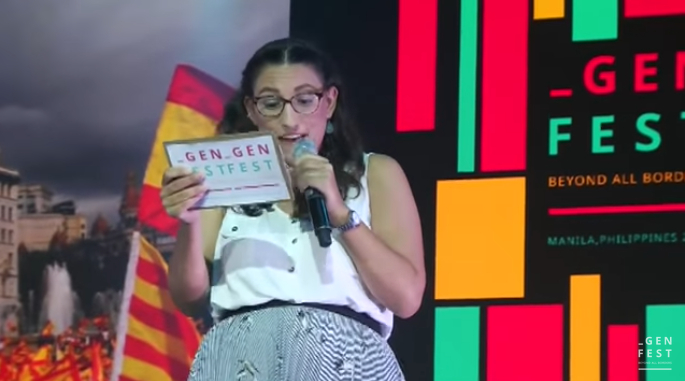
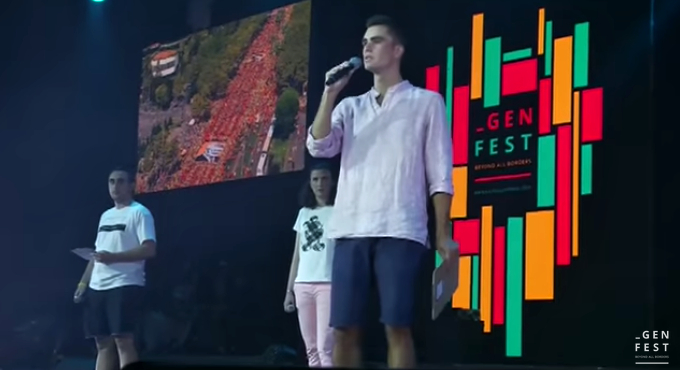 The referendum for independence held in Catalonia (Spain) on 1 October 2017, declared as illegal, gave rise to a season of strong political and social unrest and civil tension which directly involved all the sectors of the population, above all, the youth. Martì is Catalonian and comes from a city near Barcelona, but moved to Madrid for his studies. As a Gen, he shares the Focolare ideals of unity with other young people of various regions of Spain and recounted that “despite this common value, also with them in the first three months in Madrid, it had not been easy. Furthermore in the residence where I live I was maltreated because I was the only Catalonian. I held many discussions with the Gen and we continuously ended up getting angry. But one day, we decided to resolve this situation by talking among ourselves and really listening to one another. We began to see that this was the most important thing we had to do: go beyond our ideas and not foregoing dialogue amongst us, since the most important thing was to understand and respect one another. I can’t say that from then on the path was simpler, but we understood that problems are solved when we set ourselves in the condition of really listening, and not wanting to impose ourselves, the.
 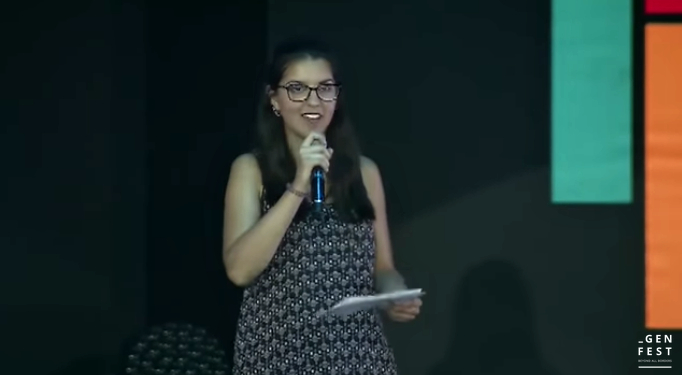 Alba is also Catalonian and recounted that the post-referendum period was a real test for her and for the other gen: on the social media some Gen had written their strong convictions about the political ideas of one or the other party, which hurt me deeply, but I didn’t stop to think whether my way of expressing myself could hurt those who do share my ideas. It was in those days that I started reflecting on what it meant for us, who often say that we are even ready to die for each other. When would we have to put this promise in practice? I felt that the time was now. So we met up with all the gen from all of Spain to clarify things even if it was not easy since we were a big group and it was impossible to say all we felt. We continued to speak with some of them, like Laura. I remember that with her the situation was delicate because I did not know how we could face the problem without hurting each other. When she proposed to make a pact, that is, of putting love before everything else, I was taken off my feet! No one had ever proposed a similar thing to me but it worked because from that moment on we managed to dialogue. The objective was not to defend our ideas, but to take care of one another, and at the same time, leave room for free expression. This experience made me see the political situation differently, and understand that what matters is not to be on the reasonable side, but that beyond the ideas there is always the person and this is more important. Still today our opinions have not changed: we think differently and this is not easy. At times we have to ask excuse, but in talking, we reach the conclusion that both the positive and negative things are part of experience. The misunderstanding now has been transformed into something greater: it is not resignation, or only respect. It is that rose which is worth more than all the thorns put together.”
https://youtu.be/YwMdvyhDJeA?t=1428
12 Aug 2018 | Focolare Worldwide
10 Aug 2018 | Non categorizzato
“Mary Most Holy is the Seat of Wisdom because she welcomed Jesus into her womb and he is the Incarnate Wisdom. With her fiat at the Annunciation, Mary consented to the divine will and Wisdom made its dwelling in her womb, making her Wisdom’s most exemplary disciples. The Virgin was blessed, not so much for having suckled the Son of God, but for having nourished herself on the wholesome milk of God’s Word.” (Pope Saint John Paul II, Angelus, September 4, 1983) In order properly to understand this sacred hymn of praise, we need to bear in mind that the Blessed Virgin Mary is speaking on the basis of her own experience, in which she was enlightened and instructed by the Holy Spirit. No one can correctly understand God or his word, unless he has received such understanding immediately from the Holy Spirit. But no one can receive it from the Holy Spirit without experiencing, proving and feeling it. In such experience the Holy Spirit instructs us as in his own school, outside of which nothing is learned except empty words and prattle. When the Holy Virgin experienced what great things God was working in her despite her insignificance, lowliness, poverty, inferiority, the Holy Spirit taught her this deep insight and wisdom, that God is kind of Lord who does nothing but exalt those of low degree and put down the mighty from their thrones…” (Martin Luther, Commentary on the Magnificat of Mary, Introduction). “The Madonna is Seat of Wisdom not because she had spoken, not because she was a Doctor of the Church, not because she was seated on the cathedra, not because she founded a university: she’s Seat of Wisdom because she gave Christ to the world, who is the Incarnate Wisdom. She accomplished a fact. The same for us: we’ll have wisdom if we live in such a way that Jesus will be in us, among us, in fact.” (Chiara Lubich, Una via nuova, Citta Nuova, 2002) “Mary doesn’t live of herself only, but from far more profound depths: the Holy Spirit in her. From him emanates not only her Son, the content and fruit of her being; from him emanates the fulfillment and the form of his very life.” (Klaus Hemmerle, Brücken zum credo)
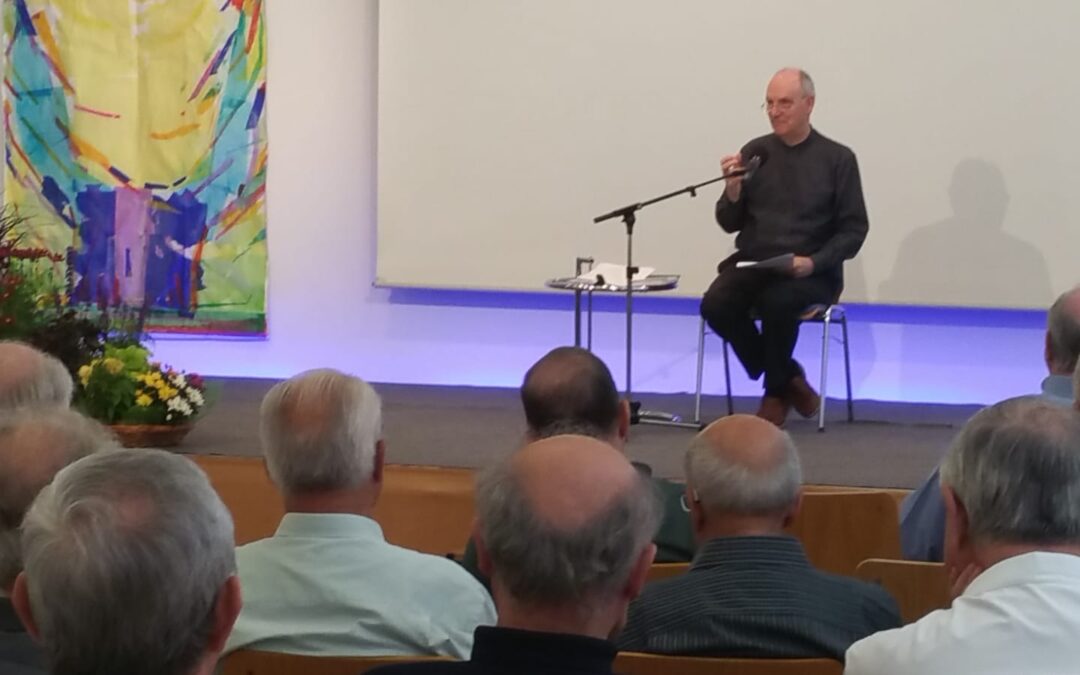
9 Aug 2018 | Focolare Worldwide
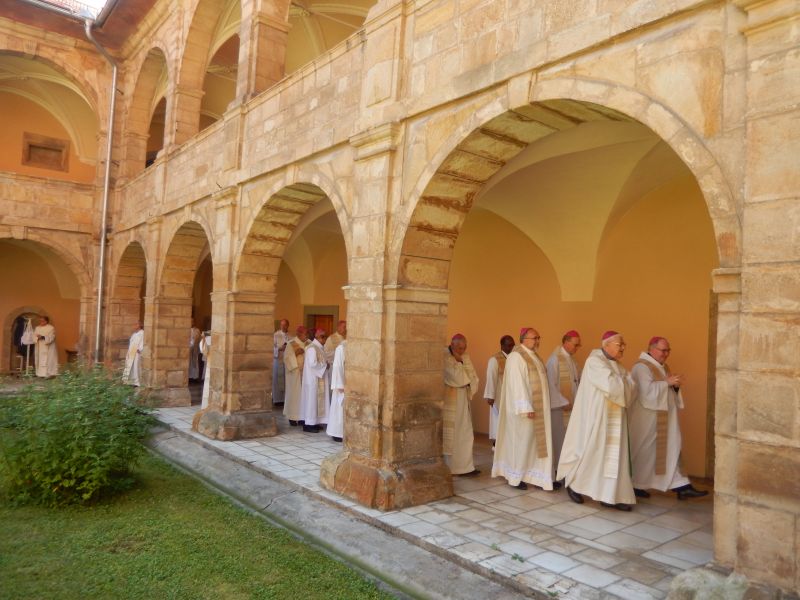 “We were invited to this enchanting place, the “green heart” of Austria, by Bishop Wilhelm Krautwaschl, current bishop of this 800 year-old diocese,” writes Thailand’s Cardinal Francis Xavier Kriengsak, who is coordinator of the Bishop Friends of the Focolare Movement. “For us, this this stay was an opportunity to live together as brothers, to share each other’s joys and sorrows, to regenerate our strength and to anchor ourselves once again in the essential.” History: The first meeting of Bishop Friends of the Focolare was held in 1977 upon the invitation of theologian Klaus Hemmerle (1929 – 1994), once bishop of Aquisgrana, Germany. That time, the meeting was attended by twelve bishops from five continents. At the General Audience in the Vatican, Pope Paul VI greeted them and encouraged them to go forward. At the next meeting when he met them for the last time, he said: “As the head of the Apostolic College, I strongly encourage you, I urge you, I exhort you to continue in this undertaking.” The same encouragement arrived from successive popes, including Pope Francis who sent his personal greetings. In 1981 these summer vacations with a small group of bishops were began. In 1984, Chiara Lubich invited them to “decisively launch themselves, along with the whole Work of Mary, towards the unity of the churches and dialogue with other religions and people of good will” in accordance with the Church’s and the Focolare spirituality’s objective. The bishops write: “That invitation provoked a leap in quality in our communion [with one another].”
 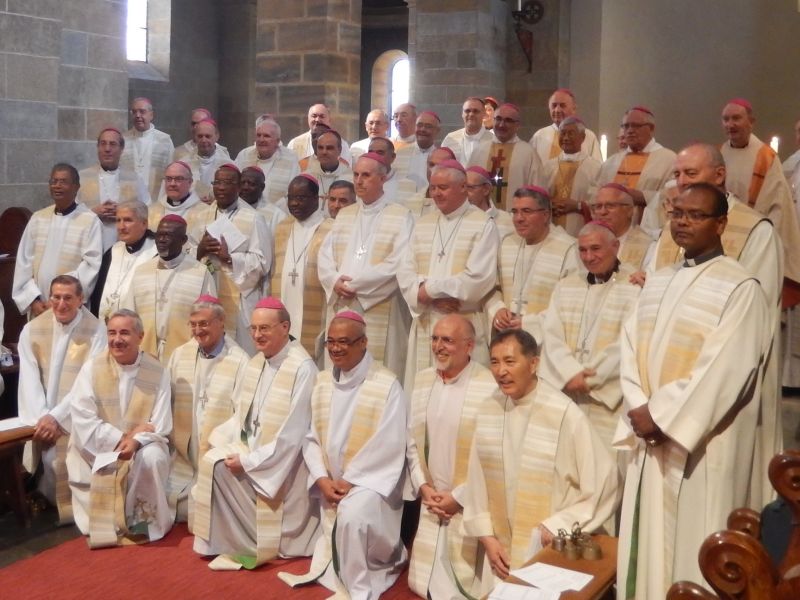 This year 63 prelates from 31countries attended, including Lutheran bishop Christian Krause, once president of the World Lutheran Federation. The goal was the same as always: “to enter more deeply and live the spirituality of communion” and to “explore the ways it could strengthen the Church’s journey” in various socio-cultural circumstances. The setting was the beautiful Palace of Seggau (XII century), ancient seat of the Bishop of Graz and now transformed into a conference centre immersed in lush green surroundings. The meeting opened amidst much joy and fraternity, they write, “with a review the beginnings of the bishops’ participation in the charism of unity, which has led them to aim for a life of communion not only during summer vacation, but also at a distance and throughout the whole year.”
 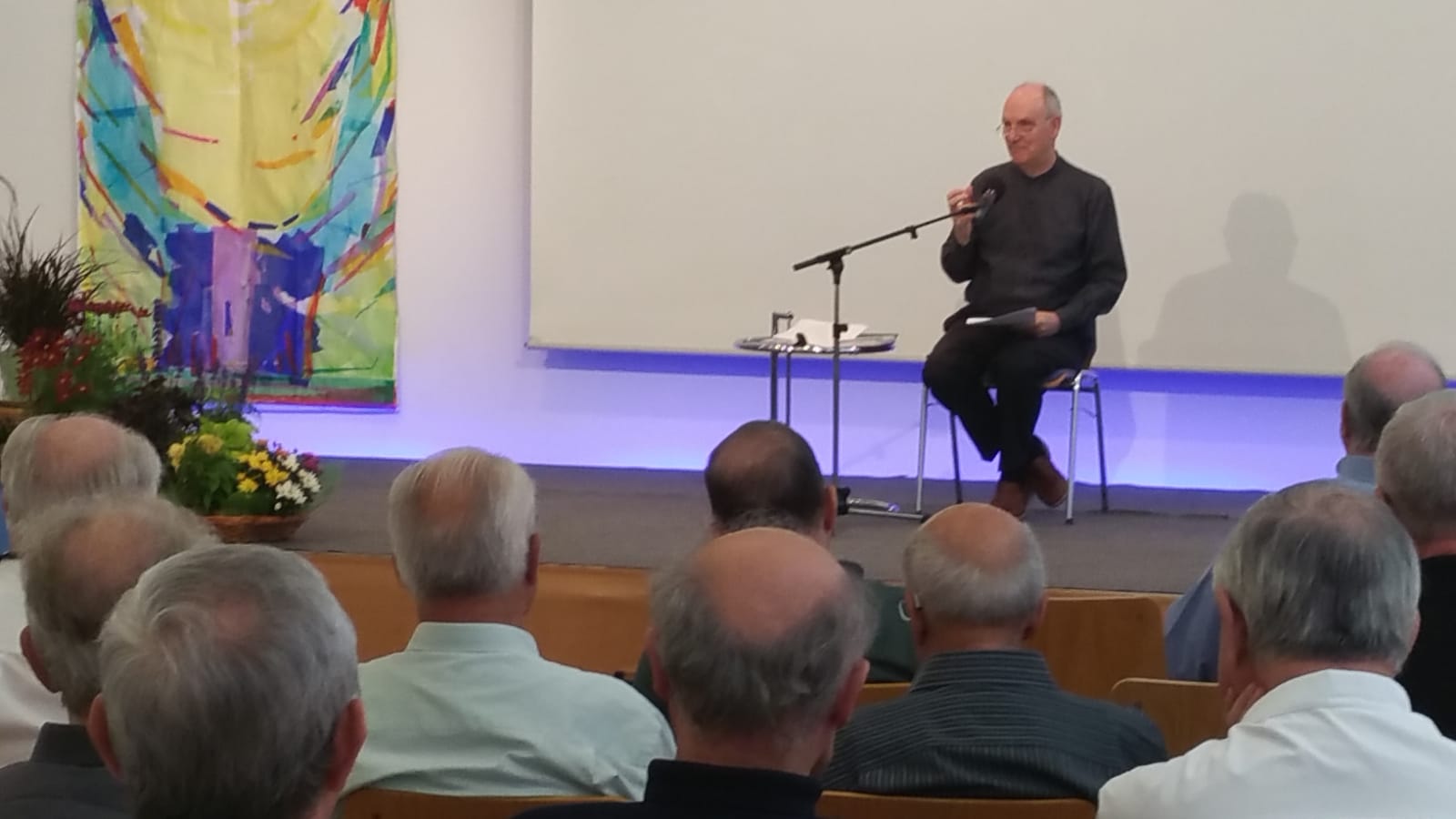 There were several presentations. Fr Fabio Ciardi, OMI, who is head of the Abba School, offered several reflections on Chiara Lubich’s experience of light in 1949. Archbishop Vincenzo Zan, Secretary of the Congregation for Catholic Education, described the Synod on young people that will take place in October. Bishop Brendan Leahy from Ireland reported on the Meeting of Families that will be held in Dublin at the end of August. Focolare president, Maria Voce, anticipated the topic that will be explored by all the Focolare members throughout the next year: “The Holy Spirit, Soul of the Church and of the world.” Then, together with co-president Jesús Morán, she talked about their visit to several Asian countries last January where they met with communities of the Movement. They also described the recent large gathering of young people at the Genfest in Manila, Philippines. They listened again to the Pope’s speech at the Focolare town of Loppiano, Italy, on May 10th, which Moran described as a “kind of guidebook” for the Work of Mary’s journey.” The Governor of the region welcomed the bishops in the Main Hall of the university of the Jesuits and offered them a reception. This is an unprecedented event, he remarked, which places us in the good collaboration between civil institutions and the church “in an ecumenical spirit and openness to all religions.”
9 Aug 2018 | Focolare Worldwide
While tens of thousands of youths from almost 200 dioceses throughout Italy are on their way to Rome for the meeting with Pope Francis on 11-12 August, the two-day programme was presented. About 70,000 young people will meet the Pope on Saturday at the Circo Massimo, for a “face-to-face” dialogue, to be followed by a prayer-wake in the spirit of the synod of October dedicated expressly to the youth. During the night some Churches along the Circo Massimo-St. Peter route will remain open not only for personal and community prayers, and confessions, but also testimonials, performances and theme encounters. On Sunday morning in St. Peter’s Square, Mass will be celebrated, followed by a new meeting with Pope Francis who will consign his missionary mandate to the youths and bless the gifts which the Italian delegation will bring to the World Youth Day in Panama in January 2019.
8 Aug 2018 | Focolare Worldwide
Tommaso Carrieri, co-founder of the association “Not from war”
8 Aug 2018 | Non categorizzato
Instituted by the United Nations in 1994, the Day memorialises the rights of all people to live according to the customs and traditions of their origins, with particular focus on the 370 million members of indigenous people living in 90 countries of the world and representing 15% of the world population while remaining 15% of the world’s poor. The UN document is intended to “incarnate the global consensus on the rights of indigenous peoples, and to establish a framework of minimal norms for their survival, dignity and well-being.” In the last ten years – the UN reports – the Declaration has had several successes at different international level, national and regional levels, but there continues to be a gap between the formal recognition of the indigenous peoples and that actualization of politics on the ground.
7 Aug 2018 | Focolare Worldwide
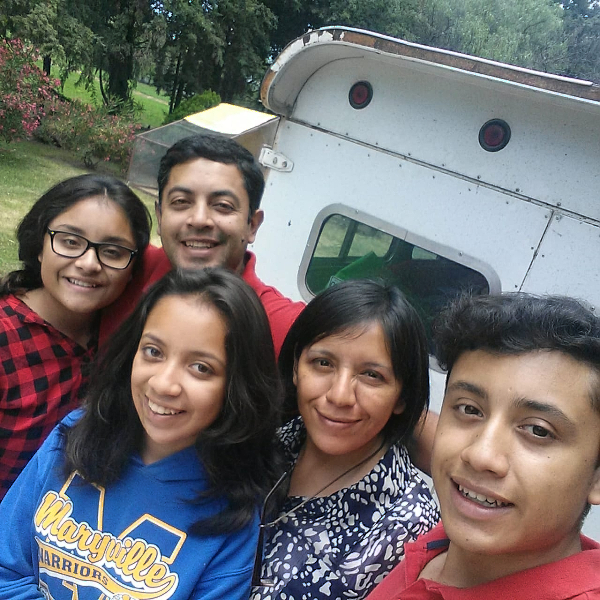 Together with their three children, four years ago Edgar and Maquency moved to “El Diamante”, the Focolare’s little city 50 kilometers from Puebla, and close to 170 kilometers from Mexico City. Although only a couple of dozen inhabitants, each year a few thousand visitors come to this land, which has a culture of sharp contrasts, including modern, well-populated cities and vast surrounding areas. The little city is a true point of a diamond, the beating heart of the Focolare Movement that Chiara Lubich founded in 1990. It is a place that bears witness to how Gospel life can become enculturated if it is based on dialogue and mutual exchange between diverse cultures. “We decided to move to the little city with our three children to contribute in a practical way. We landed here after responding to a real and true call from God to build the city togethe rwith others,” says Edgar. “For us, making ourselves available was a way to pay back all the love that has been given us ever since we heard about the ideal of unity,” Maquency adds. “Recently,” says Edgar, “we were trying to make ends meet, which was difficult without having a steady job. During our first year in the little city, I had different carpentry and plumbing jobs, and then I worked as a house painter to support our family. After that, discussing it with Maquency and the other focolarini, we decided I would go and search for other income in my field, engineering. After some time, I found a job in a city 90 kilometers from the little city. The work was good, and I was happy, but there was always that feeling that I was far away from home, my family and the little city.” Then another opportunity arose in a nearby city. “Talking about ita t home, we decided to accept the job. At first it seemed a good option, but after a few months of working at that business, I realised that things were not quite what they seemed and gave my notice. “I then went back to the little city and dedicated myself to silk-screen printing. It felt like I had gone backwards. “Instead just after that, an unexpected job offer came up as a consultant for a project. I was immediately hired, and I really enjoyed the work and the pay was good. Finally we were able to have financial stability in our family.” When everything seemed to become normal from the financial point of view, Edgar was surprised to be asked to manage the maintenance in the little city, which was quite needed so many years after being built. “My wife and I entered into a new phase of discernment, trying to understand the right choice to make. There were moments of uncertainty and worry, especially when we thought of our children’s future.” “We remembered,” Maquency says, “our early experience that God had us live through. We felt we were being asked yet again, since when God calls, he asks to leave everything and demands an. Exclusive love. He wants us to leave our security in order to put ourselves at the service of others. Yet he also offers us everything, as the Gospel says: ‘No one who has left home or brothers or sisters or mother or father or children or fields for my sake and for the Gospel will fail to receive a hundredfold in the present age.’” “And so we decided that I’d put myself at the service of the little city. When I discussed it with my manager at the business, he exclaimed, ‘If only there were many people like you!’ and he proposed that I work for reduced hours, which matched my needs. I experienced how Providence intervened firsthand and how true the Gospel is.”
6 Aug 2018 | Focolare Worldwide
6 Aug 2018 | Focolare Worldwide
73 years ago, on 6 August 1945, the horror of Hiroshima, and Nagasaki, three days later, came in the form of an immense flash of light which brought immediate death to hundreds of thousands people, almost all civilians, and many more in the following years, due to the radiations. From those two explosions, not only Japan, but the entire humanity was devastated, and consigned to the world the awareness that nothing would ever be the same. “Never again” is not only a moral warning, but also an absolute need, if we want our planet to have a future of peace and create a world in which the sun is the only symbol of life.
5 Aug 2018 | Focolare Worldwide
“These words are precious to me, since they are written by Chiara Lubich: ‘I can imagine that all of you . . . feel the full weight of the violence and terrorism that even spreads across entire nations. Young people not much older than you believe that they can change society by kidnapping, killing and committing every sort of criminal act. Without a doubt they never found more positive ideals to live for and let themselves wander onto very dangerous road. Many people are frightened and unable to live at peace. What can we do? What contribution could we give?’ These words perfectly sum up what I’m going through right now. I’d like to share with you what I’m living and how abandoned I feel in this moment, perhaps a bit as Jesus felt when he was abandoned on the cross. This sense of abandonment is something I felt in all four of the detention centers where I stayed and where I found myself among teenagers who were for the most part younger than me. At first these kids frightened me. They were against me and even wanted to kill me. But I tried to get close to them and realized that what they were missing was understanding, a lack of opportunity and, therefore, a lack of love. I’m not trying to justify them, but they also need love and help, only that they looked for it by drawing attention to themselves in the wrong way. But it was the only way they knew. My parents try to live for a united world and, ever since I was a small, I did too. It’s easier when you belong to a community where everyone tries to live in that way. Whereas, for people who are afraid to let themselves love, it’s harder, especially when they see that this love doesn’t correspond to what they see around them, such as thieves and assassins. Nevertheless, it’s only love that cuts through all the limitations and this is the more precious truth, despite of everything I’m living in here. Now these guys come into my cell and ask me for advice or help, especially when they’re going through ugly moments. Some of them even want to know more about Youth for a United World (Y4UW) which I belong to in spite of my situation. Lots of them ask me how I am, if I need anything; one even calls me brother. What I’m living in prison can turn into an invasion of love that little by little spreads where violence reigns, just like gentle rain that penetrates deeper and deeper into the soil…”.
https://youtu.be/6VGaH7_g-H0
3 Aug 2018 | Non categorizzato
Maria Voce
2 Aug 2018 | Focolare Worldwide

Brenda Drumm
 Repeated every three years, the event, which is promoted by the Holy See’s Secretariat for the Laity, the Family and Life, brings together families from around the world to celebrate, pray and reflect together on the importance of marriage as the foundation of personal life, of society and of the Church. The meeting will continue after the official inauguration on 21 August, with a three-day conference in which there will be diversified programs for young people and adults, with entertainment for children, all culminating in sharing experiences of faith in the presence of the Pope. Most of the events will take place in Dublin while other related events will be held in other parts of Ireland. The numbers are flattering, says Drumm: “People’s response has been overwhelming. All the tickets for the scheduled events have already been booked for a long time: 37,000 for the pastoral congress, 77,000 for the Festival of families, 45,000 for the visit to Our Lady of Knock, 500,000 for the closing Mass. Numbers from which interesting data can be derived: families from 116 countries will arrive in Ireland, for a total of about 15,000 international participants; thousands of families will converge on Dublin from all over the country. Approximately 6,000 young people under the age of 18, and 10,000 volunteers committed to ensure the success of the Meeting. But behind the figures are the people: families from all over the world who will gather to celebrate their joys and to discuss some of the many challenges they are facing faced in a rapidly changing world.” And she continues: “Pope Francis is able to grasp perfectly the reality of family life today, with the difficulties of every day. He understands that as parents we do our best for each other each day, and for our children. He also understands that families are not perfect.” What is the family for Pope Francis? Drumm recalls: “The nearby hospital, the first school for the children, the best home for the elderly.” And if “at times dishes can fly,” the Pope reminds us “how happier our family life would be if we only understood the importance of the words ‘please,’ ‘thank you,’ and ‘excuse me.’ The Pope remains passionately convinced that the family will continue to be ‘good news’ for the world. He believes that in the often complex and disordinate life of the modern family, the grace and the love of Jesus Christ are alive in a galaxy of daily acts of kindness, tenderness, generosity and fidelity often lived out heroically amidst immense human frailty and overwhelming social challenges. In a society that is easily inclinded toward violence, the family continues to hold us to hold our lives together, along with the world itself.”
1 Aug 2018 | Non categorizzato
The littlest one A neighbour, who was in a bit of pain because her son wasn’t profiting much from his schooling, couldn’t find a way to help him with his schoolwork. She left for work every morning at 5:30 and returned in the evening. So, I suggested that she send him over to me and he could study with my son. It wasn’t easy, because I also had to help my older son and take care of the smaller one, who had just turned one. But I was glad to be of help to someone. M. M. (Venezuela) An arms factory Finally I had found a job at factory equipped with a sophisticated security system. I couldn’t believe it and thought our problems were over. After a while I became aware of a secret that had been kept from me: the factory built weapons. They asked me if I had a problem with that, and I nonchalantly answered no. It wasn’t up to me to solve that problem, plus I would have been out on the street again. Talking it over with my wife and some friends, I realized what choice I needed to make. On my way home, unemployed again, I couldn’t stop crying, but there was an unusual joy deep inide my soul. I had put my Christian identity before everything. I would never have imagined that just a short time later I would be offered another very gratifying job and, most importantly, in line with my conscience. D. R. (Italy) A different mood Our son had returned from the kind of vacation we parents just couldn’t approve of. We decided to talk to him after supper, firmly decided to tell him that either he changed his lifestyle, or he’d have to move out of the house. All day, I kept asking myself if that would really be good for him. I also spoke about it with some of my girlfriends and my doubts increased. Perhaps, I thought, we have to be able to wait and put more love into our relationship as Jesus tells us to do. After talking about it with my husband, we had a change of mood, no longer imposing our point of view, but having a more listening mood in order to hear him. We sat together for a long time and, even though he didn’t share our ideas he let us share his struggles. We thanked God for having guided us along. C. W. (Austria) A suspicious character We don’t know anyone in the town we moved to for work. In fact, my colleagues tell me not to trust anyone there, because the people there are not recommendable. My husband, with his outgoing personality, immediately began to chat with several people, especially one man in particular whom he met every day at the magazine stand. My colleagues warned me again, telling me that man, in particular, had serious problems with the law. A few days later our daughter wasn’t feeling well and her condition worsened. I felt at a loss. Then I remembered that my husband had received a local map from the man he had met at the magazine stand. It showed the location of all the local services, including hospitals, doctors and pharmacies. Suddenly, it all became easy, thanks to the map from that suspicious character. It was a powerful lesson for me: Love of neighbour must come before any and all judgements.” L. S. (Italy)
31 Jul 2018 | Non categorizzato
31 Jul 2018 | Non categorizzato
According to tradition, on the night of July 1216, St. Francis asked God for forgiveness of the sins of the penitent pilgrims visiting the “Portiuncula.” On 2 August Pope Honorius III established the “Pardon of Assisi” in the Franciscan churches, an indulgence extended today to all the parish churches worldwide. On 1 August there will be the celebration of the “Opening of the Days of Indulgences” (from 12 noon of 1 August up to midnight of 2 August). It will be followed by the traditional Evening Prayer with a procession with torches. The youths of the 38th Franciscan March coming from all the regions of Italy and some foreign countries, shall cross the threshold of the “Portiuncula” after a journey on foot of more than a week, guided by the theme, “With a new name.” Lastly, the Basilica Square will be the location of five events/shows (Gloriosus Francisuc with Michele Placido, Concert of the Russian Symphonic Orchestra, On a journey with Mary, Pardon Concert of the Vatican Gendarmerie Band, and the ballet, The Two Paths).
31 Jul 2018 | Non categorizzato
 “We live in a world which has become a real village: complex and new, but a village. Humanity today lives as if it were a small group. And if it is so, it could really live, in brotherhood. But how can we make it bloom?” Chiara Lubich See the new website: www.unitedworldproject.org With new contents: Watch, Workshop, Network «UWP, promoted by New Humanity, wishes to contribute to the creation of the united world by mapping, promoting and setting on the network the personal and collective good practices, processes, big or small actions, daily or extraordinary ones that contribute to make the world a place o peace, more fraternal and united” as listed in its objectives. Enter into the United World Project network!
30 Jul 2018 | Focolare Worldwide
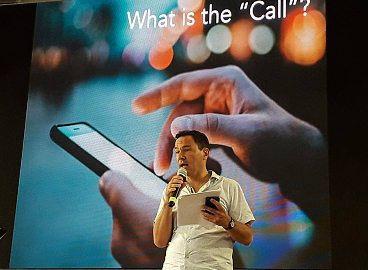
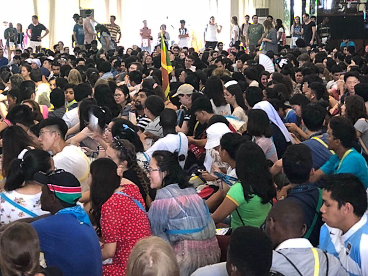 “What shall I do in life?” one of the seven workshops held following the Genfest, focused on the theme of the choices in life, that is, one’s own “Life direction.” As the organizers recounted, “the construction of this workshop by adults and a group of young people from various parts of the world began last February, with meetings via Skype: a really edifying experience assumed by all with commitment, responsibility and creativity.” “Upon arriving in Tagaytay and getting to know each other personally, we realised the great expectations of everyone. Also the numbers expected at the workshop were high: out of the 1,000 enrollees in the seven workshops, 250 had chosen Life Direction, and came from various countries, speaking 16 languages.” The program, guided in a light and gradual manner towards ever deeper issues in which concrete experiences were the main factor, was prepared by the youths of the Asian town themselves, and the thread focused on a “daily motto: a thought to put into practice during the day.
 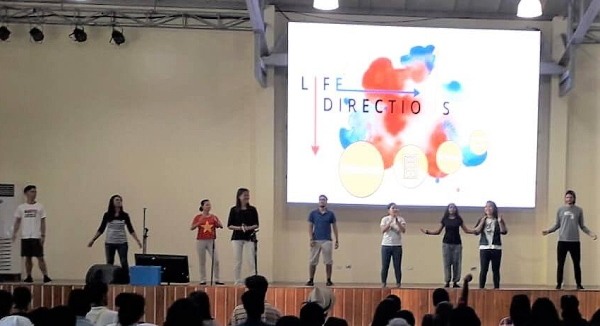 “The first day opened with “Open your heart”: an invitation to open one’s heart to true happiness, trying to remove what could be an impediment in living the present moment intensely. Four experiences were presented in various situations and methods on the theme of happiness discovered thanks to concrete love, or discovered after starting again after a fall, or in painful and difficult situations. The exchange sessions in small groups verified what lay in the depths and how many questions and expectations each one had inside.” “On the second day – they continued – the motto was ’What is the call’ which required our most active participation in presenting the sense of the ’calling’ with a comprehensible language to be able to be accepted, and associated to three key words: understand, listen, choose.” Then followed the story with God in five biblical personages: Samuel, the rich young man, the prodigal son, Mary, and Peter. A married couple, a religious, a woman committed in the professional world, and a focolarina were interviewed on the three key words. “In smaller groups we managed to deepen the sense of each of these callings, interacting with questions and answers.” “The third day’s motto was: ’Aim high.’ We left the word of Chiara Lubich who in 2002 recounted her calling to the youths in Barcelona. The questions, which were written, slowly filled the question box, and were the afternoon’s programme, with other interviews of our guests: each underlined the beauty of their own vocation in the perspective of the sole calling to love. The hour and a half passed swiftly!” “In these four days – the adults wrote – we saw youths who were thirsting for a relationship with God, in a profound quest, simplicity and serenity. We felt that something new had come about: an experience of light that had opened a new path of dialogue with the youths on the calling to a radical vocation.” Some of those present said: “It was exactly what I needed at this point of my life. Living the present moment, opening my doors, and taking radical steps beyond ourselves, are what I am bringing home with me.” “The youths who spoke about their choice to follow God in a total way gave me courage to make choices only out of love.” “For me it was important to understand how to answer the call: understand (that God loves me), listen (to the voice within) and decide (to follow Jesus). I am so happy about this experience. Thanks!”
29 Jul 2018 | Non categorizzato
More than 50 countries have signed up to the International Day of Friendship, which the United Nations established in 2011 and is celebrated each year on July 30. (Some countries, such as India, Nepal and Bangladesh, celebrate it in the days just following.) The aim of the day is to encourage governments, associations and groups to promote every kind of friendship, solidarity, trust, mutual understanding and forgiveness. This is in line with local cultures and customs, with the conviction that these feelings can effectively contribute to peace between peoples and nations. The UN especially encourages young people, as future leaders, to undertake community activities that include different cultures, to promote international understanding and respect for diversity. Judging by the thousands of young people who enthusiastically took to the message of friendship and unity “Beyond all borders,” at the recent Genfest in Manila and many other countries, the encouragement has not fallen on deaf ears.
29 Jul 2018 | Focolare Worldwide
28 Jul 2018 | Non categorizzato, Word of
The prophet Jeremiah was sent by God to the people of Israel, who were experiencing the pain of exile in Babylon. They had lost everything that represented their identity and chosenness: their land, the temple and the law… However, the prophet’s words pierce through this sense of pain and loss. It is true that Israel had been unfaithful to the covenant of love with God and this had led to destruction. But then came the proclamation of a new promise of freedom, salvation, and a renewed covenant. God was preparing this out of his eternal and unfailing love for his people. “I have loved you with an everlasting love; therefore I have continued my faithfulness to you.” “The eternal and unfailing nature of God’s faithfulness is a quality of His love. He is the Father of every human being, a Father who is the first to love; and his commitment is forever. His faithfulness touches each one of us and allows us to entrust to Him every worry that might block us. This eternal and patient love also helps us grow and improve our relationship with Him and with others. We are well aware that our commitment to love God and our neighbours is not yet constant, although it is sincere. But His faithfulness to us is freely given, anticipating our needs, regardless of the ‘service’ we give. With this joyful assurance, we can go beyond our limited view of things and start out on the journey again each day, becoming witnesses to this “motherly” love. “I have loved you with an everlasting love; therefore I have continued my faithfulness to you.” God’s loving way of looking at humanity also reveals a wonderful plan to make all people become one family, which reaches its fulfilment in Jesus. In fact, he bore witness to his trust in God’s love through his word, and above all, with the example of his life. He made it possible for us to imitate the Father’s love for all (Mt 5:43 ff.). He showed us that the vocation of every man and woman is to contribute personally to building relationships of acceptance and dialogue. How can we live the Word of life for this month? Chiara Lubich invites us to have a mother’s heart: « […] A mother always welcomes, always helps, always hopes, and covers everything. […] In fact, the love of a mother is very similar to the love of Christ which St Paul spoke of. If we have a mother’s heart, or, more precisely, if we decide to have Mary’s heart, the heart of the Mother par excellence, we will always be ready to love others in all circumstances and to keep the Risen Lord alive in us. […] If we have the heart of this Mother, we will love everyone and not only the members of our own church, but also other people’s churches. Not only Christians, but also Muslims, Buddhists, Hindus, and so on. We will love all people of good will and every person who lives on this earth […] » . “I have loved you with an everlasting love; therefore I have continued my faithfulness to you.” A young wife, who started living the Gospel in her family said: “I experienced a joy I never had before and wanted to share this love outside the four walls of our house. For example, I remember running to the hospital to visit the wife of a colleague who had attempted suicide. For quite a time, I had known of their difficulties, but being absorbed in my own problems, I had not bothered to help her. But then I felt her suffering was my own and I could not rest until the situation that had driven her to that point was resolved. This experience marked the beginning of a change in my mentality. I understood that, if I love, I can be a reflection of God’s love for everyone I meet, even if only a very small one “. What if we too, sustained by God’s faithful love, freely have this inner attitude in the presence of everyone we meet during the day? Letizia Magri
27 Jul 2018 | Non categorizzato
“The woman of Nazareth, as a homemaker, offers an enormous challenge for us, urging us to set aside a spirituality based on a fascination for the extraordinary in order to find mysticism in our daily routines. From theoretical fantasies to a tangible reality in the simplicity of the everyday… that is where God walks. Ermes Ronchi, Le domande nude del Vangelo (The bare questions of the Gospel), p. 176. “We truly need a home. A home is extremely important… It needs to be kept as most holy Mary kept hers, which hosted no less than Jesus, so she needed to do something in harmony with he who was the Word of God. “It was the beauty of God, it was brilliant, it was glorious, for glory means God’s brilliance. I don’t know if you can imagine, as a way of saying, God as a sun that is setting. Its rays that shine forth are the Word. The Word of God that became flesh is Jesus. So he is truly the glory, the height of beauty, splendor. “And so Mary… in her home… she knew how to keep it well, in a way that hosted Jesus well… Our calling, if it is a Marian calling, is making a home. You can’t understand Mary if you don’t understand a mother at home, beyond being the seat of wisdom, someone who knew how to keep a home.” Chiara Lubich on May 30, 1996, at the inauguration of the Gen house in Loppiano, Italy “A mother is more about intuitions of the heart than speculations of the intellect, more poetry than philosophy. She is quite magnificent and grounded, close to the human heart. “Thus it is so with Mary, mother of mothers, who is the sum of all affection, goodness and mercy, to which all the world’s mothers cannot compare. Mary is peaceful like nature, pure, serene, clear, moderate, beautiful… She is gifted, spirited, tidy, steadfast, rich with hope. “She is too close to us and unpretentious to be contemplated… She brings the divine to earth, like a heavenly plane that gently slopes from a dizzying height of the heavens down to the infinite smallness of creatures.” Chiara Lubich, Disegni di luce (Designs of light), p. 84–85.
26 Jul 2018 | Focolare Worldwide
“We had a few special days here at Loppiano,” the organizers write, “special days in the first “school” for pastoral care workers. There were 75 of us from different regions of Italy, as well as some groups from Latin America and Rwanda.” The title chosen for the workshop was Local Church: communion and mission – pastoral care in light of “The Joy of the Gospel.” The workshop took place in the Movement’s international town of Loppiano and was promoted by the Evangelii Gaudium (CEG) Center. It was a formation course as well as a research and study project offered by Sophia University Institute. “We were pleasantly surprised by the effect the proposal had on the participants: both in the deep and mature sharing of ecclesial experiences and in how the spirituality of unity responded to their needs, as well for the spiritual presence of “Jesus the Teacher” which seemed to illumine the pastoral care experience.” The presentations were high quality, prepared in close collaboration and in harmony with one another. The interactive afternoon workshops provided us with methods for implementing the content that was presented in the mornings.” The goal of the workshop was to propose theoretical and practical models to people who are working to make the spirituality of the Focolare “visible and experienced” in the Italian Church, since it is a gift from the Holy Spirit that was given to Chiara Lubich for the whole Church of today.” The course opened with an enriching introduction to the Trinitarian method used at the university in Loppiano, by Msgr Piero Coda, Director of the Institute; and a talk by Cardinal Giuseppe Petrocchi, president of the CEG, titled: Protagonists in the life of diocese and parishes. One of the attendees remarked: “How beautiful the analysis of the new cardinal. Every concept raised smiles and emotions. . . I believe I absorbed a certain human mentality, especially regarding the use of words when proclaiming [the Gospel]. With the excuse of respecting the other’s freedom, I hide and deprive the other of the great gift I’ve been given. The cardinal spoke with force and, in his analysis, you could feel his zeal for the Church and humanity, and the secret for contributing to their renewal.” Other important presentations were given by Archbishop Vincenzo Zani, Secretary of the Congregation for Christian Education, and by Dr Vincenzo Buonomo, rector of the Lateran University. One young man remarked: “Archbishop Zani’s presentation illuminated me a lot. You have to have a program: The Word, placing oneself in the school of ‘Jesus the Teacher,’ living new relationships, expressing the communitarian dimension of the Church, the dimension of dialogue which generates a universal brotherhood.” Other comments; “This school was interesting for rediscovering the value of the incarnated Word in renewing the human structures of the Church.” “Our missionary life passes through a living charity and, therefore, seeing it, others wish to be a part of it.” “Theoretical presentations were both beautiful and exhaustive. Today, the third day, I went through a little crisis, following an examination of conscience because of what I always propose to do and never manage to do. So it was a constructive crisis.” “I really feel that we all need this training, so that our actions will be supported by this knowledge.” The workshop will continue with a second part that will take place in early October at the individual parishes. Gustavo Clariá
26 Jul 2018 | Non categorizzato
“Fifty years after being published, Paul VI’s encyclical Humanae vitae appears entirely different to modern eyes. In 1968 it was a brave document – and as a result controversial– that went against the climate of the time. This was the era of the sexual revolution, which needed certainty of contraception and the possibility of abortion in order to happen. It was also a time when economists spoke of a ‘human bomb’ – the danger of overpopulation that threatened rich countries, which could have decreased their prosperity.” So writes Lucetta Scaraffia in Avvenire, although she concludes that today the world has changed and that the encyclical should be read again with a different perspective: as a “prophetic event.” It was published on July 25, 1968, in the sixth year of Paul VI’s pontificate, and caused a number of conflicting responses.
25 Jul 2018 | Focolare Worldwide
Dear God, I remember those moments when I was younger, when I used to send you letters. Those letters were bombarded with, questions that I wanted answers immediately. I was 12 years old when I started seeing the world in a different way. I was born in a beautiful family, just like how I saw in the movies. I had a caring mom who wakes up earlier to prepare our breakfast. I had a loving dad. I had two lovely younger sisters that were always happy with the little joys of life. And just like any story in the movies, there was a downfall. One day, I just woke up and my mom wasn’t there anymore. I remember clearly, normally Sunday is Pancake day, my dad would prepare pancakes and my mom would cook bacon and eggs. But that day I just saw my dad drinking coffee by himself. No pancakes. No bacon and eggs. No mom. He explained that she left for good. My sisters were 8 and 6 years old. I pulled them both closer to me and hugged them and whispered to the universe that I will do my very best to take care of them. We were the talk of the town. The parents, teachers and kids were gossiping. There were so many moments I wanted to fight back to protect my sisters or simply just cry and complain to the world, to you. Why? Why us. I am too young to face this. Where are you? And my dad, he was the best person in this world. He did not deserve this. We moved closer to our grandparents. One day at school, I was about to eat with my friends, my sisters were rushing to me and told me that our mom was there. And in my mind, I was thinking, it’s impossible. I saw my mom coming towards us. She had a huge plastic bag filled with gifts for me and my sisters. I did not know what to feel. I ignored that she was there. Why now? Why is she back? After leaving your family? You can just come back? And you expect they will receive you and forgive you with wide open arms? And now she comes back with gifts thinking she can just replace it with all the moments she was not present? NO So I wrote to you, God, let your angels send me the message. I don’t know how, I don’t know when, but I felt in my heart you were listening to me. I remember writing to Mary as well. I told her I needed a mother. And you did answer to me. That day that I spoke with my grandmother, she helped me understand that I have to go beyond the pain my mom caused us; there is Jesus inside her. And despite all the bad things we do in life, his love for us will never change, if we fall, if we make mistakes, he will always love us immensely. It was not easy, I had to empty my heart and let her in, little by little, we began to rebuild a relationship and now my mom is a part of my life again. The love I have for my family is so huge that there will always be space for mistakes and acceptance. I may not have the family like in the movies, but I have a story that is real, and it’s better, because you God, you directed it. You wrote it. Life doesn’t stop there, I still have so many struggles to overcome, there are still so many challenges, but one thing is for sure, I trust in your plans for me. I might not understand right away, but I have this faith in my heart that you will be there for me no matter what. And for that, thank you.
25 Jul 2018 | Focolare Worldwide
A meeting of bishop members of the Focolare Movement is underway in Seggau, Austria, from July 24th until August 1st. The 64 bishops, including cardinals from the Curia and apostolic nunzios from 31 countries and four continents, will spend several days together in Sytria for an “experience of the Universal Church among bishops,” the Austrian diocese reported. The gathering will be hosted by Bishop Wilhelm Krautwaschl. “The tradition of these bishops meetings was begun decades ago when the foundress of the Focolare Movement, Chiara Lubich (1920-2008), invited several bishops attached to the Movement, to Switzerland during the summer months. It was the deceased bishop of Aquisgrana, Bishop Klaus Hemmerle, to launch and moderate these meetings that were “deliberately private” and held in different places every year. The goal of these gatherings is to “delve more deeply into the charism of unity, to encourage sharing among the bishops on a global level and to spend several days in fraternal communion.” On Saturday, July 28, Bishop Krautwaschl will concelebrate the Mass with his brother bishops at the Basilica of Seckau, “to which all are invited.” In Austria, the Focolare Movement has 1,300 members and more than 20,000 sympathizers. Source: AgenSir
24 Jul 2018 | Non categorizzato
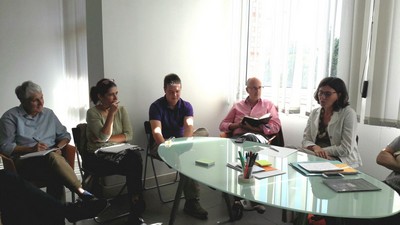
Well aware of the environmental and social crises that our planet faces, hundreds of people around the world have been steadily moving to find creative solutions to these grave problems, putting them in motion in their everyday lives through actions large and small. However, these actions often begin, grow and die totally in isolation. “Together we can do much more” is one of the mottos proposed by Prophetic Economy, a project that aims to create collaborative networks among all those who, in their own context, work to promote human development, independent of age, nationality or beliefs. The main event for Prophetic Economy will land at Castel Gandolfo in Rome from November 2–4. Experts from many fields will be involved, such as Jeffrey Sachs, North American economist and one of the world’s top minds when it comes to economic and sustainability questions; or Luigino Bruni, Italian economist and international coordinator of the Economy of Communion. “The experience is open to all people, organizations and businesses,” says Florencia Locascio, Prophetic Economy’s general coordinator. “All those who propose sustainable and creative solutions to the problem of poverty, inequality and the social and environmental crises that we are living through. We want to identify the changemakers, the innovators, and give them more visibility.” During the event, in addition to workshops, collective activities, networking and panels with renowned international experts, the first-ever Prophetic Practices Award 2018 will be awarded. The competition awards, spotlights and connects existing experiences of a prophetic economy, the many best practices that are already up and running that contribute to the common good. “Teens and the new generations have something important to say, and they already contribute enthusiastically, offering practical examples that are exciting,” explains Paolo Matterazzo, who directs communications for the Community of Nomadelfia. The first three to win the competition will receive a monetary prize and be invited to present their projects during the November event. The top ten will also have the chance to present their best practices. Deadline for the competition is August 1. For more information, see propheticeconomy.org. Source: United World Project
24 Jul 2018 | Non categorizzato
23 Jul 2018 | Focolare Worldwide
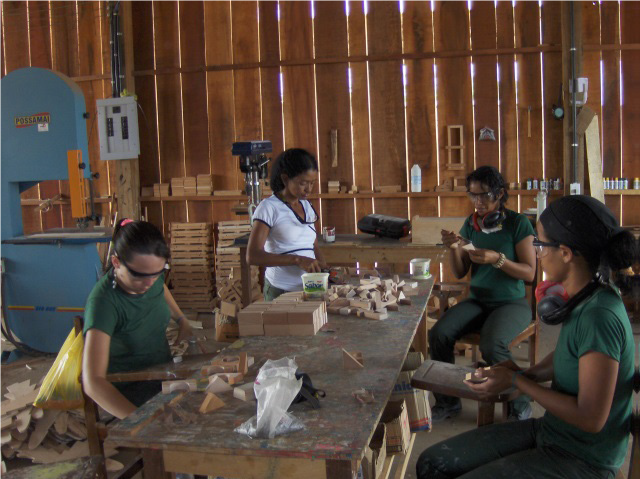
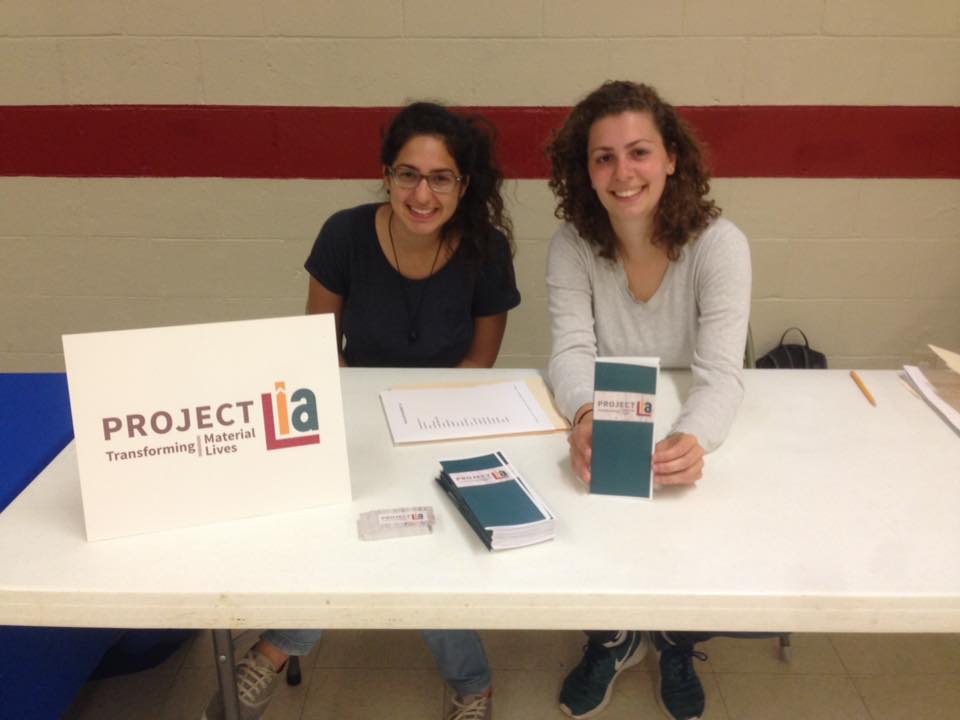 Imagine discovering that a new form can be made from waste material, that is potentially there already, whereby waste is turned into “something” nice, useful and valuable that previously did not exist. Then, think about involving vulnerable individuals into this virtuous process, like women who served time in jail and now are having difficulties reintegrating back into society, finding a job and economic self-sufficiency. This is Project Lia’s mission, a non-profit association and social enterprise established in Indianapolis, Indiana (USA). «Here, these women who are trying to reintegrate back into society, learn how to create home furnishings and furniture, in an educating workplace, which is a space for mutual understanding and respect, where waste material is re-purposed, as well as people’s lives, through relations based on reciprocity and trust,” Project Lia founder and executive director Elizabeth explains. “We also provide learning opportunities about finance, communication, corporate ethics, health and wellbeing, in addition to promoting participation in community and social life.” According to statistics published in their website, taken from Bureau of Justice data, over the last three and a half decades, the female prison population in the US has grown by over 700%. In 1980, there were 12,144 women in State or federal prisons, but their number had risen to more than 100,000 in 2015. If we also add women held in local jails, out on parole or under house arrest, they are more than one million. “When these women get out of prison,” Elizabeth Wallin adds “they need to find a steady job and a home, while they are trying to rebuild their family relations. If we add the stigma that is associated to prison and racial discrimination, then it is very difficult for them to reintegrate into society and avoid recidivism.” For this reason, Project Lia elected to focus on women. By helping women, families and communities are strengthened indirectly: important studies show that these empowered women are “community-minded” and reinvest 90% of their income into their own families. At this point, we wonder what has inspired this project. “During a trip I made to Argentina,” Elizabeth tells us. “I participated in organizing a youth festival called No Te Detengas (“Don’t hold back”). This festival gathered more than 1,000 young people and was about the cages we lock ourselves in, out of fear, social pressure or because of situations of comfort or bias. When I got back to the States, I realized that, there, women who got out of prison were still held back by a bigger and system-wide cage. To me, Project Lia is an answer to the fear, pressure, comfort and bias of a criminal justice system, and a society, which keeps “holding ex-convicts back”, even after they served their sentence, without offering any possibility for real social inclusion.” To sum up, it is an inclusive project that aims to build bridges of true social solidarity. There is one last thing we are curious about: why did you pick Lia for a name? Elizabeth explains to me that: “Lia is the name of a woman who dedicated her entire life to building bridges between people of different race, culture, religion and social background. Her full name was Lia Brunet, she was about thirty years old and was one of Chiara Lubich’s first followers, founder of the Focolare Movement.” In 1961, Lia Brunet traveled to Argentina, where she founded the Focolare little town in O’Higgins, a community in the heart of the Pampas, where Elizabeth too was able to experience the ideal of a united world. Source: United World Project
22 Jul 2018 | Non categorizzato
Eating alone One of my colleagues never joined us for lunch in the staff canteen. No-one really liked him because he was always so bad tempered. One lunchtime I made an effort to approach him, and as we talked, he confided how much he was suffering over one of his sons who had become a drug addict. I listened with an open heart. Then the two of us went into the canteen together. The other staff noticed with surprise how well we were getting on, and after that they began treating him with respect. O.F. – Slovak Republic An honest gift I offered to help a colleague in my office organize the collection for a staff member who was retiring. When the time came to buy the gift, my colleague advised me that we only had to spend half the money collected, dividing the rest between the two of us! I protested that this was not right, but she insisted this was how it was always done. I looked at her in silence, conveying my disapproval. A short while later she came over to apologize to me, and from that day we become friends. F.M. – Italy A rose and a promise For a while now I have committed myself to opening up our parish hall so that our young people have somewhere to go after school. It’s not easy, and there is quite a lot of challenging behaviour. Once, while I was trying to break up a fight, I received a punch aimed at one of them. Shocked at what they’d done, they both fled. But a short while later, the one who had inadvertently hit me came back to give me a single rose and a promise to behave better in future. F.B. – Switzerland The intern During my internship in a hospital, one of the patients with diabetes had already lost a toe and part of his foot, and due to complications was about to have his whole leg amputated. I took his situation to heart, and went to talk to him about the impending operation. He was desperate, and I tried to console him. «Look – I said – I have a present for you, but it’s not a material gift». We read the Word of Life together. The next day, as they were taking him to the operating theatre, he saw me and said: «I have faith. Let’s believe together!». C. – Argentina My sister My sister and I were always arguing. Again and again, I wanted to make things better with her, but I lacked the courage and so never made the first move. The morning after a particularly hurtful argument, I met her in the kitchen and muttered a quick “Ciao”, but so quietly that she didn’t hear it. I knew I should repeat it with more conviction, but I worried it was below my dignity. Then I almost amazed myself as I turned to her and said a loud and heartfelt “Ciao!”. She was amazed too and we both smiled. D.B. – Italy
20 Jul 2018 | Non categorizzato
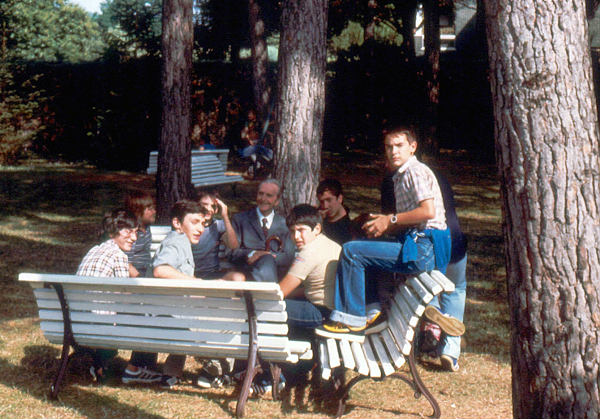
″You need to be young to follow Jesus, or else become young. He even asks that one becomes a child – every day and in every moment, freeing oneself from the sickness of spiritual senility. Because, if the spirit ages, it is held down and it can never soar. Therefore, one always needs to be reborn, begin again, become new: Jesus. It is often said that the youth of today are skeptical, perhaps cynical… if that’s true, it might be a case of posture or style beneath which lies the sense of amazement in front of a generation that was born in the midst of an inhumane waste of energy in the production of death. It is materialism that scares, deludes and arrests today’s youth who, by nature, react to a standard of living made up only of economic calculations and sensorial entertainment, of a singular battle for the stomach … This is the divine lesson behind this human crisis on which we pour so much makeup, tears and Coca-Cola: you can’t live without an absolute. Jesus walks by and the young people see him if the sight of him is not impeded by surgance of proud human beings, that is, people who feel that they are more than others because of their money or political power… Young people can immediately pick out the pure and divine countenance of Jesus, they leave father and mother, fiance and wealth, flattery and comfort – first on the path of the aposotolate and then Calvary. They want Christ and Christ Crucified. Christ in his entirety, all in all: only ideal. And they want his spirit, which is love: this divine blood that conquers death; which is intelligence and wisdom and bond of unity.″ Igino Giordani
19 Jul 2018 | Focolare Worldwide
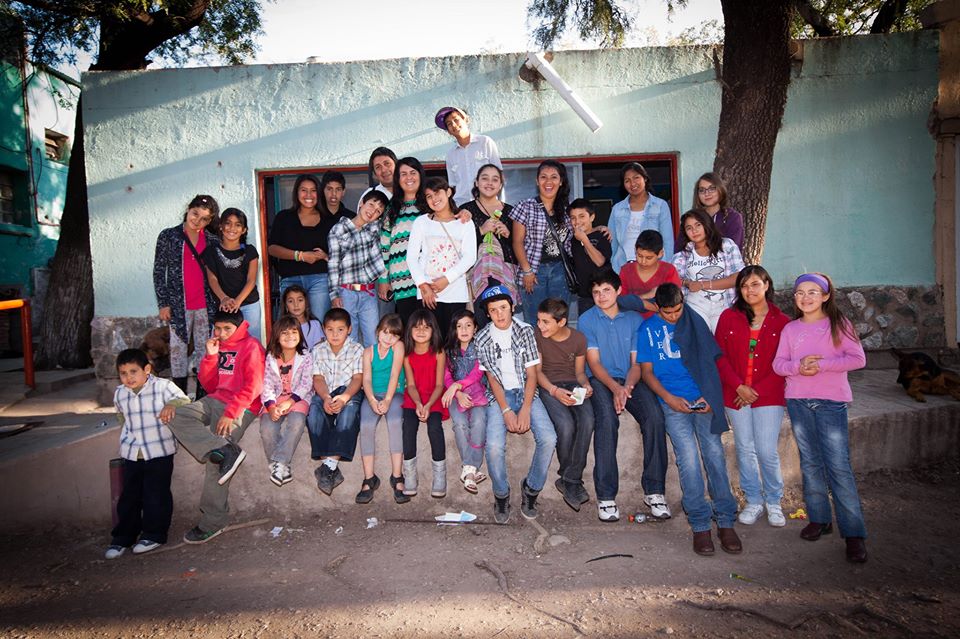 In the foothills of two small mountains in the heart of Argentina, La Falda is a small provincial town near Cordoba, located on a gentle slope that is part of a well-known tourist circuit in the Punilla Valley. Up until four years ago, this is where the Bongiovanni family – Esteban, Victoria and their two sons – used to live. Then unexpectedly things changed, and they moved to San Marcos Sierras, just to the north. It was their generous way to respond to a request to live at Sierra Dorada Home, a refuge for minors who already carry too many serious problems on their young backs. Many of them have stories of being mistreated, violence, being abandoned or malnourishment. At the moment the refuge hosts 28 children. “Before we arrived, we feared the worst about children’s homes. Like the ones you see in the movies, where the kids and infants are beaten or mistreated. Instead, we found it quite different, more like a large family. We make an effort to improve their situations and remove all the violence they have inside and the conditions they’ve lived through, so that they understand that the normal thing at their age is to live in peace, play and study.” Founded close to 20 years ago by Julio and Patricia Lanciar, and supported by a nonprofit foundation that operates with a true Christian spirit in the province of Cordoba, the goal of the home is to improve the children’s living conditions and help them to reintegrate into their families or foster care. The Lanciars had nothing when they started, other than the hope to be able to improve many children’s situations. Little by little, thanks to the support of many, things grew. Today the Sierra Dorada Foundation manages four “home labs.” There is San Marcos Sierras (where Victoria and Esteban are), Embalse de Río Tercero, Rumipal and Salsipuedes, and a number of programs for host families, scholarships for volunteers, etc. Seated at table in the dining hall, Victoria and Esteban explain that “many people show great solidarity, especially when they build a rapport with the children. There are young people from overseas who undertake internships in social work, as well as Argentinian university students. “Our work begins when we take people in. From the moment they arrive, we try to include them, to give them love, just as a mother or father would. With the help of a staff of psychologists, we try to give their lives a certain order. Starting with using a toothbrush, to bathing every day, putting on clean clothes and teaching them to take responsibility for their school homework.” Smiling, Victoria chooses one of the dozens of stories she could tell. “A few weeks ago, we all went to a hotel where we had been invited for the weekend. I hadn’t made my bed, thinking that we were in a hotel. But then I realized that the children had left their rooms completely in order, and even the bathrooms were impeccable. So I ran back to my room to make my bed, because I realized that I was the only one who hadn’t. “We try to live well our calling to serve. Yet it is certainly not always necessary for everyone to leave everything, their city, their home and go and live in a children’s refuge. Anyone can do this anywhere with whoever you find next to you. It can begin with the smallest things, such as giving an elderly person your seat on a bus, or driving without road rage. It’s the small things that start and spread good deeds.” Esteban adds: “We understood that God would never abandon us if we do things well, without expecting anything in return, with humility and trust. “And the truth is that by doing so… it works.” Source: United World Project
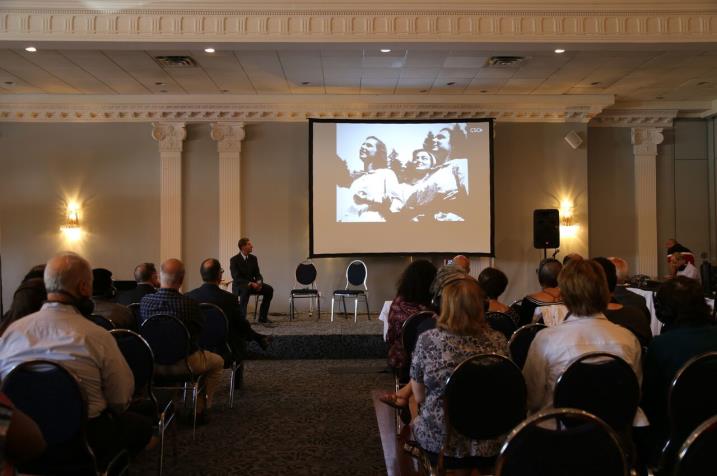
18 Jul 2018 | Focolare Worldwide
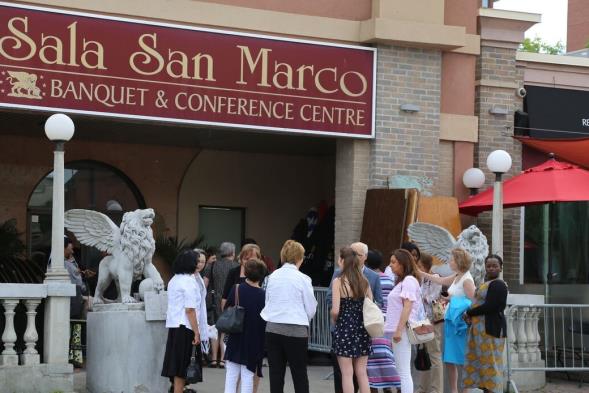 The organising committee of the “Italian Week” regarded Chiara Lubich as one of the most admired and respected women in Italy and, therefore, someone who should be remembered. The ten day Italian “carnival” that took place in the Canadian capital of Ottawa between June 6 – 25 focused on a number of famous people from Italy such as Giacomo Puccini, Sophia Loren, Vittoria de Sica and Alda Merini: it was a great surprise that the committee decided to include Chiara Lubich such names. When the Focolare community hear about this proposal, they asked themselves how best to present the charism of unity in a multicultural and multifaith society that is constantly in search of ways to peacefully respect diversity. The community also reflected upon the challenge of relating to the aboriginal people – a challenge that seems to be on going, marked by contradiction and with social consequences.
 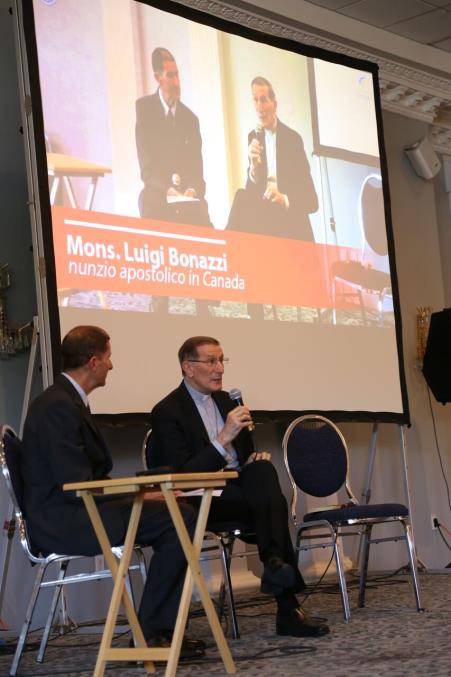 Fernando and Lucie explain, “While we were preparing, we heard that a group of Muslims from Montreal had recently participated in a Congress in Castelgandolfo, organised by the movement. These Muslims are students of Doctor Mohammad Shomali. They were very happy to work together with us and offered to share their experiences.” They continue, “On June 16, the San Marco hall in the centre of Little Italy, Ottawa, began to fill with people of many different origins – from Africa, Asia, the Middle East and, obviously, from Italy and Canada. The Apostolic Nuncio, Luigi Bonazzi, was present as was Minister Fabrizio Nava, representing the Italian ambassador.” A range of experiences illustrated the relevance of the Chiara Lubich’s charism to today’s society. The first to speak was Jacques, a focolarino in Toronto and a “pioneer” in the spreading of unity in Canada. Then there was Anne, the manager of a tour company intriguingly called “Spiritours” who spoke about the economy of communion as a means of putting the gospel into practice at work. She was followed by Maria, a Brazilian focolarina living in Montreal, who recounted an experience of meeting with aboriginal people from Wati in the Gran Nord. Last year, responding to a request by the local Church, she and four other people spent a month with these people. Then there was Edwige who comes from Togo but is now living in Rimouski, in the province of Quebec. She was one of the first students at the Sophia University Institute in Loppiano and now, having completed her course, puts “the person at the centre” of the work she is doing in another university. She recently received a commendation that is normally given only to professors. Then Fatima and Moustafa shared their experience of dialogue between Muslims and Christians and of meeting Chiara’s charism. Fatima said, “One of the most important things I have learned is that unity is a gift from God and that harmony in diversity is an expression of unity.” Lastly, Monsignor Luigi Bonazzi, the nuncio in Canada, spoke. He confided that he had met the foundress of the Focolare movement on several occasions and that, many years ago, in 1975, he had made a pact with her to always “remain up” no matter what difficulties he faced. He said that this pact had sustained him during many years of intense diplomatic activity. The day concluded with the proposal first made by Chiara Lubich in 2000 in Washington, namely, to live the “art of loving.” Through this event – widely publicised by social media – the seed of the spirituality of unity has been scattered in a distant land and promises to bear new fruits.
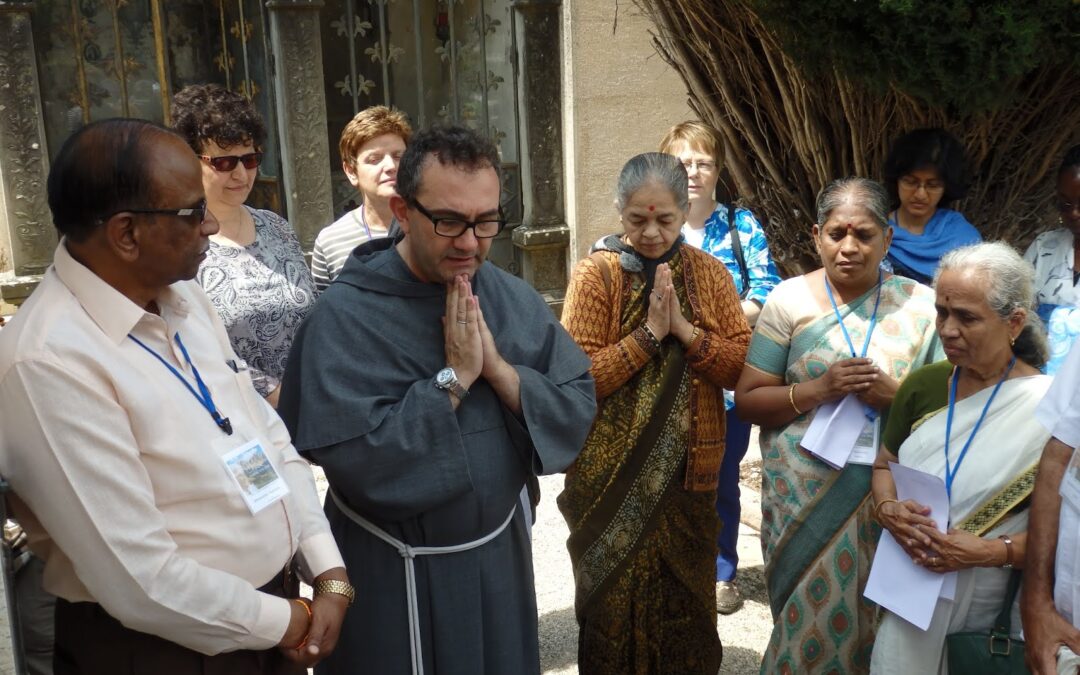
17 Jul 2018 | Non categorizzato
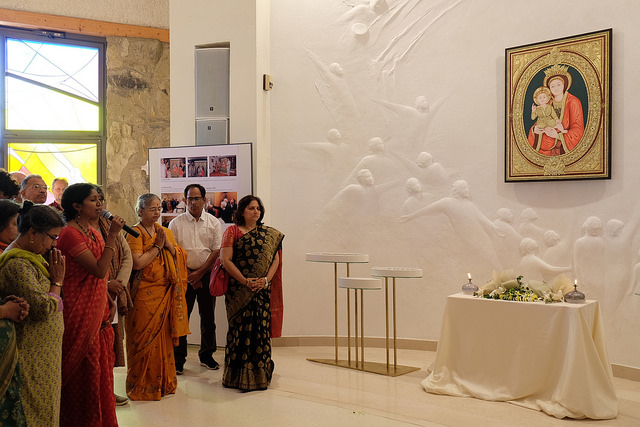 “Our Hindu-Christian delegation had two motives for visiting Loppiano. They hoped to explore and deepen their understanding of the very original experience that the Sophia Institute offers. They also wanted to commemorate the fifteenth anniversary of their presentation to the Movement of a painting of the Virgin Mary. The painting is the work of a Hindu artist and is now adorning one of the walls of the Theotokos Church in the little town. The dialogue with the staff and students at Sophia was deep and enriching. Indian academics have a considerable interest in inter disciplinary formation in dialogue. The exchange and thoughtful comparisons made by the participants increased understanding among everyone present and it became obvious that Sophia Institute is similar to some of the academic centres that inspired Mahatma Gandhi. We hope that we will soon be able to introduce courses on this great apostle of dialogue at the university in Loppiano.
 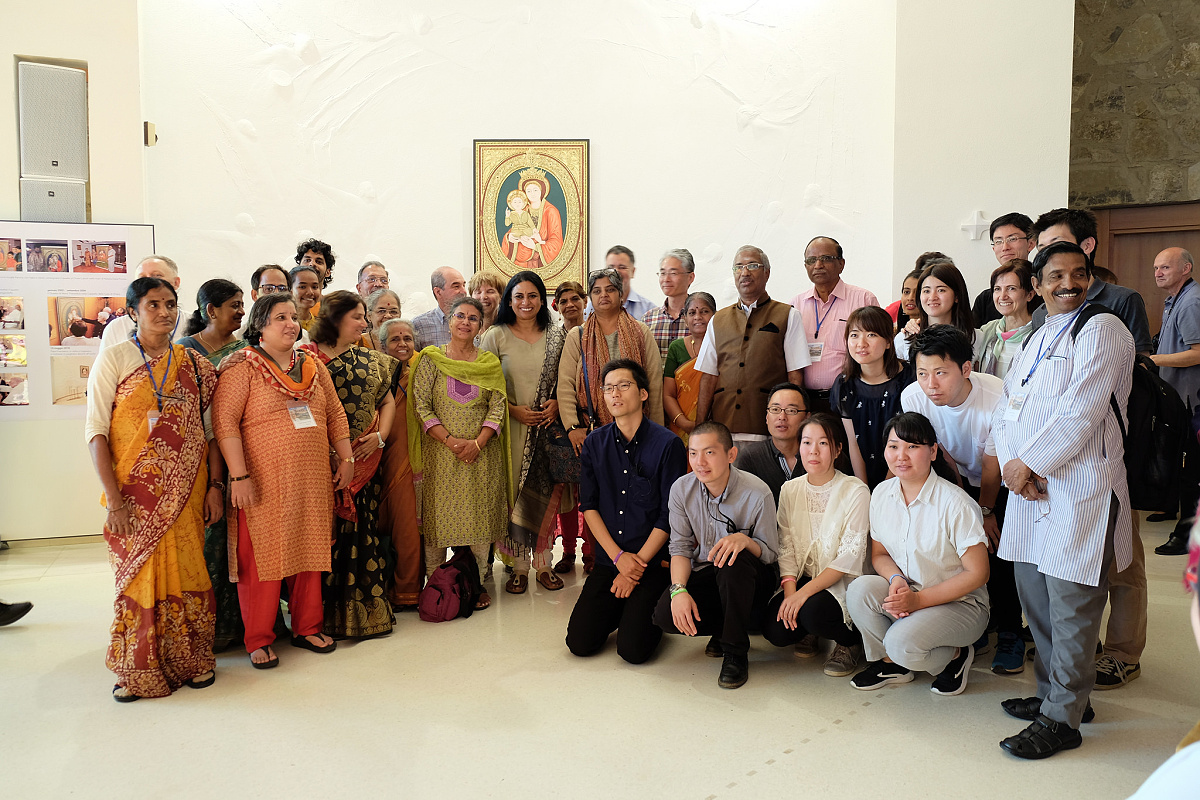 The seminar on Theology and the Practice of Dialogue was very interesting. There were not only the members of the delegation present but also many students and adults from the little town. Even though the subject is very topical, it was completely new to some people. In the evening, the Hindus came in procession to the Theotokos bringing flowers and garlands for the image of Mary. Gen Verde sang in the background. The reverence and solemnity created a deeply spiritual atmosphere. They spontaneously prayed in Sanskrit, Tamil and English and then there was the sacred moment of silence. Silence is an essential part of being oriental: in contrast, how uncomfortable it is for people from the west! It is as if people are not used to it or they are afraid to think too deeply about themselves. When cultures and religions meet with men and women of true faith, there is no need for compromise, syncretism or anomaly of any kind. Each gesture, each word, each moment of silence speaks of the Absolute. Everyone listens to it on their own wave length but the vibrations – as the Indians say – are always the same and penetrate the depths of the heart.”
 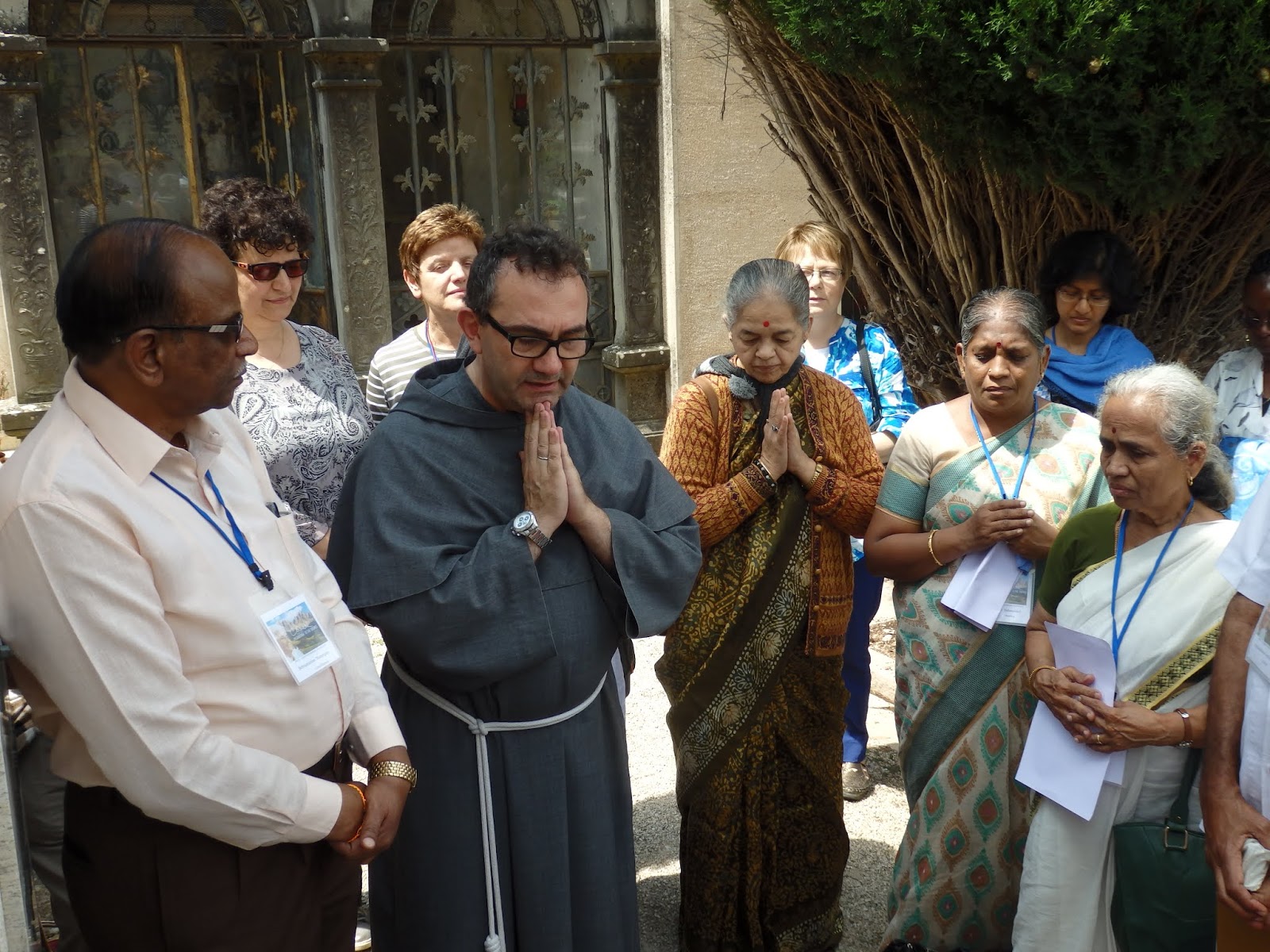 The last stage was Assisi. “We arrived at about 10.30 am. We walked up to the St. Francis Basilica and then on to the cemetery. I could not help but think back to the autumn of 1997 when the town has been hit by an earthquake and many people had been seriously injured. We had climbed to the top of the same hill with Vinu and Ashok, Dr. Aram’s daughter and son. Dr. Aram, a Gandhian teacher, had died some months before and had wanted some of his ashes to be buried in the land of St. Francis who he had greatly admired. Every evening, he used to recite his prayer, ‘Make me an instrument of your peace.’ The pilgrimage then continued to the crypt of the Basilica where we joined the monks as they recited the prayer of the ‘sixth hour’ in front of St. Francis’ tomb. There was a great sense of reflection, fraternity and spirituality. Our friends listened in silence as we prayed: it was a sign that they respected and valued our prayer as much as their own. The story of St. Francis, a man of peace and dialogue, continues to attract people of all faiths and from all over the world. Assisi is the perfect place for dialogue.” Source: blog by Roberto Catalano
16 Jul 2018 | Focolare Worldwide
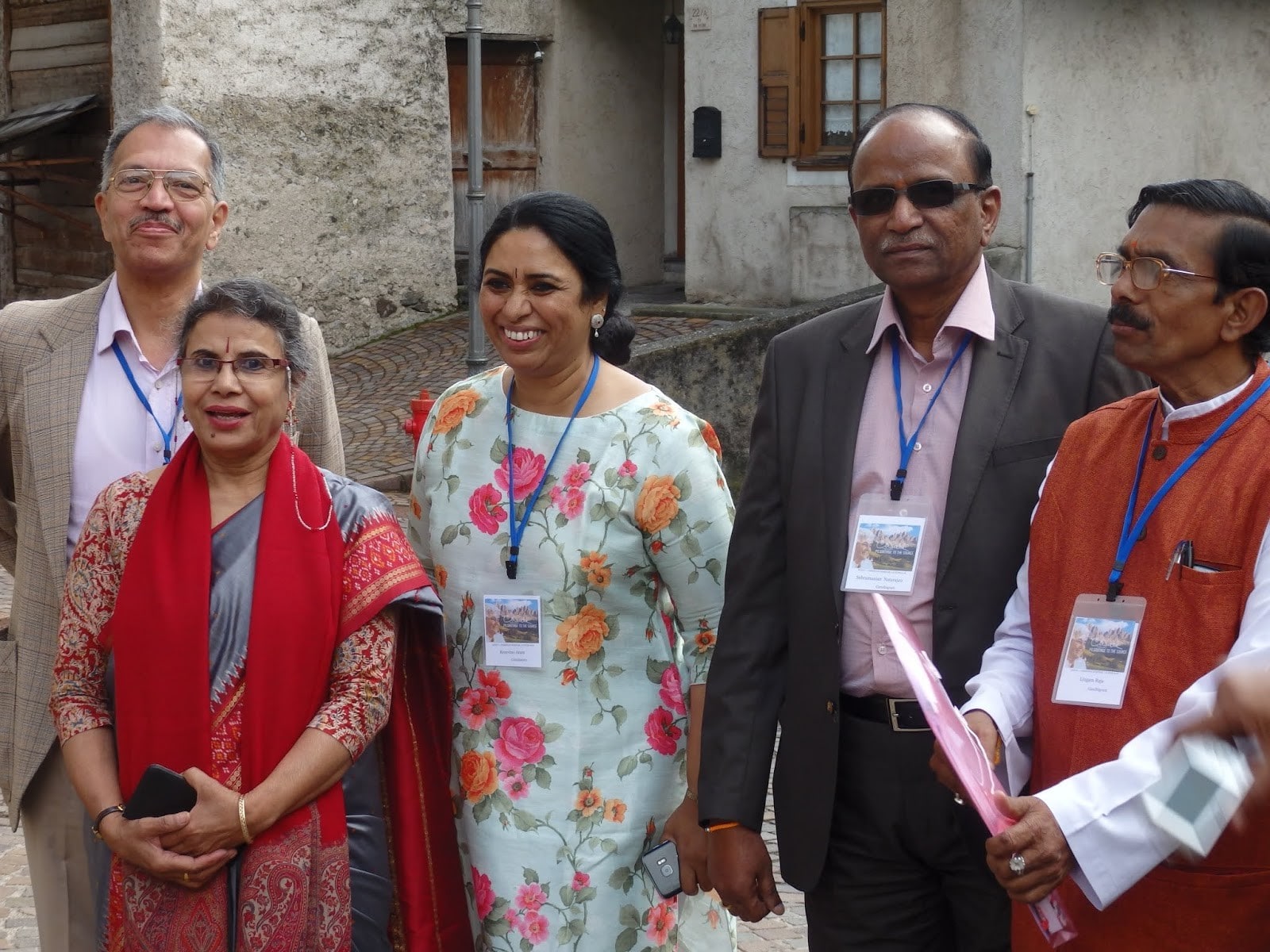 “It’s been three years since I’ve been to Tonadico, in the Primiero Valley (Northern Italy), and here we are again. With us are some Hindu friends, who have come from India for a pilgrimage to the sources of the charism of unity. These are longtime friends, largely from the academic world, with whom we’ve shared moments of study and life for years. The most recent was in January, when I went to Mumbai. It’s a joy to meet again. They are fascinated by Chiara Lubich, and they want to know her mystical experience deeply. And is there any better place than Tonadico, where Chiara had an extraordinary light-filled experience in 1949? Our meeting begins with profound sharing, in a great atmosphere of family. Mysticism unites the great religions at their core. The way that each religion follows, with the means it has available, all lead to the heart of the Mystery, which is the same for all of them. The paths and tools are diverse, but the point of arrival is the same. For this reason, we all converge on mysticism and find ourselves united there. Although the language of the faiths and ways of expressing ourselves are quite different, the symbols are shared: sun, flame, gold, nothingness, everything… through these we understand each other. We know that Jesus is “the Way,” yet he, in ways that only he knows, can be a “wayfarer” with us all and lead everyone to the Father. And then it was time to wish each other a good trip!” Fr. Fabio Ciardi is professor at the “Claretianum” Institute of Theology of the Consecrated Life in Rome and director of the Missionary Oblates of Mary Immaculate Center of Study. He currently directs the Abba School, an interdisciplinary study center that Chiara Lubich founded in 1990 with the contribution of Bishop Klaus Hemmerle (April 3, 1929–January 23, 1994), the renowned theologian and philosopher. Fr. Ciardi aims to go into depth in the charism of unity from different points of view. Source: Blog P.Ciardi
Video summary
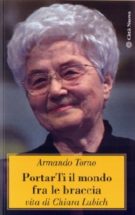
15 Jul 2018 | Non categorizzato
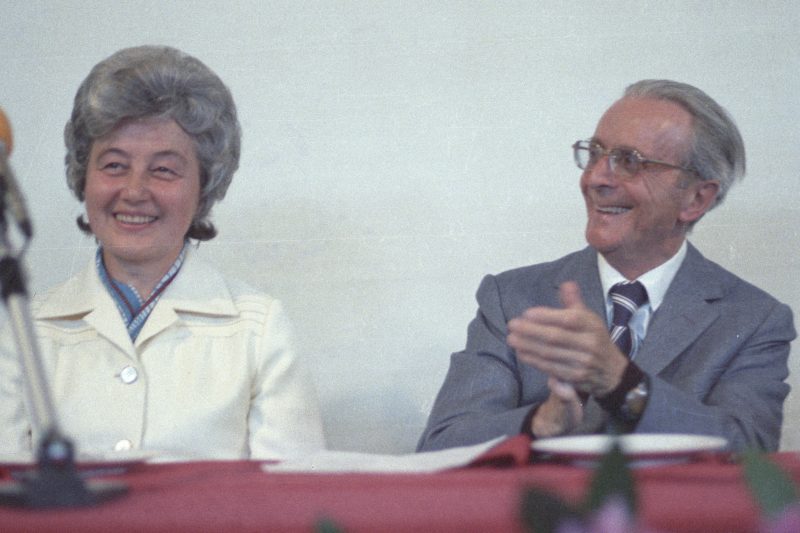 The beginning of a period of major illuminations (of Chiara Lubich) can be said to have begun on July 16, 1949. Igino Giordani had arrived on that day in Tonadico, Italy. He was staying at the Orsinger Hotel and was to hold a conference in the meeting hall of the Capuchins. “Enamoured with Saint Catherine of Siena,” Giordani had always dreamed of finding a consecrated virgin like her whom he could follow. Certain that he had found that person in Chiara, he proposed making a vow of obedience to her, thinking that in this way he would be obeying God. He went on to say that then, the two of them would be able to become saints as a duo like Francis de Sales and Jane Frances de Chantal. Chiara didn’t understand. The Movement didn’t exist and they didn’t talk about their vows. She felt that she had been born for Jesus’s prayer to the Father “May they all may be one”. She was tempted to let go of his idea, but she had the feeling that his words were rooted in a grace that shouldn’t be lost. So, she said to him: “I am nothing. In fact, I want to live like Jesus Forsaken who made himself nothing. You’re also nothing because you live the same way. Well, then, tomorrow we’ll go to church and I’ll say to Jesus Eucharist who will come into my heart as into an empty chalice: ‘Upon my nothingness, you establish unity with Jesus Eucharist in the heart of Foco. And do it in such a way, Jesus, that what comes out is the bond that you have in mind between us.’ And you, Foco, do the same.” That is what they did. Giordani headed for the hall where he had to give his conference, as Chiara felt driven to return to the church. In front of the tabernacle, she was about to pray to Jesus, but, in that very moment, she felt like she couldn’t. She felt that she was totally identified with the Son. She heard herself pronounce the words: “Abba-Father.” She realized that her religious life would have to be different from the way she had lived it up until that moment: no longer turned towards Jesus, but beside Him, her Brother, turned towards the Father. Armando Torno, “PortarTi il mondo fra le braccia. Vita di Chiara Lubich”, Città Nuova, Rome, 2011.
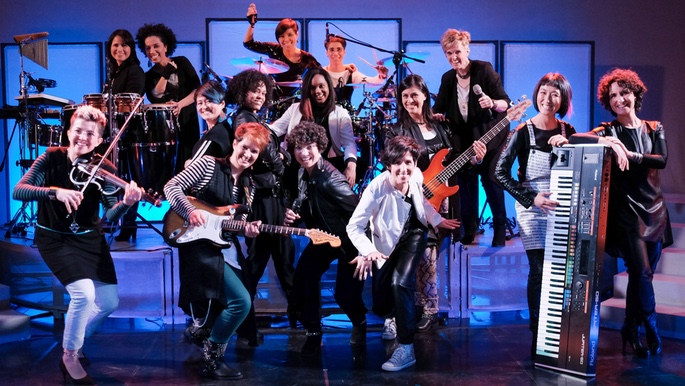
14 Jul 2018 | Non categorizzato
Dates: August 14th and 15th: workshop with young people August 16th: Concert “On the Other Side + young people of the Start Now project” GenVerde Tours

13 Jul 2018 | Non categorizzato
The Focolare recalls July 16, 1949 as the day on which Chiara Lubich and Igino Giordani made a “pact of unity” which would be the basis of the growth of the Movement. That day marked the beginning of the period of intense mystical contemplation for Chiara, which is known as “Paradise of 1949”. “[…]We were living these experiences when Foco arrived in the mountains. Foco, who loved Saint Catherine, had always searched in his life for a virgin he could follow. And now he had the impression that he had found her among us. So one day he proposed to make a vow of obedience to me thinking that by doing so, he would be obeying God. He also added that in this way, we could become saints, like Saint Francis de Sales and Saint Jane de Chantal. In that moment, I didn’t understand the reason for the vow of obedience or this unity between two people. At that time the Work of Mary didn’t exist and we didn’t speak of vows. Moreover, I didn’t share the idea of unity between two people because I felt called to live “May all be one” (Jn 17:21). At the same time, though, it seemed to me that Foco was under the action of a grace which should not be lost. And so this is what I said to him, more or less: “It could be that what you feel truly comes from God. So we should take it into consideration. However, I do not share the idea of unity between only two people because all must be one.” And then I added: “You know my life: I am nothing. In fact, I want to live like Jesus forsaken who annulled Himself completely. You, too, are nothing because you live in the same way. “Well then, tomorrow we will go to church and to Jesus in the Eucharist who will come into my heart, which is like an empty chalice, I will say: ‘On the nothing of myself, bring about unity with Jesus in the Eucharist who comes into the heart of Foco. Jesus, bring about the bond between us that you want’.” Then I added: ‘And you, Foco, do the same.’ […]” See full text at: Chiara Lubich Centre
13 Jul 2018 | Non categorizzato
God is not a distant person who can be approached only by queuing up. He listens with particular attention to those who are particularly poor, and particularly humble. From the volume Scelto per gli uomini (“Chosen for mankind”), p. 113. The busier I am, the more I need time for prayer. It is then that I discover one thing. When I use, or “waste” my time to remain in God, a sort of “miraculous multiplication of time” comes about. Thanks to the time given to God, I end up having more time at my disposal, or at least, quality time, more available and denser with love to donate to the others. Time becomes like a pearl necklace composed of many precious moments which I am able to live, and bring to fulfilment in meditation and commitment to others. From the volume Scelto per gli uomini (“Chosen for mankind”), pp. 109-110. We could define the “grain of salt” of Christian prayer as the point in which the distinctive characteristic of the Christian appears clearer and more evident: the fact, that in praying to God the other, our neighbour, is always included; and the fact that the praying person’s “I” always intrinsically includes a “we.” From the volume Scelto per gli uomini (“Chosen for mankind”), p. 114 At times it would be good not to say anything but remain in silence. It is only then, in fact, that we denote how many flows of thoughts, impressions and ideas cross our minds. It is as if we are immersed in a tide that intensifies and unceasingly distances us from ourselves, not allowing us to reach ourselves. In prayer it is not decisive for us to reach this absolute silence. It may even seem “right” if despite every effort, we are unable to reach it. In fact, somehow we understand that also in that indistinct, confused flow, so devoid of perfection and integrity, I am however myself, I who have been given and abandoned to myself, and I, the one who constantly slips away from myself. And so we can say: I have no power over me, and it is not I who knows and possesses myself but you in the innermost of me, and you who knows and scrutinizes me. You know who I am and what is good for me, and you answer with your “yes” and address me with the word: You. From the book Das Wort fur uns (“The Word for Us”), p. 91. Source: Klaus Hemmerle, “La luce dentro le cose, meditazioni per ogni giorno” (“The Light within things: Daily Meditations”), Città Nuova, 1998.

12 Jul 2018 | Focolare Worldwide
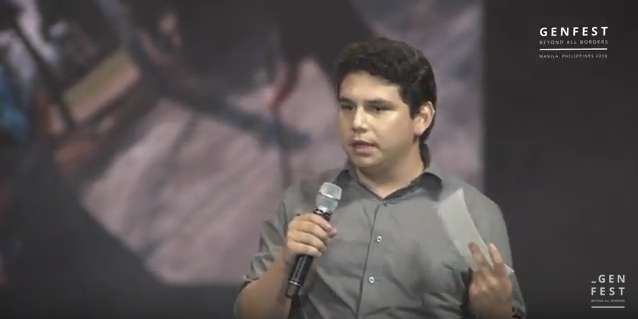 “I come from a country in Central America, El Salvador. It’s a small country, rich in history and natural resources, but afflicted for many years with political instability, injustice and poverty that have produced overwhelming violence and social upheaval, as every neighbour appears as a threat to everyone else. In recent years, the violence has intensified to point of creating a complete lack of mutual trust among the citizens. It was a situation that makes one feel quite helpless. In 2014, I lived for a while with some other young people from the Youth For A United World in a small Focolare town in Argentina, known as Mariapolis Lia. Everyone in that place tried to live the Golden Rule: Do to others as you would have them do to you. It made me see how beautiful it would be to create a society where everyone took care of one other. Yet, when I went back to El Salvador, I found myself once again facing the internal struggles in my country. The situation was really bad, more violent if that was even possible. Every moment was filled with danger both day and night, always risky to leave the house. You never knew whether or not you’d return home at night. Because of the situation, my parents and my sister decided to leave. But, thinking more about what to do, we decided to stay so that we could be a light in that dark place, during such dark times. During that period I read an article from the Youth For A United World in the Middle East, which told of how they decided to stay there in spite of the war in order to be able and willing to help the people wounded in the daily attacks. Their experiences made me think and strengthened my resolve to stay in El Salvador, to go out and meet the suffering of my own people. That was how my friends and I decided to launch a campaign that we called: ‘Change Your Own Square Metre’ with the goal of building peace in our local environment. We know that the problem in our country is complex, but we can make a difference if we begin from our own life with the people we meet every day, with our own daily activities. Personally, for example, I try to help my classmates with their difficult Mathematics Exam or to build positive relations with the neighbors around my house. All of it had a wider impact on the society as well. We got others involved in constructing a local park, a pretty place with painted walls. We launched a campaign to collect books and send them to cities that charge a high fee for renting them in the schools. Then collaboration was begun with other movements that visit the elderly in public rest homes, and with institutions that provide food and shelter to the homeless. Adults helped us in collecting food and allowing us to cook it in their homes. It was amazing how the food was always enough for everyone to have some! Perhaps we won’t be up to the task of changing our country all at once, but one square metre at a time we will certainly do it!”
https://youtu.be/PDUSyxLYpsE