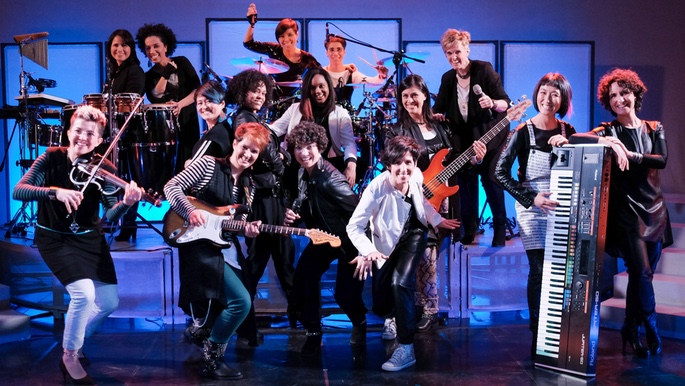
GenVerde Tour
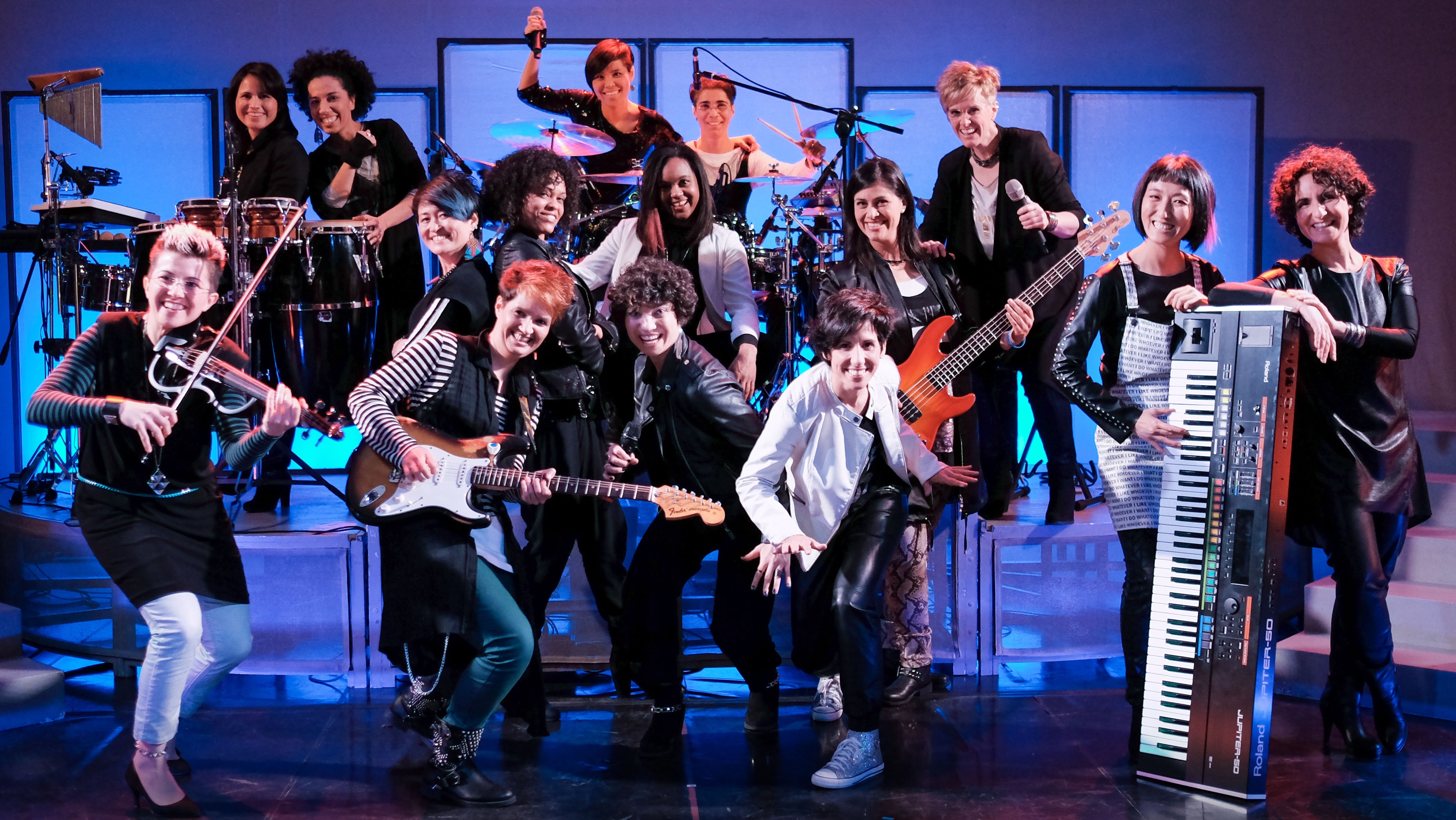 Dates: 27, 28 and 29 October: workshop with young people 30 october: Concert From the Inside Outside – Conservatoire de la Ville de Luxembourg 31 october: Feedback GenVerde Tours

Dates: 27, 28 and 29 October: workshop with young people 30 october: Concert From the Inside Outside – Conservatoire de la Ville de Luxembourg 31 october: Feedback GenVerde Tours
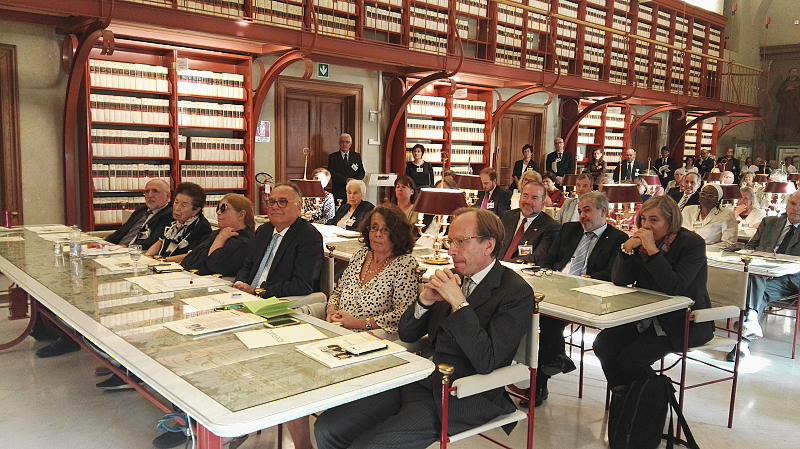 The event saw the participation of members of the Italian parliament and the European Parliament, ambassadors, teachers, academics and many people who knew Giordani also through his writings. Promoted by the Focolare Movement with the Chiara Lubich Center, Igino Giordani Center and the political Movement for unity, for years now universities of the five continents, associations and local entities, have been supporting and sharing the fundaments of the cultural, social and political project, which are based on the vital encounter between Chiara Lubich and Giordani. We can thus say that the meeting in Rome was the expression of a long partnership and synergy amongst many. Upon opening the convention, Donato Falmi, Co-Director of the Focolare in Rome, read the greeting and message of the President of the Italian Republic to the Focolare President, Maria Voce: “…in expressing my appreciation for this initiative, aimed at nurturing the example of men and women who worked to promote the universal values of peace, brotherhood and solidarity, President Mattarella is conveying to you and the entire Focolare Movement, his best regards and greetings.” “I had the fortune of meeting Igino Giordani because in my youth,” affirmed Steni Di Piazza, Senator of Palermo. “I met the young people of the Focolare, and attended educational congresses with them. In July 1979, I met Igino Giordani and he told me that when he met Chiara, he felt something new. After many years I understood that with that phrase, Giordani was referring to politics in the fraternal cooperation and dignity of all the members. And maybe the vocation to politics began to grow in me after that meeting with Igino.” “This is a good moment to discuss and commemorate that 18 September of 70 years ago, in order to try to highlight those values that marked such an occasion,” underlined Stefano Fassina, Congressman of Rome. “Politics as a vocation should be felt and lived by every citizen, since every citizen is called to be responsible for the public good.”
 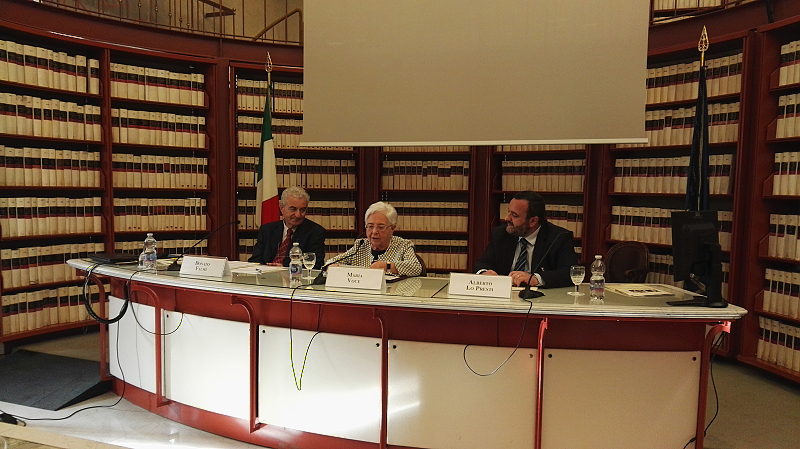 Going back to 18 September 1948, Giordani recounts the meeting with Chiara in his Memoirs: “I felt something new in the first words of that young lady. There was a note of deep and secure conviction which arose from a supernatural sentiment. So suddenly my curiosity was aroused and a fire inside me started to burn…” In that encounter Chiara brought with her the Ideal of unity. “She simply spoke about the divine adventure that had started a few years earlier in Trent, which already triggered the birth of a new Christian community,” Maria Voce affirmed in her speech. “From the beginning, the first focolare women and then the men, nurtured themselves on the Light of this Ideal, as also Igino Giordani, who Chiara spiritually fed through a prolific correspondence.” In the era of Catholic politics, Giordani was a leader. He not only worked in the Parliament but also in the Vatican. But the meeting with Chiara transformed him deeply. “He discovered unity in a new way, as the principle and value of human relationships, especially in politics,” stated the political scientist, Alberto Lo Presti. “That is, he understood that all the partial truths he had believed were decisive in doing good politics, were fulfilled in unity. (…) Unity is the banner of his political vocation.” Rocco Pezzimenti, Professor of the History of political doctrines in the Lumsa University of Rome reminds us of Giordani’s two publications: the first, published in 1949 entitled Dehumanism and the second, published in the 1960s, entitled The Two Cities, both of rare and also prophetic depth. Giordani clearly says that from St. Augustine, he acquired a fundamental characteristic: politics is not an improvised event. What occurs in politics is first developed interiorly.” “If there is a theme we should reflect on today, starting from that encounter between Igino and Chiara,” recalled Marina Sereni, former vice president of the House of Representatives – “it is precisely unity in politics today. And politics is a vocation if it centers on the Common Good, with those values which are not the property of one party, but which target unity.” Her words were shared by Beatrice Lorenzin, former Minister for Health, who affirmed how “Igino and Chiara were two masters in the history of the Italian Republic and who initiated something extraordinary. We need these reference points to help us make a dynamic and not hypocritical analysis.” Lastly, four testimonials. “The first time I heard about Giordani was in the summer of 1946,”recalls Congresswoman, Rosa Russo Iervolino, “when my parents were elected in the constituent assembly. Giordani’s interventions in the chamber were always respectful of the others but at the same time harsh in making the truth emerge. Giordani was so humble that his humility almost hid his intelligence which was dynamic and always popped up in other ways.”
 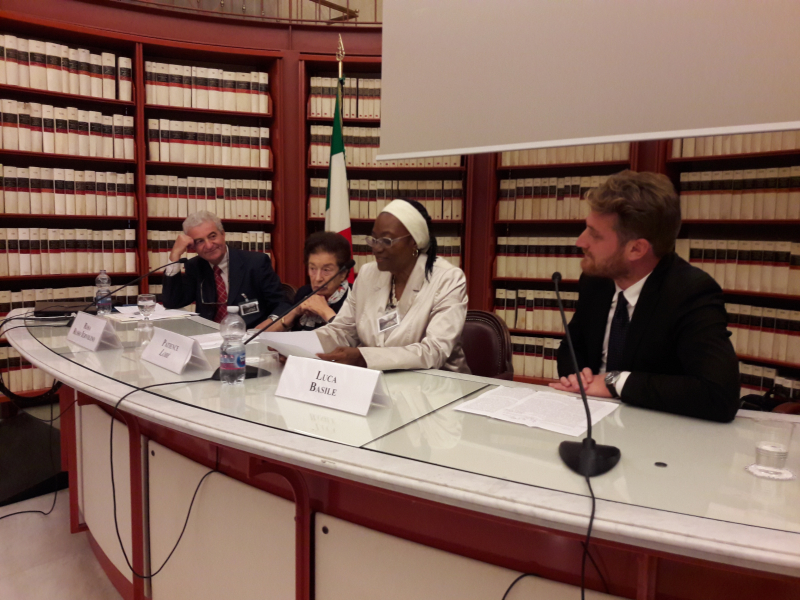 The following intervention was by Patience Lobe, first Cameroon woman to have been appointed in the Ministry as the Director of Public Works: “From the Focolare spirituality I learned coherence between life and words, and the importance of loving and serving the others. Having Chiara, a woman, as a model, gave me strength and courage, without ever making compromises. Chiara has opened my soul and intelligence to the Gospel.” To conclude, Luca Basile, President of the Town Council of Arzano in the province of Naples: “Thanks to the Focolare, I was able to live important experiences like cultural exchange and using it as a stimulus to my political commitment in the territory. My two predecessors resigned because the town council was dissolved due to mafia infiltration. You can fully understand how difficult it is to operate in such a territory, but we cannot lose hope when we have Chiara and Igino as our models.” “To implement what was generated from the encounter between Chiara Lubich and Giordani, we need to take upon us what the Country and humanity are going through,” affirmed Letizia De Torre, international coordinator of the Movement for Unity in Politics (MPPU). “May our commitment, imbued with the charism of Chiara Lubich, offer in a complex world, amazing possibilities for unity.” Lorenzo Russo
The International Day established by the UN in 2013 reminds us of the necessity to totally eliminate nuclear weapons, to achieve the fundamental objective of peace and security. Atomic weapons, in fact, continue to represent an unacceptable menace to the world population. The date chosen by the UN recalls the evening of 26 September 1983, when the Soviet Colonel, Stanislav Petrov decided correctly, to retain as an error, the missile alarms from the Unites States that appeared on the screens, despite the contrary opinion of the technicians. Petrov chose, in the span of a few minutes, to not follow the procedure that would have led to the reaction of the Soviet Union with the launching of its own atomic bombs. The man who saved the world from a real nuclear holocaust, died in absolute anonymity in 2017, in a town not far from Moscow.
A cloudy and humid day, and a sensation of emptiness. Only the day before I had celebrated my birthday, and made an ambitious wish: do all I can to make the new year shine as never before, imbuing each thing with love. I knew I would have had to start over again a thousand times, but I wanted to give my utmost. It was a sign of gratitude to Jesus for the gift of life. Not an isolated gift, but an intention valid for the entire year. He himself would have helped me. And yet, while going to an appointment, I felt that the cloudy sky was also inside me. I had allowed to silently creep into my heart a judgment of a brother who had once again disappointed me. It didn’t matter whether I was right or not. Inside me, charity was missing. I felt it with pain and I asked myself how I had gotten to that point. I came across a boy I often met. Dirty, stinky, with the usual bottle in hand. He was barefoot and shivering from the cold. He looked at me without a word. I greeted him courteously, thinking that in that way I was doing all I could, and continued my path. In that moment the Parable of the Good Samaritan came to mind. “Am I also like that Pharisee? Or do I let myself be challenged by that boy’s countenance of abandonment? I took off my sweater and went back. “Do you feel cold? “Yes, very” he answered. “Try on my sweater, let’s see if it fits.” He was so bewildered, but I almost didn’t dare touch him, since his hands really needed a good wash. “C’mon, try it on.” The size was perfect and his face seemed like that of a child on Christmas Eve. I greeted him and continued along my way, certainly feeling a bit cold, but happy. While waiting to meet my friend, a subtle voice spoke inside me. “What you did was nice, but what about that judgment you have?” “But Jesus – I answered – that person may not even have noticed it….” “But I did notice, I was in him.” One by one the arguments and excuses that came to mind were erased. Going home I decided to call him. A serene conversation, without any hard feeling on his part. Full unity was re-established, even if, to tell the truth, something inside me had snapped. A great, unmistakable peace invaded me. Two hours later, the doorbell rang. It was a dear friend, returning from his hometown with a gift for my birthday: a sweater! It was Jesus who was saying: “Raise the stakes!” From: “La vida se hace camino”, Urs Kerber, Ciudad Nueva Ed., Buenos Aires 2016, pp 41-42
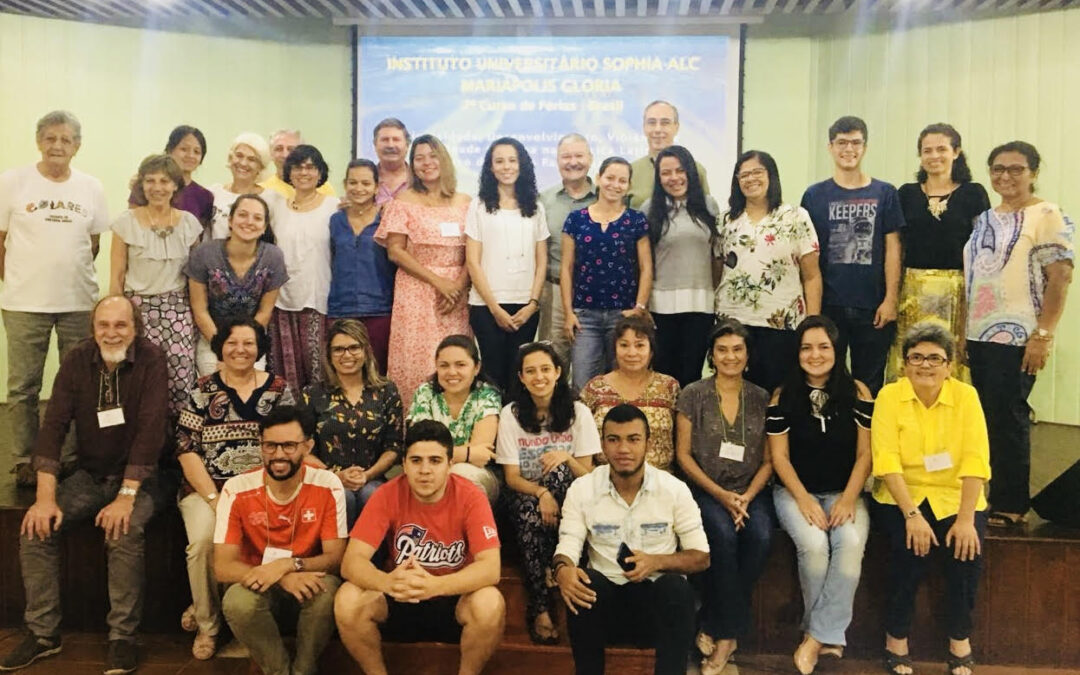
 It is an immense territory that many describe with superlatives. It includes eight countries, from the Andes mountain chain, to the Atlantic Ocean, to the highlands of Brazil. It is the planet’s largest rain forest, unique in its dense, impenetrable vegetation that holds countless animal species. Thousands of miles of rivers cross it, including the immense Amazon River (which is around 6,400 kilometers long). Many cities have sprung up alongside it, such as Manaus and Belem in Brazil and Iquitos and Puerto Maldonado in Peru. When you hear Amazon Forest you think of the “lungs of the world,” although today it is a lung that is seriously threatened by deforestation and urbanization, which year after year shrink its borders and contaminate its purity. This symbolic and cultural image that the Amazon region is usually known by, as well as its traditional character linked to its exotic nature and rich natural resources, seemed far away this summer. The “Curso de Férias” (holiday course), promoted by Sophia University Institute and ALC (the promotion agency for the institute in Latin America and the Caribbean), was held July 22–28. It was entitled “Diversity, development, violence and human mobility in Latin America: the case of the Amazon region.” The course mostly emphasized an interdisciplinary approach. It included subjects such as biodiversity, socio-diversity, the lives of local populations (indigenous, those of African origin, “ribeirinhos” who live along the river, and many others), sustainable methods in agriculture, the meeting of various forms of religion, as well as the challenges of urbanization, violence and vested interests in agribusiness.
 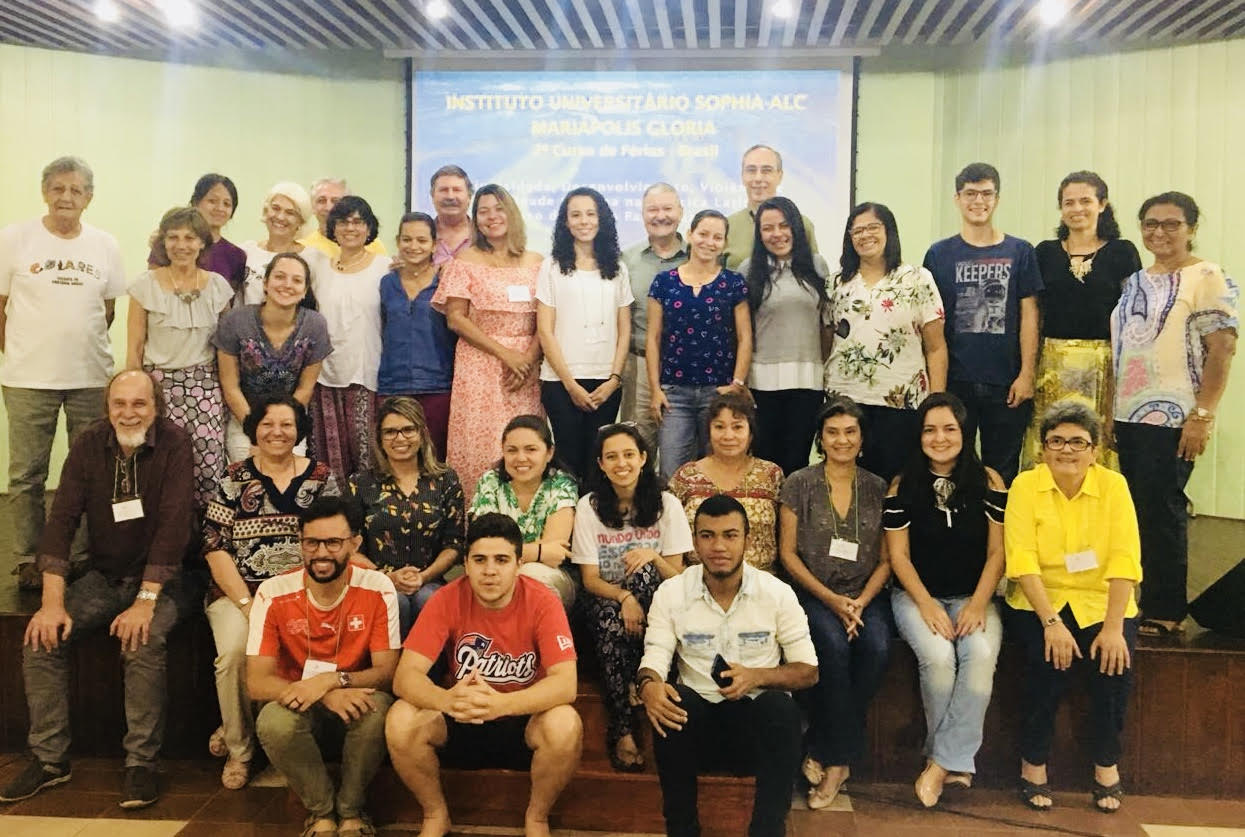 “We don’t speak of the forest; we are the forest. We don’t speak of the Amazon; we are the Amazon,” said Marcia Wayna Kambeba, from India, who was among those participating. Fifty students signed up: university students from various programs as well as teachers. The aim of the course was to invite those present to raise their knowledge of the history of the Amazon, and the responsibility of us all to face the complex reality of the region, and the cultural and historical trajectories that have been woven together there. And the importance of a respectful dialogue between the vision as the world sees it and the various religions present. “The Amazon should not only be seen only through the lens of economic interests and for its rich natural resources,” declared Belisa Amaral, a journalism student in Belem. “The world needs to explore its culture, beauty and people – rich and wise people who love this region, who defend its language, customs and identity despite being threatened widely.” “It was a real and true laboratory of humanity, researching alternatives to resolve – or at least reduce – the social and environmental problems that exist,” says Marcelo Rizzo, from Sao Paulo, an expert in human rights. For him the course was a chance to lift his knowledge and a “greater empathy for indigenous people and their culture, on questions about the Amazon, and about the environment in general.”
A Hidden Letter The wife of a friend of mine, Sandra, had fallen into such a depression that she didn’t want to talk to anyone. The family was feeling it. I didn’t know how to help her. One morning I asked God to give me an opportunity to do somethin. That afternoon I received a very fancy gift, a ceramic plate with fine chocolates. Thinking that this would be something that Sandra would appreciate, I sent it to her. After a while, Sandra telephone me laughing: “You send me a recycled present: in the middle of the dish I found a note addressed to you.” I starte to laugh too and the telephone call went on for a long time with hearts open wide. Sandra confided he fear to me and I encouraged her to share it with her family. A few days later my friend said that Sand had begun a new dialogue with the mother and sisters, and something melted away in her. T. M. – Slovak Republic Quality Pots I had come to know of a young married couple, just arrived from Candada. They didn’t have anything to live on and were working for work. On day asked myself what I could give them, which would be useful to them. Opening the kitchen cabinet I saw my favorite pot that cooks so well because of its fine quality. I felt Jesus inviting me to detach myself and, after polishing it, I invited the couple over for supper and gave the pot to them. They were both very happy. A few days later my father dropped by to see me. In the back of his car there was a gift for me. He had no idea what it was, becausse it was from my sister. Opening it, I saw a set of three fine quality pots, and the bigger one was the same exact size as the one I had given away. C. K. – Australia Hope I was a woman of the street. The hardest times to put up with were the holidays. That’s when I felt the most solitude that no one could fill. On day, as I was rushing to thte bus stop, the winow of car went down and a young man asked me if I needed a ride. He assured me that he hadn’t stopped with any alternative motives. That gesture overwhelmed me and I accepted. In the car, I asked him why he had done it and he replied by giving me a small copy of the Gospels. When I got home, I felt urged to read it and, the more I read it, the more I felt a new hop growing in me. Then, I went to ask a priest if I could talk with him. That’s how I began my ascent. N. N. – Italy Rent Not having the money to pay for the rent, my husband and I began to pray with faith. That same night our landlord came looking for the money. It was Thursday. When I asked him to come back on Saturday – becuase I wasn’t sure we’d get paid that day – he agreed. We prayed some more, together with our six children. Friday morning, a friend came to visit us, our fellow-countryman. As he said goodbye, he handed us an envelope. It contained four thousand shillings. We were thrilled and overwhelmed: besides the money for the rent, we were also able to buy something to eat. F. P. – Kenya
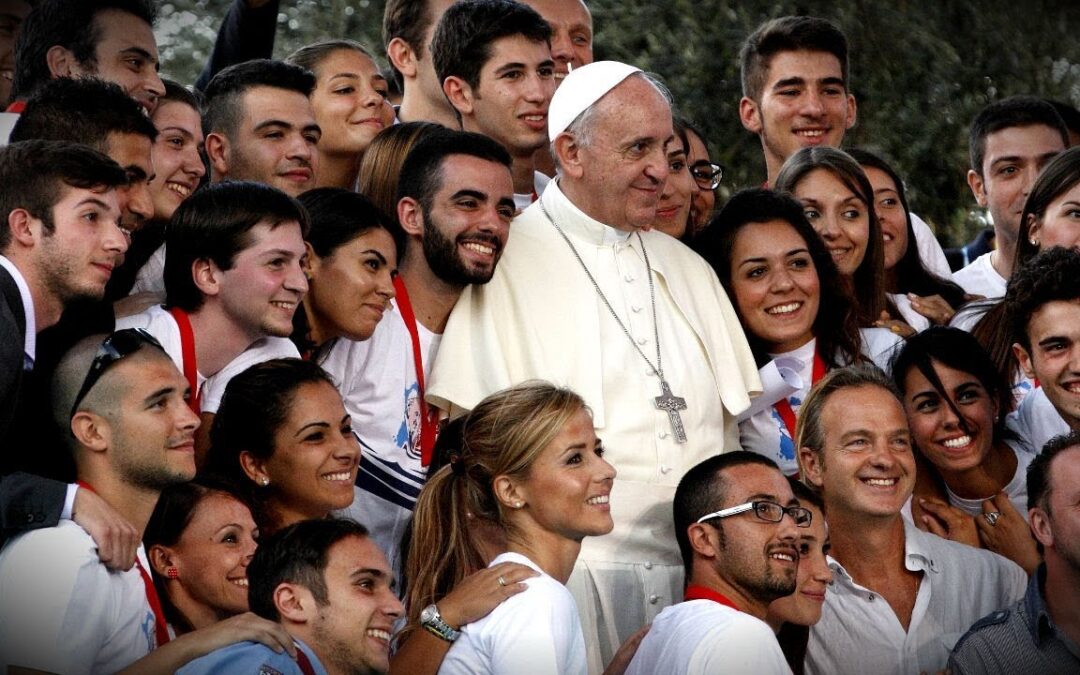
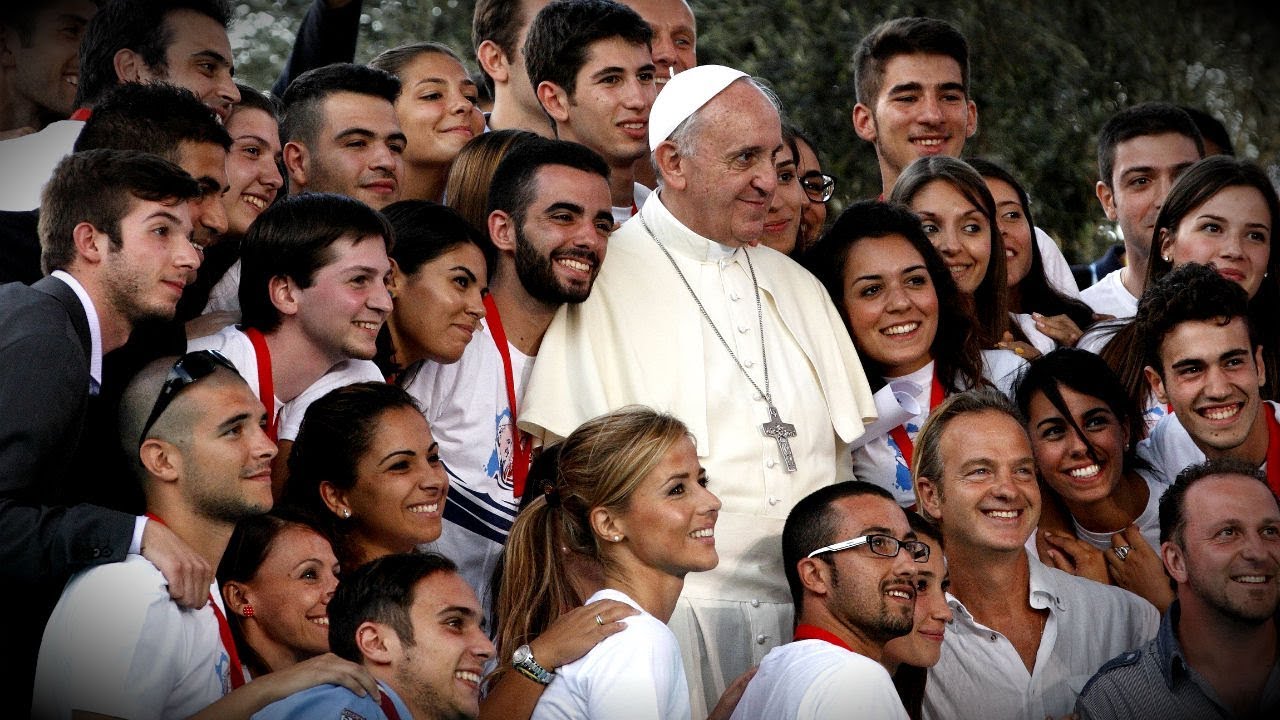 During the press release for the presentation of the Apostolic Constitution “Episcopalis Communio,” on 18 September, a new encounter of the Pope with the youth was announced, to be held at the start of the next Synod. “Once again the Pope wishes to meet the youth together with the synodal Fathers – affirmed Cardinal Lorenzo Baldisseri, secretary general of the Bishops’ Synod – to listen to them and receive their proposals to be used in the Synod’s final document.” The meeting will take place on 6 October, at 5 pm in the Paolo VI Hall.
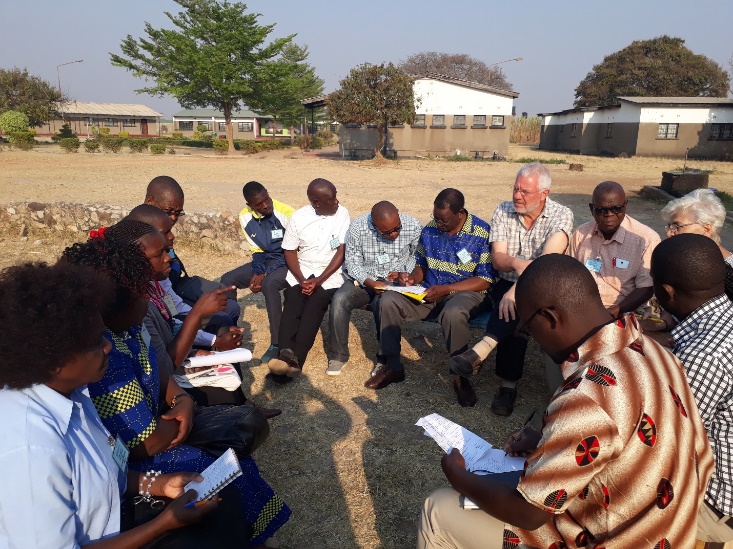
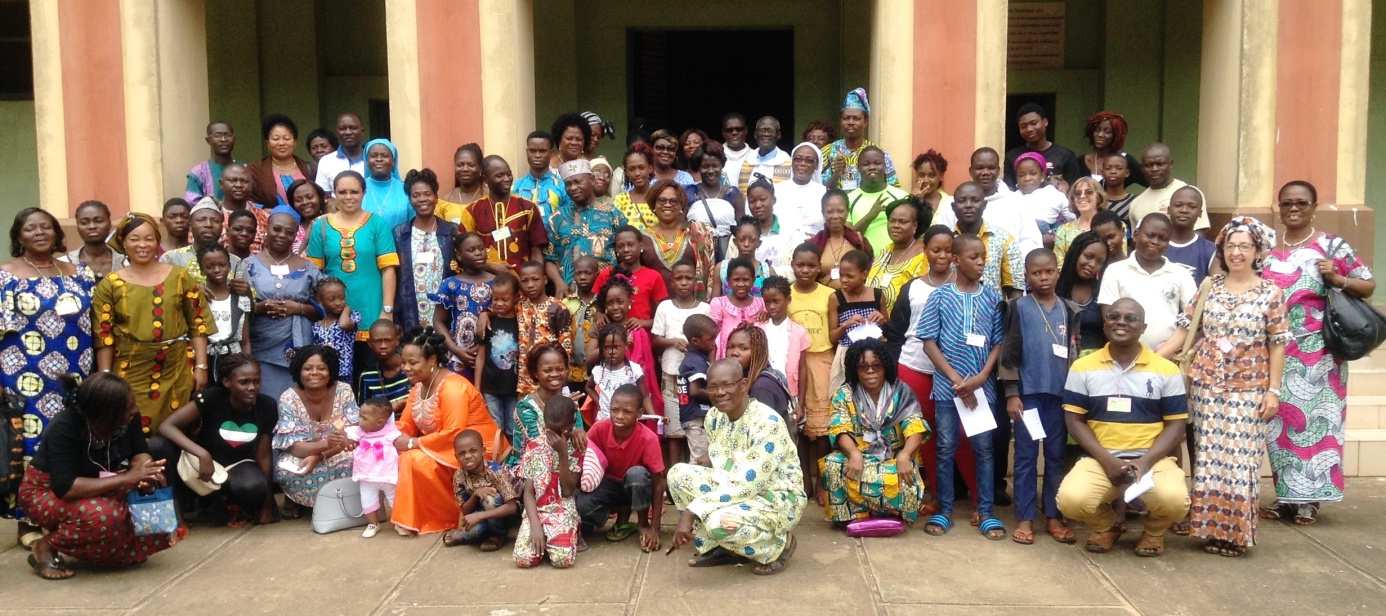 Ghana, Togo and Benin are situated alongside one another in a vertical line along the Gulf of Guinea. They are well known for their rich variety of landscape and for their ancient culture and historical ruins. In Ghana, for example, there are many colonial style buildings which remain from the time of slavery, in Bazar in Togo there are many clay settlements and in Abomey, Benin, there are the remains of the royal palace which is now a museum. The Mariapolis for this area was held in Benin. The report of this event prepared by Bernadette, Mariluz and Flora states, “Most of the people from Benin and Togo arrived wearing clothes made from the same cloth. This is what usually happens at big celebrations but what was striking was that the cloth was white.”
 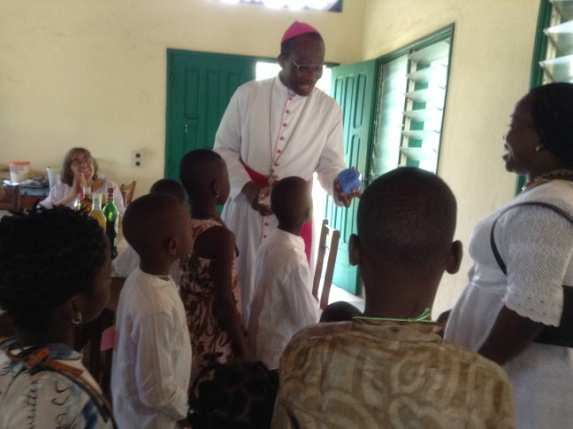 A warm welcome was given to the Archbishop of Cotonou, Roger Houngbedji, who was taking part in a Focolare gathering for the first time. There were 120 participants in total, including many teenagers and children. The programme included workshops on topics related to the practice of the ideal of unity in everyday life, improving one’s own life and making a positive impact upon society: for example, economy, the relationship between parents and children, affectivity and sexuality, handling stress. “The children played “living in the town” and took on different parts – in the hospital, at the market, on the sports pitch or in the restaurant. The young people spoke openly about the challenges they face. One morning was spent clearing the market place which was littered with empty plastic bags that had been thrown on the ground. The mayor had given permission for this public action which created a sense of beauty and harmony. In the past, slaves used to leave from the town of Ouidah for the ‘new world.’ Having been sold to white people, they crossed the ocean chained up in the hold of a ship. They took their last steps in their native land as they crossed the “point of no return” beyond which they were no longer considered to be human beings but merchandise. “We followed in their footsteps praying as we walked along this ‘way of the cross.’ At the ‘point’ we asked for an end to all forms of slavery and thanked God for the missionaries who later brought Christianity to Africa.”
 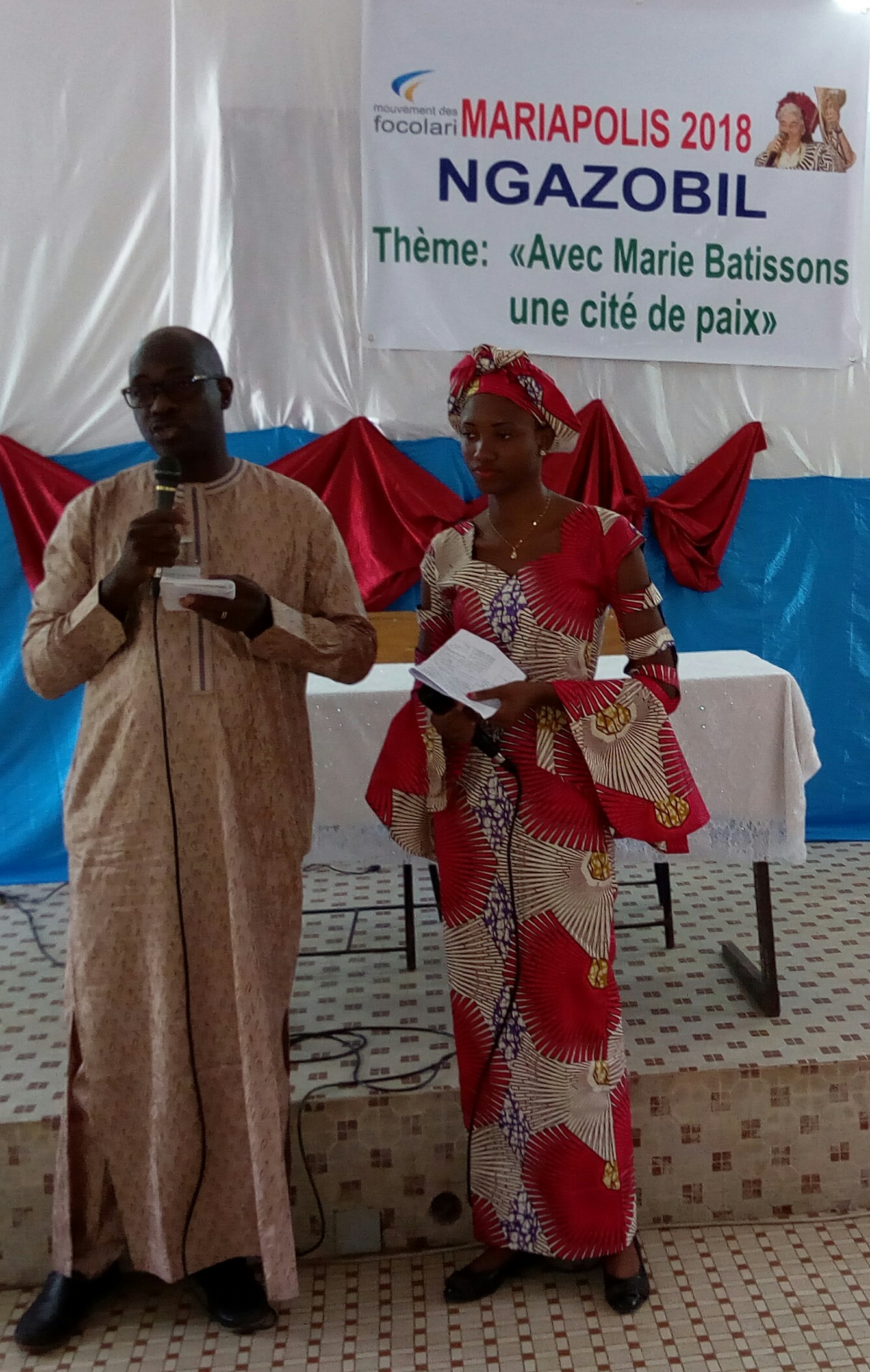 Moving west to Senegal, the Mariapolis was held in Ngazobil, 110 kilometres from the capital, Dakar. 94 people took part from Senegal, Mali and Burkina Faso: these countries lie close to the Sahel region in an area where risks to personal security are high. “It was not easy to travel to the Mariapolis. It took two days’ coach journey just to arrive for people from Mali and three days from Burkina Faso: it was really tiring for the very small children and for the older people many of whom use crutches to walk.” Aurora wrote, “The fact that people undertook such an uncomfortable journey in such difficult circumstances in order to reach a Mariapolis they called an ‘oasis’ or ‘town of peace’ is a witness to the fact that there is an enormous thirst for God in our people.” It was a beautiful experience of communion. Jean Noel Diof, emeritus bishop, attended as did Nana, a young Muslim from Burkina Faso. At the end, Nana said, “As the only Muslim, these four days have strengthened my faith and have helped me to appreciate another religion.” A Christian participant from Senegal said, “I have understood how to be with people from other Churches and with people of the Muslim faith.” A Mariapolis also took place in Zambia, a central-southern area of the continent. Zambia has often been called the “real jewel of Africa” because of its landscape, full of features of outstanding natural beauty such as the famous Victoria Falls. The theme of the Mariapolis was “Mary, mother of unity.” Celestino wrote, “This theme was perfect because of the many divisions in our society at the moment. Such a diversity of people took part and their comments at the end reveal the importance of this meeting.” “A time for reflection and change.” “I have learnt what it means to love, to care for other people and to forgive.” “I have met brothers and sisters from my own country.”
Following a decision made last July, on 6 September, the Eritrean President Isaias Afewerki and Ethiopian Prime Minister, Abiy Ahmed Ali, signed a peace agreement called the “Gedda Pact.” The agreement which came about under the mediation of Saudi Arabia, the United Nations, the African Union and the United Arab Emirates, puts an end to a state of war between the two nations which continued also after the end of the conflict which lasted from 1998 to 2000 for territorial issues. The peace pact furthermore foresees, as per official communications, the opening of the embassies in the respective capitals, the resumption of road connections and use of Eritrean ports by Ethiopia and normal relations between the two countries “on the basis of the close geographic, historical and cultural bonds between the nations and their respective peoples.” The UN Secretary General, António Guterres, highlighted the importance of the Agreement, and defined the event as a “strong wind of hope in the Horn of Africa.” Meanwhile, a few days ago, the border between the two countries was reopened and many families, divided for twenty years were able to reunite.
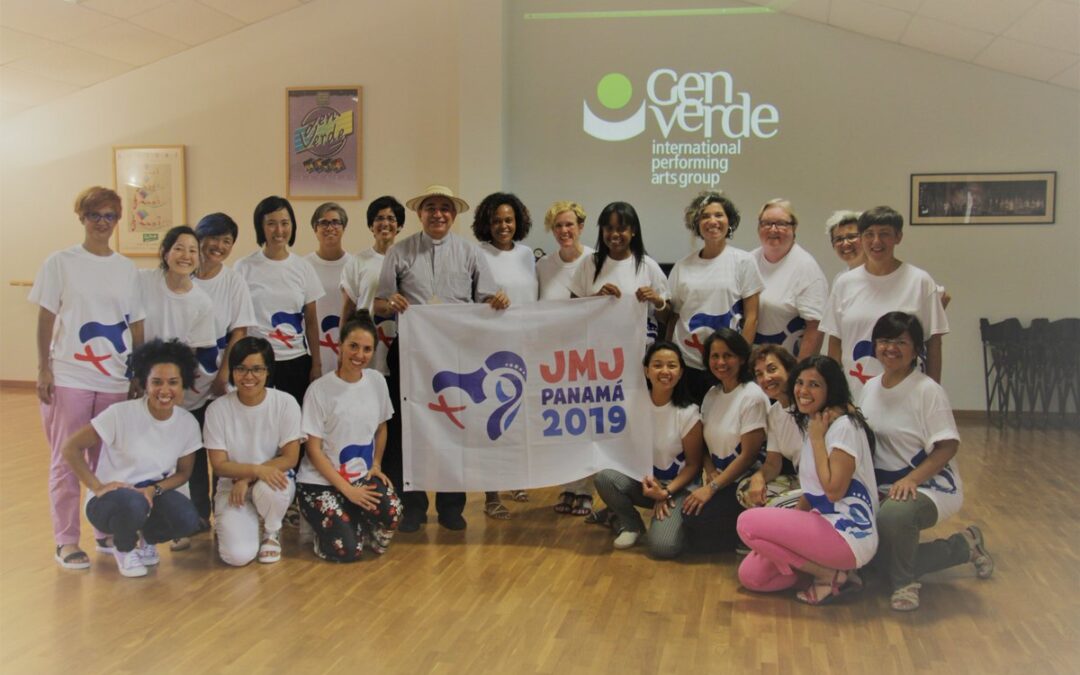
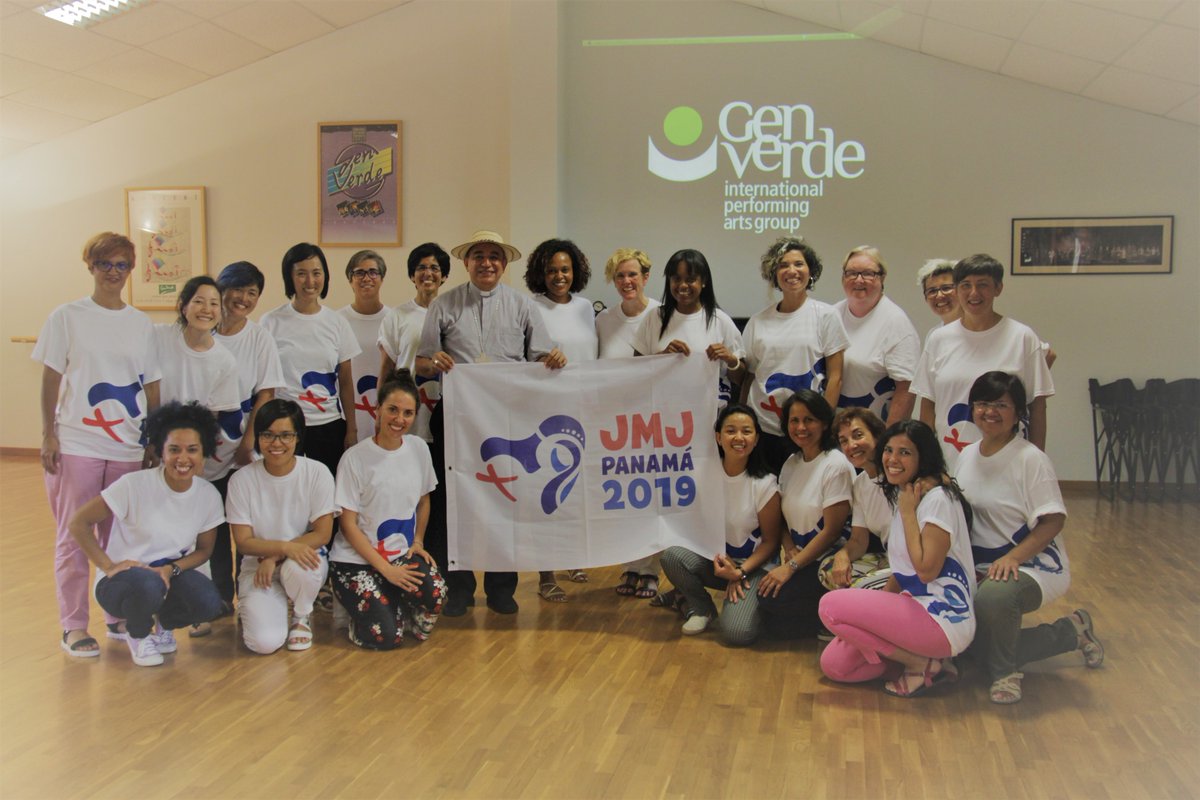 The Focolare’s international band Gen Verde is among 400 artists invited to perform during the next World Youth Day (WYD), organized by the Catholic Church, in January 2019 in Panama. “We are honoured and happy to be part of such an important moment,” explained a band member, “especially in the Panama land bridge, where the heart of the Church beats together with the heart of the youth. Latin America is well represented on ‘planet Gen Verde’ and we would not miss this event for the world.” Gen Verde’s “Start Now” show is part of the Festival which runs before and during the WYD, presenting artistic performances and exhibitions at different venues across the country from 22 to 27 January. The band will also be on stage to welcome pilgrims in the diocese of Chitré, province of Herrera on the Gulf of Panama, and for the local festival of Colón in the north of the country, at the entrance to the Panama Canal.
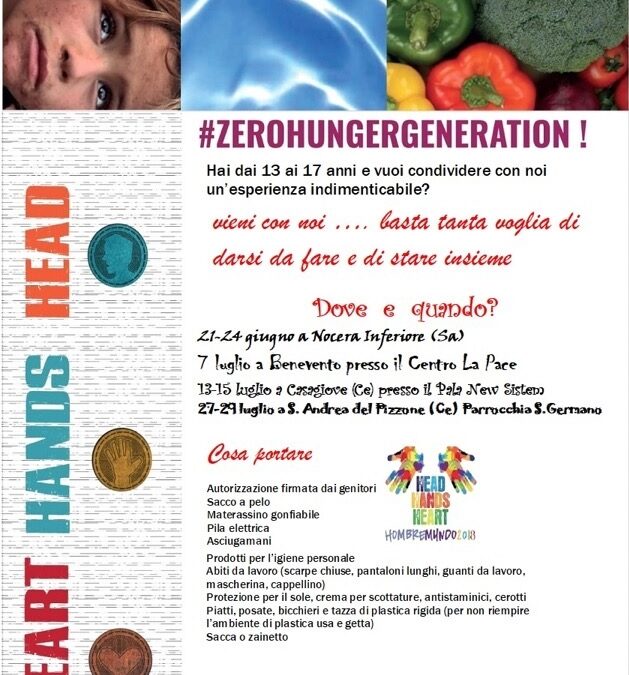
“The Focolare community wanted to look around in the local environment for positive things that it could highlight and spread through mutual love, especially in the outlying suburbs where the poorest were waiting. We’ve listened to so many poor people. On the first day, fifty children, who had been gathered by Friar Michele Floriano, were waiting for us at St Joseph’s Parish. It was a joyous “siege” that we faced with abandonment to God’s plans.” Nocera Inferiore is an ancient town, tormented since the 1980s by criminality and unregulated building and development. In the 1980s a violent earthquake shook the whole province, sweeping away entire country-sides and causing many building collapses and victims. For almost forty years entire families of the Vescovado district have been living in pre-fabricated and unsanitary building, still waiting for more decent housing that keeps on being promised and then postponed. 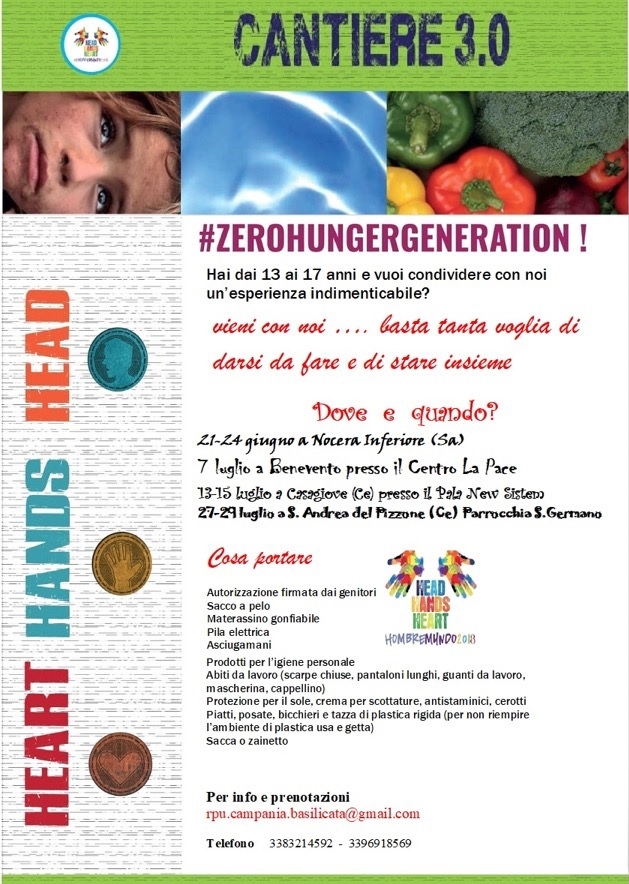 For three days (June 21-23), the Hombre mundo” worksite offered to the adult and youth volunteers who had stepped up and pitched in a true experience of a Church that reaches out in accordance with Pope Francis’s invitation. There were also the people in the background, in their own homes cooking dinners and suppers for everyone. “The neighbouring district of Calenda, which is part of the same parish,” write Felice and Romilda from the nearby town of Angri “mobilized their “Circle of Friends.” Moreover, several different associations became active in the worksite, offering their own contribution. “Hombre mundo” turned out to be the fruit of a network of people and groups that surpassed us. In these parts, marginalization threatens to make us lose our identity. We realized it when we asked a girl where she lived and she answered saying: ‘Lot 3,’ ‘Worse than Scampia, Bishop’s District’ stands in large letters on top of a gloomy rooftop, in a downward race that refers to the famous Naple’s district that is known for delinquency and drug trafficking. In front of the building is a large and open space where games are held for the children. “Mothers and sometimes grandmothers and some great-grandmothers come down to keep watch and chat with us, “unburdening themselves of some of their suffering.” “In the morning, after some prayer and reflection and tossing of the Cube of Love, the children are given free reign over the area next to the parish. The youths get involved in workshops under the guidance of artistic, musical, and environmental experts along with to the paediatric unit of the nearby hospital. More than once we have experienced the prompt intervention of God who supported us by sending people to help us out just at the right moment. For example, on the third day we were having problems organizing the games. Just then we received a telephone call. It was from an expert in conducting activities for children, who was offering to help. Everyone chipped in, also the teenagers who looked after the little ones, cleaning the quarter of weeds and planting flowers to leave touch of beauty and love in a place reduced to such poverty and suffering. The young people were especially touched by the testimony of 49 year-old Roberto who had spent a long and painful time in hospital, which he lived as “suffering transformed into love.” “Hombre mundo” concluded in Calenda where the Circle of Friends had supper prepared for everyone. It was a day of brotherhood and friendship, concluding with the final “show” by the young people who had taken part in the music workshop.
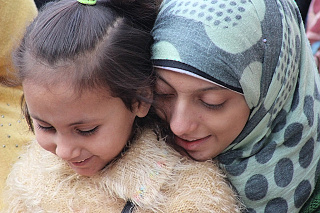
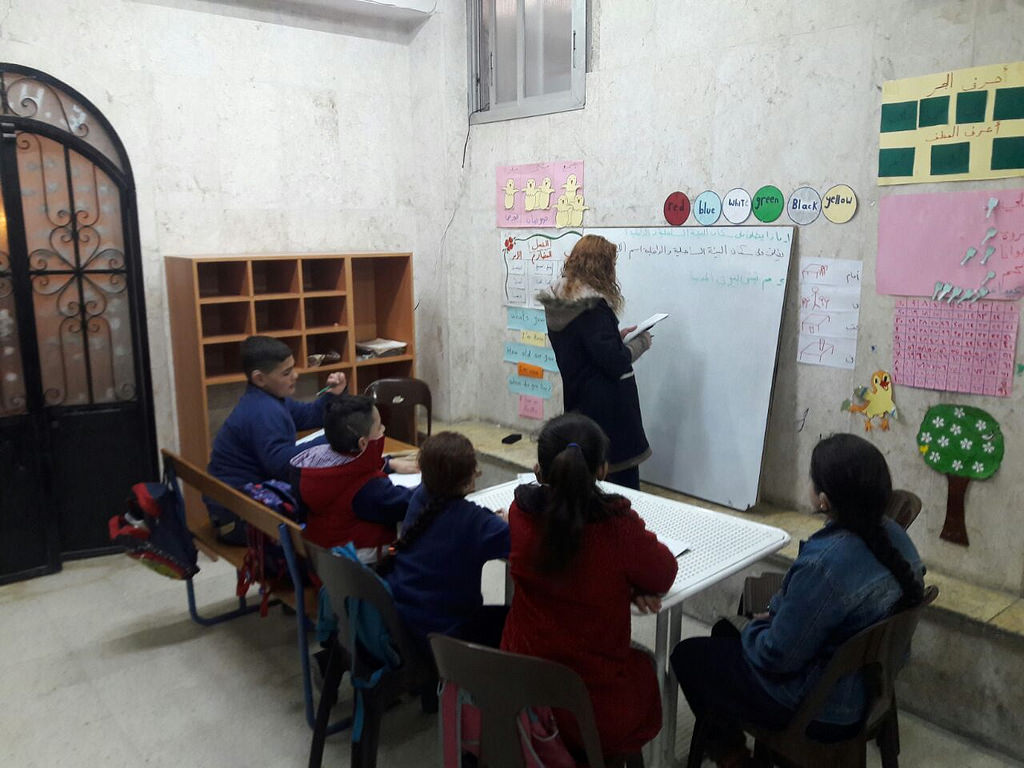 In the hemisphere where summer is giving way to autumn, many cities have suddenly changed their rhythm, to conform partly to the opening and closing schedules of the schools, the cause of morning traffic, jams, or the gathering of groups at the exit of the scholastic facilities. But if for many children it is obvious that the return to school with a backpack, means meeting teachers, schoolmates, occupying a desk and are chair, for many others, in other parts of the world, struck by painful situations of war or poverty, going to school, keeping up with one’s studies or doing the homework is a challenge. These are the problems addressed by AMU (Action for a United World). Inspired by the spirituality of Chiara Lubich, it works to spread a culture of dialogue and unity among peoples through development projects worldwide.
 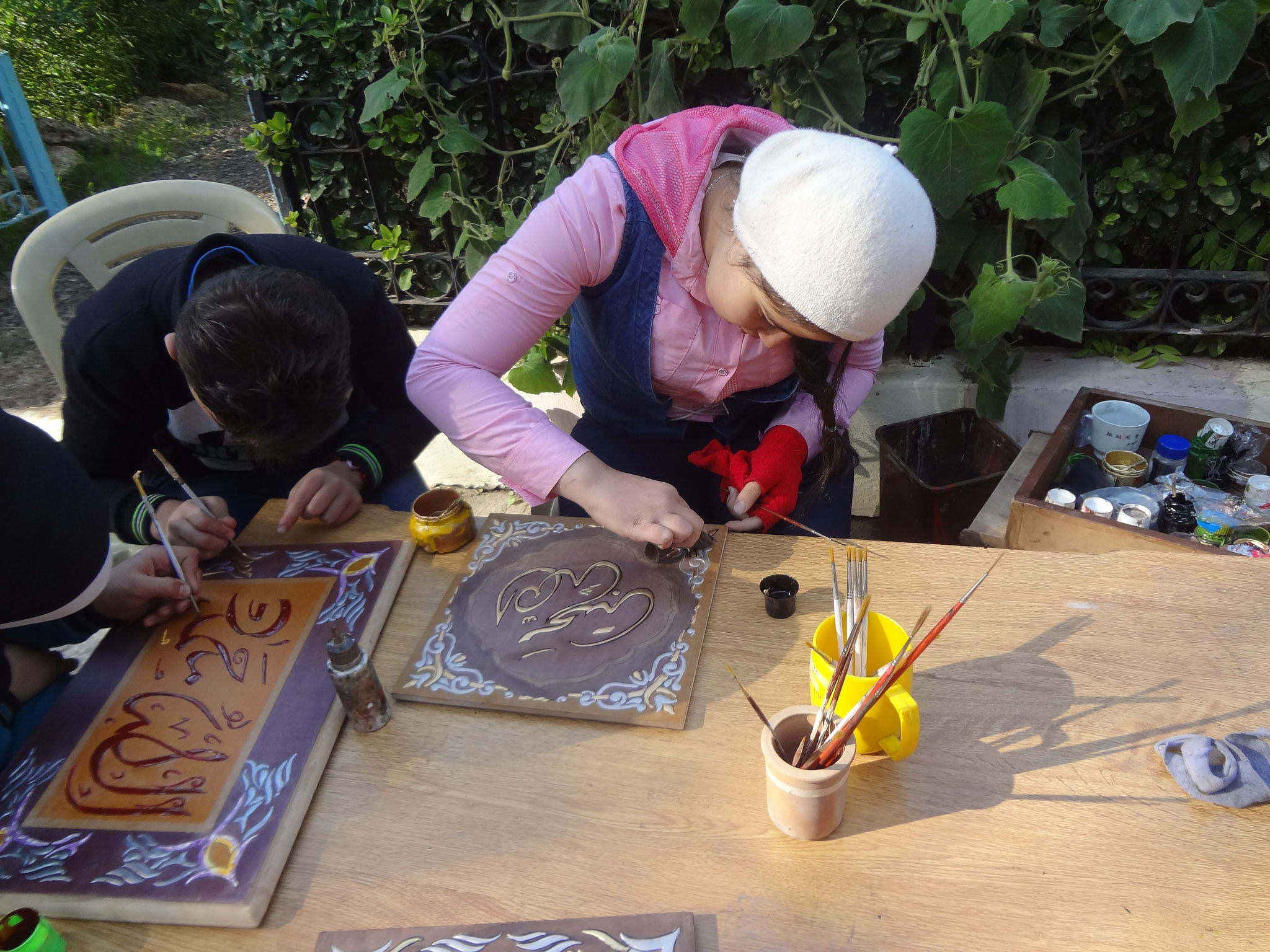 As for example in Syria. Today, now that the violent armed clashes have ceased, but not the emergency, the country is taking stock of the destruction of many school infrastructures and buildings, the migration of capital abroad, the economic embargo. In Homs, the transfer of many people from some bombed districts to others considered “safe” and the reduced number of professors, who have migrated, have led to an overcrowding of the schools, resulting in the lack of adequate support for each student. On the other hand, the cost of attending a private school has become impossible. AMU’s commitment is that of offering greater care and attention to the evacuated children, accompanying them with educational and scholastic programmes. Instead in Damascus, in the old Tabbale district, the aid goes to the “Bayt al Atfal” Centre which gathers, for four days a week, 120 children between 6 and 10 years of age. Some of them live with their families in just one room and do not have a place where they can study, others have learning difficulties or syndromes such as dyslexia, or simply cannot count on anyone’s help, due to the absence or the illiteracy of their parents. In Aleppo, AMU supports a centre for deaf children who are not admitted to public or private schools. Today the “EHIS” school hosts 75 children and offers work to 30 people, among whom, professors, assistants and labourers. Still in Aleppo, the learning project “Learn and produce,” organised by the Syrian Handicrafts Centre, and supported by AMU, is bringing ahead a training course, for 20 adolescents, who learn to make and sell local artisanal items like soap based on laurel, brass objects and embroideries. In Cairo, Egypt, the “hot topics” are scholastic dispersion and access of women to educational and professional courses that could help them develop their own professional capabilities. “Change For Tomorrow” of the Koz Kazah Foundation, in the community of Shubra, one of the most populated districts of the grand capital on the Nile, supports a group of women who have started up activities like the processing of wicker, cuisine, and ecological prints. In Italy, AMU offers to teachers and educators a training path entitled “Living peace: peace as a school project.” Instead, for schools and groups of teens, it offers the “Basta conoscersi” project. The AMU educational and study assistance projects welcome donations. In this way, for many children and adolescents September can really become a time to go back to school. By Chiara Favotti
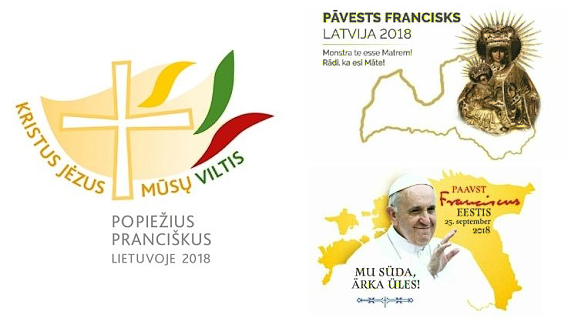
The next international itinerary of Pope Francis’s apostolic journeys will be in Lithuania, Latvia and Estonia, which will take place from 22 to 25 September, on the occasion of the centennial celebrations of the first declaration of independence of the three Baltic states of Russia. Among the most important events will be the prayer at the Museum of Occupations and Freedom Fights, known as the Museum of the Genocide Victims in Vilnius (Lithuania), the ecumenical meeting in Riga (Latvia), and the visit to the beneficiaries of the Works of Charity of Tallin (Estonia). The visit to the so-called Genocide Museum will be particularly symbolical because it was used by the secret police of the Soviet Union from 1944, the year in which Lithuania returned under the control of the USSR, up to 1991 when it regained its independence. Besides hosting the officials of the State Security Committee, the building acted as the venue for interrogations and as a prison for the political opponents of the communist regime. But the history of horror in this building started even earlier, in 1941 when the Nazis invaded Lithuania and the building was set up as the general headquarters of the Gestapo. In the three years between 1941 and 1944, about 100 thousand victims, a third of the city’s inhabitants, mostly Jews, were killed in Vilnius alone. Precisely to recall these horrors of the occupation, the Government decided to convert the building into a place of remembrance. In the various legs of his trip, the Pope will pay homage to the painful history of a population which has remained deeply anchored to its own Christian roots, despite the persecutions.
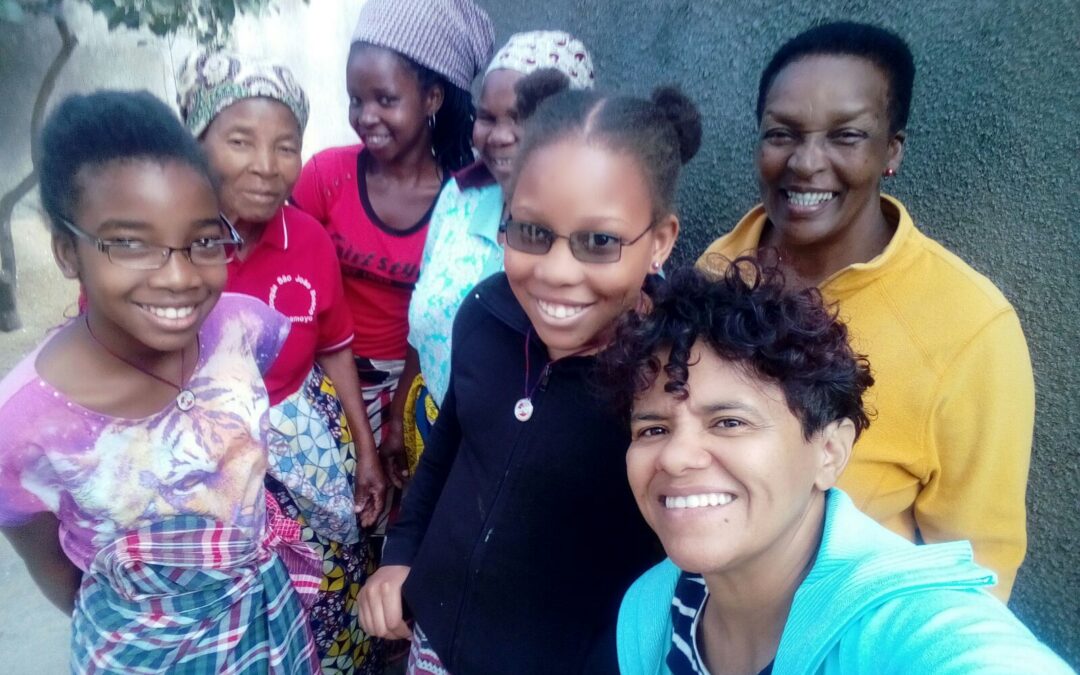
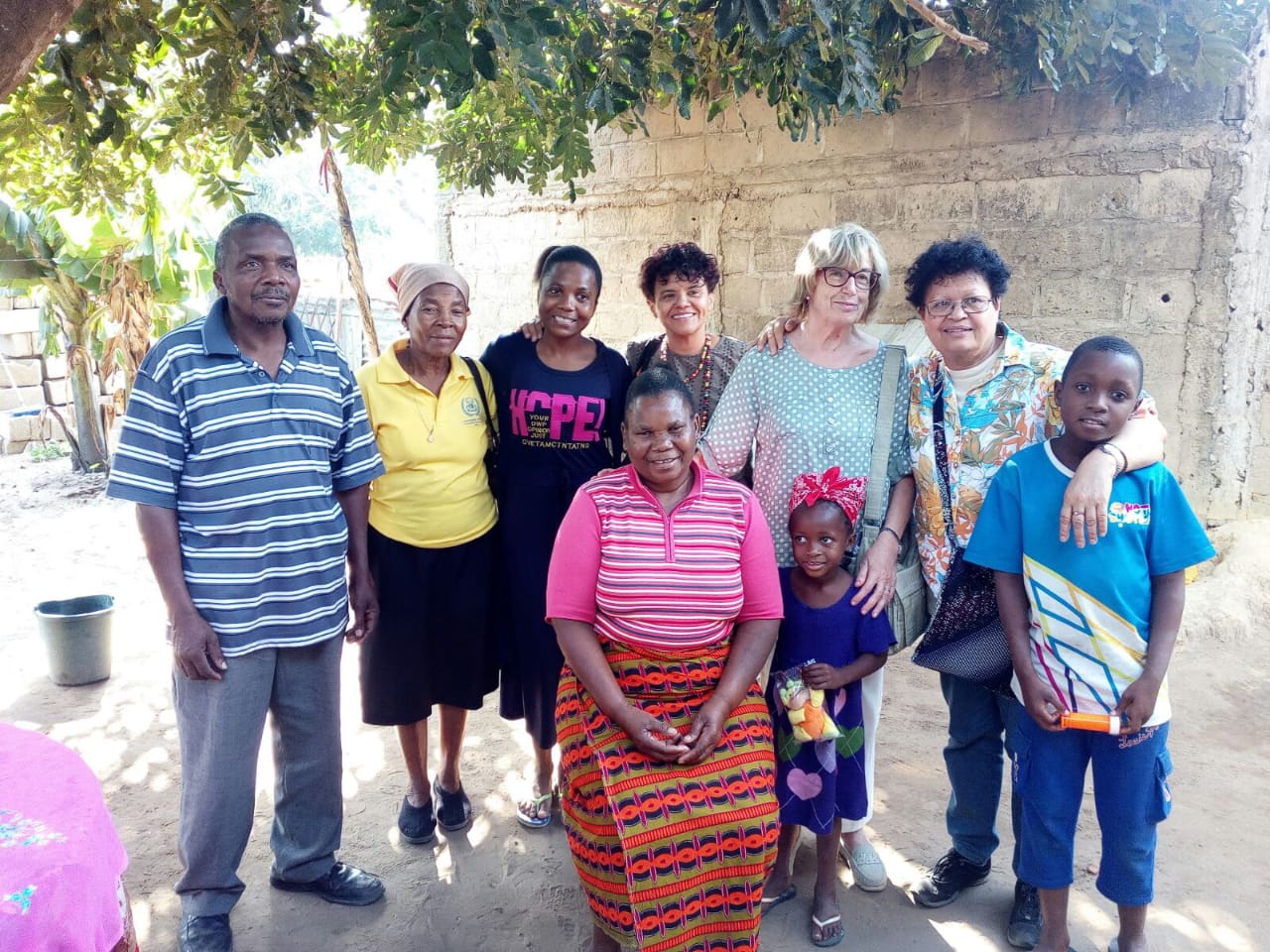 “Focolares that rove throughout the world,” is how Chiara Lubich described them – made up of young people, adults, families, religious or teens. It’s a project that is being repeated, after positive results and the fruits from this original way of meeting and exchange, which temporary focolares bring to various parts of the world. One of these was at Maputo, the capital and largest city of Mozambique, as well as the main port there in Delagoa Bay, which is on the Indian Ocean. This city in southern Africa is full of crowded and colorful markets, many of which are most alive in the evenings, and features a train station designed by Gustave Eiffel. From August 1–30, a temporary focolare was established there, made up of Antonietta, Giovanni and Perga (from Loppiano), Father Rogelio (a religious priest from Maputo), Father Stefan (from Switzerland) and Fatima (from the Johannesburg focolare). “When we got to Maputo, we immediately made a pact of unity between us. In the days that followed, in various meetings with people from there – young people, families at home, their workmates and friends, and men and women religious – we saw the light of Chiara Lubich’s charism enter their hearts, and they were fascinated by the Gospel becoming life.” There were also other beautiful family moments, such as those with Archbishop Francisco Chimoio, who told us to ‘not lose that joy and bring it to the world,’ and with Papal Nuncio Edgar Pena, who emphasized the importance of “sowing the seeds.’”
 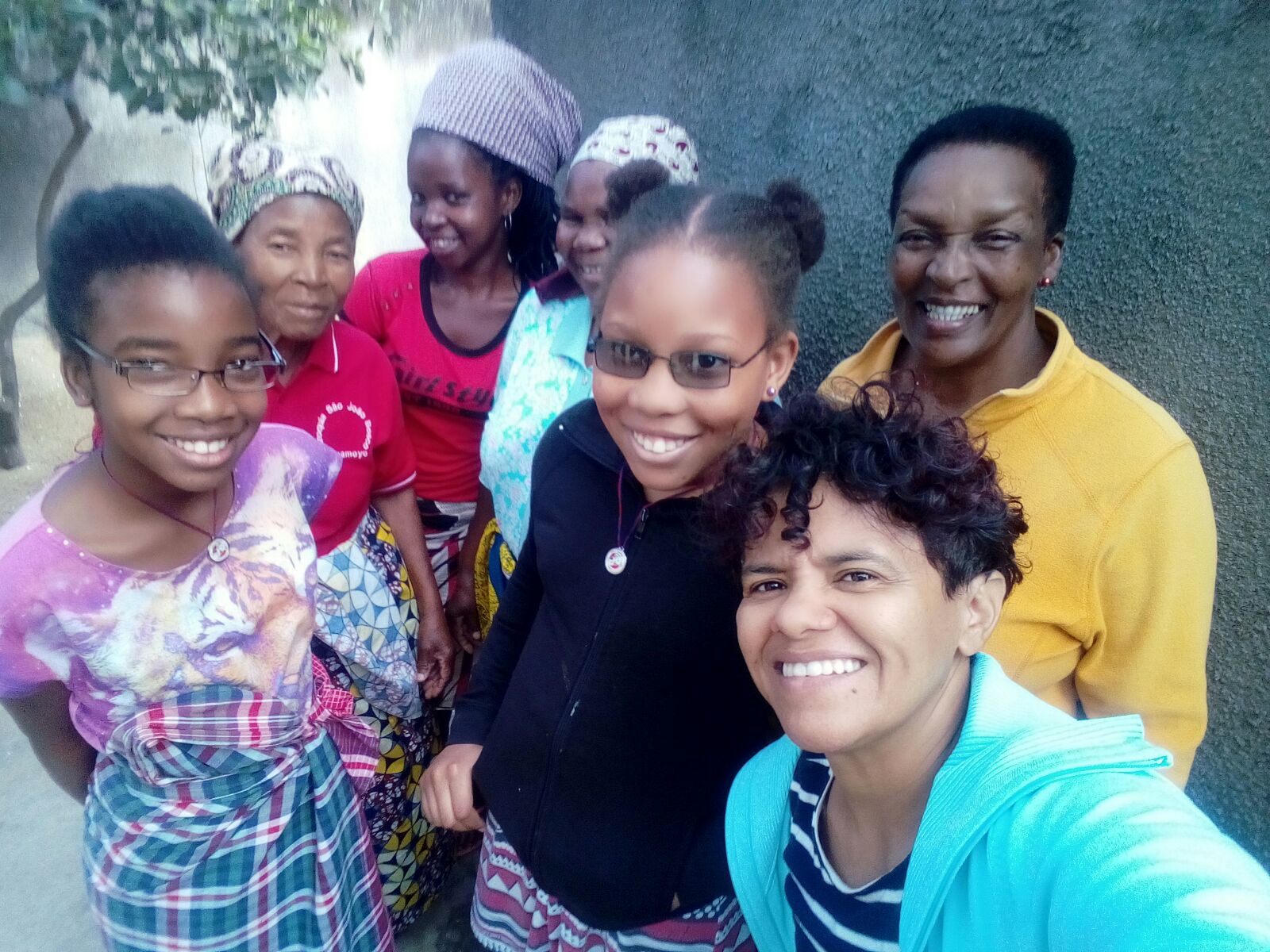 Three focolarine had a “tour” of Zimbabwe, although not as tourists. “It was an experience that I would recommend to many,” writes Cielito from Portugal, “since it opens your heart, mind and soul to the needs of humanity. The two weeks seemed like months, such was the intensity of each day.” After this they had a brief stop in Johannesburg, “which was our first approach to this continent’s poverty, although it would be quite different to what we would find afterwards.” Then the small group moved to Bulawayo, hosted by a friend in a suburban neighborhood, who shared so much despite her lifestyle of poverty. “Zimbabwe,” Cielito explains, “is a country that is mostly Christian, and people’s lives revolve around the parish, with a strong sense of belonging. Our friends from the Focolare had prepared for us a ‘tour’ of the city’s various parishes. We met more than a thousand people during those few days, many of which were children and young people. We presented ourselves and told of our experiences based on the Gospel. “Each morning we set out, entrusting ourselves to Mary, not knowing who we would meet. We put as many useful things as we could into our backpacks and away we went, trusting only in the Holy Spirit. Leaving God to direct our day, we were amazed at what he would do. “We found so much generosity, readiness and commitment, despite having only the poorest of means, and this for us was a great witness. “For the second week, we moved inland to a mission (a college the Jesuits founded 130 years ago), and from there we went for two days to a rural village that was quite far out, to visit a group of people who have been living the Word of Life for years. They are very poor, yet they were able to welcome us in an exquisite way. Their generosity, simple and profound faith, and the purity of their hearts won us over. In such a faraway place, in the middle of nowhere, we saw with our own eyes how truly universal the charism of unity is.”
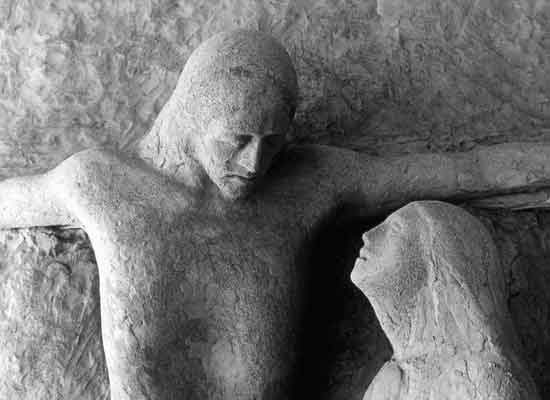
© Ave Cerquetti, ‘Crocifissione’ – Lienz (Austria) 1975
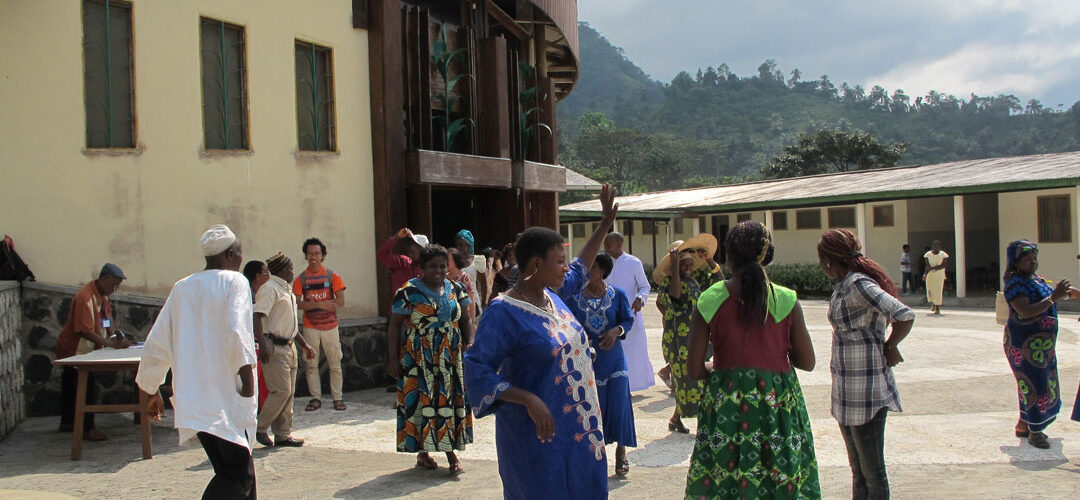
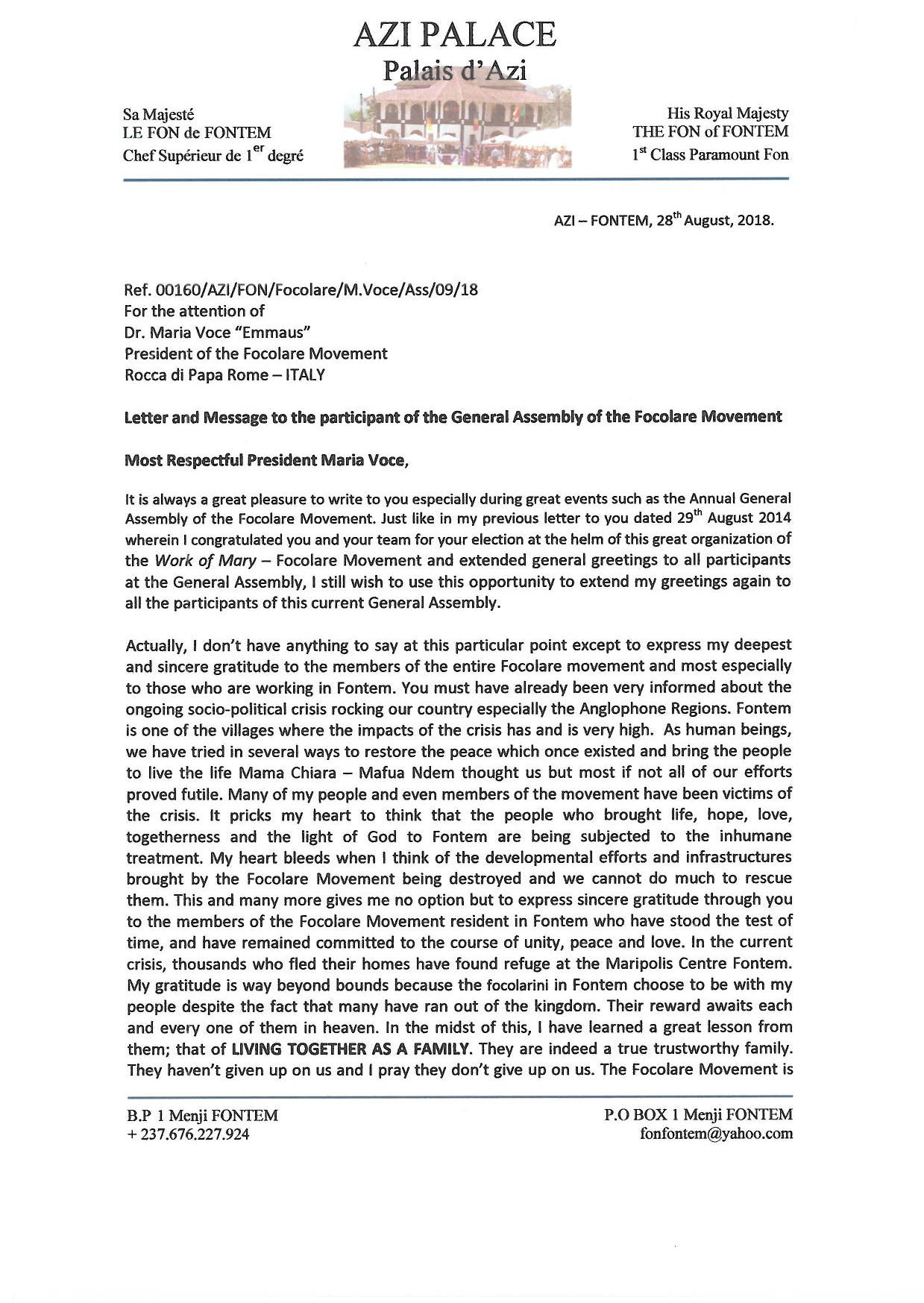 In the letter addressed to “the highly esteemed President Maria Voce”, Asabaton Fontem Njifua, the highest traditional authority of the place where the Focolare town is located (southeast of Cameroon), wrote: “I’ve nothing particular to say – he said in the letter sent on 28 August from Palias d’Azi – if not to express my deepest and sincere gratitude to the members of the Focolare Movement, especially those working in Fontem.” “You must have already been informed of the socio-political crisis rocking our country, especially in the Anglophone regions. Fontem is one of the villages that have been strongly hit by the crisis.” Recalling that one of his predecessors had named Chiara Lubich in 2000, as the “queen sent by God,” the Fon used bitter words to describe the current situation: “As human beings, we have tried in several ways to restore the peace that once existed and to bring the people to live the life which Mama Chiara – Mafua Ndem taught us. But the most part, if not all of our efforts, have been useless. Many of my people and even members of the Movement have been victims of the crisis. I think of the people who brought life, hope, love, togetherness and the light of God to Fontem, and who are now being subjected to inhuman treatment. My heart bleeds when I think of the development efforts and the infrastructure brought by the Focolare Movement, that are being destroyed. This and many other things push me to express my sincere gratitude to all the members of the Movement living in Fontem, who have stood the test and have remained committed to the cause of unity, peace and love.”
 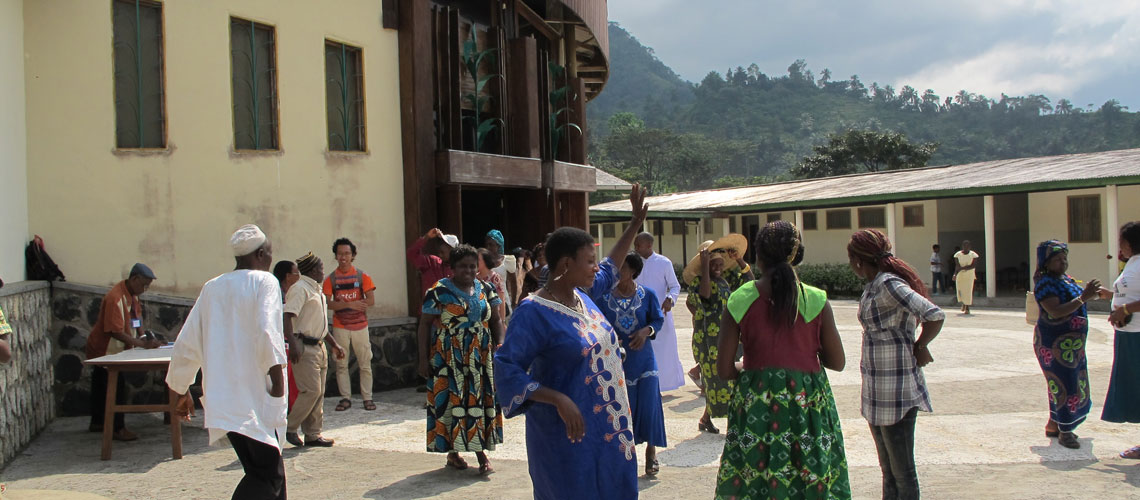 “In the current crisis – the king explained – thousands of people have fled their homes to find refuge in the Mariapolis Center of Fontem. My gratitude is way beyond bounds because the focolarini choose to be with my people, despite the fact that many have run away from the country. The reward awaits each and every one of them in heaven. In the midst of this, I have learned a great lesson from them – that of LIVING TOGETHER AS A FAMILY. They are indeed a true, trustworthy family. They haven’t given up on us and I pray they do not do so. The Focolare Movement is like the backbone of Fontem, without which we are nothing.” After urging us to pray to the Father for his people, and that peace return to Cameroon, the Fon concluded: “Our greatest desire is to live the words of Mama Chiara ’THAT ALL MAY BE ONE.’ Remember us in your prays because prayers are all we need now. Man has failed but God cannot fail.” See letter of HM Fon of Fontem

Replay streaming event
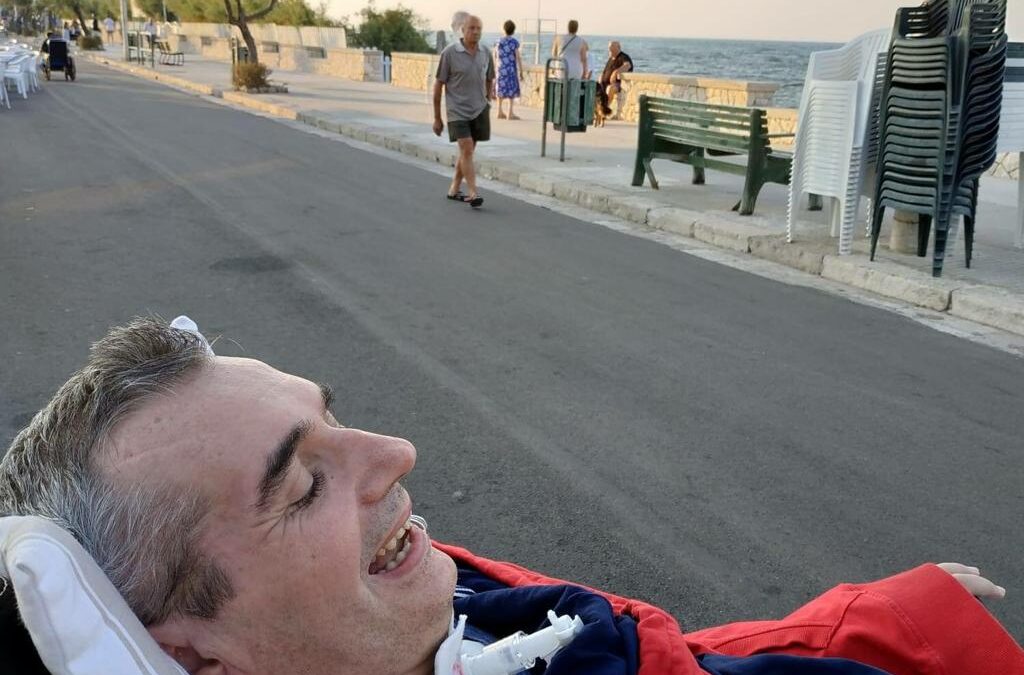
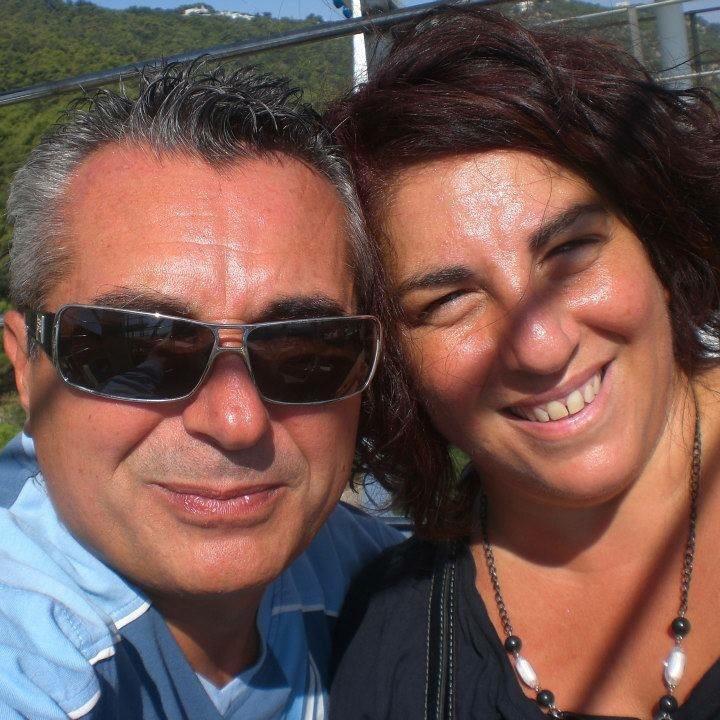 “The year was 1975. I was at high school in Sicily. Learning about Cicero’s denunciation of Cataline in ancient Rome sparked a lively discussion among me and my schoolmates about the hot topic of freedom. Our class teacher wisely channeled our increasingly heated argument into a formal debate between the supporters of Cicero, expressed by one of my companions, and those of Cataline, for whom I was the spokesperson. My passionate defense of freedom became so ardent that they all applauded me. And from that day, the idea of freedom has characterized my whole life. But what is freedom? And am I free?” Francesco is Italian; he is 59 and is married to Paola. The progressive nature of his illness means he can no longer move his body or speak. But he can move his eyes. Last year he started a blog, at the suggestion of a journalist who contacted him for a brief interview. At first Francesco used his thumbs and later began using an eye-gaze device, which may be slow but allows him to communicate the strength and dynamism he is finding within himself even as his body is becoming less active. His blog is entitled: “SLA: io Sono Libero d’Amare”. SLA = Sclerosi Laterale Amiotrofica translates as “ALS. I am Free to Love”. “I’m no author. But a voice within suggests what words to put down. I’ve found I’m watching a film of my life that I never knew of before. This is my strength and I’ve been able to start communicating in this way. I receive messages that are deeply moving. I’ve simply expressed some of my thoughts and I receive back so much love. People communicate their emotions, sufferings, joys and most of all, life!”
 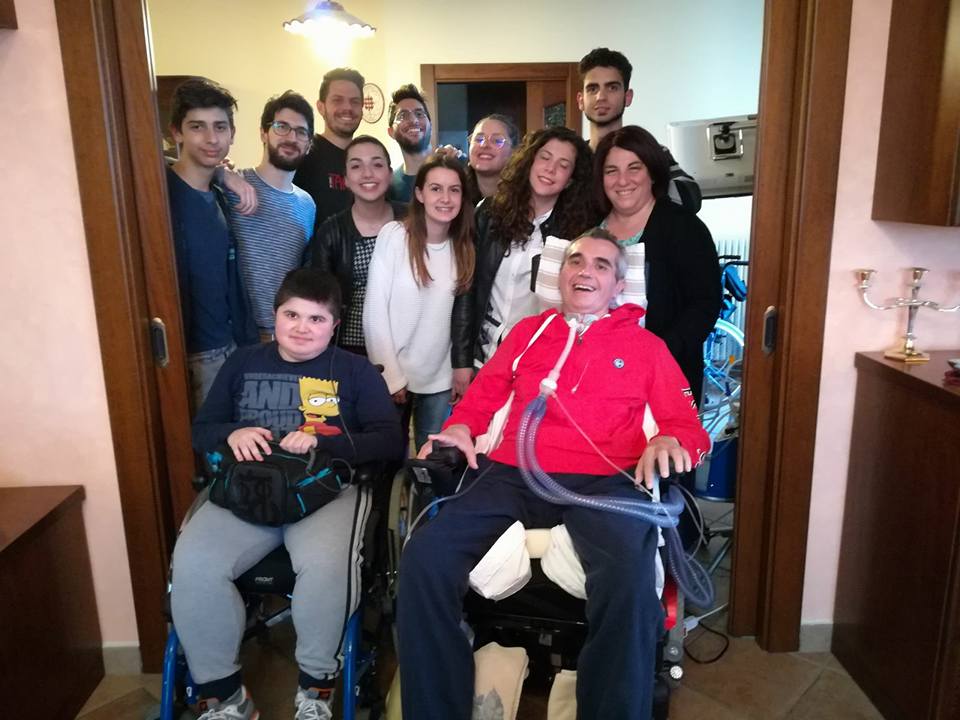 “In my life, I’ve always tried every day to find time for a personal and intimate moment with God. It’s not always been possible, but every time I passed a church, I’d say “Ciao” to Jesus present in the tabernacle. Often I would actually go inside the church just to dedicate a little bit of my time to God. I’d try to silence myself so that He could speak to me. And before leaving I’d entrust the difficulties of the day to Him, sometimes joking ‘Jesus, this one is yours because I certainly can’t solve it on my own’. And I have to say, He’s never let me down.” “How often, no matter how full our life may be, do we detect a feeling of emptiness or apathy inside us which covers our life with a veil of unhappiness?” “One man brought me a glimmer of light: Augustine of Hippo. Reading his Confessions prepared me for an event in August 1976 which changed my life: my meeting with God who is Love and who loves me immensely. How can I correspond to this infinite love? It was the Gospel, which I’d read but not actually lived, that gave me the answer: how can you love the God you do not see, if you don’t love the neighbour you do see? This was my Copernican revolution. I found myself among a group of friends living this experience: we would read the Gospel together and try to put it into practice. My heart practically exploded with joy, and I began to appreciate that even suffering can be life!”
 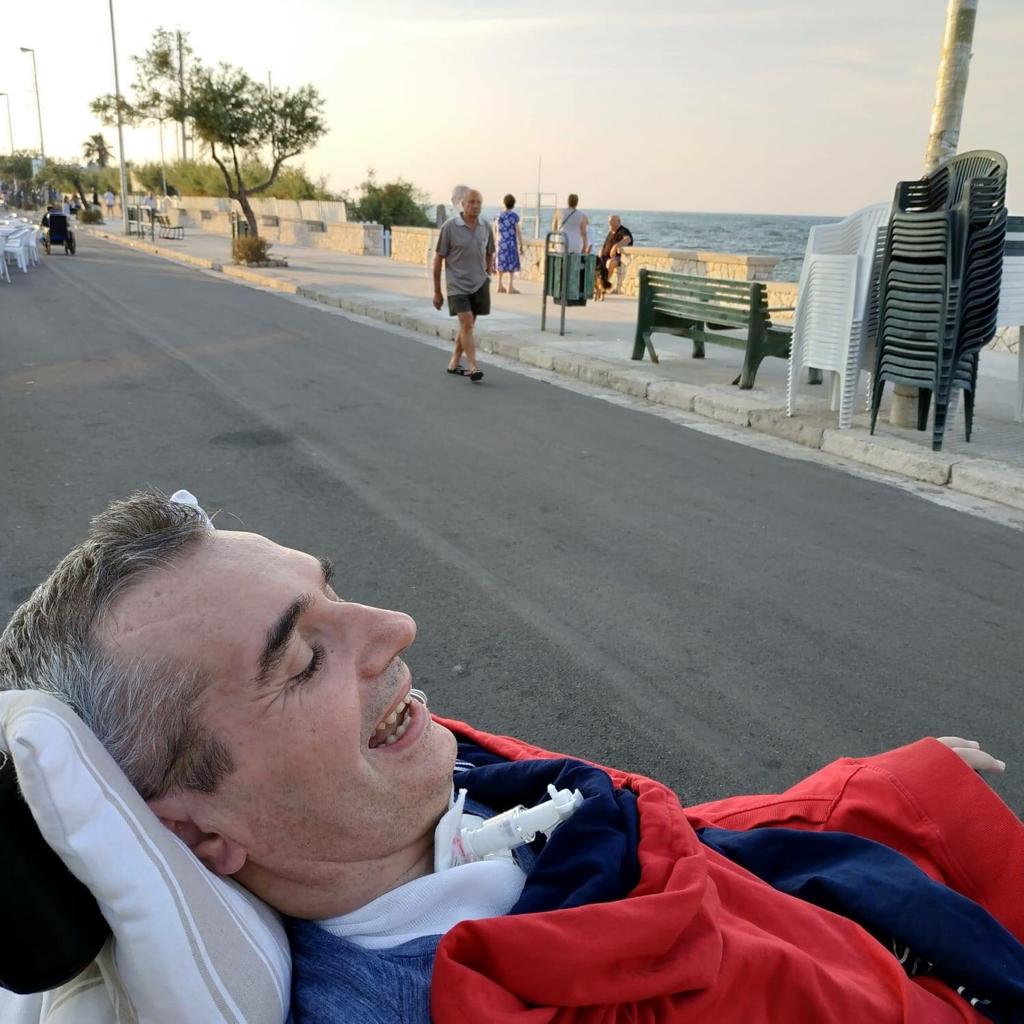 “I can still remember the smell of the sea, even if my illness has left me with no sense of smell, (…) I can feel the sensation of water on my skin, even if I’ve not been able to swim for the past three years. But this is not nostalgia. I’m not suffering over what I used to be or what I’ve become. I close my eyes and my body is floating. It’s not a dream or fantasy; it’s my Lord who continues to say to me ‘Do not fear’.” “This disease – ALS – was written in my heart from when I was born, but I didn’t know it until a few years ago. My tax code actually starts with ALS, and I don’t think it’s just coincidence! I don’t believe in fate, but I trust in one who has chosen me as her son and has never abandoned me. Mary, the mother of Jesus is my safety net, like the one a trapeze artist has (…).” “It is an experience that keeps on repeating itself, every time I’m assailed by doubt and I feel my hope sinking. Mary is always there, so I can’t be afraid! (…) Mary has marked out the way for me, and Chiara Lubich has taught me every day to point my interior compass on Jesus Forsaken on the cross. He is the secret to finding the Truth.” “Living the present moment perfectly brings us into God eternally. That’s what Chiara has taught me. And in the present moment I can cry out loud, maybe not with my voice but with my heart: I am FREE TO LOVE!” (In Italian = “SONO LIBERO di AMARE!” SLA – Sclerosi Laterale Amiotrofica). Extracts from Francesco’s blog (in Italian)
This year’s Islamic New Year’s is celebrated on September 12th, the first month of the Muharram calendar, (المحرم in Arabic), and one of the four holy months of the year. According to some, this feast celebrates the passing of Moses as he fled from Pharoah through the Red Sea. Others say that Adam and Eve, Heaven and hell and life and death were created on the tenth day of Muharram. This feast is celebrated in different parts of the Sunni world, such as North Africa where it has a particularly joyous character. The Shiites fast during the first ten days of Muharram; whereas for the Shunni, it is a voluntary fast as it is for Ramadan.
“…On the day set by you, God, I will come towards you… I will come towards you, my God (…) with my wildest dream: to bring you the world in my arms.” (The Cry, New City Press). Ten years after Chiara’s death we are once more astonished by the prophetic vision for society of this extraordinary woman who, with her ideal of “may they all be one” (Jn 17:21) starting from her own town of Trent, reached the whole world. However, one cannot understand her prophetic nature without considering the historical context in which she was born and lived, and her sharing in the destiny of humanity. She was born in Trent, an existential periphery with great historical and social significance; she experienced poverty and the tragedy of world wars. Set amongst the affairs of her day, a specific charism began to manifest itself in her, the charism of unity: “Above all, each of us must keep our gaze fixed on the One Father of many children, and then consider all people as children of that One Father. Our thoughts and affections should always go beyond every human limitation and acquire the habit of aiming constantly towards being on family in our one Father: God.” In these notes, written on the 2nd December 1946, it is possible to grasp key pillars in Chiara Lubich’s prophetic vision for society. In fact, Chiara was not a social reformer, just as Jesus was not one. Her dream in fact aims higher and goes into greater depth, to the anthropological and theological foundation underlying any kind of social reform: one universal family and unity as envisaged by the man-God, Jesus. This is why we could say that the first social project that Chiara founded was in fact the first community of the Focolare that began in Trent immediately after the war. This community took the words of the Acts of the Apostles literally Acts 2:42-48). They practiced a radical communion of goods and did all they could to care for the poor and the thousands of suffering people the war had left in its wake. This underlying experience has never been lost. Indeed, it is the inspiration behind all the activities and social projects that have been undertaken over the years by Chiara herself and all those who, in following her, have made their own the Ideal of unity. In all of this Chiara’s human and ecclesial genius is clear. Her human genius is clear in the context of resolving social problems. Despite appearances and technological progress there is a scandalous and growing number of people all over the world who are deprived, marginalised and forced to flee or migrate. These ever more serious social problems are the outcomes of iniquitous systems and a type of globalisation put at the service of the dominant powers in this world. Resolving these problems does not in fact depend, according to the most enlightened minds of both past and present, on sociological strategies and actions effective only at the most superficial levels of human reality (accepting that these are relevant and necessary) but rather they are resolved through the fundamental options and the deeper values that motivate consciences. Chiara’s ecclesial genius is evident because the Church’s mission cannot be summed up in charity and care for the least (however necessary they are). Rather its mission is to proclaim, in the light of the incarnation of the Word of God, the dignity of each and every person as a child of God.Without these two driving forces, the anthropological and the ecclesial, we cannot grasp the true social dimension of Chiara Lubich’s charism, which is informed by an intrinsic sociality that develops into life, action and study (see the Social Schools of the Sophia University Institute). What are the practical consequences of this perspective, for all of us? If we want it, a story is awaiting us. We too have a story ahead of us. Chiara takes us out of anonymity to make us the main characters in a dream: all of us are main characters, no one is excluded. Guislain Lafont, a great Dominican theologian, speaks of the “principle of littleness” that in his opinion sums up the practical philosophy of Pope Francis. It concerns the belief that “salvation comes from below rather than from above”. Chiara knew how to apply this “principle of littleness” magnificently, in commitment to true social renewal, set in motion by the paradigm of unity. This is her greatness. From: Italian New City n. 6, June 2018
On 10-11 September, the Jewish communities worldwide celebrate the festival of the Rosh Hashanah, the Jewish New Year of the year 5779, with festivities starting on the eve, 9 September. “The atmosphere of the feast – explained the UCEI, Union of Italian Jewish Communities – differs greatly from that in force in the ’civil’” New Year. It is considered a day of reflection, introspection, self-examination and spiritual renewal. It is the day on which, according to tradition, the Lord examines all of mankind and takes into account the good or bad deeds each has done in the previous year.” In fact, the Talmud says, “During Rosh Hashanah all creation is judged before the Lord.” It is not by chance that in Jewish tradition it is also called “Yom HaDin,” Day of Judgement. Divine justice will be sealed on the day of Kippur, Day of Atonement. These two dates are separated by seven days which sum up to two of the Rosh Hashanah, and those of Kippur are the so-called “ten days of penance.” Rosh Hashanah regards the single individual, the relationship one has with one’s neighbour and with God, and each one’s intentions to improve.”

Maurizio Certini
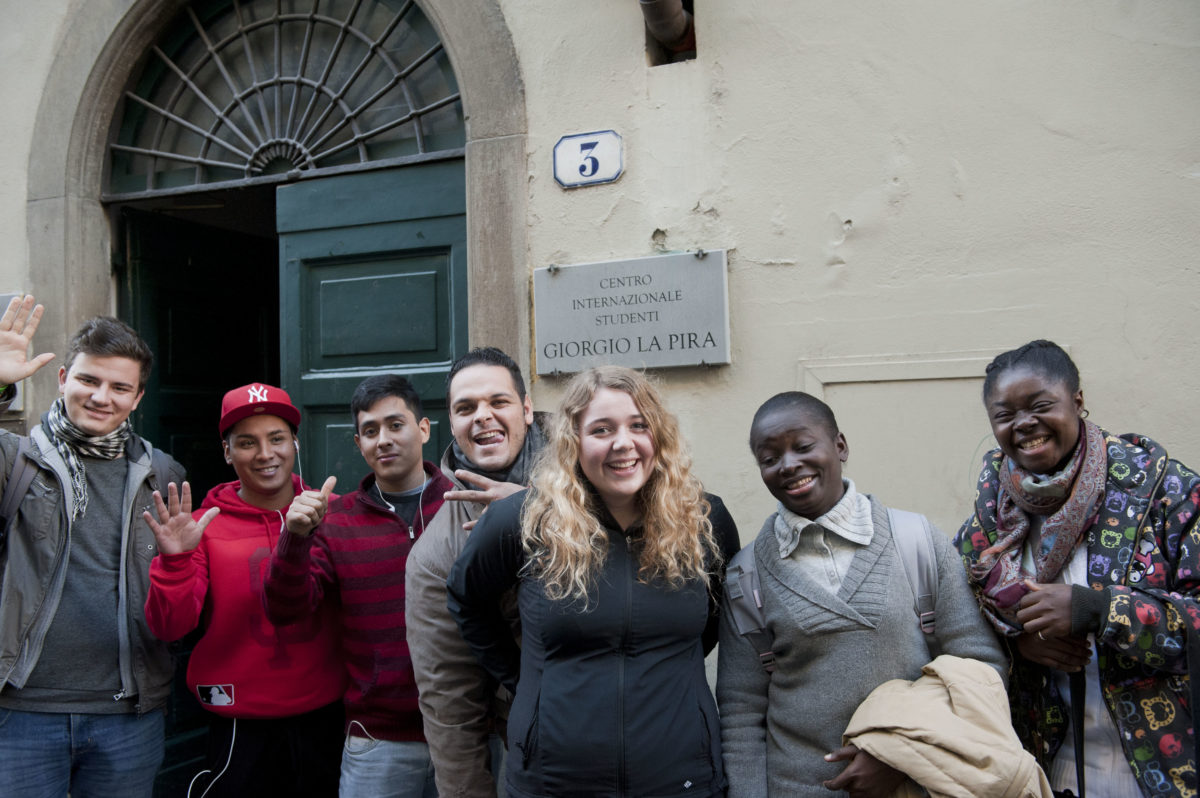 What is the situation now, forty years later? Of course, living conditions for overseas students, who are very able but without much financial support, have certainly improved, thanks to their being exempt from taxes and to the availability of accommodation and canteens. Nonetheless, coming here to study still poses significant challenges. They are far from home and have to look after themselves; it is hard to study in a cultural context they know very little about; there is a great deal of bureaucracy and also the attraction of consumerism. When you get to know the stories of these young people, you are struck by their courage and fortitude in tough times and their perseverance in facing difficulties. More serious problems can arise in the second or third year when, even though they are willing and highly motivated, they don’t get enough credits to stay in the university residences. Suddenly, it is as though they are standing on a precipice, and that can make them start going downhill, which eventually leads to them abandoning their studies and their dreams being ruined. How many young people have passed through the Centre? A huge number. We were keen to address their needs and find solutions, so as to give them hope. Many of them were disappointed and discouraged but managed to pick themselves up and finish their studies. Studying at an overseas university is a unique opportunity both culturally and professionally. However, special attention is needed to link the academic aspect with their need to connect among themselves and with others. This needs to be coordinated and be sensitive to cultural and religious differences, putting the students themselves at the centre, accompanying them in an integral way. Can an association supported mainly by volunteers have an impact on politics and society? Giorgio La Pira often quoted the words of the great renaissance architect, Leon Battista Alberti: What is a city? It’s a big house for a big family”. Today the whole world is a global city. Through our work, we look at the world’s cities through the eyes and stories of our many “guests” and we are open to reciprocity. The word “ospite” in Italian means both host and guest. At the Centre we seek to generate community knowing that we are in an ever more pluralistic social context. We need people who are open to dialogue and who can integrate with one another reciprocally. Today people’s need for community is particularly strong: the world is always in a rush, it’s alienating; there is growing violence, lies, suspicion and fear. Our little ‘field of action’ broadens out every day to the level of citizenship, both national and international. We believe we can win only if we generate community, wanting to build up society as a civil body, putting the human person and their dignity at the heart of everything we do. By Chiara Favotti
“The Old and the New Testaments form a single tree. The flowering comes about in the fullness of time, and the one flower is Mary. The fruit that follows from it is Jesus. The tree of humanity was created in the image of God. In the fullness of time, at the flowering, there comes about unity between heaven and earth, and the Holy Spirit weds Mary. We have therefore a single flower: Mary. And a single fruit: Jesus. But Mary, although she is one, is the whole creation in synthesis at the apex of its beauty when she is presented as bride to her Creator. […] Thus Mary is the flower blossoming upon the tree of humanity, born of God who created the first seed in Adam. She is daughter of God her son. Looking upon a small geranium plant that bloomed with a red flower, a question came to my mind and I asked: “Why are you flowering in red? Why do you change from green to red?” It seemed so strange to me! Today I understood that all of humanity flowers in Mary. Mary is the flower of humanity. She, the Immaculate – the Unstained One, is the flower of the ‘maculate’ – the stained. Sinful humanity flowers in Mary, the All Beautiful! And as the red flower is grateful to the small green plant, with its dirt-covered roots, that brought it to bloom; so is Mary because it was sin that constrained God into thinking of Mary. To her we owe our health; to us she owes her life.” Source: Chiara Lubich, Mary Flower of Humanity
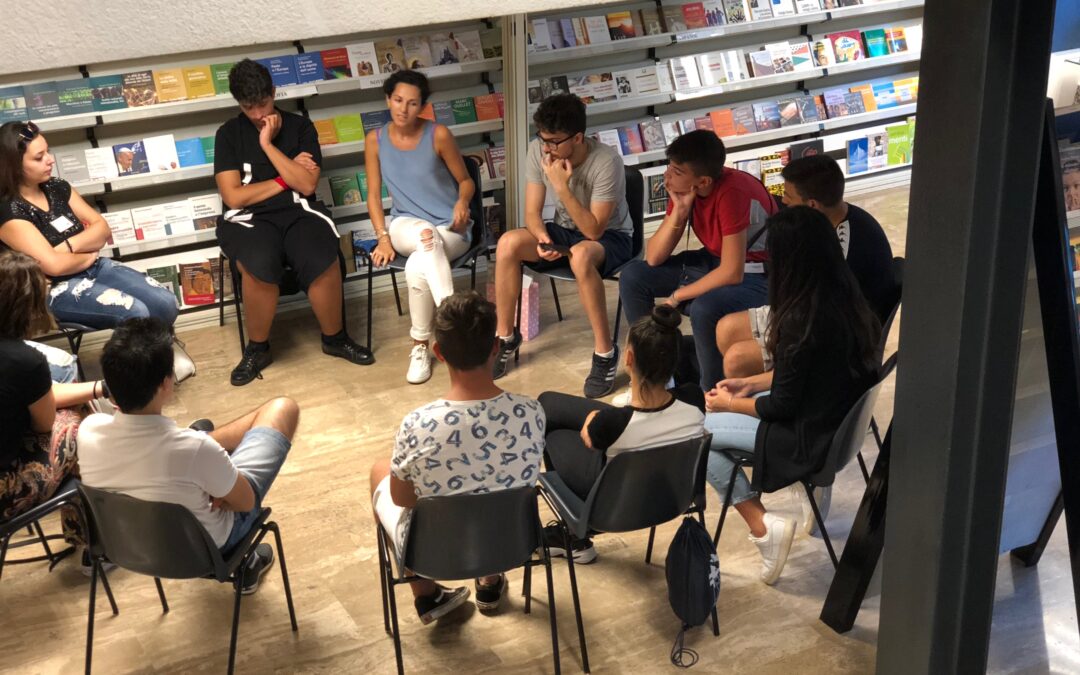
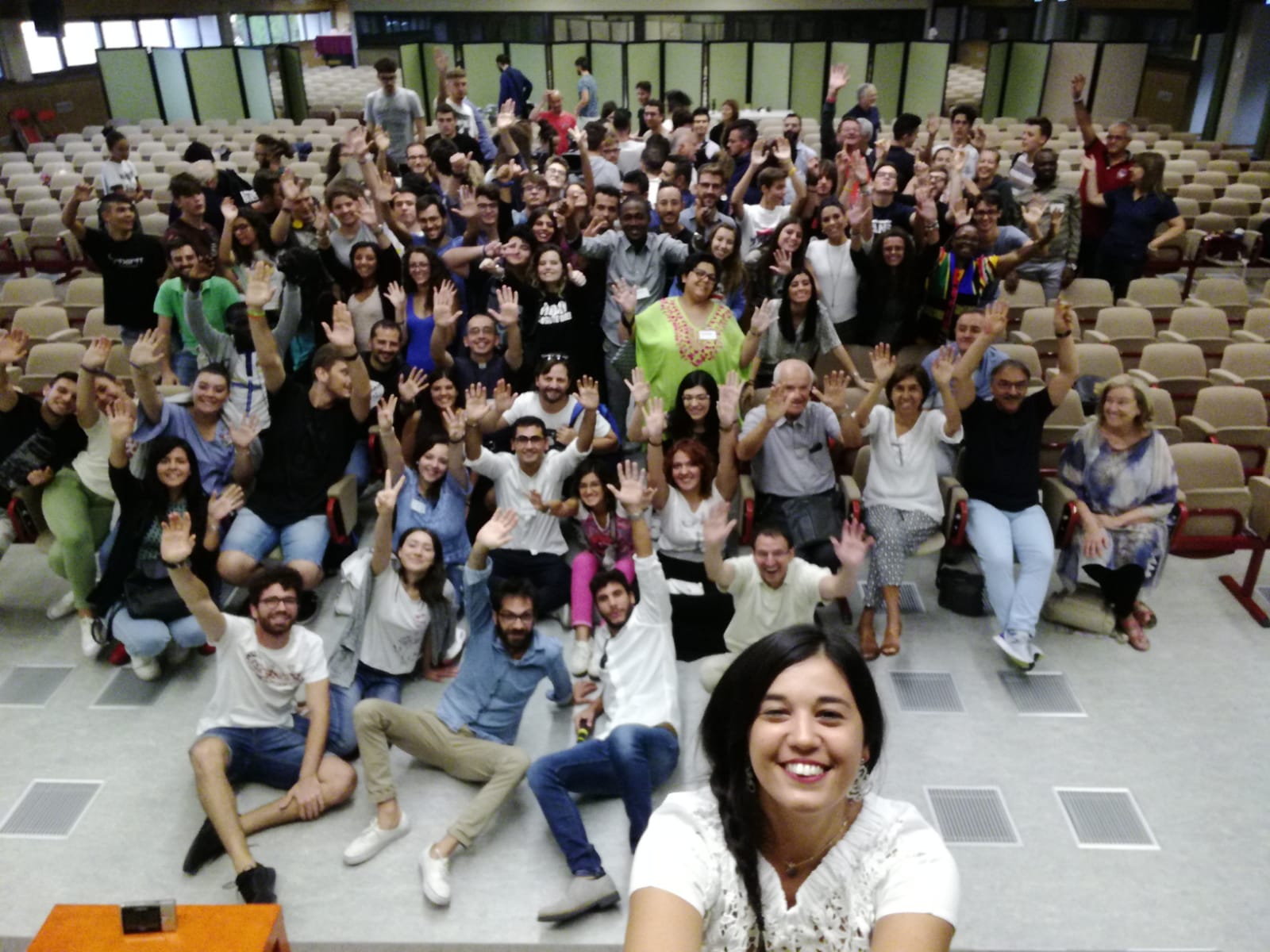 “I remembered a phrase of my friend: ’The idea of God has to grow with us.’ I haven’t tried to understand something about God for a long time now. I really needed to find out from others who knew more than me.” Three years ago, Andrea, a university student left his homeland where he had a reference group in the parish, and moved to a big city. But here he didn’t immediately find a precise reference point for his faith. In the Congress he met many. “I am still searching and am discovering new aspects of this adventure, but I have certainties, strong points. One of these is surely the awareness that the road opened out before me is a community path, to be experienced with others. At times I forget this and so I need to be corrected, but inside me I know that it shall be this,” Nicolas confirmed. “Committed to the ‘We’” was an initiative that was held in Castel Gandolfo (31 August to 2 September) and promoted by the Diocesan and Parish Movements, branches of the Focolare Movement addressing the youths active in the local Church. These movements aim to irradiate the charism of unity in the parishes and dioceses in which they offer their services, and to work together with other ecclesial organisations in the building of a “Church of communion,” as aspired to in the Novo Millennio Ineunte, the Apostolic Letter John Paul II addressed to the priests and all the laity, at the end of the grand jubilee of 2000. For this purpose, it promotes and nurtures an ever deeper unity of the faithful around the parish priests and bishops cooperating in the various dioceses and promoting a new evangelisation in the parishes, according to a community style.
 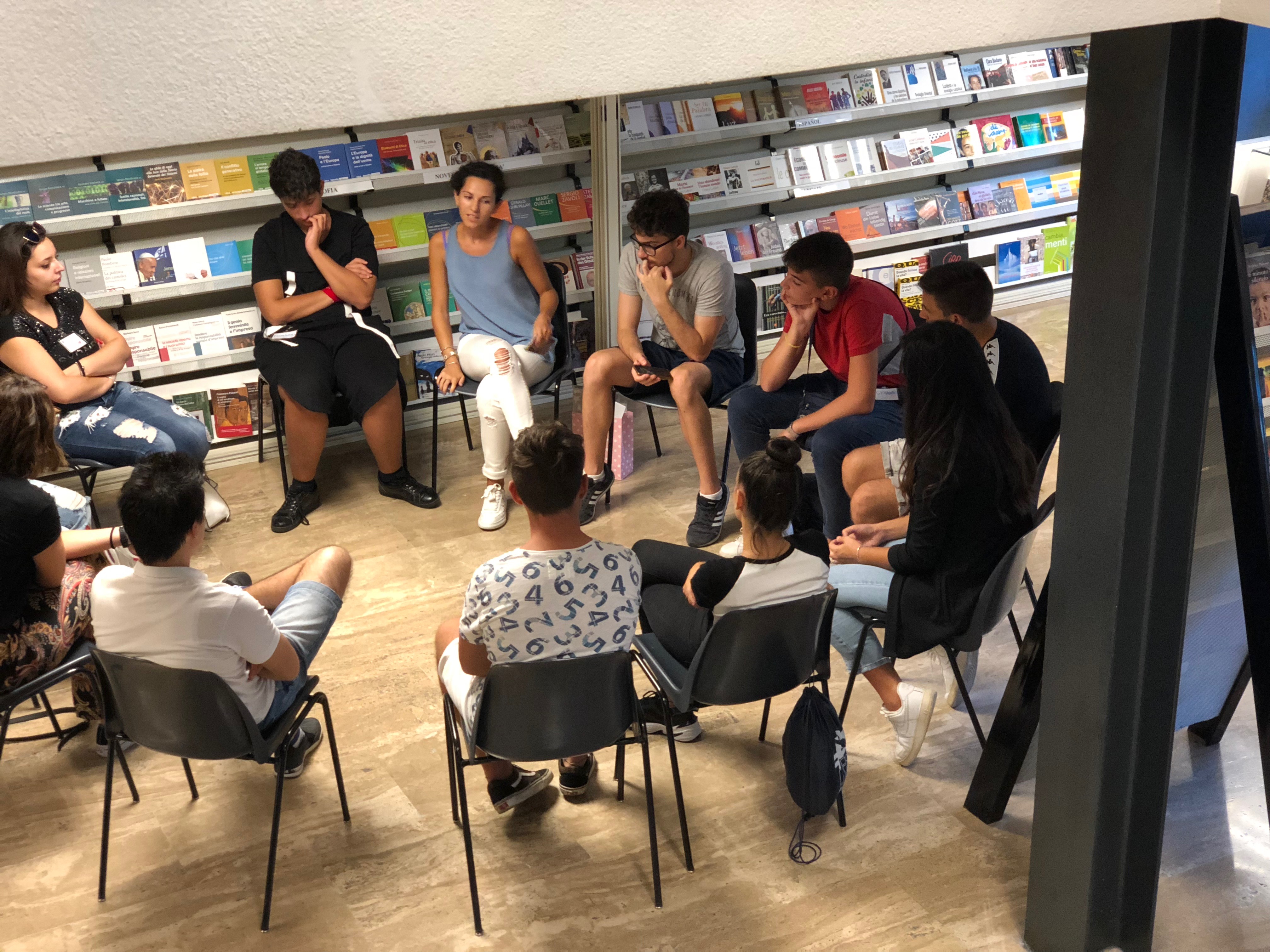 “We chose this title – the organisers pointed out – to contribute in fulfilling what Pope Francis often invites us to do: pass from the ’I’ to the ’we,’ through a community discernment which helps us to grow and make common decisions. During the days they spent together, the participants discussed their own faith, but above all the mission they feel called to, that of spreading the ’good news’ of the Gospel. The life experience based on the spirituality of Chiara Lubich acted as a background, since every charism of God is for the entire Church and humanity. The methodology was the culture of encounter: taking time to get to know one another and being together, to feel as ’people of God,’ a community in which one can grow, helped by those who are moving on with us.” The experience of the congress is fully part of the path towards the bishops’ Synod on the youths, to be held next October. “The words that Pope Francis said?? to the Italian youths gathered together last 11 August in Rome resounded strongly in us: ‘Do not be content with the cautious steps of those who settle down at the end of the line.’ We need courage to risk a leap ahead, a courageous and fearless leap to dream and fulfil, like Jesus, the kingdom of God, and commit ourselves to a more brotherly humanity. We need brotherhood: take the risk, and move ahead!”
Emigrants We live in a country unwilling to welcome migrants. One day, while talking about this topic in our family where we try to live the words of Jesus, we realized that even the marginalized are emigrants. Not long after, we learned of a boy who came from the world of drugs and had no one to take care of him. So we welcomed him into our home until he got stabilized, overcoming his addiction and finding a job. Even later we stayed in contact with him. Now he’s a happy father, with a happy family. R. H. – Hungary The Granary Old and childless, Marie spent many afternoons with us. One day, alluding to the barn behind our house, she told us that she would be happy to live there. We talked about it with our children and decided to make her happy. After obtaining the necessary permits, we transformed the granary into a little house connected to ours by an internal door. Not only for Marie, but for our whole family a door has opened, a new way of understanding the solitude of so many people. We feel genuinely enriched. C. J. B. – Belgium Shining For many years I have been paralyzed and bed-ridden. Last Thursday two members of the Focolare came to see me, which gave me great joy. Later, they told a friend of mine that they had found me “shining” and their comment surprised me very much. I thanked God, asking him to help me to always be like that. The next day I woke up with severe back pain. It was an opportunity to stay “shining” even in suffering. The same thing happened a few days later. This is the attitude I try to have now, even if I don’t always succeed, at least I try. N. P. – Venezuela The Milk Amidst the difficult economic conditions across the country, everything was being rationed and markets were empty. Due to a severe bone decalcification, Rosa needed to drink a lot of milk, but it was hard to find. One day a neighbour went to her house, asking for some milk for her baby who had not been drinking for days. Rosa immediately offered her what was left in the bottle, despite her own children’s protests. Just before evening, eight litres of milk arrived. With tears in her eyes, Rosa exclaimed: “God never allows himself to be outdone in generosity!” M. C. – Mexico The Mother-in-Law Rosita and I had taken in my mother-in-law who was living in a home for the elderly and had problems walking. My sister-in-law was with us too. Grateful for the beautiful sunny day, we went for a walk and to have breakfast at a restaurant in the square of a neighboring village. There was an atmosphere of joy and harmony among us. When we asked for the bill, we were told that it had already been paid by another customer who admired the way we cared for the elderly. My mother-in-law, Felice, confirmed it. R. Switzerland
“The dream of becoming a doctor, which I had always nurtured, became even stronger when, years ago, my father and my brother were involved in a serious accident. The hospital became our home away from home because of a series of surgeries on my father’s legs. During that period I began to understand the difficulties patients had, especially those who didn’t have sufficient funds. “I’ll become a doctor,” I said, “and offer the hope of medical care to everyone.” My family was also in precarious financial conditions. My father, because of a permanent disability caused by the accident, couldn’t work anymore. When school was finished, my dream to study Medicine was shattered when my mother said to me: “We don’t have the money.” I wept bitterly, but then thought: “If Jesus wants this, then I want it too.” We had always been in touch with the Focolare, and they knew my great wish. Several days later, they telephone me to tell me that they had found someone who was willing to help me out financially. I was so happy! It was a sign of God’s love. I began school at the university. It wasn’t all so easy. Every day I needed a good dose of patience and endurance. There were students from different cultures and religions in my class and several of them were bullies towards me whose character was softer and submissive. I tried just the same to be friends with everyone and to stay united to Jesus who gave me strength to face every difficulty. I was also only sleeping for two hours at night because of the tons of pages I had to memorise. I spent all my time studying, but still I was unsuccessful in an exam or missed going out with my friends. And then I was really missing my family. But I was certain that God had plans for me. During the internship we worked 30 to 36 hour shifts on the ward with the patients, and that was really exhausting. We had to do many things at the same time, make sure that the patients were receiving care while studying for exams. The encounter with each patient was an opportunity to love. Even though I was tired and half asleep, I tried to present myself to them with lots of energy, smiling and listening with sincere compassion. In the hospital, the nurses tended to be short with us interns and liked to give us orders. Nevertheless, I tried to silence my pride and build relationships of friendship with them. After a while they changed their attitude. In my group there was one girl who was always contrary to everything and raising her voice against all of us. No one could stand her. I thought: “If I don’t love her, who will?” I learned to understand her difficulty and love her. At first it was hard, I because she always had something she wanted to obtain. I prayed to Jesus for courage and strength to persevere in my understanding attitude. In the en, she also began to understand me better and we became friends. If there’s one thing I learned, it’s that things can go less than well, but you can still grow stronger. I was afraid many times of not managing to “begin again,” which is the secret I’ve learned from Chiara Lubich. Now I’m a doctor and my dream has come true and I have many more opportunities to love God, serving him in my patients as I remember the Gospel sentence: “Whatever you did to the least of these brothers and sisters of mine, you did it to me.”
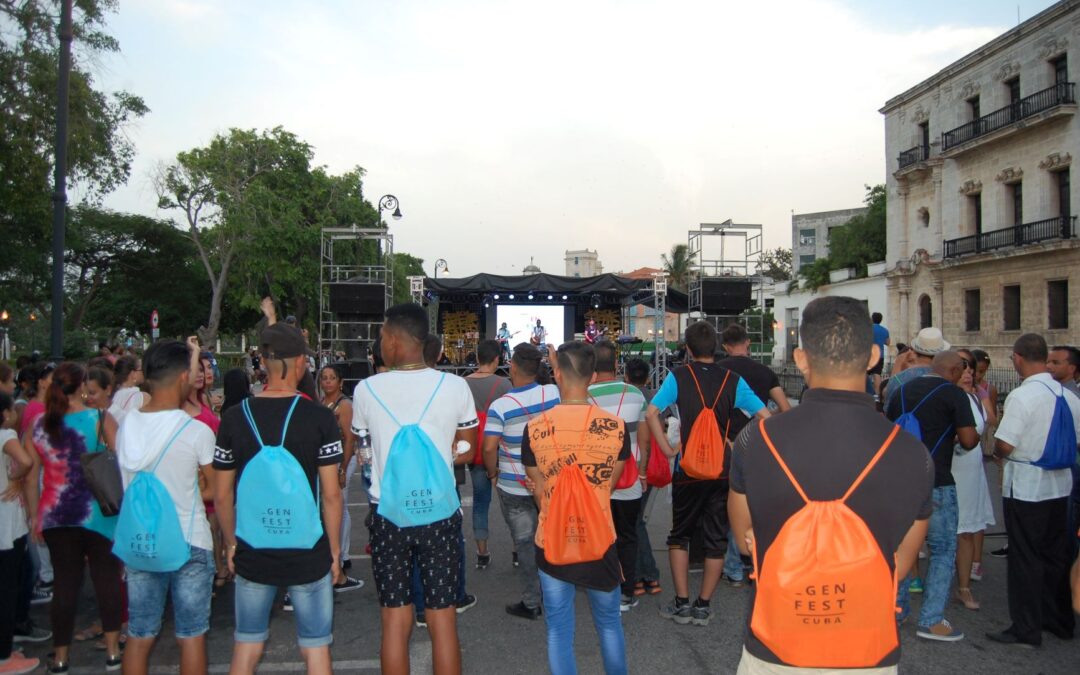
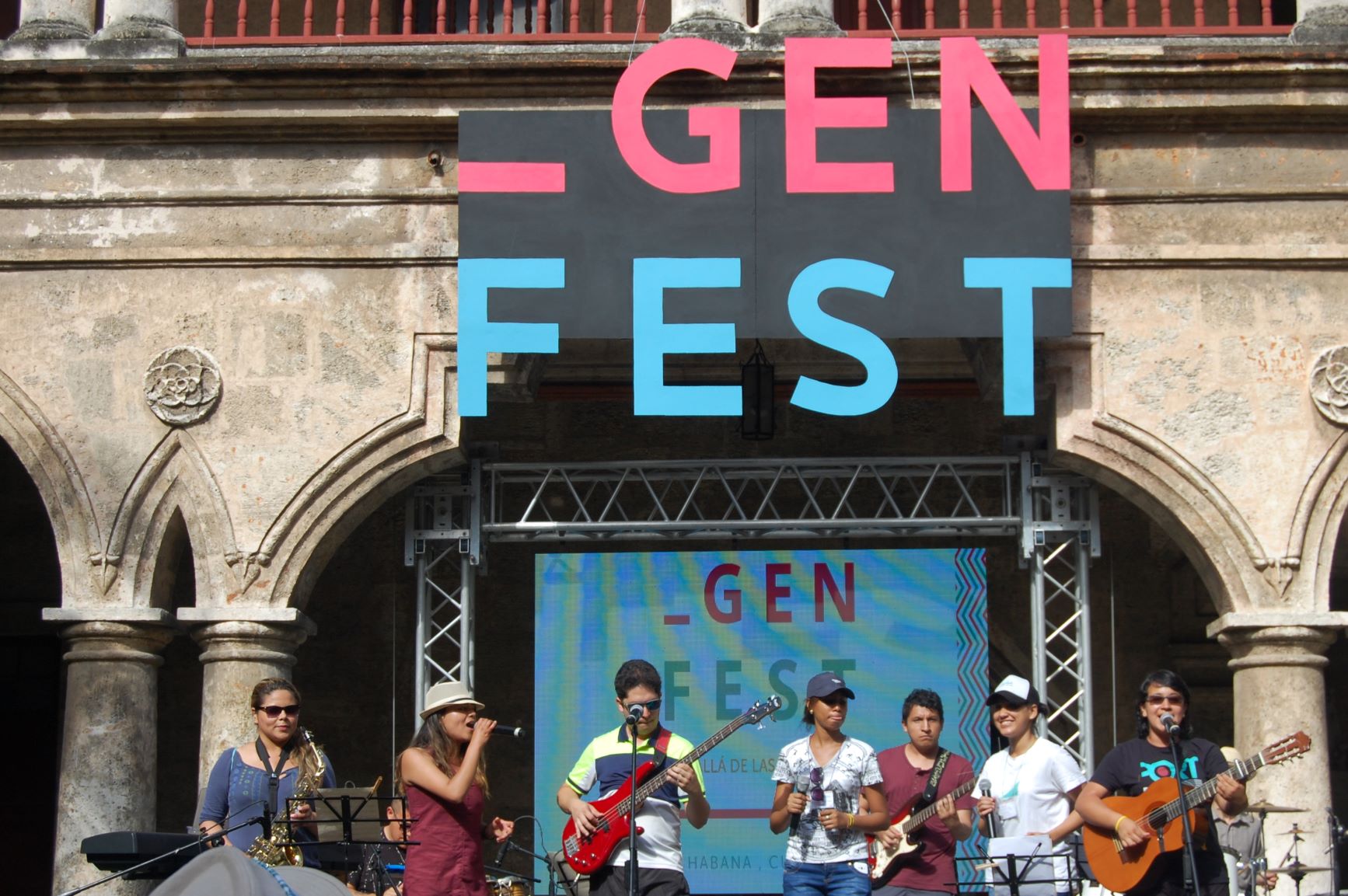 “The first Genfest ever in Cuba ended on Sunday, August 12. It was dream that we had kept in our hearts, entrusted to God, and he made it happen!” So write the Youth for a United World in Cuba. A wave of young people from all over the island came to Havana for the Genfest, an event that had “many firsts.” In fact, they write, up until now “we had never been able to put together an event of this size, obtaining the necessary permissions from the Party office in charge of relationships with religious organizations, with whom there was an excellent collaboration. It was achieved with the help of artists and professionals who through their passion, dedication and by not holding anything back – despite enormous challenges – were able to give harmony and beauty to the content that the young people asked for, after months of working together.” The opening event took place in the historic centre of the city, where Pope Francis had invited the Cuban youth in September 2015 to foster “social friendships” with and among everyone, “to build the Cuba you dream of.” On Saturday, August 11, participants explored the theme of “Beyond all borders” in nine workshops about social economics, Economy of Communion, ecumenism, relationships, the skills need to build peace, postmodernism, etc.
 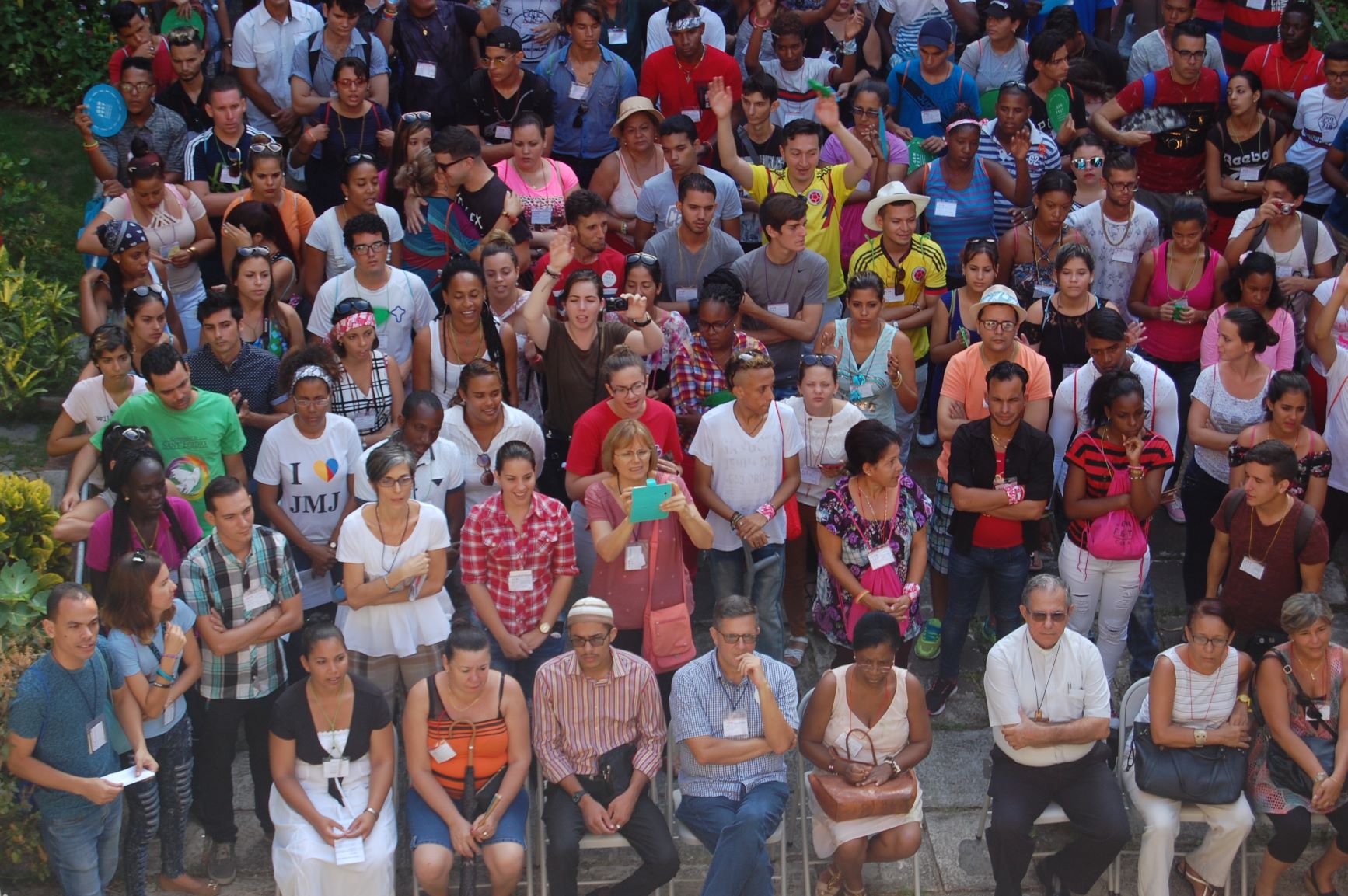 “In the afternoon, at one of the city’s famous cinemas with close to 600 participants, there were testimonies through art and shared experiences on how it is worth living for a united world. There was a profound moment in particular: an actress portrayed Chiara Lubich and her thoughts on how suffering generates life, which is the secret to going ‘beyond all borders.’” “This was the most beautiful experience of my life,” wrote one young woman, “where unity and love are the essence of a lifestyle that builds a more united world. You were able to awaken my faith and hope.” “For those of us who worked on this for almost a year,” says one of the organizers, “it was a long journey that was not without its challenges, due to conditions in the country. However, there was always the help of divine providence, which would arrive just at the right time to give us courage and resources: from South Korea, Colombia, Bulgaria, Italy, Mexico, Puerto Rico, Canada, the Philippines… “We threw ourselves into doing things we had never done before: singing, dancing, presenting on stage, telling our experiences, overcoming our shyness or being ashamed of anything. We learned to listen to each other more, not impose our opinions, and help ideas emerge together. Practically, we learned to love each other.”
 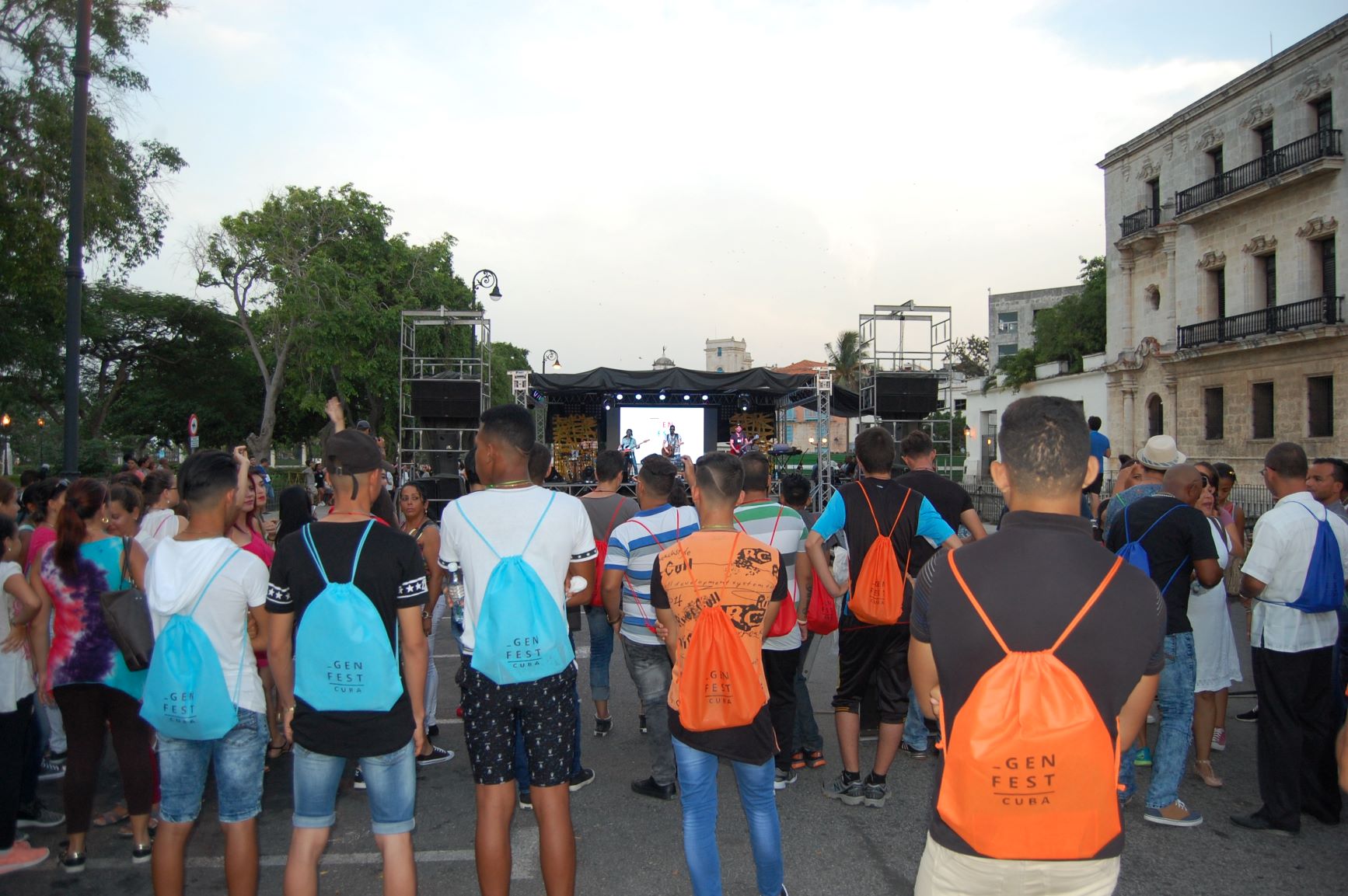 They add, “Genfest was an explosion of love and unity that revolutionized our city.” One of the participants said, “We are making history, not the kind that stays in books, but in the souls of all of us who think, work and participate in the Genfest. The memory of Old Havana remains, and today it is reborn thanks to the Youth for a United World.” “Collaborating with the other movements, youth outreach, and the Council of Churches in Cuba was really nice and productive,” they write. “Genfest in Cuba honored its objective ‘to go beyond every border,’ overcoming huge challenges during the preparation and because of how big it became. It demonstrates how for God, nothing is impossible. We are bringing this revolution of love to the whole world, and many people who did not know of our dream have now witnessed it. We thank all those who believed in this crazy adventure and were there with us with their support. What a profound joy it is to know that we are part of such a big family!”
“In 1984, I was with a group of bishops who came from a number of different Churches. We visited the Basilica of Saint Sofia in Istanbul and were very impressed by this imposing building which seemed to tangibly embody the history of the Church and of humankind. This building dates back to the time of ancient Christianity, to a time when Christians were united and Asia Minor was the centre of the Christian world: it is also the very building where unity was broken through the division between the East and the West. In the sections of the dome that were visible, we saw enormous inscriptions taken from the Koran – a sign of the domination of another religion over lacerated Christianity. There were several signs saying “Prayer is forbidden” right in front of us. It was a museum in which people were wandering around with cameras and binoculars admiring the artistic treasures. The absence of religion in a place that had previously been so sacred was terrible. We felt overwhelmed by this sequence of events: unity, unity broken, the diversity of religious faith, no religion at all. We gazed around in search of help when, all of a sudden, we saw it! Above the dome, quietly glistening, there was an ancient mosaic of Mary offering her Son. Looking at it, I clearly understood that this is the Church: to simply be here and be the first to generate God, that God who seems to be absent. I understood “Theotokos” – the mother of God, the one who generates God – in a completely new way. I understood that we cannot organise faith in the world. If no one wants to hear about God any longer, we cannot hammer on saying “Woe to you!” We just have to be there and be the first to bring the light of God to the world, that God that seems to be absent. We cannot “create” God but we can only shed light upon him; we can’t use argument to prove that God exists but we can be the chalice that contains him, the heaven from which he almost imperceptibly shines forth. I understood not only our task in the Church but also how the Church exists in the figure of Mary and Mary exists in the figure of the Church – how both the figure and the reality are the same.” Klaus Hemmerle, Partire dall’unità. La Trinità e Maria, pp. 124, 125.
“Holy Father, you can truly count on our full unity and fervid prayer facing these attacks aimed at discrediting your person and your action of renewal,” Maria Voce wrote these words in a letter that was sent to Pope Francis on August 30th in which she expressed prayer and support, following the various attacks that have recently been levelled against him. The Focolare president expressed gratitude to the Holy Father for the recent World Meeting of Families held in Ireland which, among other things, highlighted the rapport that was established between the Pope and those who attended. On behalf of the whole Focolare Movement, Maria Voce acknowledged the Pope’s heartfelt and repeated request for forgiveness from the families of the victims, and also the way his message of love was embraced. “In every wound of the Church and of humanity,” Mary Voce says, “we recognized the crucified and abandoned Christ, and, together with you, we look at Mary in order to live with courage your example as authentic disciples.” Finally, Maria Voce thanked the Pope for his recent “Letter to the People of God” which, in addition to expressing the solicitude and love of the Holy Father for humanity, indicates “how to share in the “cry” that rises to Heaven from those who suffered and still suffer, as well as how to work so that such evils are not perpetuated. Let us embrace both his words and his concern.”
The World Day of Prayer for the Care of Creation is celebrated every year on 1 September which is running its 13th edition this year. The initiative started among the Orthodox Churches to which other Christian Churches adhered in their commitment to rediscover ecumenical cooperation in the care of creation. In 2015, also the Catholic Church joined the call to all of mankind to take up their responsibility towards creation and the safeguard of the lives of all the peoples of the earth. In 2017, in a gesture to seal this common commitment, Pope Francis and the ecumenical Patriarch Bartholomew I of Constantinople signed a document which states among other things, that: “ the human and natural environments are deteriorating together, and this degradation of the planet weighs on the more vulnerable people. The impact of climate change affects, above all, those living in poverty in every corner of the globe. Our duty to use the assets of the earth responsibly implies the recognition and respect of every person and all the living creatures. The urgent call and challenge to take care of creation is an invitation to all of humanity to work for a sustainable and integral development. […] We are convinced that there cannot be a genuine and long-lasting solution to the challenge of ecological crises and climate changes without a united and collective response, and without a shared responsibility that can give an account of the actions taken, giving priority to solidarity and services.”
A great number of displaced people waiting to return to their homes still submerged by the devastating floods, has in the meantime been gathered in 3,800 relief camps. The rescue and aid operations are brought ahead amid great difficulties due to the inaccessibility of some zones. In some cases, water and food have been launched from helicopters, given that roads and bridges have been destroyed. The local communities of the Focolare have written: “We’ve just returned from the Mariapolis (at about 300 km from Kerala) held with the members of the Word of Life groups scattered within a range of 120 km. Our hearts are with the people of Kerala which has been destroyed by the strong rains. We are still in the monsoon season, and the hot winds provoke these tropical typhoons. As far as we know, the members of the Movement are safe. A retreat had been programmed for the priests in Trivandrum (south Kerala), but it had to be cancelled since it is not safe to travel and many priests are involved in the tragedy. In the weekend, our local communities will be involved in gathering foodstuff and prime commodities to be sent to the stricken areas. We count on your prayers.” Also Pope Francis prayed for the victims and that “our solidarity and concrete support for the community will not be lacking.”
The following accounts were created for those who wish to donate:
| Azione per un Mondo Unito ONLUS (AMU – Action for a United World) | Azione per Famiglie Nuove ONLUS (AFN – Action for New Families) |
| IBAN: IT58 S050 1803 2000 0001 1204 344 at Banca Popolare Etica | IBAN: IT55 K033 5901 6001 0000 0001 060 at Banca Prossima |
| SWIFT/BIC code: CCRTIT2T | SWIFT/BIC code: BCITITMX |
| Description of payment: Kerala Emergency (India) | |
| The contributions paid in the two accounts with this payment description will be managed jointly by AMU and AFN. Tax reliefs are provided for such donations in many EU countries and in other countries in the world, according to diverse local norms. | |
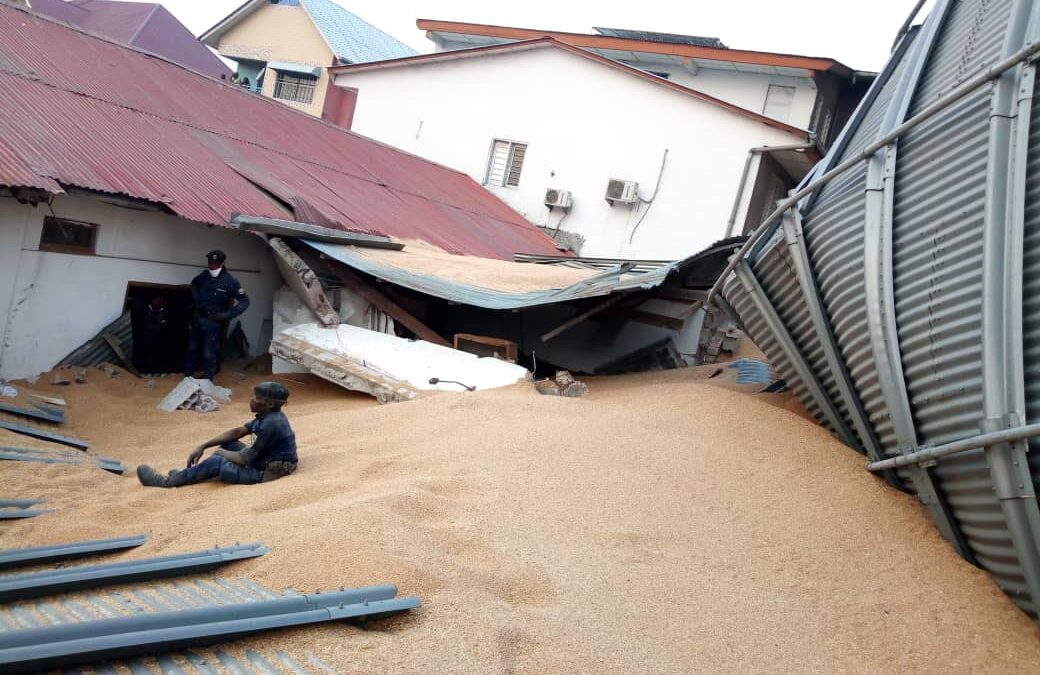
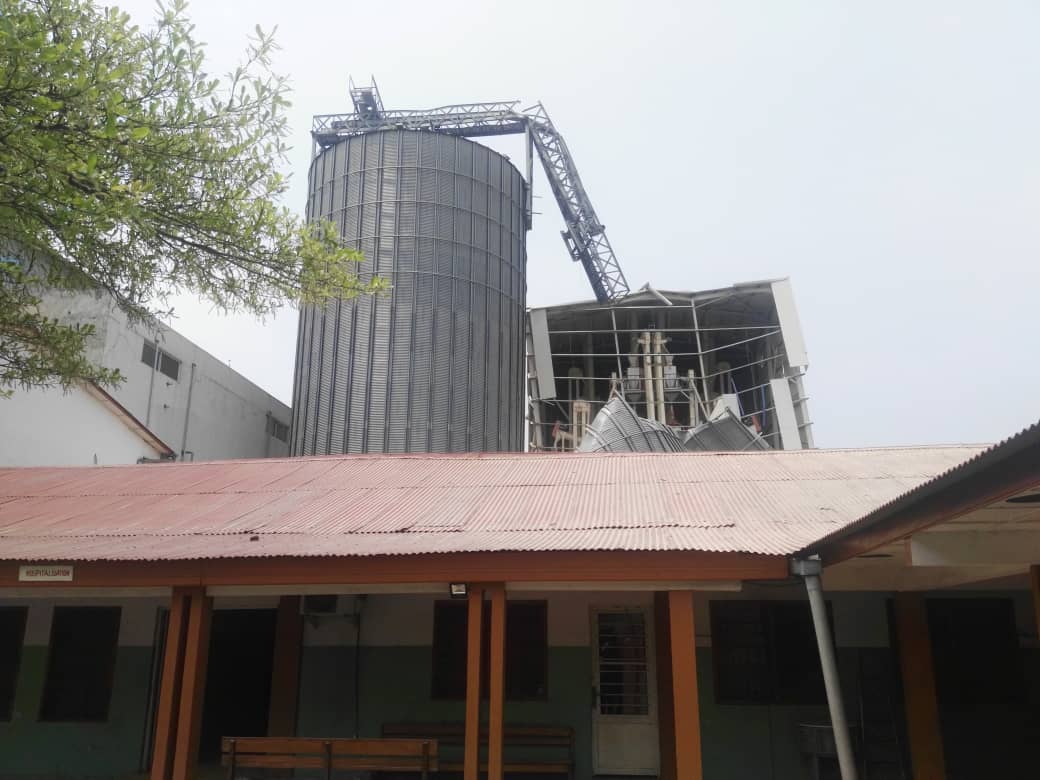 Focolare president Maria Voce wrote to the local Focolare community in the Democratic Republic of Congo: “Let us ask the Father to welcome into His Kingdom of peace all those persons who lost their lives in this serious accident, while entrusting to His love the wounded and everyone involved.” The accident occurred on the morning of August 28th in the city of Limate, north of Kinshasa. A silo containing tons of wheat, owned by flour producer FAB Congo, collapsed on part of the Moyi mwa Ntongo Hospital and an adjacent company. Under the weight of the rubble some people lost their lives, including Valentine, a member of the Focolare who was in charge of the laundry services, while other victims were in nearby buildings. “There has been an outpouring of help and support, searching for her body,” writes Aga Kahambu on behalf of the local Focolare community, with police, Red Cross and volunteers working tirelessly. Some of the victims are FAB employees, but the number is still uncertain. It is a very sorrowful time for all of us, but the unity and solidarity among so many has helped to strengthen us.”
 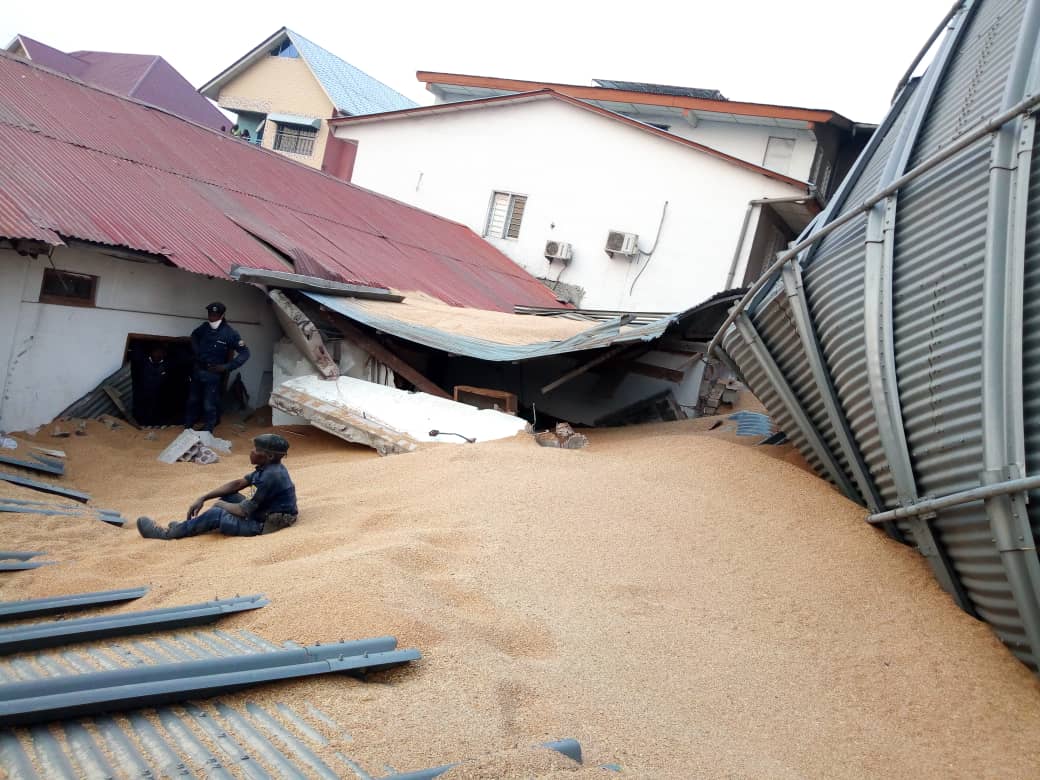 According to the local newspaper, “Actualite.cd,” the count is provisional, because the incident occurred at rush hour” and it reports “significant damage to the facilities, with the destruction of radiology, diagnostics and other departments.” Constructed in 2006 and directed by the Focolare Movement, the medical centre Moyi Mwa Ntongo is considered an excellent facility with 55 beds. Built for the care of child blindness, the centre then took on other projects, such as HIV and AIDS. Moreover, it is a model international humanitarian project: it makes use of specialists and local staff, trained both in the DRC and in Europe. In 2016, ten years after its founding, it finished a modern maternity and neonatology unit, which are essential in a country with one of the highest infantile death rates in the world. Fortunately that unit was preserved from the collapse. The ward was completed thanks to the contribution of people and agencies connected to the Focolare Movement, such as the Giancarlo Pallavicini Foundation and the gentlemen Albina Gianotti and Vittorino Giussani, financers of the Medical Centre since the day it began, and by AMU Luxemburg and AECOM Congo, as well as other supporters.
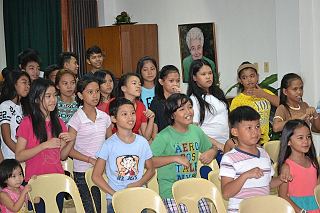
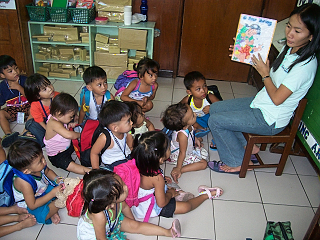 “When I was 6, my mother made me sign up to the daily social assistance program at Bukas Palad, which is a social project put on by the Focolare through its AMU (Action for a United World) and AFN (New Families) organizations. She had met a teacher who worked there. I remember her telling me, ‘There you will learn to have a smile that shines.’ My mother also participated in formation meetings and started to commit herself as a Volunteer. Initially I thought that she did it because she had nothing else to do, other than housework, but then I changed my mind when I saw that she also went on Saturdays. My father and brothers noticed she was happier. I was also attracted by the spirit of reciprocal love and unity that there was between staff members. Thanks to the project I was able to complete all my studies and graduate. I can testify that Bukas Palad had a fundamental role in most of my experiences and life choices. I remember quite well all the activities that we had at school and during the weekends with all the students. The training we received helped us become people who were sensitive to others and consider being poor not as an obstacle to doing what we want, but a gift. Through the project I met Chiara Lubich and the young people of the Focolare. Growing up in this environment, I learned that dreams can be reached if we believe that God’s love has a plan for each of us in our lives. I graduated with a degree in education from the University of Cebu, and then I passed the teacher’s entrance exam. Immediately after graduating I started working, continually accompanied by my Focolare ‘family’, who were always at my side, even when I had to face the world of work and life in general. Whether in moments that were satisfying or those that were more difficult, I had one of Chiara Lubich’s sayings with me: ‘Be family.’ When I think of Bukas Palad, I know well what it is to be a family. At first I taught in a private school for five years. Then in 2014, I requested a change to teach in public school. I was assigned to a school in Mandaue, a city that is part of the Cebu metropolitan area. Here things were completely different; there was not the same structure or systems in place that I was used to. When I had been teaching in private school, I thought that being a teacher meant having a huge heart and a brave soul. Now that I work in a public school, I believe I need a heart that is even larger, a soul that is even more courageous, and even more strength. Each time I’m tempted to leave this work behind, something keeps me here – especially the children. I see in them myself and my friends, many years ago, when we dreamt of becoming what we are now. Perhaps I will not be able to give them the same help and support that my family and I have received, but I try my best to transmit that same love to them.”
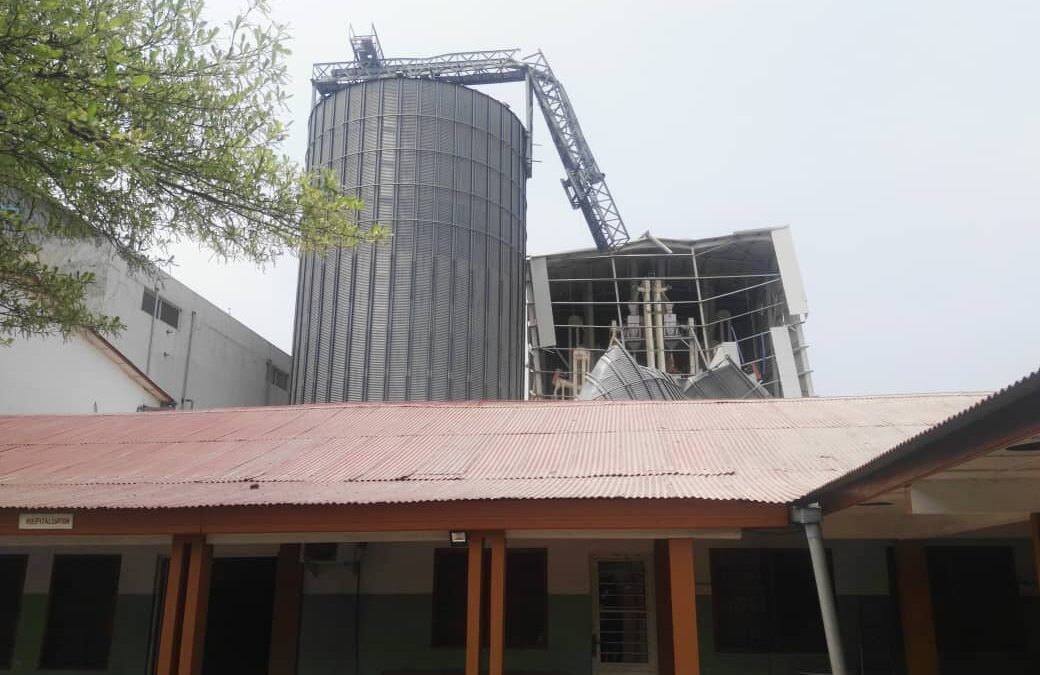 The Focolare Movement is closely monitoring the situation in the town of Limete, north of Kinshasa, capital of the Democratic Republic of Congo. This afternoon there was the sudden collapse of silos containing tons of wheat which destroyed large sections of the Moyi Mwa Ntongo hospital, built in 2006 by the Focolare Movement. The death toll is uncertain, though at least two people have been confirmed dead, including a woman who was working in the laundry, and some have been injured or are missing. The assessment of damage to facilities and equipment is also unknown.
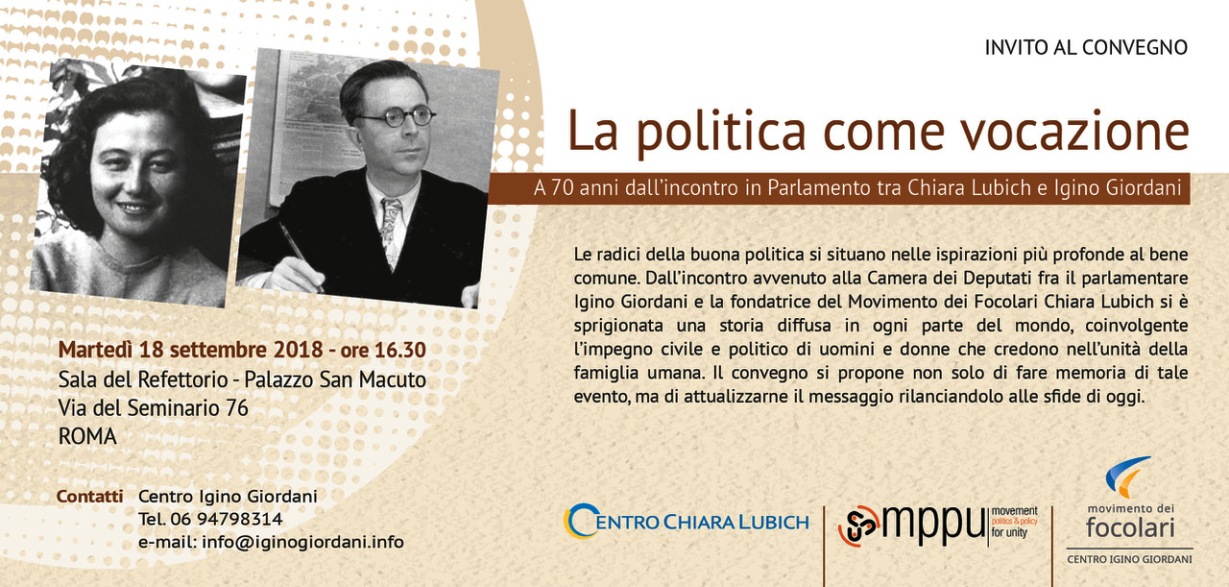 Politics as a vocation 70 years from the encounter between Chiara Lubich and Igino Giordani in Parliament. The roots of good politics lie in the deepest aspirations for common good. From the encounter at the House of Representatives between Igino Giordani and the founder of the Focolare Movement, Chiara Lubich, ensued a story that spread to every part of the world, involving the civil and political commitment of men and women who believe in the unity of the human family. The convention aims not only to commemorate this event but to actualize its message, and relaunch it to meet the challenges of today. Tuesday, 18 September 2018 – 4.30 pm Sala del Refettorio – Palazzo Dan Macuto Via del Seminario 76 ROME Contacts: Centro Igino Giordani Tel. 06/94798314 Email: info@iginogiordani.info
for ages 4-8 | for ages 9-17 | Print | Audio
The Word of Life this month comes from a text attributed to the disciple James, who was a prominent figure in the Church in Jerusalem. He exhorted Christians saying there should be coherence between what they believed and what they did. The first paragraph of the letter highlights an essential condition that makes this possible. Christians needed to be free from all wickedness in order to welcome God’s word and be guided by it on the journey toward fulfilling their Christian vocation. The word of God has a creative power that produces fruits of goodness in both the individual and in the community. It builds relationships founded on love between each of us and God and among us all. James says this word has already been “planted” in us. “Humbly welcome the word that has been planted in you and is able to save your souls.” One place where God clearly speaks to us is the Bible, and for Christians the Gospels are especially important. We can welcome God’s word by reading Scripture with love, and we see its fruits when we put it into practice. We can also listen to God in the depths of our hearts, where we often experience an influx of many voices and words. These might be slogans, or refer to choices we might make, or people to admire or maybe worries or fears. How can we recognize God’s word and leave room for it to live in us? We need to make ourselves still and surrender to God’s call, so as to listen freely and courageously to his voice which is usually gentle and quiet. God’s voice asks us to avoid being closed in on ourselves and to venture onto the path of encounter and dialogue with him and with others. It also calls on us to work so that human coexistence can become more harmonious and we can be increasingly ready to recognize one another as brothers and sisters. “Humbly welcome the word that has been planted in you and is able to save your souls.” How can this be? It is surely because, from the very beginning, God stated clearly that humankind was created in his “image.” In fact, every human being is a “you” in relation to God. Every person is called into existence to share in God’s life of love and fellowship. In addition, for Christians the sacrament of baptism incorporates us into Christ, the word of God who entered into human history. God has, therefore, sown the seed of his word in every person. This word calls them to do what is good; it calls them to justice, self-giving and fellowship. When the word is welcomed and cultivated in our own “soil,” it produces life and fruit. “Humbly welcome the word that has been planted in you and is able to save your souls.” In fact, the word of God can transform our daily life into the story of our liberation from the darkness of personal and social evil. However, we need to accept the word personally and consciously, even if it is an ongoing process and we are imperfect and fragile. Our thoughts and feelings will become more like those of Jesus himself. Our faith and hope in God’s love will grow stronger, and we will notice other people’s needs and help them. Chiara Lubich explained this in 1992: “We saw a profound unity between Jesus’ love for the Father and his love for his brothers and sisters. There was total coherence between his words and his life, and this fascinated and attracted everyone. “We too should be like him, accepting his words with childlike simplicity and putting them into practice. His words shine out in their purity, strength and completeness. By living them, we become the kind of disciples he wants us to be, disciples who are equal to their teacher, like Jesus spread throughout the world. What greater and more beautiful adventure could there be?” Letizia Magri soundcloud.com/…/word-of-life-september-2018
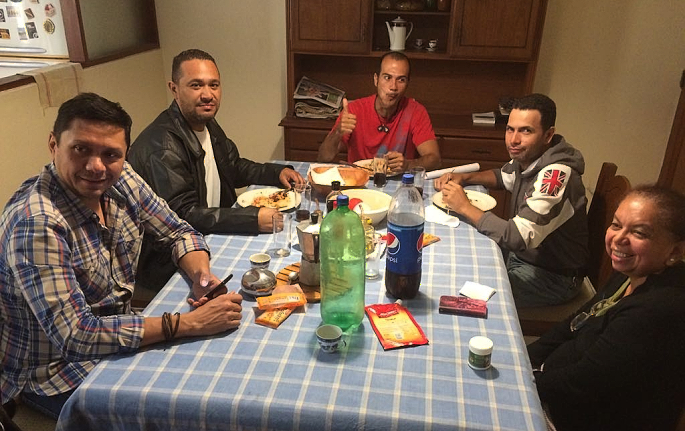
“According to reliable sources, on the 11th of August alone 5,100 Venezuelans crossed the border between Ecuador and Peru, a record that exceeds last May when in 3,700 new arrivals arrived in one day. This is why Ecuador has declared a state of migratory emergency.” Roggero, born in Venezuela of Italian parents, knows Latin America where he lived for almost 40 years before moving to the Peruvian capital in 2015. Not only are Brazil, Colombia, Ecuador and Peru grappling with an epochal exodus, but also more distant countries like Chile, Argentina and even Uruguay and, according to many observers, it threatens to provoke one of the greatest humanitarian crises in recent decades. The new rules of entry into Ecuador and Peru a few days ago imposed on Venezuelan citizens to show a passport, which is impossible to obtain these days. “This is something hard to understand if you aren’t experiencing it for yourself. The Venezuelans who have fled to Peru may have already reached the quota of 400 thousand people. They fled from a country in the grip of a very serious crisis where everything is lacking, and I’m here to find a job and keep together the rest of the family that’s been left in Venezuela at the cost of great sacrifice. They are willing to do anything, they often go hungry; they spend even 3-4 hours a day on the bus to earn just a few dollars. Many sleep on the floor and suffer from cold because they do not even have a blanket and shower with cold water. But at least they know that the family members who went to stay in Venezuela (wife, children, brothers, grandparents …) have a roof over their heads and can somehow survive with the few dollars that come from abroad. Meanwhile, the Focolare community has been trying to welcome people, relatives or friends, who keep arriving. “What is important for us,” says Silvano, is that they find a family atmosphere. Then, if we can share some food, jackets, medicines, a blanket or some help in obtaining a temporary residence permit, even better. On August 12th we met for the third time in the Lima focolare with the Fiore Center one of our operations offices. We were 23 people, two thirds of whom were Venezuelan. First, those who wanted could attend Mass. Then we offered lunch on two large tables. Before leaving, we saw a video presentation of Chiara Lubich, because most of the people did not know the Movement. An always moving moment is when we distribute clothes that the local community collects for us. We also laughed a lot when one of the people was wearing his coat, which he picked up by accident. This unusual happiness concealed some very harsh realities and all kinds of painful stories of the journey from Venezuela. Talking and listening to them has been a liberation for them. To somebody in emergency we could offer, in the meantime, some washing machine tours. To some others we were able to offer a few turns of our washing machines for their laundry. Two rocker friends of one of the guests showed up by chance and left deeply moved by the relationship they had seen among all of us. They called us “quality people”. It seems that this definition, in the rocket world, at least in Venezuela, is the highest possible compliment. And it was not over yet: from the one you would least expect came an invitation to say a final prayer. All of us in a circle joined hands and offered a prayer that was very meaningful! That same evening we learned that the UN estimates that 2.3 million Venezuelans have already fled the country since the beginning of the crisis. So we still have a lot of work to do – and for quite a while. “
 Married for 31 years, with five children and a granddaughter on the way, Gianni and Maria Salerno would have many stories to tell, along with practical advice on raising children. But for their panel on “Joy and the challenges of parents raising children in today’s world,” which is the main topic of the meeting in Dublin, they bring to the table the patrimony of the life and experience that has matured for many years in the Focolare’s New Families Movement. Some of the topics that will be discussed are: the role of technology in the family, the relationship with the faith, the multiple connections with work, the economy and environment. It is a “family of families,” which draws on the spirituality of unity of Chiara Lubich as a compass that marks north on the sometimes wearisome journey of life. “We’d like to emphasize several “key terms” that seem useful for the relationship with our children and are liveable anywhere in every the country of the world, regardless of culture. The first is detachment. Our children are not ours, they’re God’s children. This attitude allows us to seek what is best for them, to respect their freedom and to discover God’s plan for their happiness. Another important word is accompany, to them feel our nearness so that they can face difficulties without feeling all alone. Thus they can learn commitment, through an ongoing training of the will. Then, there is a phrase that has always been fundamental in our experience and in the experience of many other families from around the world with whom we are in contact: start again. When you make a mistake, when there’s a problem, or love is lacking, we can always put a period and begin again, asking forgiveness if we’ve overdone it when correcting one of our children, which for parents is often an opportunity to unload rather than educate.”
  “We should always try to immerse ourselves in what our children are going through. We use a popular phrase to express our desire to listen deeply and be open: walk in their shoes for a while before giving any quick answers. Example, sharing and dialogue are indispensable in a family. You have to be able to talk about anything in a family and parents are the ones who must prove it, using their antennas to catch the non-verbal messages that children send – especially teenagers – which are often provocations. Then we need to give our time to them. How much effort this involves, perhaps at night after a long day’s work, especially when our thoughts don’t coincide. We have to allow ourselves to challenge them without any fear of them or their ‘world,’ even when worries of all kinds arise within us: about their health, the friends they choose, school and the future. When this happens we try to hold on to a valuable piece of advice: be occupied, not preoccupied so as to avoid letting our anxiety make them even more insecure or less free. In the end, what we can always do is to pray for them, entrusting them to God’s love. There are cases in which children become rebellious and reject the relationship with the parents, taking on violent behaviours, making questionable choices that are sometimes grave and serious. This causes suffering and destabilizes the family. The wound of having failed at educating our children really burns and makes us wonder: where did we go wrong? Also in these cases we have to remember that we are parents forever and that the door of our hearts is always open. It’s not easy, but we can follow the example of Jesus crucified and abandoned who offered his pain and transformed it into Love. Like him, we can also consume our pain by continuing to love our children concretely, along with all the other neighbours who come our way, in the awareness that, in the end, Love will triumph.”
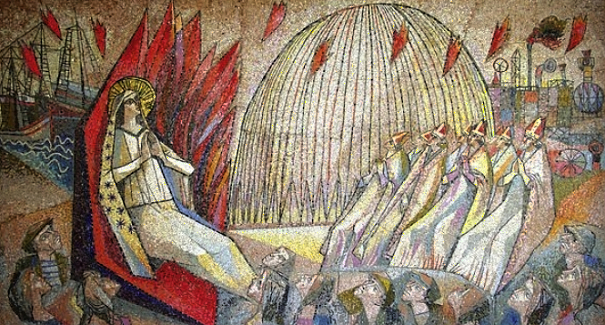
Mosaic by Paolo Scirpa (International Centre of the Focolare Movement, Rocca di Papa, Italy)
Drugs in school I had to take care of a student who had been using drugs. The usual punishment for this is exclusion from lessons for a week. I didn’t want this student to spend the time in bad company and so I arranged for him to work with a community and to come to school and study on his own in the library. In school, I stayed with him the whole time and helped him with the work his group were doing in class so that he would not fall behind. I found this very demanding but it helped me realise that loving your neighbour means practical action. M.M. – Spain A new way of life at home We are part of a team that runs courses for engaged couples. One day, just before leaving for a meeting, we had a row with our son. My wife and I still left the house and began to make our way to our appointment but we didn’t feel at peace about the situation. After a few kilometres, we realised that we had nothing to offer the engaged couples. I stopped the car and rang our son saying we were sorry for the way we had behaved. We continued the journey but then my wife pointed out that I had spoken in a very curt and dismissive way on the telephone and then we too began to argue. After a few more kilometres, we realised that we were not in a position to talk about mutual love and so we called one of the other couples and said that we were going home. As soon as we set foot inside the door, we explained what we had done to our son who was amazed that we had turned back. This was a lesson that has helped us establish a different way of life at home. K.E. – Czech Republic The school trip During a school journey, some of my friends threw away food from our lunches without even opening the packaging. I was really shocked. The following day, I made plans in advance: at lunch time, I collected all the food that my friends hadn’t even touched and put it in a bag. Then I took it to a centre for the homeless that was nearby. N. – Italy A new move After thirty-five years of service, the bishop asked me to move to a new parish. At first, I felt very confused and prayed a lot. Then, I realised that I shouldn’t see things only from my point of view and said that I was ready to make this move. Straightaway, all my fears about my new role and worries about my health vanished. I saw clearly that I wasn’t doing anyone a favour; it was the opposite, I was receiving a grace. This was the solid basis upon which I began life in the new parish – it was very different from when I started my ministry as a young priest many years before. E.B. – Slovenia A little act of love I heard that a colleague had been admitted to hospital. I was following a course in another town but, for a few months, every weekend when I came home I used to go to visit him. His parents also used to come from quite a distance to see him. I thought that they might like to go for a pizza with me after one of their visits and so I invited them out. I listened to all their worries and walked back with them to the place they were staying. They said they had not had such an enjoyable evening since their son had gone into hospital. A. – Italy
The flood in Kerala, southern State of India, has wrought more than 400 victims and about 750,000 displaced. The rescue and assistance operations are brought ahead amid great difficulties due to the inaccessibility of some areas struck. In some cases, they were forced to throw food and water from the helicopters because the streets and bridges were destroyed by the devastating floods. The local Focolare communities writes: “We have returned from Trichy (about 300 km from Kerala), where the Mariapolis was held with the members of the Word of Life groups, spread out within a range of 120 km. But our hearts are with the people of Kerala struck by strong rains. We are still in the monsoon period, with hot winds that cause these tropical typhoons. For all we know, the members of the Movement are fine. A retreat had been programmed for the priests in Trivandrum (south Kerala), but we had to cancel it because it is not safe to travel and many of the priests who booked are involved in the tragedy. During the weekend, our local communities were busy collecting foodstuffs and prime commodities to be sent to the struck areas. We are counting on your prayers.” Also Pope Francis prayed for the victims so that “our brothers there may have our solidarity and the concrete support of the community.”
“We are following closely the events surrounding the Coast Guard Ship ‘Ubaldi Diciotti‘, which arrived in Catania and is in two-days stand-off with 177 people on board who are not being allowed to disembark. The umpteenth case, unfortunately, that over the past few months has put a strain on the culture of hospitality that has always been the mark of the Italian people, “says the press release of 22 August signed by Rosalba Poli and Andrea Goller who are leaders of the Focolare Movement in Italy. They support “the need for shared paths at a European level in the search for non-improvised solutions”. But they highlight “the great concern for human events such as people fleeing from hunger, war and death”. And they ask “that the human dignity of those who are in the same condition recognized either in their countries of origin, and in the countries through which they are travelling, including ours where they have now landed.” The communiqué concludes with an appeal to politicians “from all backgrounds; that they put aside disputes between sides and particular interests, and collaborate in the name of our common humanity, which comes before any other distinction or separateness”. See also: “A-mare (o amare) il prossimo” (in Italian)
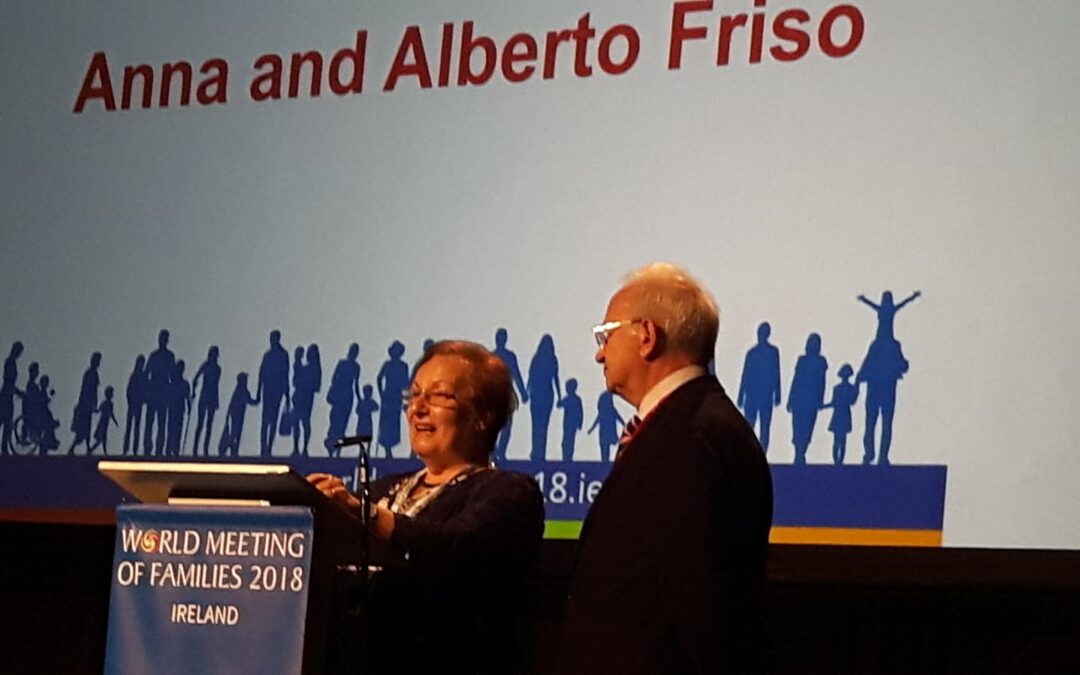
 Fifty years ago we ourselves did not know the origins of our love. We were content to know that we had undertaken a journey which had no end in sight, amazed that our differences could be so balanced, so enjoyable and complementary, so much so that although we were different we felt we were wonderfully equal. We felt we were ready for everything, convinced that no one loved in the way we loved, because we had invented love. Less than a year after that wonderful ‘yes,’ some clouds already began to darken our horizon. Work, tiredness, routine… Yes, we all know that being in love ends at some point. It was then that someone revealed to us that God is the source of every love. God who is love. We should have known all this, because when we pronounced our wedding vows He was there with us and from then on he had even dwelt amongst us. But we did not realise what a gift we had, we did not know what a gift we had, we did not know his presence was part of the package! We realized afterwards, he gives the whole of himself to us asking in return just a small, agreeable, daily contribution: that we love one another with his very own love. Does being in love come to an end? [Yes but] love needs to take its place. Because if faith is, so to speak, an interior virtue, love is its outward, visible fulfilment. Love is greater than anything else: greater than faith, greater than hope. In the Next Life, there is no more need for these two virtues. On the other hand, love remains in Paradise. Love makes of the two one body. Which means one reality that is untouchable and indissoluble. It is a ‘we’’ that is open to the Absolute. Love must reach the paradox of knowing how to become nothing in order to put yourself in the other person’s shoes. Only in this way will our love mirror its original plan which comes forth from nothing less than the Trinity.
 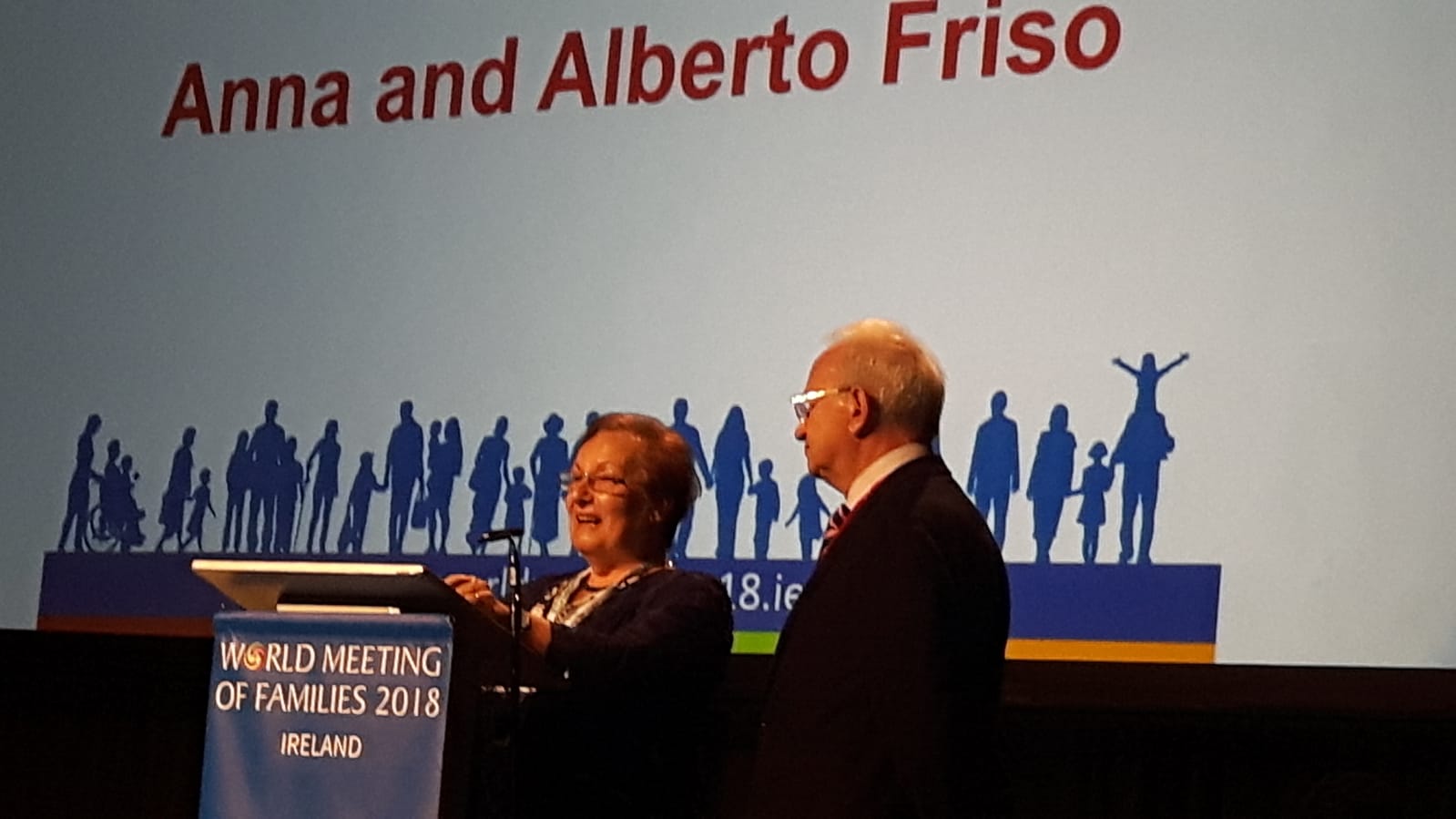 The ‘we’ formed by the couple is the first and living fruit of our love. The complimentarity of male and female expresses itself in a thousand daily gestures of mutual service and tenderness, up to the fullness of bodily intimacy. It is also expressed in sharing space, time and tasks. [The ‘we’ formed by the couple] knows how to go out first of all to their children and then towards others. The ‘we’ is the couple’s characteristic way of evangelizing, placing themselves before others as one example among many, and never as a model of the ideal family, which does not exist. Love is our unique opportunity, even if we feel that we are not perfect, even if we feel we have failed in everything. What matters is to believe that in the present moment we are the right person for the other; and that is what we are in the moment we decide to love them as they are, without any expectation that they will change, putting into action the three ‘magic’ words which Pope Francis teaches: please, thank you, sorry. It is said that today the family is going through the most tragic of all crises. Let us not regret the good old days, if ever such days existed. It is in the family that life is kindled. It is there that we learn to share, to rejoice, to suffer, to know sickness and to face death. Love makes it the most concrete of utopias. Families that welcome children even if disabled, others who adopt them precisely because they are disabled, those who welcome elderly parents, those who open their homes to migrants, those who help their children recover from addiction. In the fifty or more years that we have been together, life has taught us many things. We have cried and we partied. So many times we were wrong, but with his grace and forgiveness, we have started again. Putting our love again and again into the hands of God, who is our love, he has never hesitated, like at Cana to change our poor water into wonderful wine, making it wonderfully available also to those who are around us. And now, despite the fact that over the years our passion has diminished and the limitation of our characters are more evident, we continue trustfully to draw water from God’s unending source, happy to feel we are companions and accomplices right to the end.
 The Focolare Movement recently received a letter from the district of Lebialem, Cameroon, signed by Mbeboh John, president of the Lebang Cultural & Development Organisation. In his letter, he expressed his appreciation to the President of the Focolare, Maria Voce, and to co-President Jésus Morán, for the choice made by the men and women focolarini to remain there in order to tend to the “old, sick, children, men and women who have taken refuge at the Mariapolis Centre”, despite the risks involved in staying.