Every year, around 12 million people visit Sungsimdang bakery in Daejeon, South Korea.
What draws all these people there?
Beyond its delicious cakes and breads, at Sungsimdang, customers, partners, and employees also experience a culture of communion that inspires social and environmental initiatives.
· 79.2 fewer tons of carbon emissions each year through the recycling of milk cartons
· Production in partnership with local farmers
· Collaboration with universities in the region.
A true local ecosystem connecting production, education, and culture.
“If we had not discovered the Economy of Communion, perhaps we would have remained simply a ‘good and successful bakery.’”
Audio in the original language. Activate subtitles and select the desired language.
Mabih, from Ivory Coast, shared one of the most moving stories in the 35-year history of the Economy of Communion.
Owner of Mabs and Smalls Kitchen, she told us how she went from being a traditional boss to becoming a facilitator of dignity after discovering in the Economy of Communion a way of life.
Mabih came to understand that, in a business economy based on communion, the main goal is not profit, but the person.
“When you put the human being at the center, the business does not suffer. It thrives.”
Audio in the original language. Activate subtitles and select the desired language.
“The charism of unity is one of these graces for our time, which experiences an epoch change and invokes a simple and radical spiritual and pastoral reform, to restore the Church to the ever-new and current wellspring of Jesus’ Gospel.”[1]
[1]29th January 2020, Message of the Holy Father Francis for the opening of the international conference “A charism at the service of the Church and humanity” on the occasion of the centenary of the birth of the servant of God Chiara Lubich
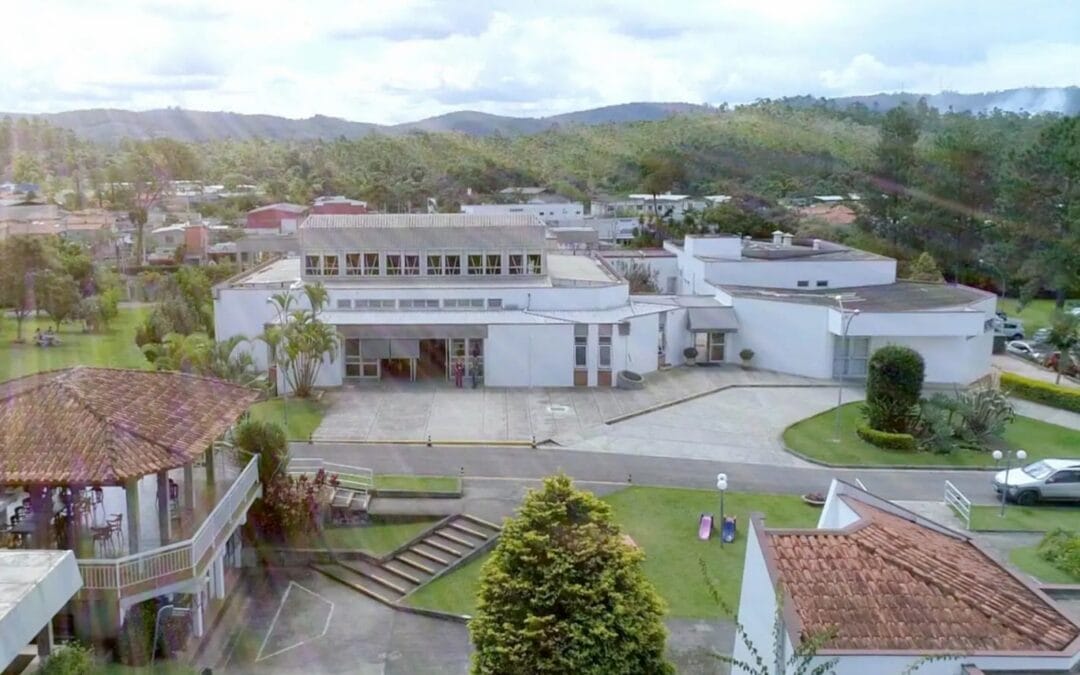
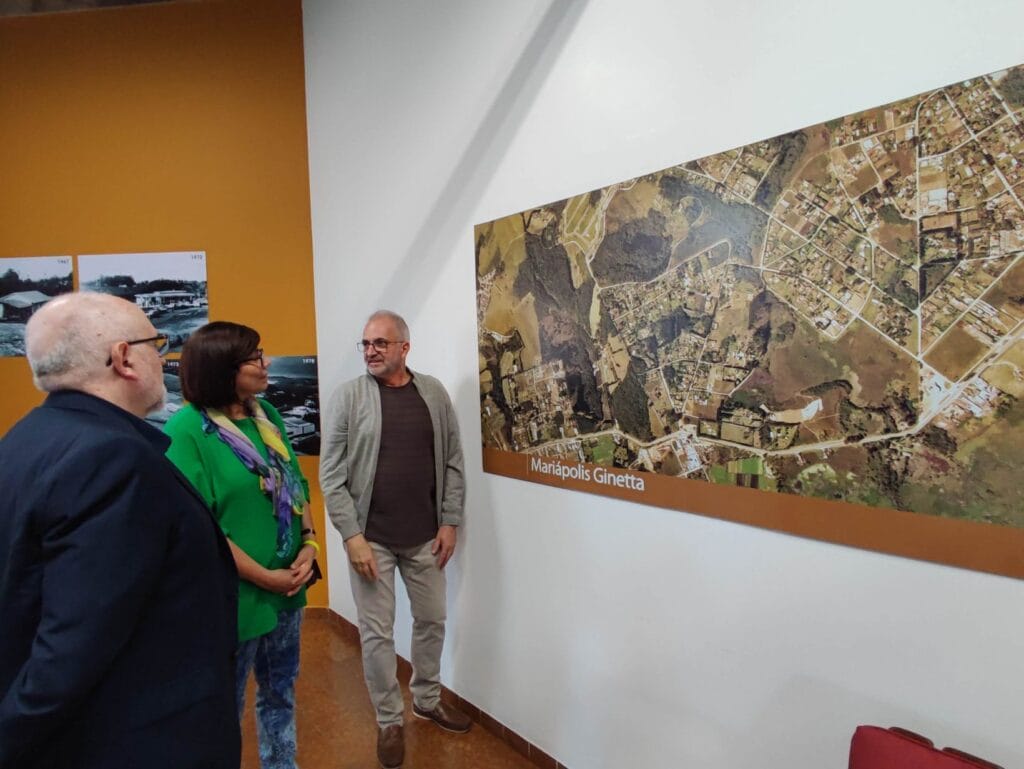
This sentence of Pope Francis appears on the web site of the “Mariapolis Ginetta“, the most developed of the three little towns of the Focolare in Brazil. It highlights the recent years’ focus: a journey towards organizational change to better witness to everyday fraternity and to meet the needs and questions of visitors and the surrounding environment.
This has taken shape through the initiation of an updating processand a more participatory and less centralized management of the different realities within it. Today, each part has its own council or management committee, composed of Mariapolis residents and professionals, working in synergy with the town council. “Co-responsibility” is a key word at Mariapolis Ginetta, alongside a forward-looking approach and the ongoing quest to update the town’s mission: “to welcome, educate, testify, and radiate.”
In 2022 Mariapolis Ginetta celebrated its 50th anniversary, having grown from the first group of Focolarine who came to a small house without electricity or gas, today it has a total of 454 inhabitants living on its grounds and nearby.
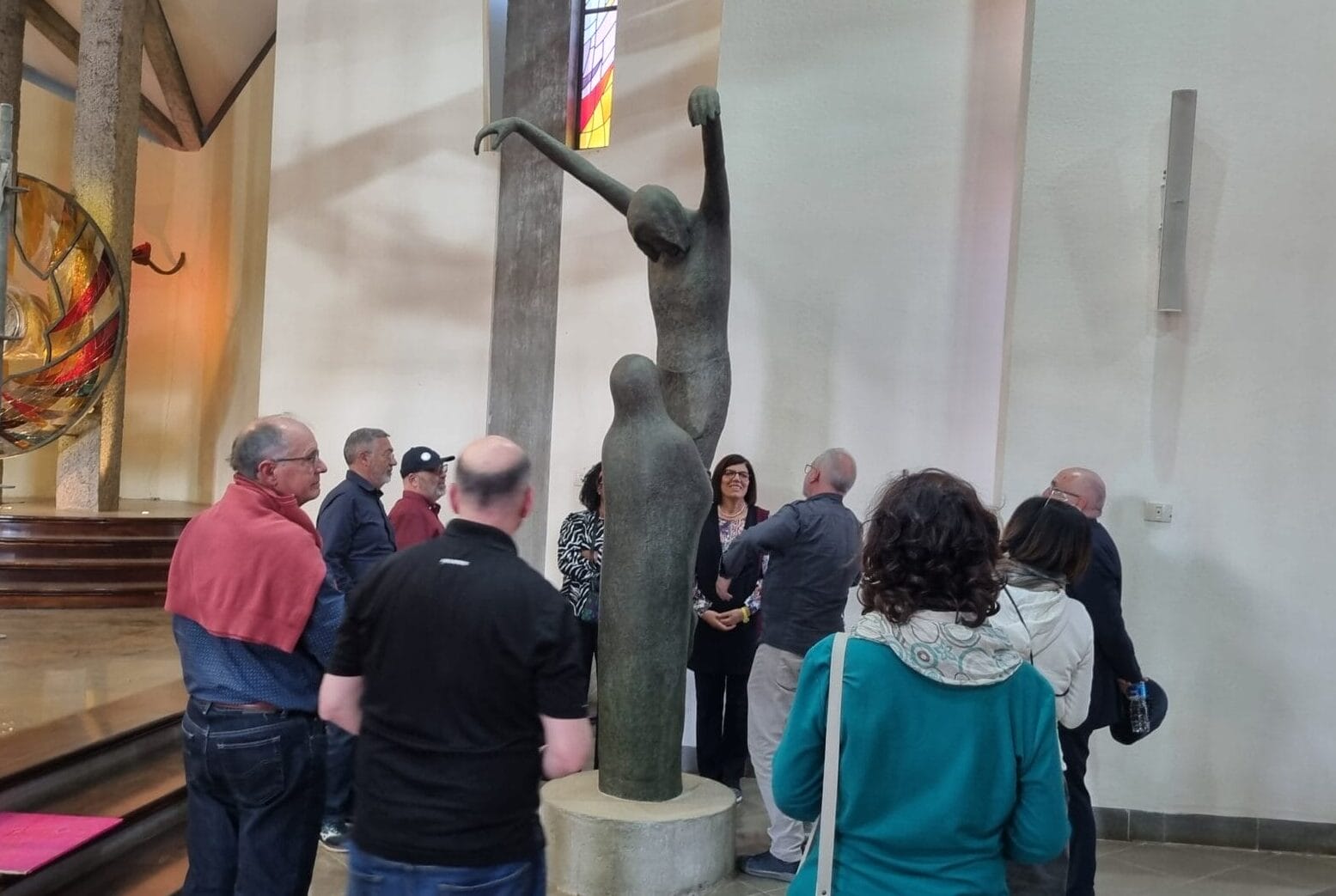
Over the years, tens of thousands of people have visited including families, priests, religious and occasional visitors. Many young people have spent time there learning to live fraternity in everyday life or to discern their way to follow God in the Focolare Movement.
The Mariapolis Ginetta is part of the municipality of Vargem Grande Paulista that is just an hour from the bustling megalopolis of São Paulo and the change of scene when you arrive is dramatic: greenery, houses, no skyscrapers, parks and playgrounds for children; the atmosphere of a small town, compared to a metropolis is the added value of this place. In recent years, fourteen families have moved from different cities to raise their children. A very young couple with three children say, “We moved from Sao Paulo 6 years ago to this place where people treat one another with love, where there is room to live a balanced, and person centred lifestyle”. This, together with a school for young people that started eight years ago, is signs of a renewed social vitality of the little town.
Co-responsibility and participatory management
Iris Perguer and Ronaldo Marques, co-managers of Mariapolis Ginetta explain, “Today in the little town there are many of the elements of urban coexistence, there are houses, a town centre represented by the Mariapolis Centre and the church dedicated to “Jesus Eucharist”, the publishing house “Editrice Cidade Nova”, an audio-visual centre, medical clinics, various workshops, the well-known bakery and cafeteria “Espiga Dourada”, social projects at the service of the most disadvantaged population, the “Polo Spartaco”, a commercial and manufacturing area where companies operate according to the principles of the Economy of Communion, the Brazilian section of the “Sophia ALC “University Institute (Latin America and the Caribbean)”.
Margaret Karram commented, “This new mode of participatory management that you are implementingis an extraordinary opportunity to open the little town to others who want to help build it, to learn about and to have an experience of unity. I must say that after attending the Genfest a great hope was born in my heart; I had the strong impression that in these days God has knocked again on the door of Brazil, asking for a response to and support for what began for the young people there. This little town, together with Mariapolis Gloria and Mariapolis Santa Maria, now has a new opportunity and responsibility to understand how to respond; to offer a witness of evangelical life lived in a social community.” ”.
The second generation of the “Polo Spartaco” Business Park
Mariza Preto told us that the Entrepreneurial Hub has also embarked on a courageous path of development and openness.
““In 2016, a debt accumulated over the years due to unpaid bills, clearly indicated that the economic sustainability of the Park was at risk. The entrepreneurs lacked motivation and were worried because there didn’t seem to be anyone interested in starting a new business. These have been difficult years, in which many things have been attempted, including building relationships with local entrepreneurs that has led to the common events and moments of dialogue and encounter. But the turning point came in 2019 when, during an exhibition we organised at the Park, most of the exhibitors were external to our reality. In that period “Espri”, our management company, had many vacant warehouses and a growing financial fragility. It was then that the Council decided to admit companies and entrepreneurs who were not involved in the Economy of Communion but who wanted to act according to its principles. Thus, a “rebirth” took place: every company that wishes to come today undergoes a process of induction about the business life that we live here and adheres to the lines of management of an Economy of Communion company “. ”.
Thirty years after its foundation, Polo Spartaco now consists of 9 buildings housing 10 companies with a total of 90 employees.
Jésus Morán said, “The economy of communion is alive here. In addition to the charismatic aspect, you can see that of manufacturing and a generational turnover of entrepreneurs is underway. All this tells us that we have entered a new phase in which the prophecy of Chiara Lubich is alive. We thank all the pioneers, those who started and believed in it and allowed us to reach this point”. ”.
SMFocolari
It is through the SMF, “Sociedade Movimento dos Focolari” that the little town engages in various social works in the area. SMF promotes community building, access to rights and protection guarantees, especially for children, youth and women in situations of social vulnerability. The three Social Assistance Projects, in which the inhabitants of Mariapolis Ginetta are involved, operate in the field of prevention for young people in vulnerable conditions, providing support networks for their families and welcoming homeless people. This is a drop in the ocean of the need for dignity, work and justice of many people and as Sérgio Previdi, vice president of SMF explained “It is just one piece of the cultural project based on fraternity that we want to develop in our area and in our town”.
Stefania Tanesini
[1]29th January 2020, Message of the Holy Father Francis for the opening of the international conference “A charism at the service of the Church and humanity” on the occasion of the centenary of the birth of the servant of God Chiara Lubich
Cultural Research. These elements are always found in the Economy of Communion (EoC): “When the youth aren’t engaged, there’s nothing, because without them, there’s no enthusiasm, creativity, optimism, gratuity. The youths need to be the protagonists.” These are the words of economist Luigino Bruni, international coordinator of the EoC, and one of the faculty members at the course inRecife. The “EoC schools” have been going on for years in various parts of the world, and they are multiplying:Italy,France,Argentina,Brazil, in 2011 a Pan-African school inKenyaand an upcoming one inPortugal. This week it wasChileandBrazil. A new road was opened inSantiago. There was enthusiasm over the consolidation of a project inRecife. But the DNA is this idealism and action. “At the conclusion of this school, we now imagine that it marks the moment for beginning of EoC businesses in Chile,” affirms Prof. Benedetto Gui, representing the Sophia University Institute, partner school of the EoC in Chile, the first in the land of the Andes. Students at the Silva Henriquez Catholic University of Santiago of Chileand from the University Santisima Conception of Conception were hearing of the EoC for the first time as they gathered on 5-8 July 2012. The initial scepticism gave way to participation in the project, as the youths fromRecife express: “We invite you to live an experience in which values play an important role. This economy isn’t something foolish. It is something beautiful that can be put into practice, something that breaks traditional business schemes and consumerism.”
What most convinced these future commercial engineers, more than anything else, were the testimonies offered by business people, like that of Bernardo Ramirez, industry director and president of the Foco Society, which began as a savings coop, the only business of the EoC in Chile. And there was the testimony of Bettina Gonzalez, owner of a travel agency of the EoC inBuenos Aires. Drawing on her own experience, she explained an approach to doing business which went against the current: suggesting that clients postpone their travel to a more peaceful time for their family; lucrative weekend travel packages to the waterfalls that they refused because they had heard there would be an excessive number of tourists that would frighten away the fauna, and so on. At the course in Recife they spoke of a “new springtime” for the EoC, where most of the 200 attendees were young people. And there were novelties: the creation of a free consulting group for the planning of new EoC businesses; the opening of a carpentry shop, for the formation of young people at risk, which is to be added on to the three EoC businesses already present at Mariapolis Ginetta in Igarassu, in the metropolitan area ofRecife. The theme of “business parks” of the Economy of Communion was the object of discussion for an entire day at the course, also fighting poverty which is an objective of the EoC. “What makes the EoC different from other economic proposals,” explains one young person, “is that the business person places himself on the same level as the worker, who is his brother and sister. He gives up many things. It’s a radical decision. I foresee a wide horizon ahead of us, hard work, but this isn’t a problem for me.” What Bruni called economy by vocation. (more…)



 Cultural Research. These elements are always found in the
 At the course in Recife they spoke of a “new springtime” for the EoC, where most of the 200 attendees were young people. And there were novelties: the creation of a free consulting group for the planning of new EoC businesses; the opening of a carpentry shop, for the formation of young people at risk, which is to be added on to the three