
Far more than a simple closing celebration, it was the visible stage of a journey built throughout the year by hundreds of young people across Italy and Albania. It is already looking to the future, aiming higher with the desire to involve many more young people, teams, and initiatives in the years ahead, both across Europe and around the world.
The Expo Fest of Time to Change ended in Castel Gandolfo (Rome, Italy), on 6th-7th June. The programme engaged around 1,300 young people and 105 teams, challenging them to take action through practical projects in solidarity, active citizenship, environmental stewardship, inclusion, and peace for the common good.
Almost 600 youth from 52 teams met. Among the comments collected from participants were: “I have become more aware of my actions and I have paid much more attention to those who find themselves in difficult situations”. “I understand how valuable some friendships are.” “I carry in my heart the beauty of what was born here and the silent strength that these days have generated”. These are some of the impressions gathered from the participants, protagonists of an event that gave voice not only to the 9 finalist teams, but to all the realities involved.
During the event, voting and the final award ceremony took place. The Trent Gen Time to Change team from Trent won first place; Children of the Sun from Taranto ranked second; Time to Change from Milan ranked third. Special prizes were awarded to the teams from Piedmont and Valle d’Aosta, the “Alfonso Gatto” High School in Agropoli and the Albanian team Alboomerang.
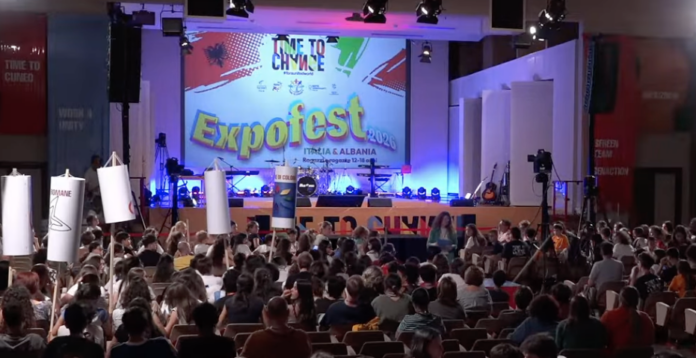
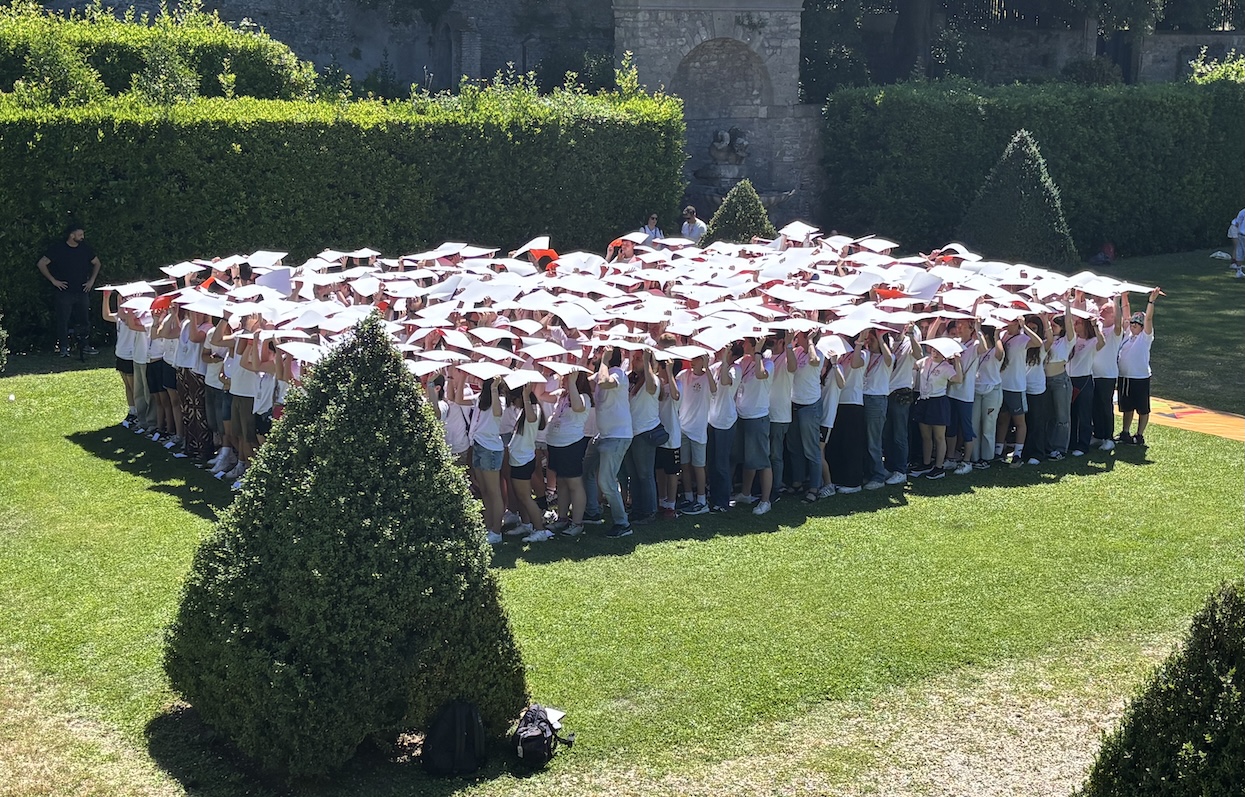
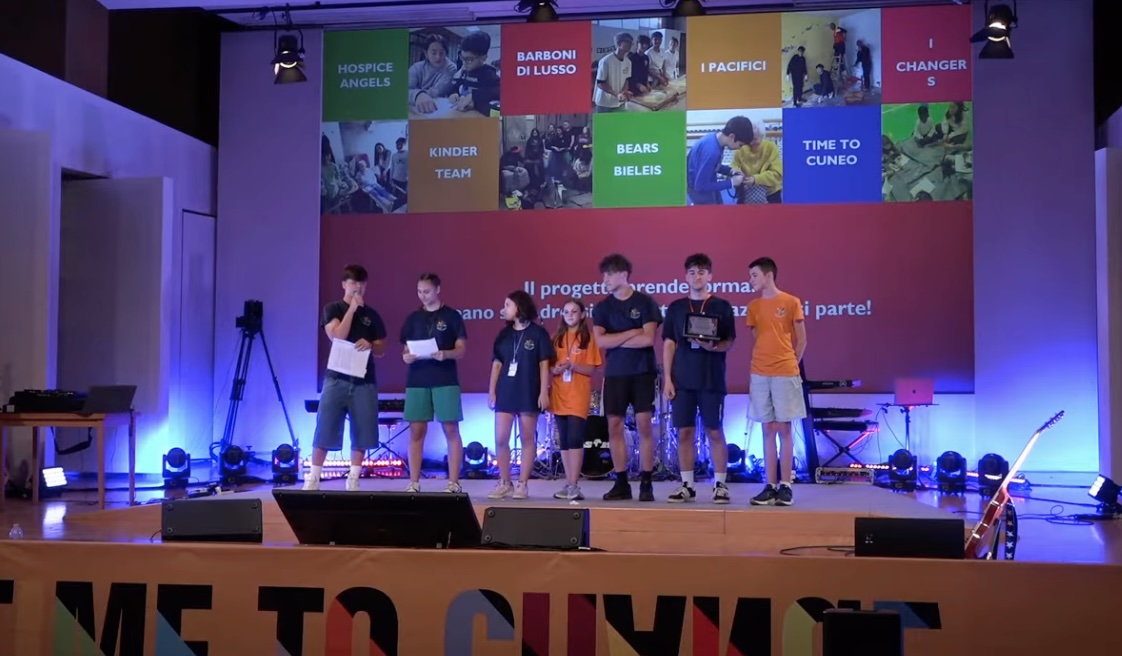
Through moments of sharing, personal testimonies, music, dance, discussion, workshops and flash mobs, each group was able to tell their contribution to change. At the heart of the event was a large space dedicated to stories: those of young people who have chosen to step outside themselves to meet others; of schools that have transformed civic education into a concrete experience; of local groups that created afterschool programmes, artistic initiatives, environmental projects and acts of solidarity towards people living in vulnerable situations.
The projects presented demonstrated how change can be lived in everyday life. For example the Alfonso Gatto Linguistic High School in Agropoli (Salerno), carried out a project dedicated to the1948 Universal Declaration of Human Rights. Students engaged people in the street, with questions about fundamental rights, handing out symbolic badges to “friends of human rights” and donating copies of the Declaration to those who wished to know it better.
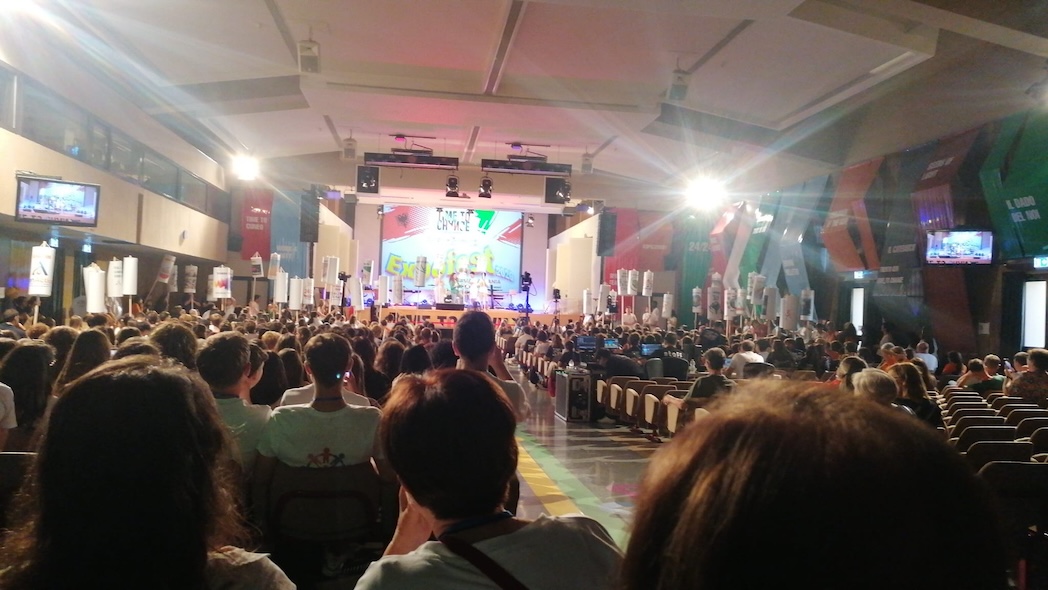
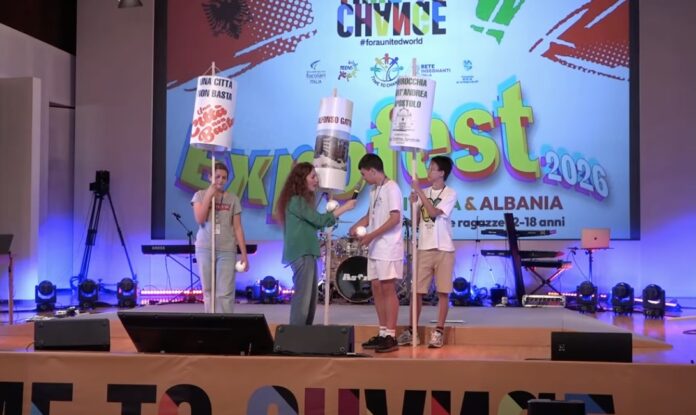
There were 18 young people from Albania. Through the Time to Change programme they took part in theatre and art activities for children, ecological walks, training sessions and meetings with young people welcomed into family homes. Regjina Paluca explained, “In the community, there are young people between the ages of three and twenty. Some told us that they grew up in a family home: they arrived as children and now attend university. It was very touching for our youth. They saw that those thirty young people all live together in the same house, while they, at the end of the day, would each return to their own home. We will continue this work in the future, because the project is spreading rapidly: young people carry a beauty within them that they want to share with their friends.”
A significant part of the journey focussed on personal vulnerability. The experiences of Edoardo, Francesca and Victoria told of isolation, depression, anxiety, bereavement, exclusion and reconciliation. Their stories showed how suffering can become a place of growth, relationship, renewed faith, and openness to others.
The journey was also inspired by a poem written in 2005 by Margaret Karram, President of the Focolare Movement, who, in front of “the long, high, grey wall” of Jerusalem, ” stretching through the city, dividing neighbourhoods, streets, lands and families”, reflected on the meaning of her life and the divisions of her Holy Land in the light of Jesus crucified and abandoned, hope against all hope.
During the event, Margaret Karram, presented a travelling trophy to the winning team, Trent Gen Time to Change. The trophy will accompany future editions of the project and will be passed each year to the new winning team.
In her brief greeting, she reminded participants that living peace requires courage, and that peace begins with personal change. “The first peace is Jesus,” she said, “who died for us, but He rose to give us peace and to redeem each one of us.”
As one of the participants wrote, Time to Change “does not limit itself to talking about change, but makes it possible”. The wave started by these young people now continues, reaching ever higher.
Aurelio Molè
Published by and photo from focolaritalia.it


0 Comments