21 Feb 2017 | Non categorizzato
A concentration of Medieval towns and villages that are among the most beautiful in the country, ancient traditions, natural treasures, art and traces of an ancient culture that has sown Italy’s history with stories of a hard-working people that is tied to its roots. This is the central Italy that has been hit by an unfortunate series of earthquakes that continue to shake the region. The Italian Province of Fermo includes forty municipalities from the Sibillini Mountains to the sand and pebble beaches along the Adriatic Sea. On a clear night you can see the lights of neighbouring Croatia from the 13th century Dome Cathedral of Fermo. The Archdiocese also has ancient roots: Begun in the late 1500s, but going back to the 3rd century, it is the largest diocese in the region with120 parishes in 58 municipalities of the three Provinces of Ascoli Piceno, Fermo and Macerata. The Focolare’s Diocesan Movement began to take its first steps in the local Church of the region in 1973. As a branch of the Focolare Movement it works at the service of the local Church, offering and spreading the charism of unity in cooperation with other ecclesial groups, in order to make the Church a “Church-Communion”. In the whole territory around Fermo the earthquake caused devastation, evacuation and much fear. Two hundred churches were closed because they became inaccessible. Loredana, from the Diocesan Movement, tells about the experience of being close to the victims: “Along the coast, numerous camps and touristic villages are hosting 25 thousand people. In one camp site at Porto San Elpidio the Civil protection Agency set up an operation centre for this region. The local citizens has hosted more than a thousand people, entire families with children and grandparents, but several thousand moved away from here before being directed to other facilities along the coast. We took up a collection among us animators, to buy basic necessities. We set up a small coffee bar for the volunteers and evacuees. Once this phase was finished, the mayor and the councillor for culture met with representatives from schools to request support in organising workshops and recreational activities. Three of us were there representing the Diocesan Movement, but we had many others behind us that we knew were willing to help. Together with them we organised activities for the children and tutoring for the teenagers, locating teachers for every day and offering desserts prepared by our mothers and grandmothers. Strong friendships were established with teachers, children, teenagers and the elderly. Many evacuees are elderly. In Monte san Giusto, for example, around 120 evacuees were offered hospitality, including 42 from a rest home and 30 in wheelchairs. Two of us offered ourselves – one a social worker and the other a municipal guard – to listen to their needs. There were many personal initiatives. The young people from Porto San Elpidio, for example, made a lot of small Christmas trees that they then gave away to the families at the camp site. In the end, we collected 1,200 eruo for the RImPRESA Project in support of small inland production activities.”
20 Feb 2017 | Focolare Worldwide
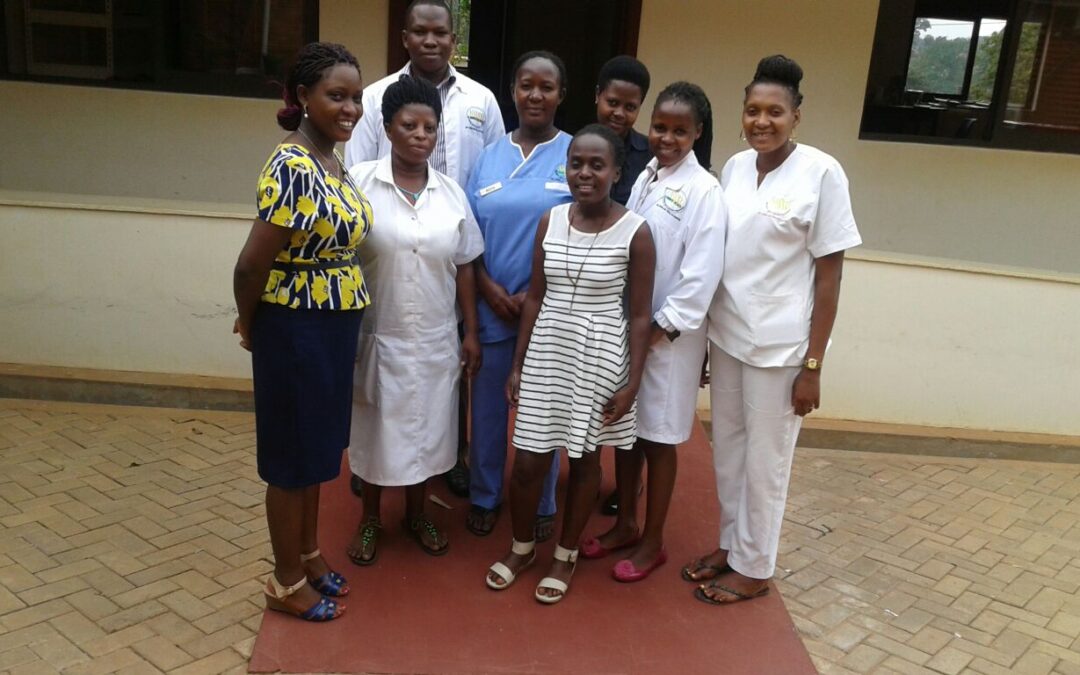
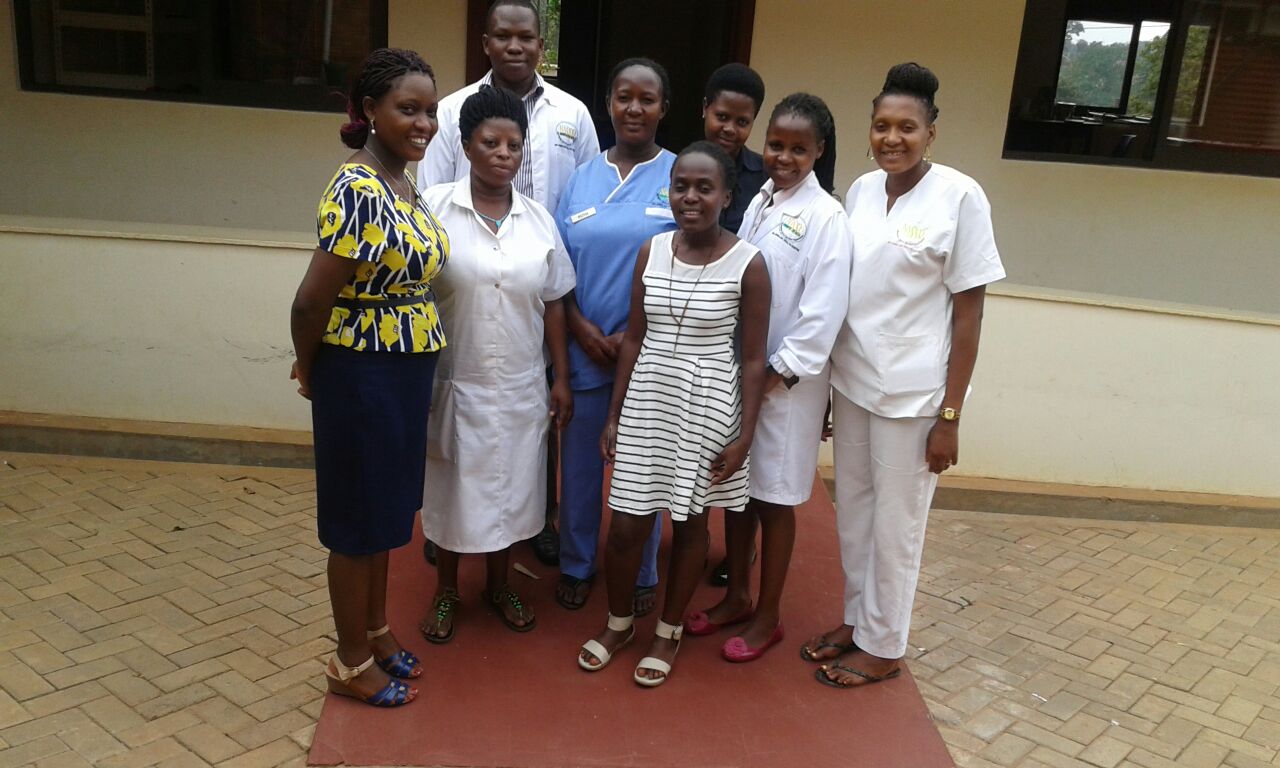
 Ugandan business woman Rita Najjingo was among the 1,200 business owners and researchers of economy who were welcomed by Pope Francis on February 4, twenty five years from the start of the Economy of Communion Project (EoC). Seventy three percent of Rita’s country is made up of young people between the ages of 18 and 30, 47% of whom are unemployed. “Many of them try to set up small manufacturing activities,” Rita reports, “but because of a lack of capital and management skills, their businesses fail from start.” The idea of the EoC came to the African continent in recent years and immediately appeared as an answer. In 2015 several Ugandan entrepreneurs and researchers took part in a conference in Nairobi, Kenya, to learn about this economic project that puts the person first. When they went back to Uganda they talked with the local community and the first projects began in Ibanda, the western part of the country with a form of micro-credit that began to support a school for ex-cons; in Lira, the north, a home was built for elderly women, along with the cultivation of garlic, and so on. In Kampala,” Rita recounts, “there was the idea of involving the patients at a neary Focolare-run health centre which had a secure source of income. The idea was to be able to grant loans with their savings that they put in common, with loans for people who did not have enough capital to start up a manufacturing activity. An expert gave a week-long course and a savings and loan association was begun.
  Typically the amount that is given in loan is never more than three times the capital the applican has on hand. The repayment starts after four weeks, leaving a small percentage for the increase of the share capital. Within three months, the debt is fully repaid. In granting a loan the promoter group enquires about the type of business that applicants intend to start, giving advice and accompanying them in their first steps. Over time, a group of experts in management has been formed that can also offer advice on managing, marketing and sustainability. One person asked for the loan to make handcrafted bags, another young person to buy a motorcycle he could rent out and also drive for pay, with a second loan and the sale of the old bike, he bought a more efficient one. He is now in charge of buying and selling used motorbikes, with help of two young men whom he hired. A member of the community has invested the loan in the purchase of sesame plants that are sold for various food uses. He too has been able to hire young people who help in delivery and removal of goods, thus facilitating things for manufacturers. With this loan activity, Rita continued, she was also able to create a fully registered company in charge of stationary and office supplies. After having used up the first loan, I got another to expand the business with online money transfers. Currently, I have four centres that have hired 4 young women, 3 of whom are single mothers.” A motorbike, small house, some garlic and sesame seeds . . . small signs, Pope Francis called them, in his speech to the EoC, seeds of change: “Change in the order of the spirit and therefore of life are not linked to big numbers. The little flock, the lamp, the coin, a ring, a pearl, some salt, leaven: these are the images of the Kingdom that we find in the Gospel. It doesn’t take many people to change our history, our life.” (Vatican City, February 4, 2017)
19 Feb 2017 | Non categorizzato
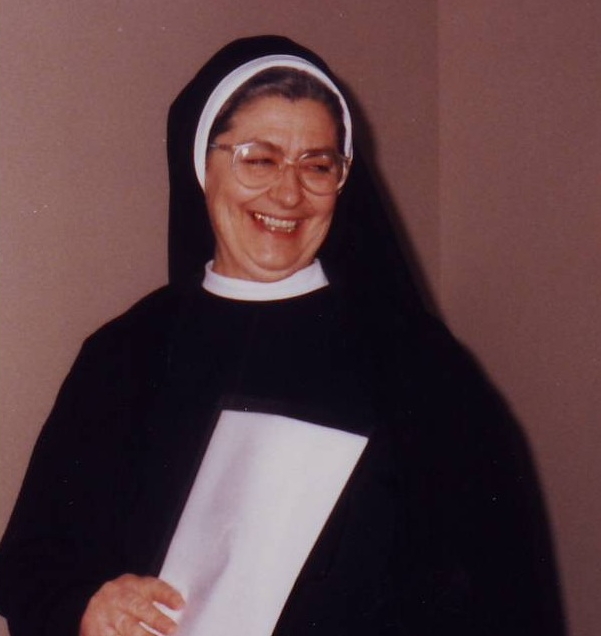
Born in a prestigious family in Rome, the institute chosen for her education was the Holy Spirit Institute run by the Daughters of the Immaculate Conception. In the institute she personally knew the foundress, now Blessed, and soon she felt the desire to give herself totally to God. Her family did not accept her choice, and after she escaped to go to the novitiate twice, she was forced to return home. Then due to her firm decision, she managed to convince her parents and make her dream come true. At the conclusion of her training in Northern Italy, she returned to Rome to teach in the school she had attended as a child and adolescent. Jovial and playful, Sr. Leopolda was able to conquer her students and with her smart remarks managed to downplay even the most complicated situations. In the 1970s she came across the spirituality of the Focolare and in it, discovered a sign of the times for the Church. Fascinated by the vision of Chiara Lubich who considered every charism a gift of love for the others, she felt the urge to create a current of communion among consecrated women of various religious families. Due to her moral and spiritual gifts, vast culture, and the great capacity to enhance the importance of people, in 1983 she was asked to guide the Congregation for 12 years. She personally met the founder of the Focolare, who in 1989 asked her to lead the Movement of the Religious at international levels, and promote communion among the Mother Generals who appreciated the spirituality of unity. Mother Leopolda accepted Chiara’s invitation with joy and responsibility, and wove a tight network of religious bound by the spirit of communion. She programmed and prepared annual meetings for consecrated women and mother generals. When her mandate to guide her congregation ended, she again took up her commitment in the educational field. The parents of her students considered her, “the most gentle and nicest Director of all the schools in the world.” When she fell ill, she was ready to say her “yes” to the God she had followed since her youth. She let Him guide her by the hand, offering all for the Church, her congregation, and the consecrated women she had met in life. In the more difficult moments she took comfort in the spiritual writings of Chiara, surrounded by her co-religious and the focolarine who were by her side up to the end. The doctors and staff of the hospital were struck by her testimony of serenity and total abandonment to God. Sr. Leopolda passed away on 1 January 2017, at the age of 87. The Focolare Movement remembers her with immense gratitude for her life spent entirely to diffuse among the religious, the spirit of communion that arises from the Charism of Unity.
18 Feb 2017 | Non categorizzato
https://vimeo.com/204141968
17 Feb 2017 | Non categorizzato
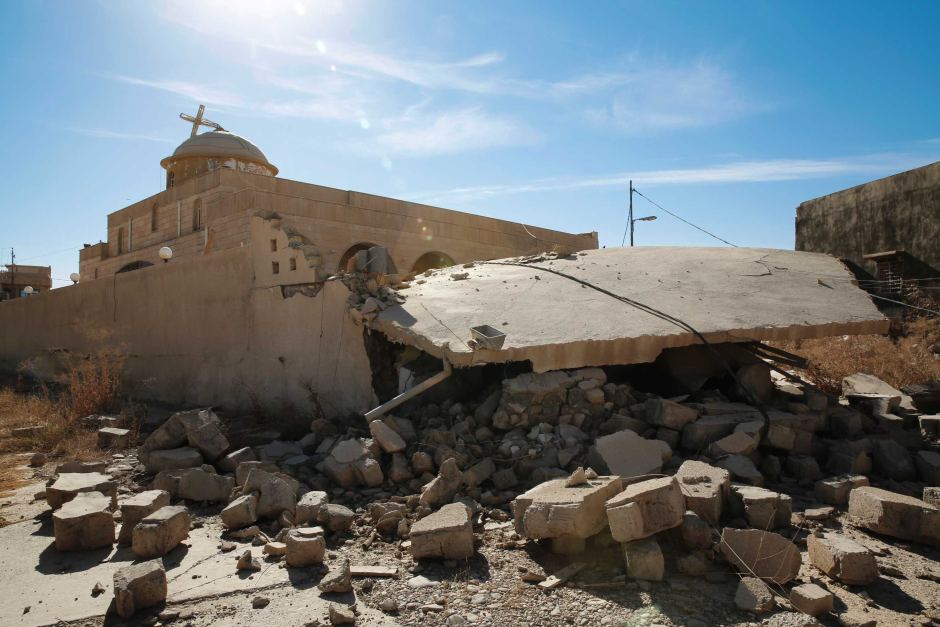
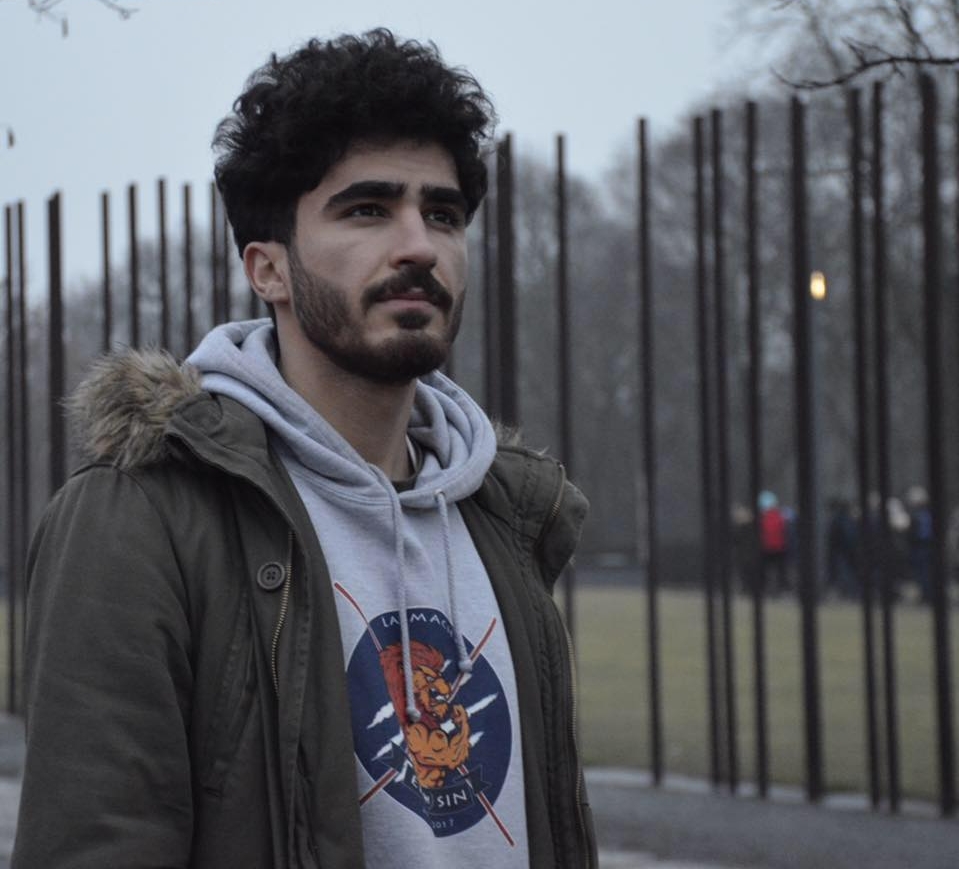 Up until the age of 18 I lived a normal life between house, school, sport, parish and my dreams. But one day, after the withdrawal of the Kurdish army, the resistance didn’t last long and my city of Qaraqosh fell. The so-called Islamic State (ISIS) took over and everything fell apart. Occupied for two years by the black flags of ISIS my birthplace was named the capital of ISIS for the Nineveh Plains. Qaraqosh had been the most important Christian city in Iraq with more than sixty thousand inhabitants. And even though it was liberated in October 2016, it was now a ghost town. But let’s go back a bit. On August 6, 2014 we had to leave our home without even packing our bags, only with the clothes on our back. We had been put in front of a choice: become Muslim, pay a bribe or have our heads cut off. We were fortunate to stay alive! From then on it was a hard adventure for us. And inside me there were mixed feelings of anger, resignation and exasperation, to the point that I even wondered how God could allow us to live such a hard trial. But it was an important life lesson that led me, not without effort, to then make a great discovery. We started out in the direction of Iraqi Kurdistan together with a crowd of refugees who were moving on foot.. I can still see their tears, the soldiers, people sleeping along the road . . . a road to Erbil that usually takes a half hour, now, due to the road blocks and in spite of the fact that we were lucky enough to have a vehicle, took us 12 hours. We went towards Dohuk where we spent about 2 months. It was a painful period that we lived through in the hope of returning home. In those difficult moments, I realized that if I stayed close in my own suffering, nothing would change and I wouldn’t move on. So I decided to live the present moment, deciding to try to bring a smile to the face of the neighbour beside me, to try to bring some change in that way in spite of everything. Near me were people of the Yazidi religion who were more needy than us. Their people had been slaughtered by ISIS, because they didn’t have the means to escape: men killed, women raped and sold. The ones who did manage to escape were in a pitiful state. I lived along with them and tried to forget my own wounds to console them. After the years of exile, my parents had decided to go to France, because that country had extended its hand. It was a hard decision: to stay in our own land with an uncertain future, or accept our exile and begin our life again in a new country that had a different culture. We were well aware of the problems that were awaiting us beginning with the language. We arrived in France on October 26, 2014. At first it wasn’t easy, but we never felt abandoned. Someone took care of us and cleared our path. His unseen hand dried our tears and lightened our pain. Yes, it was Jesus who died for each one of us! How could we respond to His love? Now that this painful adventure has led me to discover that God is Love, that it is He who gives meaning to my life. Now, I want to build peace starting from the little things.
