
The concluding residential week of the first year of the two-year political action training programme will be held from 26th January-1st February 2026. The programme is promoted by the New Humanity NGO of the Focolare Movement in collaboration with the Pontifical Commission for Latin America
L’evento, con la metodologia dell’ Hackathon , vedrà la partecipazione di 100 giovani leader dei cinque continenti, impegnati nei propri Paesi in ambito politico e sociale, di diverse culture e convinzioni politiche. Dopo mesi di intenso lavoro online, i giovani si ritroveranno a Roma in presenza per tradurre il percorso di apprendimento, che hanno condiviso da remoto, in proposte di incidenza politica: la sfida che dovranno affrontare è quella di ideare processi e strumenti idonei ad affrontare i punti di crisi che emergono nell’esercizio del potere politico, nelle relazioni e nelle istituzioni politiche.
Great attention will be paid to the participatory dimension of public policies, leading to the definition of shared pathways that will be assessed and presented during an evening open to the public, to young people and interested politicians.
“Oggi ci troviamo di fronte a problemi gravissimi – spiega Javier Baquero, giovane politico colombiano, presidente Movimento politico per l’unità/Mppu internazionale -. Ciò che va coltivata è una cultura politica che guardi all’umanità che è una e al pianeta come casa comune. A nostro parere, c’è un diverso paradigma che dobbiamo esplorare e sperimentare insieme, imparando a comporre le nostre diverse visioni a partire da alcuni valori universali”.
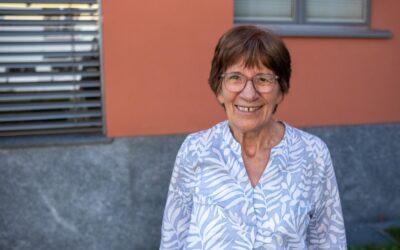
Argia Albanese, President of MPPU Italy agreed, “A meaningful response to the needs of our peoples cannot rely solely on the reform of institutions or from a purely managerial approach, which often seems devoid of democratic content. Our starting point must continue to be the social and community bond rooted in universal fraternity and sisterhood.”
The week concludes the interdisciplinary training focused on integral ecology, civil economy, collaborative governance and generative communication, which began in May 2025 with the support of experts from various academic institutions: Rotterdam School of Management (Netherlands), Universidade de Coimbra (Portugal), Universidad Nacional de La Plata (Argentina), Georgetown University (Washington DC), University of the Philippines, Universidade de Ribeirão Preto (Brazil), Escuela Superior de Administración Pública Bogotá (Colombia), University of Dschang (Cameroon), Sophia University Institute (Italy).
The week in Rome includes:
- Two Hackathon days, in which the participants, divided into language groups, will seek solutions to collective problems.
- Dialogues with experts and policy makers to connect reflection and proposals within a broad international framework.
- A public meeting to present the Hackathon outcomes and to engage with politicians active at various levels and from different perspectives.
- Visits and workshop activities in Rome at research and social engagement centres (which support migrants, women’s rights, climate justice, unemployment and disarmament).
- Workshops to set up the global network for the second year and its governance.
There will be a much-anticipated audience with Pope Leo XIV in St. Peter’s Square on Saturday, 31st January. Representatives of the MPPU Centres who will come to Rome for the occasion will also participate and will have the opportunity to evaluate the results of the experience with the participants and to plan the next steps.
What is a Hackathon dedicated to finding political solutions
It is an intensive workshop designed to develop solutions to collective problems. The idea comes from the world of digital innovation, applying the logic of “doing together and doing it quickly” to the civic sphere.
By integrating political, administrative, economic, communication, social and technological skills, the process unfolds in several phases: analysis of problems and needs, definition of priorities and stakeholders, development of operational proposals and tools for public action.
Within the framework of the themes explored throughout the year, participants will address challenges such as corruption, oligarchic governance, media monopolies, polarization, crisis of representation and electoral abstention.
In the time available, with the support of the coaches, each group will move from problem identification to strategic proposal, building problem maps, analysing available data and designing implementable ideas. At the end, the groups will present their solutions: prototypes of intervention plans, political initiatives and cultural impact projects, participatory models and communication methods and strategies.
The added value lies not only in the ideas developed, but also in the method, which demonstrated how solutions to public problems can be co-designed with creativity and rigour, enhancing and integrating different perspectives, in the search for effective solutions to increase the quality and values of a way of living politics at the service of the unity of the human family.
Edited by the Editorial Staff
Photo: © William Fortunato – Pexels


0 Comments