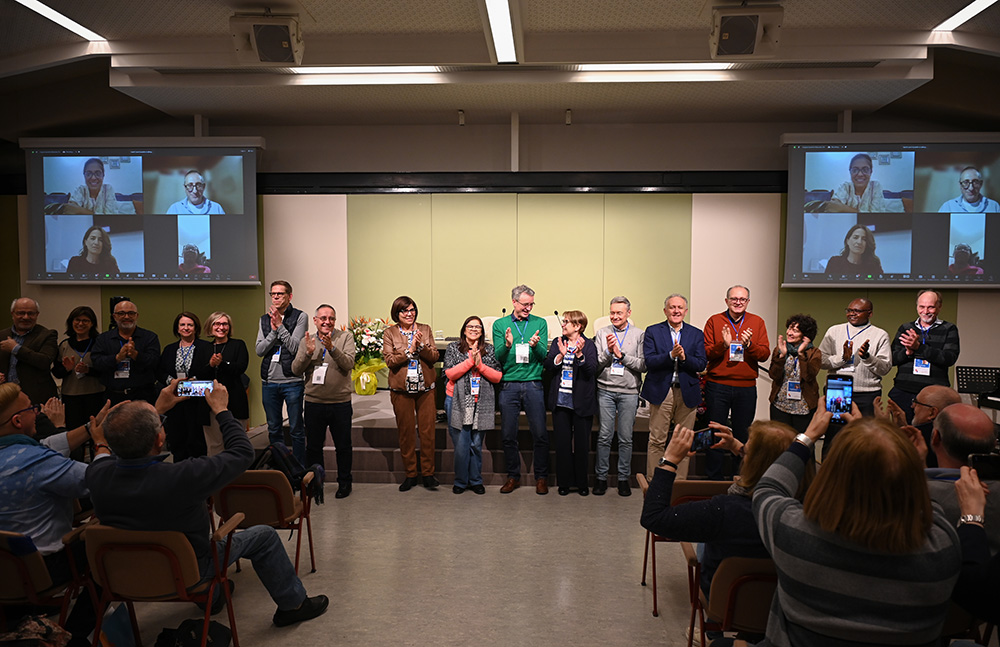
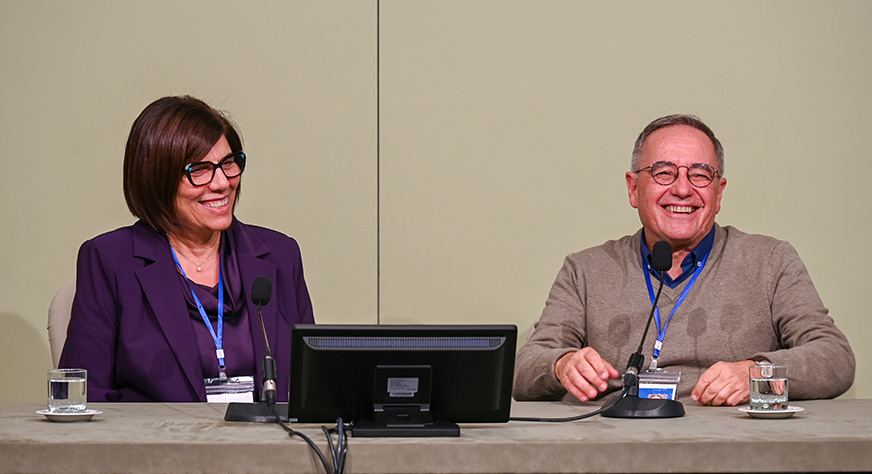
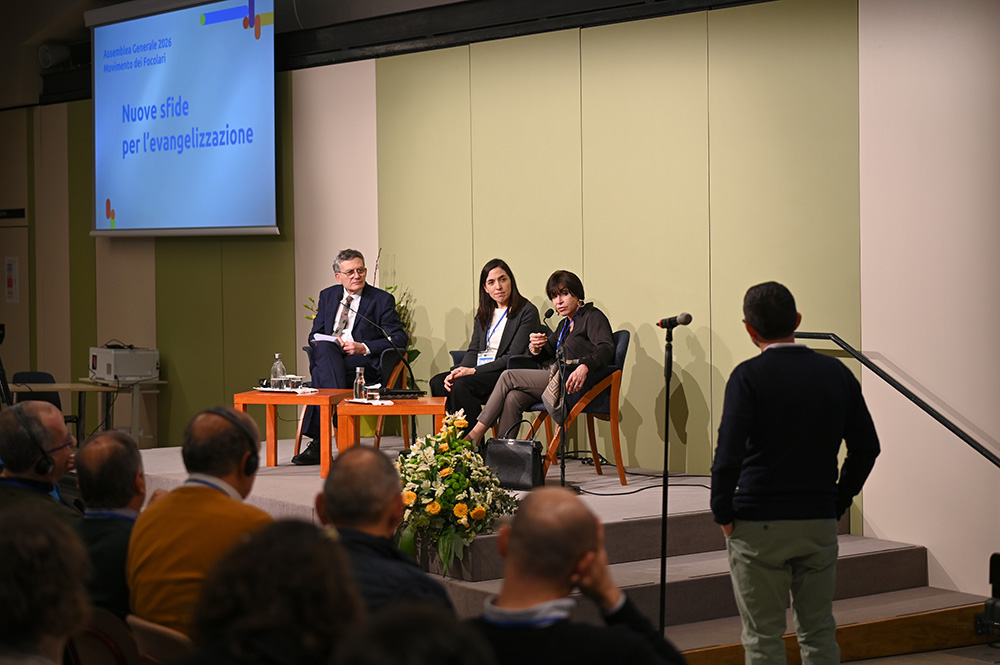
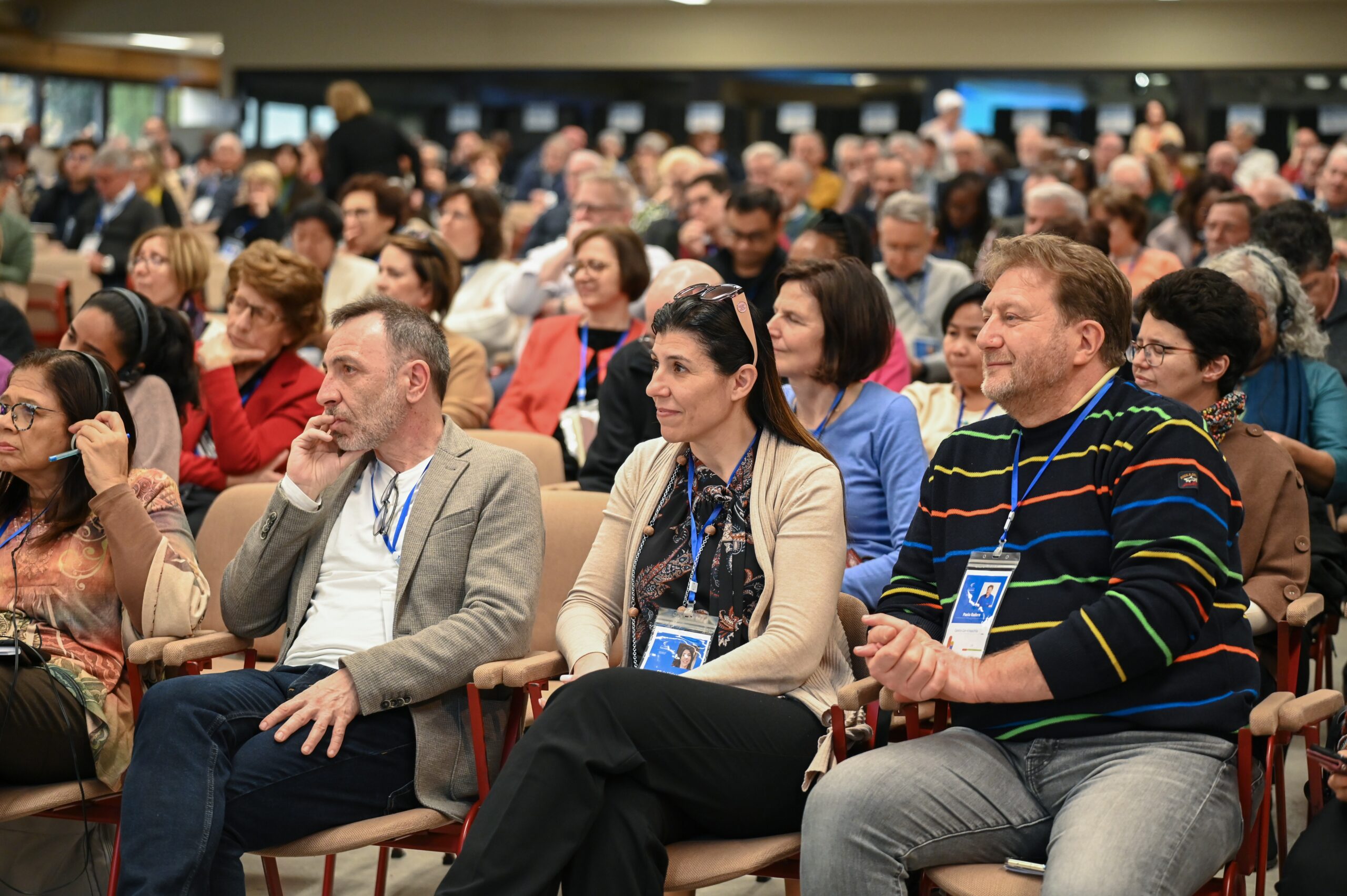
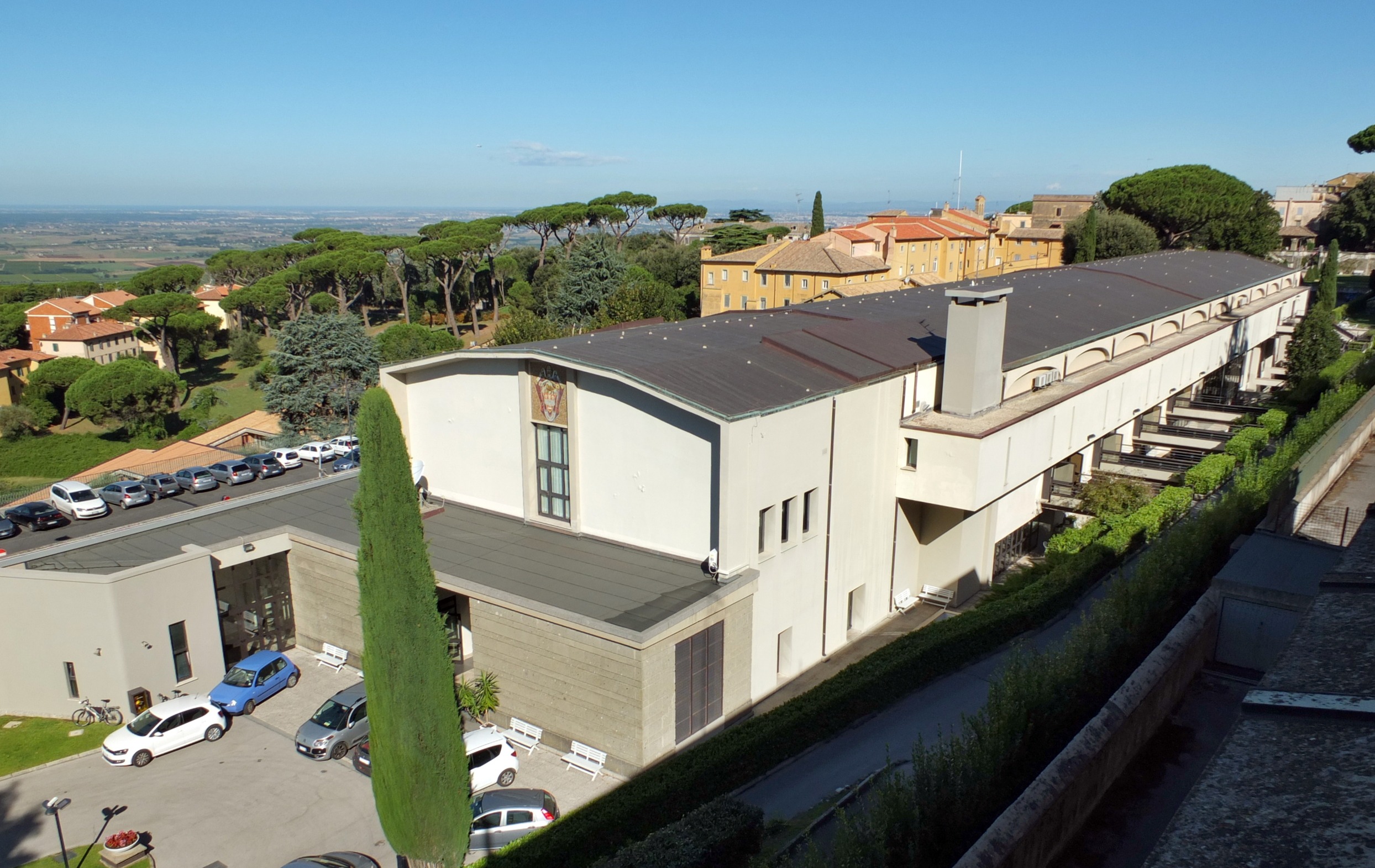
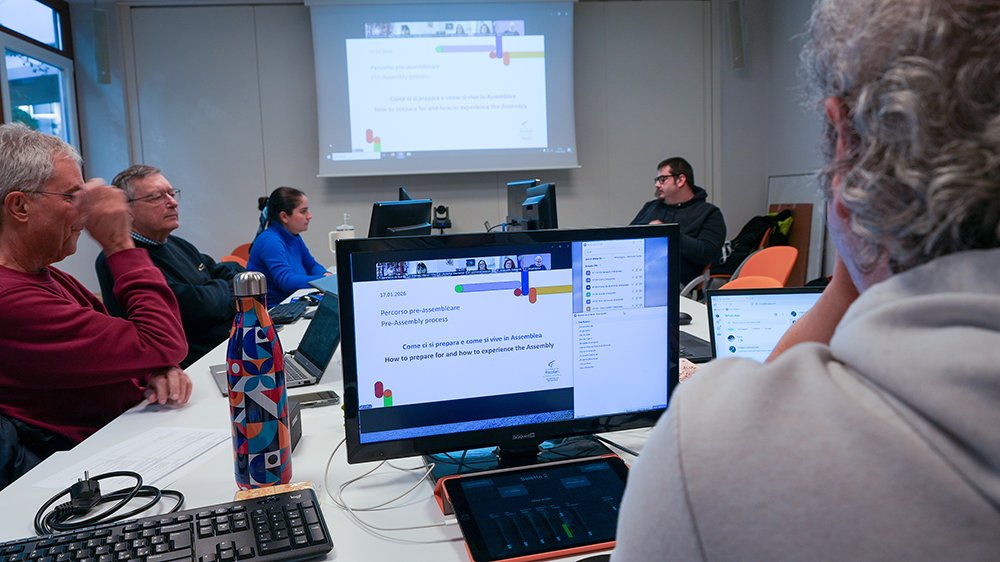
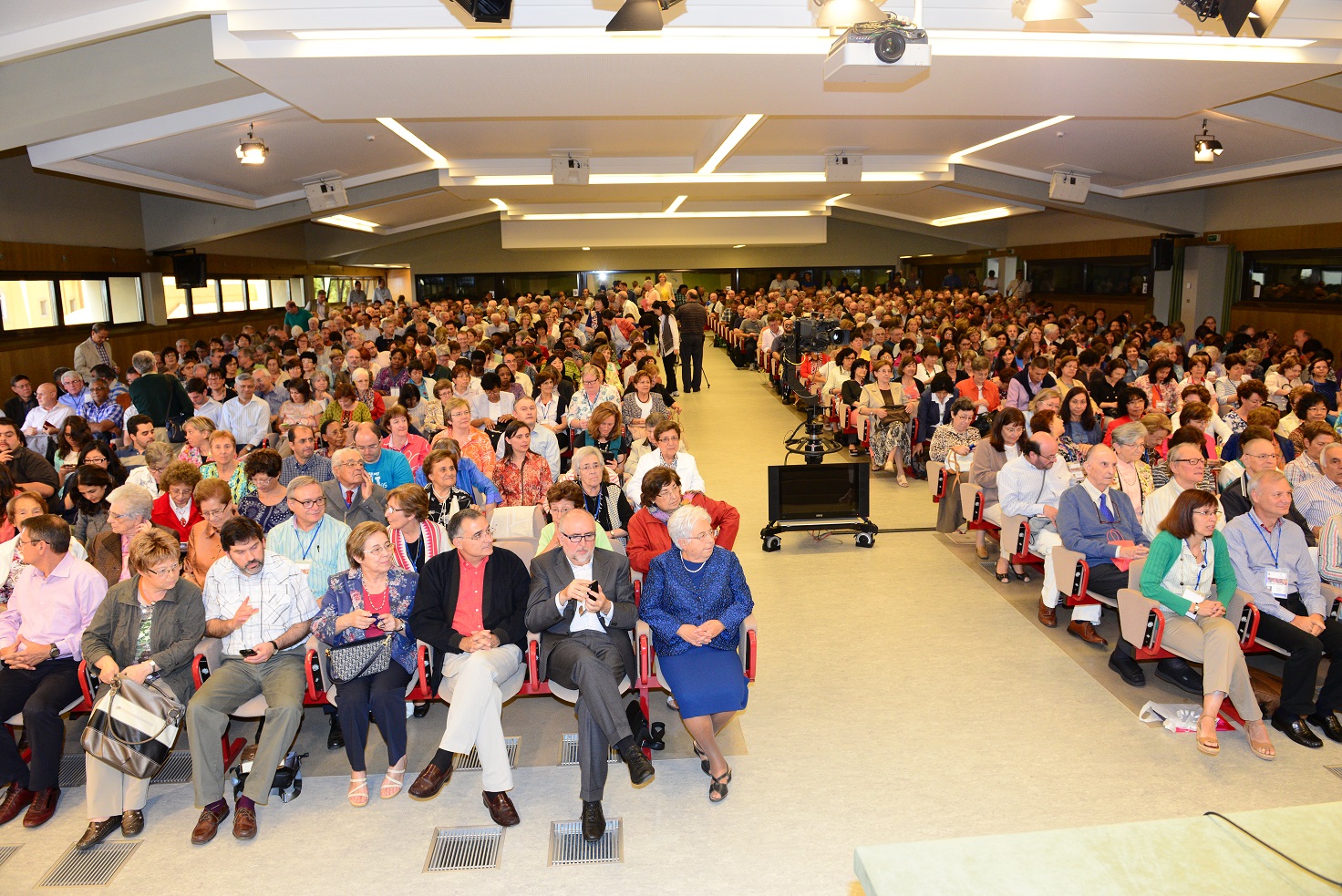
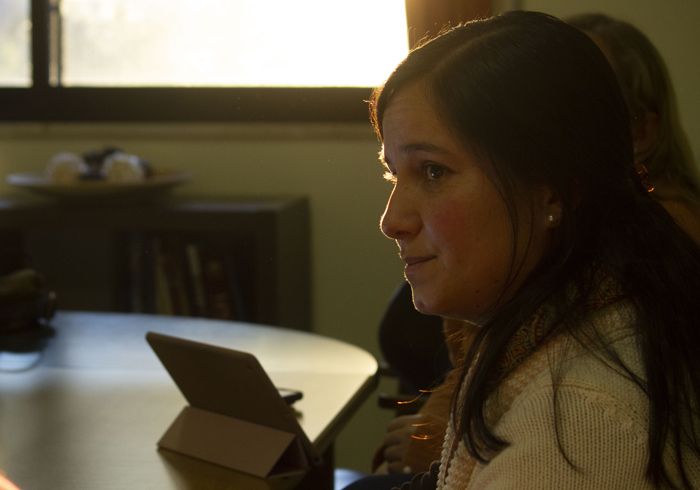
During the second half of September 2025, the General Council of the Focolare Movement met with the Delegates from its 15 geographical regions of the world at the Mariapolis Centre in Castel Gandolfo (Rome). “Exploring our History” was the title of a session in which, among other contributions and moments of sharing, participants heard the powerful and deeply moving experience of the Regnum Christi Movement through the testimony of Eugenia Álvarez, a consecrated member and a current member of its General Council. Eugenia offered an interpretation, in the light of the Gospel, of some particularly troubled periods of their movement’s journey and of the subsequent path of healing that led to a renewed momentum and a revival of vocations.
“In order to discover how we are called to live the present,” she said, “we need to connect with our deepest aspirations, read the history through which God has shaped us and recognise the concrete reality in which we find ourselves: the people we are and the circumstances in which we live.” These words referred to discernment of the present reality, a process born from a balance between hopes and history.
After her presentation, we had the opportunity to interview her. Here is what she shared with us:
Activate English subtitles – The original is in Spanish
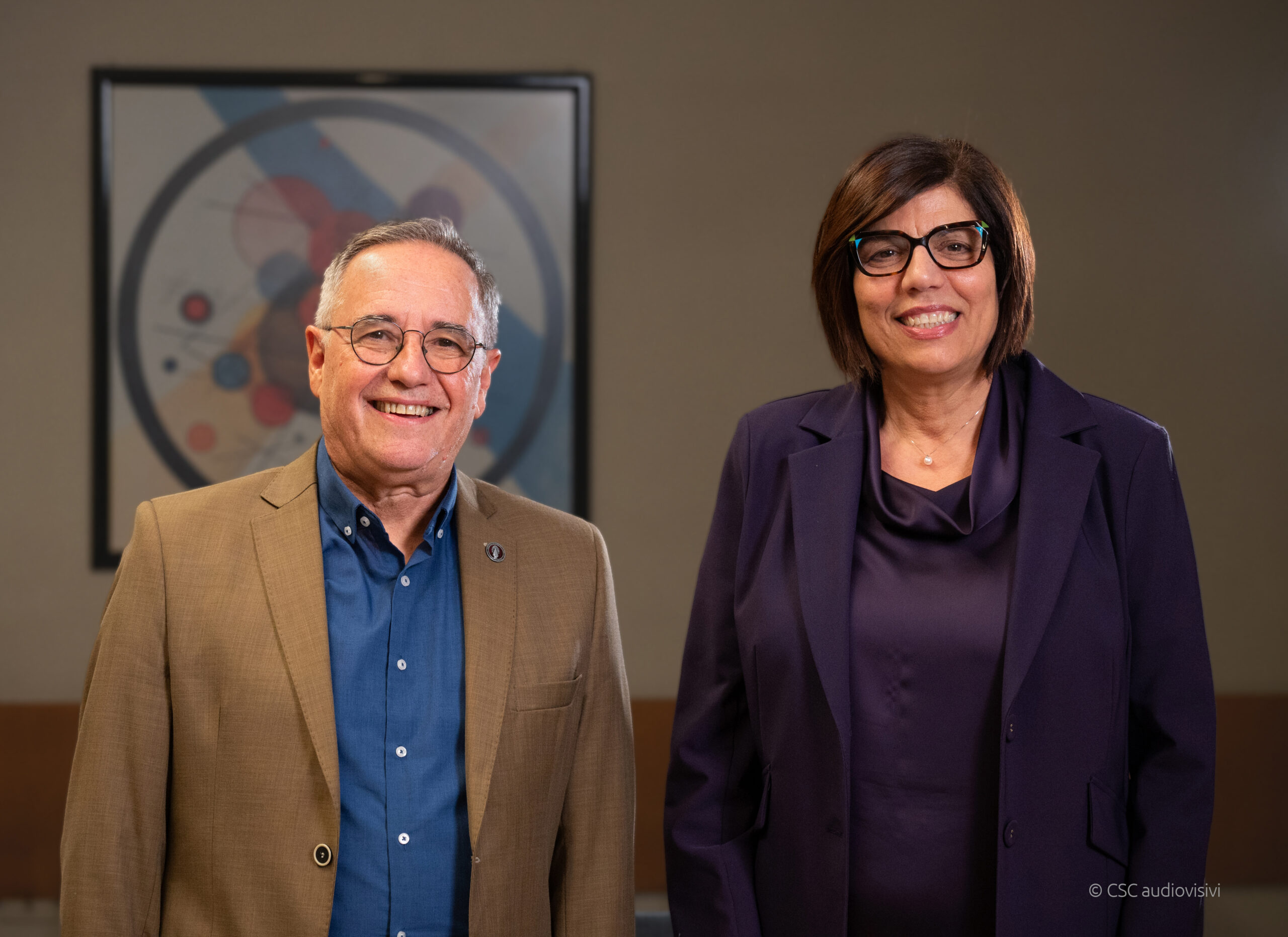
Eugenia Álvarez is from Venezuela and has been a consecrated member of Regnum Christi since 1999. She holds degrees in Education and Development from the Anáhuac University (Mexico) and in Religious Sciences from the Pontifical Athenaeum Regina Apostolorum (Rome). She has studied Spiritual Theology at the Sèvres Centre in Paris and has completed courses in Spain to become a “Specialist in Spiritual Exercises” and in the “Theology of Consecrated Life”. She currently serves as General Councillor of the Society of Apostolic Life “Consecrated Women of Regnum Christi.”
In the light of the recent positive news regarding the agreement for the Gaza Strip, I want to express my sincere hope that this represents a first step toward a just, comprehensive and sustainable peace.
There is certainly still a long way to go, yet in this moment my thoughts are with the hostages, the Palestinian prisoners and the residents of Gaza. We trust that they may begin again to glimpse a renewed hope for a life worthy of its name.
We also hope that those entrusted with the fate of nations will continue to make decisions guided by the highest good we possess: life itself.
We commit to joining our efforts, both practically and spiritually, with all those who are working tirelessly for a better world. In this spirit, we want to unite to the Day of Prayer for Peace proclaimed by Pope Leo XIV, to be held on the 11th of October.
The third and final day of the Raising Hope Conference unfolded with new keynote addresses, moments of reflection, prayer, music, and a defining moment: participants’ contributions and commitments, presented as key pillars for climate justice action.
On the website raisinghope.earth/action/ conference participants, both in person and online, were invited to share their own commitments: How will you respond to the cry of the earth and the cry of the poor? These People-Determined Contributions (PDCs) are a bold global civil society initiative to present the pledges of individuals and grassroots communities towards ecological transformation.
Raising Hope water will reach COP30
The moving opening ceremony led by Pope Leo XIV last Wednesday, 1 October—when he blessed a block of ice from Greenland—reached its culmination this afternoon as participants collected the melted water to take to their homes and communities.
Dr. Lorna Gold, Executive Director of the Laudato Si’ Movement, expressed with emotion: “A block of ice blessed by the Pope has gone viral these days. Now this blessed water will become something very powerful, because it will be carried to COP30 in Brazil.”
Each participant was able to take a bowl containing some of this blessed water—partly from the glacial ice, mixed with water from rivers across the world that had been offered by representatives at the start of the conference. This was not just a gift, but a sign of the urgency of the climate crisis, marked by the hope carried through the Pope’s blessing.
Returning to the heart and raising our voices
Another highlight of the closing day came when Dr. Lorna Gold presented some of the commitments made by participants. Among the most significant were the power of collaboration, the importance of alliances, the call to return to the heart, and the promotion of the Laudato Si’ Animator Program developed by the LSM.
She emphasized the importance of implementation: “We cannot wait for others to act. We must implement the changes that are within our hands,” Dr. Lorna affirmed. She encouraged participants to raise their voices together in Belém, Brazil (next COP), where a new alliance for the non-proliferation of fossil fuels will also be launched.
Giving thanks for 10 years of the LSM
A deeply moving moment came as participants gave thanks for the ten-year history of the Laudato Si’ Movement, founded in January 2015. Dr. Lorna Gold recalled meeting co-founder Tomás Insua in that same year and being struck by his passion and energy to spread the values of the encyclical.
“The most extraordinary thing about our movement is joy,” she declared, urging everyone to “bring this joy to COP30.” She recalled Pope Francis’s words inviting us to “sing along the way,” because “our concern must not take away our joy or our hope.”
Yeb Saño, Chair of the Board of the Laudato Si’ Movement, urged participants to engrave into memory what had been lived during the conference so that “all these reasons push us out of bed every morning.” “We have a lot of work ahead, but Pope Leo is on our side. It’s not about rushing forward, but about moving together.”
Laudato Si’ for courageous communities
The morning opened with a keynote by Kumi Naidoo, Chair of the Fossil Fuel Non-Proliferation Treaty, who described himself as a “prisoner of hope.” He stressed that we must care for our environment because “there are no jobs or humans on a dead planet.”
“Catholic communities, through Laudato Si’, have shown courage,” Naidoo said, encouraging all to act with wisdom and faith, with a sense of urgency. “Hope is not love; hope is resilience, hope is a mission.”
The resilience of peoples
The next panel, titled “Faith and Shared Mission for a Resilient Planet,” was moderated by Josianne Gauthier, Secretary General of CIDSE (Coopération Internationale pour le Développement et la Solidarité). Key topics included financing for developing countries and resilience as the driving force to move forward.
Dr. Maina Vakafua Talia, Minister of the Interior, Climate Change and Environment of Tuvalu, noted that while her native language has no word for resilience, her people have learned to “move from vulnerability to strength” after enduring multiple climate catastrophes. She also emphasized the importance of spirituality in building a resilient future.
Dr. Svitlana Romanko, founder and director of Razom We Stand, spoke of her country, Ukraine, and how fossil fuel dependency as a consequence of war has devastated its people. She stressed that resilience is what keeps them standing today, together with renewable energy and green economies, proving that living on clean energy is possible.
Mons. Robert Vitillo, from the Dicastery for Promoting Integral Human Development and the Laudato Si’ Action Platform, contributed with a reflection from the Gospel: “We are taught about solidarity, and we must shift perspective to translate it into action in our commitments.”
Listening to the peripheries
In the afternoon, the final panel was moderated by Bianca Pitt, founder of the Women’s Environment Network and co-founder of SHE Changes Climate. It revolved around what our hearts tell us about the experience of these past days.
Catherine Coleman Flowers, MacArthur Fellow and advocate for environmental health, member of the boards of the Natural Resources Defense Council, shared how people on the margins are the ones who suffer the most and are least heard.
Bishop Ricardo Hoepers, Secretary General of the National Conference of Bishops of Brazil, reflected on his country’s diversity and how it is necessary to step out of our comfort zones to broaden our horizons: “My dream for Brazil is to unite Laudato Si’ and Fratelli Tutti; and for nature and human beings to hold the same importance: nature is the space God has given us to live as brothers and sisters.”
And Margaret Karram, President of the Focolare Movement, stated: “I am convinced that the only way to bring about lasting change is to embrace love as the guiding principle of our ecological action. In Laudato Si’, the word love appears seventy times! A powerful indication of a path on which everyone and all of us are invited to walk. An invitation to journey from an authentic human fraternity — such as we have experienced in these days — toward a cosmic fraternity .”
Before concluding, participants joined in a final session of prayer and reflection, led by members of Trócaire. After presenting a video summary of the three-day journey, all were invited to recall the most significant moments and to solemnly commit to continuing the path, advocating for our common home.
In the afternoon of October 1, at the Focolare Movement’s International Mariapolis Center in Castel Gandolfo, Rome, the Raising Hope Conference was inaugurated with the participation of His Holiness Leo XIV, alongside notable figures such as Arnold Schwarzenegger, former Governor of California, and the Hon. Marina Silva, Brazil’s Minister of Environment and Climate Change.
The session combined testimonies, spiritual and artistic moments, in thanksgiving for the 10th anniversary of the encyclical Laudato Si’. Representing the Laudato Si’ Movement, Associate Director Christina Leaño and Brazil Director Igor Bastos presided over the day’s opening.
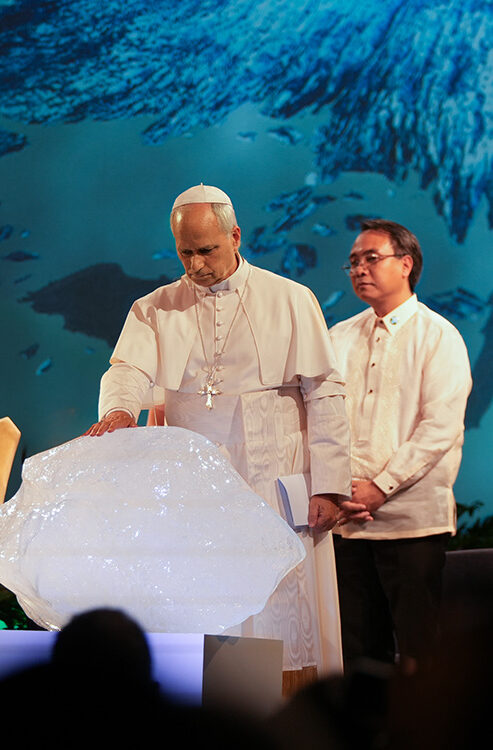
A symbolic moment came when Pope Leo XIV touched and blessed a block of ice more than 20,000 years old, broken off due to climate change from a glacier in Greenland, as well as water brought from around the world—gestures embodying compassion and concern for the cry of the Earth and the poor.
Laudato Si’: What remains to be done?
“This Encyclical has profoundly inspired the Catholic Church and many people of goodwill,” Pope Leo began in his speech on Laudato Si’, “it opened strong dialogue, reflection groups, and academic programs.” The Pope noted how his predecessor’s encyclical spread “to international summits, to ecumenical and interreligious dialogue, to economic and business circles, to theological and bioethical studies.”
Giving thanks to the Heavenly Father “for this gift we have inherited from Pope Francis,” Leo stressed that today environmental and social challenges are even more urgent. On this anniversary we must ask ourselves: “What remains to be done? What must we do now to ensure that caring for our common home and listening to the cry of the earth and the poor do not appear as passing trends or, worse still, are seen and felt as divisive issues?” he asked.
Return to the heart: from data collection to care
“Today more than ever it is necessary to return to the heart, the place of freedom and authentic decisions,” affirmed the Pontiff, because although it “includes reason,” it also “transcends and transforms it.” “The heart is where external reality has the greatest impact, where the deepest search takes place, where the most authentic desires are discovered, where one’s ultimate identity is found, and where decisions are forged.”
In this regard, he stressed that “only by returning to the heart can a true ecological conversion take place.” “We must move from collecting data to caring; and from environmental discourse to an ecological conversion that transforms both personal and community lifestyles.”
Leo reminded those present that this experience of conversion orients us toward the living God: “We cannot love God, whom we do not see, while despising His creatures. Nor can we call ourselves disciples of Jesus Christ without sharing His vision of creation and His care for all that is fragile and wounded.”
No room for indifference or resignation
Before concluding, the Pope looked with hope to the upcoming international summits —COP30 in 2025, the World Food Security Committee session, and the 2026 Water Conference— “so that they may listen to the cry of the earth and the cry of the poor.”
He also encouraged young people, parents, and those working in administrations and institutions to contribute to “finding solutions to today’s cultural, spiritual, and educational challenges, always striving tenaciously for the common good.”
Finally, he reflected: “God will ask us if we have cultivated and cared for the world He created and for our brothers and sisters. What will our answer be?”
1.5 billion Catholics can get involved
Actor and former Governor of California, founder of the USC Schwarzenegger Institute and the Schwarzenegger Climate Initiative, Arnold Schwarzenegger, began his address by congratulating the Holy Father for installing solar panels on the roofs of the Vatican: “I am standing next to a hero,” he declared.
“There are 1.5 billion Catholics — that power and strength must be used to get involved in the climate movement,” Schwarzenegger said, urging more focus on talking about pollution: “The average person doesn’t understand when we talk about net zero or rising temperatures. Instead of speaking to the head, we must speak to the heart. We can end pollution if we work together, because God put us on this Earth to make it a better place.”
Toward the COP of hope
Next came the Hon. Marina Silva, Brazil’s Minister of Environment and Climate Change, co-chair of COP30. In her address, she expressed being inspired by Christian values in taking part in the conference.
Confidently, she stated: “I am certain that the Pope will make a great contribution so that COP30 goes down in history and becomes, as we all ardently hope, the COP of hope, to preserve and cultivate all forms of life that are part of the beautiful garden God has given us.”
From tears to hope
On stage, the Pope was joined by Dr. Lorna Gold, Executive Director of the Laudato Si’ Movement and President of the Conference Organizing Committee; theologian Margaret Karram, President of the Focolare Movement; Fr. Jesús Morán; and Yeb Saño, Chair of the Board of the Laudato Si’ Movement, who shared his own story of facing climate catastrophes in the Philippines and introduced the testimonies.
A symbolic spiritual moment followed when representatives from East Timor, Ireland, Brazil, Zambia, and Mexico brought water from their homelands, poured into a common bowl on stage. They embodied the cry of indigenous peoples, wildlife, ecosystems, future generations, migrants, the poor, and the Earth itself.
From tears to hope, with the audience on their feet, Pope Leo approached the glacial ice and proclaimed a blessing over the water and all present: “May we work for the flourishing of all creation.” Musical performances by Adenike, Gen Verde, and the Pacific Artists for Climate Justice brought joy and energy to the encounter.
A block of Greenland’s ice
The ice traveled more than 5,000 kilometers from the fjords of Nuuk, Greenland, to Castel Gandolfo, Rome. Artist Olafur Eliasson organized the transfer with the support of geologist Minik Rosing. Collected from the Nuup Kangerlua fjord, the block of ice had detached from the Greenland ice sheet due to climate change and was melting into the ocean. Greenland’s vast ice sheet is one of Earth’s most important climate regulators. Formed from compacted snow over tens of thousands of years, it contains layers more than 100,000 years old with ancient air bubbles recording the history of our atmosphere. NASA’s Earth Observatory estimates Greenland’s ice sheet is losing about 270 billion tons per year due to climate change. As the ice releases meltwater into the ocean, it reminds us that our global relationship with ice sheets is existential: they connect us to the past, shape our present climate, and —depending on our care or neglect— will determine our common future. If the ice melts completely, NASA predicts sea levels could rise by about seven meters (23 feet), reshaping coastlines and displacing millions worldwide.
To all those who belong to the Focolare Movement in the world
We, the leadership of the Focolare Movement, gathered in Rome, representing those who belong to the Movement in 140 countries where it is present, express how much we are suffering at the continuing escalation of armed conflicts that are devastating the Middle East and many other parts of the world.
We express our firm and unwavering closeness to the people and nations who are suffering, and we condemn all forms of violence, injustice and oppression.
Aware that peace begins with our daily actions, we would like to invite everyone to embrace and endorse the following commitments with their lives:
• to be ‘artisans of peace’, prepared to overcome ideologies and divisions,
• to promote and support networks of solidarity in order to provide material, psychological and spiritual support to the victims of all wars,
• to ensure that each of our communities becomes a ‘home of peace’, where we learn to defuse hostility through dialogue and mutual understanding, where justice is practised and forgiveness is fostered,
• to promote educational programmes to develop a culture of peace, inclusion and non-violence, especially among the new generations,
• to encourage all local and global initiatives that generate encounters and interreligious and intercultural dialogue, which are fundamental for reconciliation.
We commit ourselves to ensure that forgiveness, dialogue and fraternity are not mere words but become real pathways that open up the future and prevent violence from having the last word.
May an unceasing and confident prayer rise from every corner of the earth to the God of peace, so that he may enlighten the hearts of those who have the power to act so as to put an end to every conflict.