19 May 2019 | Non categorizzato
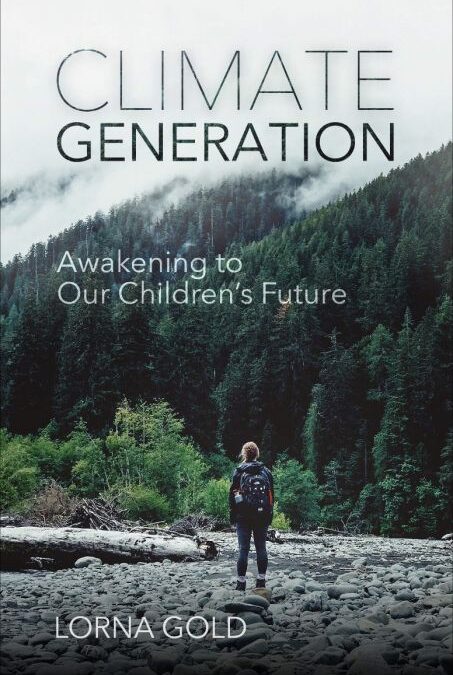
Another day of global climate action is due to take place all over the world on 24 May. An idea which began with a sixteen year old Swedish girl, the protest coincides with the fourth anniversary of the publication of Pope Francis’ Encyclical “Laudato Sí”. We asked the economist, Lorna Gold, a member of the Focolare Movement who works for “Trocaire”, the Irish Catholic Agency for Development and author of the book “Climate Generation: Awakening to our Children’s Future”, to tell us why we need to commit urgently as individuals and all together to protect the planet. You are a specialist in international development and have worked for almost two decades in academia and non-governmental organisations. Where does your commitment to the environment come from? My work for environmental justice began when I was young and I started campaigning to build a more united world with the young people of the Focolare Movement. I remember, in particular, meeting young people living in Amazonia in Brazil who told me how the forest was being destroyed. I was horrified and very quickly started to campaign in my school and community to protect the Amazon. I later studied and did a PhD on sustainable development, focussing on the Economy of Communion as an example of economics where people are focused not so much on consumerism as sharing and building the common good. In my work in “Trócaire” which works to support people living in poverty, I have seen that if we fail to protect the earth, we are also failing the poor – and all of us. Without protecting the basic conditions for life on which all of us depend, there is no way out of poverty. 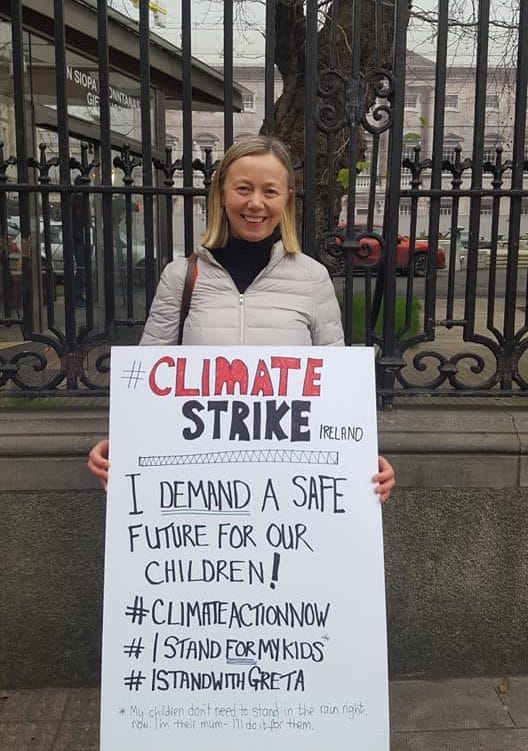 You have been supporting an initiative called “FridaysForFuture” promoted by Greta Thunberg which is being taken up by many young people and parents in Ireland. What do you do every Friday? I have been very concerned about climate change now and for many years have worked hard to influence policies of governments. I was really touched by Greta Thunberg. There have been others like her before but now, with the power of social media, there is a chance for the words of one child to become a “fire” which can move everyone. She was calling on everyone to go out and protest on Fridays, in particular on 15th December 2018. Initially, I didn’t think this was directed at me but eventually I did protest outside our Parliament. And I returned every Friday. The number of people joining us each week started growing and similar groups started springing up all over Ireland. By 15 March 2019 the whole country was mobilised: 15,000 children and adults came out onto the streets of Dublin and 40 locations around the country. How do we make commitment to the planet change our way of life? We have to protest and act. Anyone can start a Friday protest in their local community and log it on the Fridaysforfuture.org global map but you can also do a positive action like planting trees. This would generate a double impact – protest and plant! The global protests will take place regularly now, like this one. Together witth the Global Catholic Climate Movement, which Focolare is part of, we are calling on people of all faiths and communities to join the students that day. How much has your encounter with the charism of the Focolare influenced your work and life choices?
 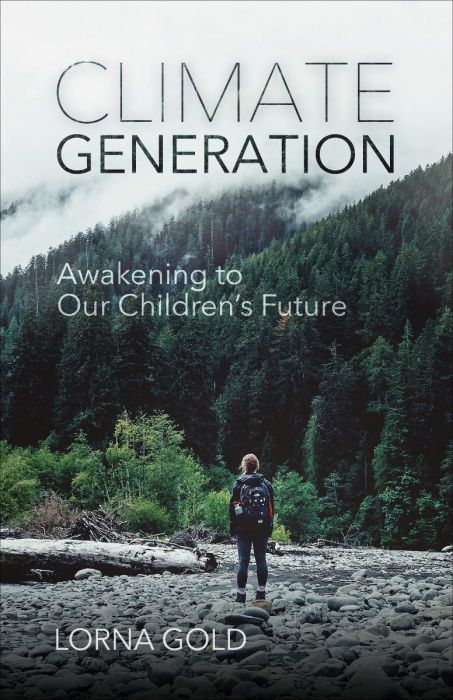 My choices in life for sure have been influenced by the encounter with the Focolare. I have learned that Love conquers all. To solve climate change we need everyone to work together. We have technologies, ideas and even money. Yet all too often there is a lack of collaboration and genuine goodwill to work for the greater good. I believe the Focolare Movement has an important role to play in generating spaces where everyone else can be supported to work together in a spirit of genuine collaboration. Where did you get the idea of writing a book and why? What kind of commitment do you propose to protect the planet? The idea to write Climate Generation came from my deep concern that parents do not see what is happening to the climate or understand how it will affect their own children. I have worked on this issue for two decades. The situation is terrifying. Unless we change our societies radically in the next decade, our children will face runaway climate change of 4 or 5 degrees Celsius by the end of the century. Put simply, civilisation as we know it would not survive. The vast majority of species would be wiped out. Our children would face a burden which is impossible to bear. For me, as a mum, that is just not acceptable. There is huge interest in the book here in Ireland and it has just been published in the USA by New City Press. I am hopeful it will get published in other countries too. In terms of what we can do, I suggest three things: first we need to reconnect with the earth, God’s wonderful creation. We need to find ourselves again in the great communion-fellowship, not only with our fellow human beings but with the entire cosmos. Secondly, we need to change our own lifestyles to minimise our impact on the environment. This involves somewhat of an ‘ecological conversion’ as Pope Francis calls it. A good starting place is to do your own ecological footprint online – there are many tools available on the web – and you will see where you can make the most impact to reduce your footprint. None of the choices are easy – and some require some major changes. Finally, we need to join with others to build political pressure for the BIG changes we need. Individual actions are not enough. Divesting our public investments from fossil fuels is a key step in this direction. Campaigning is also essential until the pressure for change is so big, it is unstoppable.
Anna Lisa Innocenti
17 May 2019 | Non categorizzato
Many Venezuelan migrants have arrived in Peru and other South American countries in search of a better life. Irene Indriago Castillo is a Venezuelan clinical cognitive psychologist who collaborates with the Focolare Movement in a variety of ways. She is currently working as an international organisational specialist in Peru. We have asked her about her personal and professional experience in this role. 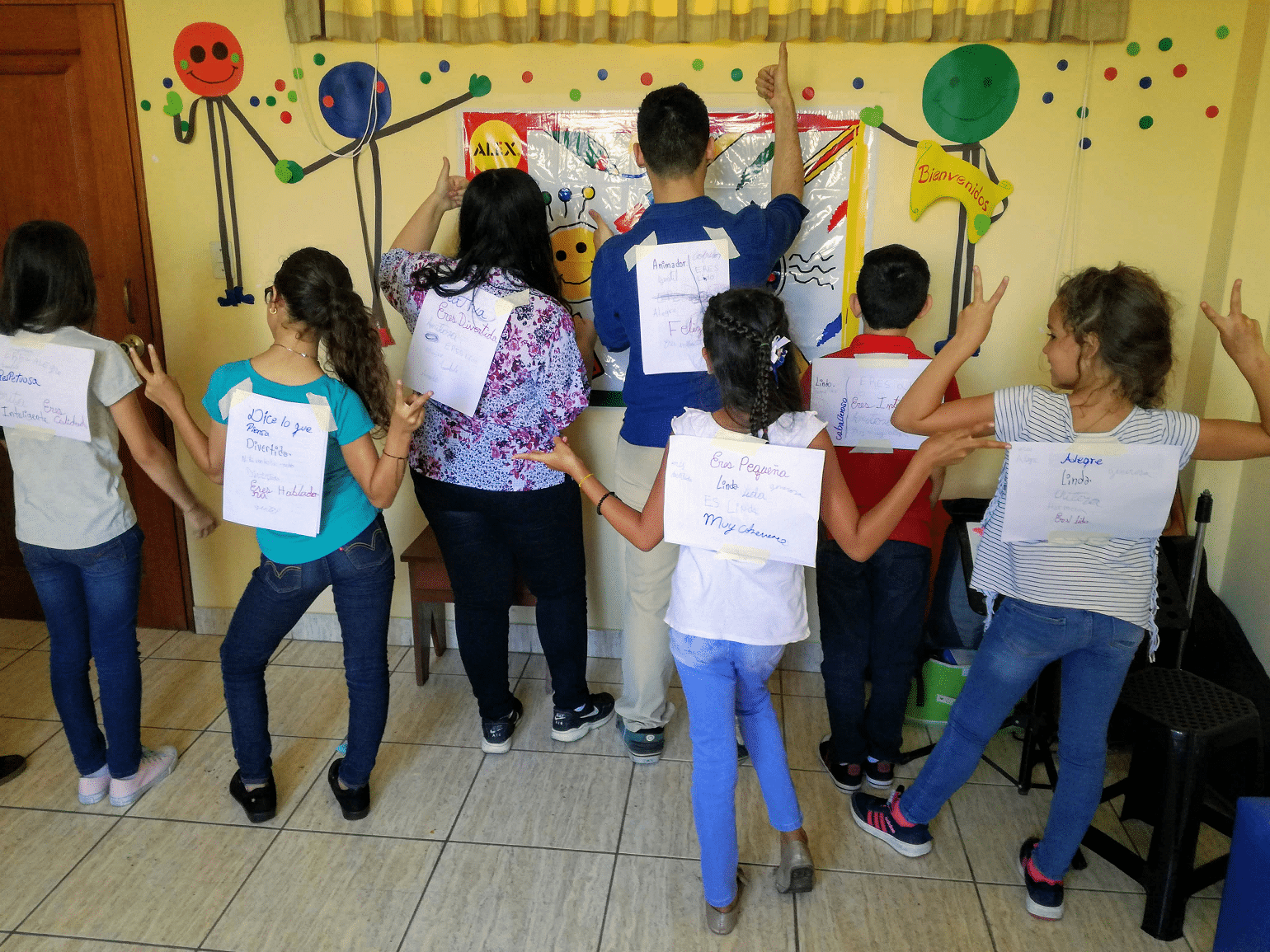 What makes the migrants suffer and what gives them hope? The people arriving in Peru have often used the cheapest form of transport possible to travel from Venezuela and have left behind everything they owned and the people they love. After the journey and the challenges of passing through migration controls, the experience which is sometimes called “from illusion to delusion” begins. These people have very little money but they want a better life for themselves: they want a home and a job so they can financially support family members who have remained in Venezuela. Unfortunately, these dreams soon begin to disappear and life becomes very difficult. They suffer a lot because they are separated from their relatives and probably receive very little news from them; the normal pattern of life is lost and they do not feel safe and secure anywhere. Sometimes they are worse off than they were in Venezuela. Adjustment is difficult and this can create difficulties between couples. These people are surrounded by a sea of uncertainty which saps away their spiritual and emotional energy. Only people with a very clear aim and a deep faith are able to overcome such challenges quickly.
 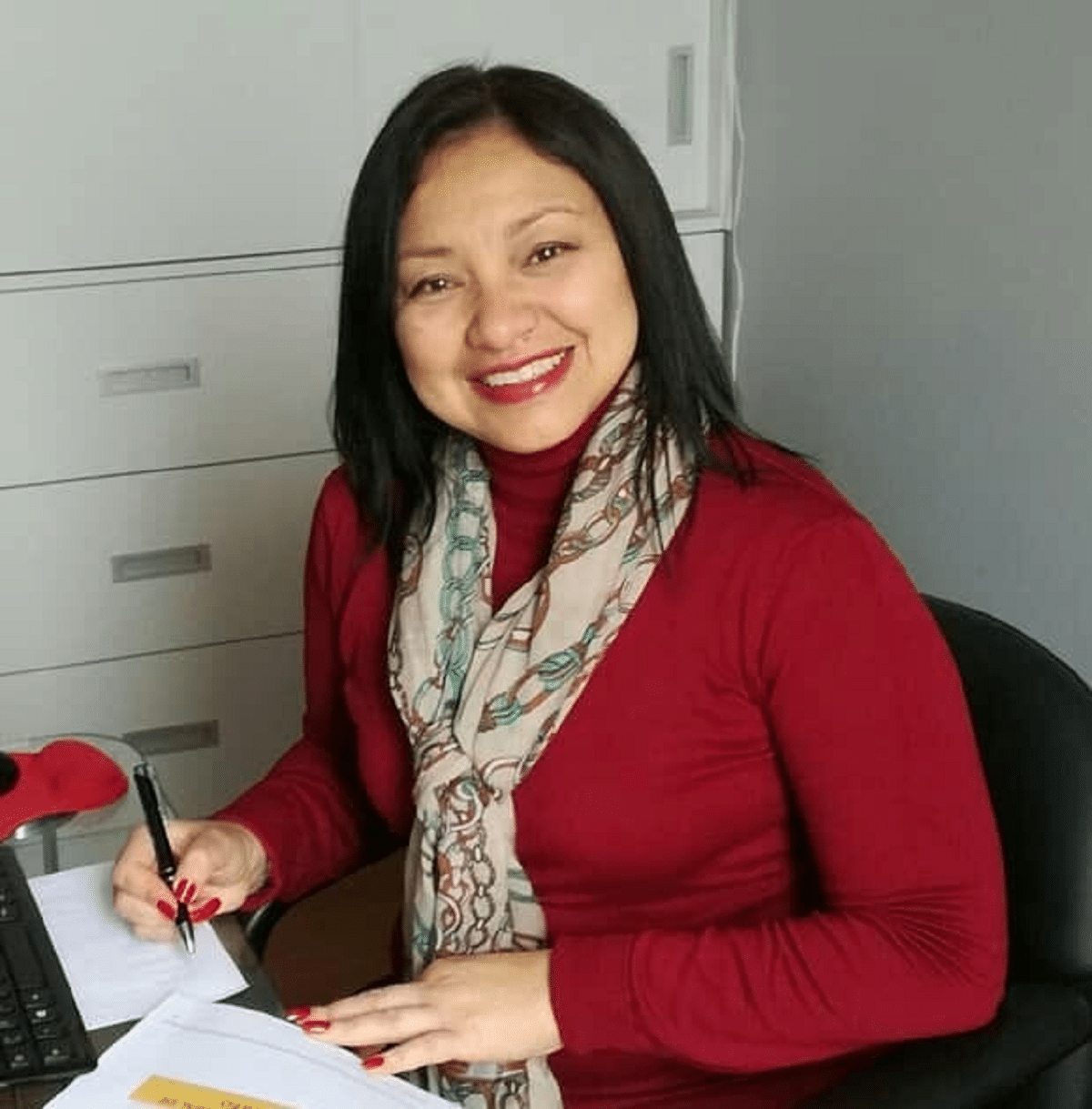 What are their greatest and most urgent needs? Their most immediate need is to earn enough to maintain themselves. They also need to work through the legal processes required to gain permanent residency and to acquire healthcare provision. They need to find ways to maintain contact with their families in Venezuela and they need help and support to handle their frustration, doubts and sadness. There are many children among the migrants: what traumas do they face and how can they be helped? Children and adolescents usually know that the reason why they are migrating is to find a better life, nonetheless, they are still emotionally shocked when it actually happens. They do not have the same capacity as adults to handle change. Through the workshops that I hold for them, I have come to realise that the decision to travel to Peru is always taken by the parents and the young people are never asked for their opinion. Although they understand that migration may lead to a better life, they do not all want to come. They see their parents less, they are anxious, they communicate less and don’t have friends. They do not all get a place at school in Peru and those who do are often called offensive names by the other students. Their sadness, anger and fear is often expressed in forms of behaviour that their parents don’t understand: they may be rebellious or cry a lot or become very isolated. It is really important to spend time with them, to find ways of communicating and to form groups with people of their own age so they feel supported Do you think there is any hope that these young people will have a better future? While there is life there is hope. We need to focus upon their resilience as a means of strengthening their mental and emotional capacity to deal with such great challenges in life. From a human rights perspective, the country in which they are now living must guarantee basic nourishment, healthcare and education. It is also essential to support them as they maintain communication with their family members and build new friendships. They also need opportunities to learn about their new environment and they have great need of spiritual support. These are all means to form people with sound values and a vision for the future and the capacity to make choices which will help them to fulfil their dreams.
Anna Lisa Innocenti
16 May 2019 | Non categorizzato
Maria Voce and Jesús Morán continue their journey in Lebanon: the roots of a culture in a country with a very complex social, political and religious situation. The challenge of an authentic dialogue as a key to Lebanon’s rebirth. “It’s time to build a new nation”, said a large poster overlooking the motorway, but the speed of the Lebanese traffic did not give one the chance to find out who published this appeal and the intentions behind it. 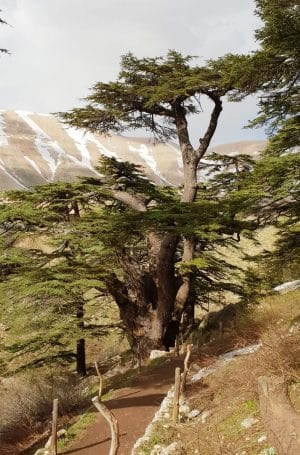 The members of a small Focolare delegation, headed by Maria Voce, its president and Jesús Morán, its co-president, were returning to Beirut from a trip to the north of the country. There, they visited the Valley of the Saints, the spiritual centre of the Maronite Church, the largest Christian denomination in country. This area is also well known for the Cedars of Lebanon, a small forest at an altitude of 2000 metres where one can still find species that probably date back to the time of King Solomon, that is 3000 years ago. The members of the delegation were so impressed by the richness they discovered during this visit, that on their return journey to Beirut they affirmed the great capacity of this people, who can boast of 7000 years of history. The Lebanese managed to survive at the crossroads of three continents and three great religions and to safeguard their creativity in extremely difficult conditions. As they approached nearer to the capital city, they thought more of the country’s present situation, that leaves very little space for hope. In Lebanon, there are currently 18 religious communities. The state and public administrations function on “emergency” management. Ethnic, religious and political groups, big families, economic interests and foreign powers are deeply intertwined. Wounds, caused by the so called “civil” war, that took place between 1975 and 1990, have not yet healed. One of the bishops they met during these days said: “We haven’t had the courage to face the harm we have caused to one another, so no one has ever asked for forgiveness”. Comments show the fear of another outbreak of war.
 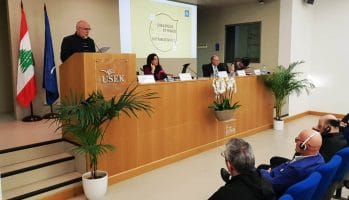 “It is time to build a new nation”, said the poster on the motorway. This provoked a very spontaneous question: how can this ever happen? Jesús Morán answered this question during a round table conference held at the faculty of Philosophy at the Holy Spirit University (USEK) near Beirut. His answer could be summed up in one word: dialogue. The Co-President of the Focolare Movement insisted: “Dialogue is part of man’s nature. Through dialogue man becomes more man; he fulfills himself by giving himself to others. It is not so much a matter of words or thoughts but of giving oneself. This requires silence and listening; it requires risking one’s own identity, even one’s own cultural and ecclesial identity. However, one’s own identity is not lost; it is enriched through one’s openness to others”.
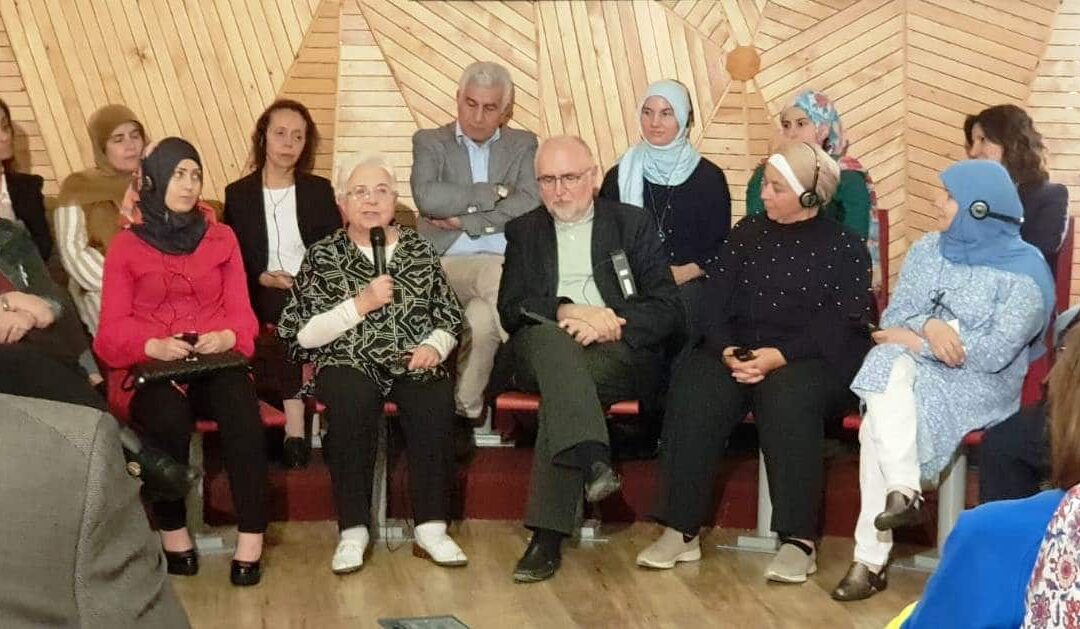
 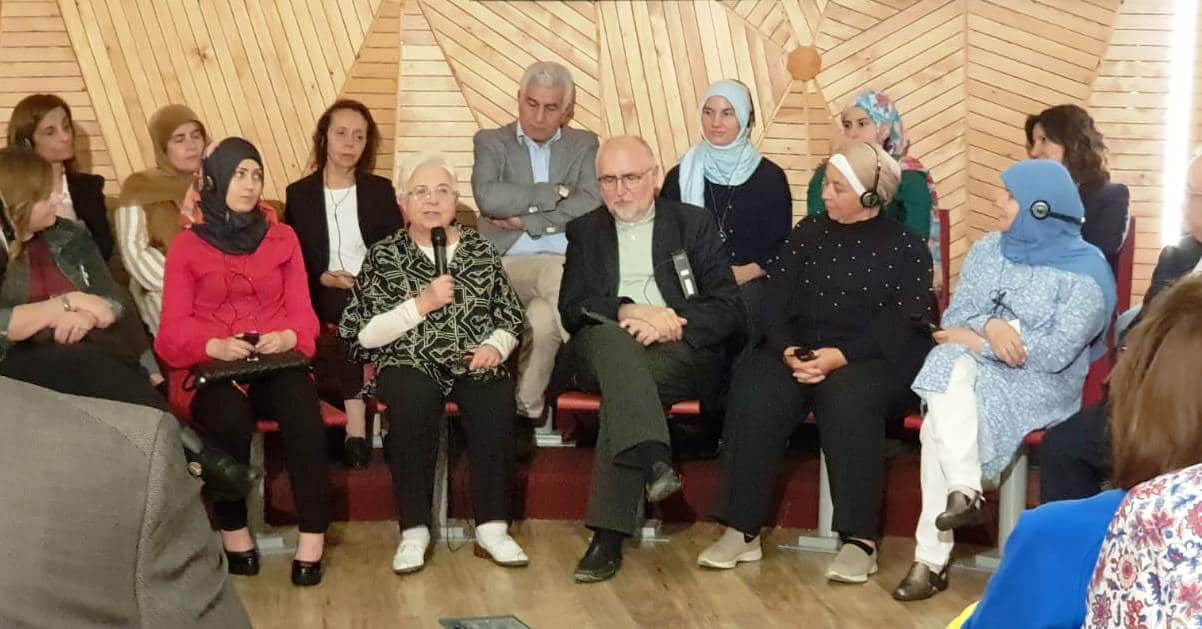 So, does dialogue build a new nation? Is this another one of those alluring theories that the Lebanese people have come across in recent years? The 150 Christians and Muslims gathered at the so-called “Yellow House” on May 13 can answer these questions. Located on the former demarcation line between East and West Beirut, the Yellow House was rebuilt as a historical symbol to remind people of the trauma of war. The testimonies shared by those gathered there were moving and convincing. They spoke of their friendship that began during the war when they were simply made welcome by the Focolare. A Muslim woman described how small gestures of closeness and attention, reciprocal visits and unbiased relationships transformed friendship into a real family. “Dialogue is possible only between people who are true. And it is only love that makes us true”, Jesús Morán said in his speech. The Christian and Muslim friends and their experiences are a proof of this. May be it is just a small seed, that will grow slowly, just like the cedars of Lebanon. But it is certainly a seed with overwhelming strength, from which a new nation can be born.
Joachim Schwind
15 May 2019 | Non categorizzato
Luigi Butori is an Italian focolarino living in Ho Chi Minh City. After over 20 years in Asia, he has seen its great beauty but also dramatic situations and contrasts. We went with him to see his work supporting and enabling the poorest of the poor, first in Thailand (see the CH Conference call of September 2015) and now in Vietnam. https://vimeo.com/333055587

13 May 2019 | Non categorizzato
The focus for discussion was safeguarding the Amazon – not only one of the richest ecosystems on the planet but also a “forest of cultures.” Look at the Amazon with the eyes of those who live there, “make yourself one ” with the indigenous peoples who inhabit it in relationships of exchange and perfect balance. While the Earth is a mother who gives life, it is humanity’s role to care for it – to protect the wealth of its creatures, while being at the same time a creature within Creation. This is the over arching vision of both the promoters and the participants of the fourth edition of the Village for the Earth, which was held in Rome promoted by the Focolare Movement together with Earth Day Italy. From April 25 to 29, they addressed the theme of safeguarding the Amazon, which has an ecosystem among the richest on the planet and at the same time contains “forest of cultures.” From the park at Villa Borghese, the appeal was renewed for the protection of the environmental and ethnic-cultural biodiversity of the Amazon. Described as one of the Earth’s “lungs,” the Amazon has been exploited and looted for too long by multinationals and governments who see it only as a source of income. The extraction of oil, gas and precious materials, and the growing deforestation of areas destined for intensive agriculture or for the construction of dams and other infrastructure – reports Francesca Casella, Director of Survivor International Italy – is a “deliberate attack” that puts at risk the survival of the ecosystem and the tribes that inhabit it. These tribes are illegally evicted from their lands, deprived of sustenance or even exterminated. “We are hungry and thirsty for justice for all those who have died fighting for our people and for our lives,” Hamangaì, an indigenous student representative of the Patax people in the Brazilian state of Bahia, said. “We ask humanity to stop and listen to the original peoples, the bearers of thousands of years of wisdom.” This cry was answered by the hundreds of organizations, institutions and entities – civil and ecclesial – that took part in the event and agreed to work together for the protection of the Amazon, this land that constitutes an inestimable ecological heritage, but which also offers itself as a model for the coexistence of hundreds of populations with different cultures, ethnic groups and religions. It’s a model to be protected, therefore, according to the spirit indicated by the Lord to Moses in the Bible: “Take off your sandals, for the place on which you stand is holy ground” (Ex 3: 5). This was the biblical passage that Pope Francis quoted during his apostolic journey to the Amazon, in 2016, and that Cardinal Lorenzo Baldisseri, Secretary General of the Synod of Bishops, proposed once again to the participants in the Village as the model of how our we should approach encounters with the indigenous inhabitants and their land. The bishops of the world will meet in October to discuss the theme of the Amazon, searching for “New paths for the Church and for an Integral Ecology.” This is the title given to the coming Synod by the Pope. The cardinal added that the presence of the Church in the Amazon is significant, with “7 Episcopal Conferences, 106 bishops and thousands of priests and pastoral workers.” A special attention that comes from the awareness that everything is connected, as the Holy Father underlines in Laudato si ‘, where he invites everyone to an “ecological conversion”, or, in other words, to assume the interdependence of all Creation, of nature with humanity and among all peoples, and therefore to change lifestyles in order to overcome individualism and to adopt global solidarity as a criterion for action. In this sense we can look at the work of the Capuchin Friars of the Holy Land, who are present in 72 villages living alongside indigenous peoples. They are also engaged in the fight against prejudice towards the indigenous peoples. While the indigenous are seen, by some, as backward peoples, the Friars assert that there is much to be learnt from them. “We are slaves of time, while being with them you understand how sacred it is to be together, to listen to each other,” says Father Paolo Maria Braghini, a Capuchin missionary for 20 years in the Amazon. He adds, “St. Francis would be happy to live today in that part of the world.” According to Rafael Padilha, professor at the University of Vale do Itajaì, in Brazil, this Amazonian model in its biodiversity, can and must be replicated elsewhere – while adapted to individual realities. He also emphasized the importance of promoting an economy that puts the person at the centre, for example through projects like those inspired by the Economy of Communion born of the charism of the Focolare Movement. Father Laurent Mazas, Executive Director of the Cortile dei Gentili, stated that the challenge, even in the so-called developed countries .is to move from multiculturality to interculturality, “from duel to duet, respecting the treasures of each culture.” At the end of the talk, in the Magnolia Avenue of the Villa Borghese, as a testimony to the common commitment to safeguard the forest and the peoples that inhabit it, a holm oak tree was planted in some soil from the Amazon.
Claudia Di Lorenzi
13 May 2019 | Non categorizzato
Pope Francis invites young economists from all over the world to join him in Assisi, Italy, from 26 -28 March 2020 to promote a common covenant which will bring about change in present day global economics and reanimate future thinking. “I am writing to invite you to take part in an initiative that is very close to my heart: an event that will allow me to encounter young men and women studying economics and interested in a different kind of economy: one that brings life not death, one that is inclusive and not exclusive, humane and not dehumanizing, one that cares for the environment and does not despoil it. This event will enable us to come together, to know one another and will promote a “covenant” that will change the current economic situation and reanimate economics in the future”.  These are the opening lines of a message that Pope Francis sent on Saturday 11 May to young economists and entrepreneurs committed to bringing change to global economics. He invited them to contribute to planning an international event entitled “The Economy of Francis” that will take place in Assisi from 26-28 March 2020. His aim is to begin a process of global change whereby economics now and in the future are more just, inclusive and sustainable and do not leave anyone behind. The event is being organised by a Committee made up of representatives from the diocese of Assisi, the council of Assisi, the Serafico Institute of Assisi and the Economy of Communion. The Pope is inviting everyone to join him – people of all faiths and nationalities – to discuss together the most challenging issues the world is facing today including care of the environment and justice for those living in poverty. They are issues which demand courage and commitment in order to rethink the current economic paradigms. Professor Luigino Bruni, scientific director of the Committee, said, “Pope Francis’ invitation to young economists is a historic event because it draws together topics about which the Pope feels very strongly – his preference for young people and his concern to create a new type of economy. Acting on his behalf, we are inviting the economists and entrepreneurs who have shown the greatest sensitivity to and understanding of the Economy of Francis (St Francis of Assisi and Pope Francis) so that the young people who will come will hear the very best speakers and learn about the best economic practice in the world today. The word “Oikonomia” (economy) has a complex background; its Greek root refers to our house rules or how we behave in our homes but, at the same time, OIKOS also refers to the care of our common home. The Fathers of the Church understood Oikonomia from a theological perspective, as a category of universal salvation. Assisi as a setting is very important: it is a town with a message that speaks of a different type of economy. The programme will take place in different parts of the town and will focus upon the three main pillars of the Economy of Francis: young people, the environment and the poor.” The two- day programme, from 26 -28 March, will include a range of talks on topics such as the rights of future generations, respect for life, social equality, the dignity of workers and care for our planet. The Economy of Francis will also be expressed in workshops, artistic presentations, seminars and plenary sessions. Well known economists and experts in sustainable development and other disciplines will reflect and work alongside the young people present. Applications to attend can be made from June onwards. The full text of Pope Francis’ letter and further details of the event can be found on www.francescoeconomy.org
Stefania Tanesini
