10 Dec 2018 | Non categorizzato
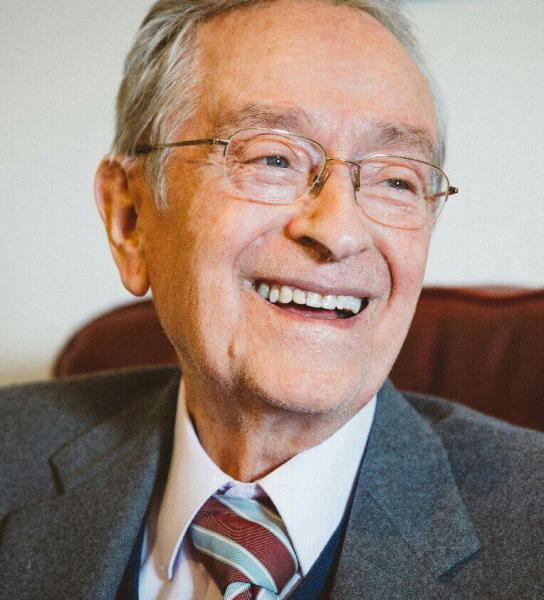
During this time of political crisis, Igino Giordani and Tommaso Sorgi encourage us to work on all levels of society to bring democracy back to its very essence –that is to “we”. 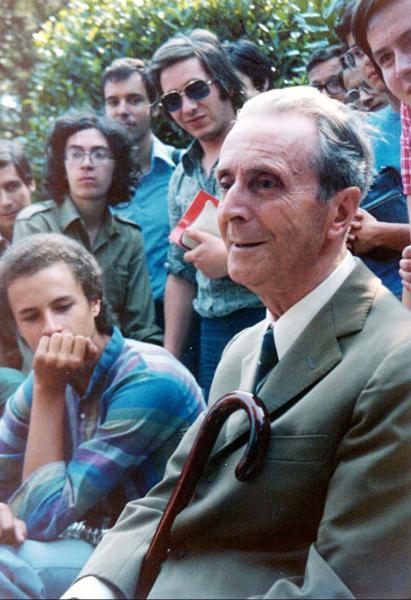 Two meetings about Igino Giordani and Tommaso Sorgi have taken place recently in Cremona and Teramo, Italy. At both gatherings, there was considerable focus upon the role of the politician as a person who values the common good – the good of humanity – over and above the well-being of his or her own community or nation. This idea and practice is not popular nowadays in this period of unbridled local and national demand. We asked Alberto Lo Presti and Letizia De Torre about the relevance of these two politicians today. Lo Presti is a lecturer in the Social Doctrine of the Church at LUMSA and president of the Igino Giordani Centre and De Torre is a member of the Italian parliament and international co ordinator for the Movement for Politics for unity. What relevance can Giordani and Sorgi have nowadays at a time when the common good seems to be understood only within the context of nationalism and the defence of regional identity? Alberto Lo Presti. There is a great need to tune into figures such as Igino Giordani and Tommaso Sorgi. They lived at a time marked by deep and apparently insurmountable periods of division. They believed in friendship among nations when the whole of history seemed to be taking a turn for the worse and they had a profoundly Christian view of the world. Giordani suffered personally in the two world wars and was regarded as a supporter of peace and justice. He paid the price for his choices of freedom and solidarity. Sorgi was one of the protagonists in the reconstruction of Italy after the second world war and greatly facilitated dialogue between opposing political forces during the time of the Cold War. These two figures teach us that every small action that favours peace and co-operation is a decisive step in the building of a civil order based upon the common good. They would be extremely surprised that in the twenty-first century there is growth in political ideas based upon national supremacy because they personally experienced the destruction brought by such political attitudes in the past. It is not our place to disregard their witness. Both regarded the relationship between the public and their political leaders as very important: Sorgi even formulated the so-called “political pact”. Is this relevant and practical nowadays? Letizia De Torre. Igino Giordani regarded politics as “charity in action – the servant and not the master”. He would never have been able to understand or practice politics based upon injustice and deception of the general public, aiming at power and personal gain. He thought of all citizens as the “masters” that he was called to serve. It was the same for the Honourable Tommaso Sorgi who witnessed first-hand the devastating effects of corruption which is still present in Italy. It was after many episodes of tension and conflict with politicians and public administrators that he drafted an agreement between the elected parliamentary representatives and the public. The agreement had an ethical basis and outlined policy involving everyone. It was a stroke of genius and is very relevant to our current crisis in democracy. We are living through a “post-representative” time; our politicians do not represent our highly complex societies and citizens know how to operate collectively, exerting direct influence. We need to overcome this continuous drift towards individualism and bring democracy back to its essential meaning – “we”. To this end, at our next international meeting “Co- governance and Co-responsibility in our Cities today” which will take place in Castel Gandolfo, Italy, 17 – 20 January 2019 we will work together to produce the outline for a “Pact for our Cities”. This will be the fulfilment of both Giordani’s understanding of politics as charity and the prophetic vision of Sorgi’s “agreement”.
Stefania Tanesini
7 Dec 2018 | Non categorizzato
In a letter to the whole Focolare Movement, dated 7th December 2018, the 75th anniversary of the day when Chiara Lubich consecrated her life to God, Maria Voce, Focolare President, has announced that during 2020 the centenary of Chiara Lubich’s birth will be celebrated. “We are getting closer to the year 2020 when we will celebrate the centenary of Chiara Lubich’s birth”, Maria Voce wrote. “This anniversary will of course be a unique opportunity; first of all to thank God for the gift that Chiara was for us and for many people across the world. In fact, all of us were won over by the charism God gave to her and that changed or is changing our lives in a deep way. It will be a favourable time in which many other people will be able to meet Chiara who is living today in her Work”. The President ended her letter saying, “From now on, let’s ask for the abundance of the Holy Spirit, for us and all that we want to achieve, but above all for all the people who will have the chance to get to know Chiara and her charism.” In the coming months, the Focolare communities around the world will be planning ways of celebrating this anniversary. A commission has been set up at the international centre of the Focolare Movement, which can be contacted (centenario.chiara (at) focolare.org) to share plans, ask for advice or receive information. Our website, too, will dedicate an area to Chiara’s centenary, where the various activities being held around the world during the anniversary year will be made known.

7 Dec 2018 | Non categorizzato
With her unconditional “yes” to God, Chiara Lubich carried out a simple, transformative act that continues to generate life, organizations and culture. On December 7, 1943 Chiara gave her life to God for always. In 2002 she told some Focolare kids about that cold morning 75 years ago, when she had no intention at all of founding anything. “I had married God! I expected everything of him.” Today more than 2 million people have embraced her spirituality, which has gone beyond geographic and cultural borders worldwide. What happens when someone’s life path comes across Chiara Lubich’s spirituality? We asked Maria Celeste Mancuso and Arthur Ngoy – she’s from Argentina, he’s from the Democratic Republic of Congo. Maria Celeste (teacher): “I got to know about Focolare during the military dictatorship in my country. My 24-year-old brother had been taken and executed, and my family was destroyed by the pain. That was when I met a group of young people from the Focolare who spoke to me about Jesus’ cry of anguish on the cross, and how I could unite my own pain to his. I found the strength to forgive my brother’s killers, and I chose to respond to the call to love everyone, just as Jesus had. Professionally I dedicated myself to teaching young people with disabilities, not just to offer them cultural foundations, but to restore their dignity and respect. Today I no longer feel Argentinian or even South American; I belong to a new culture that views someone else, someone different, as a sibling and that reads history as a journey towards fulfilling universal fraternity.” Arthur (doctor): “I had recently lost some friends in an accident that I had been in. I was at rock bottom, and it was during that time that I heard about Chiara, how she had discovered God’s love during the absurdity of World War II. I understood that my life could also be guided by the Gospel. So I decided to not give in to extortion and corruption, which is so common in my country, and to carry out my profession as a doctor, putting the good of patients above all else. One of the most difficult times of my life was in 2007: my oldest son was killed after an accident. It was an episode that, in African culture, was open to a number of interpretations. There were those who advised that I get a divorce, quit work or even leave my country. Only certainty in what Chiara had taught me – keep loving – helped me to overcome this ordeal and once again find peace at home. I want to thank Chiara for having brought the spirituality of unity to the African continent.”
Stefania Tanesini

6 Dec 2018 | Non categorizzato
An approach to dialogue amongst Churches that values reciprocity . 2017 marked the 500th anniversary of the Reformation. It was not just a time to recall what happened in the past but an opportunity to reflect upon the progress that has been made in the field of ecumenism. But what is going to happen now? This question was the starting point for the ninety participants at a seminar that took place in the Mariapolis Centre in Zwochau, Germany. It was entitled “Brennpunkt Okumene” (Focus on Ecumenism) and its starting point was “receptive ecumenism.” Paul D. Murray, a Catholic theologian from the University of Durham, England, outlined the ideas that lie at the heart of this approach. He said that it’s not a matter of “what the others can learn from us” but rather a question of “what we can learn from other people.” It is ecumenism based upon listening and reciprocity. Dr. Callan Slipper, an Anglican theologian in London, explained that this approach enables people to learn from one another without hiding the wounds and hurt from the past. In fact, it creates awareness that other people help healing to take place. He and Peter Dettwiler, a theologian from the Reformed Church of Switzerland, gave a presentation that allowed listeners to penetrate the “inner life” of their respective Churches without avoiding the blows and suffering experienced. They then participated in a round table with the woman Pastor Seehafer from the community of the Free and Evangelical Church and Fr. Marcellus Klaus, a Catholic priest, offering those present the opportunity to practice “receptive ecumenism”. The day concluded with reflection upon an extract of a talk given by Chiara Lubich in the Memorial Church in Berlin which outlines the roots of the reciprocity proposed by “receptive ecumenism”. “Before being nailed to the cross, before suffering the abandonment of the Father, in a long prayer for unity, Jesus said, ‘May they all be one.’ (Jn.17:21) We could say that when we live in unity it makes an impact: it is a powerful element of living ecumenism. It is the presence of Jesus among the members of the community. Jesus said, ‘Where two or more are gathered in my name, there am I in the midst of them’ (Mt.18:20). In this magnificent church, why do we Christians not unite in this idea and so contribute to the fulfilment of Jesus’ words? Maybe we entered the church as individuals, distinct from one another but we can leave as one Christian body, ready to die for one another.”

5 Dec 2018 | Non categorizzato
There are many ways that each of us can make this choice our own, from changing our lifestyle to choosing ethical finance that avoids fossil fuels or weapons. The Global Catholic Climate Movement contributes to the Catholic Church in order to take better care of our planet. Begun after the encyclical Laudato si: on the care of our common home was published, today the network includes close to 1,000 Catholic organizations, including parishes, schools, NGOs. Among these is the Focolare Movement. We spoke with Luca Fiorani, a physicist and coordinator for EcoOne. So Luca, what’s EcoOne? It’s the international network that started in the Focolare Movement that brings together people who are expressing their ecological awareness in a new way. What does the partnership with the Global Catholic Climate Movement mean for the Focolare Movement? It means that the Focolare becomes a part of this global initiative that is committed to fighting against climate change. In Italy, for example, it has checked its accounts and can say that it does not invest a single cent in funds that support the fossil fuel economy. Can you explain more about the link between climate change and fossil fuels? When we use coal, oil or natural gas, we produce carbon dioxide, a gas that contributes to the greenhouse effect and heats up the atmosphere. This brings a number of negative effects that we can observe, from desertification, which is one of the causes of migration, to extreme weather events, which cause flooding. What can people in the Focolare Movement do to participate in this partnership? We look at nature and humanity with new eyes: those of the heart. And then we use our heads and hands to act in favor of humanity today and future generations. We change our lifestyles: we don’t waste water, we use energy efficiently, we improve recycling, and we “vote” through the things we consume. For example, if we discover that our bank invests money in fossil fuels or weapons – all you need to do is go online and quickly search to see – we choose a more sustainable bank. The pope, and many with him, are concerned because the cry of the Earth is the cry of the poor – and we can’t just sit back and do nothing!
Lorenzo Russo
30 Nov 2018 | Non categorizzato
The Focolare contributes in the complex path of integration and dialogue between Christians and Muslims in Belgium, a land that was also wounded in the 2016 terrorist attacks. “The time of the ‘we’ has arrived”, “we are a community, a ‘prophetic minority’”. This was what Maria Voce, President of the Focolare Movement, and Jesús Moràn, its Co-President, have expressed during their meeting in Brussels. An appointment that convened Christians and Muslims in the said country, who for years have been trying to live fraternity in diversity, as well as the respect for each one’s cultural and religious identity. Present were about 50 persons, half of whom were Muslims and the other half Christians, but all actors of dialogue. It has begun with festive greetings over a cup of Moroccan tea, creating a family atmosphere. “We experienced profound unity—said Jesús Moràn—because God is so great and is present everywhere in our life.” The story of Islam in Belgian land started fifty five years ago with the arrival of immigrants from Morocco and Turkey, followed later by those from other countries. Today, it is enriched by the new generations born in Belgium. After the Brussels attack on March 2016, dialogue with Muslims has become a political priority. There is a new awareness about the problems related to integration, or rather, of the non-integration of a minority of Muslims. Oftentimes, the accent is placed on diversity, on the “we” and the “you” that is fostered by the fundamentalist current. In the said country are living a minority of believing and practicing Muslims, who manifest their identity even in public spaces, and a majority of citizens who refuse their Christian heritage, most of whom are agnostics or are indifferent to the faith. This materialistic and strongly secular society often confuse fundamentalism with the essence and beauty of Islam. The friendship between the Focolare and the Muslims in Belgium started years ago when a focolarina came to teach in a predominantly Islamic district. A profound rapport was born with many of the inhabitants. Bit by bit, some of them wanted to know the inspiration behind this generous teacher’s life. Thus, a nucleus of persons desiring to walk along with the Focolare was born, and they also participated in the international meetings of interreligious character. The dialogue that begun is, and remains to be, a “dialogue of life”, weaving a network of fraternity that is lived, renewed, and appreciated, especially in this difficult time of widespread fear.
Chris Hoffmann
