26 Apr 2018 | Non categorizzato
Antonella Lombardo
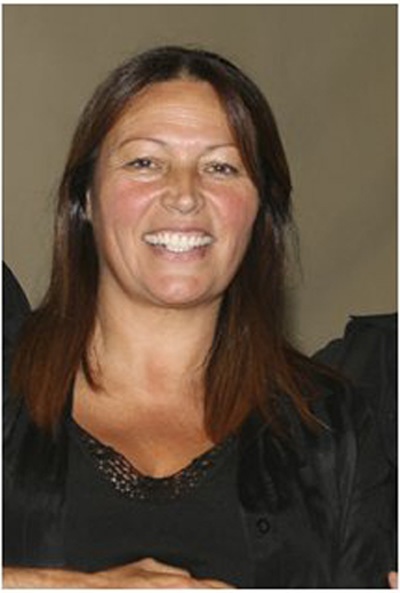
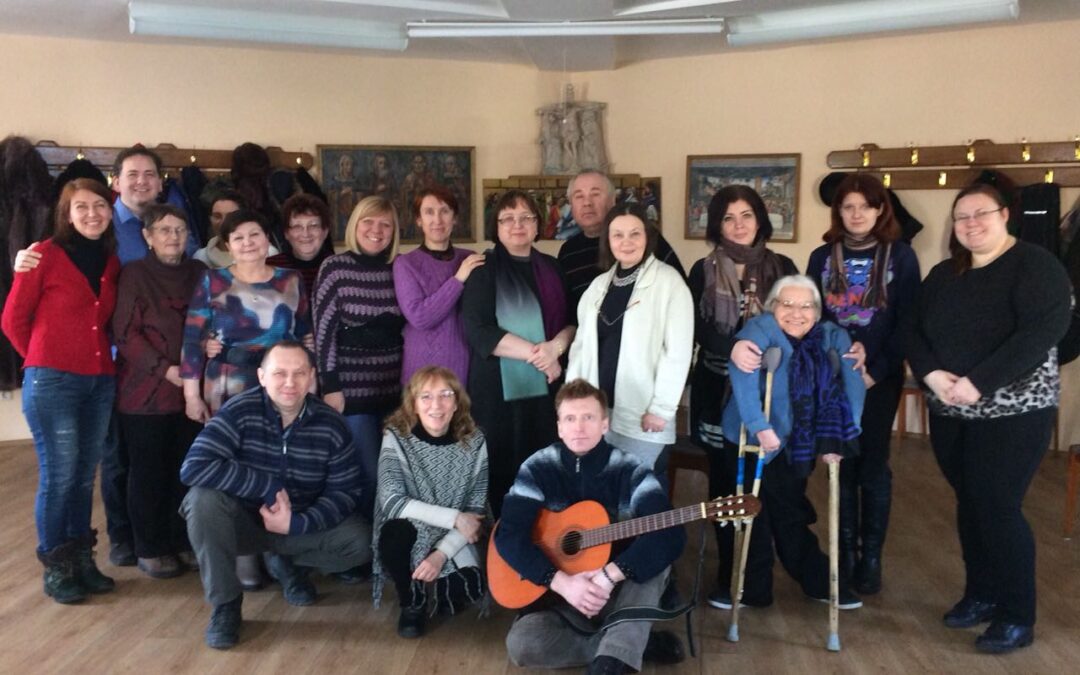
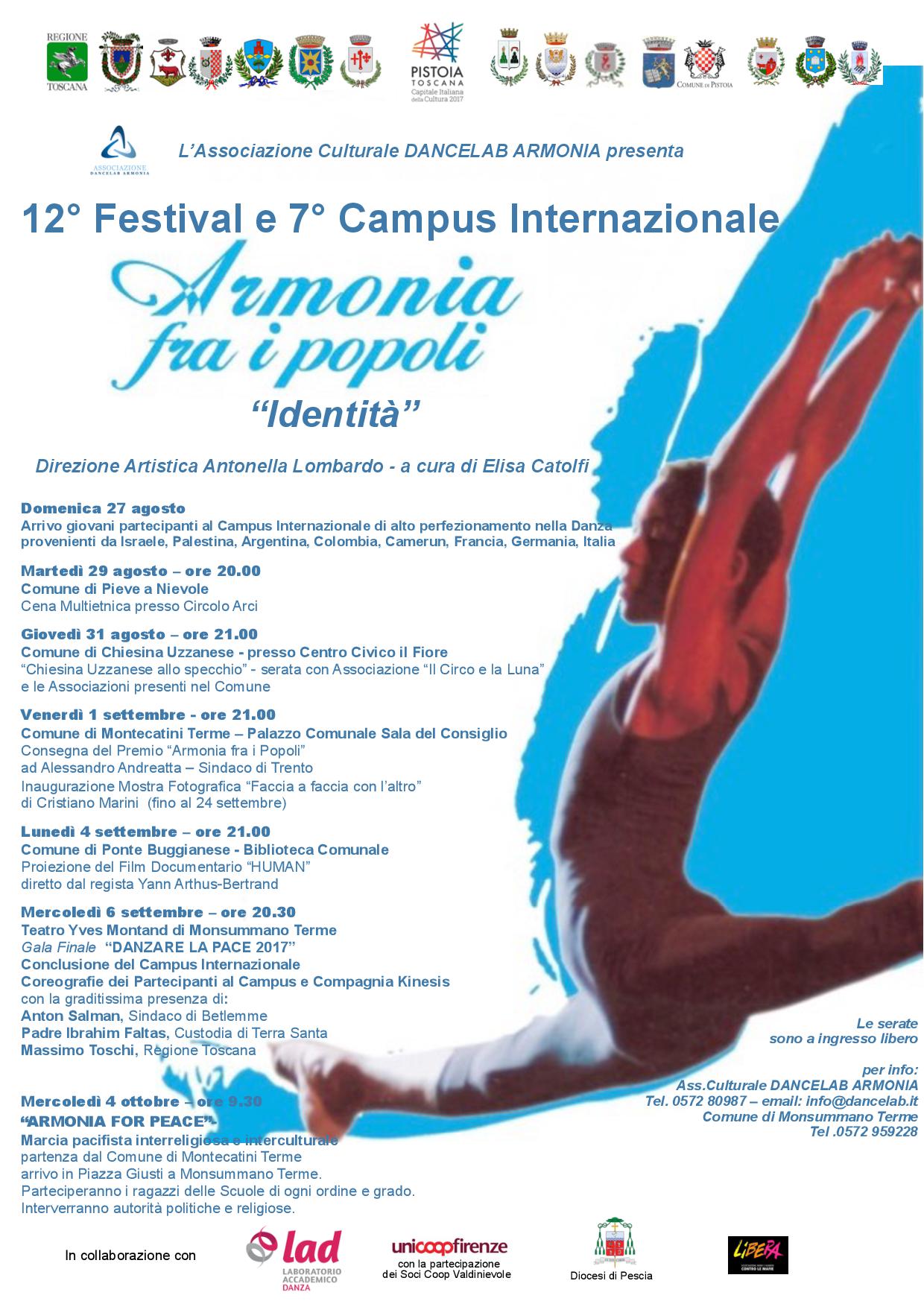 That was the beginning of the Harmony DanceLab Association. The aim of this association is to develop dance as a means of creating harmony and dialogue among different cultures and so contribute to peace in the world. For the last thirteen years it has organised “Harmony among People” an international festival, involving not only a dance school of students from areas of conflict in Palestine and Israel but also many people from the local community. Peace education underpins the professional and human formation that the students receive. Over the years, the Association has spread to various parts of Italy and Budapest and, since 2014, has worked in the Middle East with the John Paul II Foundation and in collaboration with the “Children Without Borders” Institute and Custodians of the Holy Land. Antonella continues, “Peace is not just a goal to reach but an everyday process that requires great effort and commitment. It is an educational challenge. Students learn dance techniques but also experience the power of a language that is superior to Art. On the last evening, they tell everyone about the respect, understanding and fraternity they have experienced.” An intercultural and inter religious Peace March is also part of the project. This takes place every year on the 4th October and draws people from institutions, schools, voluntary groups and faith communities (Christian, Muslim and Jewish) in Tuscany. How many young people have you met in your career as a teacher of dance? “Thousands. Dance is difficult and demanding but young people are drawn to it. TV talent shows also attract people but give a distorted idea about what is truly art. You have to provide an experiential dimension to make an impact as a teacher. Nowadays, young people do not accept the theory without experiencing the importance of it for themselves.” Does art have a social value? Antonella Lombardo is certain that it does. “Art is like the prophecy of a new type of Humanism – a means of achieving social harmony. It is a reflection of Beauty that is Love. In conclusion, she says, “Keeping this in mind as I carry out my profession has changed my life totally. I have found meaning in what previously seemed to have no sense. I try to give young people the opportunity to do the same so that their lives might be a work of art, just as Chiara Lubich taught me.” Chiara Favotti See also: www.festivalarmonia.org, www.dancelab.it
26 Apr 2018 | Non categorizzato, Word of
for ages 4-8 | for ages 9-17 | Print | Audio
St. Paul was writing to Christians in the region of Galatia, who had heard the Gospel proclamation from him. He was scolding them for not understanding the true meaning of Christian freedom. For the people of Israel, freedom was a gift from God who had brought them out of slavery in Egypt and led them to a new land, establishing a pact of mutual faithfulness with them. At the same time, Paul strongly affirmed that Christian freedom is a gift from Jesus. In fact, Jesus makes it possible for us, in him and like him, to become children of God who is love. By imitating the Father as Jesus taught us and showed us through his life, we too can learn to have the same attitude of mercy towards everyone, and be at their service. (Mt 5:43-48; Lk 6:36; Mk 10:45). For Paul, the apparent contradiction in “freedom to serve” is possible through the gift of the Spirit that Jesus gave to humanity by his death on the cross. It is the Spirit who gives us the strength to come out of our prison of selfishness, which is burdened with divisions, injustices, betrayals, and violence. He leads us to true freedom. “By contrast, the fruit of the Spirit is love, joy, peace, patience, kindness, generosity, faithfulness, gentleness, and self-control.“ Besides being a gift, Christian freedom is also a commitment. Above all, it is a commitment to welcome the Spirit into our hearts, making room for him and recognizing his voice in us. “Above all, we must become more and more aware of the presence of the Holy Spirit in us,” Chiara Lubich wrote in the October issue of Città Nuova in 2000. “We have a great treasure in our innermost being, but are not sufficiently aware of it … To hear the voice of the Spirit and follow it, we must say no … to temptation, reject its suggestions and say yes to the tasks God has entrusted to us; yes to love for our neighbors; yes to the trials and difficulties we encounter… By doing so, the Holy Spirit will guide us and give our Christian life gusto, vigor, drive and brightness, without which it cannot be authentic. Then, whoever is with us will notice that we are not only children of our natural family, but also children of God.” In fact, the Spirit calls us to step aside from being the center of our concerns in order to be more receptive to others, to listen to them and share material and spiritual goods. He calls us to forgive or take care of the most varied people in different situations of daily life. This attitude allows us to experience the typical fruit of the spirit: our personal growth toward true freedom. This brings out and develops talents and resources in us that would have stayed buried and unknown had we continued living wrapped up in ourselves. Every action of ours is an opportunity not to be missed, to say no to the slavery of selfishness and yes to the freedom of loving. “By contrast, the fruit of the Spirit is love, joy, peace, patience, kindness, generosity, faithfulness, gentleness, and self-control.“ Those who accept the work of the Spirit in their hearts also contribute toward building positive human relations through their daily activities, at home and in society. Carlo Colombino, an entrepreneur, husband and father, owns a company in northern Italy. Out of his 60 employees, around a quarter are not Italian and some of them have had traumatic past experiences. “Even the workplace can and should facilitate their integration,” he told a journalist. “Our work includes quarrying and recycling construction materials, and I have responsibilities toward the environment and the area where I live. Some years ago, the economic crisis hit us hard: should I save the business or the employees? We made some people redundant, talking it over with them and finding the least painful solutions. It was a dramatic experience with sleepless nights. “I can do my job either well or poorly. I try to do it as best I can. I believe in the positive influence of ideas. A business focused only on turnover and figures will not last long. People must be at the center of all we do. I believe in God and am convinced that harmonizing business and solidarity is not a dream.” Let’s courageously set in motion our personal call to freedom, in the environment where we live and work. This will allow the Spirit to touch and renew the lives of many people around us, and move history toward a future of “joy, peace, patience, kindness.” Letizia Magri 3 Cfr. C. Lubich, We have a Treasure, New City, 44 (2000), 10, p. 7.
26 Apr 2018 | Non categorizzato
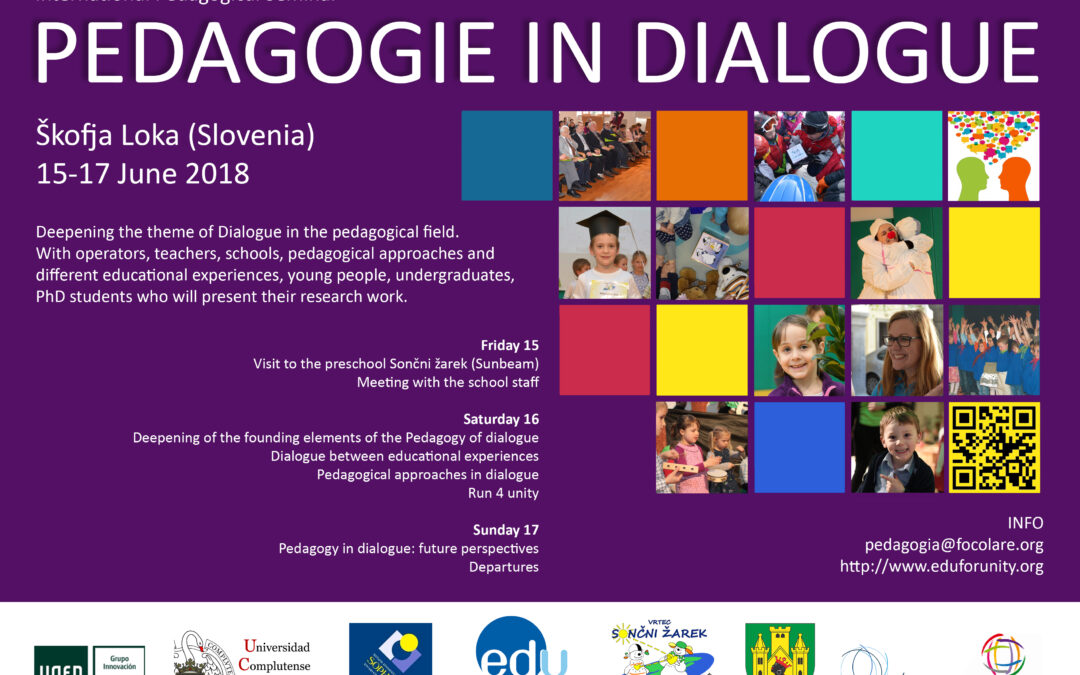
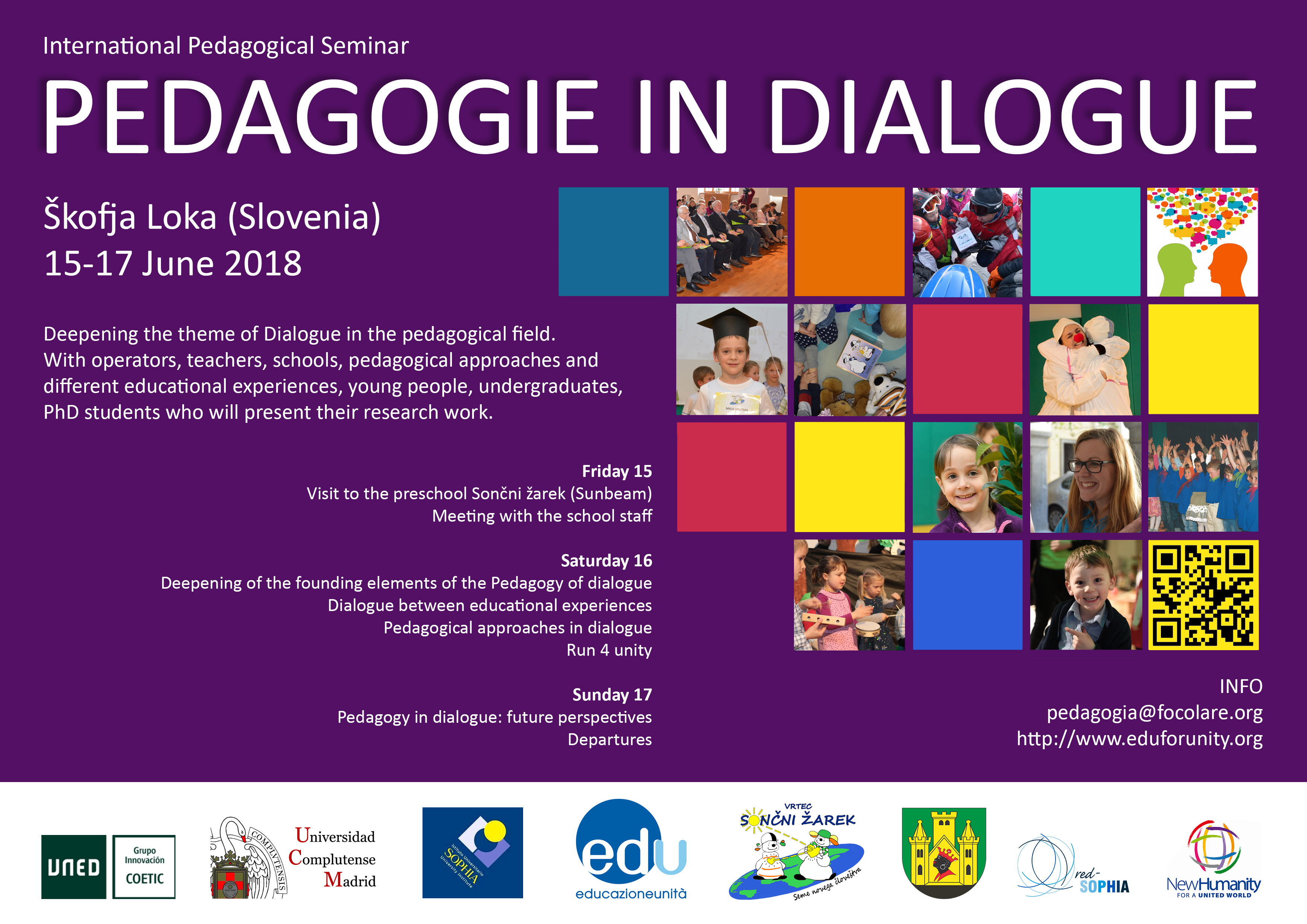 Deepening the theme of Dialogue in the pedagogical field. With operators, teachers, schools, pedagogical approaches and different educational experiences, young people, undergraduates, PhD students who will present their research work. Info: pedagogia@focolare.org Education for Unity
24 Apr 2018 | Non categorizzato
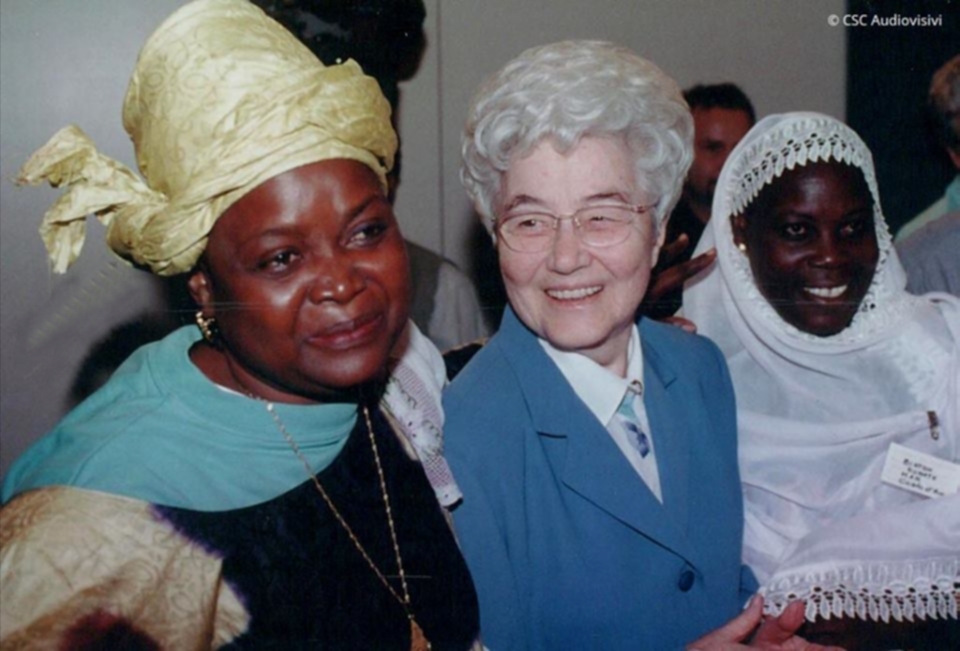
Photo: © CSC Audiovisivi
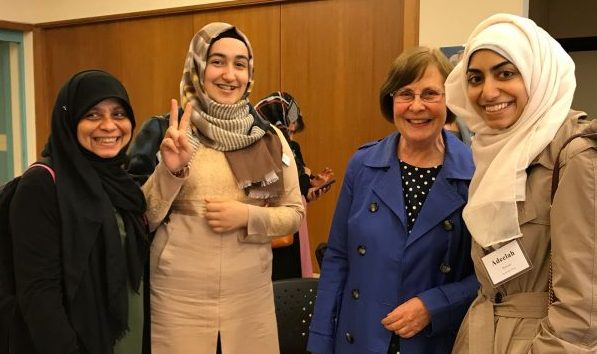
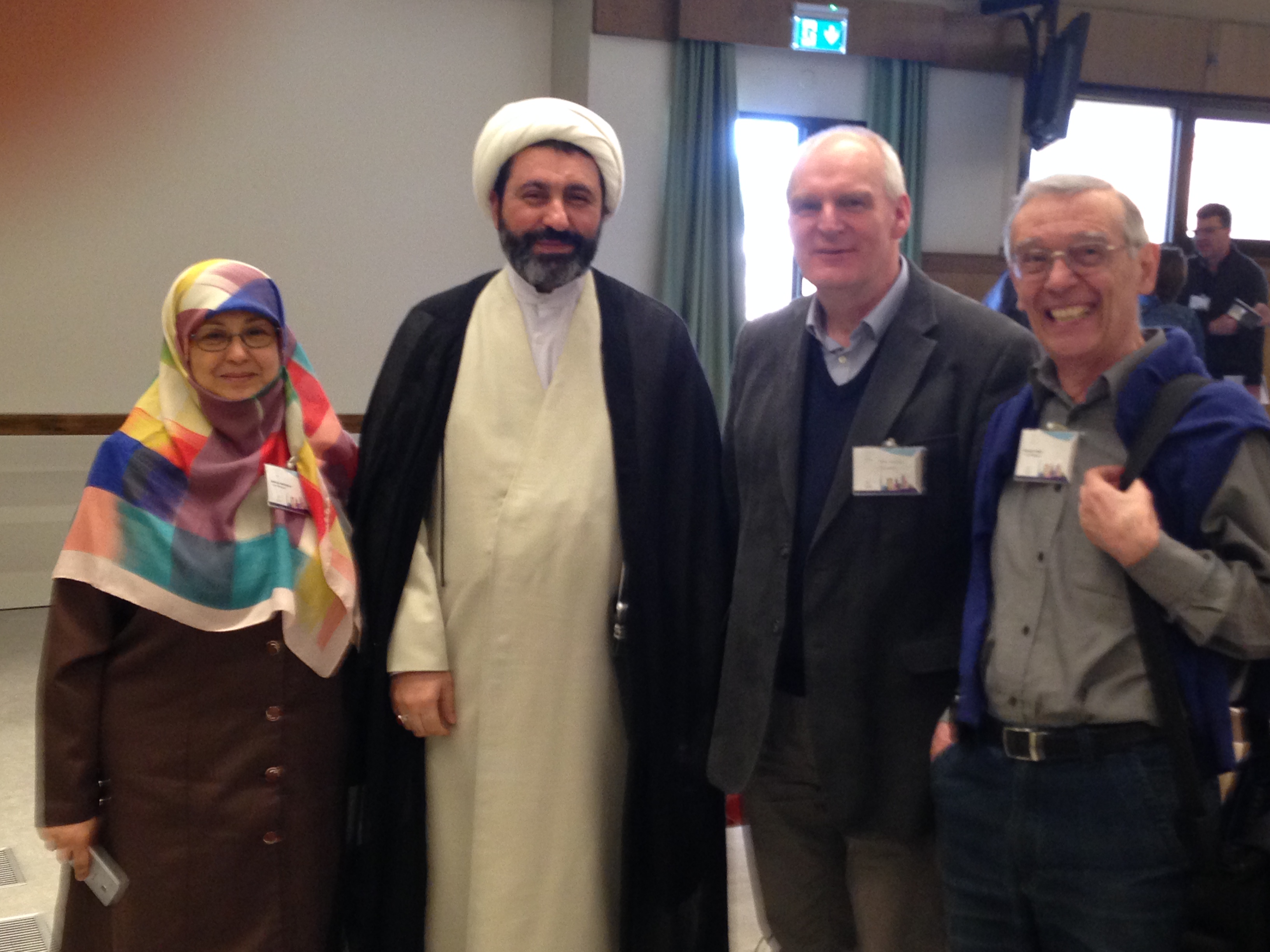 The Imam of Florence, Elizir Izzeddin, President of the Union of Islamic Communities in Italy, with whose members the Focolare Movement has shared a long, deep and fruitful collaboration, also spoke. “We’re all brothers and sisters. It’s not our goal to start a single religion, but to build bridges. With our dialogue we can encounter that hope that goes beyond the fears that have been generated by international terrorism. We work together to move beyond our fears.” Among the testimonies given, was that of the Austrian Focolare community with Syrian refugees. Hedy Lipburger recounted: “Hundreds of refugees arrived in Lower Austria in 2015. They couldn’t be ignored, so we went to help them.” Syrian refugee, Mohammad Kamel Alshhada, went on to say: “I had to leave my country, there was no other choice because, otherwise, I would have had to follow ISIS in teaching their ideas, because I’m a teacher. During the first three months in Austrian refugee camps I was depressed and without hope, we couldn’t talk with local people. Then, for the first time, several people from the Focolare spoke to us and took an interest in us. We felt accepted and appreciated, as if someone had taken our hand and helped us, step after step, to begin a new life.” In the end came the testimony of strong unity between Mohammad Shomali, Director of the Islamic Centre of England, and Piero Coda, president of University Institute Sophia of Loppiano, who began “Wings of Unity”, a series of seminars for young Christians an Muslims that delve into the two faiths and into processes of dialogue and peace. Shomali affirmed: “if we sincerely ask God to guide us so that we can understand one another better, God will guide us. We have to ask God to talk to us together. In 2016, Piero Coda embraced this idea of mine at Loppiano and said we should come up with a name for this project which was clearly from God. Thus the name “Wings of Unity” popped up. Piero Coda continued: “I sensed that that God had a clear project in this. So I proposed a pact to Shomali: “Do we want to ask God to take our heart in his own hands, our mind? He welcomed the idea with joy.”
23 Apr 2018 | Non categorizzato
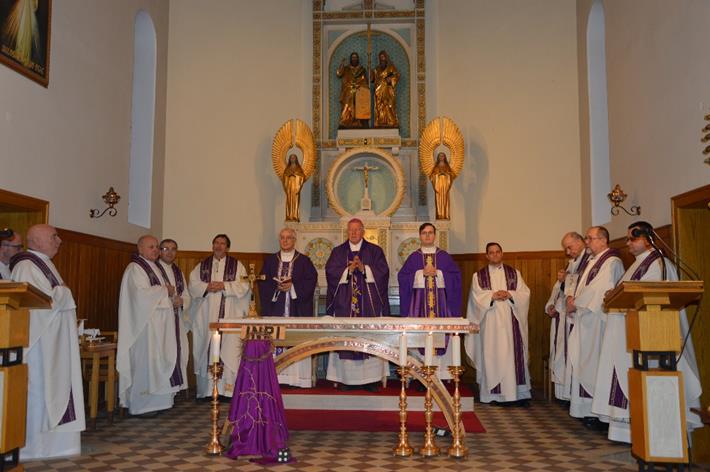 “Ten years after her death, we’re here to remember a great woman», announced the Archbishop of Belgrade, Serbia, Most Rev Stanislav Hočevar while celebrating an anniversary Mass on 14th March. He continued, “At a time when darkness overshadowed the world, a new Light illuminated Chiara’s heart. Even as sin, hatred and evil were creating divisions, Love came close, connecting and unifying, to restore and rebuild. Today, as in those times, surrounded as we are by the chaos of social, cultural and historic conflicts, we too are called to enkindle a new light of understanding, unity and cooperation.” Connecting, coming close, uniting, rebuilding’: these words convey something of the global celebration which began in March and is still ongoing; each event an occasion to recall and relaunch the spiritual legacy of the Focolare founder, Chiara Lubich. «If I was to leave this earth today and you were to ask for my last words, the last word on our Ideal, I would say, sure that you would understand exactly what I mean: Be a family.” Chiara said this back in December 1973, but her words, her legacy, touch hearts today as powerfully as ever, as seen in the news arriving from all over the world of encounters and actions inspired by this anniversary.
 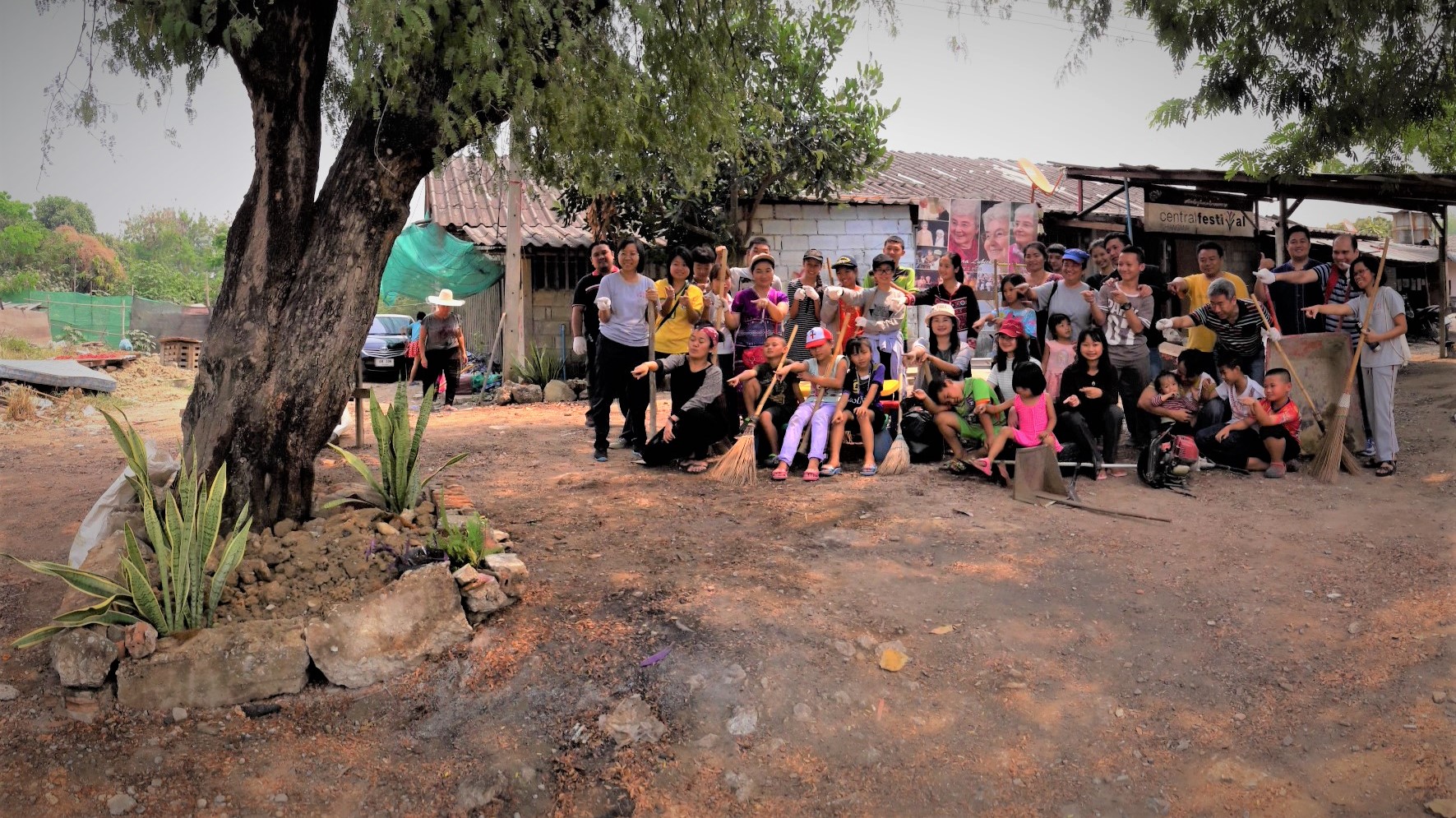 First to the mountainous region of Northern Thailand with its hundreds of elaborately-decorated Buddhist temples, to the city of Chiang Mai. Sixty members of the Focolare community, from five different ethnic groups (Thai, Karen, Akha, Lahu, Kachin), together with others from the Philippines, gathered together to mark the anniversary by offering practical assistance to a rural community in need, the Kachin tribe. As the Focolare members explained, “After celebrating Mass, we set off from the city, adults and children alike, on the 7km journey to a rural village where our friends of the Kachin tribe live in very simple and at times difficult conditions. At their request, we cleared a patch of land and prepared it as a playground for the children. When we had finished transforming that space, we realised that the biggest transformation had actually happened within our hearts and in the relationship among us, as we worked together under the burning sun. In that small place, we experienced the presence of God. We saw how we can work with Him to change the world, one village at a time.”
 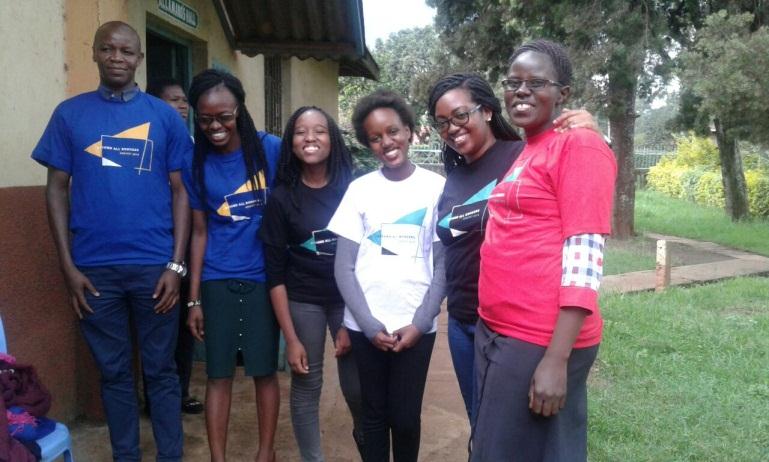 In six regions of Kenya, each in their own way subject to socio-political tensions and at times openly violent conflicts, the local Focolare communities held a series of day meetings proposing a message of unity, more needed than ever to tackle the challenges and difficulties of this multi-ethnic multi-faith nation. Venues included Garissa, eastern Kenya, where tension remains high between Christians and Muslims, Amukura and Seme in the west, Mombassa on the coast, as well as Karatina in the central region and Meru in the North East. “Chiara continues to guide us to this very day,” was the general reaction.
 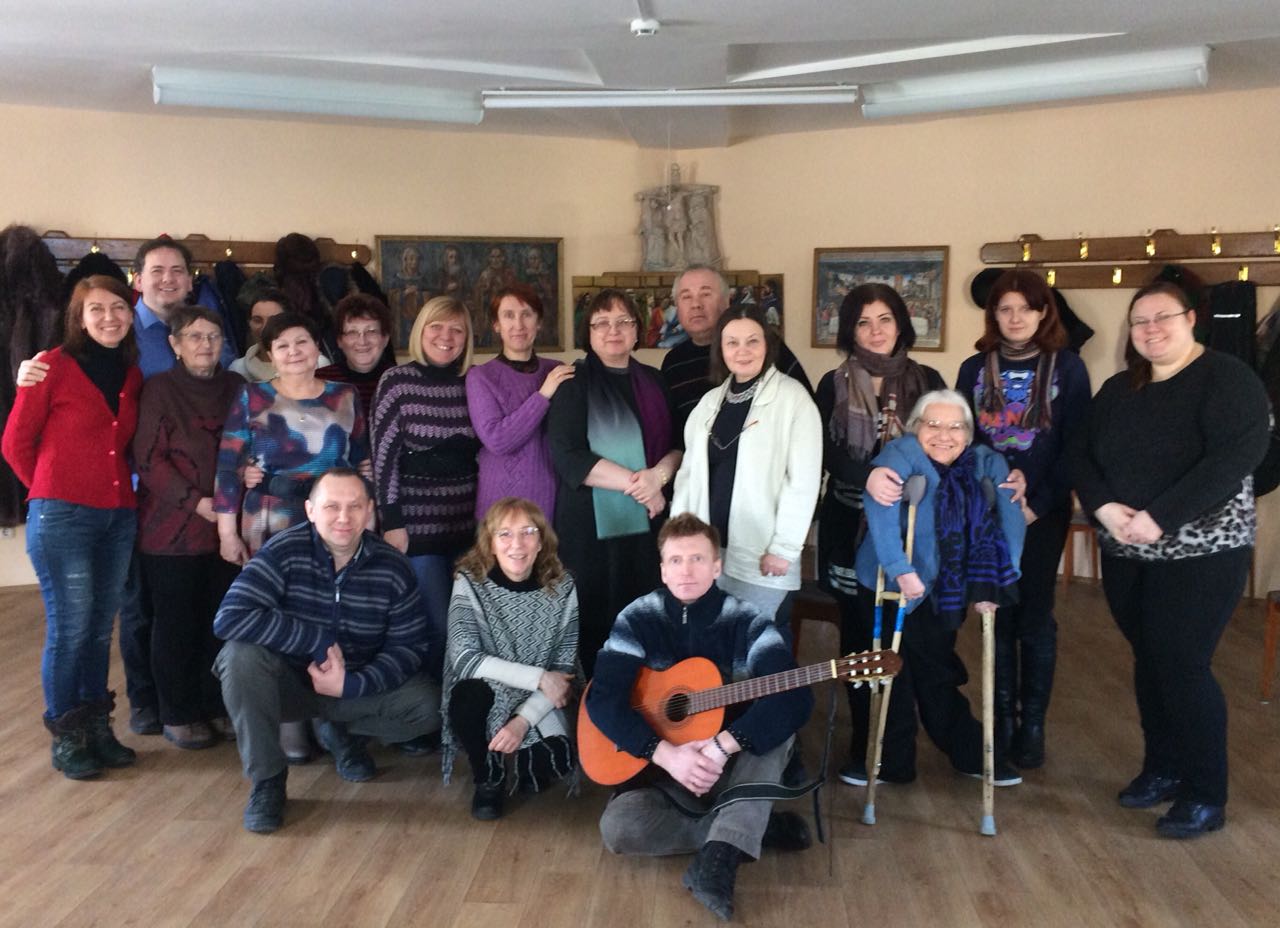 The presence and participation of religious leaders and Church representatives in numerous events was appreciated around the world. In Warsaw, Poland, the head of the Methodist Church sent a warmly-received message, and the Papal Nuncio conveyed greetings from Pope Francis. In Russia, a gathering in Moscow recalled with renewed joy the pioneering era of the 1970s when the first Focolarini arrived in the then Soviet Union. Nearly 2,000km away on the eastern slopes of the Ural Mountains, a Focolare community met in Chelyabinsk. While 4,000km from Moscow, in Central Siberia, a 3-day “Mariapolis” at Krasnojarsk also reflected Chiara’s call to be “a family”. Chiara Lubich’s “legacy” rang out loud and clear in Dublin, Ireland, the city preparing to host the forthcoming World Meeting of Families in August. Particularly moving were testimonies of care and support between the generations inspired by Chiara’s life and words. In Stockholm, Sweden, a group of young people prepared an abundant supper for the whole Focolare community. Over the meal, the conversation revealed the lasting effects of the spirituality of unity in each person’s life. Yet another characteristically “family” celebration. Chiara Favotti
21 Apr 2018 | Non categorizzato
Earth Day is celebrated yearly, the day after the spring equinox. It is the biggest environmental manifestation of the planet, promoted by the United Nations to encourage the protection of the Earth. The idea of creating an “Earth Day” was discussed for the first time in 1962, and finally took form in 1969, following the environmental disaster caused by the seepage of oil from a well in the open sea of Santa Barbara, California. In the last editions, the Day involved up to a billion people in 192 countries in the world, and became a planetary, educational and informative event on themes of pollution, desertification, destruction of the ecosystems, and the depletion of nonrenewable resources. But also included is individual responsibility towards sustainable consumption, as inspired by the idea of the “Common home” of mankind.
