19 Apr 2018 | Non categorizzato
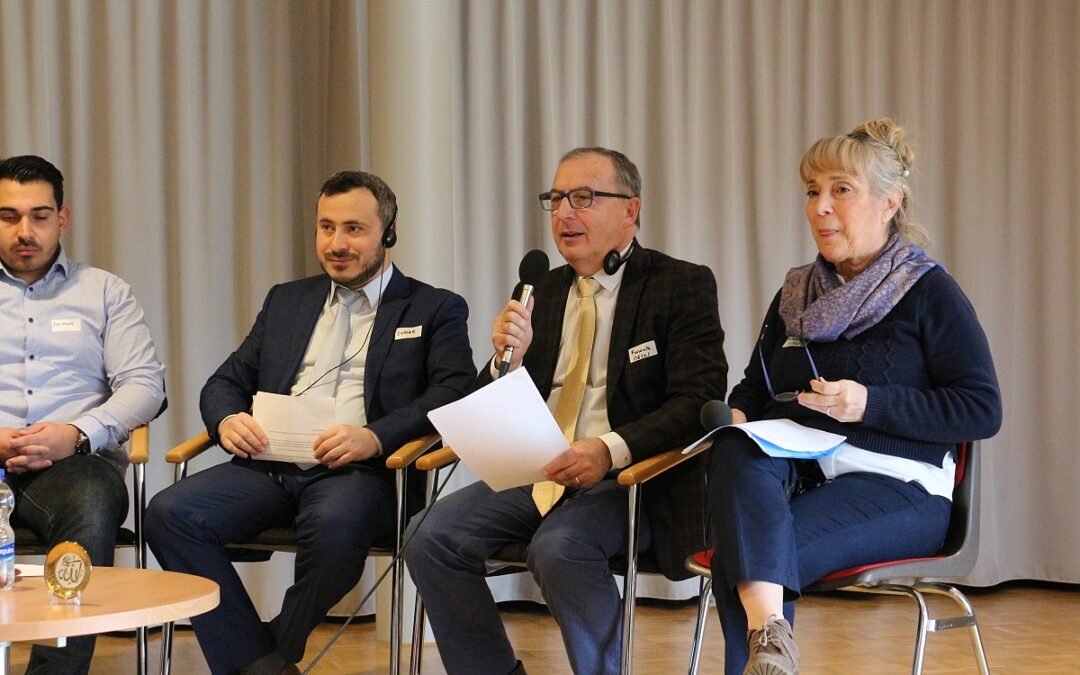
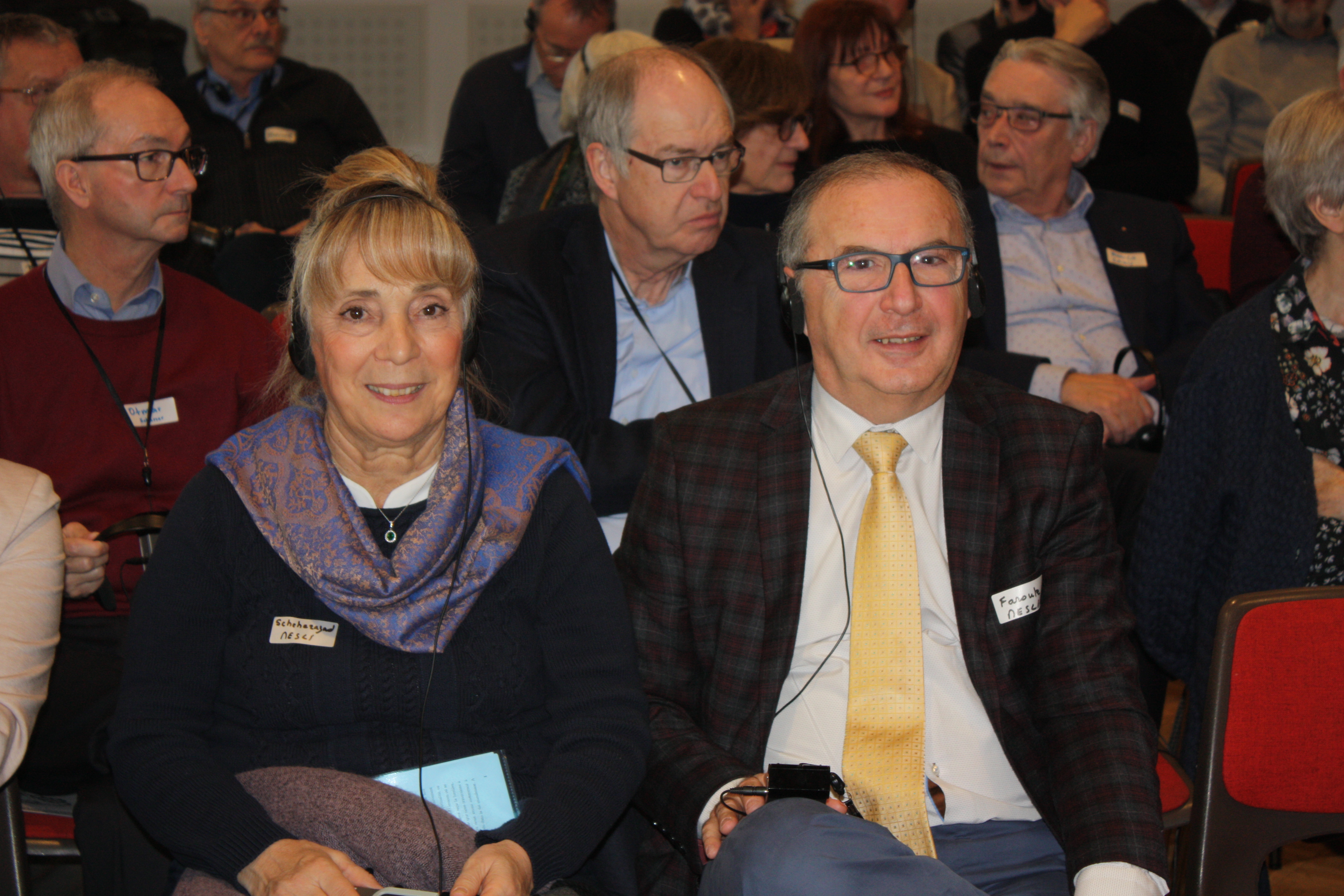 “We were born in two traditionally conservative families from Tlemcen, an ancient city, the cradle of Arab-Muslim culture,” says Farouk. “We’ve been married 42 years, have three children and two grandchildren. “During the first year we were married, like many couples, we discovered that we had very different personalities, and this caused friction between us. “Meeting the Focolare Movement helped us understand that we needed to start on the path to true love. This experience showered us with God’s love and helped us take early steps toward each other. We really wanted to learn all about the spirituality of unity deeply, to the point that our lives began to be between Orano, where we live, and Tlemcen, where the Focolare center is. “We started sharing our Muslim faith and understanding how to embody the spirituality of unity within our beliefs. A small community took shape around us at Orano, where our house became a gathering place, a “beacon,” as Chiara Lubich herself named it. “Many Muslims met the Focolare, and we started to share more and more, nourished and enriched by a supernatural love. In the early 1990s, the guerilla war in our country reminded us of the similar circumstances when the movement was born, and that same discovery of God as the ideal of our lives.”
 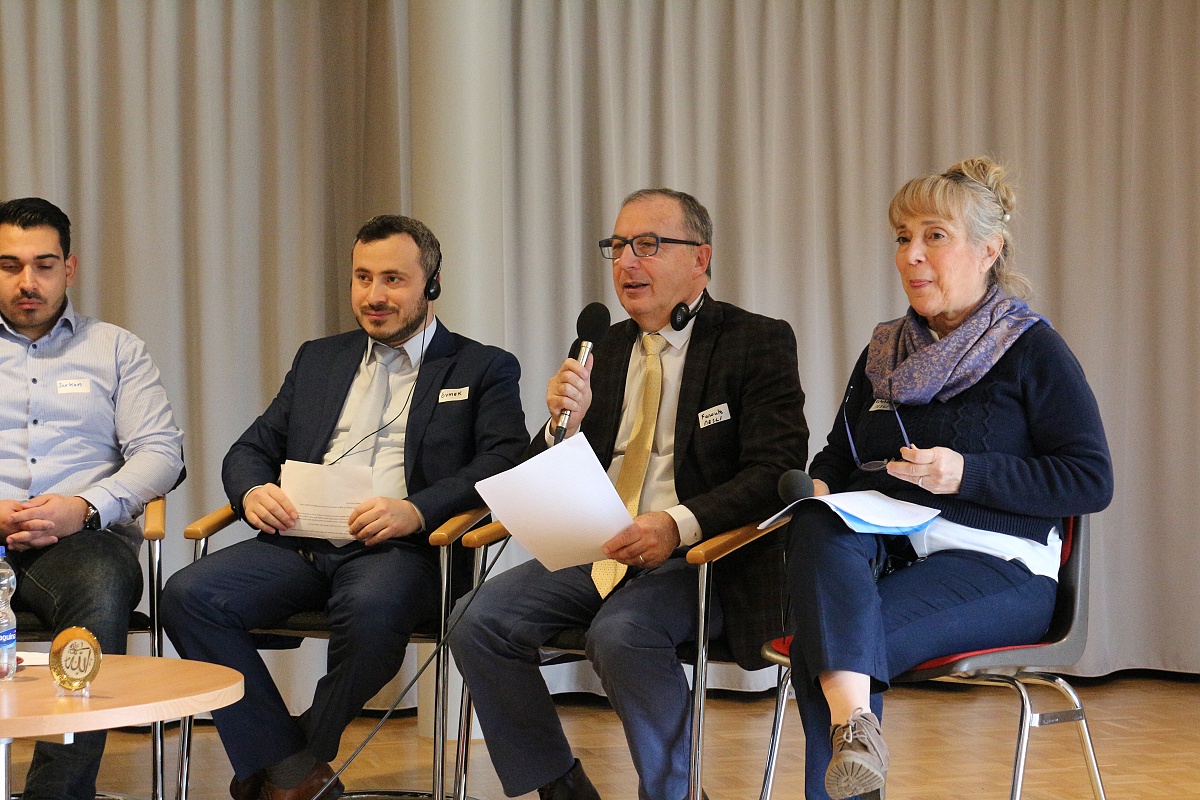 Schéhérazad continues: “We went through a pretty turbulent stage when our children were teens. We tried to debate and dialogue with them, but above all, love them. We can now say that with the two eldest we were able to create a relationship based on sincerity. “In the Focolare community I heard experiences about the love of God. Little by little I learned to trust faithfully in God, in his mercy. “Taking up this spiritual path freed me from my ego and fear in my relationships with people. The commitment to put God in the first place in our lives is certainly personal, but we chose to live it as a family. “Realizing one’s own limits and those of the other is a never-ending exercise. We need to constantly begin again, ask for forgiveness and start again.” “In Islam,” explains Farouk, “prayer is a solemn moment. Our prayers didn’t used to be that regular before, and each of us prayed alone. Now we try to pray together, out of love, not obligation. “In Algeria there are many sub-Saharan young people who come to study. Some come to the Focolare. We try to meet their needs, since they often don’t feel integrated socially. “One of these young people, who is Christian, lived with us for a year and a half. We built a relationship so profound that he considered us his second parents. We often gave him our car so he could go to Mass.” “In the Focolare community,” says Schéhérazad, “there is a sincere exchange, with out any misunderstandings about faith. Any introduction is done with respect for everyone, with love that has no agenda, with no intent to convert the other, but instead to help them be more authentically themselves. “When we meet a Christian, for us it is natural to see him as a brother to love. We are not made to compete, but to work on a common project. Building unity cannot be taken for granted; it is a commitment that needs to be constantly renewed. “Together, Muslims and Christians, we can go toward the unifying One. In our life, thanks to Chiara Lubich, we have understood that this unifying One can be reached when at least two of us love each other, ready to give our lives for each other.”
18 Apr 2018 | Non categorizzato
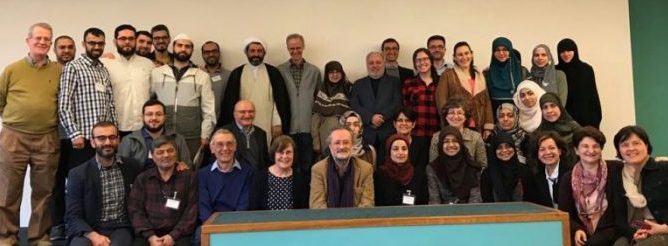
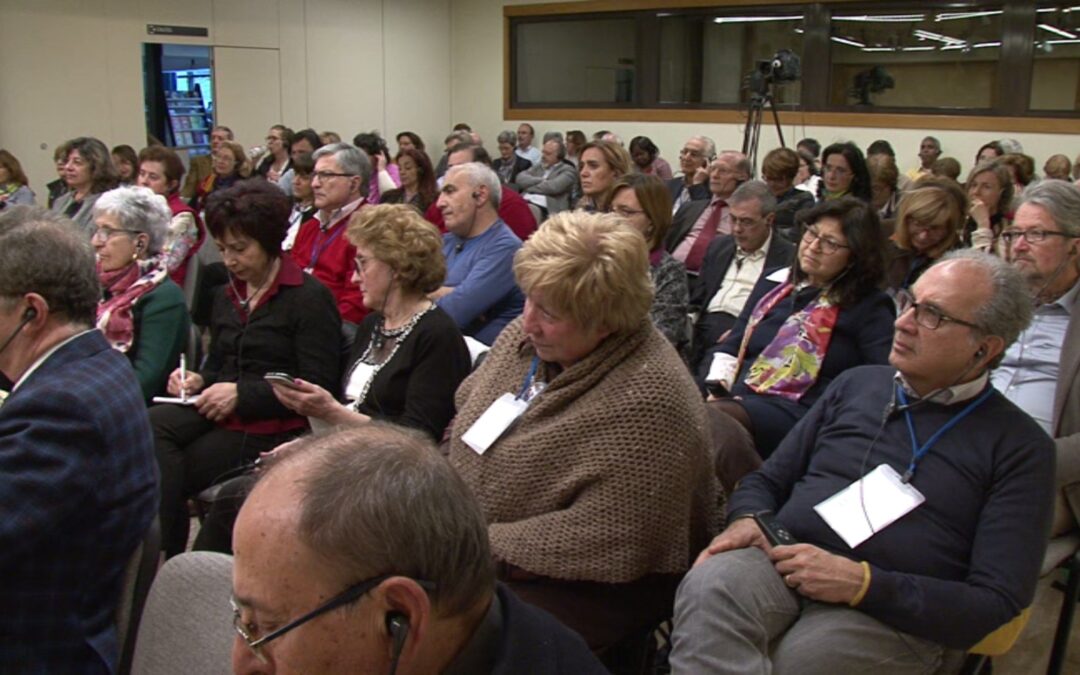
It will be discussed on Saturday, April 21, from 16 to 19 pm, within the wider context of a conference promoted by the Focolare Movement. The title of this event is“Together as a sign of hope. Christians and Muslims journeying together in the light of the charism of unity” and it will take place at the Mariapolis Centre in Castel Gandolfo, Rome from the 19 to 22 April. About 600 Christians and Muslims are expected to attend. In a social context, particularly in the western world, marked by fear, prejudice and distrust that build barriers and by ideas that nourish clashes and divisions, witness of a shared commitment between Christians and Muslims, launches a message that goes against the current and sows seeds of hope. These Christians and Muslims unit for peace, solidarity, development and harmony among peoples of different faiths, cultures and traditions. It is possible to live together in harmony, respect, solidarity and peace. It is also possible to work together, share common objectives and cooperate to achieve them, without weakening one’s identity and heritage of values, while exercising a fair and frank confrontation that strengthens mutual understanding and respect, and giving preference to that which unites over that which divides. The driving force of this journey is the charism of unity of Chiara Lubich. On May 18, 1997, in her speech at the Malcolm X Mosque in Harlem, where she made a pact to work for unity and peace together with Imam Wallace Deen Mohammed and the Muslim community present, she said: “Here I have experienced profound fraternity. Its beauty is so remarkable that it can only be God’s work. He has really made us one family for his plans”. While speaking about the underlying principle of this journey of communion, she explained: “The so-called Golden Rule – ‘Do not do to others as you would not have them do to you’ – is common to almost all religions, even if with different versions. This Golden Rule is enough to guarantee our bond of love with each neighbour, and this love would be enough to make humanity become one family”. In the wake of that experience and of initiatives launched in various countries to promote Islamic-Christian dialogue, the coming event at Castelgandolfo aims at being a step foward in the journey towards universal brotherhood and a sign of hope for humanity. “Religious education is attention to peace” says Adnane Mokrani, a professor at the Pontifical Gregorian University and at the Pontifical Institute for Arabic and Islamic Studies (PISAI) and president of Cipax, who will be present at the conference. “With such an approach, there would be no divisions, but there would be solidarity, collaboration, unity among people of different faiths, called to work together for the common good of humanity and to serve everyone without any distinction”. Maria Voce, President of the Focolare Movement, Cardinal Jean-Louis Pierre Tauran, President of the Pontifical Council for Interreligious Dialogue, Abdullah el Radwan, Head of the Islamic Cultural Centre of Italy, Izzedin Elzir, Imam of Florence and president of UCOII, Piero Coda, Dean of the Sophia University Institute and Mohammad Shomali, director of the London Islamic Centre will be among the speakers during this open gathering. Numerous experiences of dialogue and fruitful collaboration will be shared as fragments of unity to be multiplied.
18 Apr 2018 | Non categorizzato
20 April 1979 – Like every Christian, my love goes to the Lord in every moment and I contemplate Him with respectful fear. At times, however, I take chances since it never represses my calling as a jokester. And this morning at Mass an invocation suddenly popped into my mind: “You are the Omnipotent.” And immediately after my weak poetic side looked for a rhyme: “I am ‘nopotent’.” Then, I thought that if I’m nothing, by receiving God into myself, I take on Divine value. 5 November 1979 – I’m often taken by thoughts of death, but they don’t come in darkness and sorrow. Death comes as a light that shows our greatness and the beauty of life, and of its Author who could be anything but a most benevolent father. Looking at certain periods in life was hard, crude, desolate: the misery, the mourning, the wars, the betrayals, the meaninglessness… But contemplated as a whole, life appears a prodigy – a demonstration – of God’s fatherliness: 86 years of life, the wounds of battle that kept the war ever present, the political battles, the financial problems, the misunderstandings both inflicted and undergone, the physical weakness, etc. But seen as a whole, it appears a defeat of death to me, a joyful and necessary operation in which I was given to do more good than bad and have feelings of extraordinary successes, friendships, journeys, mystical elevations, lessons of wisdom and faith. I never stop thanking the sharer of so many good thing that were, given to me so freely. So even amid the shadows and the sorrows, life was beautiful for me, a gift worthy of its Creator. And my daily observations, reasonings and verifying has proven to me the truth of the religious faith that has always enlightened me and made me want to live. Life is truly beautiful, and its beauty shows the absurdity of politics and the personal behaviours of those who have worked to make it ugly (war, terrorism, exploitation, hedonism, greed, lust) and all the deformations and lacerations intended by stupidity the intelligence of the world’s Enemy. Source: Igino Giordani, Diario di fuoco, Città Nuova, Rome, 2005 (1980), pp.238-240. Brochure: On the anniversary of his death, the Centre named after him has published a brochure about the life of Igino Giordani and his spiritual journey. For information: info@iginogiordani.info Giordani on Facebook
17 Apr 2018 | Non categorizzato
“Walking together, serving justice and peace.” With this goal, the World Council of Churches, the worldwide organization focused on dialogue between the different Christian denominations, has reached the 70th anniversary of its founding in 1948. This year there will be a number of opportunities to look at the results of the work that has been carried out for Christian unity. At the same time, it will be an opportunity to renew the commitment toward the future challenge of full communion, to best respond to God’s calling for the unity of the human family, justice and world peace. Among the festivities, the Focolare Movement has organized an event on April 18 in Geneva, Switzerland in order to commemorate the rich collaboration between Chiara Lubich and the Focolare Movement with the World Council of Churches. The program includes a presentation by Pastor Olav Fykse Tveit, the secretary general of the council, and Jesús Morán, the co-president of the Focolare. For streaming see link
17 Apr 2018 | Non categorizzato
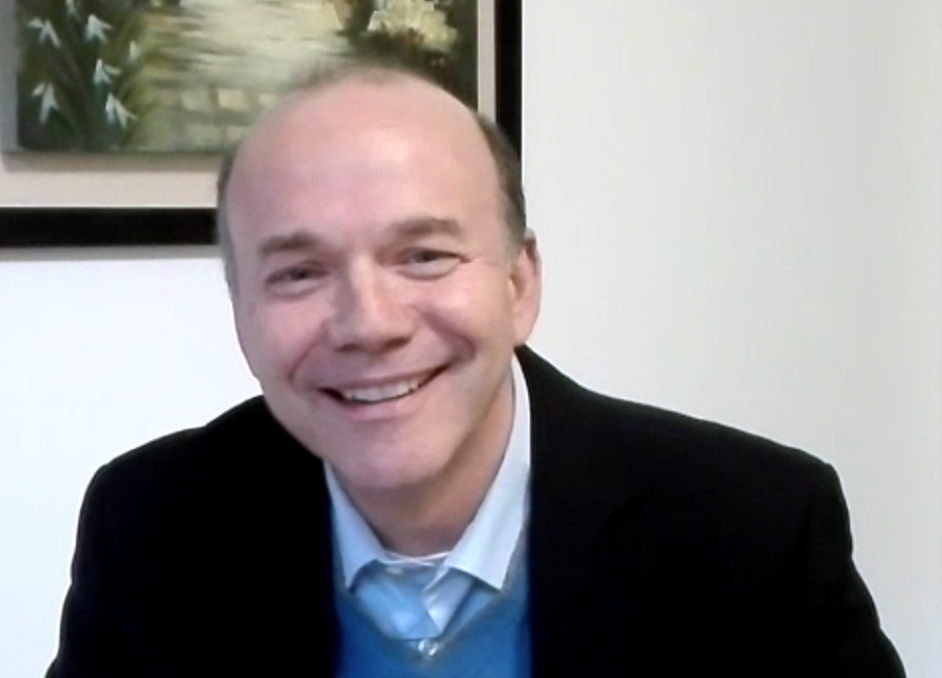
Marc St Hilaire. Focolare Movement
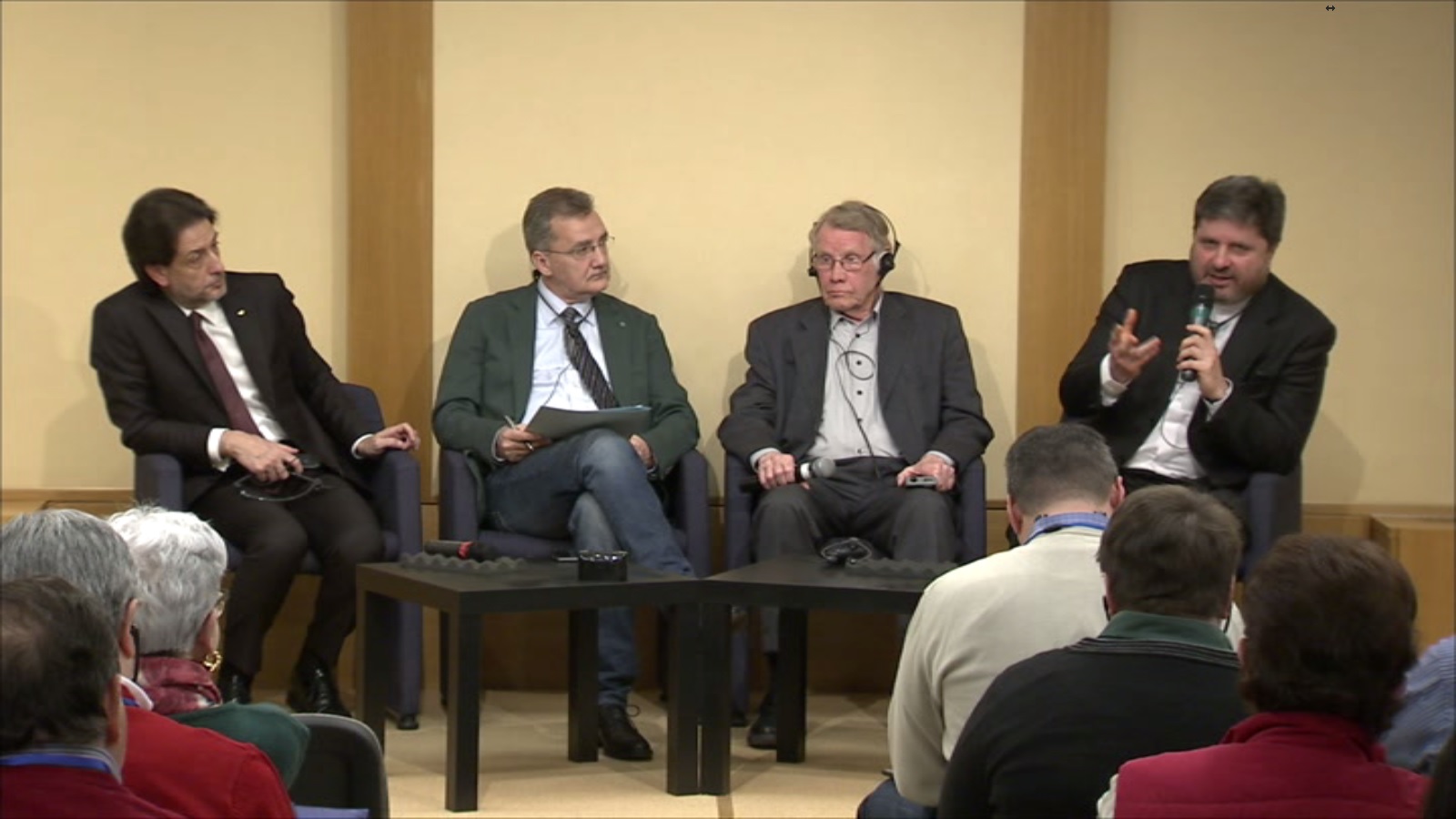
Salvatore Martinez, Aurelio Molè, P. Marmann, D. Angelo Romano
 Fr Angelo Romano, Rector of the Basilica of St Bartholomew in Rome, for the Community of Sant’Egidio and in charge of dialogue, “There are sectors in which the path of communion has to grow: as Christians we cannot refuse to question ourselves about the phenomenon of migration and take steps together. Another topic to examine more deeply are the conflicts, which generate poverty and suffering and send a message that is contrary to the Gospel, which says that those who are different can never live together; whereas, we believe that the Gospel is a leaven of unity and peace, and Christians are called to provide a new perspective.” The work of the movements is an incarnation of the Gospel: “We’re the answer,” says Martinez, “of that dichotomy that many would like to put between doctrine and mercy, because the theology of the spirit is done with the life.” And proposing a Church that is poor and missionary is not in antithesis with the doctrine, but part of it: “It’s that dialogue with the world and modernity that the Second Vatican Council prophesied,” says Martinez, “which Paul VI was the first to attempt and all the popes to continue. It’s this original synthesis that the Pope asks us to give witness to: a doctrine that one incarnates in the history.” In this prospective, twenty years from 1998, the ecclesial movements appear more and more to be “the Providential answer to the needs of our time”. It is an answer that implies a constant effort towards unity, to bringing the face of Christ to the human peripheries.
13 Apr 2018 | Non categorizzato
 “We’ll never be able to quantify the help that we receive from our brothers and sisters. How much courage their faith inspires in us, how much warmth their love, how much their example draws us!” Chiara Lubich (1920-2008), who wrote these words, was known as someone who drew after her hundreds and thousands of people and constructed relationships with Buddhists, Muslims. She is still being followed by people with no religious affiliation and breatheing new life into politics and economy. The friendship with the first companions of Silvia Lubich whom they knew simply as “Chiara” or Clare, played no small role. It all began with a choice of God and her consecration to Him in 1943, Trent, Italy. However, quite soon it was no longer a single “I”, but a collective subject that began to move, to act, to pray and to love: Chiara and her first companions could have ended becoming anyone, but they became beacons of light on all five continents. This story has many incredible elements, but yet it’s simple. You understand it if you open and read in chapter 13 of John’s Gospel: “I give you a new commandment, that you love one another. As I have loved you, so must you love one another” (13:34). This is a commandment that can only be lived out in the company of others. When Chiara and her companions read this Gospel passage in a bomb shelter, they looked at one another very intensely as they thought about the commitment it would be. They didn’t hesitate, but said to each other: “I’m ready to love you to the point of giving my life for you.” Chiara would later consider this the cornerstone on which the entire Focolare Movement would rest. It’s certainly not something unheard of in the history of the Church, but there might be one thing new about it. Chiara immediately conveyed to her companions whatever she was living and all that the Holy Spirit was inspiring in her. The bond among them was stronger than cement, and I would like to illustrate the qulaity of their relationship that valued and freed potentials, edifying a work that was of God.
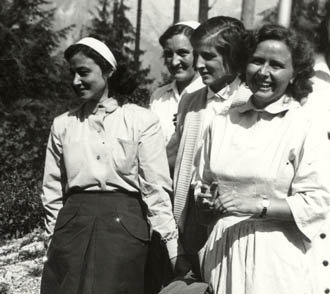
 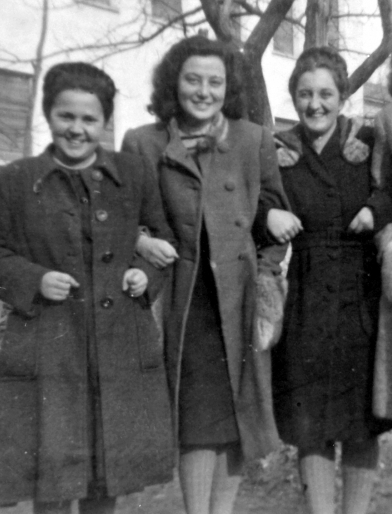 Ten years went by and it was 1954. Chiara was living with Giosi, Graziella, Natalia, Aletta, Marilen, Bruna and Eli. One day, as Chiara paused to look at them, she recalled the sentence from the book of Proverbs: “Wisdom has built her a house and set up her seven columns” (Proverbs 9:1). She was looking at the seven young women in front of her, each with her own talent, all of them united and rooted in God. These were Wisdom’s seven columns, the seven colours of the spectrum that emerge from the one light of Love. Seven interdependent aspects of love, each flowing from and into the other. Chiara entrusted Giosi with the communion of goods and the paychecks, not only the care of the poor: the red of love. To Graziella she entrusted “witness and spreading,” the orange. Natalia had been her first companion: she personified the heart of this ideal, the cry of Jesus Forsaken of love. She would carry thi secret beyond the Iron Curtain. She was the spirituality and prayer life, the yellow of the spectrum. Aletta would be remembered as the one who encouraged the members to be mindful of their health, and to form a community united in love. Chiara entrusted her with the green, Creation and physical life. To Marilen, who lived for fifteen years in the midst of a Cameroon forest, Chiara entrusted the blue: harmony and the home. Bruna was a bit of an intellectual and Chiara saw her as the one who could develop the aspect of studies: the indigo. Eli was always at Chiara’s side and helped to make sure that all the members around the world were living as one. She was entrusted with the aspect of unity and the means of communication, the violet. Some other of her first companions would also have special tasks: Dori, Ginettta, Gis, Valeria, Lia, Silvana and Palmira.
1959: Lia, Marilen, Bruna
