6 Apr 2018 | Non categorizzato
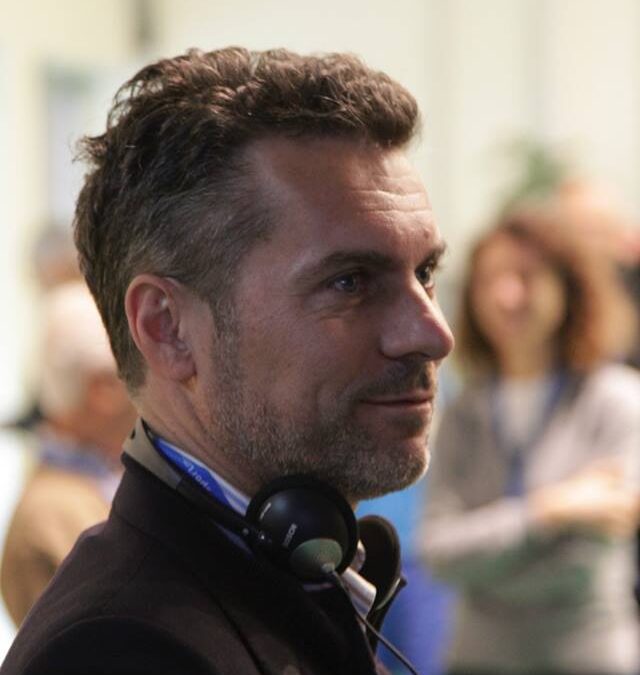
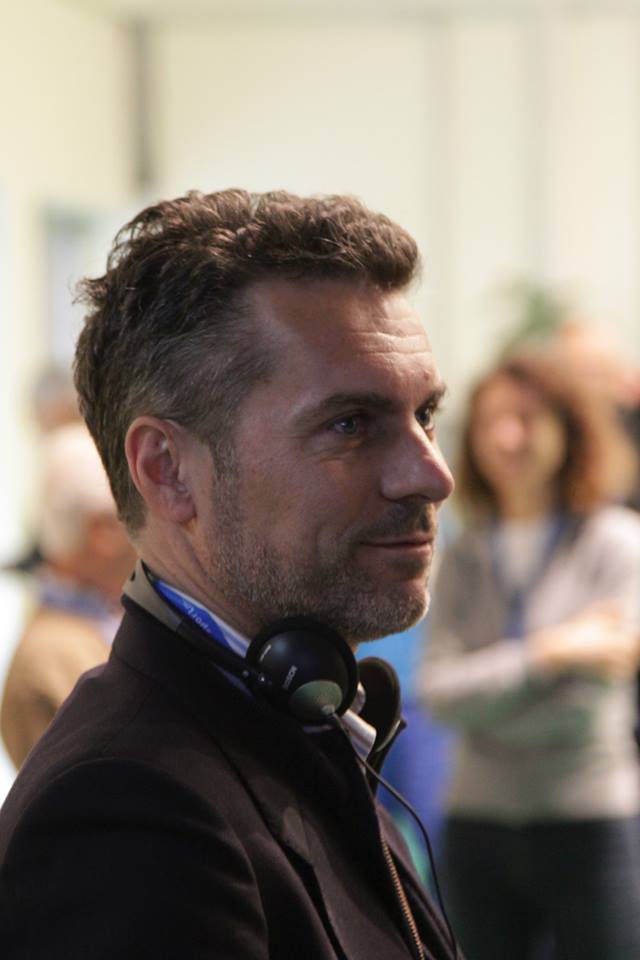 Sports and peace have been a winning combination since ancient times, when an “Olympic truce” was put in force during the games that were celebrated in honor of Zeus. All public and private hostilities were put on hold in order to safeguard the athletes and spectators who had to cross enemy territories in order to reach Olympia. The International Day of Sport that will be celebrated April 6 will be held on the same day that, in 1896, saw the reopening of the Olympic Games for the modern era, once again in Greece. This emphasizes the value and relevance of this year’s Day of Sport. Paolo Cipolli is the director of Sportmeet, an international network of athletes and sports professionals. Since 2002 it has been dedicated to and contributed toward developing a sports culture that is focused on peace, development and universal fraternity. “Sport, which some sociologists have defined as an ‘imitation of war’ or ‘war without shooting,’ can still represent an element of reconciliation despite its combative content,” says Cipolli. “Through a process of catharsis, purification through conflict and the element of competition, controlled by the rules of the game, sports holds great potential for relationships.” The recent Winter Games are a great example. “What happened at PyeongChang was truly surprising,” says Cipolli. “At first, the choice of a venue near the border of the two Koreas, especially during a time when there were escalating tensions, seemed ill-fated. And yet, the miracle of sport occurred, and the Olympics showed themselves to be not only an extraordinary chance to change the expectations of a breakdown, but also a surprising opportunity to bring the two countries closer. It was a miracle that threw a curve ball at international politics,” he says. “This has happened before. Many times in recent history, sports became an opportunity to ease tensions. I remember that famous game of ping pong between China and the United States in 1971.” Sportmeet, which began within the Focolare Movement, promotes values of holistic personal growth and peace within the world of sports. What are its goals? “What moves us is the drive to bring our spiritual legacy, Chiara Lubich’s ideal of unity, into this area. We support the positive experiences that exist, recognizing everything good that the history of sport has brought about to date. We also hope to grow awareness that sports has great possibilities for developing fraternity. “Recently we had the opportunity to promote and participate in the first Via Pacis Half Marathon in Rome. We will continue to work in partnership with various religious communities and sports institutions for the next marathon, to be held on September 23.” The reality of limitations runs through all our lives, whether individually or collectively. It is a mold we all come through, with disadvantages, difficulties and social hurdles, both physical and psychological. How does sports address this? “The experience of sports contributes to an understanding of limitations that goes beyond its specific area of expertise. By its very nature, sports is a contest with limitations. Promoting participation prepares us for differences, opening pathways to integrate and overcome any political, religious, ethnic or social barriers.” What’s next? “We are organizing an international conference around these themes, to be held April 20–22 in Rome. It will be open to those working in the field of sports and others, in order to learn about and promote good practices. “On the main day, April 21, there will be an ‘Earth Village’ at Villa Borghese, where we will get together with participants from the Eco-One conference entitled ‘Nature breaks limits.’ We’ll take an interdisciplinary approach to limitations. “It will be a roaming conference between the Corviale neighborhood, which is on the geographic and social margins of the city, and central Rome. It will be a chance to see the difficulty, vulnerability and the ‘margins’ and realize that they are limits to recognize. “They make us more human.” Chiara Favotti
4 Apr 2018 | Non categorizzato
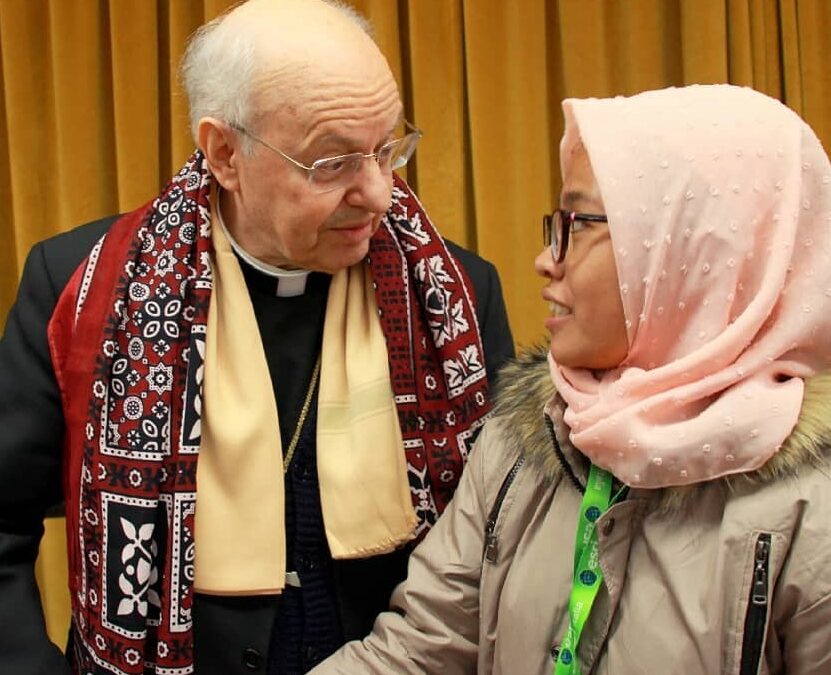
 “You will be taken seriously,” the Pope ensured. How many times have the young people in this society felt they are not being considered, heeded, and taken seriously? “They may not take us seriously because they fear that our lack of experience may lead us to make mistakes in all fields. The truth is we may still have a lot to learn, but on the other hand we have something the adults don’t have, and that is our youthfulness here and now, a different experience from what they have lived. We certainly need their experience but we have this plus factor which they don’t have. The young people, however, must not fall into useless criticisms of the adults, trying to destroy the other, but instead, try to cultivate a deep inter-generational dialogue and without judgments. The young people and the adults have specific features that offer the possibility of fruitful and mutual enrichment: the adult person rejuvenates and the young mature.” So, besides the experience of dialogue with the young people of other Churches, faiths and convictions, you have also established a dialogue between generations… “In reality the two dimensions are not separate, and the religious dimension should not be distinct from our humanity and our daily lives; it would be a mistake to distinguish spiritual life from normal life. Instead, transcendence is part of man, and understanding that we are limited and seek the answers by going beyond our own selves is an anthropological issue, typical of our being human. Inter-generational dialogue is a fact because there are people of different ages. Humanity renews itself and within this fact there is also a spiritual aspect which is typical of all ages, in adults as in children.
 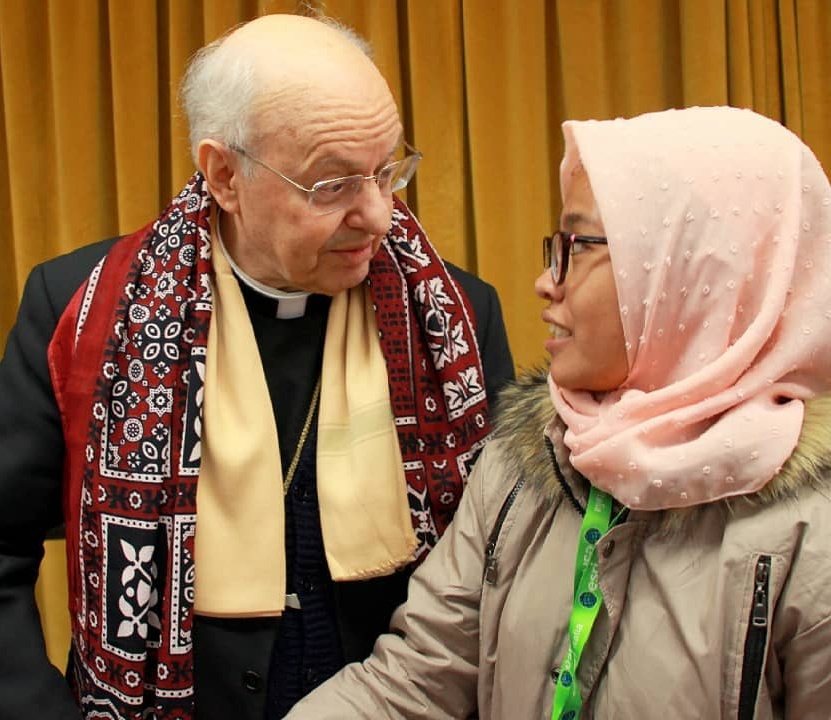 The Pope wanted this Synod on the young people to also be a synod for the young people, with and of the youth. Did you really feel like protagonists? “Very much so, and we were moved by this total openness, firstly of the Pope, and of the Church. His representatives who were there to keep up with us did not interfere: Cardinal Lorenzo Baldisseri and Bishop Fabio Fabene were there to listen to us. In them I saw the figure of Mary who creates total silence and makes room so that the Word could be born, a painting in the background, a precious silence that makes the Word emerge. They were there to listen both during the work session as in recreational moments and when we asked them questions they answered, otherwise they remained silent. In their faces we saw the reflection of the things on which they agreed and those which hurt them and this helped us to find that balance the Pope spoke about on the first day: speak up with daring but be humble if you make mistakes and ask for forgiveness. This happened when we were drawing up the final document, when some may have used overly critical language, but slowly we found this balance, also because their presence helped us. So, certainly we also felt the support of the adults of the hierarchical Church. Not everything was perfect but that’s life.” What impressed you upon completion of the works? “Once the final document was approved I heard the young people of various countries – one from the Samoan isles, an Asian, an African, a European and a Latin American – say that this document reflects what the young people are today. These are the same things my friends think, and the same questions we ask ourselves, and I was really glad because this was the reason for our meeting: to be able to talk of themes that otherwise would not have been faced. It’s true that not everyone agreed with everything, since there are different nuances in every region, however, the main problems and questions, and the experience in pursuing in-depth meaning is reflected in the document with all the contradictions that arose; even if some think in one way, others in a completely opposite way, the quest and aspirations were the same. So I was pleased to see that this 5-day working session, the 300 young people from all over the world and their situations essentially reflect what the young people are today, whether in the Middle East, Asia and in Africa. We are aware that this is a historical moment for the Church, not only because it is the first time it has opened out to listen to the young people in this manner, but also because from now on we will not be able to proceed without taking this meeting and all that has emerged into consideration. It is a start and we are happy to have been part of it.” Read the entire document
3 Apr 2018 | Non categorizzato
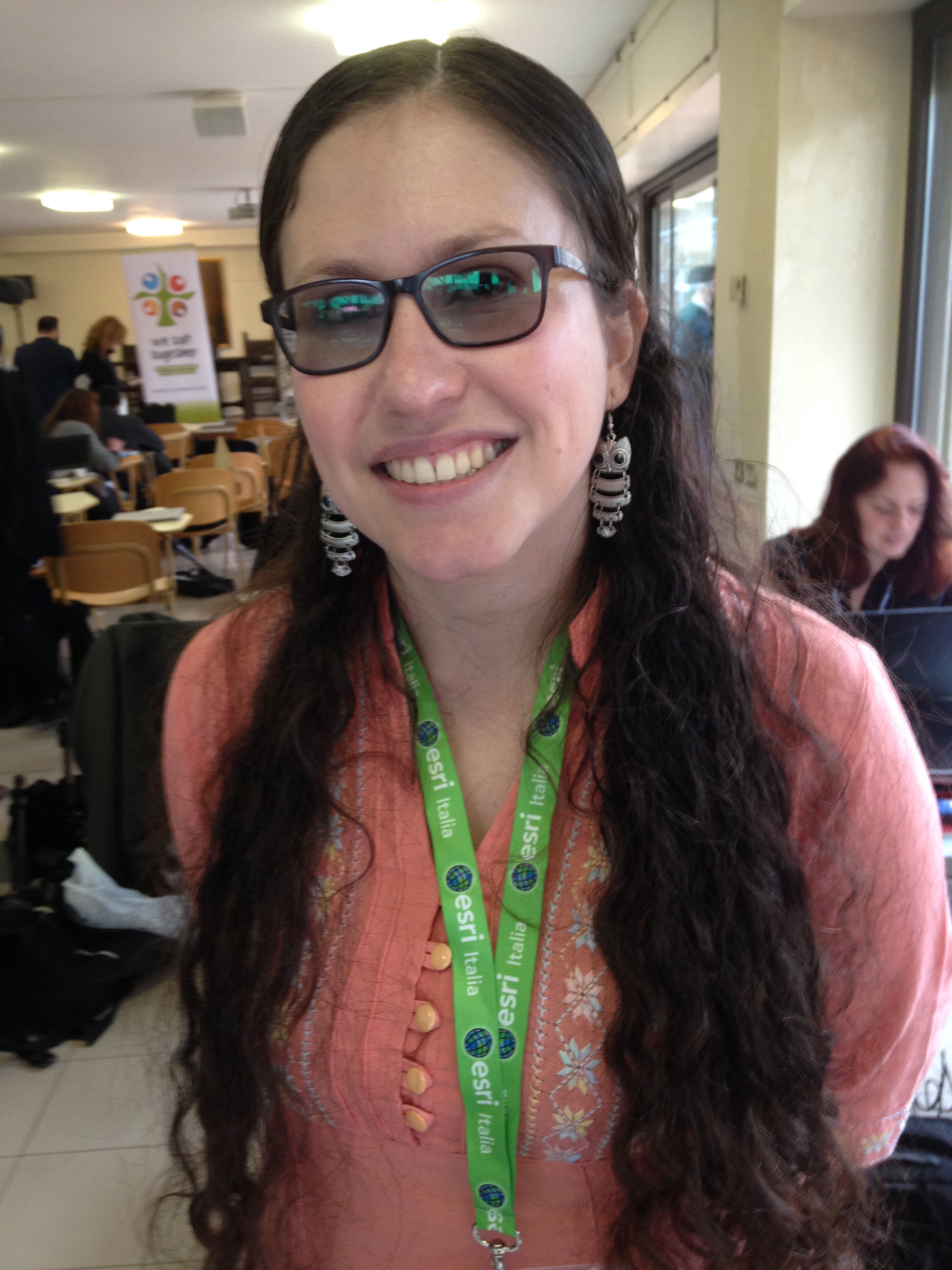
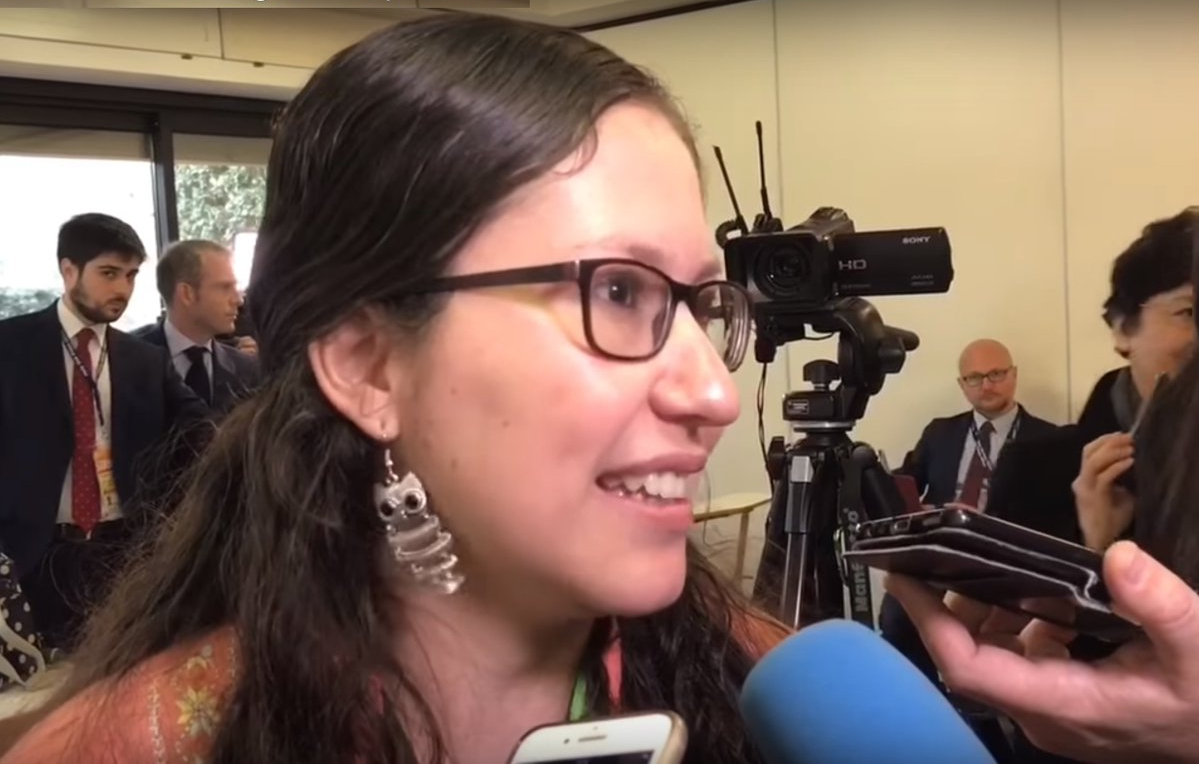
Noemi Sánches from Paraguay
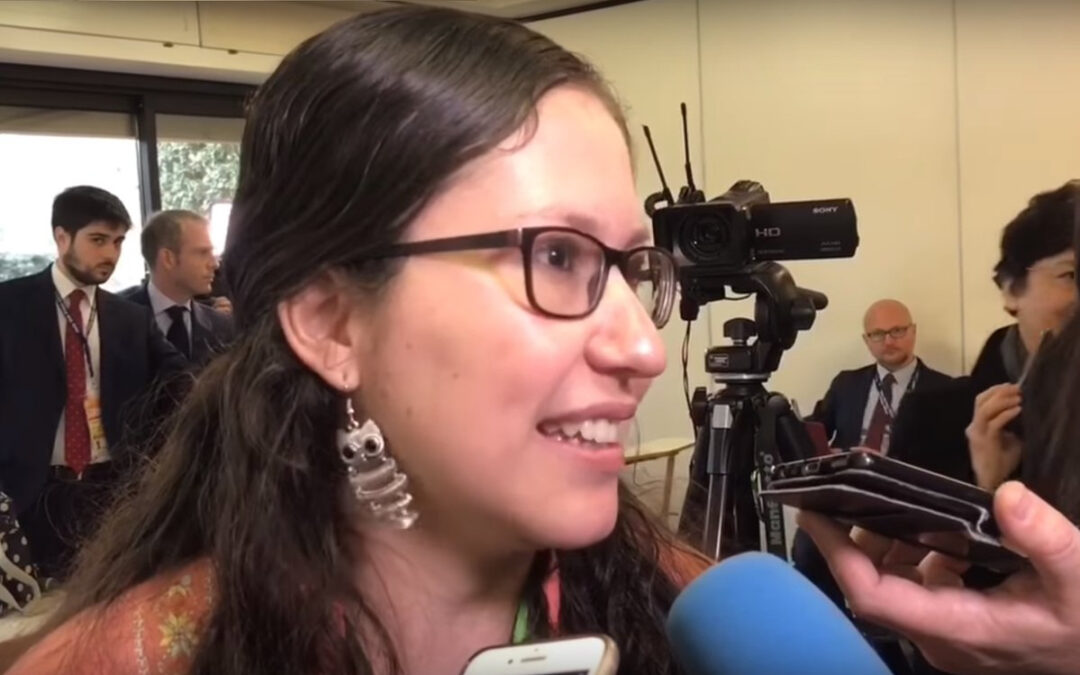
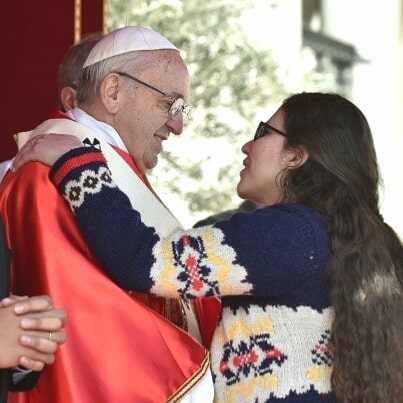 The Pope invited you all to speak up with courage and “cheekiness”. What are some of the the more difficult topics that you anticipate you will be dealing with? “Some very timely and, perhaps, problematic such as homosexuality. Then there was a request for a more concrete stance on migration, refugees and wars. These topics reach beyond mere dogmatism, the family in the traditional sense and how to live it today when it is not like exactly like that. We never asked for a change in the doctrine, but how to understand it to the end in order to live it it out in today’s society. Perhaps this is already being done, but not in a way that is reaching the young people.” At the Pre-Synodal meeting you were among the representatives of Focolare young people from around the world. What are the young people asking of the Church and what are they proposing? What experiences do they have that they can present as a model to others? “Based on the experience in Rome among young people from so many backgrounds, faiths and cultures, with whom we haven’t only spoken but also lived together, shared meals together and enriched one another, the young people from the Focolare – who have the charism of unity, which means dialogue – have proposed that these kinds of gatherings continue abroad among people of all backgrounds. This experience, in fact, helps us to realize that the other person is another me, and that we have the same questions in our hearts, the same challenges, which we approach in different ways, that are also an enrichment for all of us. So each of us as something to give, and it’s a giving that provides a wider vision, a more complete and enriching experience. Together we can arrive at the point of providing concrete answers to the problems we all experience.” That is a valuable witness in times that are so marked by prejudice and indifference, when it’s easier to build walls and fences than bridges, or reaching out to someone who is different. How was this counter-current proposal received? “By the grace of God, within the Focolare Movement we’ve been living this way for many years and have been holding these kinds of meetings. But even in this space provided for us by the Church for the young people, our proposal was listened to with much joy and satisfaction by people who don’t even know of the Movement and live in different ways. When the time came for concrete proposals, in my group, I proposed that we apply this model of relationship even when we confront other topics, always with this dynamic of openness to everyone, in which everyone lives and takes part together, discovers themselves and one another more. All of the young people immediately agreed. It was unanimous. But we had to acknowledge that there were older and bigger people who listened in and made comments, but I could see in them – not a refusal – but a bit of fear, the fear that the tendency to “go out” towards the other would make them to lose their own identities. However, the young people who had had some experience with this dynamic, immediately realized that you don’t lose your identity, but you enrich it. Obviously, your religious identity has to be carefully form and deepened, but you can give that identity and, when you do, you make room for the other. The young people who lived it, understood it and wanted it. In this sense, we lived out what Pope Francis had said to us at the beginning: You young people have to dream the dreams of the old, but also prophecy, that is, go beyond the dream. And I think that what we lived in Rome was a translation of that exhortation into real life. We wanted to be Church and we realized that to do that we had to go beyond the traditional structures. The Church is universal, so we have to be open to all, welcoming all and reaching all, in order to become more fully what we already are.” Read the full document:
2 Apr 2018 | Non categorizzato
Evicted We had been evicted and had to be out of the apartment within a month. Rents in the area were quite high. The only thing left for us to do was to look outside the city, hoping to find something that would match our means. We began to involve our friends and acquaintances in the search, but we didn’t come up with anything. We prayed, as we had had done before, with a lot of trust in God. Right towards the end of the month we heard of a family that was leaving a second-floor apartment. We tracked down the owner who lived in another city and explained our situation to him. He took our word on it and accepted our proposal, saying: “Move in. When I come we’ll draw up the new contract.” It seemed unbelievable to find an apartment in the same building and not having to make a big move. We remembered Jesus’s words: “Everything is possible for one who has faith.” (Italy) Optimism I have a difficult character and that’s why I found myself alone at a certain age, after a few attempts at marriage or living in community. A priest had suggested that I help out taking care of a spastic boy, so that the mother, a widow, could attend to some business. I began to visit and saw that, in spite of their hard circumstances, they were always happy and putting on a feast for anybody that went to visit them. Slowly, a new optimism began to enter in me. I discovered that the root of the serenity in that family was their life that was all based on the Gospel. And their attitude was contagious. (Slovakia) The Shrub All because of a bush that, in my opinion, my husband had planted in the wrong place, there was a little upset between us. As I cooked with my soul in confusion, I tried to entrust myself to God and, little by little, I became calm. I thought that I would suggest to my husband that we plant the shrub in a pot, and look for a better place to plant it. It seemed like a good idea to him. We apologized to each other and went to buy the vase. Then we planted it in a better spot. Now, when we look at our shrub, it reminds us that what matters the most in our relationship is that we love one another, and be disposed to give up our own ideas in order to make the other happy, so that God can shine between us. (Switzerland) Not only my physical health After the bone marrow transplant I was well for a long period until I had a relapse and a second transplant was needed. During moments of anguish, I said to myself that I had to give all my worry to Our Lady. When I did it with my heart, I felt a deep peace. At first I prayed all the time to get well. But then I realized that God wanted to draw me to himself precisely through the illness. So, instead of praying only for my physical health, I began to ask for the grace to be able to draw closer to God. (USA)

1 Apr 2018 | Non categorizzato
Father, we praise you with all your creatures. They came forth from your all-powerful hand; they are yours, filled with your presence and your tender love. Praise be to you! Son of God, Jesus, through you all things were made. You were formed in the womb of Mary our Mother, you became part of this earth, and you gazed upon this world with human eyes. Today you are alive in every creature in your risen glory. Praise be to you! Holy Spirit, by your light you guide this world towards the Father’s love and accompany creation as it groans in travail. You also dwell in our hearts and you inspire us to do what is good. Praise be to you! Source: Pope Francis, Encyclical Letter Laudato Si’ on the care for the common home (A Christian Prayer for creation, 246)
31 Mar 2018 | Non categorizzato
 |
|
| Today more than ever, while new conflicts are starting in various parts of the world, and tragic events of all kinds make our hopes for peace seem vain, we want to affirm our faith in the Man-God, who died and rose again for all people, and to lead the world to its destiny of unity. He is our hope and our joy. I send Easter greetings to all of you, personally and on behalf of the Focolare Movement. I pray that the spirit of the Risen Lord be born and reborn every day in us and amongst us, according to Jesus’ promise, “For where two or three are gathered in my name, I am there among them” (Mt 18:20). Happy Easter everyone!
Maria Voce
|
