2 Mar 2018 | Non categorizzato
Starting Again From Zero When I was still quite small my father left us. My mother fell into a deep depression and began to drink. I was raised by my maternal grandmother. When my mother died, I was in my adolescence and I was harbouring inside of me a desire for revenge. Then, I met a girl who introduced me into her parish community. Through those people, little by little, I discovered God, inner peace and balance. When we got married, I was able to say that that community was my family. One day, at work, a man came and introduced himself as my father. I was desolate and feared my reaction. Despite the surprise, I welcomed him warmly and told him about the daughter that had been born, and invited him home. A week later he came over with his partner. My wife and I gave them a warm and festive welcome. More than grandparents, they felt like adopted children. Since then, family life changed and so did theirs. It was as if the past no longer existed; only the desire to start from zero existed. P.P. – Serbia The Caricature A classmate had drawn a caricature of me, photocopied it and spread it around the school. I felt like beating him up! But then I decided to approach him and speak to him calmly. In fact, I invited him to my house, to do homework and go to see a film. When he asked me why I responded like that, I told him that I had learned to see Jesus in every neighbour, knowing that we all can make mistakes. Surprised, he wanted to know more. Now he’s also trying to put the words of the Gospel into practice. Daniel – Brazil The Humanity of Jesus The first signs of my multiple-sclerosis go back to when my wife, Susi, was expecting our daughter, Tecla. I, who was always used to working and playing sport, now found myself realizing that it was more and more difficult to move, until I was completely immobile. And yet, from the onset of the illness, I felt the reawakening of a desire for values that were true. Many years have gone by since then. Being sick, seeing my legs no longer able to respond anymore, depending on others for everything, feeling pain, knowing humiliation, feeling different: I experienced all that. But my suffering helped me to understand the “humanity” of Jesus much more than before. Renato – Italy The Florist It was a very cold night. An old flower-seller was trying to sell her flowers. She was wearing an old blanket and seemed resigned to watch the people go by with haste and indifference. I thought, if I were in her position, I’d enjoy something warm. But there was no coffee shop in sight. So I found a boy selling homemade sweets. I bought one for her. When she took it and thanked me, she didn’t say many words, but her eyes showed how moved she was. I went on my way with the feeling of her gaze still upon me. Szidi – Romania
28 Feb 2018 | Non categorizzato
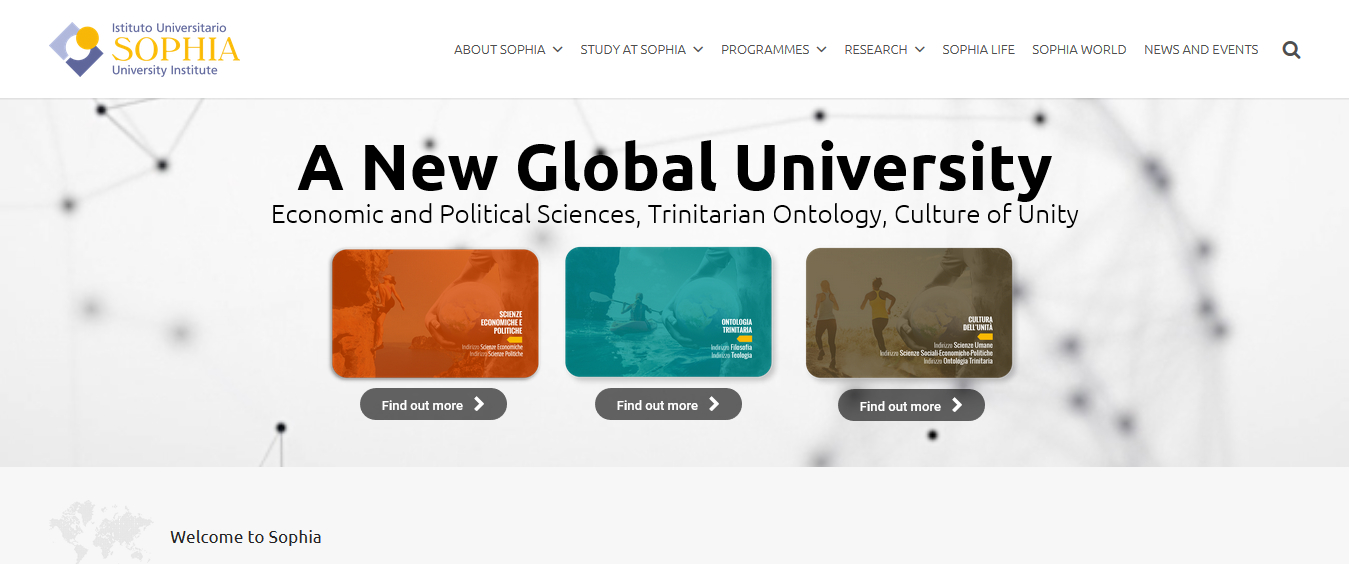 The new website expresses Sophia University Institute’s calling to become more and more global, not only because of its multidisciplinary approach to study and its cosmopolitan community of students and faculty, but also because of its openness and the soon to be opened training centres that will be added to the university of Loppiano near Florence, Italy. For ten years, Sophia has made dialogue and interaction among the different fields of knowledge an innovative method for overcoming the fragmenation, abstraction and isolation among the disciplines, with the goal of providing an open vision of the disciplines and the opportunity of comparing and combining their content, methods and results. Up until now Sophia has welcomed 450 students and faculty members from 50 countries and 4 continents. Visit the site
28 Feb 2018 | Non categorizzato
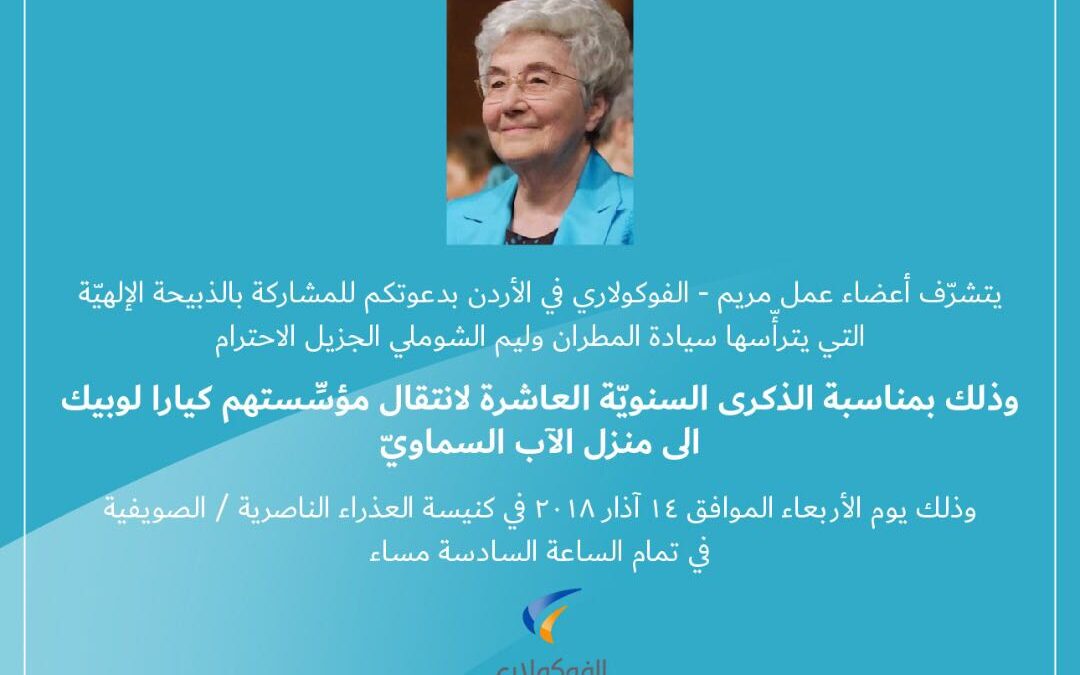
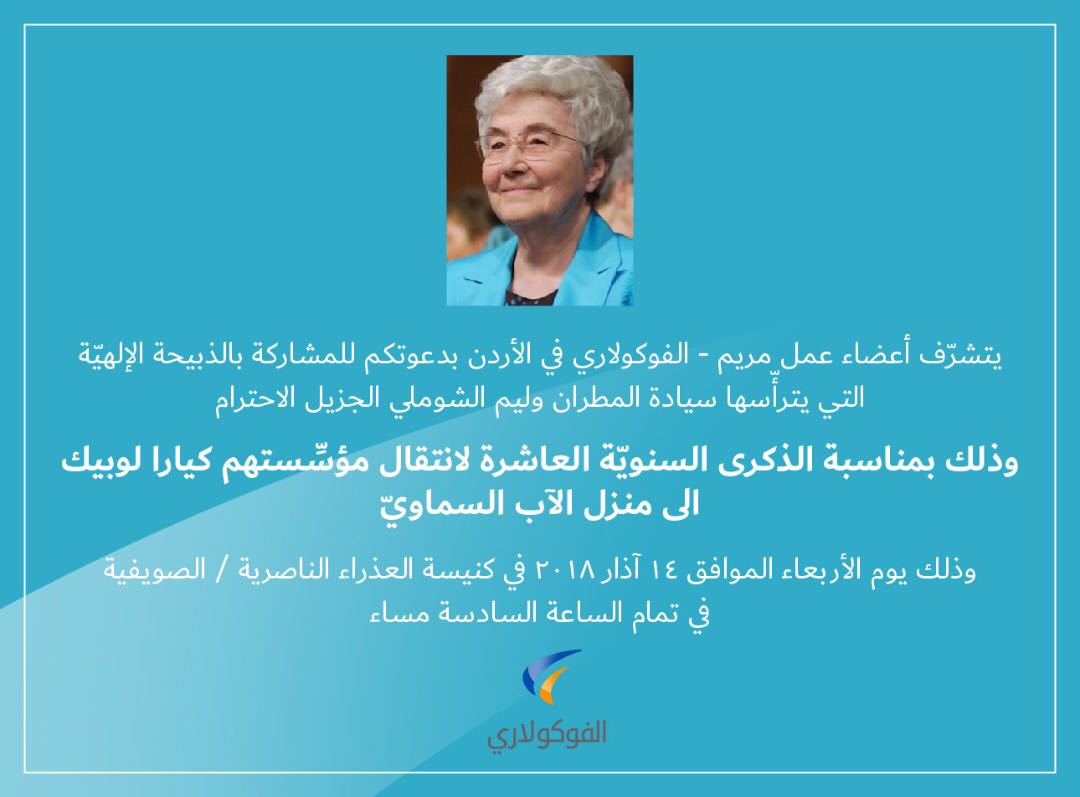
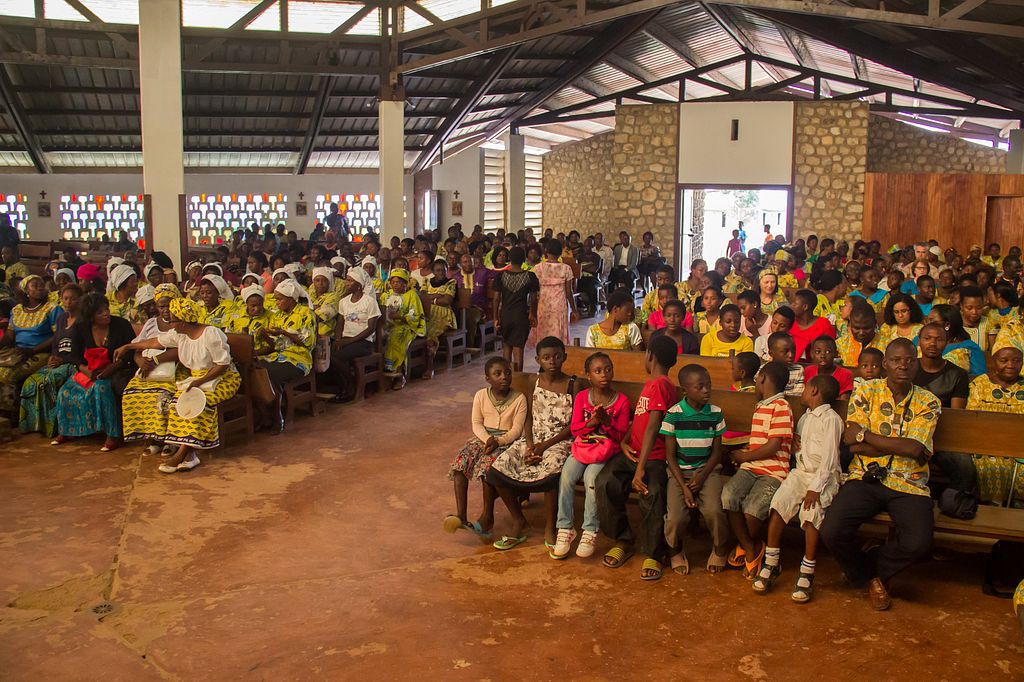 March 14, 2018 marks the 10th anniversary of Chiara Lubich’s passing away. Focolare communities throughout the world will commemorate this anniversary through a varied number of events that mark the charism’s contribution to social change. On March 3, 800 people are expected to participate in a conference held at Maria Hall of the Catholic University Hospital in Seoul, Korea. “Mary: a ‘yes’ that changes society” is the theme chosen for a meeting to be held on March 11 at Goma, Democratic Republic. Of Congo. A conference on “Chiara Lubich: a life of dialogue for peace” is scheduled to take place also on March 11, at Chicago, USA. “Conoscenze plurali” is the title of the convention which will take place on March 17 at the Salone dei Cinquecento of Palazzo Vecchio, in Florence, Italy. On March 18, a multi-ethnic day of social action is being organized in a tribal village at Chiang Mai, Thailand. A day’s meeting on “Chiara Lubich and social actions” will be held on March 24 at Chisinau, Republic of Moldova. These are some of the many initiatives planned. A 360º overview of the social dimension of Chiara Lubich’s charism will be presented through an artistic event scheduled for March 3, at the Mariapolis Centre, Castel Gandolfo, Rome. 2000 participants from the five continents are expected to attend. The Secretary of State, Cardinal Pietro Parolin and personalities from the fields of culture, communication and institutions are also expected to be present. This event can be followed in English, Spanish, Portugese, French and Italian via internet (http://live.focolare.org/chiaralubich/).
  For Chiara Lubich, the greatest attraction of modern times was “to penetrate to the highest contemplation while mingling with everyone, one person alongside others”. Sergio Zavoli, who was a very close friend of Chiara, defined her as a mystic of unity between heaven and earth. While speaking about the change she brought about in Trinitarian mysticism, he said: «Allowing God to dwell in the intimacy of one’s soul is making him live among men through communication between – I repeat her words – God in me and God in my brother. It is not by chance that Chiara Lubich’s thought appeals to us to put together the fragments of the inseparable, that is man, and to recompose the fractures of what is shareable, that is the community». Since the very beginning of Lubich’s experience in her native city of Trent, the social change that stemmed from her thought, gave rise to initiatives that have a very strong social hallmark. Today, these actions and works are found practically in all the world; they have the characteristics of each region and culture and they seek to give an answer to specific situations of individuals, groups and communities in need (see link). When confronted with the question about the Focolare’s focal aim today, ten years after the death of its founder, Maria Voce answered that the Movement “must definitely maintain unity with its source, that is Chiara, hence fidelity to the charism as originally passed on; it must return to its beginnings to discover the radicality and totality required from us, may be even more today. The Movement has to be developed so that it can be that instrument designed by God to spread the spirituality of communion and build the unity of the human family. It has to deepen its knowledge about the great charism God entrusted to Chiara and about ways of transmitting it to everyone, since besides its spiritual aspects, the charism has also doctrinal, social and political ones that can influence all areas”. Maria Voce expresses her conviction that today’s visibility of the Focolare Movement, where incidence on human and social realities is concerned, albeit good, “is still too localized”. Then she affirms: “I think that this visibility needs to be more effective and more extensive. May be the Movement needs to become more known even on a worldwide level. We are present almost in every country, but this, perhaps, is not evident enough. It will happen through our life: the more we live according to the charism, the more we will influence the world around, and hence become more visible”. SIF
Follow the live streaming event on 3 March at Castel Gandolfo, from 4.00pm – 7.00 pm: http://live.focolare.org/chiaralubich (in English, French, Spanish, Portuguese, German)
27 Feb 2018 | Non categorizzato
https://vimeo.com/257451488 Choose subtitles: English, Spanish and Italian