30 Nov 2017 | Non categorizzato
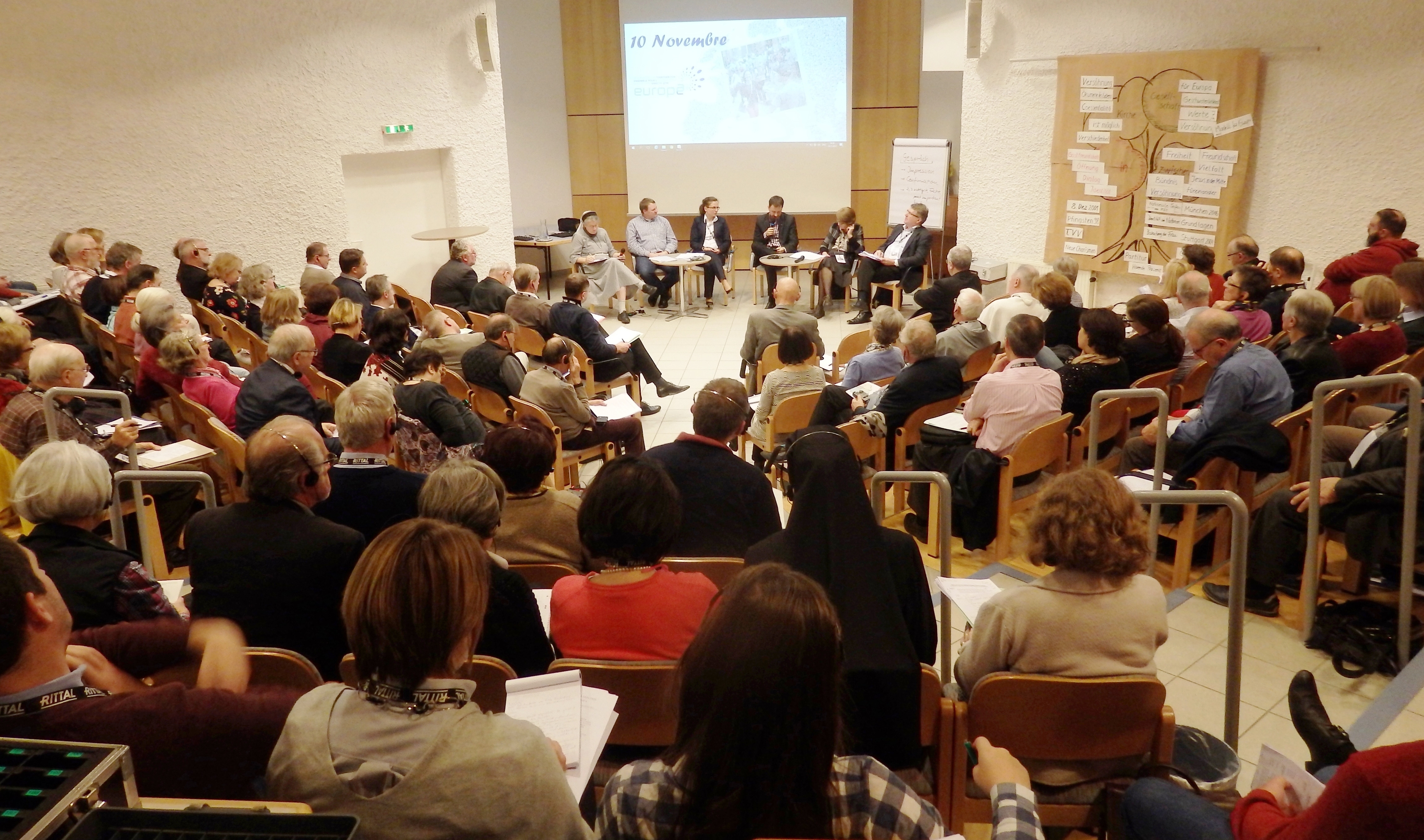
 From 9th to 11th November 2017 in Vienna (Austria), the annual conference of ecumenical network Together for Europe (TfE) took place, with 130 participants from 44 Movements, Communities and Associations. Meetings, exchange of ideas, and moments of prayer, characterised the Conference’s program Fr Heinrich Walter (Schoenstatt Movement), Gérard Testard (Efesia, France), Gerhard Pross (YMCA Esslingen) spoke of the eighteen-year history of Together for Europe and its future challenges. “We say Yes to a Europe to which God has entrusted a vocation in the course of history: the togetherness of heaven and earth, of faith and shaping of the world: for heaven and earth meet in the crucified one.” Pál Tóth (Focolare Movement, Hungary), an expert in Communication Science, pointed out some differences between the Eastern/Central European countries and the West of Europe and put forward a daring proposal: “Together for Europe can increasingly become a platform for dialogue, or rather a school of inter-European dialogue.” One of the suggestions which emerged was to dedicate 9th May, when many countries celebrate Europe Day, as an event in which to spread the message of ‘togetherness’ through local actions. www.together4europe.org twitter.com/together4europe
29 Nov 2017 | Non categorizzato, Spiritualità, Word of
for ages 4-8 | for ages 9-17 | Print | Audio
A young woman is in her house in Palestine — a distant, little known corner of the powerful Roman Empire. Suddenly she receives an unexpected, rather disturbing visitor: a messenger from God, asking something of her and awaits her reply. “Rejoice!’’ the angel says to Mary. Then he reveals God’s abounding love for her, inviting her to collaborate in fulfilling God’s plans for humanity. With a sense of wonder and joy, Mary accepts the gift of this personal meeting with the Lord. She gives herself entirely to this yet-unknown plan because of her complete trust in God’s love. With her generous and wholehearted “Here am I”, Mary decisively puts herself at the service of God and people, giving a shining example of how to accept God’s will. “Here am I, the servant of the Lord; let it be with me according to your word (Lk 1:38).” Meditating on this Gospel passage, Chiara Lubich wrote in 1981: “To fulfil his plans, God needs people who surrender themselves to him as humbly and as readily as a servant. “Mary is the true representative of humanity, whose destiny she took on. With this attitude, she gives God all the space he needs for his creative action. “However, the term ‘servant of the Lord’ is not only an expression of humility, but also a title of nobility, given to the great servants in salvation history, like Abraham, Moses, David and the prophets.” “Therefore, by using these words, Mary also affirms her greatness.’’ “Here am I, the servant of the Lord; let it be with me according to your word (Lk 1:38).” We, too, can discover God’s presence in our lives and listen to the word he says to us, asking us to fulfil part of his design of love, part of his design of love for history, here and now. Our weakness and sense of inadequacy may hinder us. So let us believe the angel’s words, “for nothing will be impossible with God” (Lk 1:37), and trust in God’s power more than in our own strength. This experience will free us from our limitations and from presuming that we’re self-sufficient. We will find new energy and talents we did not know we had, enabling us to love in our own way. “Right at the start of our marriage,” shared one couple, “we opened our house to the families of children in our city’s hospitals. More than 100 families came to our house, and we continually tried to create a family atmosphere for them. “We often received providence, which helped us cover our expenses, but we needed first to be open to welcoming people. “Not long ago, we received some money and decided to put it on one side, being sure it would be useful for somebody. In fact, soon afterwards another request arrived. “It is all a game of love with God, and our part is just to be ready and play along.” “Here am I, the servant of the Lord; let it be with me according to your word (Lk 1:38).” Chiara’s words about accepting the Word of God as Mary did can help us live this phrase of the Gospel. “Being completely available, knowing that it is not merely human word … As it is the Word of God, it contains a presence of Christ. “So you can receive Christ, in his Word, within you. Then put it into practice actively and readily, moment by moment. “If you do this, the world will once again see Christ walking through the streets of our cities. Christ in you, clothed like everyone else. Christ at work in offices, schools and the most varied places; Christ amongst all.’’ Now that we are preparing for Christmas, let us find some time, as Mary did, to spend “one on one’’ with the Lord, perhaps by reading a page of the Gospel. Let us try to recognize his voice in our conscience, which will be enlightened by his Word. We will become more sensitive to the needs of the brothers and sisters we will meet. Let us ask ourselves, how can I be a presence of Jesus today? How can I contribute, where I am, to making all people one family? Saying ‘‘Here am I’’ to God will allow him to sow peace around us and increase the joy in our hearts. Letizia Magri
29 Nov 2017 | Non categorizzato
28 Nov 2017 | Non categorizzato
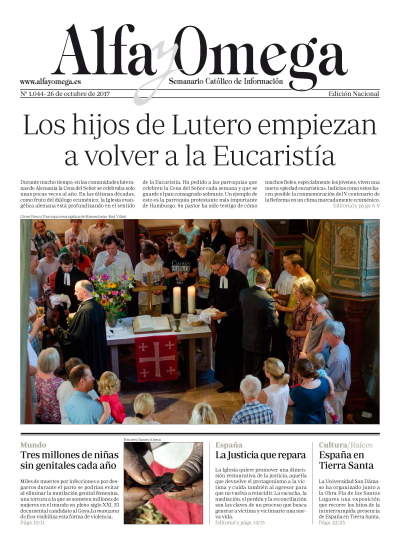 The keyword is “journey”, because “truth is sought through journeying”. Maria Voce, or Emmaus as she is known in the Focolare, became animated as she described Pope Bergoglio’s vision of ecumenism. Her eyes lit up when speaking about an ecclesial reality which truly has unity as its vocation. Such was the route undertaken by Focolare founder Chiara Lubich. It is one of the very few movements born in the Catholic Church which embraces the faithful of other churches. It is indeed a rarity in times of fragmentation. “I think that true Catholicism is what God perceives it to be: a gathering of communities each having their own identity. I imagine the moment will come, because it must come, when everyone will be one. Jesus asked for this. Therefore not just one Catholic Church: it could be Catholic in the sense of universal, but not a single Roman Church or a single Church of Constantinople.” Your words came across almost as a provocation. “Of course, they’re provocative!” Maria Voce replied. It was clear that in her “provocation” she felt supported by the Argentinean Pope. On 3 June, the last Sunday of Pentecost, the Pontiff convened the charismatic Catholic and non-Catholic movements. Before the meeting had even started, the Pope specifically asked for Maria Voce. A priest went looking for her and she joined the group of leaders sitting on the stage. At the end of his speech, the Pope approached her and, to her great surprise, took her by the hand: “Come, Maria …,” he said without adding anything else. And they left the assembly together. “From the first moment of his election, when he appeared on the balcony to greet the crowds and introduced himself as a Bishop and not as a Pontiff, I understood that it was already a sign of his ability to relate to other churches.” “Jorge Mario Bergoglio,” Maria Voce recalls, “had a living experience of ecumenism with other churches in Buenos Aires. Considering that time, Maria Voce identified the seed of what happened as a consequence during his pontificate, which reached its utmost expression with the Pope’s presence, almost a year ago, in commemorative celebrations held in Lund (Sweden) which marked the 5th centenary of the Protestant Reformation of Martin Luther. “Something immense happened in Lund, when two Church leaders at the same level of authority met and signed a joint statement.” The challenge is to follow the Pope’s example and join in the ‘spirit of Lund’. “If John Paul II will always be remembered for the ‘spirit of Assisi’, the present Pope should be remembered for the ‘spirit of Lund’.”
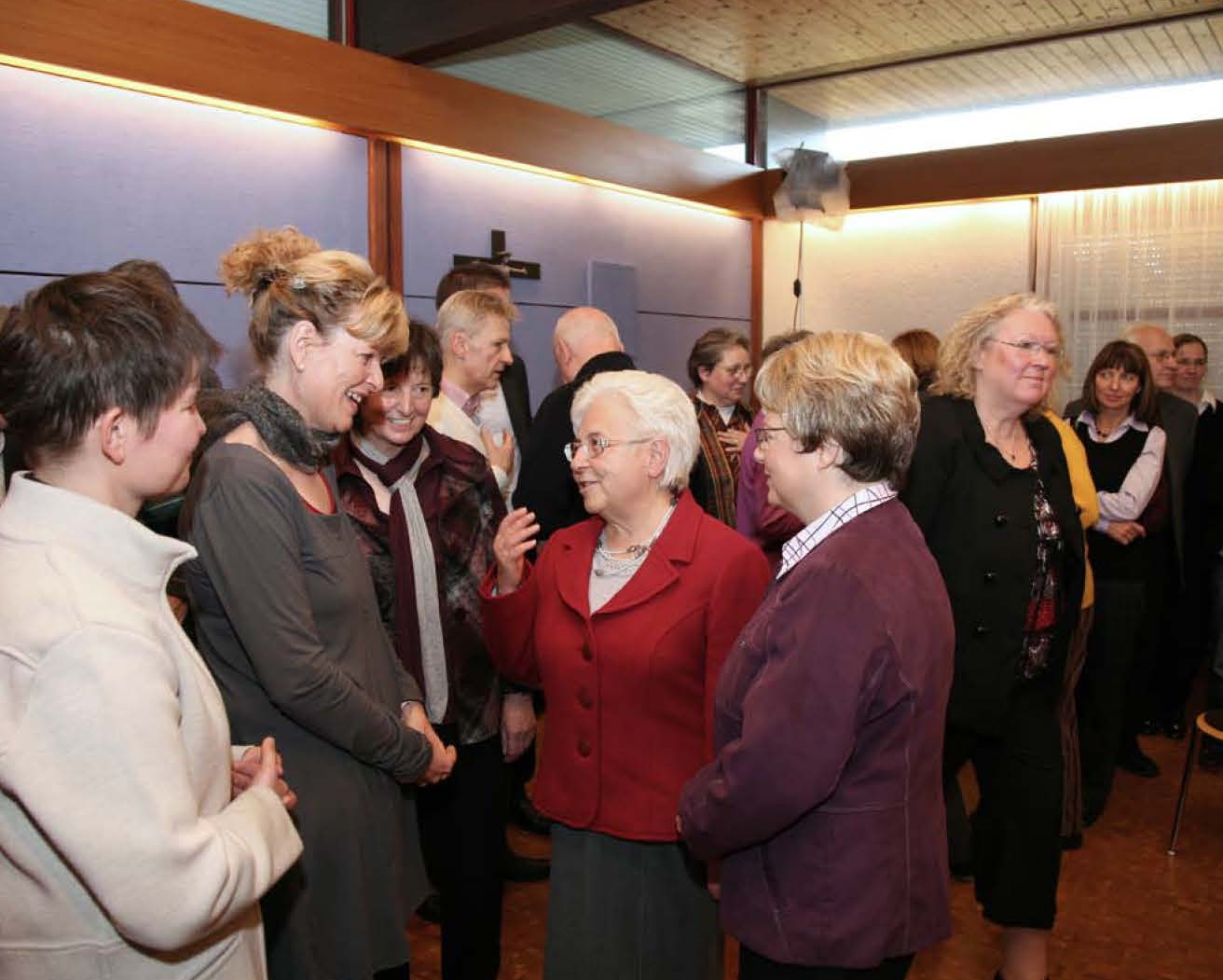
Ottmaring, Germany: María Voce during a meeting with a group from the Evangelical Church on 1 novembre 2009. Photo courtesy of Alpha y Omega

25 Nov 2017 | Non categorizzato
If one day all people, not as individuals, but as peoples, learned to put themselves aside, to put aside the ideas they have about their own countries, their kingdoms, and offer them as incense to the Lord, the king of a kingdom that is not of this world, the guide of history, and if all were to do this as the expression of the mutual love between states that God asks for, just as he asks for mutual love among individuals, that day would be the beginning of a new era. For on that day, just as Jesus is present among two who love each other in Christ, Jesus will be alive and present among peoples, given finally his true place as the one king, not only of individual hearts but also of nations: he will be Christ the King. Christian peoples, or their representatives, must learn how to sacrifice their “collective” egos. This is the price. Nothing less is asked of each of us in order for our souls to be consumed in unity. Now is the time for every people to go beyond their own borders, to look further. Now is the time to love other countries as our own, to acquire a new purity of vision. To be Christians it is not enough to be detached from ourselves. The times we live in demand something more from the followers of Christ: the awareness of Christianity’s social dimension, which not only builds up one’s own land according to the law of Christ, but also enables other lands to be built up as well, through the universal action of the Church, and through the supernatural vision given to us by God the Father, who sees things quite differently from the way we do. We need to live as the Mystical Body of Christ in such an excellent way as to translate it into the mystical body of society […] May the Lord have mercy on this divided and confused world, on these peoples closed within their shells, contemplating their own beauty — the only beauty that exists for them – that is both limiting and unsatisfying) They strain to hold onto their treasures against all odds, the very treasures that could help other peoples who are dying of hunger. May the Lord cause all barriers to fall, and allow love to flow uninterruptedly among all lands, bringing with it torrents of spiritual and material goods. Let’s hope that the Lord will bring about a new order in the world. He alone can make humanity one family and cultivate the unique characteristics of each people so that the splendour of each, put at the service of others, may shine out with the one light of life. This light will make each earthly homeland more beautiful, so it becomes a prelude to the eternal Homeland. See also: Chiara Lubich , “Mary Transparency of God”, New City Press, 2003 p 102

25 Nov 2017 | Non categorizzato
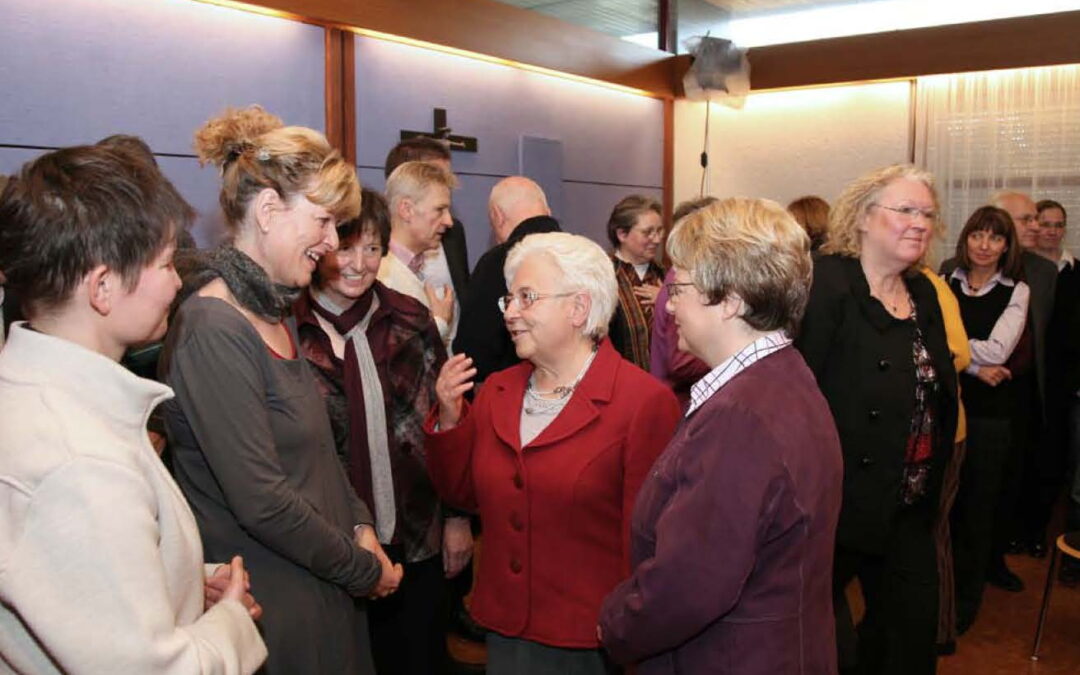
The “International Day for the Elimination of Violence Against Women” was established by the UN in 1999. It occurs every year on November 25 and governments, international organizations and NGOs are committed to raising awareness about the issue and thus creating public opinion. 18 years have passed since its establishment. Much has been done but it’s far from enough. There’s no need to look further afield where violence against women is concerned. It can happen right next door to us and go undetected.. . The words of St John Paul II resound very strongly in his Apostolic Letter Mulieris dignitatem (MD, August 15, 1988), underlining that “God created man and woman in his image, not just as individuals but, in their commonality as the as ‘unity of the two’. The man and woman, therefore, are essentially the same, both persons called as such to participate in the intimate life of God and to live in mutual communion with one another, in love, on the model of God who is Love, who is unity in the Trinity, and to mirror in the world the communion of love that exists in God (MD 7). ” It is a milestone which needs to be faced daily as individuals and as a society.
