
24 Nov 2017 | Non categorizzato
“Have I really been transferred here?” Francesca asked with a pounding heart as the jail doors –a series of about ten big iron gates – opened out for her. Someone had described it as “a descent into hell.” After attending a course for jail teachers, Francesca entered the classroom for the first time. “I thought I would be assisted by a jail policeman, instead the only agent on shift had to monitor around ten classrooms and also perform other tasks at the same time. On the second day I said to myself: “It can’t go on like this! If I am afraid, it is useless that God has sent me here!” From that moment on I felt I was free to love.” In trying to see in the jailees only persons inhabited by Jesus, a journey began for Francesca. It was not so much the going to and returning from a place without limits to a place of reclusion, it was the going to the heart of many stories imbued with real humanity, errors, fear, and anguish, and also to the decision to take one’s life again into one’s hands. It was the start of a deep dialogue, with each side respecting the role of the other. “I tried to prepare the lessons very well, to make them attractive. I knew that Jesus came with me even in jail. During science lessons I started to explain about anatomy and the relations between organs and systems. Subsequently some jailees started to cut down on cigarettes, gradually abolished the use of tranquillizers, and sunbathed during out-of-cell time.” “Besides the difficulty of teaching students with different educational backgrounds – Francesca says – there other types of problems, the clanging of the gates, the irregular attendance of the students, and continuous transfers to and from other jailhouses. That is why whoever stood before me in that moment became even more precious. I might not have seen him again.” Ermal, is Albanese and a remarkably intelligent boy to whom Francesca had given the article of Pope Francis’s interview with prisoners. From that day on, a deep dialogue started about God and prayer. In a short time, Ermal reached brilliant results in school. “Professor, excuse me, I can’t write anything, I’ve got too many problems!” A young Tunisian held his head in his hands in front of a blank sheet for a class exercise. “I received the permit to bring him earphones for the PC and watch a film in his language. Slowly he relaxed, started to practice sports, made an appeal and is now hoping for a reduction of his term. Now when I see him, he greets me with a smile from behind bars.” «At Christmas –Francesca continues her story – we were invited to participate in the Christmas Eve mass. I was the only one since the other teachers had gone to the one celebrated for the “protected” jailees. We had not decided together. There were also Muslims among those present, others without any religious creed, and some jailees who had committed serious crimes. The Bishop started by saying: “You are not the crime you have committed, you are human beings. The crime regards the past; now let us look ahead with hope.” «In January Ermal obtained house arrest. But in that period he was approached by the gang which was the cause of all his problems. We could not keep contact with him, and couldn’t even get his address. Every day I entrusted him to Mary, asking her to let him return to school. After two months, due to evasion from house arrest, Ermal returned to jail! For us it was “good news” and the occasion for him to continue his studies. In a short time he brilliantly passed the High School exam. The President of the Commission told him: “Do you realise that you’ve got brains? What are you planning for the future?” “I want to study,” he said – “to prepare for University.” «After a year in school, I must say that I have come to know another world, almost like a parallel universe. My heart has expanded, and my way of thinking has changed. Many things that seem necessary “outside” are no longer so when you live a life of privation, where they are seen in the right perspective.” But the change God operates in people’s hearts goes beyond the bars or limits.
23 Nov 2017 | Non categorizzato
The Sophia University Institute is pleased to invite you to the Inauguration of the Athenagoras- Chiara Lubich Ecumenical Professorship that will be chaired by His Eminence Gennadios Zervos, Orthodox Archbishop of Italy and Malta entitled: The Partriach Athenagoras and Chiara Lubich, protagonist of unity. Maria Stella Giannetti: Communication – External Relations Istituto Universitario Sophia Via san Vito 28, Loppiano – 50064 Figline e Incisa Valdarno (FI) Tel. +39.055.9051521 – Cell. +39.349 62 72 045
23 Nov 2017 | Non categorizzato
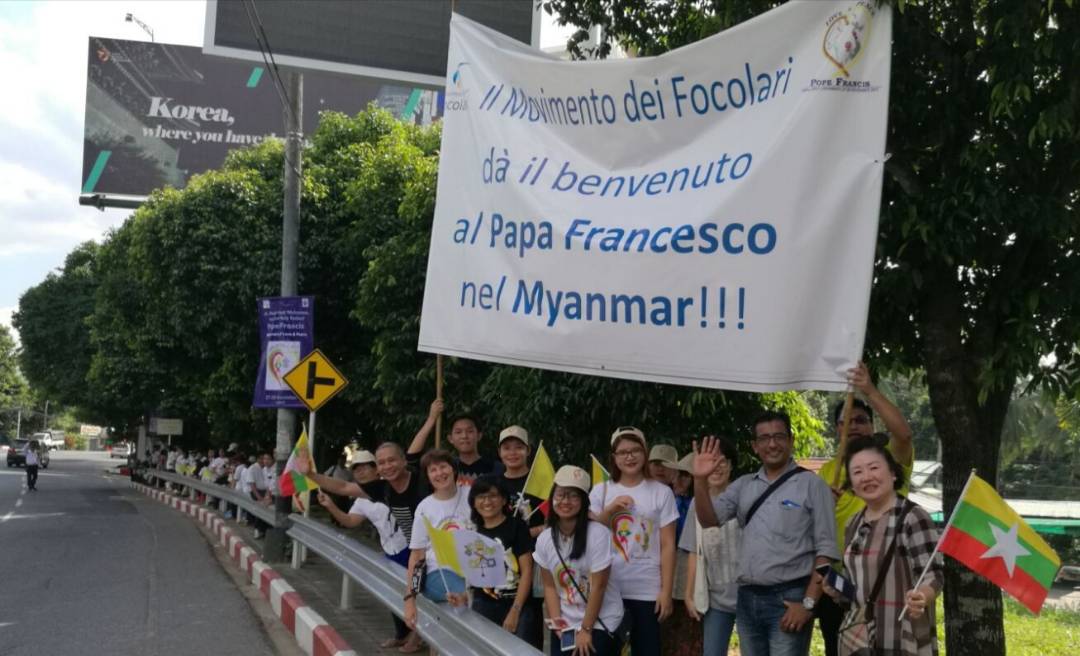
 From 26 November to 2 December, Pope Francis will embark on an apostolic voyage to Asia, stopping in Myanmar from 27 to 30 November and in Bangladesh from November 30 till December 2. It will be the first visit of a Pontiff to Myanmar, while in 1986, John Paul II visited Bangladesh, one of the most densely populated and poorest countries of the world. Pope Francis will travel to Dhaka, the capital city of Bangladesh. During his stay, he will meet with prominent political and civil authorities, as well as young Muslim and Hindu religious leaders in order to address major issues such as climate change, migration, the refugee crisis, the future of young people, all in view of renewed hope. The members of the Focolare Movement will be accompanying this intense week long schedule in Asia with prayer for harmony and peace. A video message recorded by Pope Francis in view of the apostolic visit to Myanmar
22 Nov 2017 | Non categorizzato
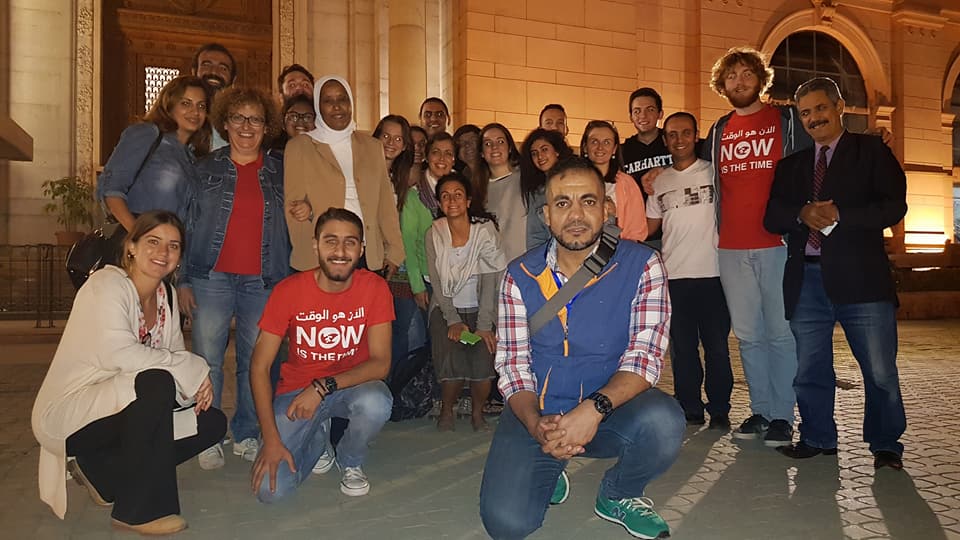 “What will my future be as a young person in my land?” This cry of Nasreen, a young Palestinian, penetrates the hearts of the other young people who listen in deep silence wanting to put balsam on her wounds, still open after years of war and social instability. Emina was seven years old when war broke out in Sarajevo. Her life changed in an instant, but her desire to mature and counter react has been stronger. And Albert from Spain: “My life changed ever since I had an experience of living in a refugee camp in Jordan. I’m no longer the same.” They are young people who are determined to revive the challenges of building the social fabric of peace starting from their own lives.
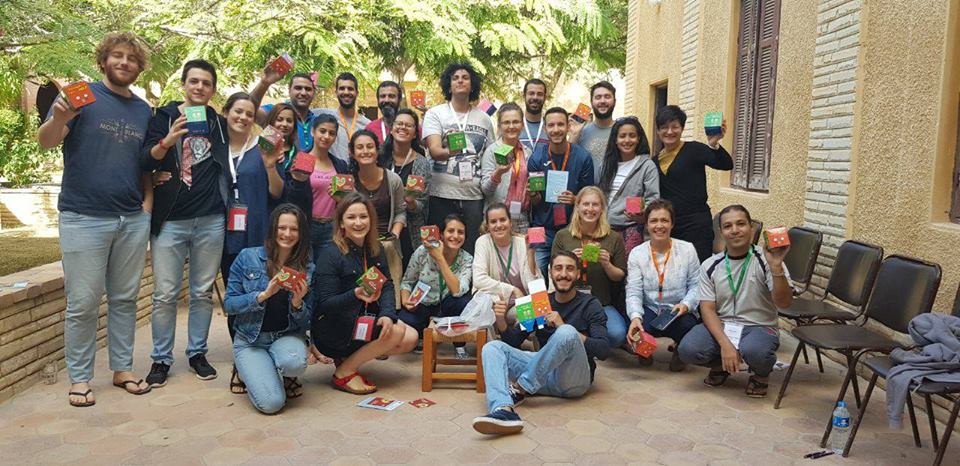
 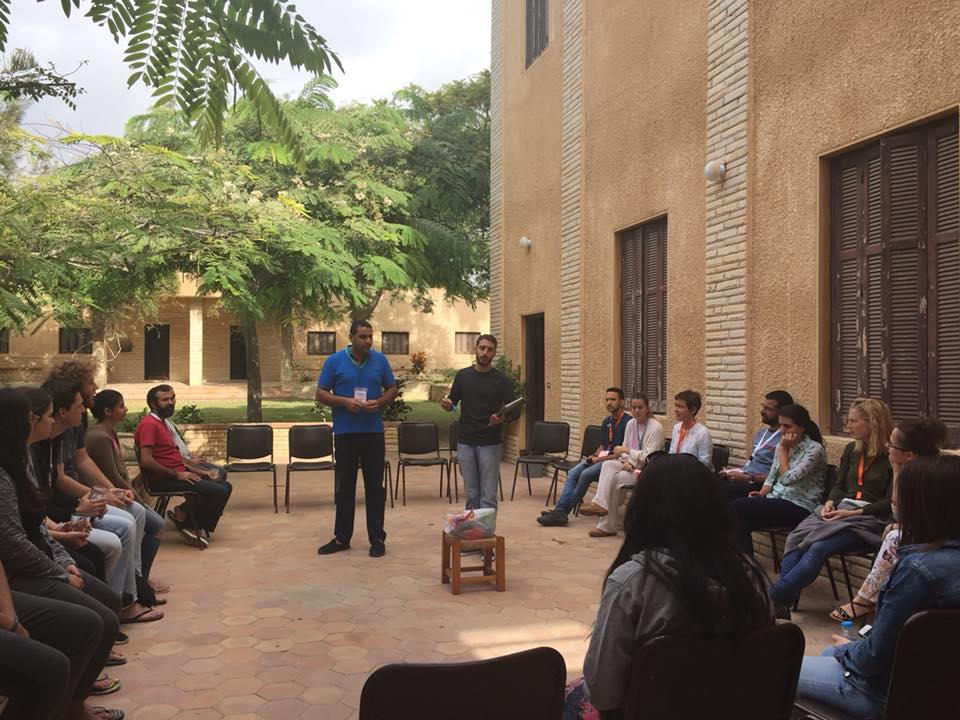 Thirty-two participants took part in the “Host Spot” project, held from 28 October to 2 November 2017 in Alexandria, Egypt. It was promoted by several NGOs and Associations, including New Humanity, “Non dalla guerra”, Caritas in Jordan, Igino Giordani Foundation (Spain), B-Net, Jesuit Culture Center (Alexandria), Ireland Focolare Trust, VACA (Palestine) and Starkmacher (Germany). Starting off from their experience of meeting at a refugee camp in Jordan in August 2016, the young people pursued their initiative by holding two follow-up events in Germany, where they dealt with some of communication techniques, and as a final stage they met in Egypt. Young people from Hungary, Bosnia, Palestine, Egypt, Spain, Ireland, Italy and Jordan spent ten days together in the accomplishment of this innovative project, promoted by the European Community, in order to create connections and to build bridges between youth associations which which have as their aim the quest for peace. Through workshops, in-depth sessions on issues in the Middle East, dialogue between cultures and the importance of the media in communicating migration problems, in a world where one in two refugees is a child, the protagonists of this edition of Host Spot have embarked on a steadfast mission to spread a culture of peace, first and foremost through a training course on current affairs and information seminars on the systems which regulate the media. It was an experience which has allowed the youth protagonists to draw conclusions regarding the activities already undertaken and to plan together how to pursue this valuable collaboration between associations by developing projects and putting new synergies in place.

21 Nov 2017 | Non categorizzato
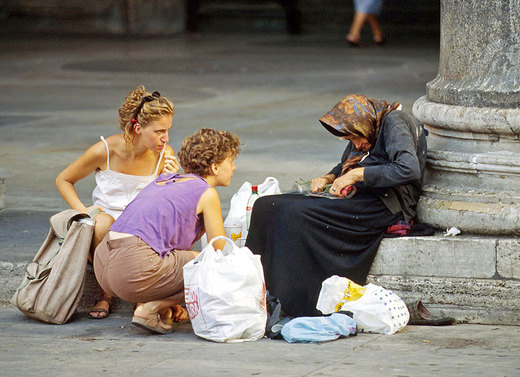
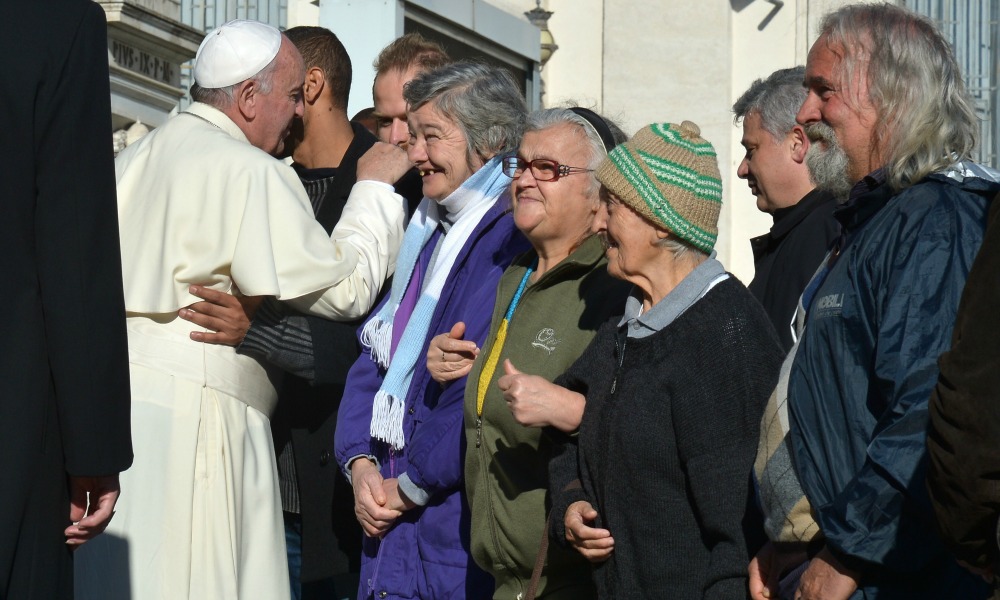 The news that was announced on June 13th by Pope Francis, who wished there to be an international day dedicated to the poor, appeared totally in line with his pontificate that is so attentive to the needs of the vulnerable and discarded by society. The response from associations, movements and institutions, as well single individuals and groups, was surprising. The Focolare Movement in Italy embraced the invitation to “create moments of encounter and friendship, solidarity and concrete help,” to love “not only with words, but with deeds.” “Although we can learn from the poor,” say Rosalba Poli and Andrea Goller who are responsible for the Focolare in Italy, “nonetheless those who have more are called to give.” Not alms, not symbolic gesture to put ones conscience at peace; the invitation is to step out of our comfort zone and our certainties,” as the Pope says, “to go out to meet the thousands of faces of poverty.” In Italy also the phenomenon is a cause of concern. According to a recent government report, nearly 5 million people are living in “absolute poverty.” Eight million and a half suffer “relative poverty.” It is a poverty of a thousand faces: marginalization, unemployment, violence, lack of aid. And mostly isolation, because being poor first of all means being excluded. “The Day of the Poor takes us back to a primary aspect of the Focolare’s spirituality, the communion of goods,” Poli and Goller explain. “It’s a practice that has led to many social projects over the years, inspired by the desire to imitate the custom in the early Christian communities where no one was needy among them. Some of our projects include Arcobaleno Association, which has been active in Milan for more than 30 years; the La Pira Center for you foreigners in Florence; the Sempre Persona Project that helps prisoners to become reinserted into society and offers assistance to their families. Then, the Apriamoci Project from the Trentino More cultural association, such as Facciamo Casa Insieme. Others distribute food, like the l’Associazione Solidarietà in Reggio Emilia, B&F in Ascoli, Associazione Città Fraterna and Comitato Umanità Nuova in Genoa. RomAmor is involved in helping the homeless around the Ostiense Train Stations, whereas other projects welcome refugees in Lampedusa and Ventimiglia. In Pomigliano d’Arco, the Legami di Solidarietà work in an area that is strongly marked by unemployment where mutuality and sharing has made a comeback. Following the earthquake in central Italy, several Solidarity Buying Groups were instituted by the RImPRESA Project to provide on site support for local economic activities that had been damaged in the earthquake. Alongside the consolidated projects, other projects have begun in the north and south of the country, often networking with institutions or associations that work in the social field. The intent is to become stable supporters of those living in poverty. From Milan to Sicily, from Messina to Udine, there are food banks, listening centres, soup kitchens, recycling projects. There is also a home for separated parents, at the city gate of Cagliari. Meanwhile, just a few days from its activation, the App Fag-8 project already has thousands of subscriptions. It’s a technological evolution of the custom of putting ones possessions in common, material things and also talents, ideas. By downloading the app it is possible for someone to share (also in someone else’s account), a material object, a project or one’s own time. It is a tool connected to total local a national networks, that allows one to find out in a short time whether what I’m looking for is available, or if I can answer someone else’s need.
![Rights of the Child World Day]()
18 Nov 2017 | Non categorizzato
 On 20 November 1959 the UN General Assembly adopted the Declaration of the Rights of the Child and approved in 1989, the International Convention on the rights of infants and adolescents. Based on the harmonization of different cultural and juridical experiences, the Convention enunciated for the first time, and in a coherent way, the fundamental rights to be recognized and guaranteed for all the children of the world. The document stated the four key issues: the lack of denunciation, greater interest, life and survival and development, and lastly, listening in all the decision-making processes. The Convention also provides for a control mechanism on the work of the States that have to present a periodic report on its implementation in their territories. According to UNICEF, every year millions of children continue to be victims of violence, abuse, abandonment, exploitation, wars and discrimination. A lot has been done, but still more must be done to achieve a concrete application of these principles.
