18 Nov 2017 | Non categorizzato
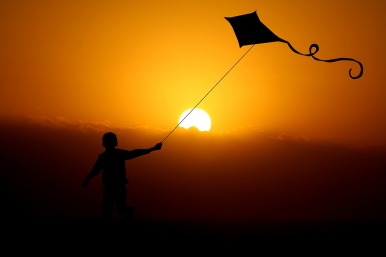
There is a pram beside the supermarket cashier, and a newborn inside it. In the crowd, nobody heeds the others. All are taken up in waiting for their turn, making sure nobody skips the line and be able to come first and finish quickly. But before the child, many stop to smile, and say some kind words. Children have the exceptional power to break down the aloofness of our society and create a simple link with their presence. Children belong to their parents and their family, but at the same time to all of us. They are, so to say a “common asset.” In a certain way this is true for children in general, that is, for every child, as what the prophet announced regarding one child: “A child is born for us, we have been given a son” (Is 9,5). Children are gifts which we all receive. What do they give us? The answer is – the future? Obviously, if there were no children humanity would have no future. But our answer has a deeper sense. Instinctively we experience the child as a promise, like the dawn of that better future we all are hoping for. We do not only ask a child: What will your future be? But also: What future will you bring us? In fact, what will the future be, and what will happen or not happen depends on those who are children today. The future is already here, in the babies who are born. (pp 39-40) Becoming a human person means becoming a child. Since Adam and Eve there has been no exception to this. The journey that leads to adulthood traverses childhood. And this is precisely the path of God: the Son of God who became man, by becoming a child. We belong to him if we accept his friends, the children, and if we welcome him like children. Only those who become children will enter into the Kingdom. Become simple and pure, sharing sufferings and joys. Allow ourselves to be receivers of a gift and return the gesture. The child: virtue that saves us from resignation and calculations, and from egoism and senselessness. The child asks us to let him live, to have his own vital space. The Child in the manger is he who is inviting us to become men like him and receive a divine life from him. (p. 34) Klaus Hemmerle, from “Dio si è fatto bambino” (“God made himself man”) – Ed. Città Nuova Rome 1994.

17 Nov 2017 | Non categorizzato
Promo video su Facebook – Collegamento CH
17 Nov 2017 | Non categorizzato
See program of seminar to be held at LUMSA University, Borgo Sant’Angelo,13, Rome on 28 November 2017 Official Website Seminar brochure
17 Nov 2017 | Non categorizzato
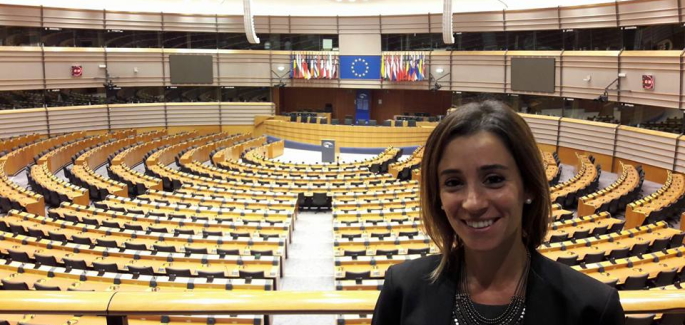
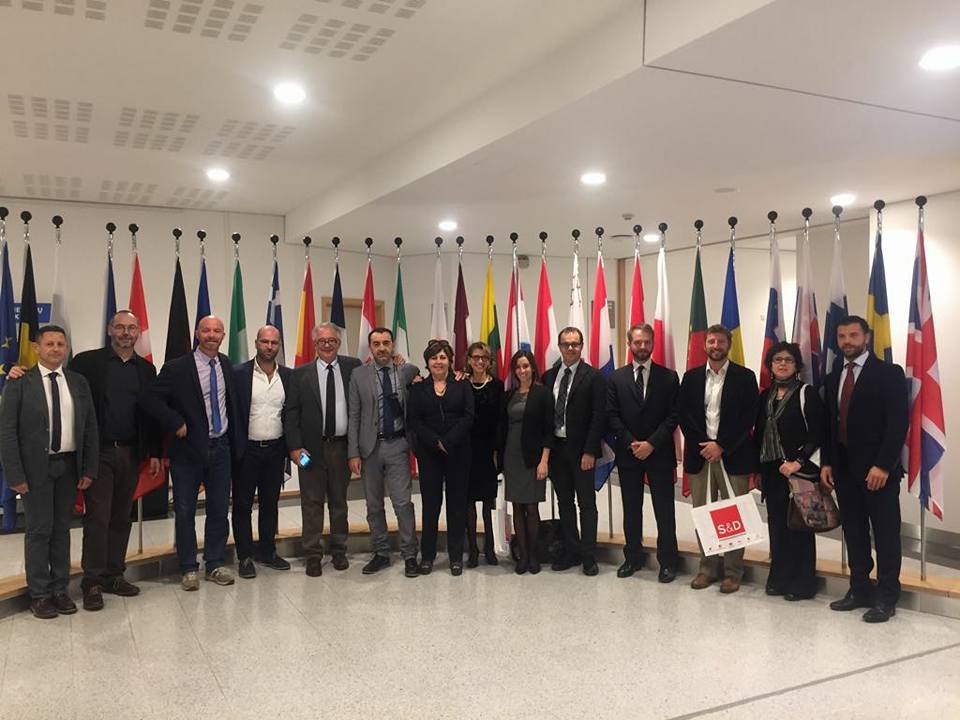 Halfway through two international days, namely the UN’s one dedicated to the eradication of poverty on October 17 and that of Pope Francis on November 19, aimed at global solidarity with the poor, the question which arose was insistent: Is it possible to reduce and totally eliminate inequalities? Economists, NGOs, associations, national and international institutions discussed and sought ways to reduce pockets of poverty and their consequences. A debate which was organized in Brussels in October by the European Intergroup Fighting against poverty, in defence of Human rights, and ATD Fourth World, hosted the contributions of several organizations that attempt alternative methods to help people in difficulty overcome their situation. Their method consists not so much in lowering subsidies, but in activating network paths. Among the contributions was that of Florencia Locascio from Argentina, a representative for the Economy of Communion project (EoC). “The Economy of Communion,” explains Locascio, “is a movement of people, entrepreneurs, workers, consumers, scholars and citizens committed to responding to reducing poverty, to fostering an economic and civic culture that puts at the centre the person and the value of relationships. The EoC conceives profit as a means of growth which is sustainable, inclusive and in solidarity with human beings and society as a whole. ”
 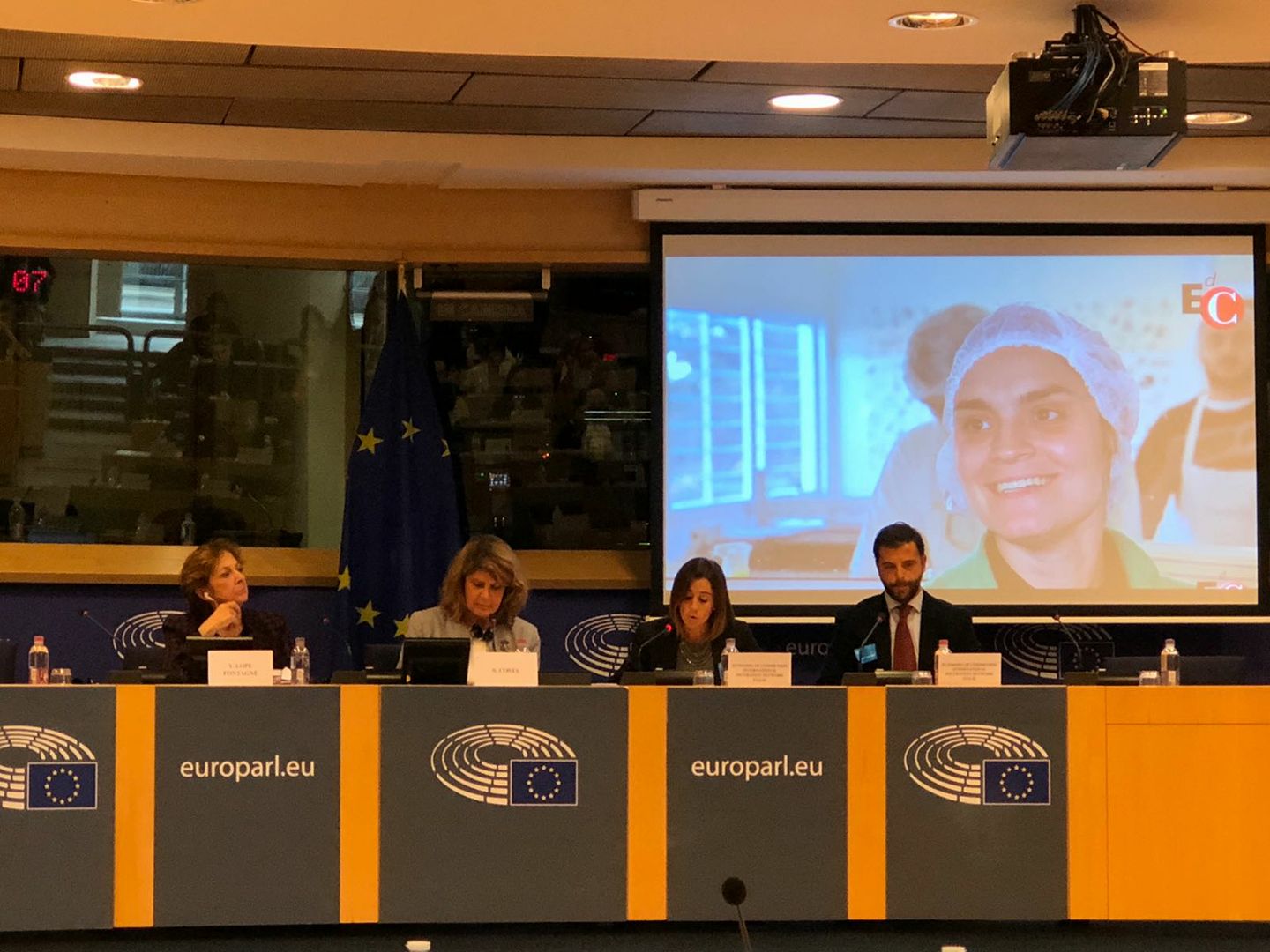 After 26 years since it started (it was 1991, during her visit to São Paulo in Brazil, when Chiara Lubich had an insight of a new economic model) the EoC promotes companies that adhere to the spirit of working with three goals as an objective: reducing poverty and exclusion, train new business men and women in the culture of communion and in developing companies, creating new jobs. Some examples, among many, are these: At Banko Kabayan bank in the Philippines, 85% of clients are micro-entrepreneurs, mostly women, who offer loans, savings, micro insurance, as well as business management courses to promote their business. The “LIA” startup project in the United States aims to reintegrate older persons into the work force by re-using old furniture. DIMACO is an Argentinean company that distributes building materials. Together with other local entrepreneurs and in coordination with public institutions, the group has managed to make the work of over a thousand small producers in the region sustainable. “We are convinced, through our experience,” says Locascio, “that we cannot allow poverty to exist without involving disadvantaged people living in our communities, and wherever possible at workplaces. It is not enough to distribute wealth differently. We need to involve the poor in the creation of wealth.” In order to monitor and disseminate the effects of the EoC in the fight against poverty and inequality, the OPLA observatory on poverty, an international research centre named after Leo Andringa, a Dutch economist who was a pioneer of the Economy of Communion, was born in 2017. OPLA’s research aims to investigate, in particular, the production of “relational goods” linked to EoC activities. “But since we want to deal with the reduction of poverty not only today, but also in the future,” continues the young Argentinean, “the most recent project of the Economy of Communion, called EoC-IIN (Economy of Communion International Incubating Network), contributes to the emergence of new companies with a positive social impact. These are just some inspirational examples that carry a seed of an inclusive economic proposition. We are aware that in order to eradicate poverty, it is necessary to change the rules of a system that generates ever more inequality. It is a challenge that we want, and must, take up with all the other components of society, starting with politicians.”
15 Nov 2017 | Non categorizzato
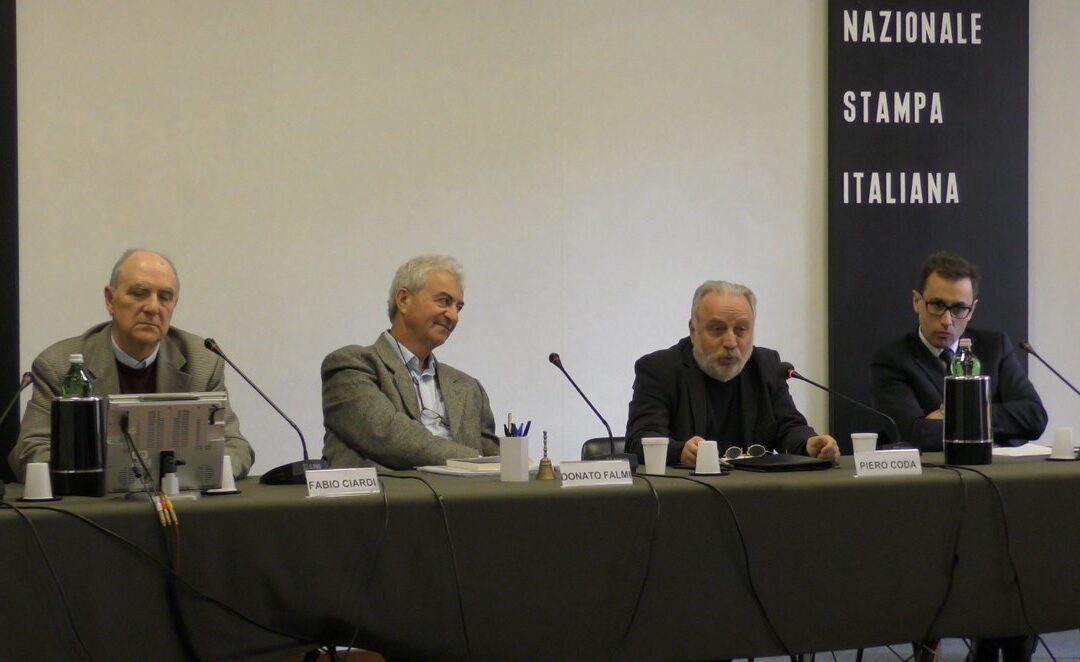
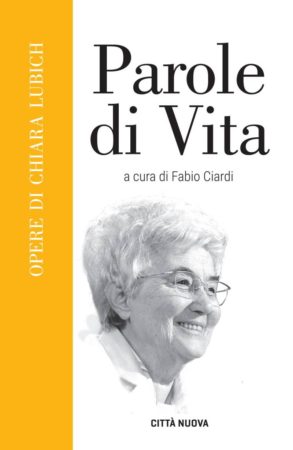 “I never wrote a book,” Chiara Lubich said in 1995 when she received the Author of the Year Award from the Catholic Publishers and Booksellers Union (UELCI), “even though many books bear my name.” There are many ways to write a book, and the way Chiara did it is truly a literary event. Her Italian biography lists 58 titles. Others appear only in non-Italian editions. Hundreds of articles and thousands of letters, along with documentary material have been collected by the Chiara Lubich Centre, which was established after her death to keep her memory alive. The writings scan her entire life, from 1920 in Trent where she was born, to Rocca di Papa where she died in 2008. Her first book, Meditations, has 27 Italian editions, 28 translations and a million printed copies. Meditations was the book that gave a start to Città Nuova Publishers in Rome, Italy (1959). The director of the Works of Chiara Lubich Series, Donato Falmi, commented: “In order to overcome the episodic manner in which Chiara’s writings were presented by Città nuova, a systematic publication project was begun in 2012,” which will not produce an opera omnia, but will classify the writings according to literary genres, which are organized in three blocks: the woman (the autobiographical element recovered not only in diaries and letters, but also in mystical writings); her spiritual path (found especially in texts of meditations, in the Words of Life, in texts where here spiritual, theological and cultural thought is developed); and the Work (the speeches in civil and ecclesiastical contexts, The Statutes and the Rules). Fourteen volumes are planned, each with its own large introduction that will provide a key to understanding the complexity of writings that the Focolare foundress left to us as her spiritual legacy.
 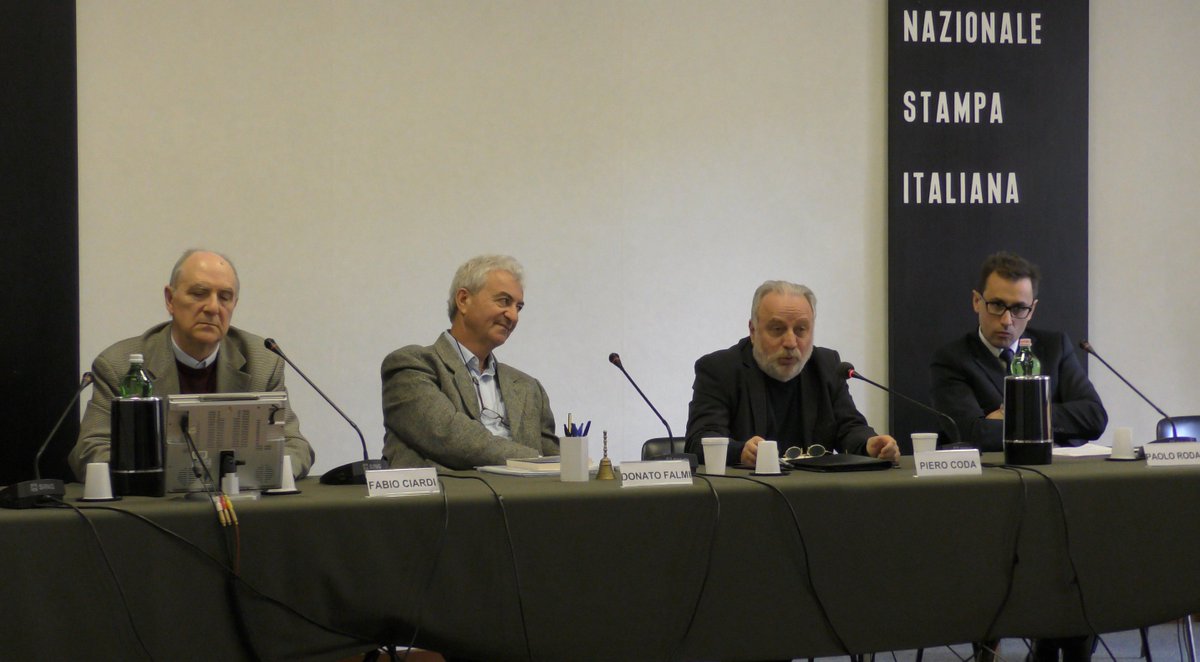 “It is quite a timely message,” commented Piero Coda, Rector of Sophia University Institute and member of the series’ scientific committee: There is no aspect of human life, or country where the leaven of this charism has not fermented. And yet,” he notes, “Chiara Lubich is still a widely unknown woman,” to discover and appreciate, even though her story and spirituality have anticipated many cultural paradigms that later materialized. “I was also in New York, with her, at the Malcolm X Mosque when she met with Imam W.D. Mohammed. There was a rabbi sitting beside me and it all seemed impossible to him. But she made it happen.” The literary production contained in the first volume is rather special. Compiled by Dr Fabio Ciardi, professor of Theology of Consecrated Life at the Claretianum Rome, her words are within the grasp of everyone, at times comments on sentences taken from the Gospels to be put into practice. These were first printed on handwritten leaflets, then mimeographed and, finally, printed in an ever growing number of copies. The Words of Life, with their simplicity and directness, have brought about a rediscovery of God’s Word in the twentieth century. In the experience of Chiara Lubich and her first companions, the Scriptures returned to being accessible to all, the humble and the simple, the educated and important, the children and the adults, the laity as well as to the consecrated. One can also discern prophetic signs in this of the universal call to holiness that was proclaimed many years later by the Second Vatican Council. The present edition, compiled by Fabio Ciardi, spans the period between 1943 and 2006. It is hoped that this monumental effort by Città Nuova and the Chiara Lubich Centre will be reflected in many other languages and cultural settings.
See video on Rome Reports (Vatican news agency) https://youtu.be/8RWX3ugmnh8
13 Nov 2017 | Non categorizzato
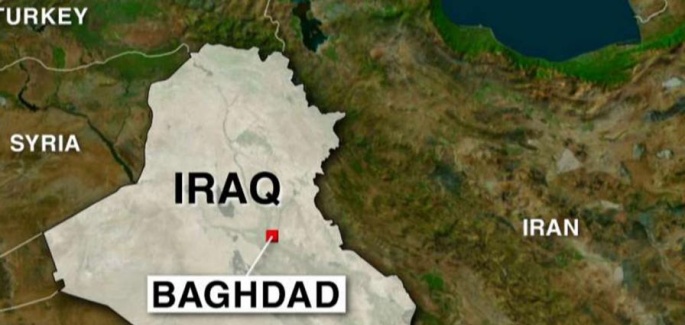
Yesterday, November 12,an earthquake with a magnitude of 7.3 caused hundreds of casualties in the Iraq-Iran border. 11 people died and thousands are wounded in Iraq, while in Iran the earthquake killed around 348 people and left 6,603 wounded. The devastated areas show entire buildings which had crumbled by the powerful tremor. The epicenter of the earthquake was located at a distance of 31 kilometres from the city of Halabja, 240km North-East of Baghdad, and about 15km from the Iranian border, but the shock waves have been felt by millions of people in Central Asia. Iraqi authorities have ordered urgent evacuation in the area surrounding the Darbandiyan hydroelectric power station. It is feared that many people will be buried under the rubble. Iran’s authorities also sent the country’s armed forces to give emergency help. According to the Mehr News agency, the Iraqi prime minister thanked Iran for its collaboration with Iraq. Pope Francis “expresses his sorrow towards all those who weep for the loss of their loved ones” and “offers his prayers for the dead”. The Pope also “invokes divine blessings of consolation and strength” for the wounded and for those who work in the search and rescue.
