30 Jun 2017 | Non categorizzato
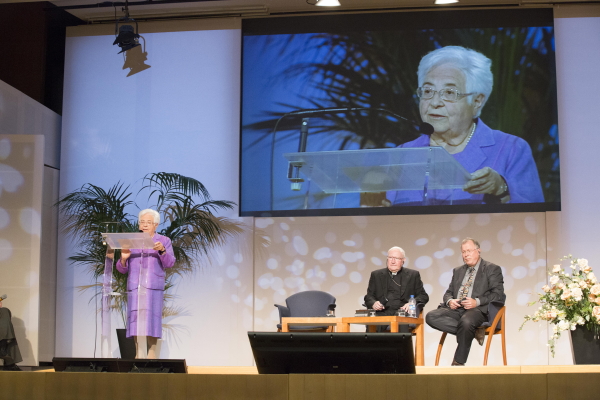
 Ecumenism is important for peace. Can you explain why and how? “Ecumenism is important for peace because ecumenism is unity. Unity is peace. Unity means being one heart and one soul. It means loving. It means sharing belongings, sorrows, joys. This is what generates peace. What is peace? Peace is not the absence of bombardments. It’s not just a signed truce. This is not what peace is all about. Peace is the unity of hearts. Ecumenism serves to build and to spread this union of hearts and therefore it serves peace; it takes peace ahead. When Christians show they are united, they certainly have more impact. Together they can embark on peace initiatives, especially since peace is continually threatened. They can help put into practice the sharing of goods in the world, give help to those who flee from war-torn countries in search of a better life, show welcome. But they can only help if they are united. And if they are united, they can instigate the necessary steps for the realization of peace filled.” What contribution does Pope Francis give to the ecumenical movement and what kind of style is he communicating to the Churches? “I saw his commitment the very first moment he appeared on the balcony when he presented himself to the world as the Bishop of Rome. It was the Pope’s first contribution to the ecumenical journey of the Churches. His is an ongoing commitment; this is evident in his desire to reform the Church by leading it towards greater collegiality and participation, both of the pastors and of the faithful, as well as in engendering mutual humility and acknowledgment of the past errors. It’s a process that goes in the direction of the ecumenical journey.”
  The participants at the Ecumenical Week 2017 attended the General Audience at the Vatican, during which Pope Francis spoke of Mary, the Mother of Jesus, as a the one who remained alongside her son throughout his Passion. Is Mary a model of the ecumenical journey? “I would say ‘yes’, because Mary is a mother; she was the Mother of God and Mother of Jesus and, therefore, mother of all human beings. And surely a mother wants to see her children united. She tries her best to bring her children together, to help them recognize that God had come down from heaven for them. She wants them to love one another, not to quarrel or speak badly about each other; she helps them find new ways to understand each other. Mary gives us a hand in this. And then I believe that Mary helps us to remain standing underneath the cross, through the example of her own desolation. It seems to me that there, underneath the cross, she herself lost her greatest treasure and she wants to teach us to lose something too, to lose the richness which every Church has in order to embrace the richness of all the others. If Mary was able to lose her Son, the we can lose an idea, the recollection of past wounds, which we still carry within us, in order to be builders of unity.” Interview by M. Chiara Biagioni – Source: S.I.R See Part 1
29 Jun 2017 | Non categorizzato
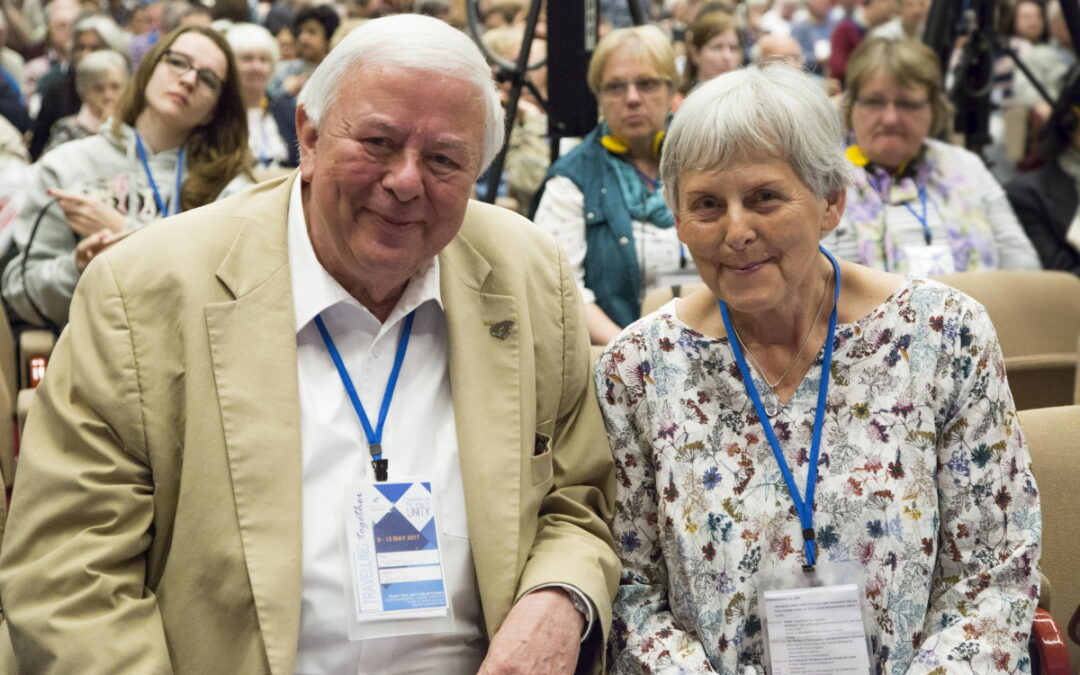
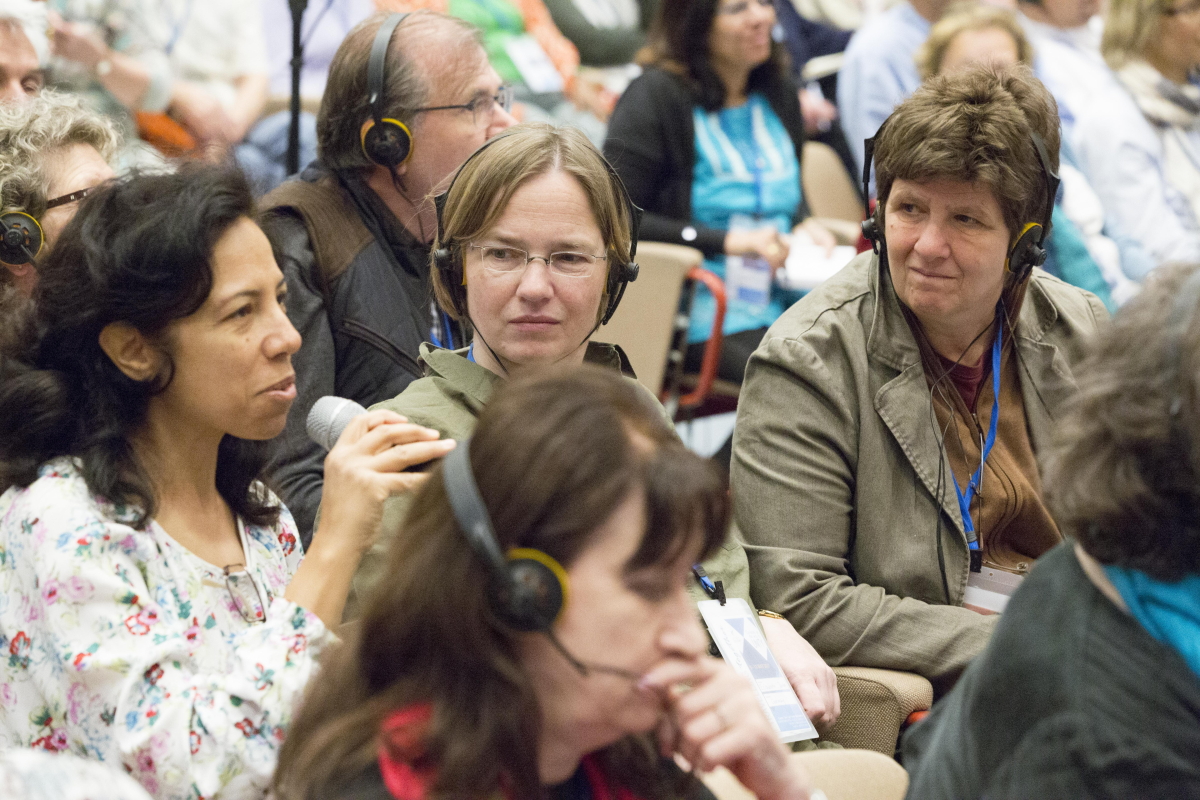
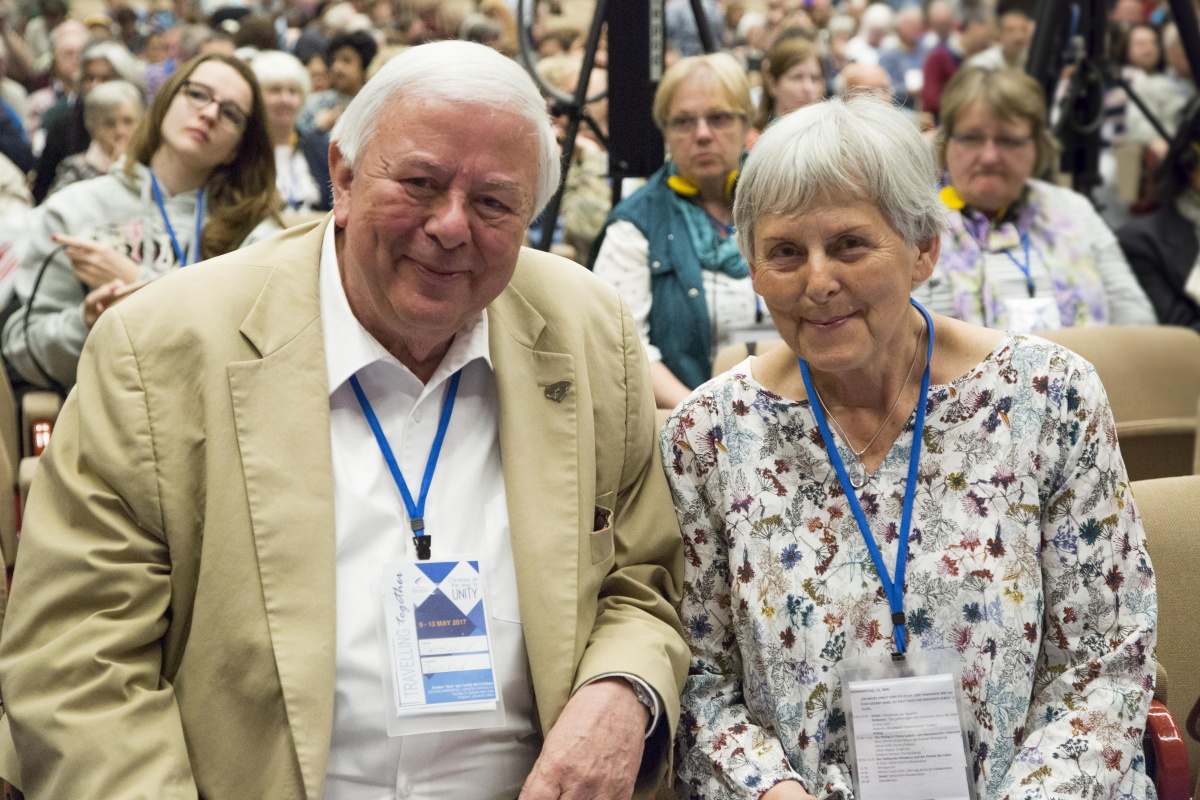
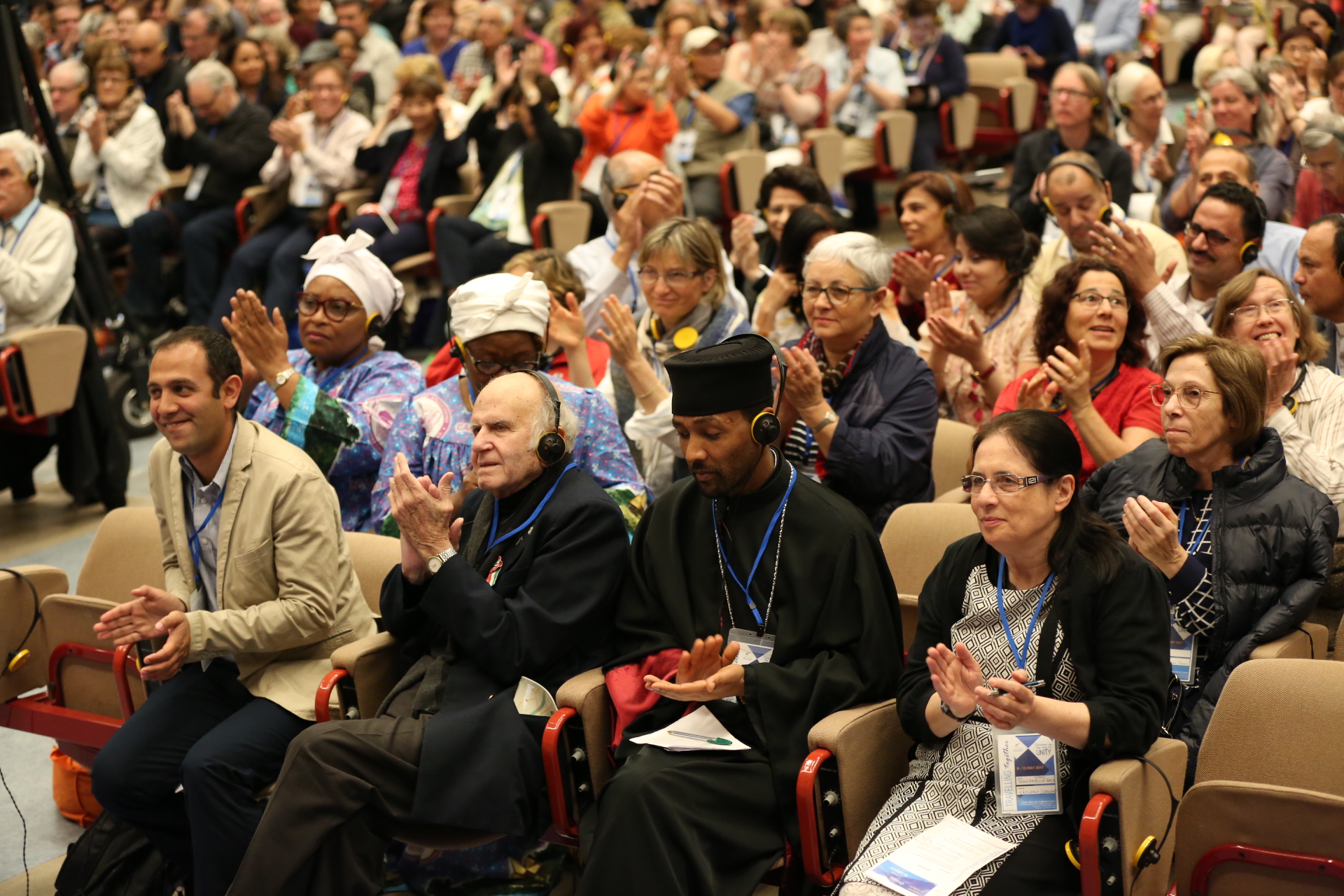 “The Revolution of the Gospel. A return to the Gospel and the Life of the Gospel in the World.” The putting into practice of the Word of God today as the early Christians did, contains therein the ecumenical journey that began 50 years ago by Chiara Lubich and taken ahead by the Focolare Movement all over the world. It is a journey in which Christians of all Churches fully partake in as seeds of peace in a world wounded by wars and divisions. Maria Voce, president of the Focolare Movement spoke about this recently. We met her at a press conference with journalists of various newspapers, at the end of the 59th Ecumenical Week, which took place at the international Mariapolis Centre in Castel Gandolfo during 11-13 May. The hall was jam packed. There were about 700 Christians belonging to 69 Churches and ecclesial communities, from 40 countries around the world. The translation booths were in full swing with 17 different language interpreters. The participants were of all ages and races, and the clothes they wore showed their different backgrounds and affiliations. A highlight of the Ecumenical Week was the recital of the prayer for unity in the Catacombs of St Sebastian in Rome, in the very place where the first Christians and martyrs used to meet. Here, they made the so-called ‘Pact of Mutual Love’ through the exchange of the sign of peace, asking forgiveness for the harm inflicted in the past and so that “renewed by love, we take this witness lived between us to our communities in our countries, and in our society”. “We have built so much together,” commented Maria Voce. “Now it is about accelerating the pace, so that communion is full and visible. We need to go forward.” The world yearns for universal brotherhood as never before. Do you think it is possible? Is it possible in this century? “I know it’s possible, though I can be sure it will happen in this century. One thing is certain that we will reach this goal, because it is God’s wish. God wants the whole human family to be a family of brothers and sisters. And if God wants it, then this plan of unity for humankind will be fulfilled. Perhaps it won’t succeed in this century. But what’s important is that that we take the steps that God asks of us today, and today God asks us to work in this direction and as Christians to at least recognize each other as brothers and sisters. In the ecumenical world, one perceives the suffering of Christians belonging to different Churches of not being able to participate in the same Eucharistic celebration. How do you respond? “It’s undoubtedly a suffering for everything. However, we believe that the presence of Jesus in the world is not limited to a Eucharistic presence. Jesus is present in the world in so many ways. He is present with his love; he is present in the people around us because we recognise Jesus in every neighbour; he is present in the poor, in those who guide us in the Church’s magisterium, and in the various Churches and institutions. We, as the Focolare Movement, feel that two things are particularly important. The first is that suffering is the presence of Jesus in the world. Jesus has taken upon himself all the sufferings of humanity, and hence the pain of division. It is a suffering that Jesus himself endured when he was crucified and abandoned. The second thing, which is of utmost importance, is contained in the words of Jesus: “Where two or more are gathered in my name …”. He did not say gathered in the Eucharist, but rather he said “in my name”. And what does it mean to be united in the name of Jesus? It means to be united in reciprocal love which he brought on earth. So where two or more are united in his name, there is his presence. This presence of Jesus in the world is in a way proof that we already live a true communion, and therefore we could also say: “Who can separate us from the love of Christ?” While it’s not possible to receive the Eucharist together, we can’t but receive the love of God, we can’t but live this love among us in the hope that one day we can arrive to that full communion which will be added to the communion that we already live.” (to be continued) Interview by M. Chiara Biagioni – Source: S.I.R See Part 2

28 Jun 2017 | Non categorizzato
The official magazine of the Focolare Movement in the US, Living City, has won 5 awards by the Catholic Press Association of North America. First place was awarded for “Best coverage of ecumenical/interfaith issues” for the articles “Growing together”, “Start bridge-building now”, and “A compass to guide our way”, by Sarah Mundell, Susanne Janssen, David Shaheed and Jordan Denari. “Fantastic pieces that tell compelling stories while making a statement on the larger issue of building bridges with those of other faiths,” the judges commented. “The authors do an excellent job of creating articles that spur readers to think deeply and open their hearts.” Third place was given in the category “General excellence — National General Interest magazine.” In the category “Best interview”, Susanne Janssen’s interview with Andreas Widmer, Director of Entrepreneurship Programs at The Catholic University of America, entitled “What is work all about?” received an Honorable Mention. And in the category “Best essay”, both Amy Uelmen’s article “Listening beyond the echo chamber” and “Even being ‘anti’ can open up dialogue” by Sarah Mundell, earned Honorable Mentions. The judges wrote, “The issues are filled with pithy, interesting stories that offer depth, insight and variety.”
28 Jun 2017 | Non categorizzato, Word of
“Weary and carrying heavy burdens”: these words suggest images of people (men and women, young adults, children and the elderly) who are weighed down in all sorts of ways as they journey through life, hoping the day will come when they can be freed from all this. In this passage from Matthew’s Gospel, Jesus invites us: “Come to me…” He was surrounded by a crowd that had come to see and hear him. Many of them were simple people: poor, with little education, unable to know and to follow all the complex religious obligations of their time. What is more, they were saddled with the taxes and bureaucracy of Roman rule, a weight that was often impossible to bear. They were constantly worrying and were looking out for the offer of a better life. In his teaching, Jesus gave special attention to them and to all those excluded by society because they were seen as sinners. He wanted everyone to understand and welcome the most important law, the law that opens the door to the Father’s house: the law of love. God, indeed, reveals his wonders to those with open and simple hearts. But Jesus invites us too, today, to come closer to him. He showed himself as the visible presence of God who is love, a God who loves us immensely just as we are, with our talents and shortcomings, our aspirations and failures! And he invites us to trust in his “law” — which is not a burden that crushes us, but a yoke that is easy. It fills the hearts of those who live this law with joy. It demands our commitment not to turn in on ourselves, but rather to make our lives an ever-fuller gift to others, day by day. “Come to me, all you that are weary and are carrying heavy burdens, and I will give you rest.” Jesus also makes a promise: “I will give you rest.” In what way? He gives us rest first of all through his presence, which becomes more decisive and deep in us if we choose him as the cornerstone of our life. Next, he does so through a special inner light that shines upon our daily footsteps and makes us discover life’s meaning, even when things around us are tough. And then if we start loving as Jesus himself did, in love we find both the strength to carry on and the fullness of freedom, because the life of God grows within us. In her commentary of the Word of Life from May 1999, Chiara Lubich wrote: “A Christian who is not always striving to love does not deserve the name of Christian. The reason is that all Jesus’ commandments are summed up in one: to love God and love our neighbor, in whom we see and love Jesus. “Love is not a mere feeling, but it translates into real life, into service of our brothers and sisters, especially those who are close to us, starting from the little things, from the humblest of services. “Charles de Foucauld says: ‘When you love someone, you are in that person in a real way; you are in that person through love; you live in that person through love; you do not live in yourself; you are ‘detached’ from yourself, ‘outside’ yourself.’ “And it is because of this love that Jesus’ light gains ground in us, just as he promised: ‘To those who love me … I will reveal myself’ (see Jn 14: 21). Love is a source of light. And by loving, we have a greater understanding of God who is love.” So, let’s accept Jesus’ invitation to go to him, knowing he is the source of our hope and our peace. Let’s accept his “commandment” and strive to love, just as he did, in the endless opportunities to do this throughout the day — in our families, in the parish, at work — responding to offenses with forgiveness, building bridges rather than walls and putting ourselves at the service of anyone weighed down by difficulties. Far from being a burden, we will discover that this law gives us wings to soar on high. Letizia Magri Each month the Focolare offers a Scripture passage as a guide and inspiration for daily living. Focolare’s founder, Chiara Lubich (1920–2008), wrote these commentaries for many years. Now an international commission continues this tradition, faithful to her spirituality of unity. Letizia Magri, an expert in marriage and family from the John Paul II Institute in Rome, is head of this commission and part of the Focolare’s center for the family. This Word of Life is translated into 96 different languages and reaches several million people worldwide through the media. This monthly leaflet is also a supplement to Living City, the Focolare magazine (livingcitymagazine.com). For information and to subscribe to this leaflet or to the magazine, write to: Living City, 202 Comforter Blvd, Hyde Park, NY 12538; tel: 845-229-0496; e-mail: livingcity@livingcitymagazine.com. Visit focolare.org (international) or focolare.us (U.S.). © 2017 by Living City of the Focolare Movement, Inc. Read more Lubich, Chiara. The Art of Loving. New City Press: Hyde Park, New York, 2010. Lubich, Chiara. Neighbors: short reflections on loving the people around us. New City Press: Hyde Park, New York, 2012. Lubich, Chiara. “In love what counts is to love,” Essential Writings. New City Press: Hyde Park, New York, 2007, pg. 82.
27 Jun 2017 | Non categorizzato
Joseph Absi, Patriarchal Vicar of Damascus, has been elected to guide the Greek Catholic Church. The new Patriarch, who succeeds 85 year-old Gregory III Laham, studied theology in France and Lebanon. He earned a licenciate in philosophy at the Lebanese State University and a PhD in music at the Pontifical University of Kaslik. Archbishop Absi belongs to the Missionary Society of Saint Paul (Paulist Fathers). He has been a priest since 1973 and Superior General since 1999. He was ordained a bishop in 2001 and was president of the Syrian Caritas, promoting more than 40 projects in Damascus, Aleppo and Hassaké with the help of collaborators. One topic that is particulary dear to the new Melkite Patriarch is the unity among Catholic Eastern Churches.
26 Jun 2017 | Non categorizzato
After the arrival of the “Pilgrim Cross” where the World Youth Jubilee 2019 will be held, Archbishop José Domingo Ulloa Mendieta, O.S.A., launched the initiative in which, on the 22nd day of each month “prayers will be said together” for this important event. The prayer of last 22 June was entrusted to the local Focolare communities. At the conclusion of the Mass, the Archbishop placed the “Pilgrim Cross” in the hands of the Focolare young people along with the icon of Our Lady. “It was beautiful to receive and carry the Cross of the World Youth Jubilee,” the young people wrote, “and we took the opportunity to tell the Archbishop that he could count on us; and he answered: “I do count on you. It was a celebration of the family of the Church!”
