6 Dec 2016 | Non categorizzato
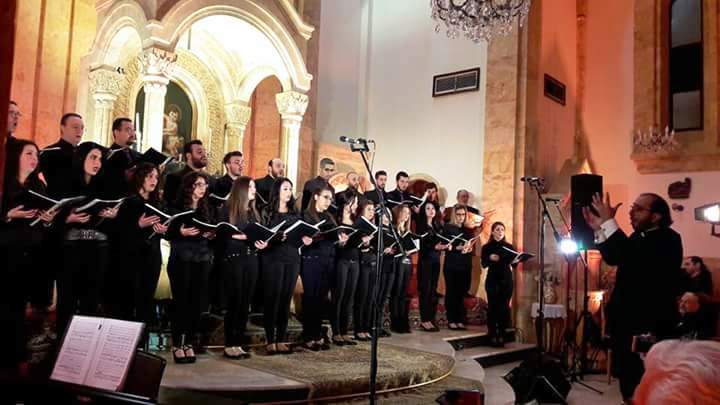
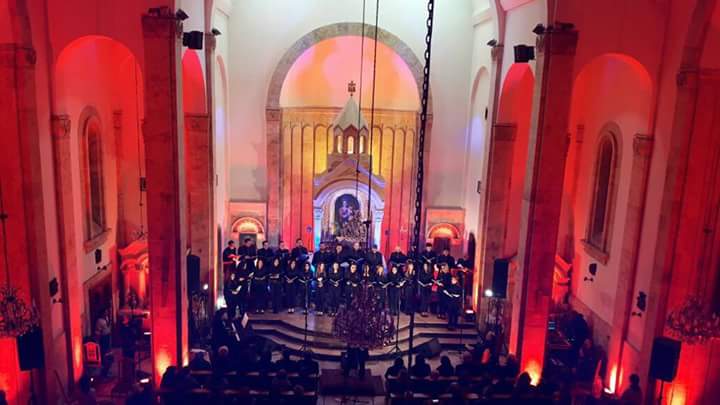 I attended for the first time, a classical music concert in the midst of a battle. It happened in Aleppo, where, surrounded by death, a voice of peace arose among many others that announced war, to comfort the hearts of the people and make them momentarily forget the cold and death. It was like a chapter of a modern tragedy that resembled Greek mythology. In a fully packed Church and with very few tools, Father Elias Janji with the Naregatsi choir and the pianist played some pieces of Verdi, Mozart, Vivaldi and Karl Orf, elevating our spirits to another horizon, despite the polar chill that has invaded Aleppo these days.. And to think that not too far away, the tragedy continues with missiles launched from Eastern Aleppo over the Western zone, killing school children and innocent people, while in the Eastern part of the city, the Syrian army continues to attack. Thousands of people (an estimated 60,000 up to today) managed to escape from East Aleppo and take refuge in the Western zone. They tell of how many have been taken as hostages and that some of those who were shot in their backs while escaping, were killed. Others escaped amid the gunfire, carrying their grandmas or other elderly relatives on their shoulders. The people were relieved since they could finally return to their own homes that were liberated in these days while the army took hold of the city’s water pumping station, even if it was mined. Water is forecasted to return to the city in a month’s time, after the technicians have completed their work. Thus a chapter of the tragedy will end, though there will surely be many more. December 4 is the feast of St. Barbara, the young girl martyred in the first centuries of Christianity, pierced with a sword by her father since, as a follower of Jesus, she had refused to adore another God. It is a great feast for the Christians of the East, adults and children who, despite the war, gathered together to honour her in a masquerade and recount her story in song – a story which despite the centuries passed – has not changed very much. We can’t help but wonder, what has remained of man and his dignity? What will happen now? Will the war in Aleppo end, and bring back serenity to the people who have suffered so much, even if they will find a great part of the city destroyed? The population is weary and wants the conflict to end. But the armed groups refuse to accept defeat and want to fight to the last, despite the appeal of the UN special envoy, Staffan De Mistura, to all the groups to leave the city and spare the lives of the people, who would otherwise pay a heavy price, according to the logic of war! How can we forget that in the end, it is Man since each one, whether good or bad, is an image of God, though this image is buried under a thousand vices and wickedness. With Christmas now at our doorstep, let us therefore remind ourselves that this feast should not only be a remembrance of a past fact celebrated with the usual festivity. The arrival of the “Prince of Peace” should also change the hearts and gestures of all of us, because these become tiny stones in the construction of a better world we all dream of. From Aleppo, Pascal Bedros
3 Dec 2016 | Non categorizzato
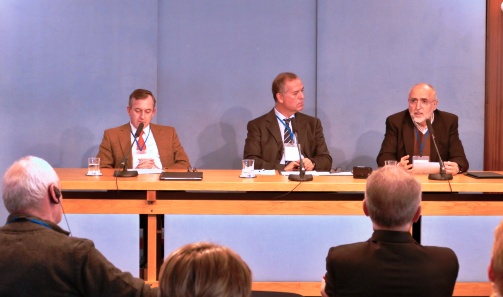
From left: Jorge López e Alberto García (Regnum Chisti), Jesús Morán (Focolari)
From left: D. Edoardo Robles Gil, General Director of the Legionaries of Christ- Regnum Christi with Jesús Morán and Archbishop Vincenzo Zani.
1 Dec 2016 | Non categorizzato
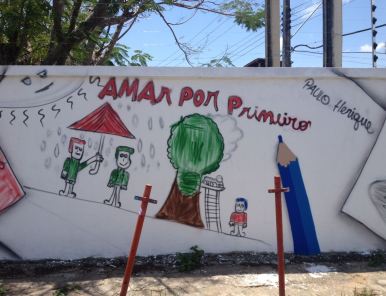
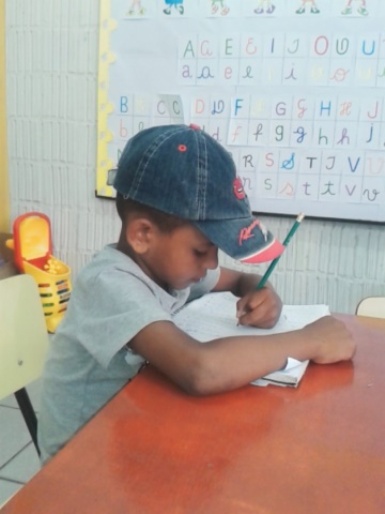 In Coroado on the outskirts of the capital of the State of Amazonas, the wall that separates and protects the centre from the harsh realities of violence and drugs that consume the neighborhood, had begun to deteriorate because of recent rains. Begun in the early 1990s through the efforts of some people from the Focolare Movement, the centre began its work in favour of social inclusion, with a nursery and primary school, but soon turned into a real social agency that was open morning until night. It was begun as an attempt to ensure children and adolescents of the area the right to a harmonious and wholesome development, through educational and recreational activities and support for their families. It is financially supoorted by the generosity of so many people, especially by distance support from the New Families Non Profit Organisation which, in addition to education also provides nutrition and preventive medical care. Several activities followed, such as a study in collaboration with the School of Educational Psychology at the Federal University of Amazonas to identify and overcome the learning problems of some of the young people. There was also also a project carried out and presented by the Pharmacy students to provide the children and their families with a basic knowledge of hygiene, nutrition and personal care. The School of Pharmacy did research project on infectious diseases with blood samples, and provided treatments. There are drug prevention programmes and programmes that combat child labour while parents are offered vocational training courses in collaboration with the Centre of Technology Education of the State of Amazonas. Jeanne and Carlos who work full time for the project recount: “Over the years we came up with Literature and Theatre workshops. We also managed to come up with a programme on emotions and sexuality for teenagers and young adults.” The latest win was described by Janine and Carlos: “The economic crisis is making the situation of our country more and more difficult. For example, one institution that offered a computer course for more than ten years, had to stop collaborating with us. Some of the children’s parents are losing their jobs. And the financial resources for repairing our protective wall that had assumed a gloomy and even threatening appearance often defaced by vandals, were just not available. Then we had the idea of appealing to the Manaus Court of Justice and proposing a partnership called “Let’s paint the wall.” The proposal, which was subsequently passed, would portray in images the experience and the values that we live with the children at the Social Centre and to give an air of joy and harmony to our neighborhood. We wanted the boys and girls to be engaged in this project, so we collected their drawings so that they could be reproduced on the wall.” The newly restored and painted wall was unvieled on October 27th. “It was a very joful event for us,” say Janine and Carlos, “because this recognition from the Court of Justice not only comforts the centre and its efforts, but it allows us to bring ahead the project in the best way we can. We especially thank the many people who generously support us in giving the boys and girls the opportunity to gain knowledge and training that will allow them to take their life in their own hands and become new women and new men.” Giovanna Pieroni
28 Nov 2016 | Non categorizzato, Word of
https://www.focolare.org/gb/files/2016/11/2016-12.mp3
Word of Life for ages 4-8 | for ages 9-14 | for ages 15-17
The verb is in the present tense: “He comes …” We can be sure of his coming in this very moment. We do not have to wait till tomorrow, or the end of time, or the next life. God acts immediately, because love shuns both hesitation and delay. The prophet Isaiah is speaking to a people anxiously waiting for their exile to end so they can return to their homeland. For us too who are waiting for Christmas, we cannot but recall a similar promise given to Mary: “The Lord is with you” (Lk 1:28), as the angel announces to her the birth of the Lord. The Lord does not come for a casual visit. His is a decisive intervention, a matter of greatest importance. He comes to save us! From what? Are we in grave danger? Yes. At times we are aware of it, at other times not. He intervenes because he sees our selfishness, our indifference to those who suffer or who are in need, our hatred, our divisions. The heart of humanity is ailing. Moved by pity, he comes towards each one he has made, who he does not want to be lost. The Lord offers his outstretched hand as if to the drowning victim of a shipwreck. Sadly these days this image is always in front us, brought to mind day by day when we see those refugees who are trying to cross seas, those immigrants crossing borders. We witness how quickly they grasp an outstretched hand or a life jacket. We too, in every moment, can grasp God’s outstretched hand and follow him with trust. He does not only heal our hearts from self-absorption, which closes us off from others, but he makes us, in our turn, able to help those who are in need, who are sorrowful, who are going through trials. “Certainly it is not the historical Jesus or Jesus as head of the Mystical Body who sorts out our problems,” wrote Chiara Lubich. “It is done by Jesus-us, Jesus-me, Jesus-you… It is Jesus in human beings, in that specific human being (when grace is present in him or her) who builds a bridge, lays down a road … “It is as another Christ, as a member of his Mystical Body, that each human being brings his or her characteristic contribution in all fields: in the sciences, in the arts, in politics, in communications, and so on.” The person thus works together with Christ. “It is the incarnation that continues, a complete incarnation that involves all those who are Jesus in Christ’s Mystical Body.” (“Jesus Forsaken and the Collective and Cultural Night,” an address given by Chiara Lubich to a group of young women on January 7, 2007). This is exactly what happened to Roberto, an ex-convict who found someone who “saved” him and who then, in turn, became someone who “saved” others. He told his experience at a Focolare gathering in Villa Borghese in Rome last April. “When my long-term prison sentence came to an end, I thought I would start life again, but as usually happens, even if you have paid your debt to society, you still seem very suspect to people. “I found the doors shut in my search for work. I had to beg on the streets, and for seven months I lived as a tramp. But then I met Alfonso who, through an organization started by him, helps prisoners’ families. “He said to me, ‘If you want to start again, come with me.’ For a year now I have been helping him prepare food packages for these families in whom I see a reflection of myself. I see the dignity of these women who are alone with little children, living in desperate situations, waiting for someone to give them a bit of comfort, a bit of love. “Giving of myself, I have rediscovered my own dignity as a human being, and my life has meaning. I have more strength because I have God in my heart, and I feel I am loved …” Fr. Fabio Ciardi, OMI Each month the Focolare offers a Scripture passage as a guide and inspiration for daily living. Ever since the Focolare’s earliest years, founder Chiara Lubich (1920–2008) wrote her own commentaries each month. Now Fr. Fabio Ciardi, OMI, theologian and close collaborator of Lubich, heads a group of scripture experts who have been entrusted with the task of writing the Word of Life commentaries, reflecting her thoughts and her spirituality of unity. This Word of Life is translated into 96 different languages and reaches several million people worldwide through the media. This monthly leaflet is also a supplement to Living City, the Focolare magazine (livingcitymagazine.com). For information and to subscribe to this leaflet or to the magazine, write to: Living City, 202 Comforter Blvd, Hyde Park, NY 12538; tel: 845-229-0496; e-mail: livingcity@livingcitymagazine.com. Visit focolare.org (international) or focolare.us (U.S.). © 2016 by Living City of the Focolare Movement, Inc. Read more: Lubich, Chiara. “How I met you,” Essential Writings, New City Press: Hyde Park, New York: 2007, p. 56. Lubich, Chiara. “The attraction of modern times,” Essential Writings, New City Press: Hyde Park, New York: 2007, pp.169–178.
27 Nov 2016 | Non categorizzato
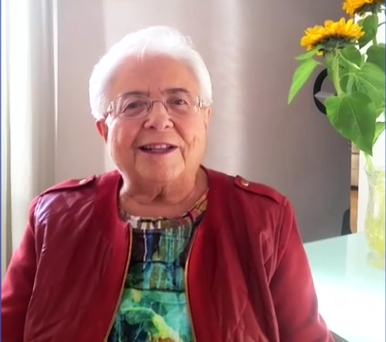
“I have seen how seriously you have been preparing for this moment and this makes me very happy indeed, and gives me great peace for the Movement’s future, because I have seen that you have taken Chiara (Lubich’s) legacy seriously which is handed on to the second generation in the Movement … with the same zeal” as at the start of the Movement. In response to various questions that the young people asked her, on Jesus forsaken, the point of the spirituality of unity which has been chosen to go into depth with this year, Maria Voce explained: “God sent his Son to re-build these bonds, [of unity between God and humankind and among all people] so to do something great.” In order to do this “Jesus did not choose to come with an armada … but he chose a means that maybe is not understood first off; he chose the means of the cross. The means of the cross which for Jesus meant loving right to the end, the greatest love of all, taking on himself all of humanity’s pain, all sufferings, all humiliations, purely out of love! And in the moment he did it, Jesus made a new creation, he created a new unity, he redeemed humanity, so he re-established the unity that humankind had lost with God and people had lost among themselves; it was the greatest of works.” “So in that moment Jesus forsaken is truly the victorious King! He is not only someone who is suffering. Yes, suffering was the means that He chose, but it was because through that suffering he showed the greatest love; because he bore witness before people as to how much the Father loved them and how much he was ready to suffer out of love for the Father and love for them. Now Jesus forsaken comes to us and says the same thing: “Do you want to bear witness to God’s love in front of the whole world, and all people? Then use the same means as I did. Make yourself one with them right to the end, take on the sufferings, pain, doubts and anguish that people feel,” creating “bonds which will make the human family a real family of God’s children, bonded with one another and with the Father.” Concerning questions about their future, Maria Voce answered: Be generous with God! If you truly feel that God is calling you somehow, that he is speaking in the depths of your heart, don’t pay attention to anything else, pay attention only to this voice and say yes … then He will be the one to take you where he wants you to be”, to fulfil God’s “plan of love for each one that will give you the greatest happiness. I wish you this with all my heart!” Gustavo Clariá https://vimeo.com/192601570
