10 May 2016 | Non categorizzato
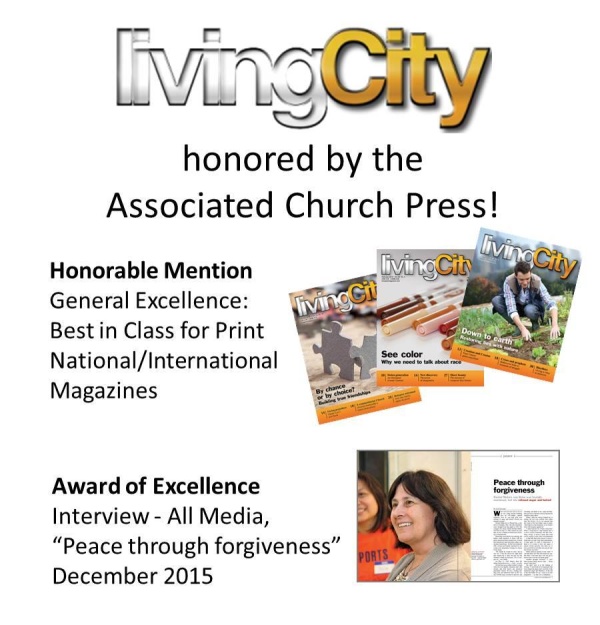
On 5 May 2016, The Associated Church Press (Florida) conferred on Living City Magazine two awards for last year’s February, April and October issues. It received an Honourable Mention in the category “Best in Class National/International print magazines, directed to a broad audience” (Christian Century and Sojourners were the other award recipients in this category). The judges appreciated the “strong use of colour on front covers” and the full bleed and full page pictures. For the writing, they found the first person pieces the most engaging. “Unique perspectives and a strong focus on the magazine’s purpose makes for an original and interesting magazine. Good work,” was their comment. In the category “Reporting and Writing: interview (all media)”, Living City received an Award of Excellence for the article “Peace through forgiveness” published in the December 2015 issue, written by Jade Giacobbe after an encounter with Rahel Muha, whose son was murdered in 1999 at age 18. The judges wrote, “This would be a heart-breaking story were it not for the emphasis on forgiveness, and the mother providing a powerful testimony … A well-crafted story. Good can spring from evil with the proper approach to forgiveness.”
Susanne Janssen
Living City Magazine
Award-winning article: https://livingcitymagazine.com/peace-through_forgiveness
10 May 2016 | Non categorizzato
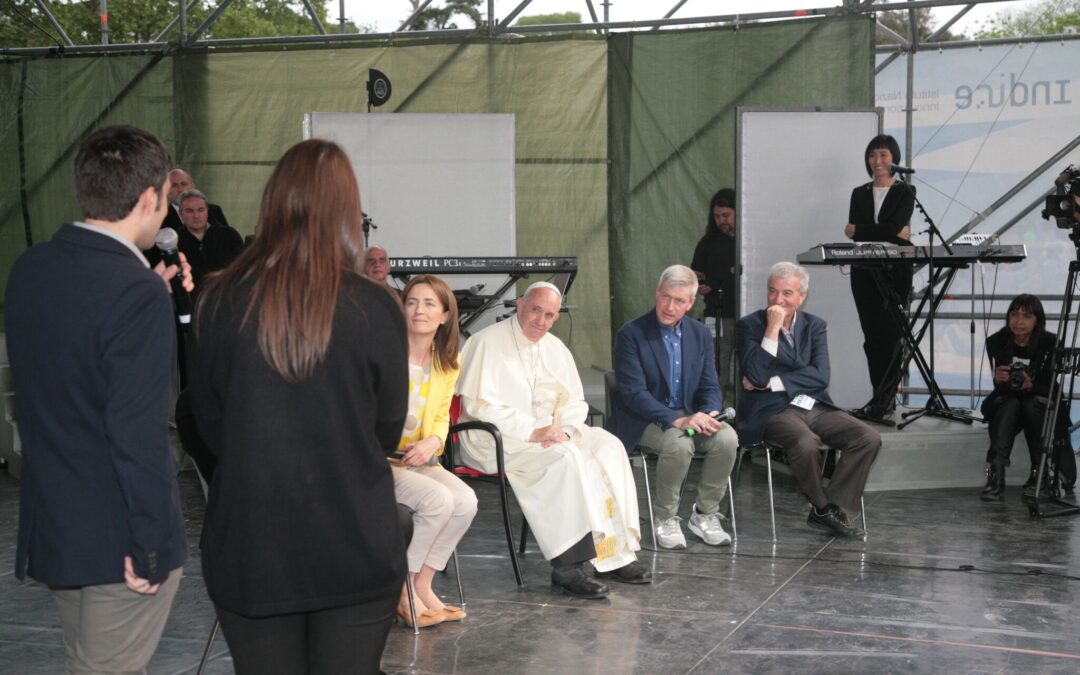
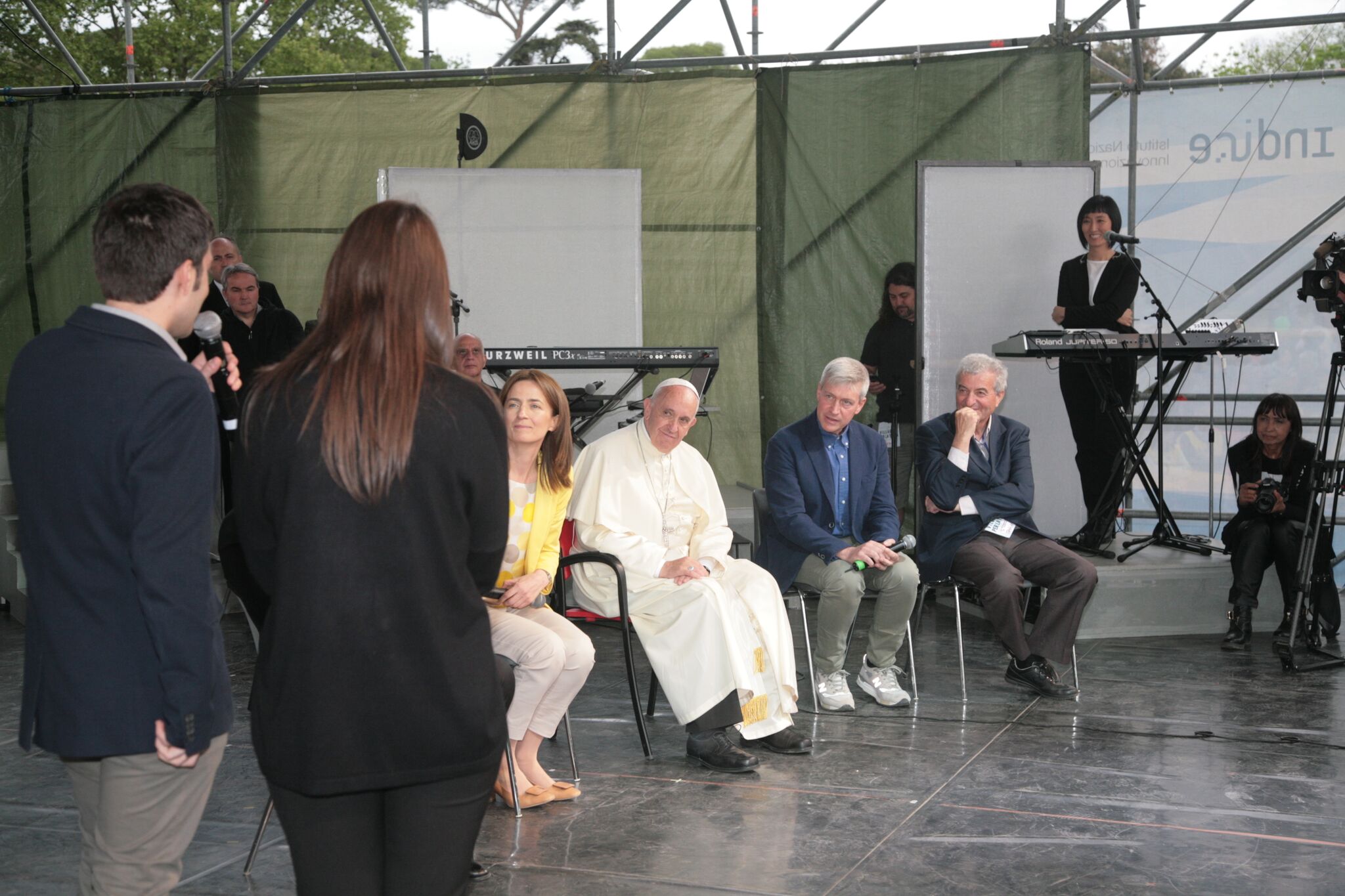 “We felt strongly that we wanted to immerse ourselves in the wounds of our city. We became inolved with Patrizia, a teacher and collaborator of Città Nuova magazine, who was writing a book about the children of prisoners and she had just met the Break the Wall Committee. This committee consists of 7 prisoners who were working to allow children to have a bit more than cold meetings with their fathers in large empty rooms. They wanted to hold celebrations and events that would leave the children with a happy memory of their fathers from whom they were separated. A collaboration of mutual trust was immediately established between us, the inmates on the committee, the teachers and the director. The first meeting with the prisoners took place at Christmas 2014. I was struck when the police ordered us to leave all our personal possessions behind before crossing the prison gate. We took his words to mean our prejudices as well. The detainees couldn’t believe that so many young people would spend a Saturday morning with them. Since the day of that celebration something more than a volunteer programme began: a true and deep relationship with the detainees themselves.As we described what we were doing, one of them remarked that it took a lot of courage. But for us it was a matter of trust in others even though they had committed a crime and of hope that they can change and begin again. We remember the joy of that detainee who was glad to be able to invest his talents in something legal that was not for profit – as were the illegal activities that he had been engaged in before. For him who had no children of his own, working for the children filled him with a sense of satisfaction. Last year we met with the detainees on the committee to plan another event. A thank you note they wrote conveys their joy and enthusiasm over that meeting where we were able to sit down together as if we weren’t inside the walls of a prison. We also had a snack together, yes, because they gave us a warm welcome as you would among old friends. Now they call us ‘the kids on the external committee’. At that meeting they opened up and shared with us the practical effects of inprisonment on their daily life. For example, they said that people in prison aren’t able to bring the background into focus; their eyes need to reacquire the ability to look ahead, having lost the possibility to see the horizon. One of them said goodbye to us in a note; “To the youngsters I say continue to dedicate yourselves to this activity, because often the ones who are inside need only to see that there is someone on the outside who is interested in our problems so they can have a second chance. On my part, I thank you for that.” Last March, for Father’s Day, we organised games and other activities in the mornings and afternoons. Half a day of simple things that allowed their usually divided families to spend some time together, and for their children to cherish fond memories in the area of the so delicate and difficult relationships with their fathers. Some of them were present during the visit Pope Francis made on Holy Thursday last year, and they attrended the Mass and told us how moving it was for them. It has remained a precious memory for them. They often tell us that ‘Prison takes away your feelings along with your freedom’. But perhaps now something has changed: there’s the joy of meeting and working together without any prejudice. In them we’ve discovered the face of Jesus the prisoner, Jesus the marginalised. Every time we’re leaving Rebibbia Prison we feel that we’ve learnt to have the courage to change, to admit our own mistakes and to begin again.We feel God’s personal love and His immense Mercy.”
9 May 2016 | Non categorizzato
In the Year of Mercy, Consecrated Women who belong to the Focolare Movement will hold a week of Spiritual Exercises at their Casa Emmaus Centre in the Focolare town of Loppiano, Italy. “It will be an opportunity for the women to deepen their own charisms in the light of the spirituality of unity,” explains Sister Antonia Moioli, “and in this context to experience the relationship that exists amongst the charisms. Brochure
9 May 2016 | Non categorizzato
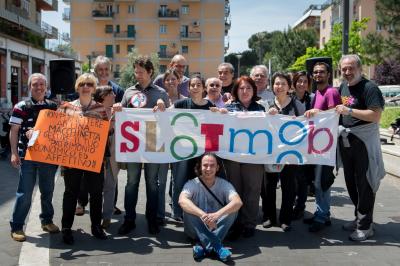
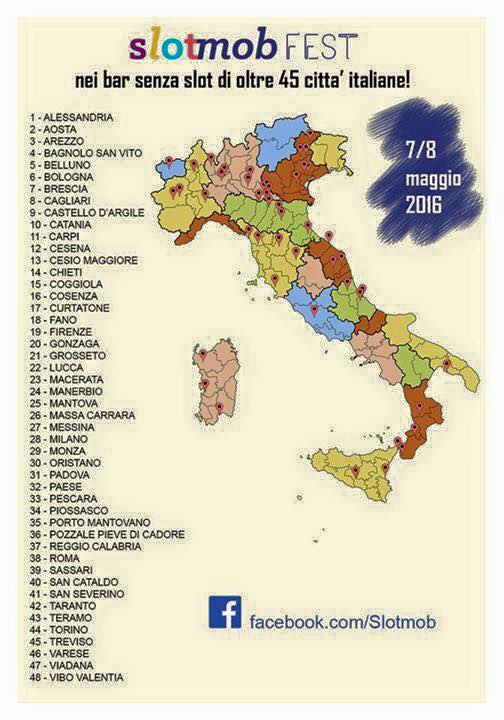 It was the summer of 2013 when an idea came up among some teenagers from Rome of doing something to curb the proliferation of gambling in the city. It was becoming more and more common to see both old and young people glued to the slot machines that are found in many Italian bars. Despite the economic crisis, in recent years the supply and consumption of gambling in Italy has increased dramatically. Italians spend 85 billion a year on the more than 50,000 latest generation slot machines, and the latest estimates are that more than 800,000 people suffer from gambling addiction. We see how the gambling business is devastating our cities, depleting the fabric of society and creating isolation and loneliness. At the helm of this exponential growth of gambling is an economic vision in which the only thing that matters is profit for the multinationals with the consent from a state that also sees it as an opportunity for profit. In front of such a bleak scene the teenagers from Rome wondered what they could do . . . and from there came the idea of rewarding the barkeepers who have chosen not to make gambling available at their establishments. They went to breakfast at their bars en masse as a Slotmob. Initially they proposed doing it in Rome and Milan, but the simple and practical idea fascinated many Italians from north to south of the peninsula. There have been 120 Slotmobs in the past two and a half years, with the participation of over 10,000 people and a network of more than 200 associations. The project has created relationships with very diverse groups, created meeting spaces, awareness and mended the social bond that gambling had disintegrated. “In Rome we concentrated our efforts on an area known as the Italian Las Vegas,” Maria Chiara explains. “In a short time a network was formed with 7 local associations that deal with different aspects of gambling. A sincere relationship was created, not without the usual difficulties of working with one another. That’s how the Let’s Not Gamble Ourselves Project began and now involves several city schools. Talking to teenagers about the power of our choices and of how we can change unjust situations beginning from ourselves, is not in fact very easy. But it actually is important to build a more just world and to involve young people in the change process.” Maria Chiara continues: “The Slotmob experience is making us meet many people, many stories that show us that gambling is an open wound on our society. During one Slotmob a man that had helped us to organise some games with the young people took the microphone and told his own experience as a regular gambler. He said to us: ‘My life is made of bright spots and shadows, and what makes me gamble is the solitude. But today seeing all of you here I no longer feel alone. So I commit to stop gambling. If you see me in front of a slot machine, you’re authorised to reprimand me and remind me of this promise I make today’.” “When we look back,” Maria Chiara concludes, “we see that we’ve had unimagined results. Two laws were blocked that would have reduced the power of mayors in limiting gambling; we got a partial ban on television advertising, and increased media attention on the problem of gambling. We’re aware that we have a long road ahead of us, we’d like advertising for gambling to be completely banned and we want to re-open the discussion on whether gambling should be in the hands of multinationals. For this reason on May 7 we will be on more than 40 public squares across Italy restating our yes to a different economy and rewarding bars that have said no to gambling.”
8 May 2016 | Non categorizzato
“Dear Youth for a United World, I know that you hoped to receive a message from me that would contribute towards the success of United World Week. What subject have I chosen to speak on? There couldn’t be a better one than your very own goal of achieving a united world. Is it reasonable to talk about a united world? Is it possible to imagine a united world? Can we hope that the attention we give and the energy we use will one day play a significant role in reaching such an objective? Or is it a utopia, something unattainable and fantastical, as some people might think? Many signs today point to the fact that the world is heading towards this goal. First of all, there is the conviction that unity is a sign of the times. This means that those who are particularly able and competent in discerning the times we live in confirm that the world is moving towards unity. Some of you may remember that I too have spoken about this very often, examining the religious aspect in particular. Today’s drive towards unity, however, does not only involve the religious field, but also the political world. Apart from the United Nations, where almost all the states of the world are represented, there is the Organization of African Unity in Africa, for example, that is, an association of African states. In Asia there are various associations of states like the Islamic Conference Organization which includes 53 Muslim countries; the Southeast Asia Treaty Organization, and others. In America there is the Organization of American States (of North, Central and South America), and the Latin American Integration Association. In Europe we have the Organization for European Economic Cooperation which also includes the countries of Eastern Europe, and the European Union. In addition, many wise people from different cultures in the world have expressed their thoughts on this subject. I would have liked to quote them but I don’t have access to them here in Brazil, from where I am sending this message. I found some thoughts by the most recent Popes. Besides being authoritative, the Popes are also holy, and so what they say can be of interest to everyone in the world. Pius XII, John XXIII and Paul VI have very similar ideas. In Populorum Progressio, Paul VI says: “Who cannot see the need to reach, by degrees, the establishment of a worldwide authority that can act effectively on the juridical and political levels?” The present Pope expressed himself in these terms at our Genfest ’90: “Truly, this seems to be the perspective emerging from the multiple signs of our times: the perspective of a united world. This is the great expectation of people today, the hope, and at the same time, the great challenge for the future. It is evident we are moving towards unity at an ever increasing speed.” My dear young people, you are striving and working for a united world. What are you doing to reach this goal? You are involved in activities which, although meaningful, might appear very small in comparison with your proposed objective. When you are older, perhaps some of you will be more directly involved in the various organizations which contribute to building a united world. Although all these activities and efforts will be very helpful, I don’t think that any of them will play a determining role in reaching this goal. Instead, the deciding factor in the journey towards unity we are involved in, is that of giving a soul to the world. And this soul is love. You must start a revolution of love around you, in all the countries you are living in. Today it is not enough to organise charity or welfare programs, although through such activities we can give to others out of love. Today we must “be love”, that is, we must feel what the other person is feeling, live the other, the others, and aim at achieving unity in accordance with our spirituality which, like a fire, has already been enkindled in varying measures, thanks to you too, all over the globe. John Paul II also said at the Genfest ‘90: “Be aware – and I say it again – that the path towards a united world, which is the path of peace, is founded on building relationships of solidarity, and solidarity has its roots in charity” (in love). Thus we must build relationships of unity, which have their roots in love. You must live out this love first of all among yourselves, so as to reach the point of living it with many, many others, wherever you go: with the people you meet every day, and with those who determine the course of events, in various institutions, and in big and small organizations around the world… everywhere. Only then will they fulfill the purpose for which they were established; only then will we truly work for a united world. Take courage, then, youth for a united world. You are following the most fascinating and splendid ideal on earth. And you are not alone! You, who are proud to be called Christians, know that by acting in this way, Christ is among you. Each and every one of you, of every belief and creed, knows that unity is strength. Go ahead then, begin or continue with your characteristic enthusiasm and determination. I, all of us, are with you… for the final victory, whenever God wills. But who will gather if no one sows? This is your task now at this time in history. And all things considered, there are promising signs that the goal you are living for is not far-off.” Chiara Lubich
