26 Feb 2016 | Non categorizzato
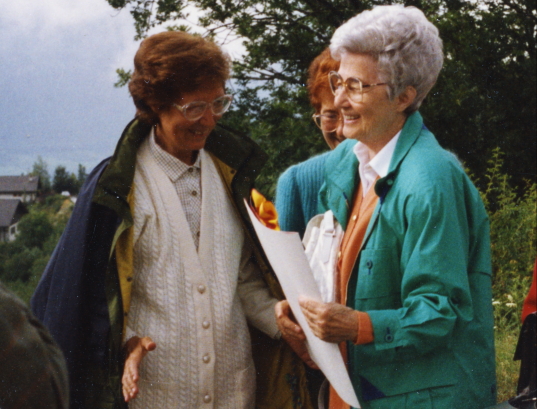
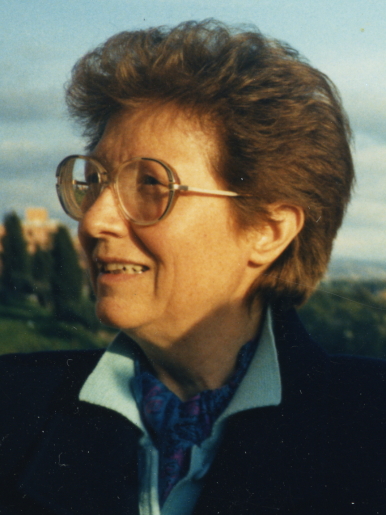 “December 1948. This evening, the whole crème of Catholic society in Rovereto was gathered in my father’s study: the presidents of the Catholic Youth, the Saint Vincent Society, the Daughters of Mary, the Franciscan Third Order and naturally the pastor. Plus, eighteen year-old me was there as the president of Student Youth. The speaker was Valeria Ronchetti. There was something in her that took me by surprise. She talked about God, but in a way that I’ve never heard any other person talk – until then. It wasn’t anything external as with a scholar; Valeria possessed God! She expressed something that urged her from the heart and that overflowed with force . . . I was in a state of shock. It was a war story . . . They were experiences of what she, with her friends, had found in the Gospel, how they had discovered God who is Love. It was a torrent of living water that completely engulfed me. In the candlelight – since the electricity had gone out – a quite serious-looking, elderly gentleman asked her in a rather ironic tone: ‘But aren’t you afraid, Miss, to excite the youth in this way? And if it’s just a flash in the pan?’ Valeria was a really enthusiastic type of person, all fire in her words and in her answers. She jumped to her feet and responded with energy: ‘What? Aren’t you afraid of exciting the youth over sport, music, paintings, mountains – all those beautiful things that pass away? And you’re afraid of exciting them over God who is the only thing that remains?’ Total silence: I was completely taken. The mountains, music, paintings . . . Hadn’t I myself tried all of that? I had tried every beautiful and wholesome thing you could ask for, it had completely occupied me for years even, but none of it had ever really filled me up. I had always been left unsatisfied in my search. Well, then, here was the point . . . this is what I sought: it was God who was the answer to that recent period of dissatisfaction, of loneliness, of the confusion among my friends, of activism, of boredom . . . Everyone left my father’s study smiling, exchanging cheerful goodbyes with Valeria. But I didn’t really think we had actually understood what she was telling us. I asked myself: if she could have what she had just talked about – and it was clear that she did – why can’t I have it too? And at this point I recall a saying attributed to Saint Augustine: ‘If this one and that one, then why not me?’ I extended my hand to Valeria and told her: ‘I want to do what you have done, help me!’ We said goodbye and agreed to meet the next day. And the adventure began!” Source: Città Nuova online
26 Feb 2016 | Non categorizzato, Word of
God’s kingdom is Jesus present among us. We experience this when we love one another. He is almighty and conquers every evil.
This is what the Jews of the time of Jesus were waiting for: the arrival of God’s kingdom. As soon as he began going around the villages and towns, Jesus started to proclaim: ‘The kingdom of God has come near to you’ (Lk 10:9). Then immediately after that: ‘
The kingdom of God has come to you’; ‘the kingdom of God is among you’ (Lk 17:21).
In the person of Jesus, God’s very self had come into the midst of God’s people and, decisively and with strength, taken back control of history so as to lead it to its goal. Jesus’s miracles were a sign of this. In the person of Jesus, God’s very self had come into the midst of God’s people and, decisively and with strength, taken back control of history so as to lead it to its goal. Jesus’s miracles were a sign of this.
In the Gospel passage that this Word of Life comes from, Jesus had just healed a man who was mute, freeing him from the devil who held him prisoner. It was the demonstration that he had come to conquer evil, every evil, and finally establish the kingdom of God. This term ‘the kingdom of God’ was the Jewish people’s way of saying that God acted for the sake of Israel, freeing the people from every form of slavery and evil, guiding them to justice and peace, flooding them with joy and good things. This was the act of that God who Jesus revealed as ‘Father’ – mysterious, loving and full of compassion, aware of the needs and sufferings of each of his children. We too need to hear Jesus’s proclamation: ‘The kingdom of God has come to you.’ Looking around us we often have the impression that the world is dominated by evil, that the violent and the corrupt have the upper hand. At times we feel ourselves at the mercy of hostile forces, of dangerous events stronger than we are. We feel impotent in the face of wars and environmental calamity, of massacres and climate change, of migration and financial and economic crises. Yet this is where Jesus’s proclamation is set. It invites us to believe that he, right now, is conquering evil and is establishing a new world. In the month of March twenty five years ago, speaking to thousands of young people, Chiara Lubich entrusted them with her dream, ‘it is possible to make the world a better place…. almost a single family, as if belonging to just one country.’ Then as now this looked like a utopia. For the dream to become reality, however, she invited them to live mutual love, in the certainty that acting like this they would have had ‘Christ among you, Christ himself, the Almighty, and from him you can hope for all things.’ Yes, it is he who is the kingdom of God. And so, what do we do? Act in such a way as to have him always in our midst. Chiara went on to say: He himself will work with you in your countries because he will, in a certain way, come again into the world wherever you meet, because you will make him present through your mutual love, through your unity. And he will enlighten you about all that is to be done. He will guide you, he will sustain you, he will be your strength, your fervour, your joy. Because of him, the world around you will be converted to living in harmony; every division will be healed…. Love, therefore, love among you and love sown in many corners of the earth among individuals, among groups, among nations; love sown by every means possible so that the invasion of love, of which we have spoken at times in the past, may become a reality and so that, also through your contribution, the civilization of love we all await may begin to take on solid form. You have been called to this, and you will see great things.[1]. Fabio Ciardi [1]. Address to the fourth international youth festival (Genfest) of ‘Youth for a United World,’Paleur sports stadium, Rome, 31 March 1990 in Chiara Lubich, Essential Writings, (London and New York, 2007), 366.
25 Feb 2016 | Non categorizzato
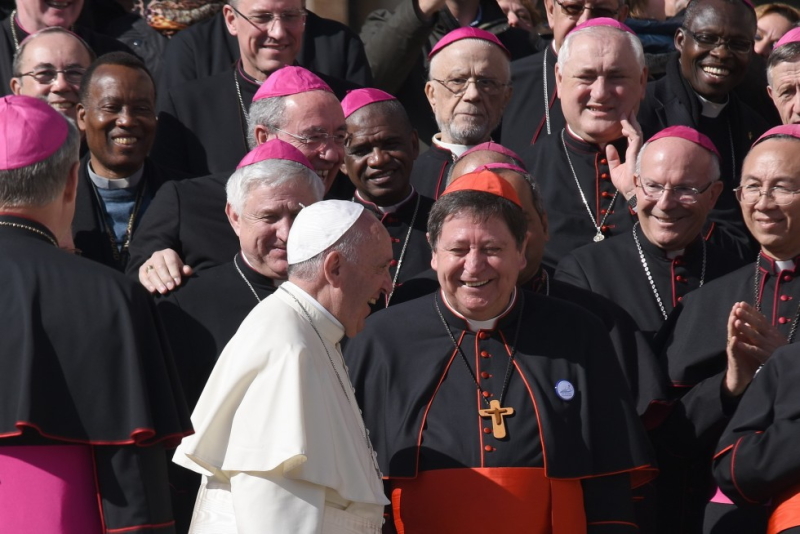 60 Bishop-friends of the Focolare Movement, representing 31 countries (Iraq, Lebanon, Syria, Bénin, Cameroon, Ivory Coast, Ethiopia, Madagascar, Democratic Rep.of Congo, Tanzania, Thailand, India, Pakistan, Brazil, Venezuela, Panama, U.S.A., Uruguay, Austria, Spain, France, Great Britain, Ireland, Italy, Portugal, Czech Rep., Latvia, the Rep.of Moldova, Romania, Ukraine, Hungary.), are presently gathered at Castelgandolfo (22-26 February). The participation at the General Audience held by Pope Francis at St. Peter’s Square has been the central point of this meeting. In his address the Pope urged the Bishops “to always keep alive the charism of unity in the apostolic ministry, in communion with the successor of Peter”. “A synodal Church is a Church that listens, that realizes that listening ‘is more than simply hearing’. It is a mutual listening in which everyone has something to learn.” This type of Church, as defined by the Pope during the ceremony commemorating the 50th anniversary of the institution of the Synod of Bishops, indicates the track to be followed during this conference. The choice of the title “A Church which generates unity” stems from the belief that, at a time marked by tensions and increasing disintegration, the people of God are called to contribute in a vital manner towards building relationships at all levels and in all environments. This has to be lived, first of all, within the Church itself and its source must be in the heart of a merciful God. The core of this theme lies in understanding Jesus’ prayer to the Father for unity (Jn 17), as “ gift, commitment and achievement”. Maria Voce, president of the Focolare Movement and Jesús Morán, co-president spoke about this approach in the light of Chiara Lubich’s charism.
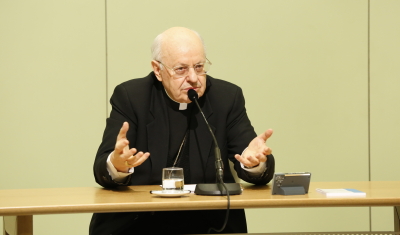
Cardinal Lorenzo Baldisseri
23 Feb 2016 | Non categorizzato
Chiara Lubich lived on this earth from January 22, 1920 until March 14, 2008. On the day she died thousands of people filled the streets of Rocca di Papa where the International Headquarters of the Focolare Movement is located as well as Chiara’s house. They were there to pay their final respects, and even larger crowds attended her funeral at the Basilica of St. Paul’s Outside the Walls. In the years that followed, her anniversary became an occasion to reflect on different aspects of the life, witness and thought of Chiara Lubich: ecumenical dialogue (Trent, 2012); the charism of unity and young people (2012); charism, history, culture (2013); interreligious dialogue (2014); politics for unity (2015). On January 27th of the same year there was the official opening of the Cause of Canonisation. In 2016 the focus will be on peace. Chiara Lubich was a peacemaker. She opened paths of dialogue at many levels and was internationally recognised, like when she was awarded the UNESCO Prize For Peace Education in 1996. Her spirituality, which also translates into the daily practice of universal brotherhood, has inspired hundreds of projects around the world that are aimed at enriching the world with humanity and solidarity through caring for Creation. These projects are all gathered in the United World Project (UWP). https://www.youtube.com/watch?v=TR_MvehHeIk While responding to Pope Francis’s appeal, on behalf of the Movement, Focolare president Maria Voce called for new commitment and effort in favour of peace. “We have to do more,” she said, to move the top politicians, the weapons trade networks and the chief strategists who – as we are beginning to see – can start off from the bottom with the mobilisation of civil society.” Maria Voce also called on the members of the Movement “to join in more with others” with others who are moving in this direction, to promote actions that unmask the causes of war and of the tragedies that afflict so many parts of the earth, with the goal of remedying them, “putting our own forces into play, our willingness and resources.” One event titled Culture of Dialogue, A Way To Build Peace, with a special appearance by the Gen Verde international band, will be held at Castel Gandolfo, Italy, on March 12th. These events will mark the 20th anniversary of the conferment of the UNESCO Prize For Peace Education to Chiara Lubich. The invitation is addressed to ambassadors to the Holy See, civil and Church leaders. Focolare president Maria Voce will give an address, which will be followed by several testimonies regarding dialogue as a way to build peace. On March 14th a Mass will be celebrated by Cardinal João Braz De Aviz at the Shrine of Our Lady of the Divine Love, while other events to remember Chiara are being held throughout the world.
23 Feb 2016 | Non categorizzato
22 Feb 2016 | Non categorizzato
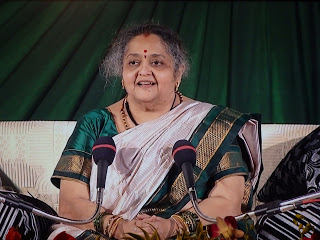
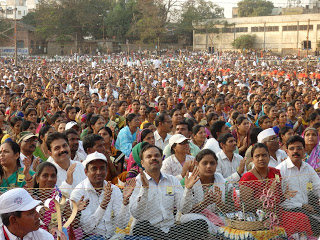 The city of Kolhapur hosted the meeting with some 50 thousand members and sympathisers of the Swadhyaya Movement which was founded by the Hindu reformer Pandurang Shastri Athawale and is currently guided by his daughter, Didi. A harmonious blend of ideals and intentions was born from the friendship between Didi and Chiara Lubich that grew over the years and continued with the election of Maria Voce Focolare president. Following the meetings between the women who succeeded the founders of those two movements, Maria Voce, Jesús Morán and the delegation from the Movement in Italy were invited to take part in the closing ceremony of a pilgrimage with some ten thousand couples from the Swadhyay Parivar Movement. The couples, who have been involved in the Hindu renewal movement, spent a week in contact with other families from the Kolhapur region sharing with them the ideals and spiritual life of their movement and paying a visit to the important temple of that region. At the ceremony, which was held on a large plaza in the centre of the city, Didi Talwalkar told everyone about her friendship with Chiara Lubich, presenting Chiara as a Catholic leader and foundress of the Focolare Movement. Following a projection of photos showing the deep relationship between the two women, Maria Voce was asked to offer a greeting and the blessing of Chiara in the spirit of dialogue and shared membership in one human family as is written in the holy books of Hinduism like the vasudhavaiva kutumbakan. It was a very intense spiritual and emotional moment which strengthened the bond between the leaders of the two movements. The journey of these years has been a new experience of dialogue among the different relgions of India and Christians in the light of the spirituality of unity. It has been an experience of deep brotherhood at a living, but also intellectual level with valuable social projects. It continues to open paths of dialogue and knowledge of each other’s faith, in the light of the charism of Chiara Lubich, seen as a woman who knew how to read the signs of the times and who knew how to offer the world a spirit that could join everyone in a journey towards the Truth. The dialogue with Maria Voce and Jesús Morán during the February 13th telephone link-up ended with a question: “In the vast Hindu world where Christians are barely 2% of a population that exstends beyond one billion, what kind of impression does that leave you with? The Focolare president answered: “[It leaves me with the impression] of a small but alive Church, very alive.” “India is a large gift,” the co-president added. “They are very in favour of pluralism, and live it in an inclusive manner. They make space for each person to express their faith explicitly. This is a gift for the West, which lives pluralism in an almost excluding manner. Another thing is silence. Silence is necessary for every type of dialogue. Without interior and interpersonal silence, dialogue doesn’t have stand a chance.” Maria Voce concluded: “And this silence expresses the religious soul of the Indian people. As they said themselves: the gift that they can give the West is to make it rediscover the sense of God, sensing, feeling God.” See also: In India: a dialogue of hearts and minds
