![Unity, the leaven of society]()
21 Feb 2016 | Non categorizzato
 “The lines of John’s Gospel converge in the sentence which for quite some time has had deep and infinite meaning for me: ‘. . . may all be one. As you, Father, are in me and I am in you, may they also be in us, so that the world may believe that you have sent me’ (see Jn 17:21). This is how we are to live. [. . .] the Unity of the Church, the unity of those that find themselves beyond the confines of our Roman Catholic Church, the unity amongst all those who acknowledge faith in the one God, the Living One, and therefore with Jews and Muslims. That unity between Church and society in which the one does not find itself beside the other in a parallel sense or in an oppositional way, but Church and society enter into a reciprocal relationship, highlighting the fact that the unity which God gives is the leaven of society, the leaven that makes man free. It is the unity that makes us truly free, because we can only be ourselves in the fullest sense only where God has the right to be God in the fullest sense and therefore can give us everything He wishes to give us. And He doesn’t wish to give us anything less than His own interior mystery: Trinitarian unity. [. . .] But this is not a mere programme, because you never get very far with programmes. It must above all become life [. . .] I also have to begin to live this unity. And for this reason I trust in the fact that all of you, dear brothers and sisters, will help me, and that we can do this together, in reciprocity.” Bishop Klaus Hemmerle Source: W. Hagemann, Klaus Hemmerle innamorato della Parola di Dio, (Rome: Città Nuova, Rome, 2013) p. 337-338.
![Unity, the leaven of society]()
20 Feb 2016 | Non categorizzato
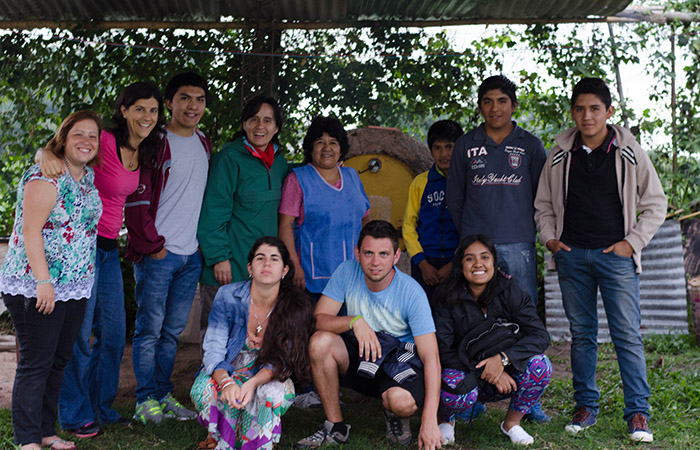 In El Espinal, a town in the province of Salta, Northern Argentina, 35 young people aged 18 to 30 from Argentina and Paraguay spent time together from 3 to 11 January, for a low-cost holiday but of “elevated levels of unity,” as they called it. In fact, also the Pastoral for Tourism –Programme for the Development of Solidal Tourism of that region also signed up for this project. This concerned firstly, living with the community and youth of the place, sharing their work in the tobacco fields with the beehive breeders and weavers, and also the typical difficulties of daily living in the countryside: cold water, lack of electricity, the mud that seems to seep through everywhere… The first point was: leaving behind commodities and prejudice. The Golden Rule “Do to others what you would like others to do to you” expressed in a nutshell what the youth of the Focolare wanted to fulfill in that community. But how were they supposed to accomplish it? It was first of all through an infinity of simple acts of love, and then with a cinema forum, meetings, an excursion, moments of relaxation, eating, dancing and singing together.… But the message was conveyed also through theatre plays that showed how El Espinal would be if everyone lived this simple rule. And who knows why this was so – perhaps for that reality “give and you shall be given” which always comes true – a competition of love triggered, where all gave their best. Maga recounts: “We will never forget how Pilar, a weaver, brought the best set of cutlery she had, to offer us a savoury soup, not to mention the ladies who set their chores aside to come and bake bread with us, and the enthusiasm of the boys and girls who fried doughnuts until late t night to make us feel at home. Then there were those who hosted us in their homes, giving us all they had to make us comfortable. There were so many new faces: and in each was Jesus who came towards us every time.” But the so-called holiday also had another objective, and this was to engage in a project to develop the Tourism Pastoral, which consisted in helping the population to see the touristic potential of their town. This was the main aim behind the organisation of activities that could later be transformed into concrete proposals for future visitors: trekking along the river, horseback riding, tractor excursions, and sight-seeing in the enchanting and hidden places of El Espinal.
 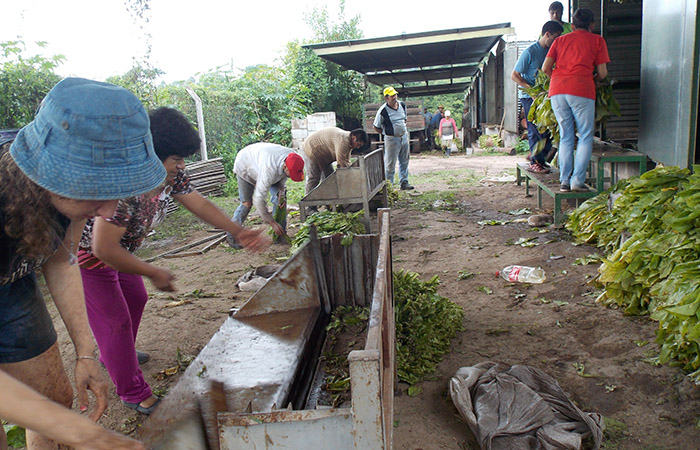 Among the breathtaking landscapes, sudden climate changes, the sun, animals and insects – at times not valued – everyone felt they could “feel God’s presence and the embrace of his creation” and also the relationships established among the youth, which were really enriching. In short, they spent a different type of holiday in the beautiful province of Salta, while adhering to Pope Francis’ invitation to live the Gospel in the outskirts. Before returning to their cities, they expressed their impressions: “I learnt a lot of things: to be happy with the little we have and not to complain, and live the golden rule. I felt loved and welcomed. All has left a deep mark in me. It was the best way to start the year. Thanks to you all, I have come closer to God.” Other impressions: “We shall leave with our hearts full of stories, experiences, their values, life, light and joy. I again discovered that if we live together for the others, everything else will come as an extra enrichment.” But also the local youth expressed themselves: “You are the best friends Jesus has given me.” “You have filled us with smiles, joy and peace.” Dominga wrote a prayer which she shared with us: “Thank you Jesus for being here and for giving me so many brothers as a gift. I discovered You in each one of them. Lord, teach us to dream big, and of beautiful things that expand our hearts.”

19 Feb 2016 | Non categorizzato
Live streaming: http://www.ustream.tv/channel/feb-2013-celebration
 Fifty years ago, on February 22, 1966, a group of five men and women focolarini arrived in Manila. They were sent by Chiara Lubich in response to the request of Cardinal Rufino Santos, then Archbishop of Manila. Guido Mirti, Giovanna Vernuccio, Silvio Daneo, Ednara Tabosa and Magdalena Brandao were the first protagonists in the adventure of the Focolare in Asia. From Manila, they travelled to Japan, Korea, Hong Kong, Taiwan, India, Pakistan, Thailand, Cambodia, Vietnam … as far as Australia. The Focolare Movement spread widely throughout Asia fostering in all those who came into contact with it the spirit of unity that is its characteristic, in spite of the enormous diversity of cultures, religions and languages present in the region. “In 2016, we are planning a series of events to thank God for these fifty years of abundant graces, fruit of the meeting of the charism of unity,” write Ding Dalisay and Carlo Maria Gentile, from the Philippines. “On February 20 and 21, the whole family of Chiara present in this part of the world will gather together in Mariapolis Peace, in Tagaytay (Philippines). The first day will be ‘a homecoming’, back to our family; while on the second day, there will be a feast of thanksgiving, with artistic and cultural presentations, looking back at the story of these fifty years, to encourage us to go on, with new fervor, and continue offering our contribution towards the unity of the human family. On that occasion we will present the centers that have come up in the ‘little city’ Mariapolis Peace, at the service of the Movement throughout Asia: the School of the Oriental Religions (SOR), the Mariapolis Center, the Schools for the youth, the Centre for Priests, the House of the Seminarians, the Centers for Men Religious and for Women Religious, and the Bukas Palad and Pag-asa Social Centers. Several delegations are expected, from Korea, Japan, China, Indonesia, Thailand, Vietnam, Myanmar, India, Pakistan and Australia. Among the participants will be some among the first members of the Movement in the Philippines who have now permanently moved to the USA, thereby enriching the Focolare community in that country. The guests of honor will be the protagonists of those first times of the Focolare in Asia, who are now residing in Italy, Guatemala and Malta.” “On March 14, death anniversary of Chiara Lubich (January 22, 1920 – March 14, 2008),” continue Ding and Carlo Maria, “a Symposium will be held in Manila, on the theme: Charism of unity, a timeless legacy. This is especially intended for ecclesiastical and civil personalities so that together we may be able to reflect on the contribution that the charism of Chiara Lubich has given to the life of individuals, to communities, to the Church and society.” “In the various Mariapolis that will take place in the course of the year in the Philippines (in Davao, Cebu and Manila), they explain, one whole day will be dedicated to giving as many people as possible the opportunity to know the vitality that the spirituality of unity has brought to Asia in the fifty years of its presence here.” “Asia is also home to the great religions: Buddhism, Hinduism, Islam … For this reason, in 2017, in Thailand,” they conclude, “the 50th anniversary of the Focolare Movement will feature an interreligious event: it will be an invitation to all those who wish to join us in this walk towards the unity of the human family.”
18 Feb 2016 | Non categorizzato
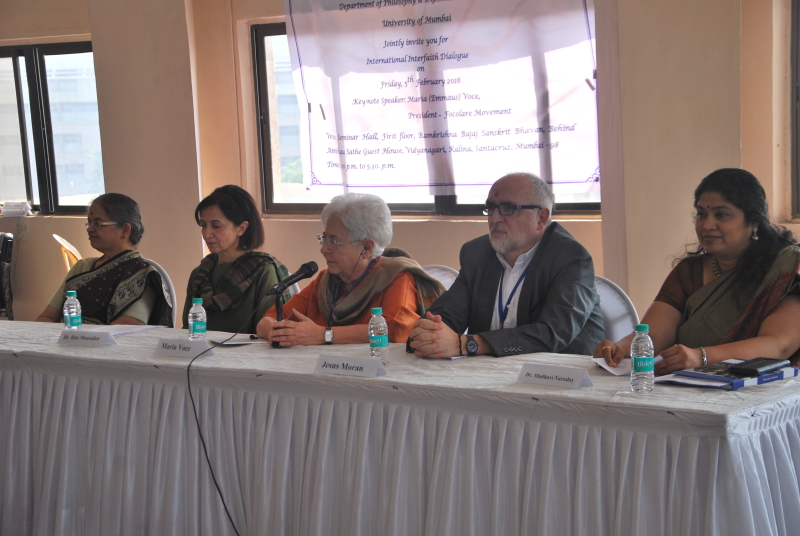
© CSC Audiovisivi – All rights reserved
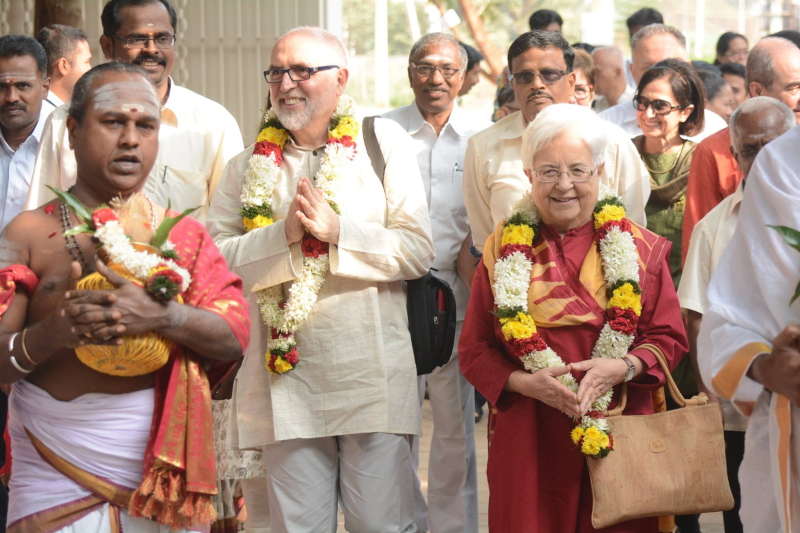
© CSC Audiovisivi – All rights reserved
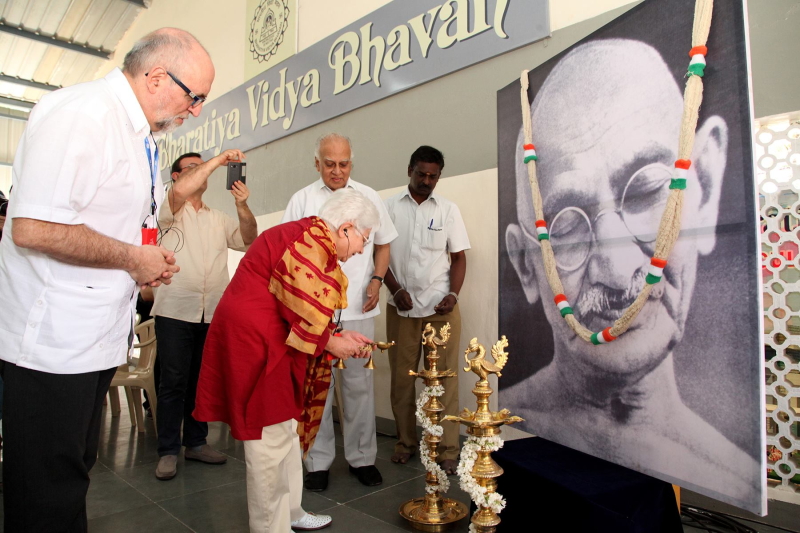
© CSC Audiovisivi – All rights reserved
© CSC Audiovisivi – All rights reserved
