![Silvana Veronesi: in the beginnings with Chiara Lubich]()
2 Dec 2015 | Non categorizzato
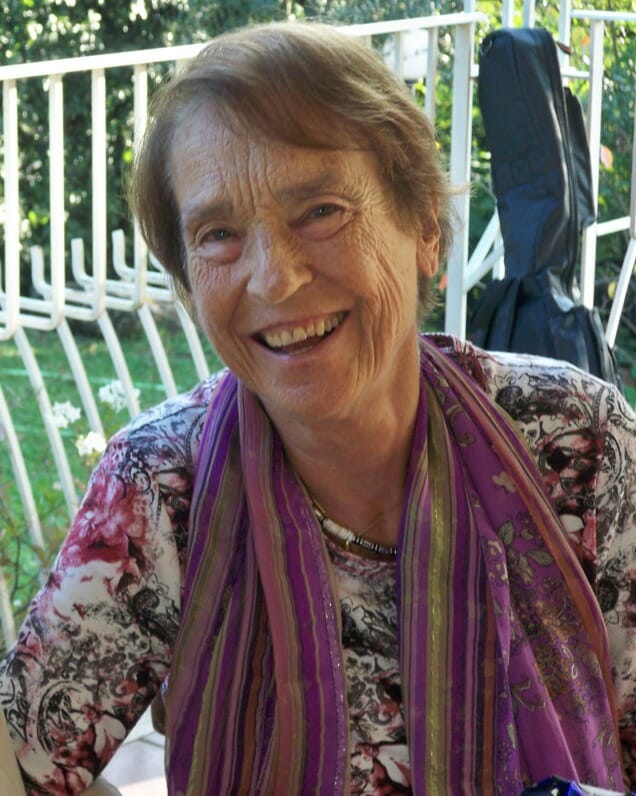 Silvana Veronesi has passed away at the age of 86. She was one of the close collaborators of the founder of the Focolare, Chiara Lubich. The news of her passing was communicated by Focolare president, Maria Voce, to the worldwide Focolare Movement: “We accompany her with the certainty that there will much rejoicing in heaven.” Her first meeting with Chiara Lubich was in 1945. She was only 16 years old and in search for something great to live for. From that moment, fascinated by the spirituality of unity, she entered the initial group that gave life to the Focolare Movement. In 1949, she moved to Florence, Italy, to attend Medical School. With great simplicity she bore witness to the novelty of her new life to young men and women, giving rise to the first Focolare community in Tuscany. She then spent some time in Turin and Milan.
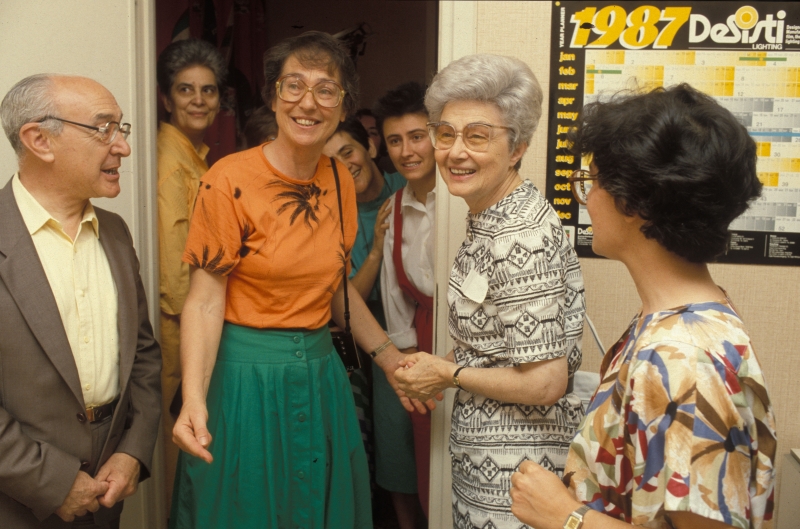
Silvana Veronesi with Chiara Lubich, International Gen Centre, Rome 1987
© CSC Audiovisivi
30 Nov 2015 | Non categorizzato
© CSC Audiovisivi – R. Meier
© CSC Audiovisivi – R. Meier
29 Nov 2015 | Non categorizzato
“We often have the tendency, due to the language we use, to have an inexact notion of what happened in Nazareth when the angel relayed to the Holy Virgin that the Word had become flesh. An anthropomorphic mentality makes us think of God as a distant person up there in the heavens, who sends his Son to a far-off place to become man. It is not so. God is everywhere. He is in heaven, on earth and in every place. God was thus in the little room of the Virgin in Nazareth, when the angel appeared to her. He was, however, infinitely distant from mankind due to the abyss of sin and because of their natural smallness. The instant in which the Virgin pronounced her ‘fiat,’ God espoused human nature in her pure womb, espoused the creature, and undertook an unimaginable act of bridging the divinity withthe universe. Since then, he is always in our midst. That infinite distance which our imagination expressed, almost placing God far from us, above in the heavens, has been negated: he is on earth, he is our co-citizen.” Pasquale Foresi, Theology of sociality (Teologia della socialità), Città Nuova 1963, p. 66
27 Nov 2015 | Non categorizzato, Word of
We are offered the possibility of meeting Jesus in our daily lives and among us. If we take it, we will experience a living Christmas. The words are spoken to me. The Lord is coming and I must be ready to welcome him. Every day I pray, ‘Come, Lord Jesus.’ And he replies, ‘Yes, I am coming soon’ (see Rev. 22:17, 20). He is standing at the door and knocking. He asks to come in (see Rev. 3:20). I cannot leave him outside my life. The invitation to welcome the Lord came from John the Baptist. It was directed to the Jewish people of his time. They were asked to confess their sins and be converted, changing their lives. He was certain that the coming of the Messiah was about to happen. Would the people, who had been waiting for him for centuries, recognize him, listen his words and follow him? John knew that to welcome him they had to get ready, hence his pressing invitation: ‘Prepare the way of the Lord, make his paths straight.’ These words are spoken to me because Jesus continues to come every day. Every day he knocks at my door and for me too, as for the Jews at the time of the Baptist, it is not easy to recognize him. So, contrary to what was commonly expected, he presented himself as a humble carpenter from Nazareth, an unimportant village. Today he presents himself under the guise of a migrant, someone with no work, an employer, a schoolmate, relatives, even of people who don’t always seem to shine with the face of the Lord, indeed where his face seems hidden. His subtle voice, which invites us to forgive, to give trust and friendship, to refuse to give in to choices against the Gospel, is often drowned out by other voices that incite us to hate, get our own back, become corrupt. This is the basis for the metaphor of tortuous and impenetrable paths that recall the obstacles hindering God’s coming into our everyday lives. It’s almost pointless to list the baseness, the egoism, the sin that dwells in our hearts and makes us blind to his presence and deaf to his voice. Each one of us, if we are sincere, knows what are the personal barriers obstructing our meeting with Jesus, with his word, with the persons with whom he identifies himself. Hence the invitation in the Word of Life that today is spoken directly to me: ‘Prepare the way of the Lord, make his paths straight.’ Correcting that judgement which makes me condemn the other person, ceasing to speak to them, so that instead I come to understand, to love and put myself at the other’s service. Correcting a twisted way of behaving that makes me betray a friendship, makes me violent, cheating civil law, and instead letting myself be converted into a person who is ready even to put up with injustice so as to be able to salvage a relationship, someone willing to pay in person the cost of encouraging fraternity in my neighbourhood. It is hard and a strong word, the one we have this month. But it is also a liberating word, one that can change my life, open me to meeting Jesus, so that he may come to live in me and it be he who acts and loves in me. This word, if it is lived, can do even more. It can give birth to Jesus among us, in the Christian community, in our families, in the groups where we are active. John spoke it to the whole of the people. And God came ‘and lived among us’ (Jn 1:14), in the midst of his people. For this reason we want, by helping one another to straighten the paths of our relationships, to wipe out any kind of distortion there may be between us, and so live out the mercy we are invited to have this year. Like this we will become, together, the home, the family, that is capable of welcoming God. It will be Christmas. Jesus will find an open highway and will be able to stay in our midst. Fabio Ciardi
![Silvana Veronesi: in the beginnings with Chiara Lubich]()
26 Nov 2015 | Non categorizzato
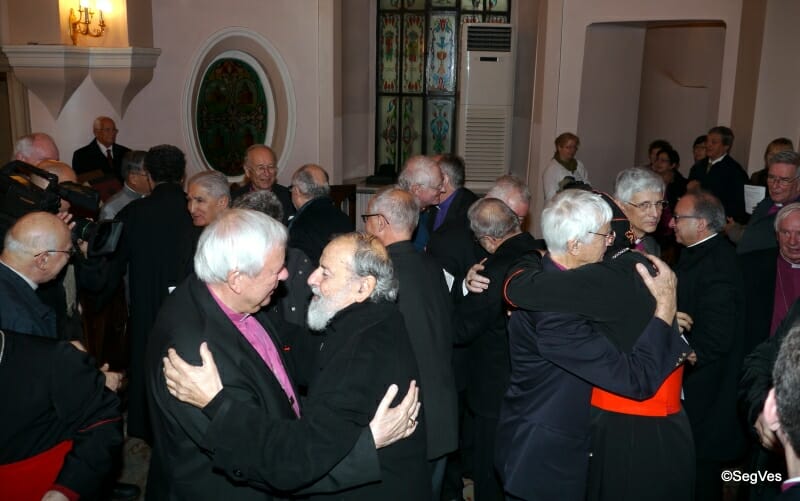
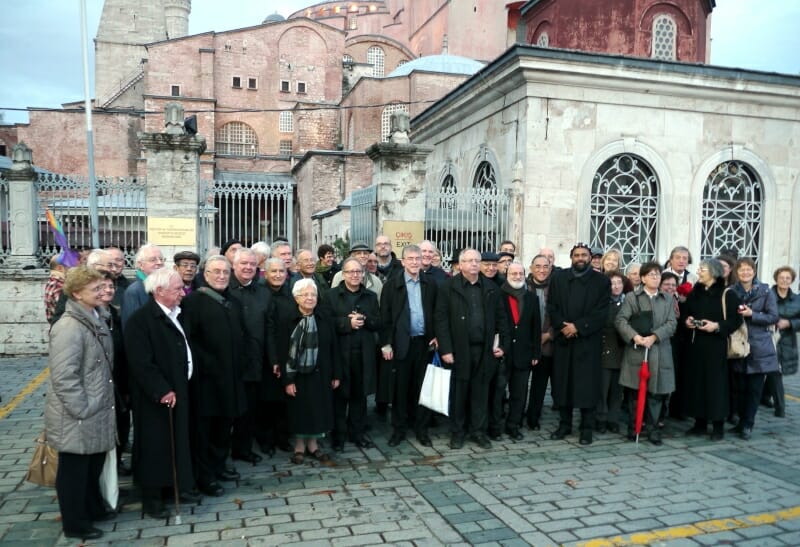
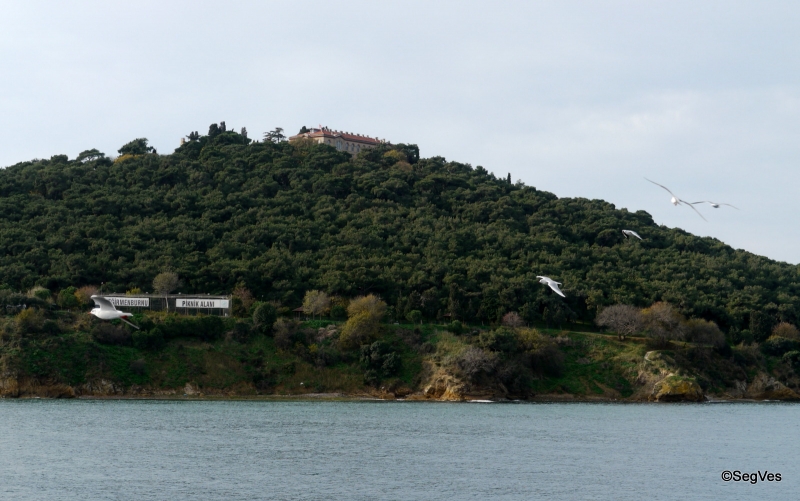 November 25th, 9 am. A light breeze blows over Heybeli Island, Halki, a small oasis of peace in the Marmara Sea near Istanbul. On the top of the island’s Hill of Hope stands the Orthodox Monastery Aya Triada (Most Holy Trinity) that is hosting this year’s 34th Meeting of Bishops from different Churches, promoted by the Focolare Movement. Founded in the 9th century, the Monastery was destroyed several times by earthquake and fire. The present construction from the 19th century is the site of a prestigious Greek Orthodox Theological Academy that contains a library with valuable ancient manuscripts and a total of 120,000 books. It was quite an unusual scene at the Monastery’s entrance: 35 bishops from 16 Churches and 19 countries in fraternal dialogue. The president and co-president of the Focolare Movement were also among them along with other members of the meeting. Ecumenical Patriarch Bartholomew I comes to the door: “I am happy at being together with you,” he says with simplicity and leads them into the Monastery. He would present the opening address of the Meeting: “Together for the common cause: the unity of the disciples of Christ in the diversity of gifts.”
 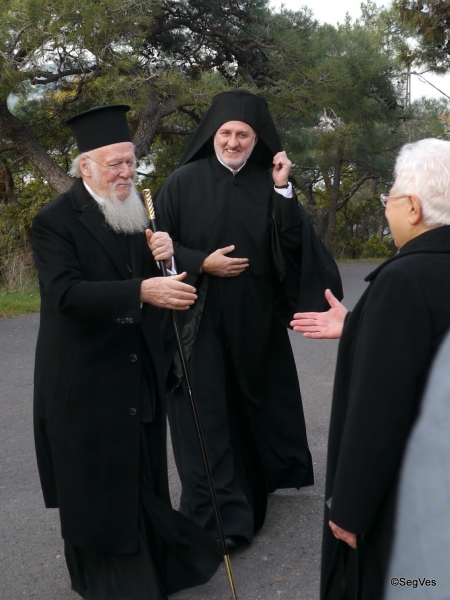 Cardinal Francis Kriengsak from Bangkok greets the Patriarch on behalf of all and thanks him for having wished to host this year’s Meeting. “Here we are in the heart of Orthodoxy with its ancient Churches and countless martyrs” he says as he introduces the members of the Meeting. The Anglican Primate, Archbishop of Canterbury, Justin Welby sent a message to the gathering: “I continue to consider the Focolare Movement as one of the beacons of hope in our divided world. With its commitment to unity through mutual respect and dialogue, it offers a characteristic path towards reconciliation beyond differences and enmities.” Bartholomew I recalls his recent visit to Loppiano for the honorary doctorate that was conferred upon him by Sophia University Institute. “An encounter,” he says “in which we experienced sincere love, without any ifs or buts. Then he speaks of the Meeting. “How can we manage to harmonise the diversity of charisms of our Churches today with the unity of the disciples of Christ and be typos (model) of unity for the world?” he asks. “Too many times the differences appear to be foundational elements and not charism and this is what we savour every day in the face of the difficulties which the human race lives out as exclusiveness and conflict”
 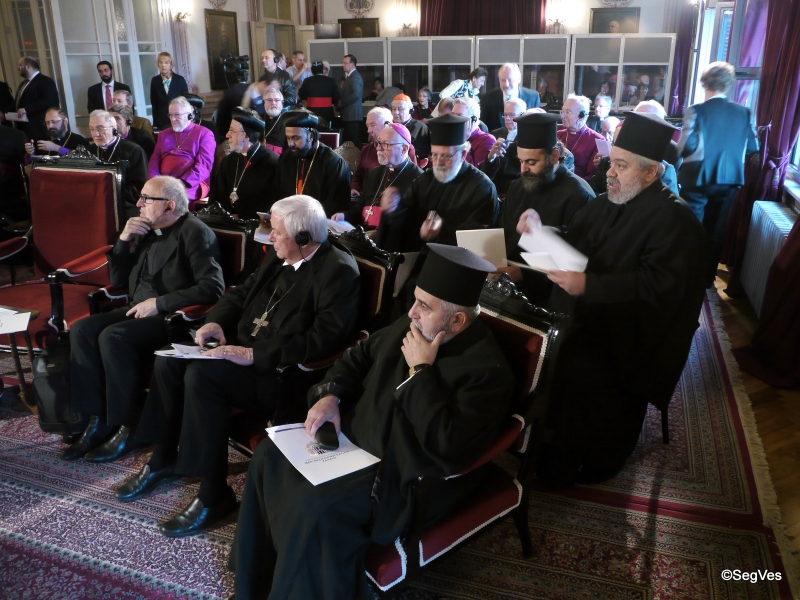 On a global landscape where discouragement, uncertainty and indifference prevail, especially in the recent days, The Patriarch looked to hope. As Christians, he emphasised: “we have to quickly recover the sense of unity as a recapitulation of the gifts [charisms],” the “wealth of the differences. . . to be offered and, in turn, received.” “The unity of the world, the respect for God’s Creation the gift of his love,” he explained, “will be given by the ability to welcome the experience of the other as an enrichment for all, as a path of unity, of respect and of reciprocity,” “free from every type of ideological, political and economic conditioning.” “I arrived here even more happy because I found you waiting for me. . . like a family,” said the Patriarch as he posed a challenge to the bishops and people entrusted to them: if as Christians we will have this experience, “we will truly be ‘salt of the earth’ and the world will begin a profound metamorphosis.” Compiled by: Adriana Avellaneda
