4 Sep 2015 | Non categorizzato
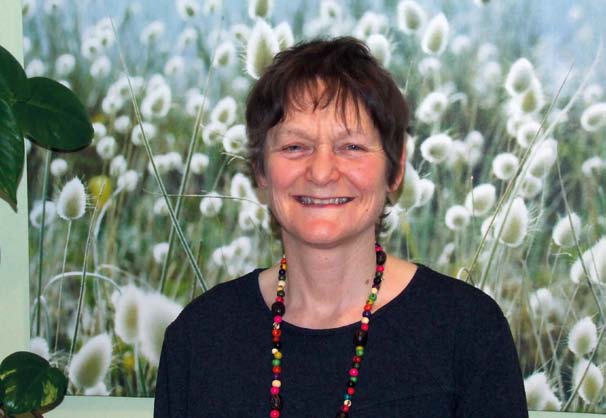
“Aboard the bus to the hospital in Harefield, Great Britan, where I was studying nursing, I was impressed by one my colleague’s way of acting. I was very shy then, but she started to make friends with me, and I was impressed by that. She invited me to breakfast, in spite of having some of her ‘wilder’ friends nearby. She didn’t make a distinction. I was trying to be a Christian but wasn’t very happy. I would go to church on Sundays more to salve my conscience than anything else. But she spoke of joyful faith, genuine faith that she shared with other young women like herself, faith illuminated by love. One day she arrived at the hospital with a guitar to celebrate with one of the nurses who was notorious for not getting on with people. I said to myself, if this woman is able to do so much, perhaps it would be worthwhile to find out what’s behind behind it. She told me about the spirituality of unity that inspired her. I began to visit the people at the focolare and every time I found new ways to give of myself: sharing some clothing or food with those in need, offering to do something practical like the washing, etc. These small gesture, which were the fruit of the Gospel that I had also begun to put into practice, made me feel much joy inside me. Even though I still didn’t know what the Focolare Movement was, I knew it was the place I had to be. I looked at the radical choice the focolarinas and thought I would love to have the courage to be like them. But they’re Catholics, and I’m Anglican. . . I felt this voice inside me saying, ‘But you can, you know. Why don’t you just say your yes to me?’ I felt like taking a step off a cliff by saying my yes to God. It was so unlike me, but I was happy to want to follow him forever. I became a nurse specialised in midwifery, because of a deep desire to bring a change in society. I thought that with this specialization I could go abroad, and I had already put some money aside for the trip. When I entered the focolare I gave that money to the poor and began my formation to become a focolarina. My first destination was the focolare in Leeds for five years. I worked in an area of the city with deep rooted social problems. I had came from a middle class backgound and had a romanticised idea of what poverty was. When one particular girl came to the clinic, she always had the same clothes on and her tights were full of holes. It was important for me to build a relationship with her, to get to know her so that she could tell me about her situation, where she lived, and so on. One day I visited her home. Her partner was standing in the doorway, very verbally aggressive towards me. I was so shocked by the man and the state of the house, that I could hardly talk. Then I noticed a big tank of fish on the wall, so I started to talk about the fish and the tension melted. On my next visit I brought along some dresses, and the third time I found her sitting on the window sill ready to show off her new clothes. I now live in the focolare at Welwyn Garden City and continue to work for the National Health Service (NHS). In recent years there was upheaval in the NHS and it’s not so easy to bring that change that inspired me at the start of my career. But even in this upheaval I strive to do everything as an act of love towards God and my brothers and sisters. Living in community with people who have made the same choice in life is an important opportunity also for my job; but also to grow together in the unity amongst us and in our faith in God-Love, giving ourselves to others whether they are Catholic or Anglican.”

1 Sep 2015 | Non categorizzato
Climatic change is one of the major moral challenges of our times. Several religious leaders unite in order to support a worldwide petition in favour of 100% of renewable energy by 2050. Religions for Peace is the world’s largest and most representative multi-religious coalition-advances common action among the world’s religious communities for peace. Religions for Peace works to transform violent conflict, advance human development, promote just and harmonious societies, and protect the earth. The global Religions for Peace network comprises a World Council of senior religious leaders from all regions of the world; six regional inter-religious bodies and more than ninety-two national ones; and the Global Women of Faith Network and Global Interfaith Youth Network. The President of the Focolare Movement, Maria Voce, who is one of the co-presidents of Religions for Peace, is aware of the moral responsibility necessary for the care of our planet. She is personally supporting the petition addressed to heads of states and invites all the interested to join the campaign. To sign the online petition visit http://faithsforearth.org and select your country.

31 Aug 2015 | Non categorizzato
It was a decidedly ecumenical move on the part of Pope Francis to dedicate a “World Day of Prayer for the Care of Creation.” He not only identified the current ecological crisis as one of the most pressing urgencies of our time but also wanted to highlight the urgent need to act no longer fragmented and in isolation but “together” – not only in the field of ecology but in all the challenges facing humankind. The idea of a World Day of Prayer had been suggested to him by Orthodox Metropolitan John of Pergamom who spoke at the public presentation of the Encyclical Letter Laudato sì on June 18th. To underscore the added value of a prayer that is made by agreement (Mt. 18:19), in the letter that institutes the Day of Prayer (June 8, 2015) the Pope exhorts: “Sharing the concern of my beloved brother, Ecumenical Patriarch Bartholomew, for the future of creation, and at the suggestion of his representative, Metropolitan John of Pergamum . . .” As if to say that it was not important who had the idea; we can always learn from each other! And to reiterate the idea, towards the end of the document, the Pope urges Cardinal Koch, president of the Pontifical Council for the Promotion of Christians Unity, “to ensure that it is coordinated with similar initiatives undertaken by the World Council of Churches.” The World Council of Churches will dedicate “the period between September 1st (the first day of the Orthodox Liturgical Year) to October 4th (feast day of Saint Francis of Assisi on the Roman Catholic liturgical calendar) – to a Time for Creation with a variety of initiatives in favour of the environment and its connection to justice and peace. The Pope’s choice of September 1st for the yearly celebration of the World Day is quite significant, since it is the same as that of the Orthodox brothers and sisters and the day that begins the Time for Creation that was established by the World Council of Churches. Also significant is his wish that other churches and ecclesial communities join in, so that it might be a fruitful opportunity for giving witness “to our growing communion.” The annual World Day of Prayer for the Care of Creation will offer individual believers and communities “the precious opportunity to reaffirm their personal vocation to be stewards of creation, to thank God for the wonderful handiwork which he has entrusted to our care,” and precisely because it is destined to involve Christians from various denominations speaking with one voice, it will be a further concrete and common message from Christians to the world. A passion for the protection of Creation has also characterised the Focolare’s commitment with its international network EcoOne that offers a space for anyone working in the field of the environment to share ideas and concrete projects. The Movement’s involvement in the field of ecumenism is also significant, especially in places where there is a high concentration from people of different denominations. For the Focolare the World Day of Prayer for the Protection of Creation represents a magnificent providential world event that will join its members in prayer, beseeching from God the preservation of the Home that welcomes the great human family. But it will also join together people of good will from all backgrounds and beliefs in coming up with new strategies and answers for the environment and for a more united world.
30 Aug 2015 | Non categorizzato
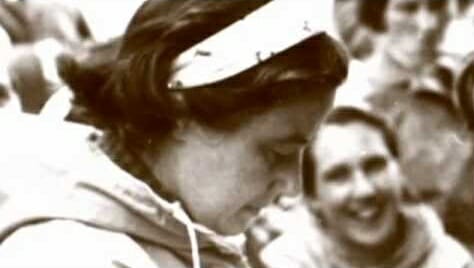
“Seeing what the Holy Spirit has done with us and with many other spiritual and social “enterprises” that are at work the Church today, I cannot but hope that He will continue to act now and always with the same generosity and magnanimity. And this holds true not only for brand new works that will arise from his love, but also for the development of those that already exist, like our own. Meanwhile, I dream that the atmosphere in our Church will be more suited to her identity as the Bride of Christ; a Church which can be seen by the world as being more beautiful, more one, more holy, more charismatic, more akin to Christ her Spouse. I dream of her being a beacon for humanity. And I dream of seeing in her a holiness of the people, never seen before. I dream that the lived siblinghood, that is gaining momentum today in the consciences of millions of people, will be practised more widely across the globe, so that in the third millennium it will be a general, universal reality. Consequently, I dream of fewer wars and conflicts, less hunger, and the reduction of the thousand other evils in the world. I dream of an ever more intense dialogue of love among the Churches so that the formation of the one Church is seen to be close at hand. I dream of a more living and active dialogue among people of the most varied religions linked to one another by love, by “the Golden Rule” present in all their sacred texts. I dream of greater encounter and mutual enrichment among the various cultures in the world, so that they may give rise to a world culture that highlights those values which have always been the true wealth of individual peoples, and I dream that these values will be seen by all as global wisdom. I dream that the Holy Spirit will continue to enrich the Churches and strengthen the “seeds of the Word” beyond them, so that the world may continually receive new light, life, and works which He alone can is able to give. So that ever-greater numbers of men and women may set out towards straight paths, converging on their Creator, and putting their hearts and souls at his disposal. I dream of Gospel-based relationships not only among individuals, but also among groups, movements, religious and lay associations; among peoples and among States, so that it becomes logical to love other people’s countries as our own; and logical to tend towards a universal communion of goods, at least as a goal to reach. (…) In a word, I dream of already witnessing the new heavens and new earth, as far as this is possible here on earth. I am dreaming of many things, but we have a millennium to see them come true.” Chiara Lubich Extract from: “Attualità. Leggere il proprio tempo”, Città Nuova, Rome 2013, pp. 102-103
29 Aug 2015 | Non categorizzato
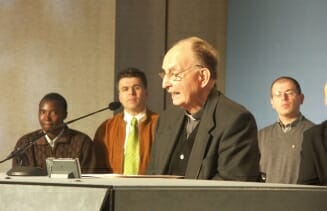
Pasquale Foresi commented many times on the theology of the charism of Chiara Lubich, underscoring its novelty for both living and thinking. Between 1990 and 1998 he was often called upon to answer questions that were posed by members of the Movement from a variety of vocational, cultural and geographical backgrounds. On one of these occasions he was asked for advice on how to live humility[1]. “Being humble simply means accepting to be who you are,” he said. “And all of us are sinners. If anyone says ‘I’m not a sinner,’ he lies; so all of us can have humility all the time. Saint Benedict’s outline seems quite wise to me and has always helped me to live. It could be summarised as follows: The first step for being humble is to accept humiliations, mortifications. . . One day, someone speaks badly of you at the office, in your workplace; there might be a misunderstanding between you and someone else, or even a calumny. . . You need to be able accept these tribulations and difficulties. The second step is to love humiliations, which is more than accepting them. This is the case, for example, when we have given our life for others and judgement and accusation begin to arise amongst the people for whom we have done much. These criticisms can have a basis in reality but are exaggerated. It is difficult to love such humiliations, but they’re beneficial for growing in the life of God. The third step is to prefer humiliations not only loving them, but being happy over them. As when someone speaks badly of you and you say: ‘This is a grace from God that I am receiving. . .” This is the highest grade which all of us should tend towards, because it returns us to that humility which draws us together. Obviously, the calumnies should always be clarified but with detachment, living the Gospel that says “Blessed are you when, lying, they will utter every sort of evil against you because of me. Rejoice and be glad because your reward is great in Heaven.” [1] Foresi, Pasquale. COLLOQUI, domande e risposte sulla spiritualità dell’unità, (Rome: Città Nuova Publishing House, 2009) p. 64.
28 Aug 2015 | Non categorizzato
This year, the annual general meeting will be held over a period of 2 weeks. The zone delegates, who will be representing 36 geographic areas and 6 Focolare little towns, will be taking stock of the life of the Movement in the different parts of the world and will be establishing guidelines to meet the challenges of the coming year.
