28 Aug 2015 | Non categorizzato, Word of
Listen to the Word of Life
If we all truly loved our neighbour as ourselves, wars would cease, corruption would disappear, universal brotherhood wouldn’t be a utopia, and the civilization of love would soon become a reality. Here is one of those words of the Gospel that demand to be put into action immediately, this very instant. It is so utterly clear, and demanding, that it does not need a huge amount of comment. To see the power it contains, it may be useful, all the same, to look at it in its context. Jesus is replying to the question of one of the scribes (one of the students of the Bible) who had asked him which was the greatest commandment. It was an open question, especially as 613 precepts to be followed had been identified. One of the great teachers who had lived a few years before, Rabbi Shammai, had refused to say what he thought was the chief commandment. Others instead, as Jesus also did, focused on the central place of love. Rabbi Hillel, for example, affirmed: ‘Do not do to your neighbour anything that is hateful to yourself: this is the whole of the Law. The rest is commentary.’[1] Jesus is not the only one to take up the teaching about the central place of love, but he put together, as a single commandment, the love of God (see Dt 6:4) and the love of neighbour (see Lev 19:18). The reply he gives to the scribe who is questioning him is in fact: ‘The first [commandment] is, “Hear, O Israel: the Lord our God, the Lord is one; you shall love the Lord your God with all your heart, and with all your soul, and with all your mind, and with all your strength.” The second is this, “You shall love your neighbour as yourself.” There is no other commandment greater than these.’ ‘You shall love your neighbour as yourself’ The second part of the single commandment is the expression of the first, love for God. Every one of God’s creatures is so close to his heart that to give him glory, to show him in action the love we have for him, there is no other way than to be the expression of his love for all. As parents are happy when they see their children getting on with each other, helping each other, staying united, so also God – who for us is like a father and a mother – is happy when he sees we love our neighbour as ourselves, and so contribute to bringing about the unity of the human family. For centuries Prophets had already been explaining to the People of Israel that God wants love and not sacrifices and holocausts (see Hosea 6:6). Jesus himself recalled their teaching when he said: ‘Go and learn what this means, “I desire mercy, not sacrifice.” For I have come to call not the righteous but sinners’ (Mt 9:13). How indeed can we love God who we cannot see, if we don’t love our brother or sister (see 1 Jn 4:20)? We love them, we serve them, we honour them to the measure that we love, serve, honour every person, both the friend and the unknown, from our own or from another people, above all the ‘small’, those most in need. This is the invitation to the Christian in today’s world: to translate worship into life, to go forth from the churches, where we adore, love, praise God, so that we go to meet others, in such a way as to practise what we have just learnt in prayer and communion with God. ‘You shall love your neighbour as yourself’ How then can we live this command of the Lord’s? Let’s remind ourselves that it is part of an inseparable pair that includes love for God. We have to give ourselves time to get to know what love is and how we can love, and so we need to give space to moments of prayer, of ‘contemplation’, of dialogue with him. We learn love from God, who is Love. We don’t steal any time from our neighbour when we stay with God, indeed we prepare ourselves to love in a way that is increasingly generous and appropriate. At the same time, when we come back to God having loved other people, our prayer is more genuine, more true, and is filled with all the persons we have met, who we bring back to him. To love our neighbours as ourselves we need, then, to get to know them as they know themselves. We ought to reach the point of loving as the other wants to be loved and not as we would like to love. Now that our societies are becoming always more multicultural, with the presence of people from a huge variety of backgrounds, the challenge is even greater. Someone who goes to a new country has to learn its traditions and values; only in this way can they understand and love the people who live there. The same thing is true for those who receive new immigrants, who are often bewildered, struggling with a new language, and finding it difficult to fit in. Differences are present within the same family, in the workplace or in the locality, even when they are made up of persons who belong to the same culture. Would we like to find someone who’s ready to set aside time to listen to us, to help us revise for an exam, to find a job, to tidy our house? Perhaps the other person has similar needs. We have to know how to intuit them, being attentive to the other, adopting a sincere attitude of listening, putting ourselves in the other’s shoes. The quality of our love also matters. The apostle Paul, in his celebrated hymn to charity, lists some of its characteristics, which it could be useful to remember: it is patient, kind, not envious, not boastful or arrogant, does not insist on its own way, is not irritable, keeps no score of wrongs, but bears all things, believes all things, hopes all things, endures all things (see 1 Cor 13:4-7). How many chances and how many nuances there are to living: ‘You shall love your neighbour as yourself’! In conclusion we can recall that this principal for human existence is at the basis of the well-known ‘golden rule’ that we find in all religions and in all the great teachers of ‘secular’ culture. We could try to find, at the origins of our own cultural tradition or religious belief, similar invitations to love our neighbour and then help one another to live them together: Hindus and Muslims, Buddhists and followers of traditional religions, Christians and men and women of good will. We have to work together to create a new mentality that gives value to the other, that instils and encourages respect for the person, that cares and protects minorities, that is attentive to the weakest, that sets aside one’s own interests to put those of the other into the first place. If we were all truly aware of having to love our neighbour as ourselves, to the point of not doing to the other what we do not wish to be done to us and that we should do to the other what we wish the other would do for us, wars would cease, corruption would disappear, universal fraternity would be no utopia and the civilization of love would soon become a reality. Fabio Ciardi [1] Babylonian Talmud, Shabbath Folio 31a.
24 Aug 2015 | Non categorizzato
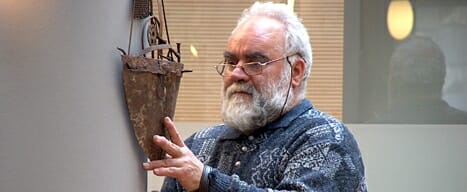 Thousands come together around the work of this Italian artist that is so in tune with Pope Francis’s Laudato sì. For years Ciro has been recycling scrap material for his creations.
 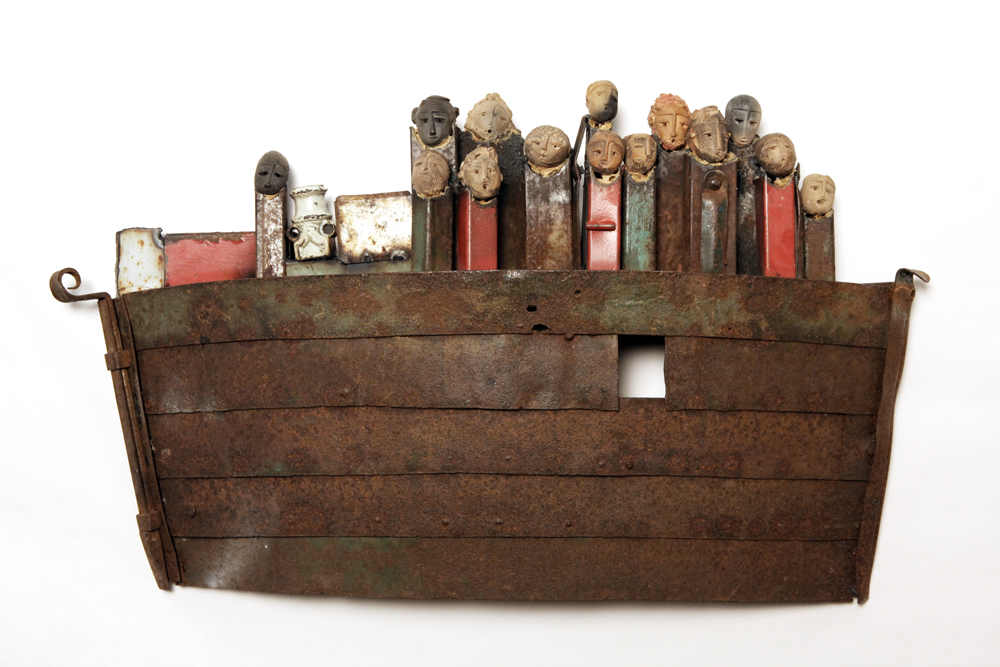 Known as Ciro, Roberto Cipollone not only welcomes visitors, but runs workshops for young and old that bring them into direct contact with the materials that will be transformed and modeled together: “a pure way of seeing, simple, direct contact with the beautiful without any tinsel,” says the artist. Besides the studio in Loppiano, which is the true creative workshop, a permanent workshop has been set up by Sergio Pandolfi.
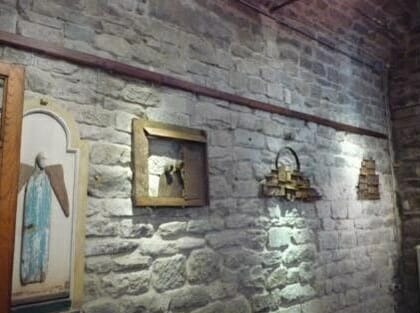
Ciro’s exhibition at Camaldoli

23 Aug 2015 | Non categorizzato
“Outside the centrifugal action of love, human beings seem to hold on to whatever causes division. They find millions of reasons, through religion itself, to set themselves apart, nullifying that freedom of movement that had been restored by Jesus when he brought down the walls of division and established that there would no longer be neither Greek nor Jew, neither slave nor master, neither male nor female – but God would be in all, and all would be in God. (…) That is love’s goal: that is the goal of existence, to make all one. To make all the Oneness that is God. By the impulse of Divine Love, existence, all of history became a return march towards unity. Everything comes from God; everything returns to God. Making yourself one with a neighbour means disappearing in him, such that between God, my neighbour and me a direct passageway is established, through my elimination, an unobstructed descent – from Oneness to the other: and so I find God in that neighbour. The neighbour is like the temple that ignites God’s light. So, I find God in the Sacrament of the Altar and in the person of my neighbour, through the effect of love. The neighbour breaks down the barriers and, in the breach, allows life to flow: the life that is God. The neighbour is ianua caeli, “gate of Paradise”. There are Christians who go to serve the least, in the lowest social classes, not so much to convert them, but to convert themselves: giving love in the form of service (to the ailing, the unemployed, the elderly – all the social refuse as they are labeled), and they find Christ. Much more than they can ever give, therefore. They offer a loaf of bread and find the Father. They convert both the helpers and also the assisted. They become holy as they bless their neighbours. Therefore, you rise to God by descending beneath every human level, to serve all people from down there, on whatever plane they may be; whereas, the Jewish priest who did not look upon the unfortunate of this earth because his gaze was fixed on the God of Heaven, never found neither God nor neighbour. He never found God because he was never turned towards his neighbour. And this is a way of proceeding from the Father who proclaims his glory in highest heaven by allowing his Son to be born in the most humble of shelters: a stable, thus establishing a connection between stars and stables through the divinizing action of love. Thus, the last shall be the first in an overturning of logic, or rather, God’s way of calculating; his counting starts from the least while we start counting from the most. What is first for us becomes last for him, and what is last for us becomes first for him. And so wealth, power, glory which we consider to be first and foremost, God considers them to be last; they count for nothing and have to wait in line. This is the actual yardstick for measuring people and things.” (From Igino Giordani. Il fratello,(Rome: Città Nuova, 2011), pp.78-80.
17 Aug 2015 | Non categorizzato
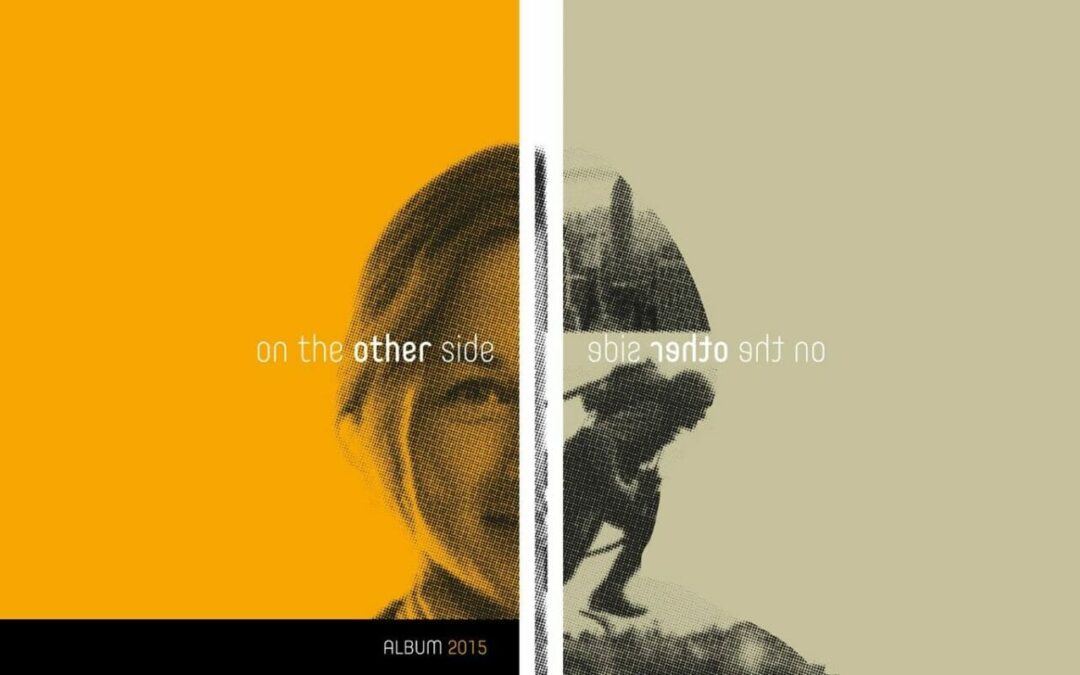
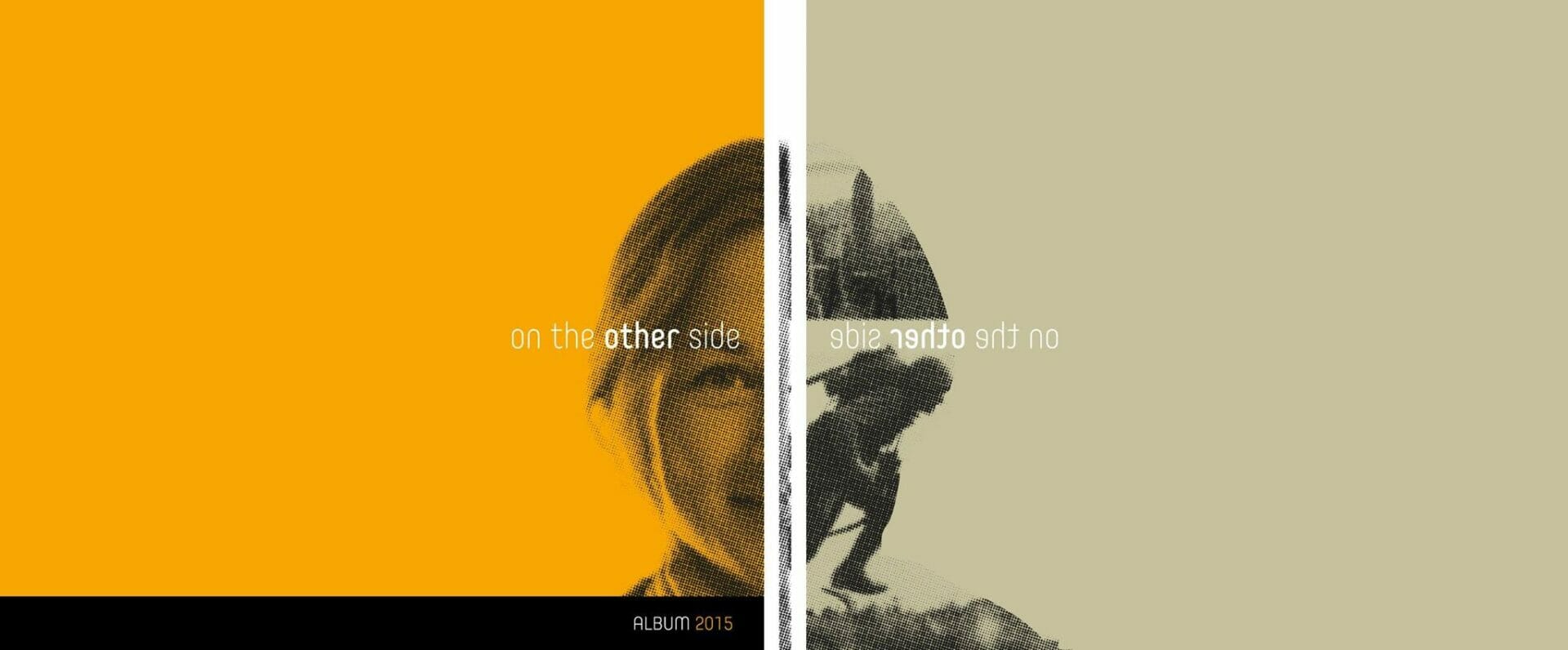 Eleven songs in five languages: English, Italian, Spanish, Portuguese and Korean. 47 minutes of pop-rock and world music, full of passion, force, vitality in music and words branded Gen Verde. According to the band’s manager, Sally McAllister, “This album is autobiographical and biographical at the same time.” It is an affirmation shared by all the members of the group. In fact, as they say, “It is biographical because the undisputed protagonist of this album is humanity that recounts its story: of people in the face of present-day challenges, the tragedies and conquests, history which marks the world’s pace, people moving along the roads of the planet in search of a land, dignity, and a place they can call their home.” But it is also autobiographical, since it is “imbued with our own stories and the musical cultures we come from.” “We wanted to try our hand,” the Gen Verde members say, “in recounting the moments and facts that marked a turning point in our lives. Different paths, with various departure points from physical sites and soul places that oftentimes are diametrically opposed but which all target that sole horizon of fraternity.” In fact, “Every piece tells a story, such as Voz de la verdad, a homage to Oscar Romero,” says the Salvadorean, Xochitl Rodríguez. And also Chi piange per te? – the cry of thousands of migrants on the banks of the Mediterranean, which continues to echo across Africa to Europe, and in every continent where people are forced to leave in order to survive. Another song You’re Part of Me is the interrupted story of the Korean people, who refuse to give in to the scandal of separation. The musical arrangement is K-pop, a genre that is very popular today with the young Koreans, and says the desire for unity is not an issue of 70 years ago, but is one of today, of this generation that will not give up.”
15 Aug 2015 | Non categorizzato
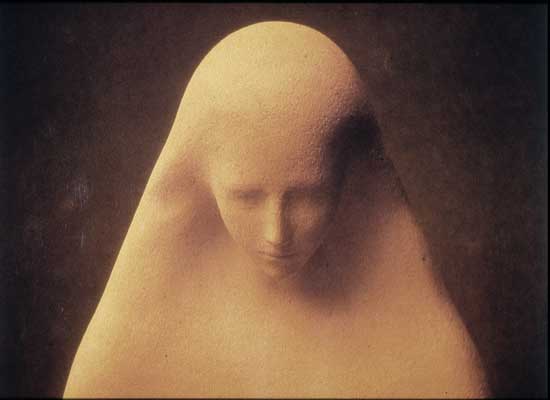
Ave Cerquetti, ‘Mater Christi’ – Roma, 1971

