
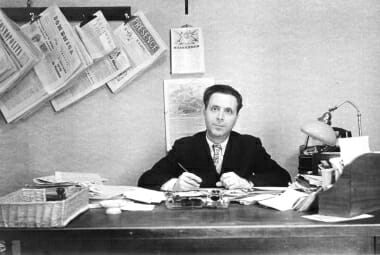
Giordani: The Role of the Writer
“In a rational world the writer should be located at the center of social life, as the one who directs and plays the spirit of the people. But the world is only partly ruled by rationality, in many ways is governed by instinct, by irrational passions such as fear. Writers become popular inasmuch as they discern and perhaps aggravate the instincts of the masses.
Today, on the one hand, technology reigns, mechanics, sports and cinema; on the other demagoguery, profiteering and politics first. If writers don’t want to see themselves reduced to a marginal function, they feel that they must serve material interests or interests marked by passion. They feel compelled to produce a journalism that often is necessarily subservient because of the huge cost to industrial groups, political parties, ideologies and profitable professions. Freedom of the press decreases because the free press is weakened under financial pressure, and the freedom of the writer is weakened. This helps explain the decline of what are considered great writers, and why more than one has switched to work in the political arena or sought out other areas of interest.
If the decline of rationality in people did produce the weakening of writing and writers shrinking to the margins, it is also true that it was the spiritual, moral and intellectual decadence of writers that distanced readers. The truth is that writers are both the cause and effect of their social environment. They need to be more the cause or less the effect. If they were what they should be –teachers or, I would even say, apostles or prophets – the people would either follow them or flay them. In short, they would show a lively interest in the manifestations of their spirit. The writer’s place is on the edge, the edge of discovery, the edge of risk. In fact, in order to carry out their apostolic mission of educating and raising the public, writers are likely to face poverty and misunderstanding.
The position of a writer is relative to the value of his or her message, and to its artistic strength and the manner in which it is expressed. In a world where technology and organization, planning and centralization, gregariousness and the fatigue of freedom have overtaken the human soul, overloading it with noise and commands, a free writer who contributes to spiritual liberation— the redemption of human beings— helping to overcome the large and small “failures” of the external and internal world, plays a greater role than that of the statesmen who are more popular.
In a world worn out by divisions and trembling with hatred and fear, one word of brotherhood and humanity, of charity therefore, spoken with clarity, beauty, and power would seal the gratitude of the people toward its author, conferring on him or her a central role in the orbit of civilization.
Igino Giordani: (Rome: Il compito dello scrittore, La Via, February 2,1952) p. 3.
Living the Gospel: accepting others as they are
“Our daughter, after a painful delusion (her breaking off with her boyfriend), came to live with us with her baby girl. She is often bitter and aggressive. One morning, for a trifle matter she mistreated me and her brothers, and shouting, left for work, slamming the door. I was really hurt and I felt she had simply gone over the limit and that we really did not deserve all this. I asked myself how I could let her see that I loved her. I prepared a special feast-day lunch with a cake, and set the table with the nicest tablecloth… When she returned, I greeted her as if nothing had happened. She smiled and I felt that I had not only forgiven her, but also forgotten the event. Harmony was reestablished among us.”
(R. B. – Italy )
“Last Saturday, my parents and I were about to close our grocery shop when two hooded characters came inside and ordered us to open the safe. Dad thought it was the usual robbery at gunpoint with a toy gun, and asked them to leave. Instead, the gun fired a shot which wounded him, though not seriously. After the bandits escaped, in a split second I remembered the group of people who, in another part of Sicily help the youth in the high risk districts of their city. So with my friends, I decided to do something myself to stop some other kids from getting involved with gangsters. Though a bit hesitant, I started going to an area of the city having highly delinquent residents, and once I found out what the real problems were in that district, I talked to the local administrators and the families of some police officers who had been killed. We formed a group to testify to people, especially the youth, that a better and nonviolent world is possible. That Saturday has changed my life.”
(M. – Sicily, Italy )
“I was 12 when my parents separated. It was a painful thing, and particularly one detail did not leave me in peace: I could not forgive my dad for leaving us to form another family. Initially, when he would call, I didn’t even want to talk to him. Then one day, I asked Jesus for help, and found the courage to show him that I did not hold it against him. On father’s day I tried to show this concretely by preparing a gift. When he saw it, I saw that he was deeply moved. He then confided that apart from the rest, the most important things for him were his children. From that moment on, I felt I had opened my heart to him once more. Much later, knowing that he was lonely, I spontaneously started to talk to him about God who loves each one of us immensely. It assured him and he expressed the desire to know more about this topic. The experience with dad is helping me to see that we all make mistakes, but that each person must be given the chance to rise up again.”
(H. – Brazil)
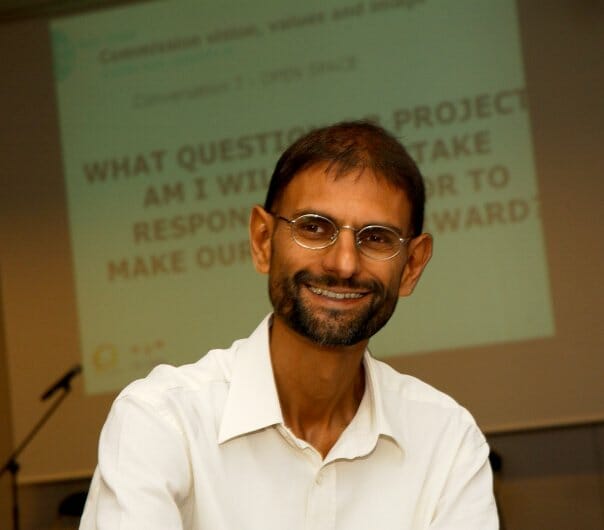
Chiara Lubich: Another vision and exercise of power
Paolo Giusta
“The life and ideas of Chiara Lubich have introduced a radical novelty that totally surpasses the concept of power as dominion. The idea of power seen as the solitary peak of a pyramid is always present and dominant at times: we often tend to think that one man alone in command, with a clear vision and the strength to impose it is the best and more reassuring solution […]. Chiara has always had a great and absolute respect for power […]. At the same time, her relationships with people at the top of the civil hierarchical ladder (heads of states and governments, presidents of European institutions) or religious (popes, patriarchs…) never showed any sign of servitude. On the contrary, her respect for authority was expressed in a creative way, by offering ideas and suggestions in an attitude of dialogue and stimulus, and placing herself and the resources of the Focolare Movement at the disposition of projects for the benefit of society, especially the poor.
Co-responsibility. Upon exercising power within the Movement she had founded, Chiara set the basis […] for a collective management of responsibility, in line with the spirituality of communion, typical of her charism. At the presidency of the movement, especially for juridical motives, there is only one person, and Chiara wanted this person to be a woman, taking as the model, Mary, the mother of Jesus, who did not have any power except for that of love […]. This is one of the key concepts of Chiara’s charism: the hierarchy exists, and its role is irreplaceable, but stands in the background; what emerges is that we all are first and foremost, brothers and sisters, children of an only God who is love […]. And all of us learn from the example of Jesus, the sole and real master.
Collective leadership. I had the chance to personally see the way Chiara exercised her role of leader when in Stuttgart, 2004 and 2007 we prepared the two meetings of the movement and Christian communities of different Churches […]. I was struck by the way in which she gave room to each one, his ideas and questions. It was as if she was listening to a word God could have pronounced through the words of one of the participants. […]. She took each word seriously and asked the entire group to make their common decision, a true example of collective leadership in action […].
Exercising one’s own role and making room for the other. This was the essence of Chiara’s concept of power, as likewise the contrasting features: the person who holds a position of power has to fully exercise this role (being), and at the same time totally make room for the other, including the subordinates (nonbeing). Likewise, whatever their role and position in the hierarchical ladder, all give their own indispensable contribution (being) and in donating it, lose it since they cannot impose it (nonbeing). This dynamics creates communion, unity in diversity. In fact, for Chiara unity is never static, or something which cancels the components, but is new and surprising each time, because always in vital movement, it is an image of God and the relationship of love among the persons of the Trinity […].
Resolving conflicts together. A practical example of the power exercised as love, in Chiara’s view, is the management and resolution of conflicts. In face of a conflict there are different options: avoid the difficulties of facing it, letting the head decide for all, or else, undertake a journey together with all those involved in the conflict. It would be a long and probably painful journey to face the conflict and emerge with a solution, not with an individual decision, but through a group experience. This solution is not handed down either from the top or given from below, but is the result of a common effort in which each gives his version of truth, in order to reach a common solution.”
See complete text (in Italian)
Chiara Lubich
Politics for Unity
Making a world of difference
March 2015
Info: http://www.politicsforunity.com/
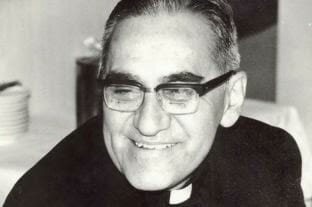
El Salvador celebrates Romero
“A preaching that does not denounce sin is not Gospel preaching,” Bishop Romero stated in one of his talks. His martyrdom, which took place on March 24, 1980 as he celebrated the Eucharist in the chapel of the hospital for terminally ill patients, where he also resided, gave strength to many Salvadoran families who had lost relatives and friends during the civil war which turned ruthless after his death. Still today his witness remains a powerful call to peace, brotherhood and reconciliation.
“The news that Pope Francis had signed the decree recognising the martyrdom in odium fidei (in hatred of the faith) of Bishop Oscar Arnulfo Romero caused much rejoicing among the people. Bishops had the bells rung in all the churches of El Salvador in expression of the great jubilation,” Father Filippo Casabianca writes from the Focolare’s Central American centre. “From when Bergoglio became pope everyone began to hope that, knowing the urgent needs of the poor and the shady schemes of some Latin American dictatorial regimes, the progress of the Cause would be unblocked. Soon there will be the Solemn Opening of the Cause of Beatification, in El Salvador.
What is the backstory of that block? “The missionary work of the Church during that period was traversed by tensions that undulated between genuine faithfulness to the Second Vatican Council’s teaching about a preferential option for the poor and being near to the least, to the temptation of some who felt that it was possible to be associated with movements that had a Marxist imprint. This is what they wanted to accuse Romero of, to the point of silencing his voice.” But, in El Salvador, the Focolare spirituality also has its roots planted in the soil of war horrors. The first focolarinos visited this land in the late 1970s. They came from Colombia until the first Mariapolises of 1982, which were held in Santiago de Maria.
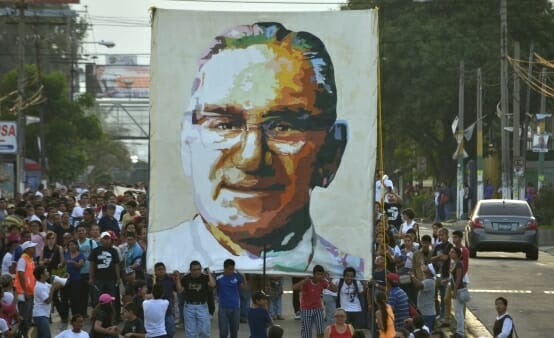 “The connecting roads were alternately patrolled by guerrillas and military” continues Filippo, “so you had to find makeshift ways to get around or you would be placed under interrogation that could lead to forced recruitment. “The war had followed the death of Romero and his message was quite alive in everyone.” “The words, the teaching and witness of Bishop Romero,” says Reynaldo, one of the first young people of the Movement in El Salvador, “powerfully resounded in those who had the fortune of discovering the Ideal of unity, particularly that call to opting for the poor. It was a strong call to Christian integrity, causing perplexity in some, embraced by many, at times manipulated. “Bishop Romero’s witness joined to the encounter with the experience of Chiara Lubich and her companions during the Second World War in Trent, made us embrace the charism of unity in a purer manner, and it helped us go against the tide.”
Going against the tide is still a feature of the Focolare Movement in El Salvador because of its social involvement. The rehabilitation of prisoners, for example, within the framework of the local Church’s prison ministry, involves Focolare teams. They visit the infamous Mariona Prison which houses the most dangerous criminal and drug-traffick bosses. They are currently in regular contact with some 180 people serving different sentences, who attend Word of Life meetings in groups of 18 people. In the most recent meeting someone remarked: “I ask forgiveness from my jail mates, because I treated them with violence, but I want to change.”
Other activities focus on social inclusion in a village at risk. The situation turned dangerous and the parish priest advised the Movement’s members to be careful. In another two cities, the Focolare runs kindergartens and after-school programmes oriented towards curbing the school dropout rate, which encourages criminal recruitment.
Following the example of Romero in El Salvador and beyond, there is a desire to be faithful to the Gospel by living for all, especially the small, the poor and the least.
Zooming in on the Ukraine
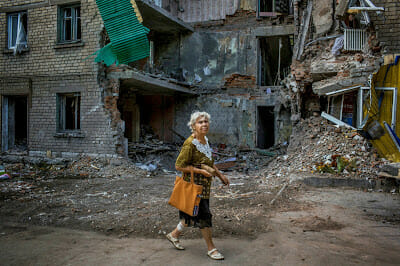
Father Mychayl is a Ukranian Greek Catholic priest from Kiev, who lives the Focolare spirituality. From the pages of Città Nuova magazine he helps us to follow the events that are taking place in his beloved and devastated country. A year after the outbreak of the conflict we asked him to give us his read on what has happened. “Nearly a year has gone by since the revolt on Maidan Square and up until now there have been 5000 deaths and over a million refugees. The war in Donbass has lasted for months. People are dying, the infrastructure is at the point of collapse, and hundreds of thousands of people are fleeing. Inside the patchwork of territories controlled by Ukrainians and by separatists, chaos of the gangs, the commanders who are at war with one another, the poorly-armed and even more poorly trained military may all have the side effect of becoming a war of everyone against everyone. According to Father Mychayl this is why now more than ever Ukraine needs an education on peace with everyone actively involved: young and old, teachers and children, parents and children: “A simple but engaging education on peace, based on the connection between theory and practice, values and experience. An education to affirm the culture of Peace, the only one able to respect and respond to everyone’s real and honest questions on the difficult road toward universal brotherhood in Ukraine.” When asked what steps would be necessary, he said: “Allow me to answer with something Chiara Lubich said in London in 2004: ‘(. . .) it would almost be necessary to propose to all those acting in politics to formulate a pact of brotherhood for their country, which places the good of the country well above any partial interest, be it individual, group, class or party. Because brotherhood offers surprising possibilities: it allows you to hold together and appreciate needs that might otherwise develop into irreconcilable conflict. For example, the experiences of local autonomies could be joined to a sense of common history; awareness of the importance of international bodies and of all the processes that tend to overcome barriers and allow important steps in the direction of unity in the human family.’” But the Ukraineian crisis has triggered the largest wave of refugees, since the Balkan wars: over 900,000 internally displaced persons. “It is no longer possible to live a normal life in the besieged city of Donetsk. The elderly – second-time witnesses of the horrors of war – are dying for lack of medical care, or have had to leave their homes. Many are not receiving the summer pension. In areas controlled by separatists there is everything in the shops and pharmacies, but no money. Banks and post offices have been shut down.” How can houses, roads and bridges be rebuilt, which are not only structural connections, but a means of healing invisible wounds? “It’s not an easy thing. Giving psychological help to the affected populations is less easy than building roads or sending humanitarian aid. For several years now Sophia University Institute in cooperation with Ukraine Iustitia et Pax, have been offering training courses that prepare young people to be contributing citizens for the common good of Ukraine.” “After the wave of protests and wars, the country is in need of these “Schools of involvement” that form students in civil and social involvement, rooted in the urban fabric; places where there is experience in political action founded on the values of sharing and nourished on the ideal of ‘universal brotherhood’. Thanks to the Maidan Square protests Ukraine has become a true nation, a people that wishes to build its life upon Christian values. Now it’s a matter of translating those values that were lived out during the protests at the square into the concrete facts in daily life; to take on the expectations and the deepest needs of the country so as not to fall into apathy definitively.” The schools of involvement do in fact provide interpretative models and operative proposals focused on spreading the culture of peace: “One of Ukraine’s principle challenges is the situation of internal immigrants, their integration in other regions of Ukraine, and the consequences of the hostility. The formation of flexible skills, therefore, to promote intercultural and interreligious dialogue, human rights, mediation, acceptance, mutual respect and reconciliation – these are the objectives we want to place at the centre of the pedagogy of the future.”