For Chiara Lubich politics was actually a vocation, “a personal calling that emerges from external circumstances and speaks through the conscience.” Answering to this vocation “is first and foremost an act of brotherhood: it acts in favour of something public, something concerning others, desiring the good of others as if it were one’s own.” Such an act, which creates the conditions for “an ongoing relationship with every sphere of life” – economy, health, communication, art, justice administration, and so on – sets the conditions so that society can fulfill its purpose.”
The global event will include a variety of local events across the globe, all of which will highlight the ideals of Chiara Lubich’s charism as it relates to politics, through stories of personal change and involvement in public affairs, raninge from addressing problems at the district, national and international levels. It will be an opportunity to welcome with renewed awareness the “dream” that inspired the life and thought of Chiara Lubich: “universal brotherhood.”
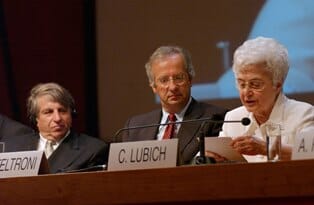
Italy. A meeting is scheduled on March 12, 2015 at the Parliament in Rome. In the morning, 300 young people of the Focolare from around the world will meet in the Auletta dei Gruppi of the Italian Parliament, for an open dialogue with politicians, scholars and representatives of international institutions. In the afternoon, the “Chiara Lubich: Unity and Politics” event will be held in the same Hall.
France. On March 13-15, 2015 at the Headquarters of the Council of Europe, in Strasbourg, a seminar titled: «Fraternité en politique: s’investir autrement dans la cité», an invitation to discover new paths that favour living together.
Canada. On March 13, 2015 a debate will be held at Glendon College of the York University of Toronto, titled: “Politics for Unity. Making a World of Difference.” Brazil. In Curitiba, the «Política pela unidade, fazendo toda a diferença no mundo» will explore how doing politics in function of unity, makes the difference. South Korea. On March 14, 2015, at the Parliament which in the past was a theatre of fierce fighting, “On the journey towards universal brotherhood.” Events will also be held in Nairobi, Kenya, Dar es Salaam, Tanzania, Madrid, Spain, Budapest Hungary, Prague, Czech Republic, and more. An online map of events and further information can be found at: www.politicsforunity.com. To join the online discussion the hashtag is: #politics4unity.
Reflection on the theme “Chiara Lubich: Unity and Politics” in the plurality of cultural and geographical areas will be an opportunity to further explore the heritage left to history by Chiara, whose Cause of Beatification was opened on January 27, 2015.
“It’s 7:00 in the morning of 28 April at the central station. A day and place that the students of Campus will never forget. Something unexpected is about to happen and… they have to make their choice: this is the moment!” A scene of great emotive and theatrical impact opens CAMPUS, the new musical of Gen Rosso, in a preview on 14 and 15 March 2015 in Loppiano, at the International Centre’s Auditorium. The first world Tour will start in Naples on 28 and 29 March 2015 at the Mediterraneo Mostra d’Oltremare Theatre.Prompted by an original idea of Chiara Lubich, the work in fact is drawn from real events and staged after 10 years of thematic and artistic research. The campus is like the cities we live in Valerio Ciprì says: «It immediately appeared to me that the campus environment is really a metaphor of the daily life co-existence of our globalised cities. Today cities are the settings of dramatic contradictions that range from decline to delinquency, drug addiction to corruption, and places of redemption in which citizens repossess their space for solidarity and humanity. This is precisely the message Campus conveys: we cannot build a united society by annulling our differences, but by facing the challenges and rolling up our sleeves to create authentic relationships. Against the background of an era, our present time, marked by the drama of fear and terrorism, the stories of a group of students unravel on stage, each with his dreams and projects for the future, and a present heavily burdened with wounds, anguish and queries.» A daring show, amid engaging sounds and pressing issues The musical is composed of 23 pieces, choreographic transitions interacting with film sequences, theatre actions and movement. «The artistic project is the result of the team work of international professionals» – Beni Enderle explains. «The sounds are forceful and rich in style contaminations and harmonic inter-wefts, with melodies that range from the buoyancy of Latin atmospheres to the pathos of Afro rhythms, in a synthesis of forceful and captivating sounds.» «As we delve deeper into the story and the atmosphere of the show – Josè Manuel Garcia continues – one feels the onset of a global reality that emerges from a narrative layout that goes straight into the heart of contemporary challenges, within an original and strictly live sound track that covers the rhythms and sounds of Rock, Pop, Reggae, Samba-axe, Contemporary electronic, Hip-hop and up to Dubstep…». The stage scenery is avant garde. Jean Paul Carradori says: «I have worked in many international productions. Campus for me was an unexpected challenge due to its strong drama and theatrical layout. We had to create a setting that highlights the contents and at the same time leads the spectator to immerse into the story. » Produced by the Gen Rosso International Performing Arts Group (16 artists from 9 nations) in an innovative, artistic, technical, directive and managerial work methodology, the Musical is the fruit of the convergence and synergy of an international team. Pre-sales tickets: CLICK HERE (tel.055 9051102 – mail genrosso.campus@loppiano.it) On-line: tickets can be bought on the Internet at: concerto 14/03 – concerto 15/03Download the poster
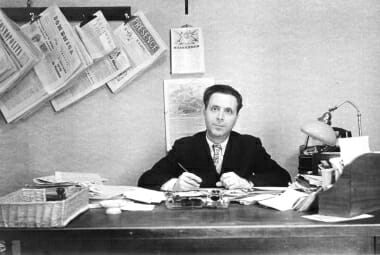
“In a rational world the writer should be located at the center of social life, as the one who directs and plays the spirit of the people. But the world is only partly ruled by rationality, in many ways is governed by instinct, by irrational passions such as fear. Writers become popular inasmuch as they discern and perhaps aggravate the instincts of the masses.
Today, on the one hand, technology reigns, mechanics, sports and cinema; on the other demagoguery, profiteering and politics first. If writers don’t want to see themselves reduced to a marginal function, they feel that they must serve material interests or interests marked by passion. They feel compelled to produce a journalism that often is necessarily subservient because of the huge cost to industrial groups, political parties, ideologies and profitable professions. Freedom of the press decreases because the free press is weakened under financial pressure, and the freedom of the writer is weakened. This helps explain the decline of what are considered great writers, and why more than one has switched to work in the political arena or sought out other areas of interest.
If the decline of rationality in people did produce the weakening of writing and writers shrinking to the margins, it is also true that it was the spiritual, moral and intellectual decadence of writers that distanced readers. The truth is that writers are both the cause and effect of their social environment. They need to be more the cause or less the effect. If they were what they should be –teachers or, I would even say, apostles or prophets – the people would either follow them or flay them. In short, they would show a lively interest in the manifestations of their spirit. The writer’s place is on the edge, the edge of discovery, the edge of risk. In fact, in order to carry out their apostolic mission of educating and raising the public, writers are likely to face poverty and misunderstanding.
The position of a writer is relative to the value of his or her message, and to its artistic strength and the manner in which it is expressed. In a world where technology and organization, planning and centralization, gregariousness and the fatigue of freedom have overtaken the human soul, overloading it with noise and commands, a free writer who contributes to spiritual liberation— the redemption of human beings— helping to overcome the large and small “failures” of the external and internal world, plays a greater role than that of the statesmen who are more popular.
In a world worn out by divisions and trembling with hatred and fear, one word of brotherhood and humanity, of charity therefore, spoken with clarity, beauty, and power would seal the gratitude of the people toward its author, conferring on him or her a central role in the orbit of civilization.
Igino Giordani: (Rome: Il compito dello scrittore, La Via, February 2,1952) p. 3.
“Our daughter, after a painful delusion (her breaking off with her boyfriend), came to live with us with her baby girl. She is often bitter and aggressive. One morning, for a trifle matter she mistreated me and her brothers, and shouting, left for work, slamming the door. I was really hurt and I felt she had simply gone over the limit and that we really did not deserve all this. I asked myself how I could let her see that I loved her. I prepared a special feast-day lunch with a cake, and set the table with the nicest tablecloth… When she returned, I greeted her as if nothing had happened. She smiled and I felt that I had not only forgiven her, but also forgotten the event. Harmony was reestablished among us.”
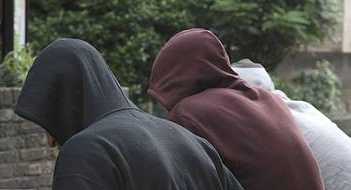
“Last Saturday, my parents and I were about to close our grocery shop when two hooded characters came inside and ordered us to open the safe. Dad thought it was the usual robbery at gunpoint with a toy gun, and asked them to leave. Instead, the gun fired a shot which wounded him, though not seriously. After the bandits escaped, in a split second I remembered the group of people who, in another part of Sicily help the youth in the high risk districts of their city. So with my friends, I decided to do something myself to stop some other kids from getting involved with gangsters. Though a bit hesitant, I started going to an area of the city having highly delinquent residents, and once I found out what the real problems were in that district, I talked to the local administrators and the families of some police officers who had been killed. We formed a group to testify to people, especially the youth, that a better and nonviolent world is possible. That Saturday has changed my life.”
“I was 12 when my parents separated. It was a painful thing, and particularly one detail did not leave me in peace: I could not forgive my dad for leaving us to form another family. Initially, when he would call, I didn’t even want to talk to him. Then one day, I asked Jesus for help, and found the courage to show him that I did not hold it against him. On father’s day I tried to show this concretely by preparing a gift. When he saw it, I saw that he was deeply moved. He then confided that apart from the rest, the most important things for him were his children. From that moment on, I felt I had opened my heart to him once more. Much later, knowing that he was lonely, I spontaneously started to talk to him about God who loves each one of us immensely. It assured him and he expressed the desire to know more about this topic. The experience with dad is helping me to see that we all make mistakes, but that each person must be given the chance to rise up again.”
“The life and ideas of Chiara Lubich have introduced a radical novelty that totally surpasses the concept of power as dominion. The idea of power seen as the solitary peak of a pyramid is always present and dominant at times: we often tend to think that one man alone in command, with a clear vision and the strength to impose it is the best and more reassuring solution […]. Chiara has always had a great and absolute respect for power […]. At the same time, her relationships with people at the top of the civil hierarchical ladder (heads of states and governments, presidents of European institutions) or religious (popes, patriarchs…) never showed any sign of servitude. On the contrary, her respect for authority was expressed in a creative way, by offering ideas and suggestions in an attitude of dialogue and stimulus, and placing herself and the resources of the Focolare Movement at the disposition of projects for the benefit of society, especially the poor.
Co-responsibility. Upon exercising power within the Movement she had founded, Chiara set the basis […] for a collective management of responsibility, in line with the spirituality of communion, typical of her charism. At the presidency of the movement, especially for juridical motives, there is only one person, and Chiara wanted this person to be a woman, taking as the model, Mary, the mother of Jesus, who did not have any power except for that of love […]. This is one of the key concepts of Chiara’s charism: the hierarchy exists, and its role is irreplaceable, but stands in the background; what emerges is that we all are first and foremost, brothers and sisters, children of an only God who is love […]. And all of us learn from the example of Jesus, the sole and real master.
Collective leadership. I had the chance to personally see the way Chiara exercised her role of leader when in Stuttgart, 2004 and 2007 we prepared the two meetings of the movement and Christian communities of different Churches […]. I was struck by the way in which she gave room to each one, his ideas and questions. It was as if she was listening to a word God could have pronounced through the words of one of the participants. […]. She took each word seriously and asked the entire group to make their common decision, a true example of collective leadership in action […].
Exercising one’s own role and making room for the other. This was the essence of Chiara’s concept of power, as likewise the contrasting features: the person who holds a position of power has to fully exercise this role (being), and at the same time totally make room for the other, including the subordinates (nonbeing). Likewise, whatever their role and position in the hierarchical ladder, all give their own indispensable contribution (being) and in donating it, lose it since they cannot impose it (nonbeing). This dynamics creates communion, unity in diversity. In fact, for Chiara unity is never static, or something which cancels the components, but is new and surprising each time, because always in vital movement, it is an image of God and the relationship of love among the persons of the Trinity […].
Resolving conflicts together. A practical example of the power exercised as love, in Chiara’s view, is the management and resolution of conflicts. In face of a conflict there are different options: avoid the difficulties of facing it, letting the head decide for all, or else, undertake a journey together with all those involved in the conflict. It would be a long and probably painful journey to face the conflict and emerge with a solution, not with an individual decision, but through a group experience. This solution is not handed down either from the top or given from below, but is the result of a common effort in which each gives his version of truth, in order to reach a common solution.”