14 Feb 2015 | Non categorizzato
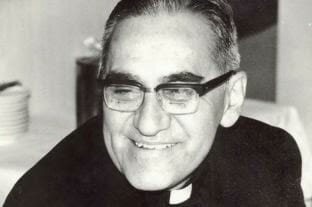
“A preaching that does not denounce sin is not Gospel preaching,” Bishop Romero stated in one of his talks. His martyrdom, which took place on March 24, 1980 as he celebrated the Eucharist in the chapel of the hospital for terminally ill patients, where he also resided, gave strength to many Salvadoran families who had lost relatives and friends during the civil war which turned ruthless after his death. Still today his witness remains a powerful call to peace, brotherhood and reconciliation.
“The news that Pope Francis had signed the decree recognising the martyrdom in odium fidei (in hatred of the faith) of Bishop Oscar Arnulfo Romero caused much rejoicing among the people. Bishops had the bells rung in all the churches of El Salvador in expression of the great jubilation,” Father Filippo Casabianca writes from the Focolare’s Central American centre. “From when Bergoglio became pope everyone began to hope that, knowing the urgent needs of the poor and the shady schemes of some Latin American dictatorial regimes, the progress of the Cause would be unblocked. Soon there will be the Solemn Opening of the Cause of Beatification, in El Salvador.
What is the backstory of that block? “The missionary work of the Church during that period was traversed by tensions that undulated between genuine faithfulness to the Second Vatican Council’s teaching about a preferential option for the poor and being near to the least, to the temptation of some who felt that it was possible to be associated with movements that had a Marxist imprint. This is what they wanted to accuse Romero of, to the point of silencing his voice.” But, in El Salvador, the Focolare spirituality also has its roots planted in the soil of war horrors. The first focolarinos visited this land in the late 1970s. They came from Colombia until the first Mariapolises of 1982, which were held in Santiago de Maria.
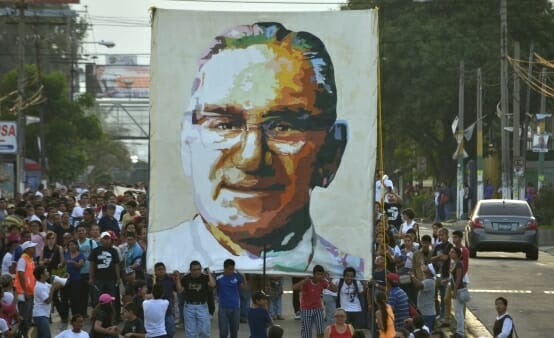 “The connecting roads were alternately patrolled by guerrillas and military” continues Filippo, “so you had to find makeshift ways to get around or you would be placed under interrogation that could lead to forced recruitment. “The war had followed the death of Romero and his message was quite alive in everyone.” “The words, the teaching and witness of Bishop Romero,” says Reynaldo, one of the first young people of the Movement in El Salvador, “powerfully resounded in those who had the fortune of discovering the Ideal of unity, particularly that call to opting for the poor. It was a strong call to Christian integrity, causing perplexity in some, embraced by many, at times manipulated. “Bishop Romero’s witness joined to the encounter with the experience of Chiara Lubich and her companions during the Second World War in Trent, made us embrace the charism of unity in a purer manner, and it helped us go against the tide.”
Going against the tide is still a feature of the Focolare Movement in El Salvador because of its social involvement. The rehabilitation of prisoners, for example, within the framework of the local Church’s prison ministry, involves Focolare teams. They visit the infamous Mariona Prison which houses the most dangerous criminal and drug-traffick bosses. They are currently in regular contact with some 180 people serving different sentences, who attend Word of Life meetings in groups of 18 people. In the most recent meeting someone remarked: “I ask forgiveness from my jail mates, because I treated them with violence, but I want to change.”
Other activities focus on social inclusion in a village at risk. The situation turned dangerous and the parish priest advised the Movement’s members to be careful. In another two cities, the Focolare runs kindergartens and after-school programmes oriented towards curbing the school dropout rate, which encourages criminal recruitment.
Following the example of Romero in El Salvador and beyond, there is a desire to be faithful to the Gospel by living for all, especially the small, the poor and the least.
12 Feb 2015 | Non categorizzato
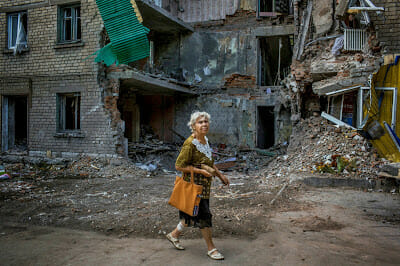
Father Mychayl is a Ukranian Greek Catholic priest from Kiev, who lives the Focolare spirituality. From the pages of Città Nuova magazine he helps us to follow the events that are taking place in his beloved and devastated country. A year after the outbreak of the conflict we asked him to give us his read on what has happened. “Nearly a year has gone by since the revolt on Maidan Square and up until now there have been 5000 deaths and over a million refugees. The war in Donbass has lasted for months. People are dying, the infrastructure is at the point of collapse, and hundreds of thousands of people are fleeing. Inside the patchwork of territories controlled by Ukrainians and by separatists, chaos of the gangs, the commanders who are at war with one another, the poorly-armed and even more poorly trained military may all have the side effect of becoming a war of everyone against everyone. According to Father Mychayl this is why now more than ever Ukraine needs an education on peace with everyone actively involved: young and old, teachers and children, parents and children: “A simple but engaging education on peace, based on the connection between theory and practice, values and experience. An education to affirm the culture of Peace, the only one able to respect and respond to everyone’s real and honest questions on the difficult road toward universal brotherhood in Ukraine.” When asked what steps would be necessary, he said: “Allow me to answer with something Chiara Lubich said in London in 2004: ‘(. . .) it would almost be necessary to propose to all those acting in politics to formulate a pact of brotherhood for their country, which places the good of the country well above any partial interest, be it individual, group, class or party. Because brotherhood offers surprising possibilities: it allows you to hold together and appreciate needs that might otherwise develop into irreconcilable conflict. For example, the experiences of local autonomies could be joined to a sense of common history; awareness of the importance of international bodies and of all the processes that tend to overcome barriers and allow important steps in the direction of unity in the human family.’” But the Ukraineian crisis has triggered the largest wave of refugees, since the Balkan wars: over 900,000 internally displaced persons. “It is no longer possible to live a normal life in the besieged city of Donetsk. The elderly – second-time witnesses of the horrors of war – are dying for lack of medical care, or have had to leave their homes. Many are not receiving the summer pension. In areas controlled by separatists there is everything in the shops and pharmacies, but no money. Banks and post offices have been shut down.” How can houses, roads and bridges be rebuilt, which are not only structural connections, but a means of healing invisible wounds? “It’s not an easy thing. Giving psychological help to the affected populations is less easy than building roads or sending humanitarian aid. For several years now Sophia University Institute in cooperation with Ukraine Iustitia et Pax, have been offering training courses that prepare young people to be contributing citizens for the common good of Ukraine.” “After the wave of protests and wars, the country is in need of these “Schools of involvement” that form students in civil and social involvement, rooted in the urban fabric; places where there is experience in political action founded on the values of sharing and nourished on the ideal of ‘universal brotherhood’. Thanks to the Maidan Square protests Ukraine has become a true nation, a people that wishes to build its life upon Christian values. Now it’s a matter of translating those values that were lived out during the protests at the square into the concrete facts in daily life; to take on the expectations and the deepest needs of the country so as not to fall into apathy definitively.” The schools of involvement do in fact provide interpretative models and operative proposals focused on spreading the culture of peace: “One of Ukraine’s principle challenges is the situation of internal immigrants, their integration in other regions of Ukraine, and the consequences of the hostility. The formation of flexible skills, therefore, to promote intercultural and interreligious dialogue, human rights, mediation, acceptance, mutual respect and reconciliation – these are the objectives we want to place at the centre of the pedagogy of the future.”
11 Feb 2015 | Non categorizzato
Source: Centro Chiara Lubich, Video (in Italian)
VIDEO TRANSCRIPTION IN ENGLISH
“If at the basis of laws or social projects we place a mentality lacking in respect for the suffering, the disabled and the elderly, then little by little we create a false society. We give importance only to a few values like physical well-being, strength, exaggerated productivity and power, while we distort the purpose for which a nation lives; that is, for the good of the human person and society.
Health, as we know, is a precious gift which should be protected. Thus we should do all we can so that our bodies and everyone else’s, too, receive nourishment and rest, and are not exposed to sicknesses, accidents or an exaggerated amount of sports.
The body is also important for a Christian. But if there is a loss of health, we must remember that there is a Life which is not conditioned by the state of our health, but by the supernatural love that burns in our hearts.
And it is this superior Life which gives value to our physical life even when we are sick. If we consider illnesses merely from a human point of view, we can only affirm that they are misfortunes. But, if we look at illnesses from a Christian point of view, we can see that they are trials in which we must train ourselves for the great trial which awaits all of us, when we will have to face the passage to the next Life.
Didn’t the Holy Father just recently say that illnesses are spiritual exercises, sermons that God Himself preaches to us? People who are sick have a richness that others do not have; a richness of another kind. In speaking of asceticism and mysticism, the Church refers to illnesses not only in reference to the field of medicine, but as purifications that God sends, therefore as small steps towards union with God.
In addition, our faith tells us that in sickness a person participates in the sufferings of Christ. In this light, the sick person is another Christ crucified who can offer his or her suffering for what is of most value, the eternal salvation of all people.
In the frenzy of work and daily life we are tempted at times to see people who suffer only as marginal cases to help so that they can quickly recover and return to their activities. It doesn’t occur to us that they are the ones who even now can do the most, who can contribute the most.
People who are ill can positively carry out their role on behalf of humanity only if they are understood and loved. Love can help them to give meaning to their condition and to be aware of what they represent. And what holds true for the sick, holds true also for the disabled. People with a disability need love. They need to be recognized for the value that their life has: it is sacred, as every other life is sacred, with all the consequent dignity. They need to be considered as persons and, as much as possible, live normal lives among other people.
What should we say about the elderly? Every life calls for love, and the elderly are no exception. Today even the elderly constitute a problem because of the increased number of people in this age category due to the higher average life expectancy.
Thus we are aware of a tendency in society to isolate the elderly, to consider them as a social burden because they are no longer productive. We speak of the elderly as a category apart, almost as if we were not speaking of human beings. Besides the inevitable physical decline they experience, the elderly can become discouraged considering themselves as useless.
We must give new hope to the elderly. Advanced age is nothing other than the third season of life. Life that is born, develops, and declines, these are nothing other than three aspects of the one mystery of all life which derives from God-Love.
In certain Asian and African countries, the elderly are highly respected because they possess wisdom. In fact, the elderly person emphasizes which is essential, what is most important.
We remember what was said about St. John the Evangelist. At the age of eighty, while visiting the Christian communities, he was asked about the message of Jesus. He always replied: “Love one another,” as if he had nothing more to add. With this phrase he had truly focused on the central thought of Christ.
To distance ourselves from the elderly is to deprive ourselves of a patrimony. We must value them by loving them. And we must value them even when they are sick and seriously ill, when there is no more hope humanly speaking, and their need for assistance is pressing.
Before God, there is no life, no part of life, that is not worthy of being lived.
Chiara Lubich
![[:it]Chiara Lubich: «Non c’è porzione di vita indegna di essere vissuta»](https://www.focolare.org/wp-content/uploads/2015/02/20140211ChiaraLubich1986.jpg)
11 Feb 2015 | Non categorizzato
“If at the basis of laws or social projects we place a mentality lacking in respect for the suffering, the disabled and the elderly, then little by little we create a false society. We give importance only to a few values like physical well-being, strength, exaggerated productivity and power, while we distort the purpose for which a nation lives; that is, for the good of the human person and society.
Health, as we know, is a precious gift which should be protected.
Thus we should do all we can so that our bodies and everyone else’s, too, receive nourishment and rest, and are not exposed to sicknesses, accidents or an exaggerated amount of sports.
The body is also important for a Christian.
But if there is a loss of health, we must remember that there is a Life which is not conditioned by the state of our health, but by the supernatural love that burns in our hearts.
And it is this superior Life which gives value to our physical life even when we are sick.
If we consider illnesses merely from a human point of view, we can only affirm that they are misfortunes.
But, if we look at illnesses from a Christian point of view, we can see that they are trials in which we must train ourselves for the great trial which awaits all of us, when we will have to face the passage to the next Life.
Didn’t the Holy Father just recently say that illnesses are spiritual exercises, sermons that God Himself preaches to us?
People who are sick have a richness that others do not have; a richness of another kind.
In speaking of asceticism and mysticism, the Church refers to illnesses not only in reference to the field of medicine, but as purifications that God sends, therefore as small steps towards union with God.
In addition, our faith tells us that in sickness a person participates in the sufferings of Christ. In this light, the sick person is another Christ crucified who can offer his or her suffering for what is of most value, the eternal salvation of all people.
In the frenzy of work and daily life we are tempted at times to see people who suffer only as marginal cases to help so that they can quickly recover and return to their activities. It doesn’t occur to us that they are the ones who even now can do the most, who can contribute the most.
People who are ill can positively carry out their role on behalf of humanity only if they are understood and loved. Love can help them to give meaning to their condition and to be aware of what they represent.
And what holds true for the sick, holds true also for the disabled. People with a disability need love.
They need to be recognized for the value that their life has: it is sacred, as every other life is sacred, with all the consequent dignity. They need to be considered as persons and, as much as possible, live normal lives among other people.
What should we say about the elderly?
Every life calls for love, and the elderly are no exception.
Today even the elderly constitute a problem because of the increased number of people in this age category due to the higher average life expectancy.
Thus we are aware of a tendency in society to isolate the elderly, to consider them as a social burden because they are no longer productive. We speak of the elderly as a category apart, almost as if we were not speaking of human beings.
Besides the inevitable physical decline they experience, the elderly can become discouraged considering themselves as useless.
We must give new hope to the elderly.
Advanced age is nothing other than the third season of life.
Life that is born, develops, and declines, these are nothing other than three aspects of the one mystery of all life which derives from God-Love.
In certain Asian and African countries, the elderly are highly respected because they possess wisdom.
In fact, the elderly person emphasizes which is essential, what is most important.
We remember what was said about St. John the Evangelist. At the age of eighty, while visiting the Christian communities, he was asked about the message of Jesus. He always replied: “Love one another,” as if he had nothing more to add. With this phrase he had truly focused on the central thought of Christ.
To distance ourselves from the elderly is to deprive ourselves of a patrimony.
We must value them by loving them.
And we must value them even when they are sick and seriously ill, when there is no more hope humanly speaking, and their need for assistance is pressing.
Before God, there is no life, no part of life, that is not worthy of being lived.
Source: Centro Chiara Lubich, Video (in italian)
10 Feb 2015 | Non categorizzato
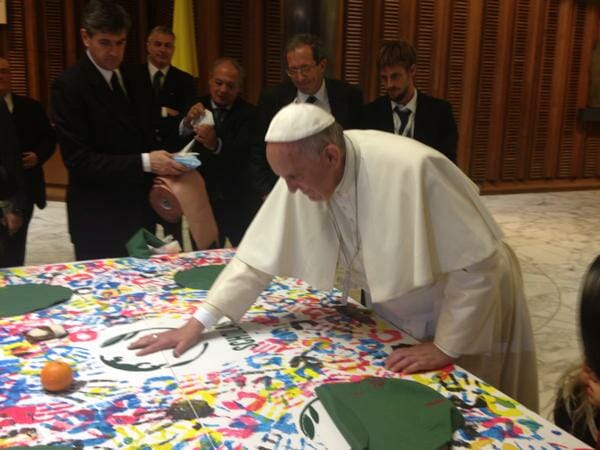
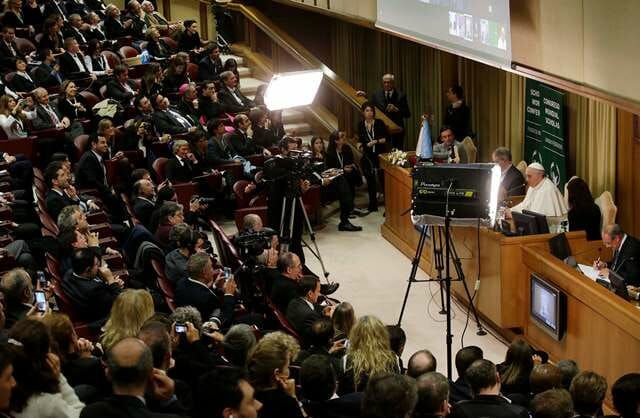 An educational agreement to be built in harmony between the families, civil and cultural institutions. This is the idea on which the project of Scholas Occurrentes (schools that respond to the needs of the population) is based, created in Argentina launched by former Archbishop of Buenos Aires, J.M. Bergoglio and relaunched today at international levels. The aim of the «Scholas is to integrate in some way, the educational efforts of all, and rebuild the educational agreement in harmony, since only with the harmonization of all those in charge of educating our youth and our children, can education bring about change. This is why Scholas seeks to integrate education with culture, sports, science; this is why Scholas tries to build bridges, to move out of the “small-scale” and seek these aspects further beyond. Today this interaction of knowledge is being actualized in all continents, » Pope Francis stressed at the end of the 4th World Congress held in the Vatican from 2-5 February. The climax of the congress, was the video link up with some disabled adolescents who participated in the inclusive scholastic programme of the 400,000 schools participating in the project. Among them was a 13 year old visually-impaired girl, Isabel, who loves athletics and asked the Pope to tell all those who suffer impairments «not to give up, because with some effort, they can achieve their goals.» Yes, because «all of you have a treasure chest inside », Pope Francis said in his video message, «a great treasure. Your task is to open the chest, bring out that treasure, nurture it, share it with others, and also receive the treasure of others.» More than 250 participants, among which, the major experts in the field of education and social responsibility, those professing different creeds and cultures, and delegations of sports organisations, as well as representatives of the world of art, show biz and culture, ITC companies that, through the most advanced technologies, help to «create a classroom where all are welcome,» as José María del Corral, Scholas Director declared. And therefore rediscover, the educational itinerary game, education in beauty, rediscovery of harmony between the “language of the brain ” and the “language of the heart” which are the educational programmes the Pope outlined in his speech. It was the spark that lit up in the hearts of the players in the game, presented at the Scholas convention, and who in the previous days had share their experiences, research studies and educational projects in which learning and solidarity merge in a pedagogical strategy open to all: students with particular educational needs, dependence, poverty, care of the environment. To this regard, amongst others, were also some projects of the Focolare, such as the Udisha project in India, mobilization against gambling, with the Slot Mob project in Itay, the Living Peace project in Egypt. Furthermore, two morning sessions were dedicated to deepening the pedagogy of Learning and Solidary Service, developed in the United States in the 60s and promoted over the last twenty years by Maria Nieves Tapia of the Focolare together will many others of the many networks and ogranisations. The CLAYSS (Latina American Centre for learning and Solidary Service,) undertakes to integrate this with dialogue and research studies on fraternity and pro-social activities. The main pedagogical theories were presented at the Congress by Carina Rossa, of Education towards Encounter and Solidarity (EIS) LUMSA and Education and Unity (EDU), theories which the Scholas network is trying to implement. «The youth are the ones who will benefit», concluded Pope Francis, underlining the importance of this work which builds bridges between the youth of all nations and creeds, educating them towards peace and fraternity. He then affirmed: «We will not change the world if we do not change education ». This is a real «rescue plan» put into action, as he had said on other occasions, to limit the reject culture which leaves no room in society for a generation of children and adolescents, and continue believing that «life is a great treasure, but which is meaningful only if shared with others. » To participate in the project, consult: www.scholasoccurrentes.org The Pope’s entire speech
![Gabon: A family at the service of others]()
7 Feb 2015 | Non categorizzato
 “The couple, married for 28 years and with four children, three of which remained in Lubumbashi (Congo) for their University studies, had discovered God as Love and had placed Him as their first priority as a couple and this was the spiritual basis of their decision to leave everything to follow Christ’s calling.
For some time now the Movement’s community in Gabon had been asking for a new focolare in Libreville. And this was why in 2011, we were sent as a “focolare-family.”
We decided to place ourselves at the service of the movement, leaving our jobs and moving to a new land. We had never been separated from our children for such a long time. It was not easy but the whole family agreed to our decision. Of course, there were unknown aspects we would have had to face… but we put our trust in God who is Love.
Upon our arrival in Gabon our first and foremost task was to strengthen our mutual love as a couple. And due to this, our love grew stronger and helped us to start anew in loving each other and all those we met along the way.
Here we found a really warm community, and with such helpful and generous people, despite the poverty. We travelled a lot across the country to also meet the farthest communities, and were welcomed with enthusiasm everywhere. In some villages we even found people lined up along the road, waving branches of the trees growing along the road, as a sign of their joy. The Christian families here, as in the rest of Africa, have suffered the setbacks of socio-cultural changes, which called for our positive reaction. We are helping many couples accomplish their journey of faith, and as of today, many have received the sacrament of marriage and others are still preparing to do so.
We have strongly experienced God’s providence, starting from the house for the movement’s activities which was a gift from the Archbishop of Libreville. To refurbish it, each one in the community brought what they could: a bed, mattress, pair of bed sheets, stove, fork, plate… At the same time, all the communities of Gabon went all out to concretely help us with our daily needs. Regularly, they sent us cassava, rice, bananas… often the doorbell would ring and to our surprise, we would find what we needed at our doorstep. Unity, love, and faith in the words of the Gospel helped us to overcome the unending difficulties we encountered: unemployment, illnesses, misunderstandings….
After three years we returned to Lubumbashi. Our children had all grown, also in terms of maturity. Also under this aspect, we saw that the Gospel is true. It was a great joy to see them again and we felt a deep unity with each of them.
When we left once again, they renewed their willingness to “send us out” again on a mission which consists in helping people to meet God, also through our mutual love, the warmth of the family and our unity, and the great desire of the community of Gabon to have a real focolare.”
Jeanne and Augustin Mbwambu
