22 Jan 2015 | Non categorizzato
Video of the recent trip to Mae Sot https://www.youtube.com/watch?v=d_jVpNjD1-g https://www.youtube.com/watch?v=5Ye7Au–vIc&feature=youtu.be It all began with a simple snack thrown into a rubbish bin and the surprise of the children who discovered that there are people who do not even have anything to eat: “Teacher, what are poor children?” they asked. This was how, in 2013 the students of the kindergarten and first grade of the primary school “G. Giuliano” in Latina managed to gather a truckload of goods to send to their peers in the Mae Sot Orphanage, in the north of Thailand . Then in April 2014, other 30 boxes full of toys were sent. Those who built this bridge are children: the school children of Latina and those of Mae Sot. The bridge will endure and will not break! Also read: Thailand calls and Latina reaches out From Latina to Thailand, a dream comes true
20 Jan 2015 | Non categorizzato
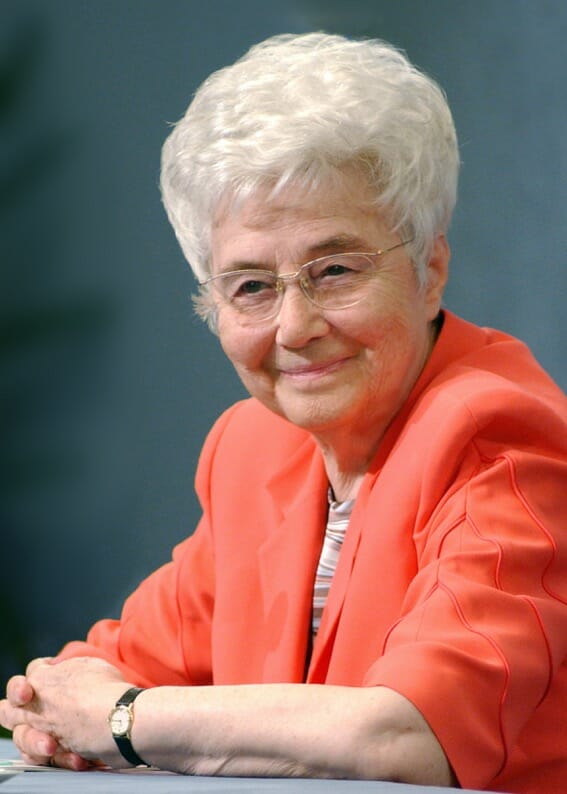
Her life was nurtured by the concept of sanctity rooted in the Gospel. Chiara Lubich had written: «We will find sanctity in Jesus, it will flourish in us because of love … If we aim to reach sanctity for its sake alone, we will never achieve it. We must Love, and nothing else. We must forego everything, even our attachment to sanctity, and aim only to love.».
The importance of this ecclesial event is underlined by the choice of the cathedral of Frascati (Rome), as the venue where Bishop Raffaello Martinelli chose to initiate the “Process of documenting the life, virtues, signs and renowned sanctity” of Chiara Lubich. The diocese of Frascati is the diocese where the International Center of the Focolare Movement is established, and where Chiara Lubich spent most of her life, and where she died. Her body lies in the Chapel of the Centre intself, in Rocca di Papa.
The opening ceremony for the “Cause of beatification and canonization,” also called the Prima Sessio or Postulation, will take place on Tuesday , 27 January, 2015; and will start at 4 p.m. with the recital of the Vespers. There will be a reading of the Introductory Decree of the Cause and the nulla osta or permission of the Holy See, the designation of the Relator by the Bishop and the appointment of the diocesan tribunal and those of the postulation commission. From this moment on Chiara Lubich may be called Servant of God.
The ceremony will be broadcasted live on the internet.
In a letter to the Focolare Movement, Maria Voce communicated the news with great joy, and wished all those who live the spirituality of unity to be «living witnesses » of what Chiara lived, announced and shared with all, in the common commitment to «become saints together.»
The procedure for the initialisation of the Cause began on 7 December 2013, the 70th anniversary of the founding of the Focolare, when President Maria Voce announced the decision to present a formal request to the Bishop of Frascati, Martinelli, through which she also stated that this was also the desire of many members of the movement, and aimed at boosting their spiritual and moral commitment for the good of mankind. In the months that followed the documents needed to carry out the canonical proceedings were gathered.
The fact that Chiara Lubich continues to be a light in these 5 years after her death is proven by the constant flow of people, to visit the places where she lived and where she has been laid to rest: more than 120,000 people from different continents and religious faiths, Cardinals, Bishops, scholars, politicians, the youth, members of associations and movements, people of non-religious cultures, children, adolescents and adults in search of hope.
We will become saints, Chiara further explained «if we put our mutual charity at the base of our sanctity (above all else, even before sanctity itself) – as the premise or principle, as the means for our sanctification and as its objective.»
Live streaming event: 27 January at 4.00pm (Italian time) : http://live.focolare.org
Press release
Chiara Lubich, Cause for beatification and canonization
20 Jan 2015 | Non categorizzato
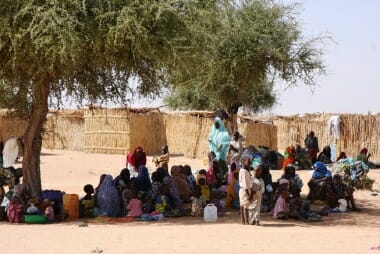
According to the United nations, there are 700 thousand people who are forced to leave their homes due to the violence in the northeastern states of Nigeria. Precisely during the days of the massacre in Paris, Nigeria was again in the news, with the criminal escalations in the State of Borno due to the actions of the extremist group of Boko Haram. They even spoke of kamikaze children who were made to explode in two markets of the Country. The population is defenseless, while contradicting politcal analyses are given and very few reveal the heavy economic interests linked to the exploitation of the petroleum resources of the country. There is great expectations for the presidential elections in February. In Nigeria the Focolare Movement is present with two centers, one in Onitsha (in the south of the Country) and one in Abuja, the capital: «After the first trip that we made to meet the people who were displaced by the internal warfare, we realized what the true situation is: the misery, diseases, hunger, lack of clothing, lack of shelter but especially the children with no hope for a future», George and Ruth, the persons responsible for the Movement in that African nation wrote to us. And so they organized a second trip, during the Christmas season inviting their friends, relatives, co-workers to join in: «We truly experienced the generosity of our people, in Focolare all kinds of God’s bounty arrived: money, food, clothes, medicines. We even received a car with a driver who was an expert and knew where to pass to avoid the dangerous areas». Three of us went on the trip: a focolarina who is a nurse, another person and the driver. Bearing many gifts «so as to bring the joy of Christmas to those people who more than anyone else resembled the Baby Jesus who did not even have a suitable place to be born». The situation was precarious: the medicines were not enough for their many needs: «I am a professional nurse – Imma shared – I treated hundreds and hundreds of sick people: malnutrition, anemia, malaria and various illnesses. Then we helped the bishop to distribute food to more than 5000 refugees. It is a very painful situation, and everyday other refugees arrive». «May this be the year of the Yes», Maria Voce wished for us in 2015, «a yes that is repeated an infinite number of times: yes to God who asks us for something unforseen, yes to that neighbour who needs our concrete love , yes to an unexpected suffering, yes to Jesus who is waiting to be welcomed by us in humanity, transforming suffering into joy, into life and resurrection». But what does this mean in situations of darkness, that seem to be without hope, like in Nigeria? «For us this is the everyday reality – Ruth and George continue – in the difficult circumstances in which we find ourselves in our Country. There are so many sources of Evil. In front of this situation we cannot remain indifferent. When we arrived there, where the people are suffering the most, we touched concretely that which Jesus repeats to us even today: “you did it to me”». And, on behalf of the whole Focolare community of Nigeria, they would like to convey to us their gratitude for the prayers and support that has reached them in many ways, «above all in this moment, and also before and after the presidential and legislative elections».
19 Jan 2015 | Non categorizzato
20150119MariaVoceTG1TG1, 8:00 edition, January 2015 (around 8:10)
Uno Mattina, January 19 – beginning at 21:38 and from 28:33
19 Jan 2015 | Non categorizzato
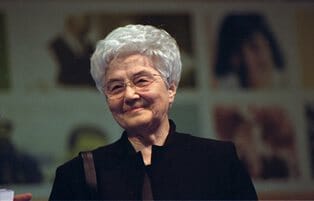
The opening of the Cause was joyfully announced in a letter to the Focolare Movement, in which president, Maria Voce, invited all those who live the spirituality of unity to be a “living witness” to what Chiara had lived, proclaimed and shared with so many; that is, the common effort of “becoming saints together.”
The decision to solicit the opening of the Cause of Canonization had been announced by Maria Voce on December 7, 2013, with the hope that such recognition would encourage many in their moral and spiritual commitment to the good of humankind.
The event on January 27th can be followed via the Internet 4.00 – 6.00PM (CET): http://live.focolare.org
19 Jan 2015 | Non categorizzato
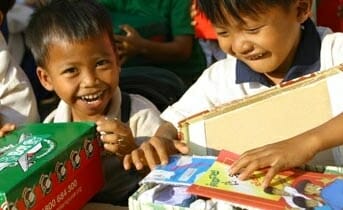
Here, December 25 is not a holiday – a volunteer at the centre for children with disabilities told us. Nevertheless, informing ahead of time the families of these children with disabilities who are undergoing rehabilitation with us, we at least take a break for one day. And so, together with the youth in our team, we thought of spending Christmas at the Center by having lunch together.
They also invited other young people who have helped us during the year in our service in some orphanages and who were happy to share this moment with us. Some of them are Christians while others are not, just like the majority of the people around us, but the desire to be one family is in the heart of each one. When we greeted one another there was that look of joy in everyone in expectation of something beautiful.
In this period, some families with their children whom we are taking care of and who come from faraway, are housed near the Center, where we try to put into practice the spirituality of unity. They are passing through very difficult and painful situations, for many reasons. Even if we had suspended our services for the day we told them that whoever wished to join us to share a moment of celebration were welcome to do so. All of them said yes. A mother cried tears of joy at our invitation: “I know that Christmas for you is a very important celebration, if you have invited me it means that I too am important!”.
Another mother, just three weeks ago had taken the train to come to the city with her husband to search for medical treatment for their daughter who has a severe form of cerebral paralysis. She went to several places but everyone told her that it was not worthwhile and it would be better for them just to go home and accept things as they are. With great sadness in her heart, she already had the train tickets to return home in the afternoon. But then she remembered one of her Christian relatives who some time ago told her about a church that she had visited. Even if she was not Christian, she felt the push to go and look for this church. She found it and met a priest. He knew one of the youth in our team who sings in the church choir, and so he told her: “Look, just fifteen minutes from here there is a place where they take care of children like yours, why don’t you try to go there”. He explained to her the route and she arrived in our center. Even if she did not have an appointment, two of us welcomed her. After awhile she called her husband who was waiting at the hostel and she told him: “We will not leave anymore”.
Later we understood that their relationship was undergoing a moment of crisis because of their daughter: “When I arrived here, what immeediately touched me was the smile of the people. I found hope once again and my husband is also not as depressed”.
The invitation to the Christmas celebration was also exptended to them. Christmas… a God who made himself little so as to make us all brothers and sisters!
