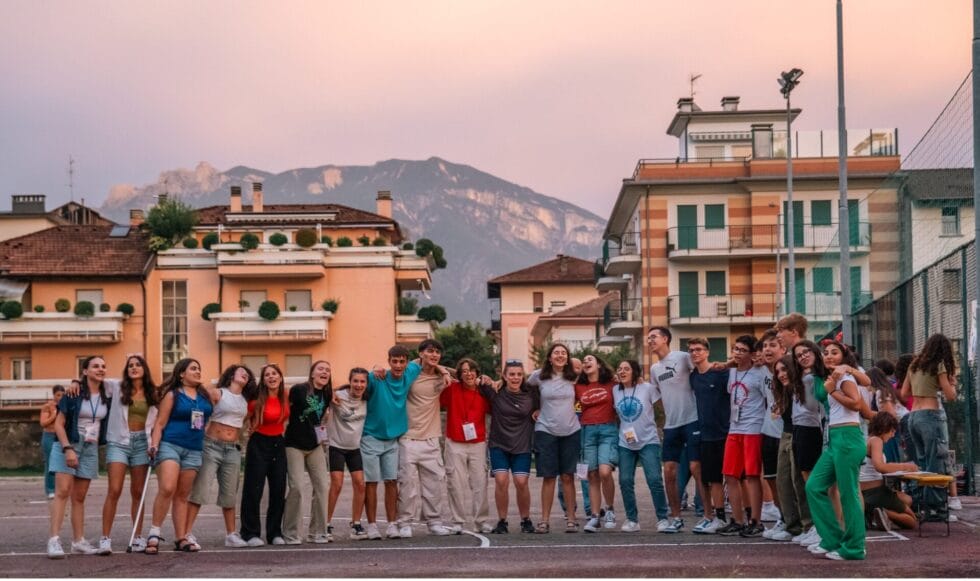
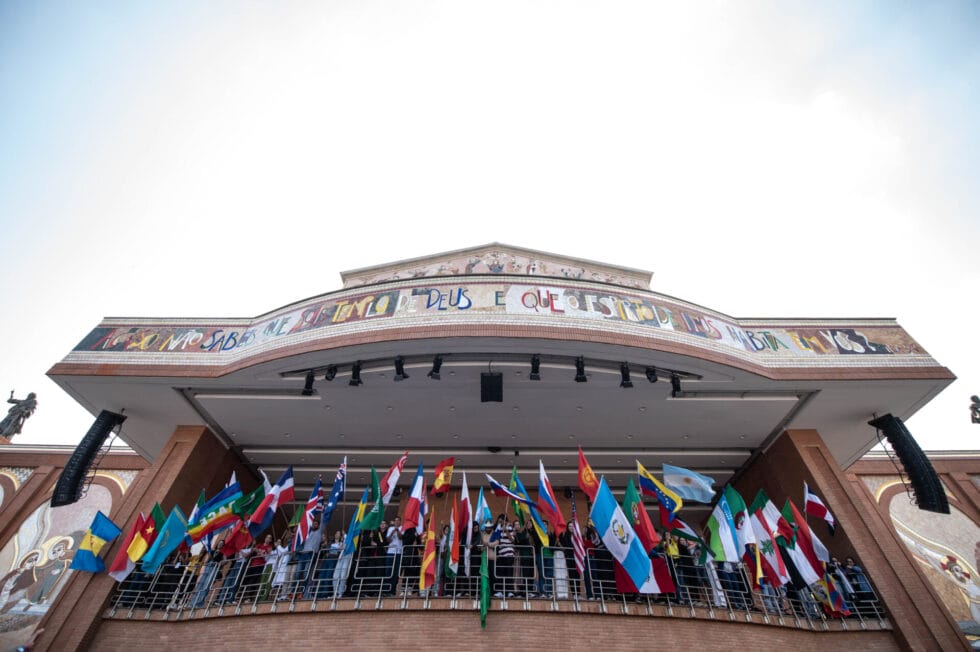
In early August in Trent, Italy, the Foco School, a Focolare Movement congress for the Gen3 boys and girls, the adolescent generation of the Movement, was held.
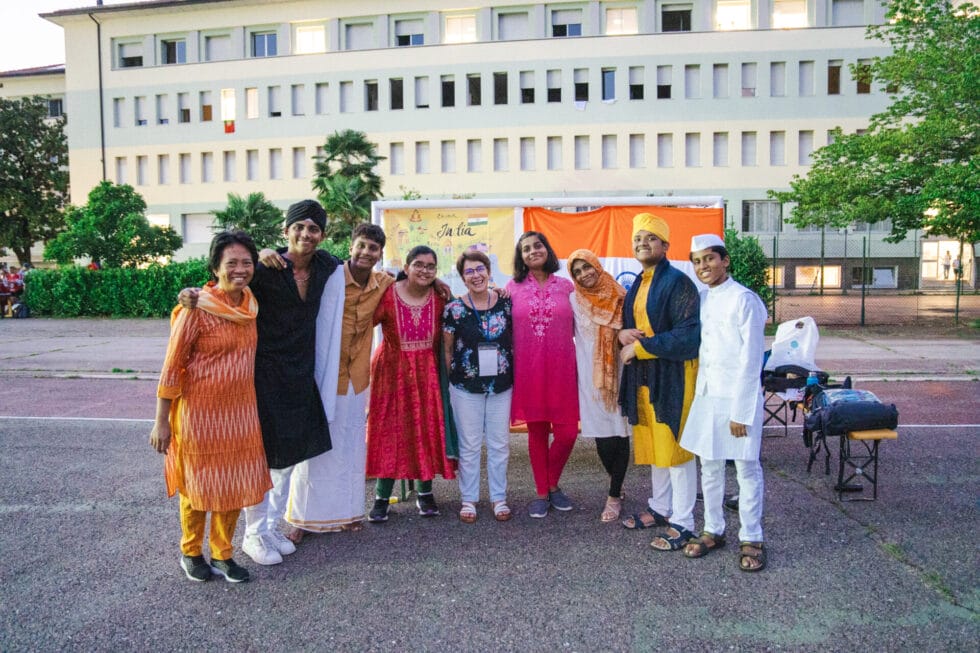
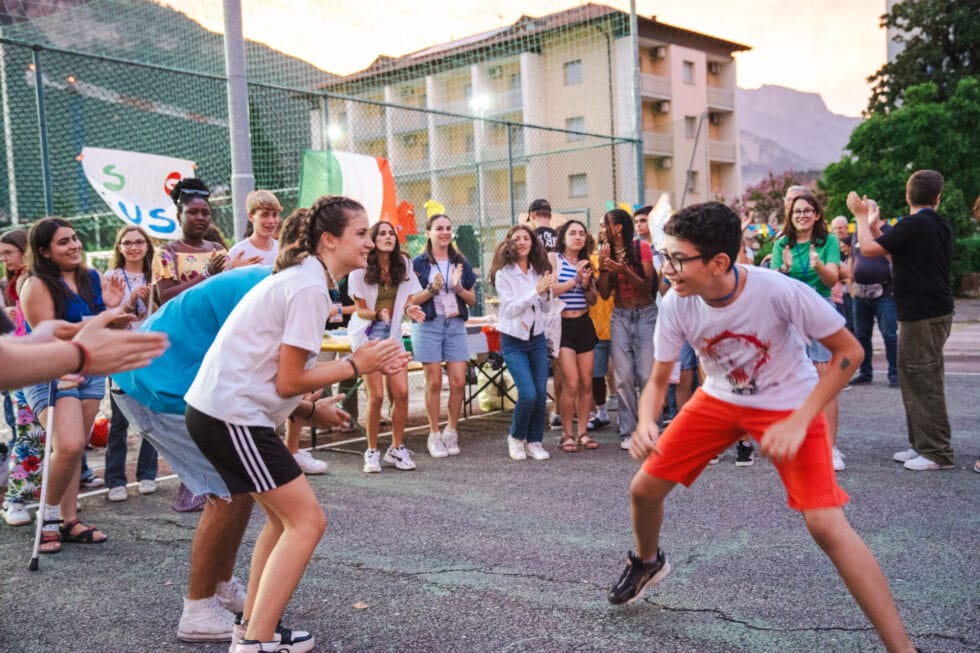
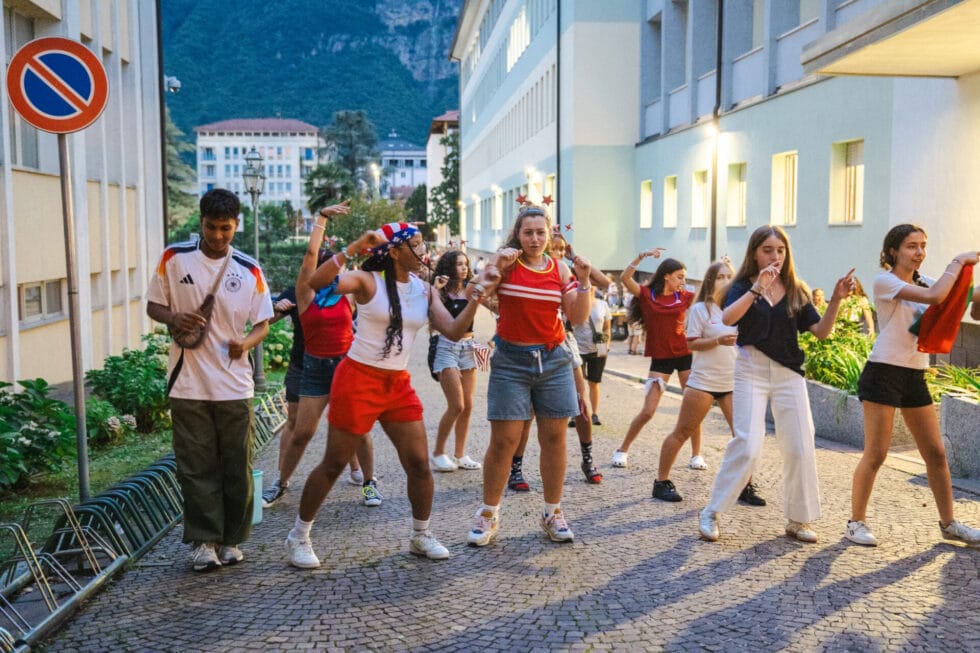
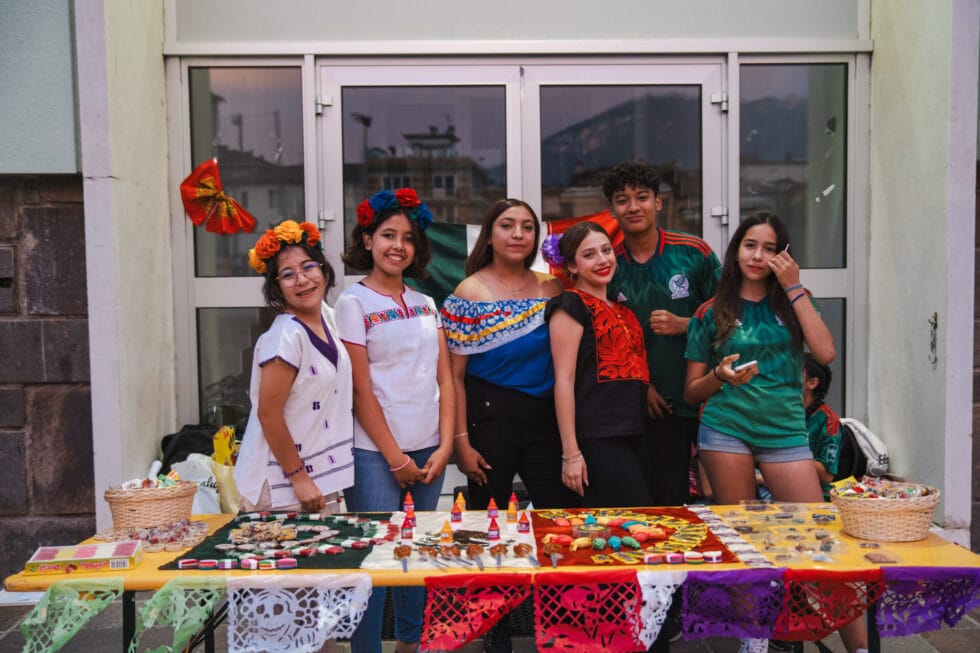
A total of 350 participants attended – ages 14 to 17 along with assistants ages 18 and older – from 19 nations with 12 different languages. A little over a week to deepen adolescent themes, experience in depth the relationship with God, discover how the Ideal of unity and universal fraternity is possible to live it and build it day by day despite the threat of wars in various parts of the world. There was also a Festival of peoples where each nation could represent itself through songs, dances, outfits, photos, and local food. A way to learn about each other’s culture and build a piece of a world that is more united and fraternal.
Here are some testimonies.
Sofia, Italy: “I decided to attend the Foco school to have a more intimate relationship with Jesus. From this school I learned the way to always love the people around me. I can better cope with moments of difficulty and pain by feeling closer to Jesus.”.
Veronika, Croatia: “I experienced a united spirit that flows from the desire for peace and community, which is based on prayer and dialogue with God. After listening to the testimonies about the violation of peace, about the struggle to keep peace in oneself, in one’s family, in one’s country, the desire to do everything to keep peace in these places was awakened in me.”.
Naomi, India: “I attended the Foco School to improve my relationship with God. At the end what I took home was how I can take comfort during times of difficulty or pain by thinking of Jesus forsaken on the Cross. But I also discovered the power of reconciliation through confession. I will always try to use my whole self to propagate the Gospel and make my city a place of love.”.
Tomás Portugal: “During the Festival of Peoples, I was proud to show our country and at the same time learn about the cultures of other countries. After this school, I miss everything I experienced there, but I also want to live what I learned there every day.”.
Emanuel, Croatia: “At Foco School, I enjoyed the Festival of Peoples. We were able to learn about different cultures and traditional dishes. I met many friends there and tried various specialties. I would gladly relive this experience 100 more times.”.
Gloria, Brazil: “I have felt changes in my relationship with God. At first I could not connect with Him and feel Him in people, but I know that after all the experiences I have heard and reflections I have experienced, I can easily feel Him in every situation. Also, I have learned to help people I don’t like, to help people with problems and to identify God in everyone.”.
Sarahi, Mexico: “I realized that even though we live in different countries and even on very distant continents, the Ideal of unity can always be lived. It was a very good experience especially to learn about other countries’ culture, food, their clothes, some words and traditions. What I took away from the school is that first of all I stopped being afraid of confession and this made my faith in God grow. Daily Mass has helped me a lot, I hope to continue going every Sunday of my own free will.”.
Sebastian, Croatia: “I liked it when we represented our countries at the Festival of Peoples: everyone showed some tradition of their country. It was a lot of fun when we played soccer in the evening and got to know each other like that. My favorite moment was the final party where we sang and had fun. My life changed after the school, now I try to live the gospel by loving the people around me.”.
Silvia, Italy: “After the school my life turned around and I began to see the world with different eyes. It was the most meaningful experience of my life and made me want to be able to resemble what Chiara Lubich always wanted from the Gen.”.
Anna, Italy: “I highly recommend Gen who have not yet attended a Foco School to do so! You will have a lot of fun, I can guarantee.”.
Jakov, Croatia: “At Foco School, I understood the importance of unity. When I arrived, everyone was welcoming, it felt like one family. Rarely have I experienced this feeling before, maybe never. Also, I understood how to love and want everyone, regardless of who they are and their background. I would like to experience more such encounters, it was an unforgettable experience.”!
Julia, Brazil: “I take home the immeasurable love of Jesus for me and for everyone, as well as the hope and the feeling of wanting a united world to become a reality. Seeing that Jesus loves each one of us and being able to feel his love at Foco School was one of the most beautiful experiences I have had and I will definitely take it with me. I found hope and faith again. Now the challenge will be to bring the love and unity I felt at school into the “real world,” at home, at school, with my friends. But it is the memories and the love of what I learned in that experience that will push me to not give up and to fight for a united world.”!
Maria Teresa, Italy: “I participated in the Foco School as I felt a desire to know more about the origins of the Focolare movement. From this School I take home the hope for a better future for our generation. My life has improved because I have realized that I have to look at it from a different perspective, make every obstacle a launching pad! Being very insecure, I am always afraid to play the violin in public. In fact, when I was proposed to play at the school I was a little unsettled. Then one day there was a talk about how each of us can give to others our own talent or quality, which Chiara Lubich calls a “pearl.” So I decided to give my pearl to others, and while I was playing with another Gen, a group of boys and girls came up to accompany us with singing, giving us support. I lived Luke’s Gospel passage (Luke 6:38) “Give and it will be given to you.”.
Elena, Italy: “At the end of this school, I take home what I understood during a day dedicated to Jesus in his pain, abandoned on the Cross. It also affected me deeply because, thanks to the testimonies of the Gen, I was able to understand how to overcome pain through love.”.
Tomás, Portugal: “I brought home the discovery of Jesus forsaken, the power of prayer, as well as confession. I will carry God’s love wherever I go, I have strengthened my faith, I have learned a lot from this school.”.
Video in Italian. Activate subtitles for other languages
The whole Genfest experience – from ‘Phase 1’ to ‘Phase 3’ – is a tangible witness that you young people believe in, and indeed you are already working, to build a united world. These were days of extraordinary graces for all of us; we put ”care” into practice in various ways: – in Phase 1, through service to the poor, the marginalised, those who suffer most, and we have done this by living reciprocity, the typical way of living communion of the charism of the Focolare Movement; – in Phase 2, in sharing life, experiences and cultural riches; – and then, in Phase 3, we have experienced the extraordinary generativity of communities, which are also an intergenerational space for formation and projects.
Someone told me about the creativity that each community has developed and the interesting workshops in which you have participated (which you just told me about).
“From Genfest I take my community home with me,” one of you said, “it is something practical that continues. A chance to live the Genfest experience on a daily basis’.
You felt that you were protagonists in the construction of these communities, and you want to continue to “generate” ideas and projects. It has given me joy to know that some of you have said that you have rediscovered the meaning of your profession, and that you now want to live it in the name of a united world.
We have walked together during these days, with a style that Pope Francis would call ‘synodal’ and not only among you, young people, but with adults; with people from other movements and communities; with people from different Churches and Religions and people who do not identify with a religious belief. This network greatly enriched the Genfest!
The presence of some bishops who experienced Genfest together with us was also very beautiful.
Now Genfest does not end! But it continues in the United World Communities where we will remain connected both globally and locally
I am sure that when you arrive in your countries and cities, you will understand where you would like to get involved, according to your interests and your studies or your professions: in economics, intercultural dialogue, peace, health, in politics etc.
In these days you have had the experience of living these “communities” in “unity”; a reality that will continue. This will be your training ground in which you will learn and you will train to live fraternity.
When I was your age, I was very struck by an invitation Chiara Lubich made to everyone:
“If we are one, many will be one and the world will one day be able to see unity. And so? Establish cells of unity everywhere” (1) – perhaps Chiara, if she were alive today, would call these cells of unity, “United world communities” – she invited us to concentrate all our efforts in this.
That is why now, I would like to ask you something important: please, please do not miss this unique opportunity, it’s a unique opportunity that we have lived here. God has knocked on the door of the heart of each one of us, and is now calling you all to be protagonists and bearers of unity in the various spheres in which you are engaged.
Yesterday as I was leaving, someone stopped me, one of you who was here in the hall, and said I have to tell you something, please can I tell you something important. She said it was the first time she had participated in a Genfest and she didn’t know the Focolare Movement, and she said: “I want to tell you, you should do much more because this movement isn’t well known, you should do more but not as you have been doing up to now, you need to do more because this Movement, this idea of fraternity, needs to be known by many more young people.” So I asked her if she could help us and she wants to commit herself. But now I hope that all of us are committing ourselves to doing this.
Of course, as you heard before, it will not all be easy and we cannot deceive ourselves that difficulties will not come… but in this Genfest you yourselves have announced: ‘a God who is different, abandoned on the cross, you have said abandoned on the cross, all divine and all human, asking questions without answers’ and for this, a God who is close to all of us. It will be by embracing every suffering, our own or that of others, that we will find the strength to continue on this path.
So let us go forward together with a new hope, convinced more than ever that a path has now been mapped out.
And, something beautiful that the Chinese writer, Yutang Lin, says: “Hope is like a road through a field; there has never been a road, but when many people walk there, the road comes into existence”. I think that in this Genfest, this road has begun to exist, So, let’s walk, and this road will be there in front of us.
So I greet everyone, have a wonderful time to those of you who will be attending the post-Genfest and safe travels to those returning home!
Ciao to everyone.
Margaret Karram
(1) Chiara Lubich, Conversazioni in collegamento telefonico, Città Nuova, 2019, p. 64.
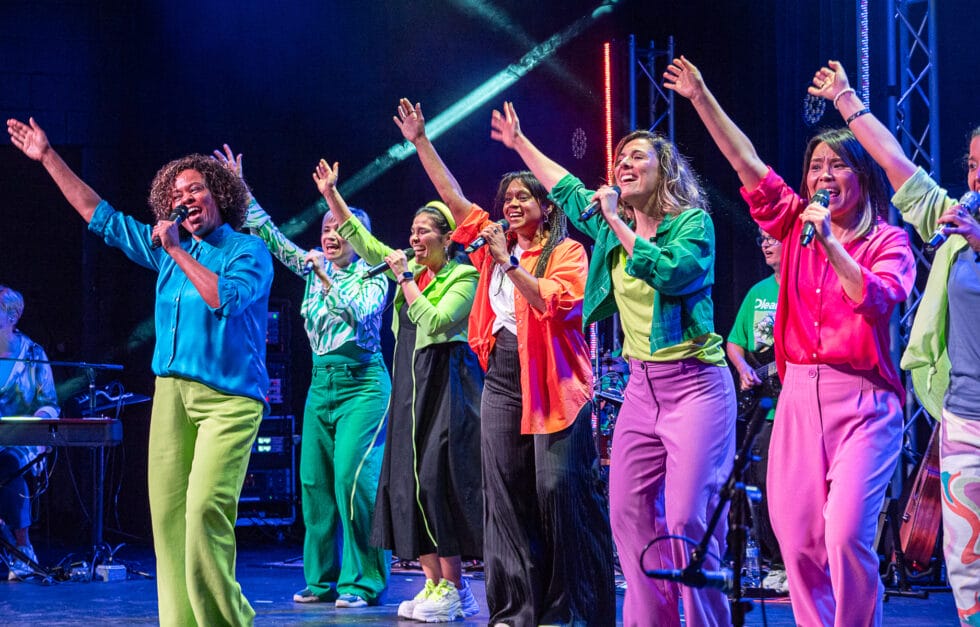
‘Start Here and Now’ is the latest single from international band Gen Verde. A hymn of unity, strength, courage and joy featuring two youth music groups: Banda Unità (Brazil) and AsOne (Italy). ‘All of us, together with our diversity, are invited to go beyond borders to build a world where care, love, justice and inclusion are the answer to pain, the horror of wars and divisions,’ explains the band.
What is behind the song?
‘The new song is in itself a ‘beyond borders’ experience because of the way it was produced,’ the band continues. The vocals were recorded in three different parts of the world and the video was also shot in three different locations: Loppiano and Verona (Italy) and Recife (Brazil).
The project includes the participation of two youth music groups that share Gen Verde values. Banda Unità is a Brazilian band and AsOne is a band from Verona, Italy. These groups also want to share, through music, the values of peace, dialogue and universal brotherhood.
‘Start Here and Now’ has an intergenerational and intercultural mix,’ continues Gen Verde. “This single stands out for its highly engaging rhythm and powerful lyrics, sung in different languages, to bring out the creative process inspired by interculturality and the commitment to universal brotherhood that is emphasised in the international Genfest event”.
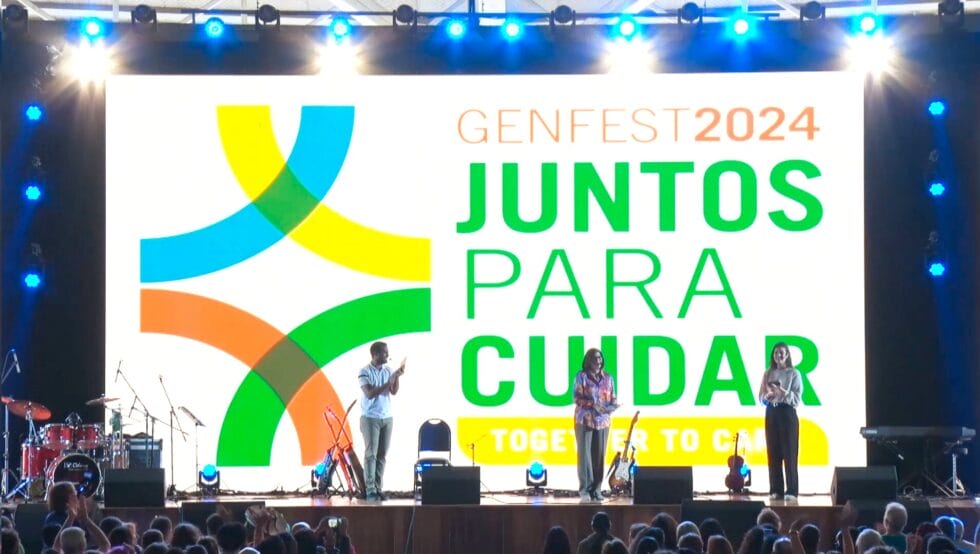
Gen Verde played this song for the first time in Aparecida, Brazil, together with the musical groups Banda Unità and AsOne on 20 July 2024 during Genfest, the Focolare Movement’s global youth event. This edition was entitled: ‘Juntos para Cuidar – Together to Care’.
The third phase of Genfest 2024, held in Aparecida, Brazil, included workshops organized by so-called United World Communities – meeting places where young people can share their talents and passions. These communities offer the opportunity to discover talented people, concrete forms of commitment and initiate actions and projects aimed at building a more united world, which seek to respond to the local and global challenges of today’s world; to activate processes of personal and collective change; and to grow fraternity and reciprocity in all dimensions of human life. An important feature of these communitites is that they are the fruits of work between people of different generations.
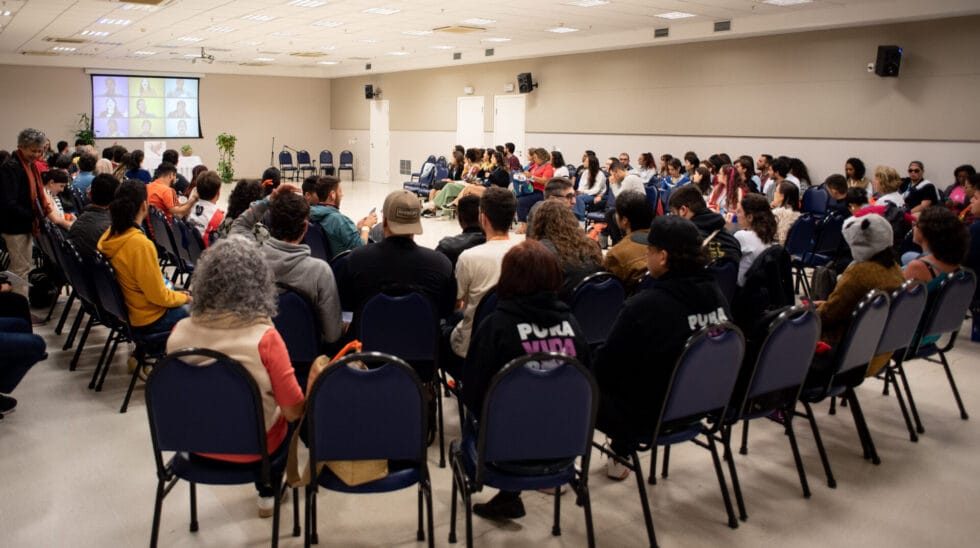
Continuing the experiences of the previous phases of Genfest, in this third phase the youth were able to participate in workshops in different areas, whose methodology was based on fraternity and dialogue, as a proof for projects and actions that can now be developed in the “glocal” sphere (local projects with a global perspective). Activities were held in the areas of economics and work, cross-culture and dialogue, spirituality and human rights, health and ecology, art and social engagement, education and research, communication and media, and active citizenship and politics. The teams responsible for running the workshops were composed of young people and professionals who worked intensively for months to organize these activities.
From now on, Communities will have a working method that consists of three steps: Learning, Acting, and Sharing. The first (to Learn) is an in-depth exploration and analysis of the most current themes and issues in each community, with the goal of identifying problems and presenting solutions. The next phase (Take Action) is the implementation of actions with primarily local impact, but with a global perspective. Finally, in the third phase (Sharing), it is proposed that the community promote spaces for ongoing exchange and dialogue between initiatives, with the aim of strengthening the global collaboration network. An application-the United World Communities WebApp, -has been created as a tool for sharing ideas, experiences and news, as well as promoting collaborative projects.
“God has visited everyone’s heart.”
Al termine della terza fase del Genfest, le Communities hanno presentato in modo creativo le loro impressioni e alcuni dei risultati delle attività svolte nei giorni precedenti. Da questo lavoro è nato il documento “The United World Community: One Family, One Common Home”, che sarà il contributo dei partecipanti del Genfest 2024 al “Summit of the Future” delle Nazioni Unite del prossimo settembre. Secondo i giovani che hanno presentato il testo, esso non è un documento conclusivo, ma vuole essere un “programma di vita e di lavoro” per le varie United World Communities, oltre che una testimonianza da presentare al “Summit of the Future”.
“With our communities we don’t want to make demands, formulate slogans or complain about political leaders,” the young people said. “Instead, we seek to name our common dreams, dreams of a united world. Personal and communal dreams, which will guide us in our activities in the coming years.” They concluded, “We hope that by living them, ‘together’ and step by step, they will become signs of hope for others.”
Margaret Karram and Jesús Morán, President and Co-President of the Focolare Movement, also spoke at the conclusion of Genfest 2024. Jesús Morán said that although the experience of care has been the most lived experience in human history, it is not the one that has been reflected on the most.
This has begun to change, as was demonstrated at the Genfest, in which care emerged as a response to the need for human dignity. In this sense, he concluded, it is important that young people remain connected to this global network of generative communities. Margaret Karram, for her part, said she has seen throughout the Genfest experience that young people have given tangible witness to their faith and are already in action to build a united world. Regarding Phase 3 in particular, she emphasized the richness of this experience because of its creativity, intergenerational and intercultural imprint, and the fact that, through the communities, there is a concrete possibility of living the same Genfest experience in one’s daily life. She concluded by calling on the young people to be the protagonists of these communities, the foundation of which is unity. “Please do not miss this unique opportunity that we are experiencing here: God has visited the heart of each of us and is now calling everyone to be protagonists and bearers of unity in the various areas in which they are involved”.
We have just heard stories of peace that were expressed in the most varied forms: songs, prayers, experiences, real projects.
All this strengthens in us the confidence and hope that it is possible to be peacemakers. Pope Francis says that we must be ‘artisans of peace’ every day. And to do this we need perseverance and patience to be able to look with love at all the brothers and sisters we meet on our path.
From this Genfest we have learnt that peace begins with me, with small gestures of care for others, for our peoples and for creation.
So where can we start?
We have said it several times in these days: by breaking down all the barriers that divide us, so as to live for fraternity. And this we can do:
by discovering that our common humanity is more important than all our differences;
then by being ready to forgive and to make gestures of reconciliation. Because to forgive means to say to the other: ‘You are worth much more than your actions’.
And as we did in the first phase of Genfest, let us continue, even when we return home, to be artisans of peace in our relationships, taking the first step towards others. Love will inspire us what to do, and to whom we should go.
Let us forgive without waiting for the other person to ask for forgiveness.
May this Genfest be the moment of our YES TO PEACE.
We must never feel alone again. In these days we have seen and certainly we have experienced the power of ‘togetherness’, Juntos.
Let us be united with all those who are living and working for peace. The communities we are going to build in Phase Three are already a possible way forward.
Open your eyes to visions of peace! Speak a language of peace! Make gestures of peace! For the practice of peace leads to peace. Peace reveals itself and offers itself to those who achieve, day after day, all the forms of peace of which they are capable.(*)
Open, speak and act.
So: let us not be at peace until we bring about peace!
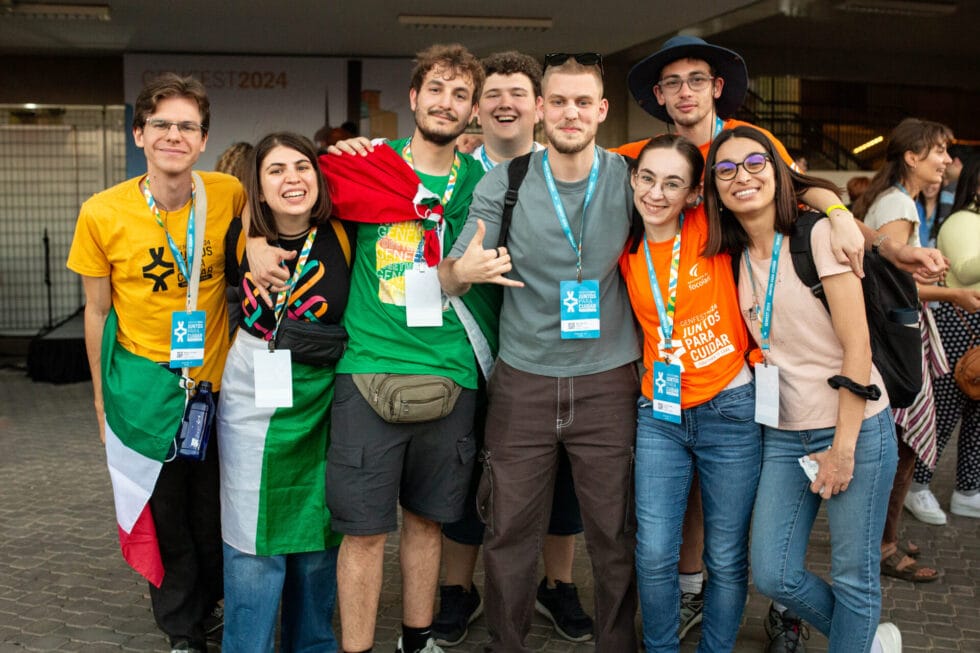
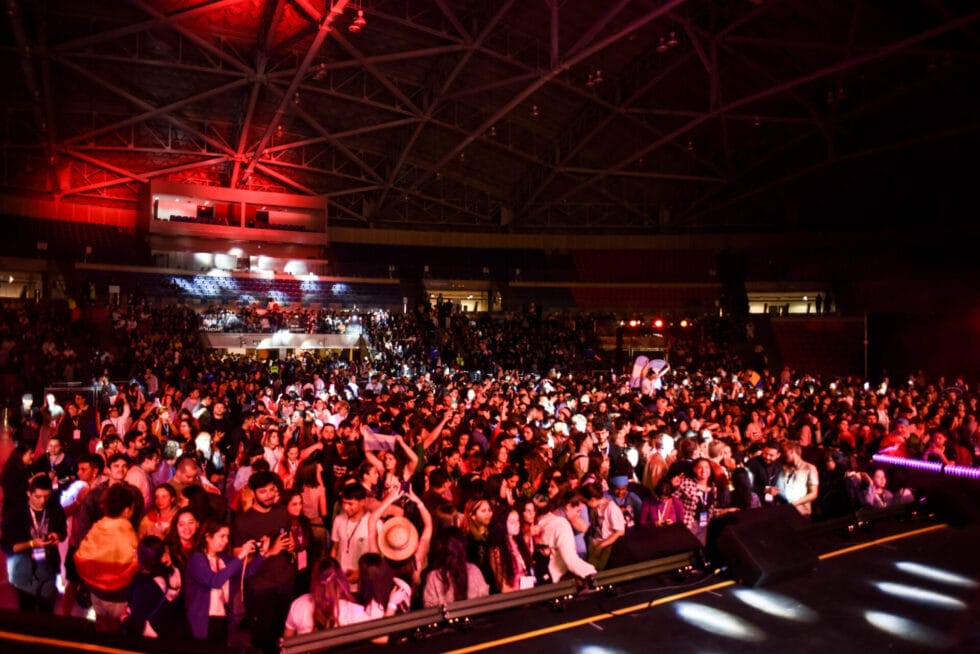
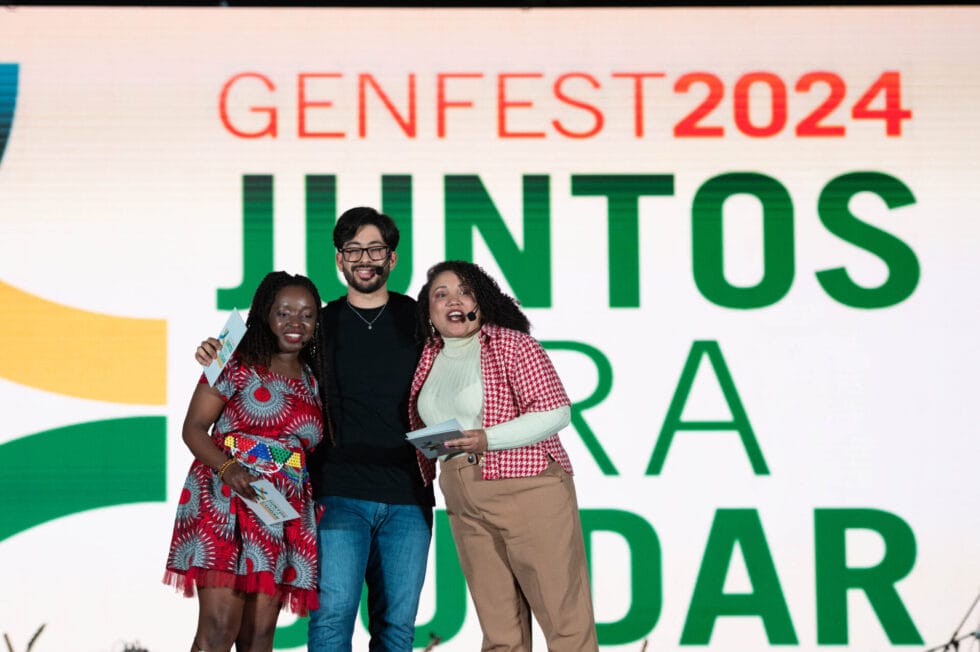
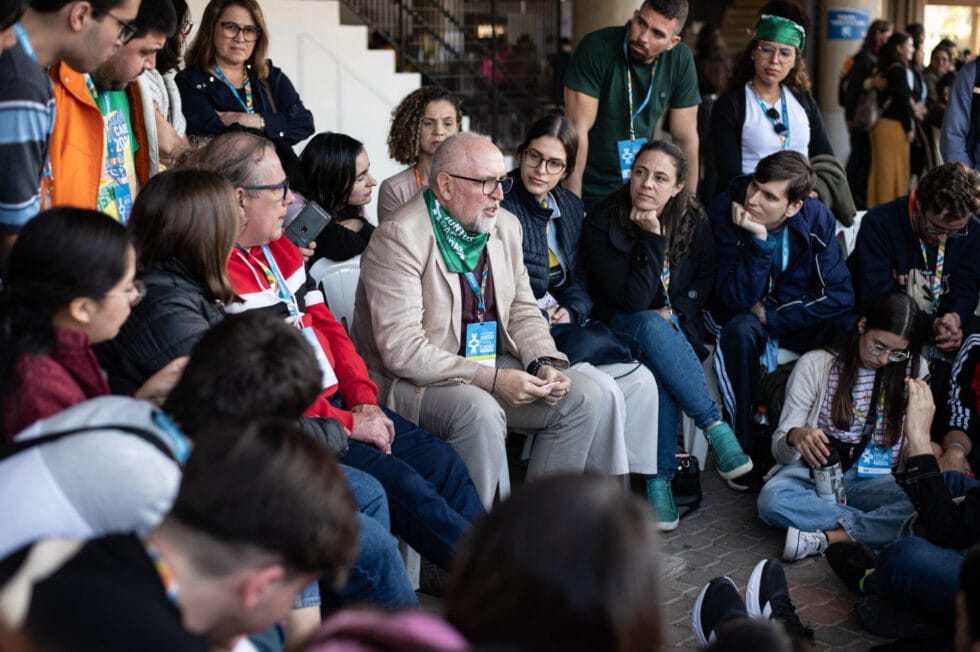
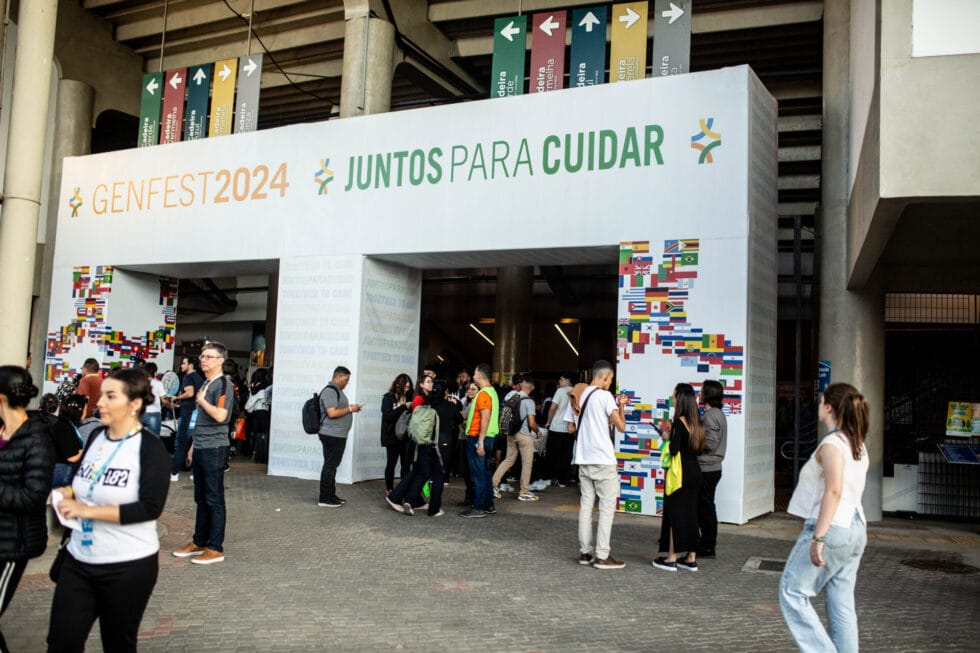
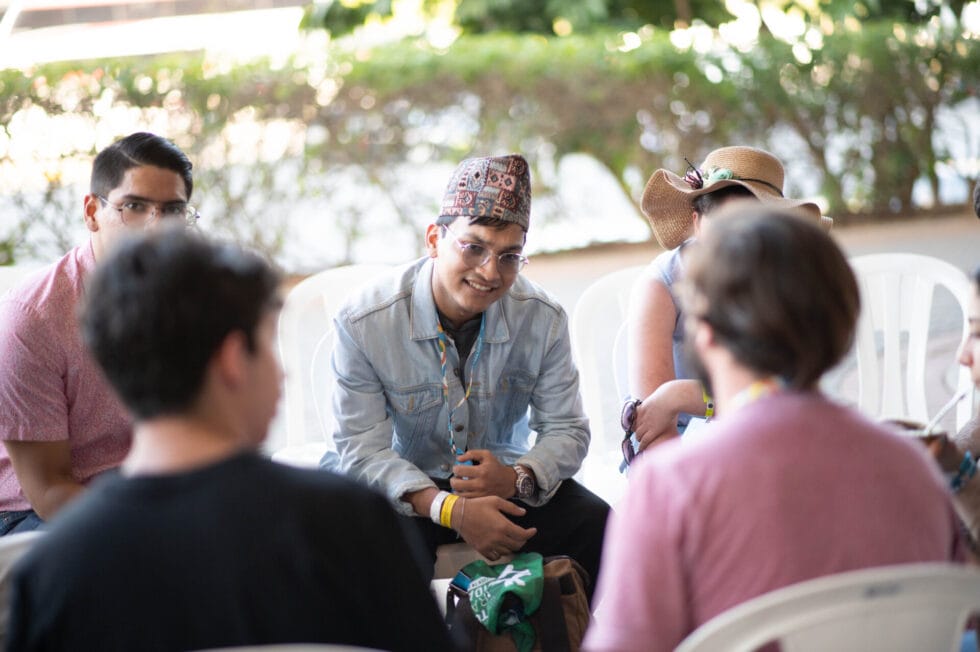
Beginning on July 19, 2024, the second phase of Genfest 2024, the event and the youth of the Focolare Movement, concluded its program on July 21, 2024 with the celebration of the Holy Mass in the Basilica of the National Shrine of Aparecida, in Aparecida (São Paulo), Brazil. The central event of Genfest, which for the first time had its international version on the Latin American continent, brought together about 4,000 participants from more than 50 countries and, from the beginning, was marked by contagious joy. In addition, thousands of people around the world followed part of the program via streaming.
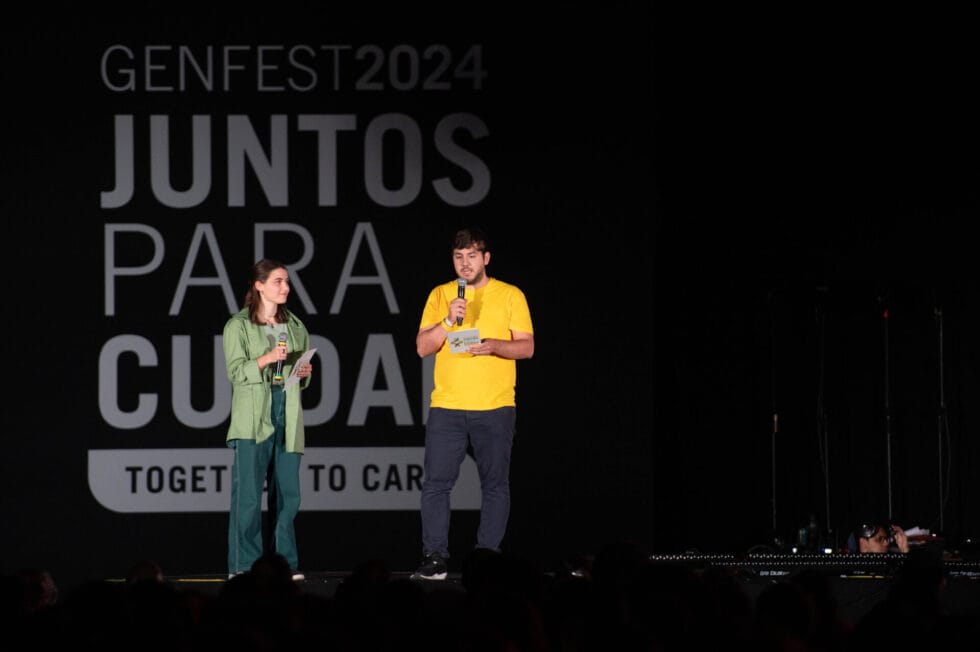
With the theme “Together to Care,” the young people gathered at the “Father Vítor Coelho de Almeida Event Center” promoted an intense program that combined celebration, art, creativity and testimony, an expression of the conviction that building universal fraternity requires concrete initiatives to take care of life on the planet, especially in terms of caring for people in different conditions of vulnerability and nature, as Pope Francis insistently requested.
Opening Ceremony
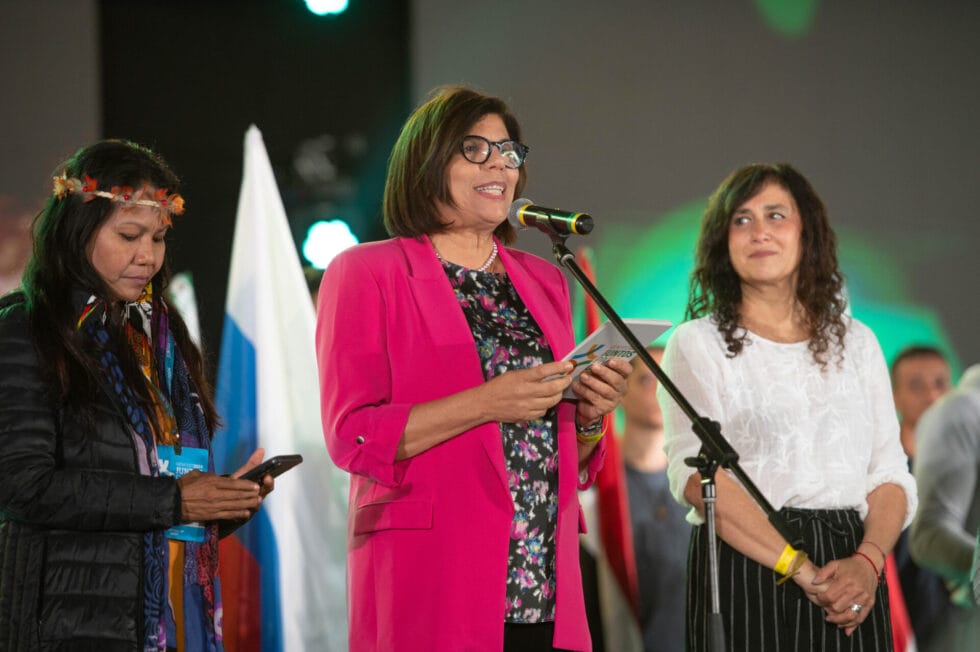
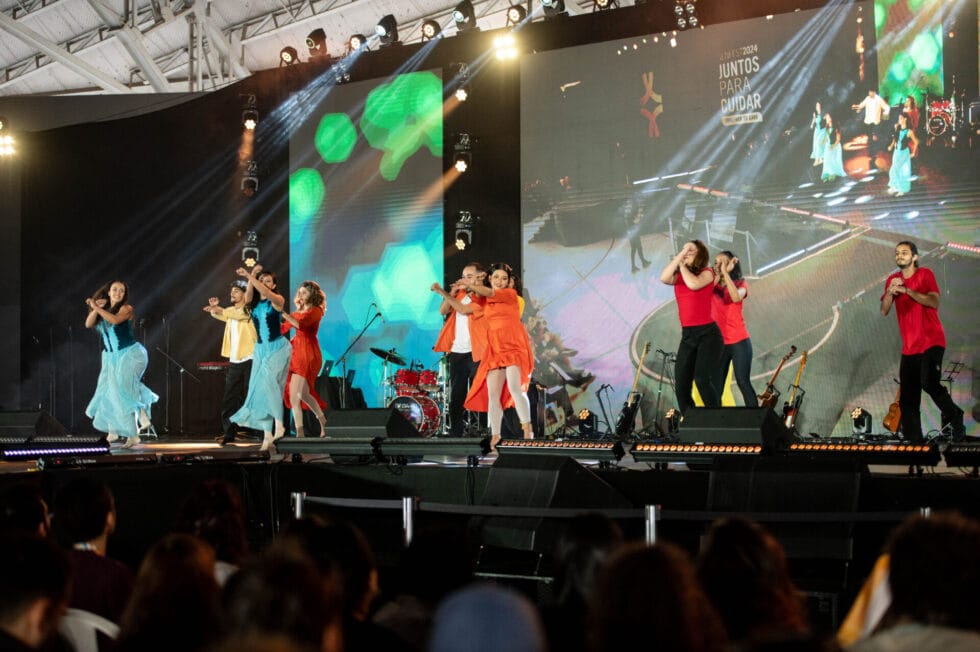
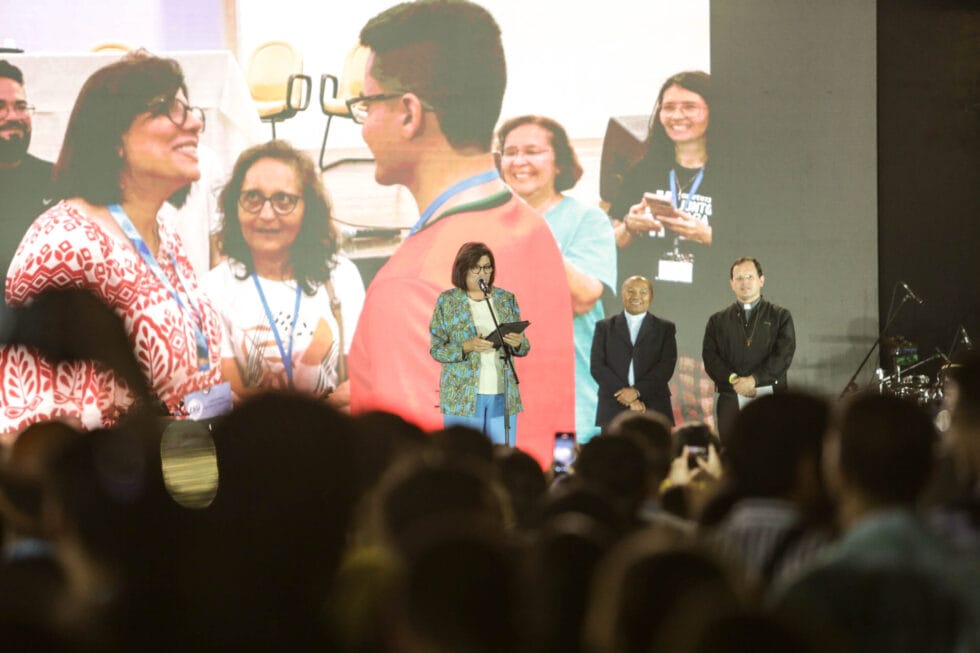
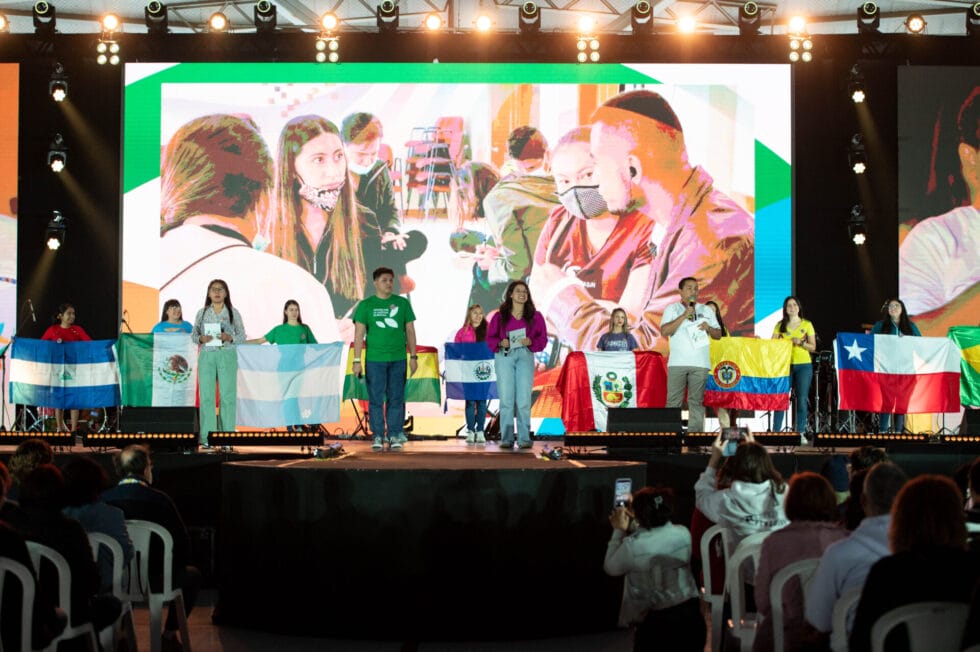
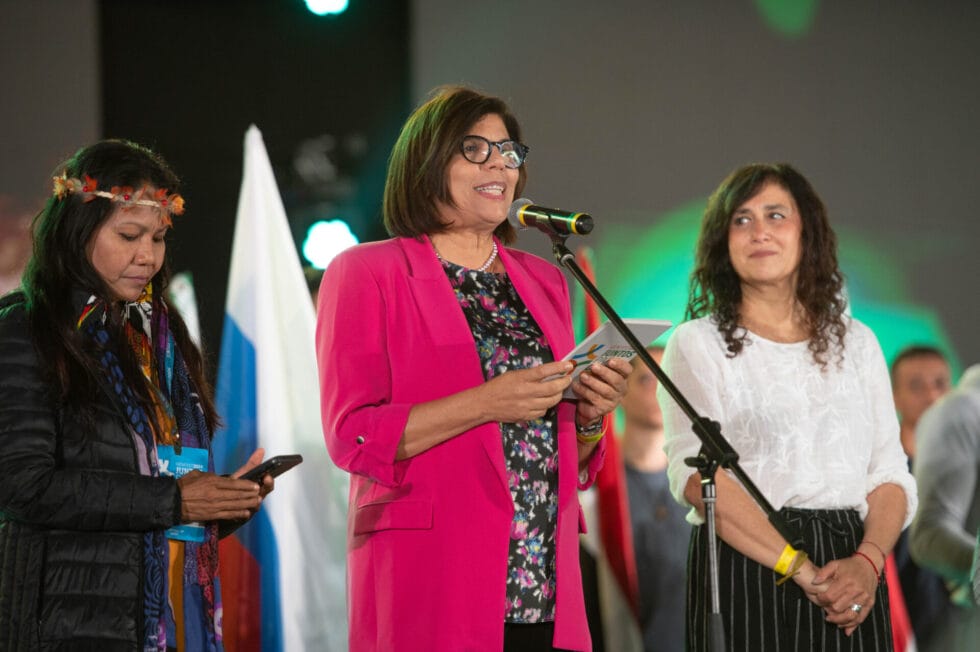
At the inauguration, the young people were welcomed by the Archbishop of Aparecida, Msgr. Orlando Brandes; the apostolic nuncio to Brazil, Msgr. Giambattista Diquattro; the rector of the Aparecida Shrine, Father Eduardo Catalfo; and the president of the Focolare Movement, Margaret Karram, among the dignitaries present. Bishop Orlando Brandes read a message sent by Cardinal Piero Parolin, Vatican Secretary of State, on behalf of Pope Francis. “We know how to react with a new dream of fraternity and social friendship that is not limited to words,” was the message read. In her words of greeting to the youth, Margaret Karram emphasized that “together, our dreams will come true.” Afterwards, the youth were treated to a “Latin American party” with artistic performances typical of different countries. It was an explosion of joy that involved everyone.
Day 2
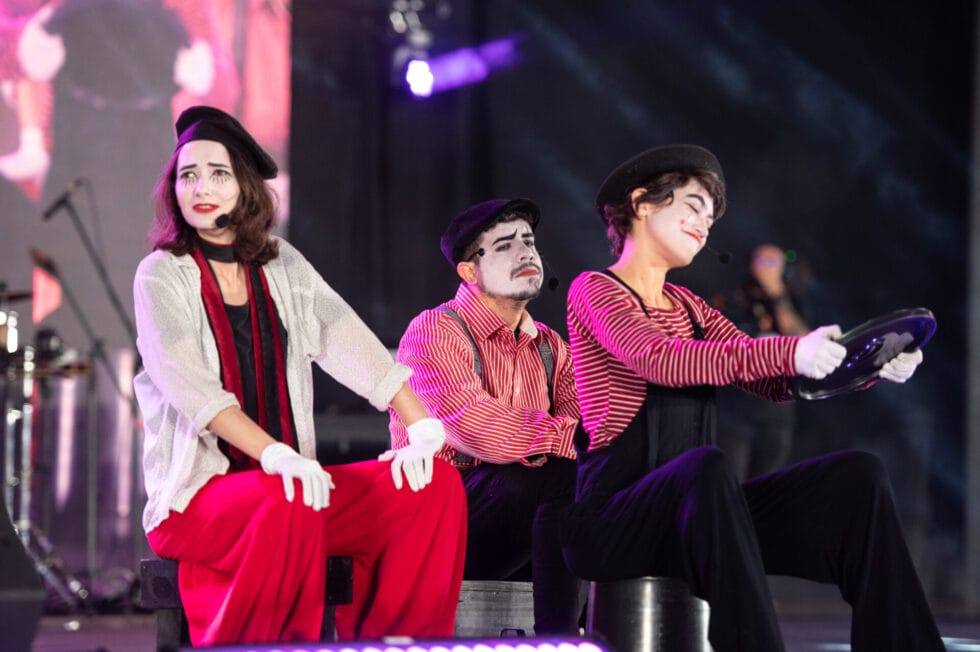
A time to find directions, or more precisely, paths, for a united world. This is how the second day of the second phase of Genfest 2024 began. On the one hand, young people from around the world told how they tried to build fraternal relationships in their environments. This was the case, for example, of Adelina, from Rio Grande do Sul, Brazil, who had to deal with the tragedy caused by the rains that hit her city in May 2024, and Joseph, from Sierra Leone, who was separated from his family as a child and recruited by militiamen fighting the African country’s government troops with acts of violence. Artistic moments drew attention to some major issues in the world today, such as ecology and citizenship, while so-called spark changers, specialists in different areas, offered the audience some brief reflections that could bring about change in the world.
Saturday’s program also included a “preview” of Genfest Phase 3: workshops were held on different themes, always with a view to “caring” for life in its different expressions. Finally, a journey around the world with stories of personal resilience or social action, but all that had fraternity as their motivation to “embrace humanity and initiate change.” The second day’s program was concluded on the Genfest stage which saw a number of young people from Turkey, Australia, Zimbabwe, Bolivia, Italy and Colombia telling how they have faced or helped others cope with grief when it seems to take away the meaning of life. The presentations, however, were not limited to personal stories. A wide variety of social initiatives were also presented on stage, such as Rimarishun, a cross-cultural project in Ecuador. Also presenting from Brazil were the Amazon Project, Quilombo Rio dos Macacos di Salvador (Afro-descendant communities) and La Casa do Menor, whose choreography received a standing ovation.
Closing Ceremony
The program for the final day of the second phase of Genfest 2024 began by looking to the past to think about the future. Some of the projects launched at the last Genfest in 2018 were recalled and have already begun to bear fruit, even in the real sense, as in the case of planting trees in areas prone to degradation. Following the example of what was done in the last Genfest in Manila, Philippines, some projects were presented to be continued after these days.
The first project will start with the third phase of Genfest. These are the “United World Communities,” which will bring together young people-including those who could not attend the event in Aparecida-in groups by areas of knowledge, from economics to work, from politics to citizenship. Young people interested in the various areas will be able to sign up for these communities based on their “passion,” as the organizers put it.
An important tool for implementing these communities is the United World Project. Launched in 2012 at Genfest in Budapest, Hungary, it is in fact a program to spread fraternity on a large scale and bring together actions in this direction, making it possible to share experiences with many young people around the world.
Another action born of this Genfest, which was more immediate, is the launch of a questionnaire to collect proposals from young people for the “ Pact for the Future,” a manifesto that will be presented at the Summit of the Future, an international summit to be organized by the UN in September 2024.
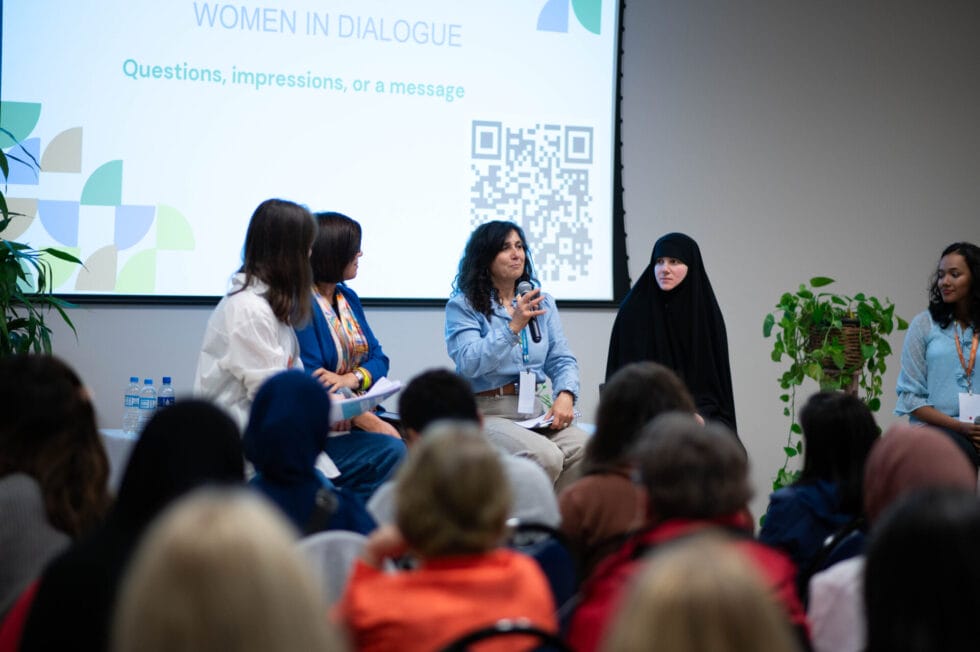
Building international communities requires dialogue. Much of the session was devoted to this theme. Rabbi Silvina Chemen and a young Muslim leader, Israa Safieddine, shared how they try to build dialogue.
Fourteen young Latin Americans from six Christian churches presented Ikuméni, a workshop of ecumenical and interreligious best practices. These are all initiatives whose ultimate goal is peacebuilding, the theme to which the entire last part of the program was devoted.
Carlos Palma from Uruguay presented the Living Peace project. A video of Chiara Lubich reminded how peace can be built today: by living mutual love.
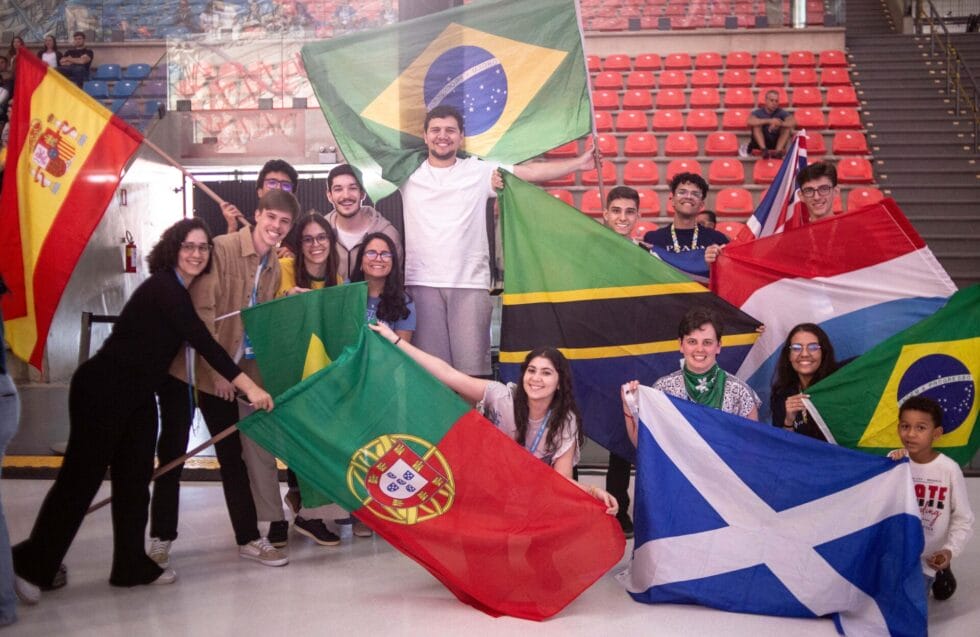
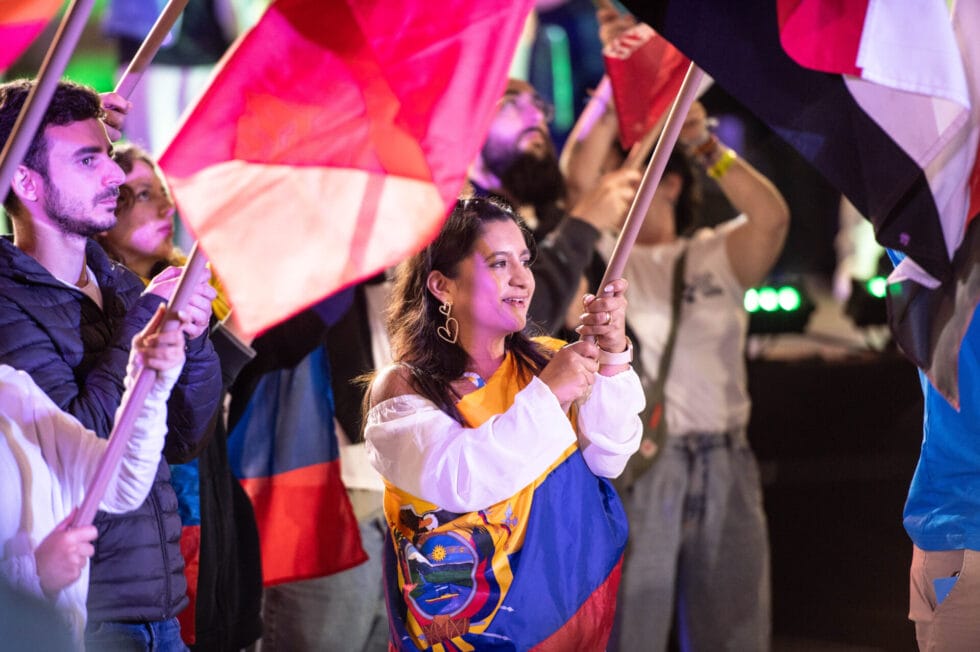
The young Genfest participants with flags from all countries finally paraded, calling for peace in every nation. At the end, Focolare Movement President Margaret Karram called on everyone to be peacemakers, breaking down barriers that divide people and taking the initiative to forgive: “Let this Genfest be a time to say yes to peace,” she concluded.