It was the birthday of a dear friend with whom I had shared ideals, joys, and sorrows. But it had been a long time since I had written to him or seen him. I hesitated a little: I could send him a message, but I didn’t know how he would take it. The Word of Life encouraged me: “Lord, you know everything; you know that I love you” (Jn. 21:17). He replied shortly later: “What a joy to receive your greeting.” And a dialogue began: messages went back and forth. He told me about himself. He was satisfied with his job, had an excellent salary and confided that he wanted to come visit me. I encouraged him and made myself available to welcome him and help organize his stay. One more reason to keep him in mind… and not wait another year to send him a message.
(C. A.- Italia)
Crushed by pride
I could forgive Miguel for the evenings he spent in the tavern, but not for the infidelity he once confessed. I was the good wife and mother, the victim. However, ever since he had been spending time with Father Venancio and others from the parish, my husband seemed like a different man: he was more present at home, more affectionate with me. I, on the other hand, remained distant every time he suggested we read the Gospel together and try to put it into practice. Once, because it was his birthday, I agreed to go with him to a family meeting. That was the first of many. One day, a phrase struck me: “Build peace.” How could I do that, having discovered how selfish, full of misery and resentment I was? Pride kept me from asking Miguel for forgiveness, while he, in our 28 years of marriage, had asked me for forgiveness more than once. Still, I searched for the right moment. Until one day, at a family group meeting, after asking God for help, I managed to share our experience as a couple and ask Miguel for forgiveness. That day, I felt a new, true love for him be reborn.
(R. – Mexico)
Caring for Others
Since I’ve been spending time in Havana, neck-deep in the daily struggles of our neighbourhood residents amid the country’s severe economic crisis, I’m still not used to the timely interventions of Providence. Among the many, this is the most recent. Someone from our community told me about a substantial donation of quality medicines, all related to the treatment of nervous disorders. I was a bit perplexed since they didn’t match the usual categories of medications needed by the poor who come to us but I went to collect them anyway. Then I remembered that once a month, on Monday mornings, a psychiatrist visits our neighbourhood to provide free consultations to those in need. So, at the first opportunity, I contacted him and showed him the list of medicines. As he read through, his face lit up: “These are exactly what I was looking for!” he exclaimed, astonished.
(R.Z. – Cuba)
Compiled by Maria Grazia Berretta (taken from The Gospel of the Day, New City, year X– no.1 May-June 2025)
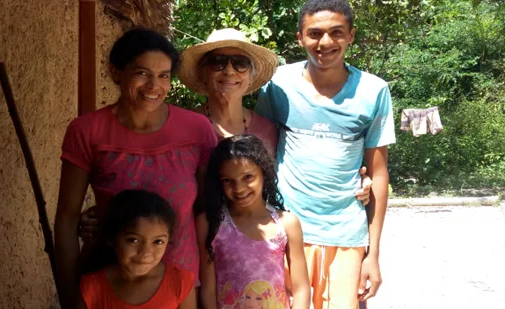
I’m Letícia Alves and I live in the north of Brazil, in Pará.
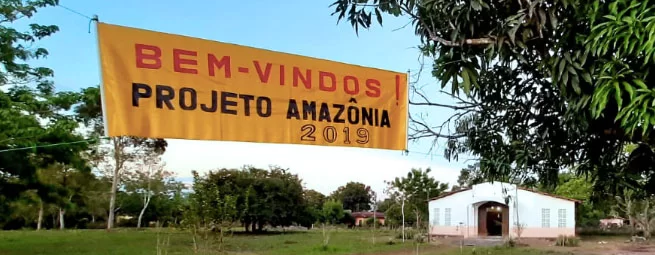
In 2019 I took part in the Amazon Project, and for 2 weeks a group of volunteers and I dedicated our holidays to living with the people of the lower Amazon, in the city of Óbidos.
Before embarking on this adventure, I wondered if I would be able to give myself completely to this experience, which was set in a reality so different from my own. During the project we visited some riverside communities living on the banks of the Amazon River, and everyone welcomed us with unrivalled love.
We provided health, legal and family support services, but the most important thing was to listen deeply and share the lives, stories and difficulties of those we met. The stories were all very diverse: the lack of drinking water, the child who had a toothbrush for the whole family, or even the son who wanted to kill his mother… The more we listened, the more we understood the meaning of our presence there.
“The urgent challenge to protect our common home includes a concern to bring the whole human family TOGETHER”
LS, 13
And among so many stories, I was able to see how much we can make a difference to people’s lives: how much just listening makes a difference, how much a bottle of drinking water makes all the difference.
The project was more than special. We were able to plant a seed of love in the midst of so much suffering and “building together” made us grow. When Jesus is present among us, everything becomes inspiring, full of light and joy.
It wasn’t something I lived for just 2 weeks and that was it, but it was an experience that really transformed my life, I felt a strong presence of God and that gave me the strength to embrace the sufferings of humanity that surround me in this daily construction of a united world.
My name is Francisco. I was born in Juruti in the Amazon, a town near Óbidos. I was surprised to learn that people from different parts of Brazil were travelling across the country to give of themselves to take care of my people and I wanted to join them.
What struck me most was the happiness among everyone, the volunteers and the local people, who even though they lived with very few material possessions, experienced the greatness of God’s love.
After experiencing the Amazonia project in Óbidos, I returned to Juruti with a new outlook and the desire to continue this mission, but in my own town. Over there, I saw the same needs that I had found in Óbidos. This desire became not just mine, but that of our entire community, which embraced the cause. Together we came up with the idea and gave birth to the Amazonia project in the community of São Pedro with the aim of listening and responding to the “cry” of those who need it most, of those who are often not heard. We chose a community on the mainland, began to monitor their needs and then went in search of professionals who could help as volunteers.
With the collaboration of several people, we brought the life of the Gospel, medical care, psychological care, medicines and dental care to that entire community. Above all, we tried to stop and listen to the difficulties and joys of those we met.
I have one certainty: in order to build a more fraternal and united world, we are called to listen to the cries of those who suffer around us and to act, with the certainty that everything done with love is not small and can change the world!
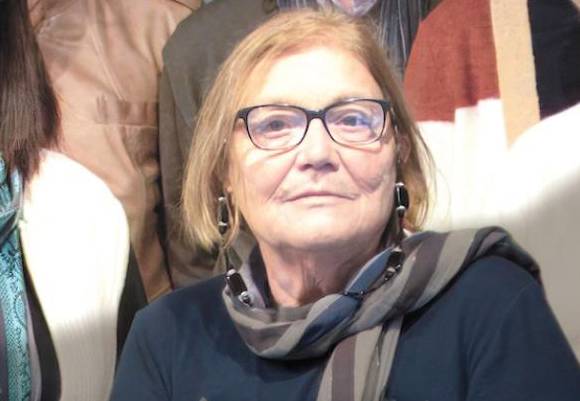
On 18th March, 2025, Luciana Scalacci left us. She was an extraordinary woman, a living witness of concrete and active commitment to 360° dialogue. Luciana, who was married to Nicola, both of non-religious beliefs, always felt that dialogue is a fundamental aspect of contemporary society which is characterised by many forms of division and conflict. A few years ago during a Focolare meeting, Luciana said, “My husband and I are non-believers, or rather, non-believers in God, because we believe in humanity and its potential”.
Luciana was born in Abbadia San Salvatore, a town in the province of Siena. From childhood, she was always committed to the least and the weakest, conveying values of honesty, inclusion and equality to everyone. Nicola and she were engaged in politics and trade unions through leftist activism, always focused on the values of justice, dialogue and freedom. Their encounter with the Focolare Movement came through their daughter Mascia.
Luciana recounted, “One day, our daughter wrote us a letter, in essence saying: ‘Dear parents, I have found a place where I can live out the values you always taught me. She had discovered the Focolare Movement”. So, to better understand their daughter’s decision, Luciana and Nicola decided to attend a Focolare event. “It was a meeting of people of different beliefs, but we didn’t know that. So, to avoid any confusion, we made a point of stating our political and religious position right away. The answer was: ‘And who asked you anyway!’ We immediately had the impression of being in an environment where there was respect for the ideas of others, we found an openness that we had never encountered in other associations or religious movements”.
From that moment on and in the years to come, Luciana Scalacci’s contribution to the Focolare Movement was vital. She first met Chiara Lubich, founder of Focolare in 1995. Alongside her, Luciana worked to initiate and deepen dialogue with people of non-religious convictions, a dialogue that gained strength in large part thanks to Luciana’s enlightened intelligence.
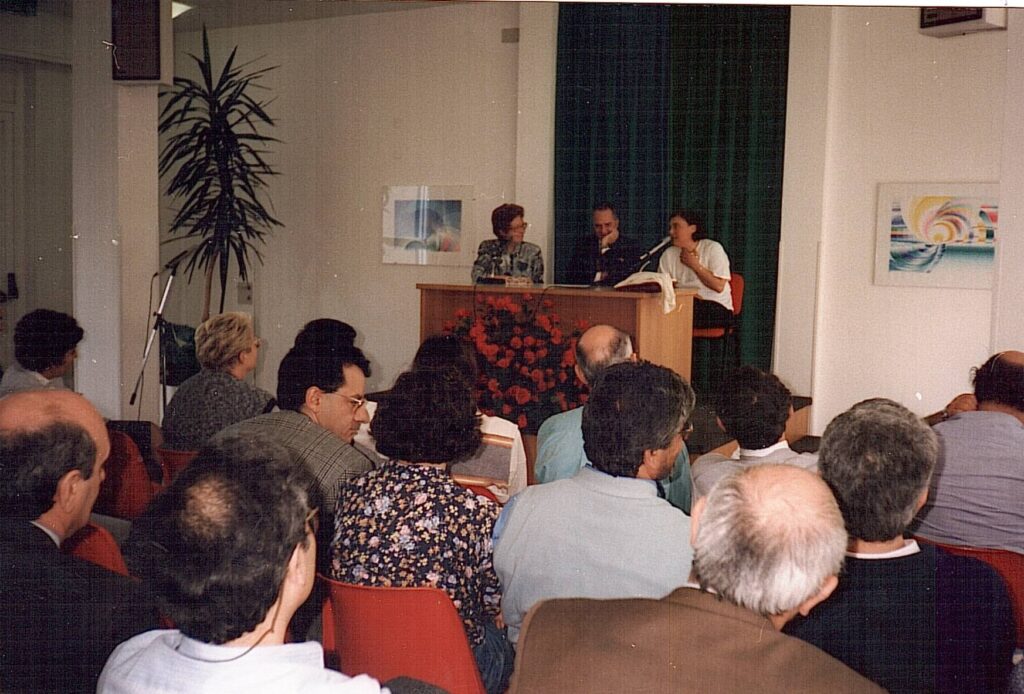
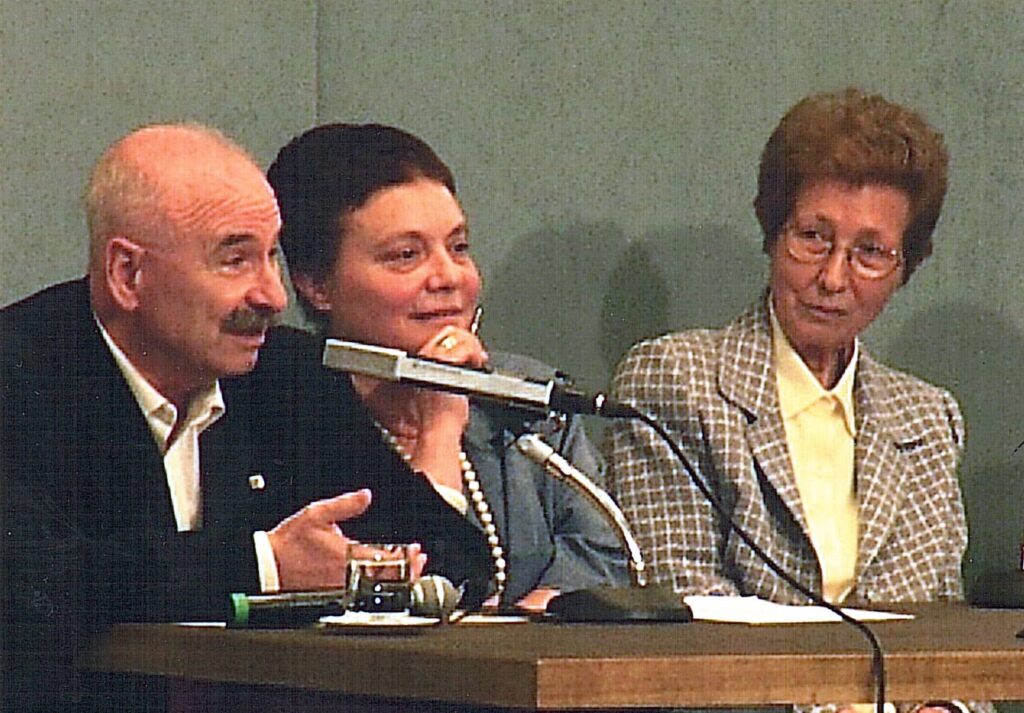
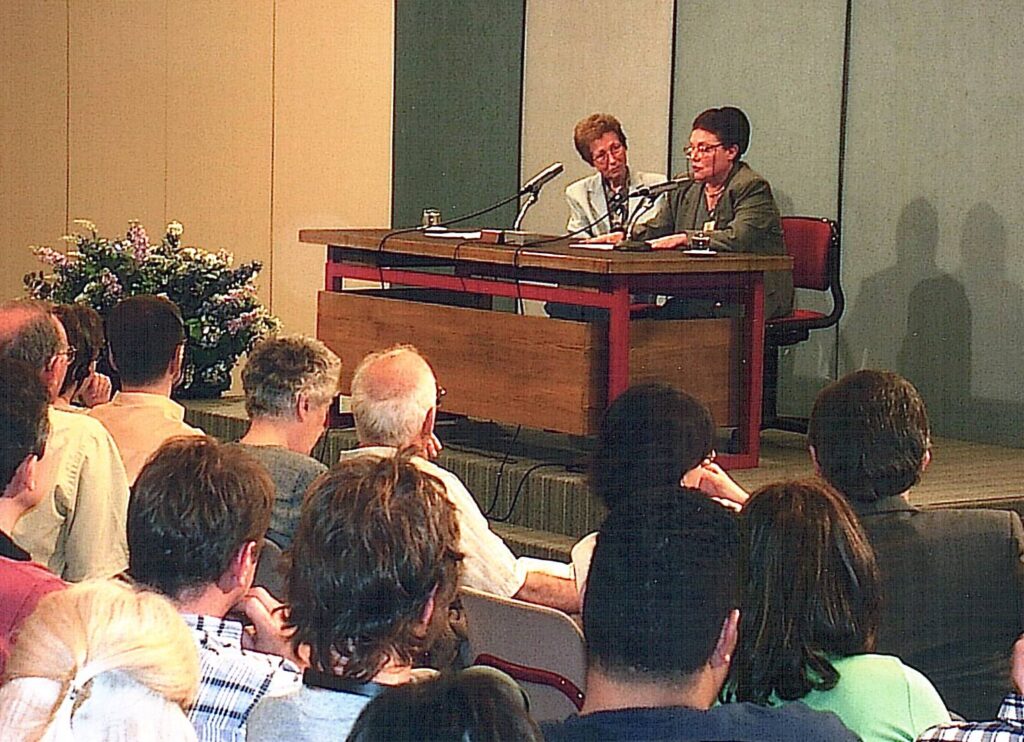
Since 2000 she was a member of the International Commission for Dialogue with People of Non-Religious Convictions, thus contributing to the organisation of conferences such as In Dialogue for Peace, Conscience and Poverty, Women and Men for a Society of Solidarity and many others. Luciana felt in full harmony with the Ideal of unity, through her personal meeting with Chiara and with the Focolare community. She once told a friend: “This dialogue (between people of different beliefs) was born not to convert non-believers, but because with Chiara we understood that the united world is built with everyone. May they all be one. If we exclude even one, it’s no longer All”.
On 26th September, 2014, during an audience granted to the Focolare, she greeted Pope Francis. She recalled the moment in a letter she wrote to the Pope while he was hospitalized at the Gemelli Polyclinic. “On that extraordinary day, I had the privilege of exchanging a few words with you that I will never forget. Now, dear Pope Francis, you are in a hospital bed and I am too. Both of us face the frailty of our humanity. I wanted to assure you that I continue to think about you and to pray for you in a secular way. You pray for me in a Christian way “.
There were many tears of gratitude and deeply heartfelt words of thanks on the day of her funeral. One tribute in particular came from Vita Zanolini, a focolarina and friend of Luciana and Nicola. “Luciana: friend, sister, companion on the frontiers of what is new, but with respect for history and roots, teacher of life and much more,” said Vita, remembering her. “Thinking of her, of her freedom, brings to mind bright and clear skies, intensely colourful; a clear spring that in its sweet and silent flow, becomes a rushing waterfall. A fire burning in a welcoming home reflecting an ever open heart. But also a refined and rich menu with delicious and always creative recipes. Resilience, respect, listening, tenacity in all shades …
Years ago at one of the conferences on dialogue someone asked a rather original question: ‘What is the difference between a believer and a non-believer?’ Luciana’s answer, which was perhaps surprising for many, was: ‘Believers believe in God, Non-believers… God believes in them.’ And I think we can say that Luciana did not disappoint or betray the faith that God had in her!”
Luciana spent the last days of her earthly life in a hospice. She was always very vigilant and proactive in communicating what was in her heart. Despite her shortness of breath, she gave her final advice (sometimes with playful mock threats) with an extraordinary strength interspersed with the memories and stories of the many experiences lived together. Vita added, “It was as she were passing on the baton to us. Our goodbye hug was heart-wrenching and at the same time very serene, with a hint of eternity”.
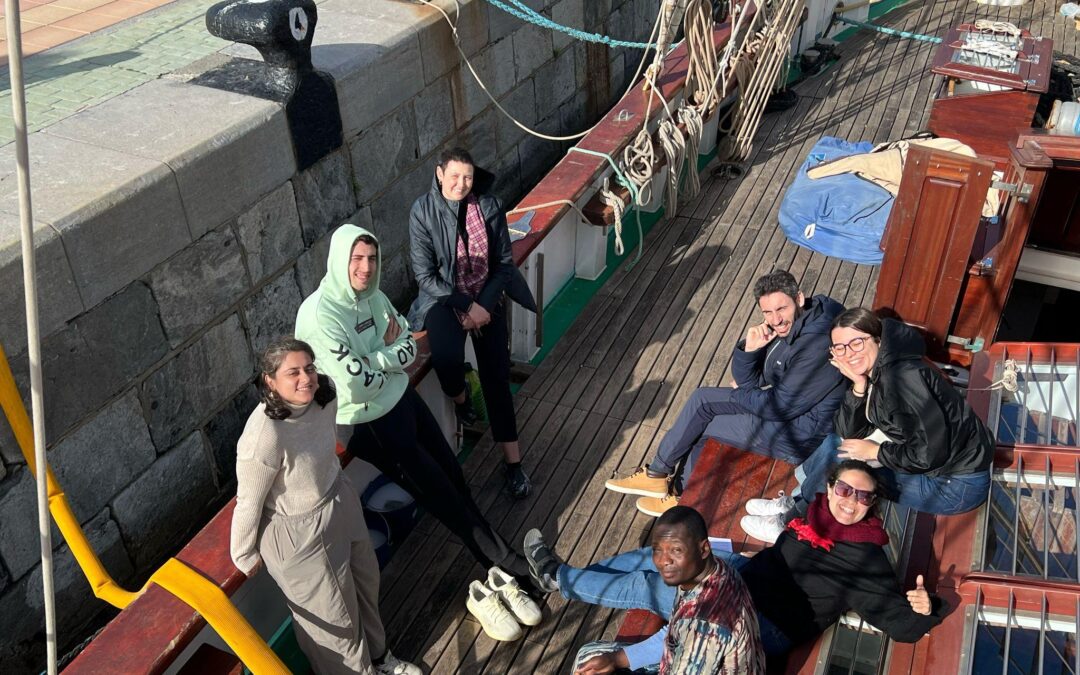
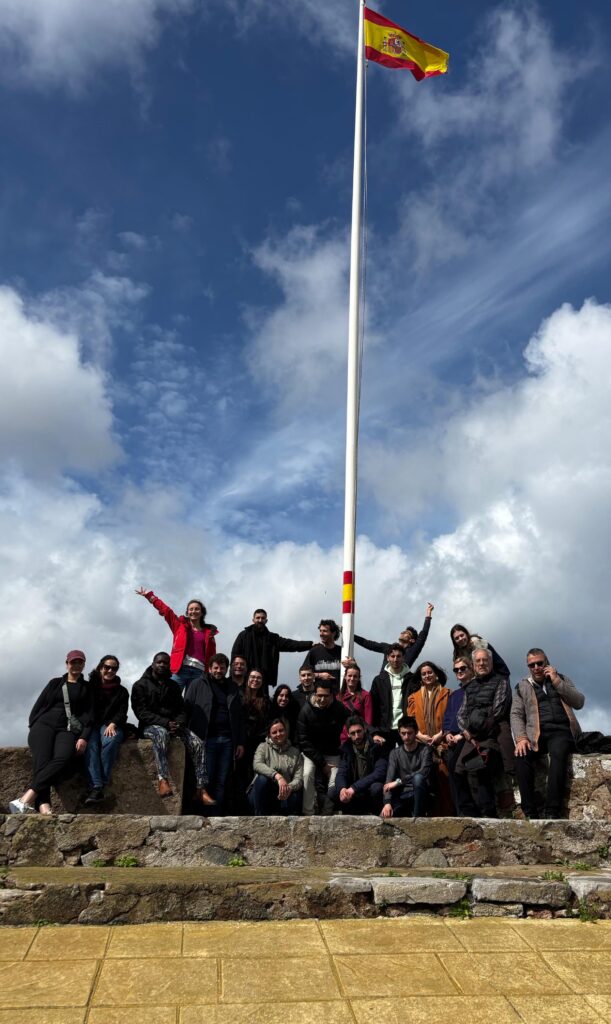
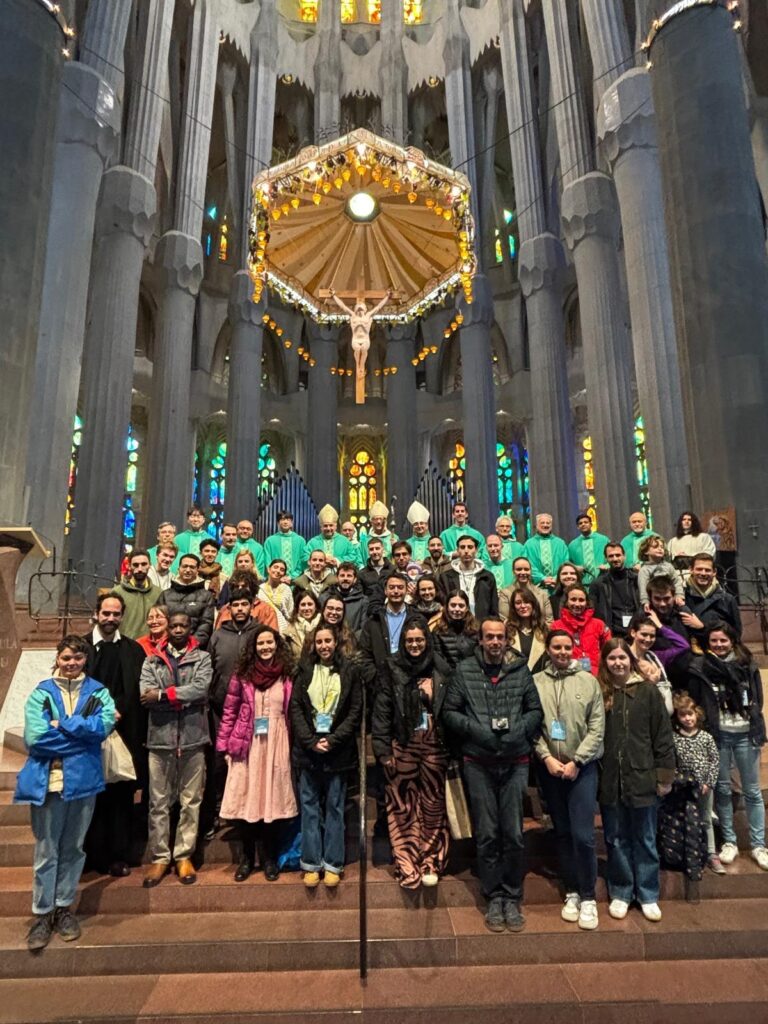
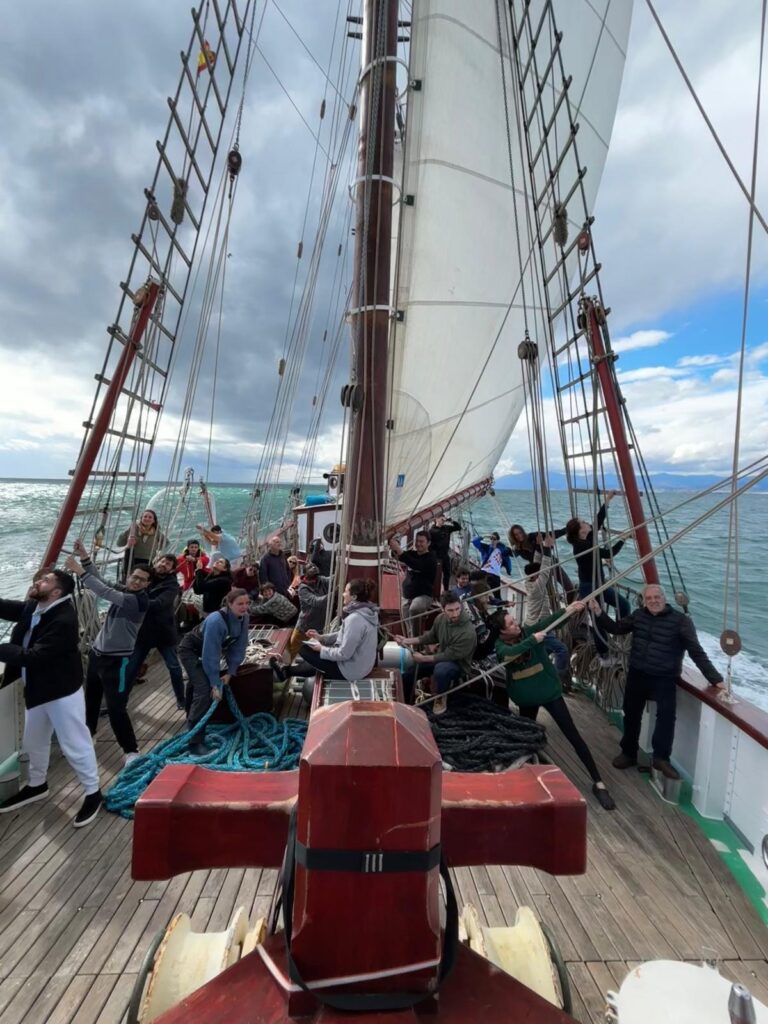
A few weeks ago, I was part of the MED25 project, a school-ship for peace. We were 20 young people from across the Mediterranean—North, South, East, and West—sailing together on a boat called “Bel Espoir.” We set off from Barcelona, and since the weather wasn’t as expected, we stopped in Ibiza before reaching Ceuta. From there, we traveled overland to Tetouan and then returned to Malaga. It wasn’t just a trip—it was a journey into each other’s lives, minds, and cultures.
Living on a boat with so many different people was beautiful, but not always easy. Every day, we had to share responsibilities: cooking, serving meals, cleaning, washing dishes. We rotated tasks in teams, so everyone experienced the full rhythm of life onboard. We also learned how to sail—which was pretty wild at first. I wish I could say it eventually became second nature, but in truth, it was harder than expected. You quickly learn how much teamwork it takes to move forward—literally.
But we weren’t there just to sail and cook. We were there to talk—really talk. We explored eight big topics together: culture, education, the role of women, religion, the environment, migration, Christian traditions, and of course, peace. These weren’t theoretical discussions. They were deeply personal. We shared our perspectives, and sometimes, we clashed. Some discussions got heated. There were moments of frustration. Some conversations even turned into real arguments.
But here’s the truth—on a boat, you can’t just walk away. You can’t go home and sleep it off. You live together. You eat together. You sail together. You are literally in the same boat. And that changes everything. It makes it impossible to stay angry for long. We had to talk it out. We had to listen. And sometimes, we had to admit we were wrong.
That, for me, was the most powerful part of the experience. I realized that most conflicts—between people or nations—don’t come from hatred. They come from ignorance. From stereotypes. From misinformation. And just like we had the chance to truly get to know each other on that boat, the world can do the same. If we could overcome years of misunderstanding in just two weeks together, imagine what could be possible if people were truly willing to listen.
I also discovered many unexpected things. Like how Lent is celebrated differently in Europe compared to the Middle East. Or how religion plays a completely different role in politics and public life depending on where you are. In Europe, it’s often a private matter, whereas in many Middle Eastern countries, it shapes laws, policies, and daily life. These weren’t just facts—I felt the difference through the people I lived with.
What touched me the most was that, despite all our differences, we had so much in common. We laughed a lot. We danced. We got seasick together. We also fasted together, since it was both Lent and Ramadan. We created art, read books, got silly, prayed in many different languages at the same time, discovered religions like Christianity, Islam, Hinduism, and Judaism, slept under the open sky, and shared quiet, sacred moments. And through all that, I realized that peace isn’t something far off or unreachable. It’s deeply human. It’s messy, and it takes work. But it’s possible.
I came back changed. Not because I think we’ve solved all our problems, but because I now believe that peace isn’t a dream—it’s a choice. A choice that starts with truly seeing and listening to the other.
And if 20 strangers could do that together on a boat in the middle of the sea, then there’s hope for the rest of the world too.
As a “distributor of tasks”, over ten years I had managed, in collaboration with our parish priest, to form the Parish Pastoral Council and the Sacristan group. As time went on, I realized my role was shrinking. Many people, previously less active, came forward to carry out various tasks and I chose to step aside to leave them space. Initially, I accepted my reduced role with serenity. Later, however, feeling excluded, I understood how easy it is to become attached to a role, but also how important it is to know when to let go. Sometimes, the Lord invites us to take a step back to prepare us for something new. It’s not easy, because it means accepting change and trusting. Today, although I feel a little on the side-lines, I remain willing to make my contribution if and when I am asked. I am convinced that every service, even the smallest, has a value and that every phase of life is an opportunity to grow in faith and love for others.
(Luciana – Italy)
God sees me
When I lived in Brussels, I sometimes went to Mass in the church of St. Michel’s College. To get there, you had to walk along long corridors with an endless series of classrooms on either side. Above the door of each one, there was a sign that read: God sees you. It was a warning to the boys that reflected a message from the past, expressed negatively: “Do not sin because, even if other people do not see you, God sees you”. Instead, for me, perhaps because I was born in another era or because I believe in his love, it resonated positively: “I do not have to do good things in front of men so that they see me, or to be praised or thanked, but live in the presence of God”. In the Gospel of Matthew 23: 1-12 speaking to scribes and Pharisees who love to show themselves off, Jesus invited them not to be called “teachers” but to have only one concern: to act under the gaze of God who reads hearts. I like this: God sees me, as the signs in the boarding school said; God reads our hearts and that must be enough for me.
(G.F.- Belgium)
The first step
My mother and her sister had fallen out over a matter of inheritance. They hadn’t seen each other for a long time and the rift grew wider, especially since we lived in the city and my aunt in a remote mountain village. This state of affairs lasted until the day, stimulated by the Words of Jesus: “If you are about to present your offering at the altar, and there you remember that your brother has something against you, leave your offering there before the altar and go first to be reconciled with your brother; then return and present your offering”, I plucked up my courage. I sought the right moment and then broached the subject with my mother. I managed to convince her to accompany me to visit my aunt. During the trip we kept quite silent so all I did was pray for everything to go well. In fact, things took place in the simplest way: taken by surprise, my aunt welcomed us with open arms. But we had to take the first step.
(A.G. – Italy)
Curated by Maria Grazia Berretta
(taken from The Gospel of the Day, Città Nuova, year X– no.1 March-April 2025)
A Pope who dreamed and made us dream… what was his dream? He once said it himself, that “the Church is the Gospel”. Not in the sense that the Gospel is the exclusive property of the Church. But in the sense that Jesus of Nazareth, the one who was crucified outside the walls as if he were a criminal and instead whom God Abbà raised from the dead as the first-born Son among many brothers and sisters, he continues here and now, through those who recognise themselves in his name, to bring the good news that the Kingdom of God has come and is coming… for everyone, starting with the “least” who have been touched by the Gospel for who they are in the eyes of God, the “first ones”. This is true and not a figure of speech. This is the Gospel, that the Church proclaims and contributes to making history. This is so, the more it is transformed by the Gospel. As it happened, from the very beginning, to Peter and John when, on their way up to the temple, they met the man who was crippled from birth at the entrance called the “Beautiful Gate”. Together they looked straight at him, and he in turn looked them in the eye. And Peter said to him: “I have neither silver nor gold, but I will give you what I have: in the name of Jesus Christ the Nazarene, walk!”
The Gospel of Jesus and the mission of the Church. Make the effort to stand up and walk. This is how the Father thinks of us, wants us and accompanies us. Jorge Maria Bergoglio – with all the strength and the frailty of his humanity, which made us feel that he was like our brother – it is for this that he has spent his life and his service as Bishop of Rome. From that first appearance from the balcony of St. Peter’s, when he bowed and asked for the People of God to invoke a blessing for him, to the last appearance, on Easter Sunday, when in a faint voice he gave the blessing of the risen Christ, then went down into the square to meet the eyes of the people. His dream was that of a Church which is “poor and of the poor”. In the spirit of Vatican II, which called the Church back to its only model, Jesus: who “stripped himself, making himself a servant”.
The name, Francis that he chose expresses the soul of what he wanted to do, and, first of all, to be: a witness to the Gospel “sine glossa”, that is, without comment and without adaptation. Because the Gospel is neither an ornament, nor a filler, nor an anaesthetic: it is a proclamation of truth and of life, of joy, of justice, of peace and fraternity. So, there we have the Church’s reform programme in Evangelii gaudium, and the manifestos of a new planetary humanism in Laudato sì and Fratelli tutti. We have the Jubilee of Mercy and the Jubilee of Hope. We have the document on universal fraternity signed in Abu Dhabi with the great Iman of Al Ahzar, and there we have the countless occasions of encounter experienced with members of different faiths and convictions. There we have the tireless work in defence of the abandoned, the migrants, the people who are abused. There we have the categorical rejection of war.
Francis was very clear that it is not enough for the Gospel to speak, with all its subversive force, in the complex and even contradictory Areopagus of our time. Something more is needed: because we are not only in an epoch of changes, but we are in the midst of a change of epoch. We need to look with a new perspective. The one with which Jesus looked and looks at us, from the Father. The gaze that, with tender and heartfelt words, is described in his spiritual and theological testament, the encyclical Dilexit nos. It is the simple and radical outlook of loving one’s neighbour as oneself and of loving one another in a selfless, free, hospitable reciprocity, open to everyone, everyone, everyone. The synodal process in which the Catholic Church – and, for their part, all the other Churches – has been convened shows the path to take in this third millennium of ours: beyond a clerical, hierarchical, male-dominated Church… A new path because it is as old as the Gospel. A difficult path, costly and full of obstacles. But a great prophecy, entrusted to our creative and tenacious responsibility.
Thank you, Francis! Your body will now rest beside Mary, who accompanied you step by step, as a mother, on your holy journey. With her, you now accompany all of us, from the womb of God, on the journey that awaits us.