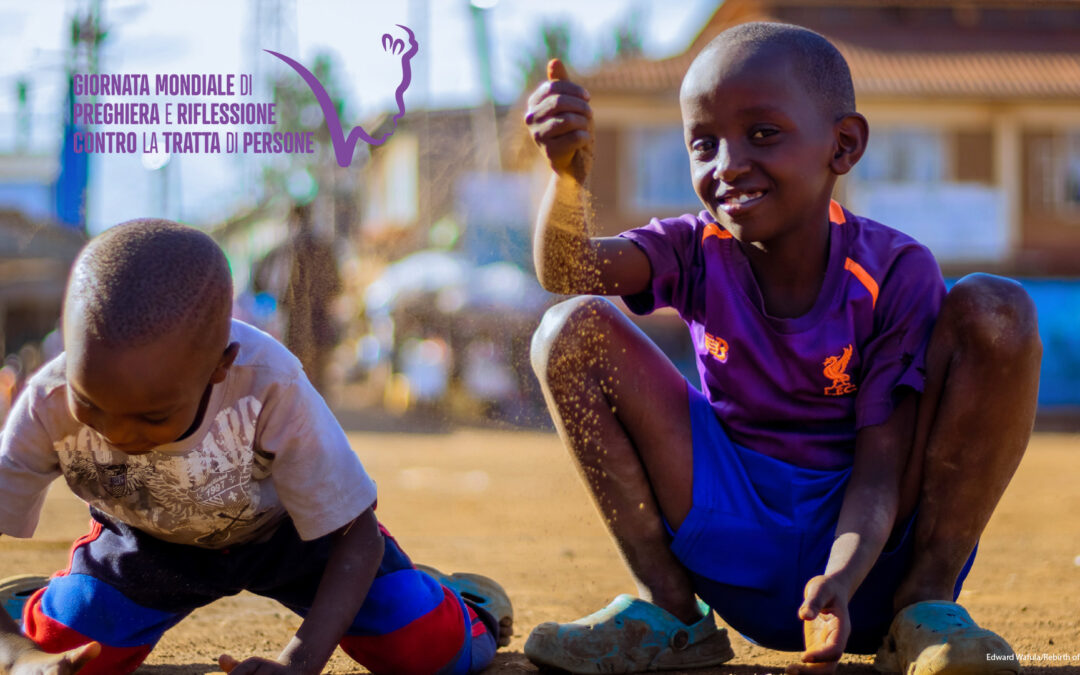
Greetings to everyone on behalf of the Focolare Movement worldwide, as we join in prayer for this digital pilgrimage. Together with all of you, we want to raise our voices to God to ask for an end to human trafficking and to affirm the dignity of every human being:
O Lord, our God,
You love every one of your people. You have given us the gifts of the earth so that we may all live in peace as your children.
Today, a cry is rising up to you from those who have been violated, those who have been exploited in degrading ways, those who are victims of human trafficking.
Help us, Lord, to stand by these sisters and brothers of ours. Multiply the forces of good to encourage their hope in the possibility of a new life.
Make the hearts of the indifferent sensitive. Grant that every citizen, even those who hold the fate of peoples in their hands, may grow in awareness of the need to fight this serious social scourge.
Lord, we ask you that we may be able to spread the global appeal that is being launched today, so that Your will may be done on earth as it is in Heaven.
United, let us continue to pray and act for justice. Thank you to each and every one of you for being part of this chain of hope and of love that is stretching across the world.
Margaret Karram
Video in Italian: activate subtitles and select the desired language.
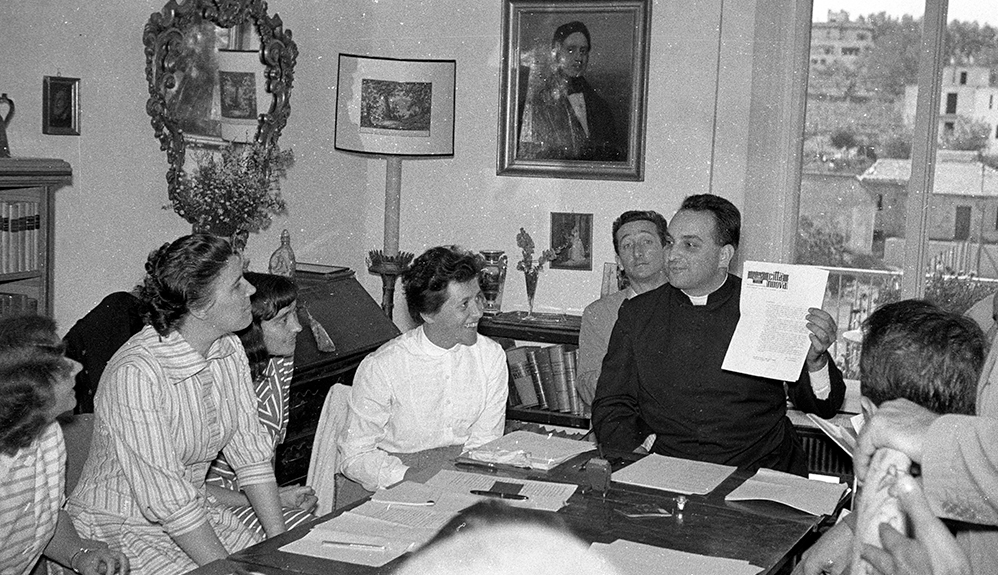
2026 will mark the 70th anniversary of the founding of the Città Nuova magazine. It was the 14th of July 1956 when, in Fiera di Primiero in northern Italy, during a summer meeting of the Focolare Movement called Mariapolis, the foundress and first president of the Focolare Movement, Chiara Lubich, had the idea of creating a “newsletter” so that all the participants could keep in contact.
Since then, thousands of publications have followed, and Città Nuova has always been committed to looking at the facts, reading and exploring current events from the perspective of universal fraternity. It is committed to dialogue on uncomfortable issues, to be close to the most fragile and the forgotten, to build bridges, to be present in the wounds of humanity, to highlight seeds of peace and hope, with a global horizon that looks towards a united world.
As the Movement spread throughout the world, editions were launched in different countries. Today there are 32 editions in 21 languages, both in print and online.
Margaret Karram, President of the Focolare Movement, addressed a video message on the 7th of January 2026 in which she stated that “today, faced with the terrible threats of our time – wars, polarisation of all kinds, environmental crises, an economy often based on exploitation, ethical challenges posed by artificial intelligence – Città Nuova still and always chooses dialogue:
it chooses peace as a difficult but essential pursuit,
it chooses to believe that every encounter, every thought, every word can contribute to changing the direction of the world.”
Here is the complete video message. Activate the subtitles and choose the language you desire.
“My prayer, my hope is that these months ahead of us may truly be months of spiritual growth, of conversion …, personal conversion, but also collective conversion …. May there be mutual love, which makes us free to give everything and to have esteem for one another, respect for one another, knowing that each one of us has different ideas, different perspectives, different concepts about the Movement, different dreams… However, my conviction is that together we can have the light, together we can allow the Holy Spirit to guide this new stage of the Movement.”
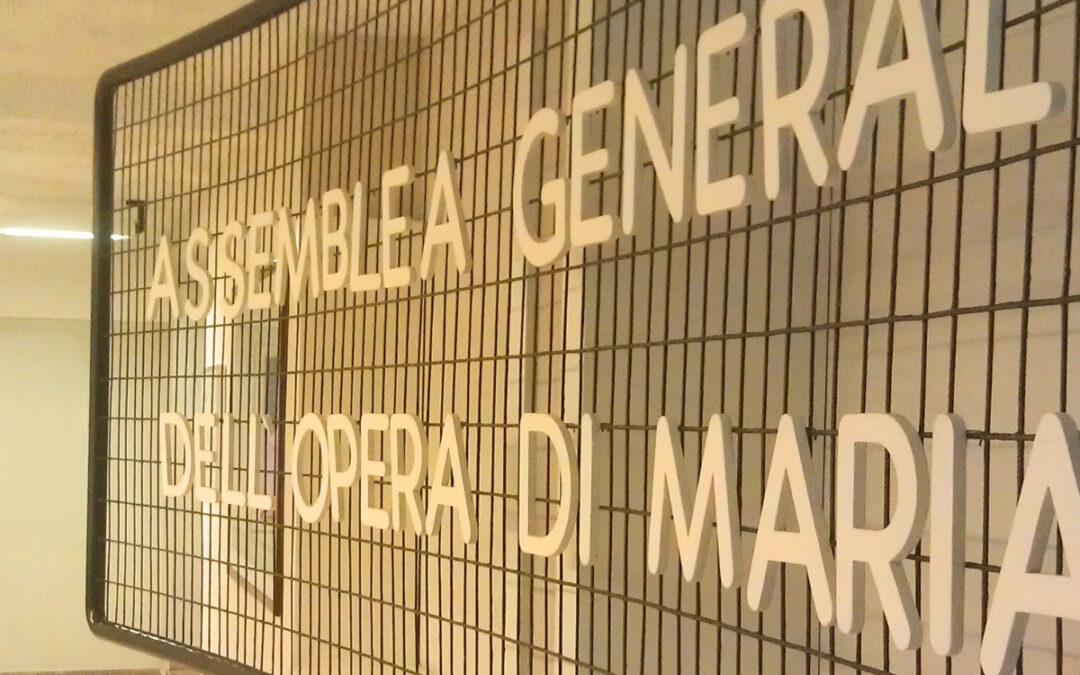
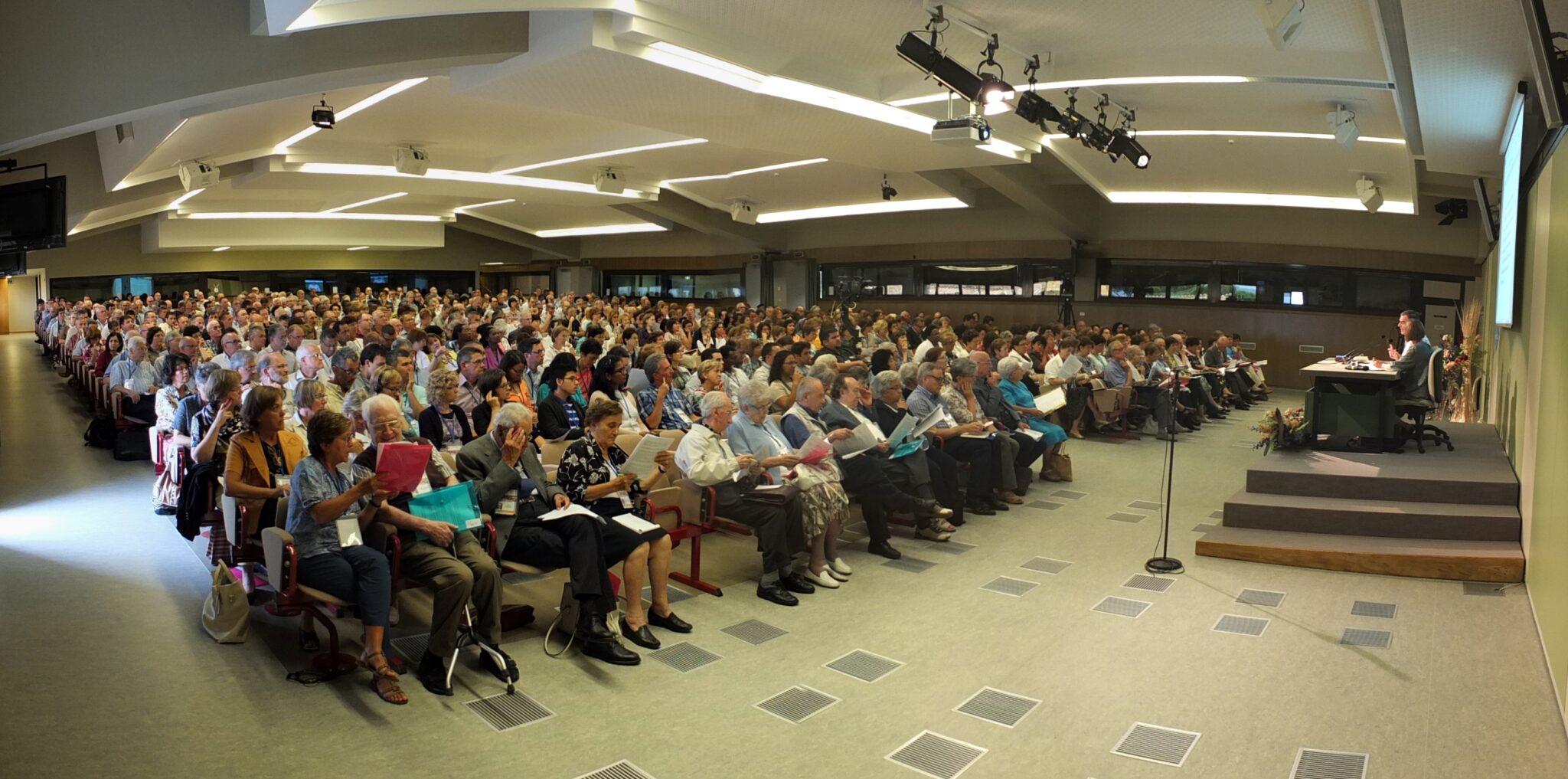
These are the words with which, on 7 December, Margaret Karram, President of the Focolare Movement, addressed those present at the annual retreat of the men and women focolarini in Castel Gandolfo. She invited everyone to look towards the General Assembly that will take place in March 2026 (2026GA), a milestone in a journey that continues the development of the Focolare Movement.
Chiara Lubich, foundress of the Focolare Movement, included a premise “to every other rule” in the General Statutes, which certainly also applies to the General Assembly, because a governing body can only be rooted in mutual love: “Mutual and constant love, which makes unity possible and brings the presence of Jesus among all, is, for those who are part of the Work of Mary, the basis for their life under every aspect.” As we announced in a previous article, following the various Zonal Assemblies that took place around the world, the consultation phase on proposed topics and amendments to the Statutes and the first phase of consultation on nominations concluded in November 2025. The list of participants and invitees has been finalised and is now definitive.
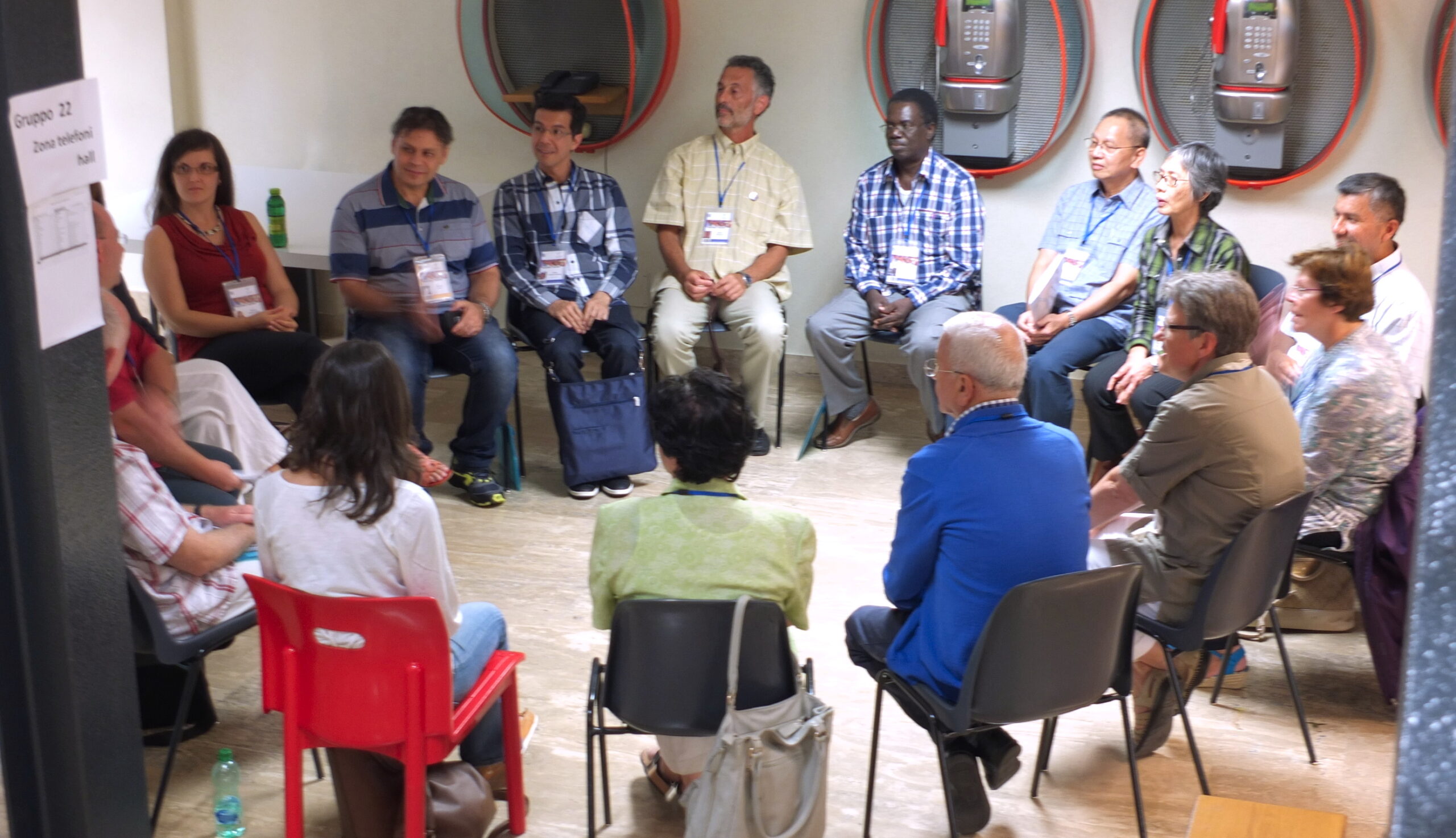
From 20 December 2025, preparations will continue with a series of meetings known as the pre-assembly process, aimed in particular at those who will be participating as elected members, members by right (ex officio), substitutes and guests at the 2026 General Assembly.
More specifically, there will be five Zoom meetings during which participants can explore various topics in depth:
20 December 2025: “Conversation in the Spirit”
17 January 2026: “How to prepare and how to live at the Assembly”
31 January 2026: “Presentation of the proposals concerning the General Statutes”
7 February 2026: “Main topics that have emerged”, Part 1
21 February 2026: “Main topics that have emerged”, Part 2
The Preparatory Commission for the Assembly (CPA) stated, “This will be a time of preparation, discernment, but above all, of sharing and will involve many people from the most diverse parts of the world. It is exciting. The participants of the Assembly will be meeting for the first time. There are certainly many challenges related to the physical distance, language and culture, but this reflects the intent of the process, which is to build unity. It is a moment in which we will truly begin to live the Assembly, in which this experience will begin to take shape.”
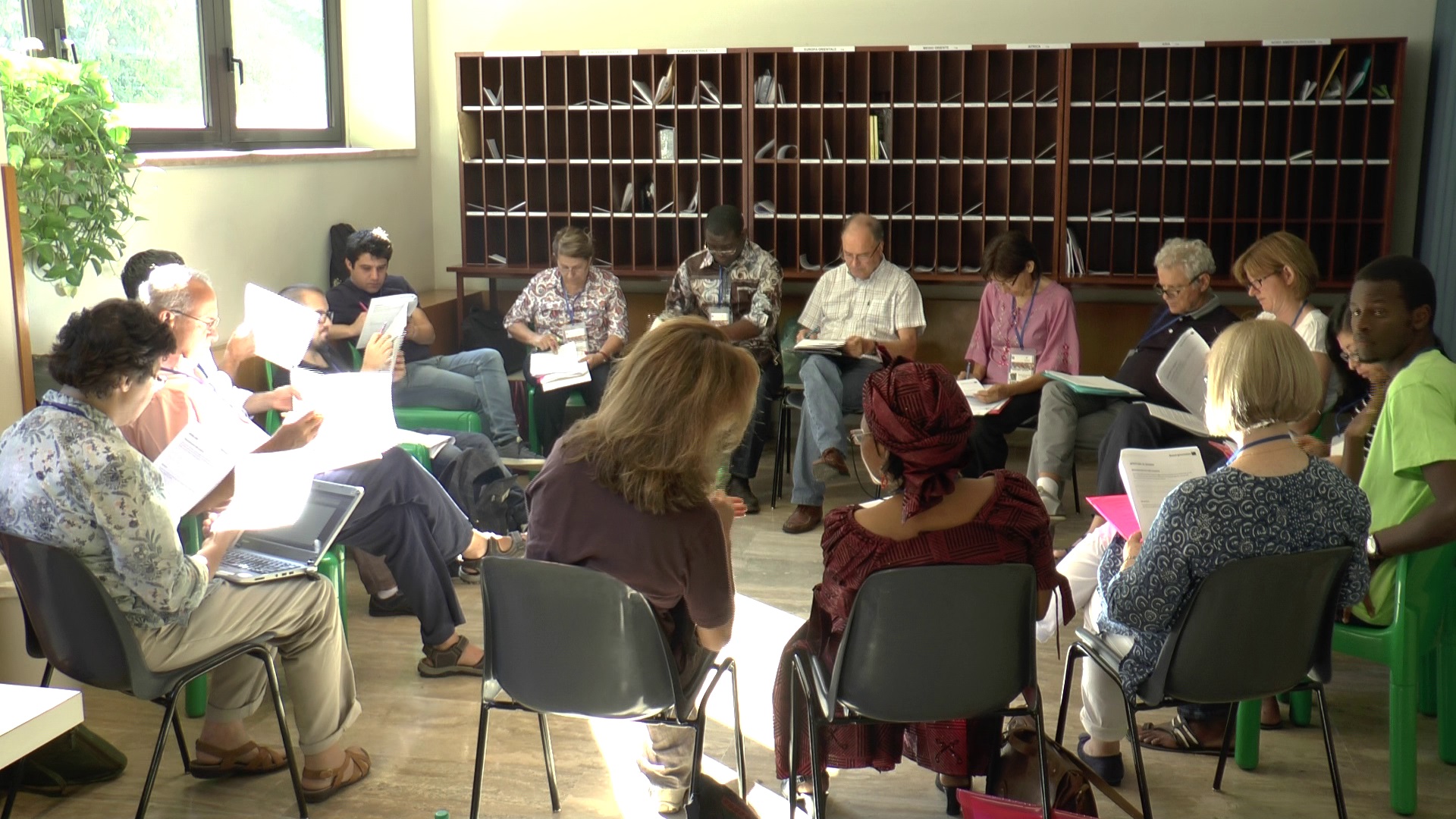
The aim of this pre-assembly process is to help participants to arrive at the Assembly as well prepared as possible, primarily through formation in Conversation in the Spirit, which will be adopted as a methodology in certain moments.
One of these meetings will be dedicated to a practical explanation of how the Assembly works and the legal requirements that must be fulfilled. It will also be dedicated to what should be the spiritual attitude of those who participate, in the awareness that each person represents their own context, their own communities and geographical areas, but at the same time, should keep an open mind to the Movement as a whole. There will then be a focus on the proposed amendments to the General Statutes to be presented to the Assembly. The final two meetings in February, dedicated to the main topics that have emerged from the consultations, will subsequently be made available to all those belonging to the Movement.
Ángel Bartol, coordinator with Cecilia Gatti of the CPA, said, “This pre-assembly process that is about to begin is not an isolated phase leading up to the 2026 General Assembly, but rather a new phase, an instrument to accompany us and help us continue walking together. It is like the image of a zoom lens that gradually focuses on the experience we want to live. In this process of coming together, in addition to learning what is important to the entire Movement throughout the world, it is also important to ‘get to know each other,’ to get to know the people who can fill the elected positions, to get to know their perspective and to enter into a dimension of listening and openness. It is a process in which it is important to allow ourselves to be converted and purified in order to discover what God is asking of us today.”
Preparing for the Assembly is therefore a journey that we want to undertake by committing ourselves daily to living mutual love, to the point of being worthy of the presence of Jesus in our midst. It is a process of gathering the fruit of months of work, drawing together a plurality of voices, ideas and souls and becoming a real expression not of individuals but of a body, of an entire family throughout the world, which together is taking steps towards the future.
In the light of the recent positive news regarding the agreement for the Gaza Strip, I want to express my sincere hope that this represents a first step toward a just, comprehensive and sustainable peace.
There is certainly still a long way to go, yet in this moment my thoughts are with the hostages, the Palestinian prisoners and the residents of Gaza. We trust that they may begin again to glimpse a renewed hope for a life worthy of its name.
We also hope that those entrusted with the fate of nations will continue to make decisions guided by the highest good we possess: life itself.
We commit to joining our efforts, both practically and spiritually, with all those who are working tirelessly for a better world. In this spirit, we want to unite to the Day of Prayer for Peace proclaimed by Pope Leo XIV, to be held on the 11th of October.
In the afternoon of October 1, at the Focolare Movement’s International Mariapolis Center in Castel Gandolfo, Rome, the Raising Hope Conference was inaugurated with the participation of His Holiness Leo XIV, alongside notable figures such as Arnold Schwarzenegger, former Governor of California, and the Hon. Marina Silva, Brazil’s Minister of Environment and Climate Change.
The session combined testimonies, spiritual and artistic moments, in thanksgiving for the 10th anniversary of the encyclical Laudato Si’. Representing the Laudato Si’ Movement, Associate Director Christina Leaño and Brazil Director Igor Bastos presided over the day’s opening.
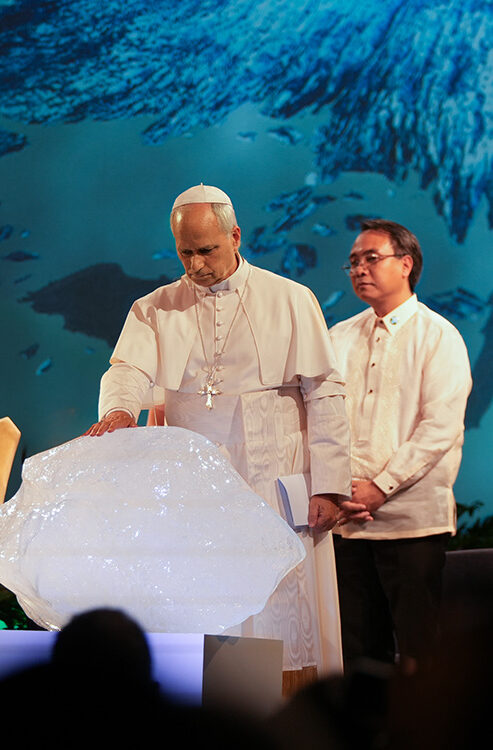
A symbolic moment came when Pope Leo XIV touched and blessed a block of ice more than 20,000 years old, broken off due to climate change from a glacier in Greenland, as well as water brought from around the world—gestures embodying compassion and concern for the cry of the Earth and the poor.
Laudato Si’: What remains to be done?
“This Encyclical has profoundly inspired the Catholic Church and many people of goodwill,” Pope Leo began in his speech on Laudato Si’, “it opened strong dialogue, reflection groups, and academic programs.” The Pope noted how his predecessor’s encyclical spread “to international summits, to ecumenical and interreligious dialogue, to economic and business circles, to theological and bioethical studies.”
Giving thanks to the Heavenly Father “for this gift we have inherited from Pope Francis,” Leo stressed that today environmental and social challenges are even more urgent. On this anniversary we must ask ourselves: “What remains to be done? What must we do now to ensure that caring for our common home and listening to the cry of the earth and the poor do not appear as passing trends or, worse still, are seen and felt as divisive issues?” he asked.
Return to the heart: from data collection to care
“Today more than ever it is necessary to return to the heart, the place of freedom and authentic decisions,” affirmed the Pontiff, because although it “includes reason,” it also “transcends and transforms it.” “The heart is where external reality has the greatest impact, where the deepest search takes place, where the most authentic desires are discovered, where one’s ultimate identity is found, and where decisions are forged.”
In this regard, he stressed that “only by returning to the heart can a true ecological conversion take place.” “We must move from collecting data to caring; and from environmental discourse to an ecological conversion that transforms both personal and community lifestyles.”
Leo reminded those present that this experience of conversion orients us toward the living God: “We cannot love God, whom we do not see, while despising His creatures. Nor can we call ourselves disciples of Jesus Christ without sharing His vision of creation and His care for all that is fragile and wounded.”
No room for indifference or resignation
Before concluding, the Pope looked with hope to the upcoming international summits —COP30 in 2025, the World Food Security Committee session, and the 2026 Water Conference— “so that they may listen to the cry of the earth and the cry of the poor.”
He also encouraged young people, parents, and those working in administrations and institutions to contribute to “finding solutions to today’s cultural, spiritual, and educational challenges, always striving tenaciously for the common good.”
Finally, he reflected: “God will ask us if we have cultivated and cared for the world He created and for our brothers and sisters. What will our answer be?”
1.5 billion Catholics can get involved
Actor and former Governor of California, founder of the USC Schwarzenegger Institute and the Schwarzenegger Climate Initiative, Arnold Schwarzenegger, began his address by congratulating the Holy Father for installing solar panels on the roofs of the Vatican: “I am standing next to a hero,” he declared.
“There are 1.5 billion Catholics — that power and strength must be used to get involved in the climate movement,” Schwarzenegger said, urging more focus on talking about pollution: “The average person doesn’t understand when we talk about net zero or rising temperatures. Instead of speaking to the head, we must speak to the heart. We can end pollution if we work together, because God put us on this Earth to make it a better place.”
Toward the COP of hope
Next came the Hon. Marina Silva, Brazil’s Minister of Environment and Climate Change, co-chair of COP30. In her address, she expressed being inspired by Christian values in taking part in the conference.
Confidently, she stated: “I am certain that the Pope will make a great contribution so that COP30 goes down in history and becomes, as we all ardently hope, the COP of hope, to preserve and cultivate all forms of life that are part of the beautiful garden God has given us.”
From tears to hope
On stage, the Pope was joined by Dr. Lorna Gold, Executive Director of the Laudato Si’ Movement and President of the Conference Organizing Committee; theologian Margaret Karram, President of the Focolare Movement; Fr. Jesús Morán; and Yeb Saño, Chair of the Board of the Laudato Si’ Movement, who shared his own story of facing climate catastrophes in the Philippines and introduced the testimonies.
A symbolic spiritual moment followed when representatives from East Timor, Ireland, Brazil, Zambia, and Mexico brought water from their homelands, poured into a common bowl on stage. They embodied the cry of indigenous peoples, wildlife, ecosystems, future generations, migrants, the poor, and the Earth itself.
From tears to hope, with the audience on their feet, Pope Leo approached the glacial ice and proclaimed a blessing over the water and all present: “May we work for the flourishing of all creation.” Musical performances by Adenike, Gen Verde, and the Pacific Artists for Climate Justice brought joy and energy to the encounter.
A block of Greenland’s ice
The ice traveled more than 5,000 kilometers from the fjords of Nuuk, Greenland, to Castel Gandolfo, Rome. Artist Olafur Eliasson organized the transfer with the support of geologist Minik Rosing. Collected from the Nuup Kangerlua fjord, the block of ice had detached from the Greenland ice sheet due to climate change and was melting into the ocean. Greenland’s vast ice sheet is one of Earth’s most important climate regulators. Formed from compacted snow over tens of thousands of years, it contains layers more than 100,000 years old with ancient air bubbles recording the history of our atmosphere. NASA’s Earth Observatory estimates Greenland’s ice sheet is losing about 270 billion tons per year due to climate change. As the ice releases meltwater into the ocean, it reminds us that our global relationship with ice sheets is existential: they connect us to the past, shape our present climate, and —depending on our care or neglect— will determine our common future. If the ice melts completely, NASA predicts sea levels could rise by about seven meters (23 feet), reshaping coastlines and displacing millions worldwide.