The evangelist, Luke, reports that Jesus shared this teaching with his disciples as they were walking towards Jerusalem, the place of the Passover of his death and resurrection. On the way, he addressed them as ‘little flock’ [1] and he confided all that lay deep within his heart and soul. These thoughts included a need for detachment from earthly possessions, trust in the Father’s providence, inner vigilance and the importance of living in active expectation of the Kingdom of God.
In the preceding verses, Jesus encouraged the disciples to have an attitude of detachment and not worry about themselves or even their own lives. He told them not to be concerned about material needs because their Father in heaven knows all that is necessary. He invited them instead to seek the Kingdom of God and encouraged them to accumulate ‘a sure treasure in heaven.’ [2] Jesus was not promoting a passive and disinterested attitude towards earthly things or irresponsible conduct at work. His intention was to take away our anxiety, our restlessness and our fear.
For where your treasure is, there will your heart be also.
In this context, the ‘heart’ means the unifying centre of the person that gives meaning to everything he or she lives; it is where there is sincerity and no deception or pretence. It usually indicates one’s true intentions, what one really thinks, believes and wants. The ‘treasure’ is what is most valuable to us and, therefore, our priority. It is what we believe gives security both now and in the future.
Pope Francis wrote: “In a world where everything is bought and sold, people’s sense of their worth appears increasingly to depend on what they can accumulate with the power of money. We are constantly being pushed to keep buying, consuming and distracting ourselves, held captive to a demeaning system that prevents us from looking beyond our immediate and petty needs.”[3] But, in the innermost depths of every woman and man, there is an everpresent search for that true happiness that does not disappoint and that no material goods can satisfy.
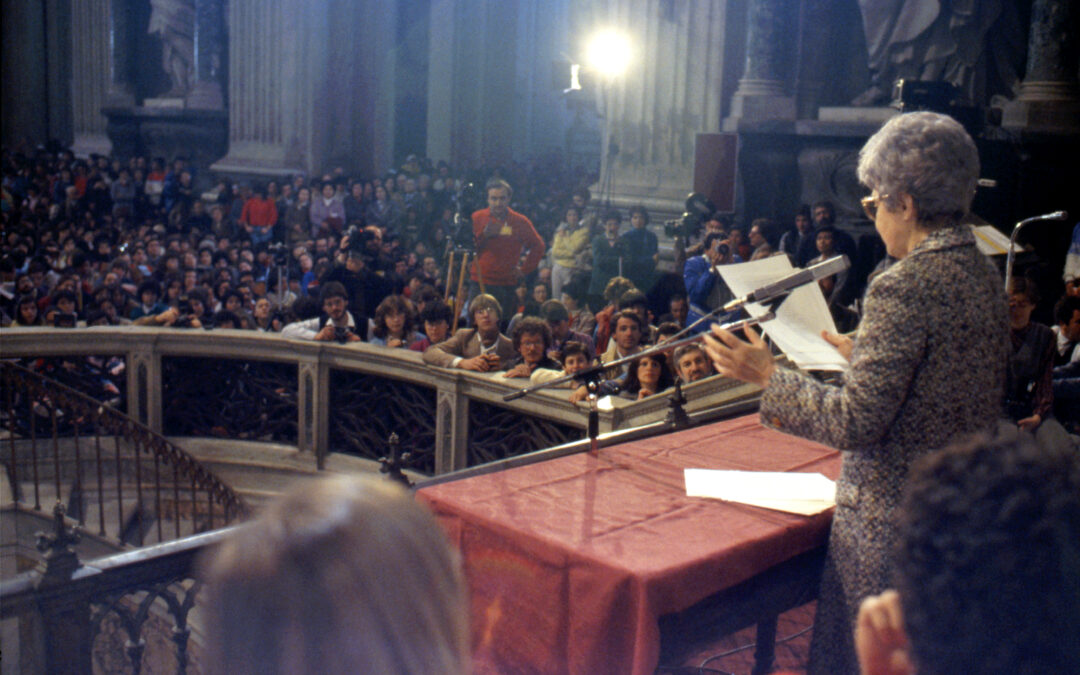
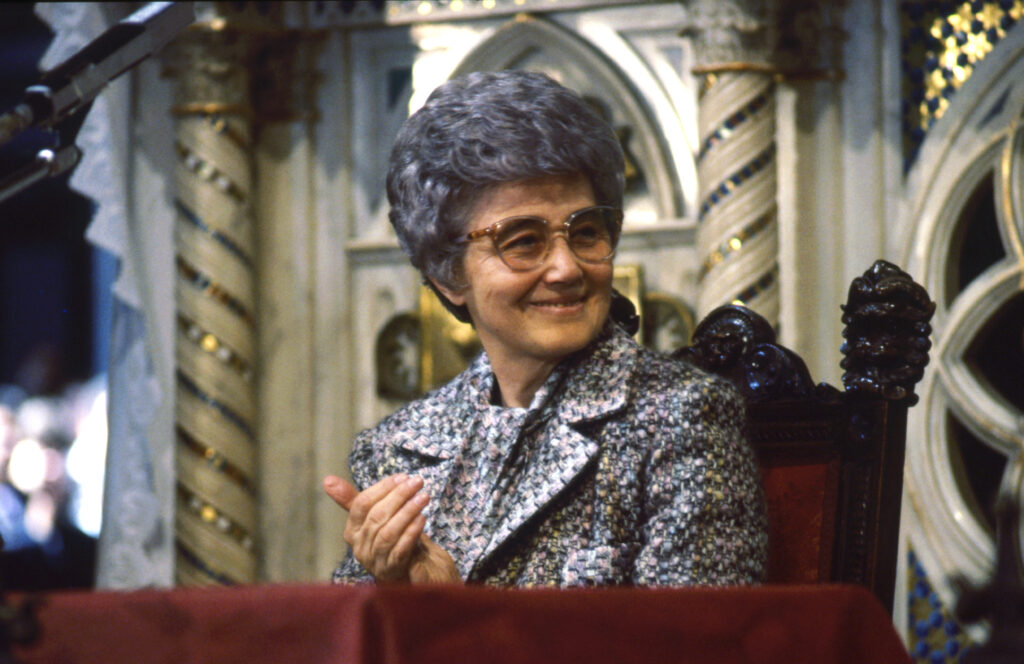
Chiara Lubich wrote: ‘Yes, there is what you seek: in your heart there is an infinite and immortal yearning; a hope that does not die; a faith that breaks through the darkness of death and is light to those who believe: it is not for nothing that you hope ,that you believe! Not for nothing! You hope, you believe in order to LOVE.’[4]
For where your treasure is, there your heart will be also.
This Word invites us to make an examination of conscience: what is my treasure, what do I value most? The answer may have many nuances such as economic status but also fame, success and power. Experience tells us that we must continually bring ourselves back to real life that does not simply slip away, to the radical and demanding life of evangelical love:
‘It is not enough for a Christian to be good, merciful, humble, meek and patient… In relationship with neighbours, he or she must practise the charity that Jesus taught us. […] For charity is not a readiness to give life. It is giving life.’ [5].
We should love every neighbour we meet during the day (in the family, at work, everywhere) with this measure. If we live not thinking of ourselves, but thinking of and living for others, we experience true freedom.
Prepared by Augusto Parody Reyes & the Word of Life Team
[1]Lk 12, 32 [2]Lk 12,33 [3] Pope Francis Dilexit nos, no. 218 [4] C. Lubich “Letters of the Early Times.” June 1944, Città Nuova Editrice 2010, p. 49. [5] Cf. C. Lubich extract taken from conference call
The ‘heart’ is the unifying centre of the person that gives meaning to everything he or she lives; it is where there is sincerity and no deception or pretence. It usually indicates one’s true intentions, what one really thinks, believes and wants.
This Idea invites us to ask ourselves what we think is most important? Where does each one of us put our hope, our energy, our lives and our hearts? The answer may have many different nuances: it may be love or giving, or relationships with others, but it may also be economic status, fame, success, power or our own security.
True freedom starts first of all from the heart. Accumulating material goods can lead to a sense of frustration as we encounter the many changes that life brings. Detachment from them can help us live with more transparent commitment to work and engagement in society thus overcoming anxiety, restlessness and fear for the future.
Pope Francis, says, “In a world where everything is bought and sold, people’s sense of their worth appears increasingly to depend on what they can accumulate with the power of money. We are constantly being pushed to keep buying, consuming and distracting ourselves, held captive to a demeaning system that prevents us from looking beyond our immediate and petty needs.” [1]
Experience tells us that we need to continually bring ourselves back to real life which is the best “investment” for which we can strive. Thinking not of ourselves but of others enables us to experience true freedom.
Philosopher and humanist, Erich Fromm, reminds us of this when he states, ” Giving is the highest expression of potency. In the very act of giving, I experience my strength, my wealth, my power. This experience of heightened vitality and potency fills me with joy.”[2]
Before whatever we do, let’s ask ourselves what is the motive for our actions: why are we acting in this way? And if we see that we need to reorient the intention, let us do so decisively. We will see that our hearts will be free from limitations and conditioning.
[1]Pope Francis “Dilexit Nos” no. 218 [2]Erich Fromm The Art of Loving (1956)
The joy of the early Christians – which can be experienced in every century, wherever people understand and sincerely live the essential truths of Christianity – the joy of the early Christians was something totally new, a joy they had never experienced before. It had nothing to do with laughter, cheerfulness or being light-hearted. As Paul VI said – it was not merely “the exultant joy of being alive,” with “the peaceful joy of nature and silence.” … It wasn’t that. These are all wonderful examples of joy.
But the joy of the early Christians was different. It was similar to the exhilarating joy of the disciples when the Holy Spirit descended on them.
It was the joy of Jesus. For just as Jesus has his peace, he also has his joy.
The joy of the early Christians sprang forth spontaneously from the depths of their being and truly satisfied them.
They had found what people in the past, in the present and in all times are always searching for. They had found God; they had found communion with God. They were totally satisfied by him, totally fulfilled as human beings.
In fact, Christ pours love, charity, into the hearts of Christians through baptism and the other sacraments, and love can be compared to a tiny plant. The deeper its roots go down – that is, the more we love our neighbours – the higher the stem grows upwards towards heaven. In other words, the more we love our neighbours, the more our heart is filled with the love of God. And this communion, this love, is not something we believe on faith alone. We experienced it. This is true happiness, this is real happiness – to love and feel that you are loved.
This was the happiness of the early Christians. This was the joy of the early Christians, both adults and young people, like all of you. They expressed their joy in wonderful, liturgical celebrations filled with hymns of praise and thanksgiving.
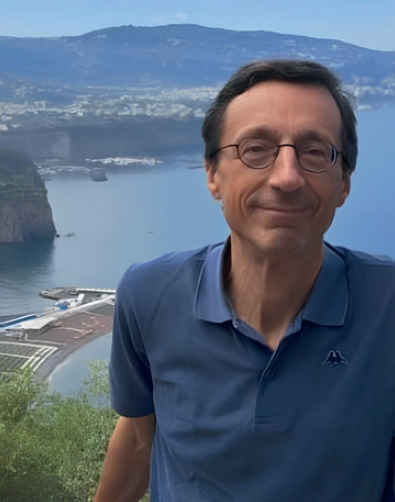
Gratitude and thanksgiving to God. These words encapsulate the multitude of messages that came from all over the world for Paolo Rovea. On 3rd July 2025, in a mountain accident, Paolo ended his earthly life. Married to Barbara, they have five children: Stefano, Federico, Francesco, Miriam and Marco.
He met the Ideal of the unity of the Focolare Movement in 1975. He said, “It radically changed my life”. That same year he took part in the Genfest in Rome, following which he wanted to live 100% with the gen, the young people of the Focolare and he dedicated himself wholeheartedly to this for 14 years, making the Gospel his way of life.
With Barbara, also a Gen, they began to plan to form a family. Engaged couples and young families increasingly began to see them as points of reference. One of them wrote: “With great sorrow for this loss, we are deeply grateful for the love, esteem and trust we received from Paolo. We are grateful for the many years of extraordinary ‘madness’ we all lived together. Together with Barbara, he had an impact on the history of New Families (the branch of Focolare that supports families) and on the history of many couples, including ours”.
Paolo distinguished himself more and more in his profession, with competence and sensitivity. He graduated in medicine from the University of Turin (Italy), specialising in oncology and oncological radiotherapy. At the same university he was a lecturer in a multi-year master’s degree. He worked as a hospital doctor eventually becoming head of the Oncology and Oncological Radiotherapy department in Turin, until his retirement in 2021. He also obtained a Master’s degree and attended advanced courses in Bioethics.
In 1989, he felt God calling him to the path of the focolare and he confided in Danilo Zanzucchi, one of the first married focolarini: “I am in a very important moment in my life: my work as a doctor should soon become permanent; 5 months ago I got married. (… ) I thank God for all the gifts he has given me: first of all for the Ideal of unity (…), for my family (…) for the gen life (…); for Barbara, my wife, with whom I am living beautiful months (…) I assure you that I set out with a renewed desire for holiness on this unique path that is the focolare”.
A life rooted in a constant growth of his relationship with God.
Many remember how Paolo rarely said no to a request or need; he stood beside anyone in need with concrete love. His talents and professionalism were always at the service of those around him: if there was a need to sing or play, he sang and played, if there was a text to write, he wrote it, if a medical consultation was needed, he was ready, if advice was required, he offered it with detachment, encouraging the fearful and urging on the hesitant. His ability to draw close to the life of everyone who crossed his path meant that over time many perceived him as a true brother, one of the family, a true friend.
“I thank God for all the gifts he has given me: first of all for the Ideal of unity (…), for my family (…) for the gen life (…); for Barbara, my wife, with whom I am living beautiful months (…) I assure you that I set out with a renewed desire for holiness on this unique path that is the focolare”.
Paolo and Barbara’s commitment to Focolare grew especially within New Families. One of the themes they were passionate about was education in affectivity and sexuality. It was thanks to them that in 2011, in synergy with the various educational agencies of the Focolare Movement, a pathway was born in this area, Up2Me, based on the anthropological vision typical of Focolare.
Maria and Gianni Salerno, from New Families said: “Although we knew Paolo and Barbara since we were young, we worked closely with them on a daily basis for the last 10 years at the International Secretariat of New Families. The passion, generosity, creativity and tireless commitment with which Paolo carried everything ahead, always attentive to relationships with each person, remain for us an immense testimony and have always been an incentive to go forward together, to always strive to be better at the service of families throughout the world. Often, when discussing with him how to face the challenges of families today, so as to be closer to everyone, he suggested innovative ideas, useful for keeping up with the times and with the needs of people. He and Barbara travelled a lot and left a trail of light everywhere in the world”.
Maria and Gianni continued, “Barbara and he suggested and coordinated many of the new initiatives of New Families. The Up2me programme, Family Format, a programme of dialogue and growth with other families at the Focolare’s international little town of Loppiano and not least of all, the Loppiano Family Experience, a three-week school for animators of New Families who come from all over the world, also in Loppiano. Despite the very painful separation, we know that we can count on his irreplaceable support, which now, from Heaven, will be even stronger…”
I was climbing the stairs to my apartment when I thought of the neighbour across from me who has major health problems. I never seemed to find time for her and this time too, I was tempted to put it off but the thought of doing it to Jesus gave me the push I needed. After visiting her and she was very happy just to have a chat, I was stopped by some other neighbours who, seeing me there, also wanted to hear my opinion on an old issue of the condominium was still unresolved. I wanted to cut them short, I still had to prepare lunch but I stopped to listen to everyone’s reasoning. At the same time, I tried to think of a solution that could bring harmony back to the building but none seemed viable to me. Maybe all I could really do was love them by listening to them. In the end, a solution emerged that was right for everyone. After saying goodbye, as if to thank me, one of them came back and gave me a medallion. But what mattered most to me was that I had built a new relationship with my neighbours.
(Fulvia – Italy)
Ten Years Later
That evening I found my wife busy doing the dishes. How could I tell her that the mitral valve that kept me alive was failing and that, after ten years, I would need surgery again? The first time there had been the anguish of the potential separation, the thought of our children whom I already pictured as orphans… then acceptance and finally peace, ready to “leave” at any moment. Then, the operation itself, which was painful but followed by a good recovery. But the greatest gift had been to feel that God was always close to us, precisely through the physical limitations that followed. Meanwhile, contrary to the doctors’ prognosis, the miracle of a somewhat stable health had lasted longer. But now, suddenly, palpitations and the feeling of exhaustion had brought me back to reality. However, I did not lose my calm. I kissed Adita and mentioned some tests that the doctor had prescribed for me. That was enough for her to understand. She looked at me with a smile. I smiled back. It was our “yes” to what God was asking of us. All we had to do was abandon ourselves to him once again.
(Hannibal – Argentina)
No longer alone
Ever since I was a teenager I’ve had a special concern for the poor, the sick and the lonely. Over the years, I’ve met many, including a woman with two children, rejected by everyone, because of mental health issues. When she passed away, the two children were even more alone, but they continued to consider me as a family member: I went to visit them from time to time and helped them as much as I could. Sometime later, one of them also passed away and joined their mother in heaven. F. remained alone, the brother whom, because of his violence, the neighbours considered as unapproachable. He never left the house and I couldn’t bring anyone with me on my visits because he wouldn’t accept anyone else. Seeing in him the true image of Jesus Crucified, I decided to go to visit him anyway. Before going, I phoned a friend and asked her to come to look for me if I didn’t call her back after 30 minutes. F.’s joy in seeing me come into his house without any fear was immense: having someone to talk to was the greatest gift he’d ever received. Since then, almost every evening, he sends me a message. I reply, trying to give him hope. Now F. is no longer alone.
(G. – Italy)
compiled by Maria Grazia Berretta
(taken from The Gospel of the Day, New City, year X– no.1 July-August 2025)