What’s UP? The journey continues
Turn on subtitles and choose your desired language

Turn on subtitles and choose your desired language
Further articles on this topic:

“Here is a summary of the event (of the 16th of July) that Chiara offers us, restoring its enchanting Gospel-based inspiration. When Igino Giordani (Foco) suggested (to Chiara Lubich) that they ‘bind themselves closely’ to each other in order to follow Jesus more closely – as Saint Catherine did with her followers – Chiara felt prompted to respond by inviting him to make a ‘pact’, in faithfulness to the Gospel principles to which she had learned to conform her life [1]:
“You know my life: I am nothing. I want to live, indeed, like Jesus Forsaken, who annihilated himself completely. You too are nothing because you live in the same way. So then, we will go to church tomorrow and I will say to Jesus-Eucharist who will come into my heart, as into an empty chalice: ‘On the nothingness of me may you seal a pact of unity with Jesus-Eucharist in Foco’s heart. And, Jesus, bring about between us the bond which is known to you.’ … ‘And you, Foco, do the same.’” (Translation of the Italian – verses 24 and 25 of the text of Chiara Lubich published in “Paradise ‘49”, Città Nuova, Rome 2026).
The narrative is concise and extremely simple. The event that then came as a gift, once the pact had been made and had borne witness, exceeds all human expectations. And in this form, it is also unprecedented in the history of Christian experience.
We could try to discern its meaning from what Chiara first of all tells Foco, in order to “explain to him” – as she wrote – what had happened. “Do you know where we are?” She begins with this question, inviting him to join her in opening the eyes of his soul to the scene that has unfolded through the pact. It is clear from this that the pact prepared the conditions for God’s grace to be made manifest: the mystical perception of the presence of Jesus in Chiara and Foco (and immediately afterwards in those to whom the pact is extended) becoming “one” – brought about in Jesus and by Jesus, through the lived Word and through the Eucharist. And it is so in each of them. Certainly, the lived and perceived identification of Chiara with Jesus, expresses the extraordinary grace common to all authentic mystical experiences attested to throughout the history of the Church. But what comes to light in the experience described here, is that this takes place for Chiara in the unity in and through Jesus, that she lived with Foco, and then gradually with the other people to whom the experience is communicated. To such an extent that they too are drawn into it.
Piero Coda
(Translation of the Italian text taken from Paradiso ’49 [Paradise ‘49], Works of Chiara Lubich, edited by Piero Coda – Alba Sgariglia, Città Nuova, Rome 2026)
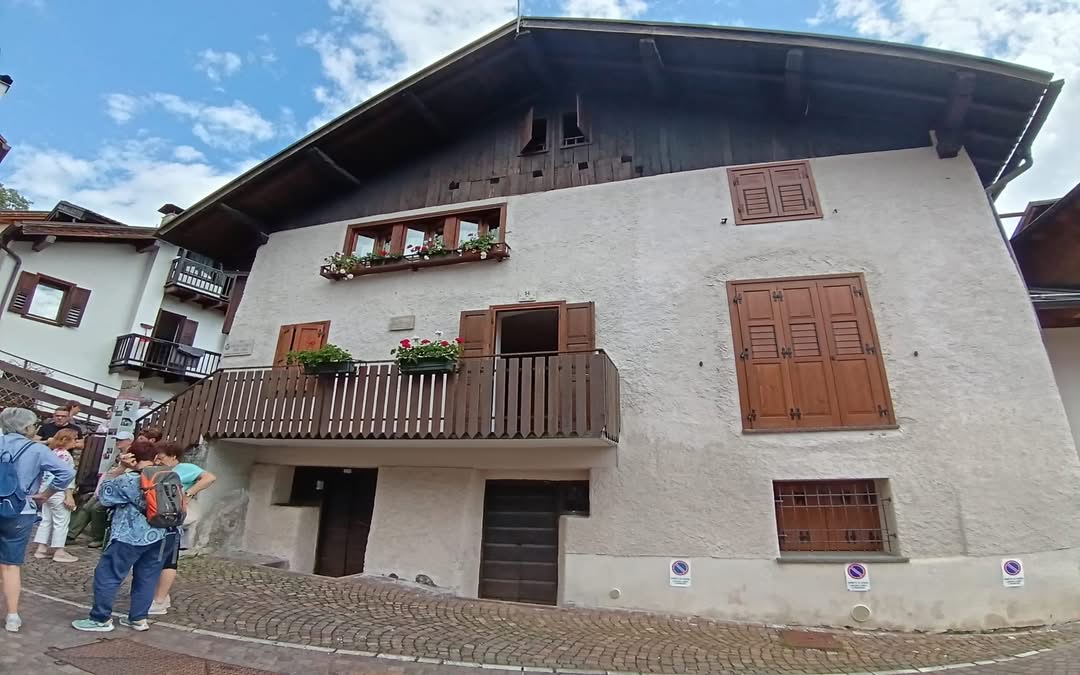
Photo: Baita Paradiso. A cottage in Tonadico, Italy, where Chiara Lubich and some of her first companions
stayed during the period known as ‘Paradiso ’49’. © Jesús María Zamora
[1] Here we have a specific description of the Christian experience brought about by the charism of unity: the “pact”. Whatever its origin in Chiara’s thought and practice, it is clear that the dynamic of “sealing a pact”, implies sharing with those involved in it, the fundamental focus of one’s existence in God and the decision to carry out his will together. In this way, the pact, among those who live it, becomes an expression of the pact with which God himself established a covenant with his people in the Old Testament, and as “once and for all” renewed it eschatologically in Jesus. Therefore, we see this as a “fundamental” aspect of the experience of Revelation. “Before then,” Chiara recalls in a footnote, “we had lived other pacts, such as the pact of mutual love. This had brought about a qualitative leap in our life, making us experience the presence of Jesus in our midst with the gifts of the Spirit he brings with him: peace, joy, light, strength. Then the pact of mercy (as we called the pact by which we focolarine took the commitment to see each other new every day, without remembering each other’s defects, as if we were meeting each other for the first time) helped us in perfecting our love for one another” (footnote 30). The pact of unity, inspired by Foco’s request and lived out according to the method described by Chiara, brings about a further and decisive “qualitative leap” – in keeping with the unfolding of the charism of unity as a gift from God – namely, that of the identification given and experienced with Jesus, and of finding oneself in the Bosom of the Father.
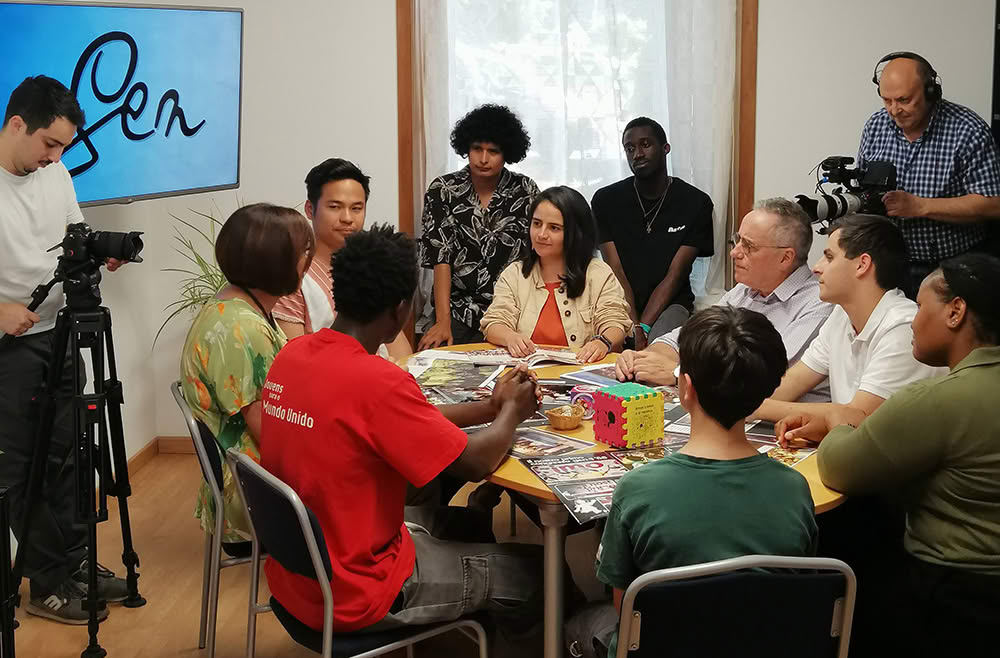
“Young people of the world, unite”: this is the invitation that Chiara Lubich extended to the younger generations 60 years ago, so that each one could answer God’s call to live for unity in a practical way. Today, this mission remains as relevant as ever and, in these extremely troubled times, continues to be a way ahead that often goes against the current. It refuses to let hatred and division have the last word. It means to journey as a family with hope and action, with a constant desire to live for a united world.