Every year, around 12 million people visit Sungsimdang bakery in Daejeon, South Korea.
What draws all these people there?
Beyond its delicious cakes and breads, at Sungsimdang, customers, partners, and employees also experience a culture of communion that inspires social and environmental initiatives.
· 79.2 fewer tons of carbon emissions each year through the recycling of milk cartons
· Production in partnership with local farmers
· Collaboration with universities in the region.
A true local ecosystem connecting production, education, and culture.
“If we had not discovered the Economy of Communion, perhaps we would have remained simply a ‘good and successful bakery.’”
Audio in the original language. Activate subtitles and select the desired language.
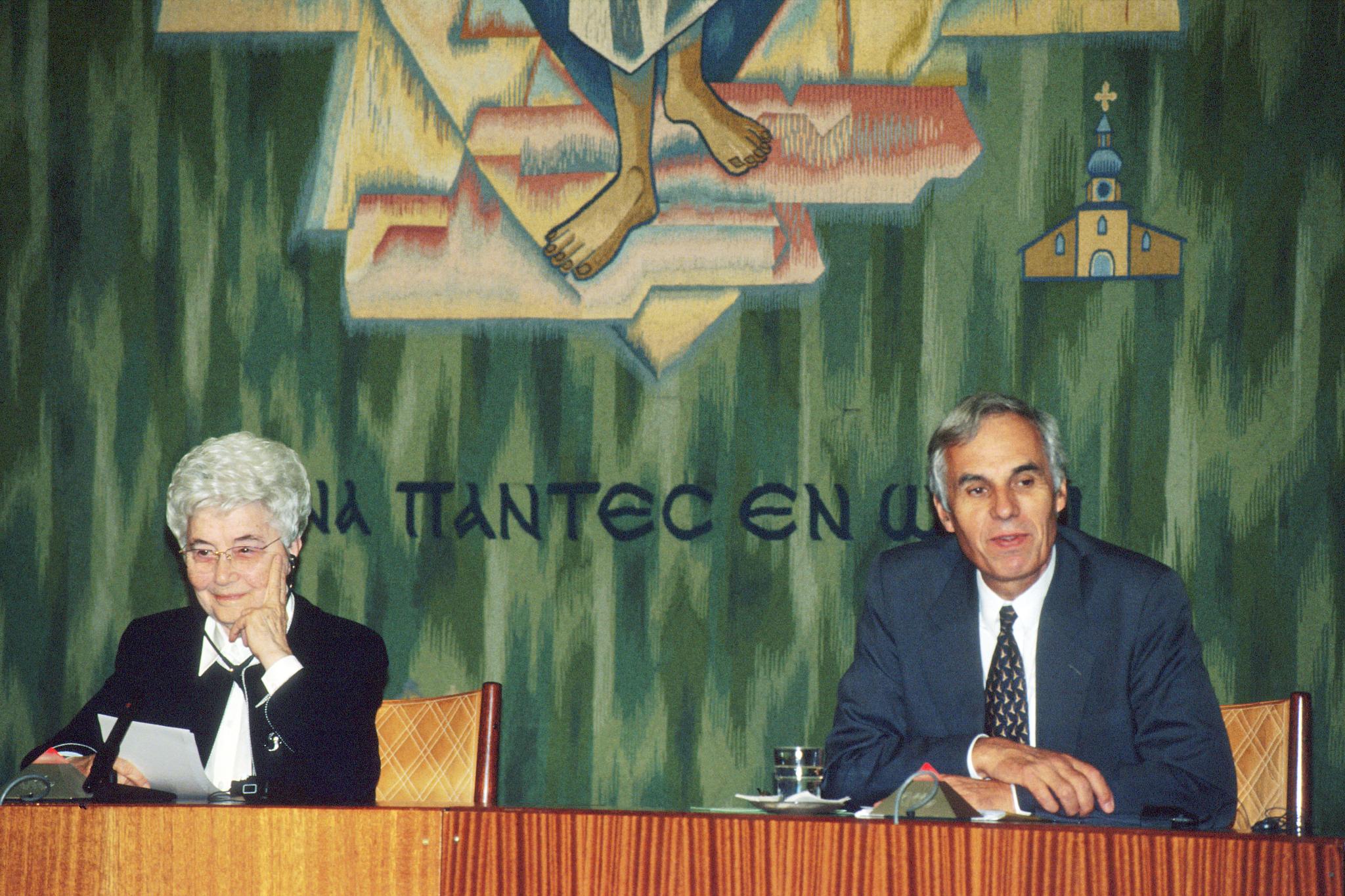
Wehrle: Dr Lukas Vischer, the well-known Swiss theologian, who was director at the WCC Faith and Order Commission for many years, had met Chiara Lubich in 1962 in Rome. He returned to Geneva saying that he had found a Roman Catholic woman full of passion to give her life for a movement for unity. He spoke to his colleagues at the WCC and they decided to invite her to Geneva in 1967 to share with them this spirituality of unity. At this meeting, in order to facilitate, to keep, and to deepen the relationship with Chiara Lubich and the Focolari Movement, they asked whether a member of the movement could work at the WCC. That’s how I came to work at the WCC in 1969.
I was full of enthusiasm to be able to contribute to the mission of WCC. I was 23 years old. I thought that by living out this spirituality of unity, by sharing it, the dream to be one, the prayer by Jesus “that all may be one,” would be soon a reality. I wrote this to Chiara Lubich. She replied immediately: “Slowly, slowly, Luzia, you only need to love – you have no other responsibility – Mary was not preoccupied to be active but to give space, visibility to Jesus by loving.” This sentence took away all the pressure and accompanied me during the years I was working at the WCC. I was not and I am still not a theologian or an ecumenist – Chiara didn’t consider this when she asked me to go to Geneva. For her it was enough to tell me “basta amare” – all you need is to love, to love Jesus in each person.
Indeed these 40 years were an immense gift and have left in my heart an indelible mark— not only from ecumenical experience gained through the many conferences throughout the world but above all the immense gift to live for the unity of the churches. It was a real privilege and somehow a continuous thanksgiving to God who, it seems to me, allowed me to experience His personal love through this very, very rich period of my life at the WCC in Geneva. What struck me deeply was to see in my colleagues the generosity to dedicate years of their lives to the ecumenical movement, among other things, by leaving their home countries together with their families, their cultural lives, their conveniences, and their careers. What an enrichment to live together with so many different cultures.
Wehrle: Chiara Lubich next visited the WCC in 1982, invited by then general secretary Philip Potter, to speak to WCC staff members about her spirituality. Philip Potter coined the phrase, “You have an ecumenical lifestyle,” which since then has often been used to describe the Focolare commitment.
When a staff member at the plenary meeting asked Chiara how to live out this spirituality daily, she proposed “The Word of Life,” which is a monthly leaflet—you may know it— containing a sentence of the Gospel with a comment, at the time by Chiara Lubich, on how to live it out. About 120 people WCC staff had asked to receive this regularly.
Sometimes people from outside asked me whether I was not influenced by the Protestant and Orthodox mentalities. I would reply affirmatively. Indeed they influenced me a lot and helped me to become a better Catholic, a more faithful member of my own church. They reinforced my own faith through their witnessing. I was also deeply touched also by how much they respected the practice of my Roman Catholic faith. The Catholic Focolari community members attend daily mass. Therefore, the WCC allowed me to start working a bit later in the morning so that I could attend mass at 8 a.m. They made similar arrangements for me whenever we travelled for conferences.
I remember a conference in Thailand. Upon arrival, one of the first questions my director would ask me was where and when I could attend mass. The time of the meeting with the steering committee was then fixed, taking into consideration my time schedule. When I returned from church, my director asked me how the worship was, and what the Scripture readings were. I had to tell him frankly that I couldn’t remember the readings. I can assure you that from that day onwards I have been much more attentively listening to the Word of God!
What were some other moving moments for you?
Wehrle: Another small happening: My director had an important appointment with the general secretary. A few minutes before, this director came to my office and asked me to ask the cleaning lady to come to his office because he had just met her while she was crying. As he didn’t speak French, he asked me to accompany her to his office. He wanted to see if he could help. I reminded him of his appointment but he asked me to call the general secretary’s assistant to postpone his appointment. I replied that I thought that this would be difficult, and that he could see the cleaning lady after his meeting with the general secretary. However, he insisted and he had a one-hour talk with the cleaning lady and he helped her solve her problem. Very often, this experience helped me in various situations in my own life.
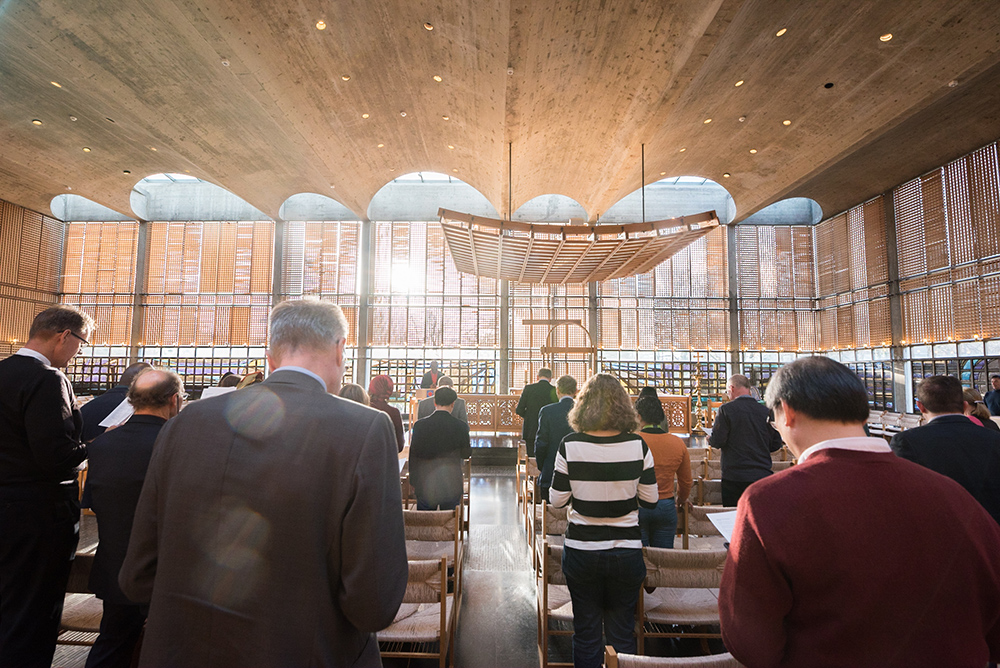
Surely the many WCC assemblies were a unique experience, especially during the prayers. The joy of celebrating the presence of God who unites us all was and remains a tangible unforgettable event which strengthens my own faith.
Even though sometimes during a conference there were different opinions which may sometimes have provoked tensions, praying together helped keep the presence of Jesus among us, and healed these wounds so that solutions could be found. Maybe one of the sad moments was when one of our colleagues passed away in a very tragic manner but, again, to be able to experience the ecumenical family helped and allowed us to heal the wound in many of us.
When was Chiara Lubich’s third visit?
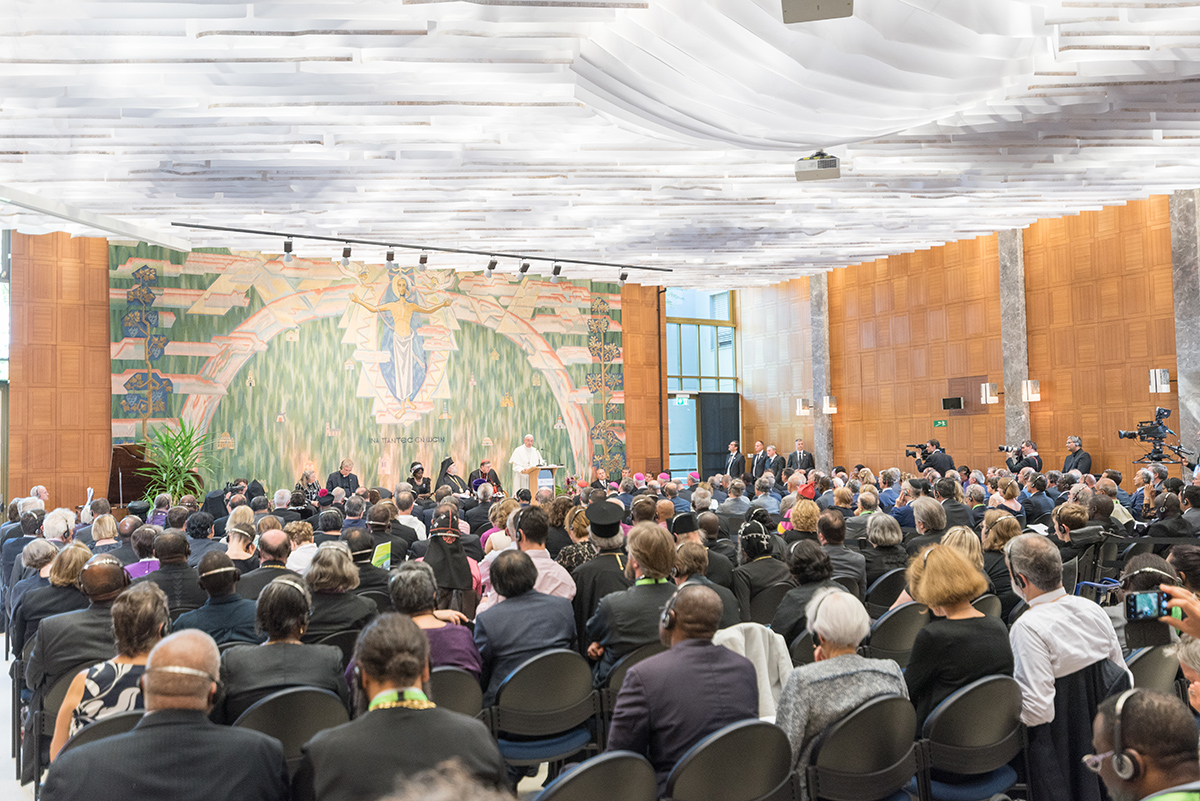
Wehrle: I was deeply impressed by the preparation for Chiara Lubich’s third visit to the Ecumenical Centre in 2002. The visit was very carefully and efficiently prepared. For one year, senior WCC staff members organized monthly meetings with members of the local Protestant Church and with members of the Focolari Movement in Switzerland. Also to prepare for this event, acting as an interpreter, I accompanied Dr Raiser, then the general secretary, for a visit to Chiara Lubich, who was on holiday in the Valais (part of Switzerland) to discuss the programme. I was deeply impressed by Chiara’s attentiveness towards Konrad Raiser, by her interest in the WCC, and the esteem she attached to the work of this organization. She also spoke about Jesus the Crucified and Forsaken as the key to achieve unity. She then asked Konrad Raiser which of the two topics he would like her to address, “A spirituality of unity” or “Unity and Jesus Crucified and Forsaken, foundation of a spirituality of communion.” I remember that Konrad Raiser didn’t hesitate a minute to choose the second one.
At the end of this visit, Konrad Raiser and Chiara Lubich edited and signed a joint reflection, entitled “Spirituality of Unity,” that emphasized the renewed hope for our common ecumenical journey.
The numerous meetings and contacts between the WCC and the Focolare Movement led to an increasing desire for more cooperation: mutual participation in conferences (in Rome, in Geneva, or elsewhere) and in different areas such as the field of spirituality, theology, economics, international relations, education, justice and peace, and youth. The WCC was also involved in a project, “Together for Europe.” The Focolari musical art group “Gen Rosso” was invited to perform as part of the “Decade to Overcome Violence,” which took place in the Caribbean in 2009.
One of the highlights during these 40 years happened to me at the end of January 2008 – a few weeks before Chiara Lubich’s passing away. Once again, acting as an interpreter, I accompanied Dr Sam Kobia, the WCC general secretary at that time, who, together with Yorgo Lemopoulos[1], and Martin Robra[2], paid a visit to Chiara’s home in Rome. They wanted to thank her for all that she had done to promote unity, not only for the churches, but the whole of humanity built above all on Jesus Crucified. They also wanted to encourage Chiara to carry on. That visit was a unique moment of joy, of deep communion.
On her death, Samuel Kobia paid tribute to her by saying, “Our love for Chiara and immense gratitude for the gift of God she has been to the ecumenical movement will continue to motivate and inspire us in our work of the visible unity of the Church.”
What do you continue to hope for the ecumenical movement?
Wehrle: I am very optimistic about the ecumenical movement also because during my 40 years of work at the WCC – attending many conferences throughout the world – I realized what Christian unity means: to build up personal relationships which do not separate us but which promote the interest in the diversity of the many Christian denominations and which enrich us reciprocally. Also, when there were tension, sometimes serious tensions – we spoke to each other – listened to each other, strengthening the faith into visible unity and very often opening new doors through which the light of God was tangible!
Would you like to share one more memory?
Wehrle: I remember my farewell party. When I looked at the people who were present, I felt strongly – and I also said it aloud — that nothing can ever separate us from God’s love–because if I try to be in His love, to live it out, our relationship can only grow and will never be forgotten. For me it was and is still that family with God’s presence among us. “For where two or three are gathered together in my name, there am I in the middle of them.” (Matthew 18:20) This reality of Jesus in our midst has helped me in many situations.
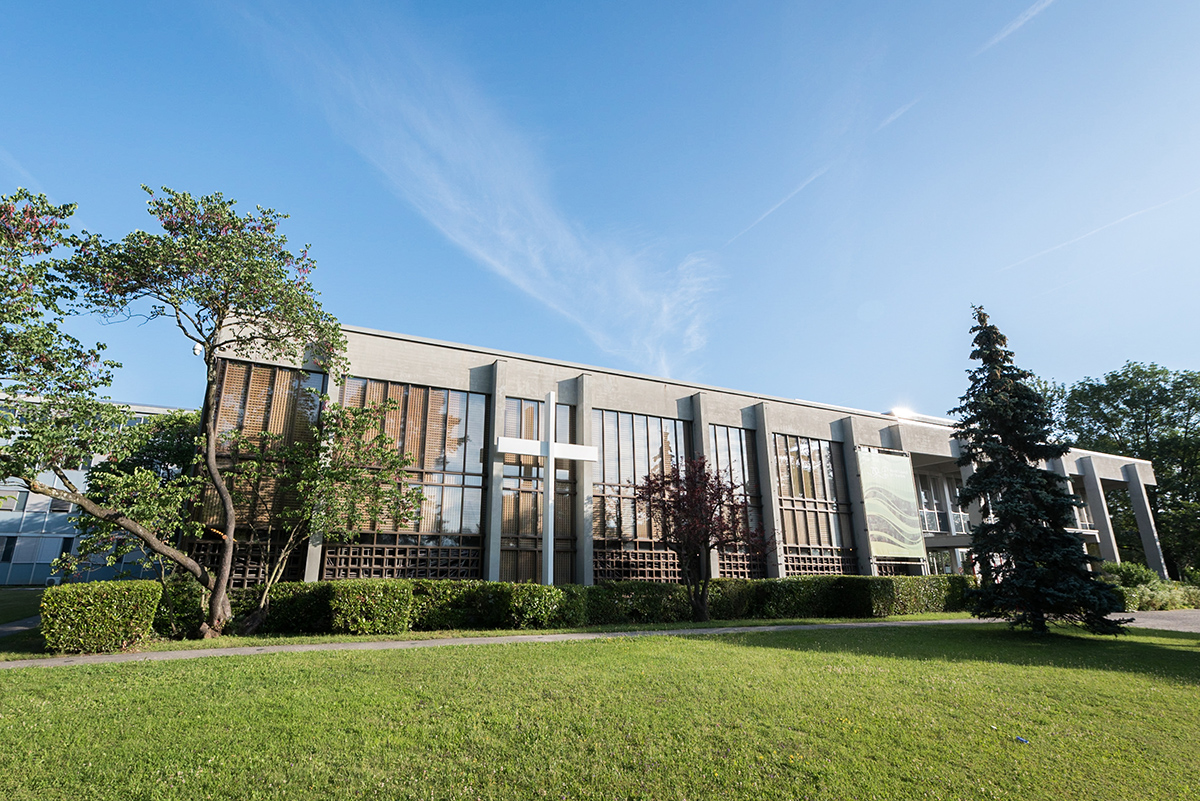
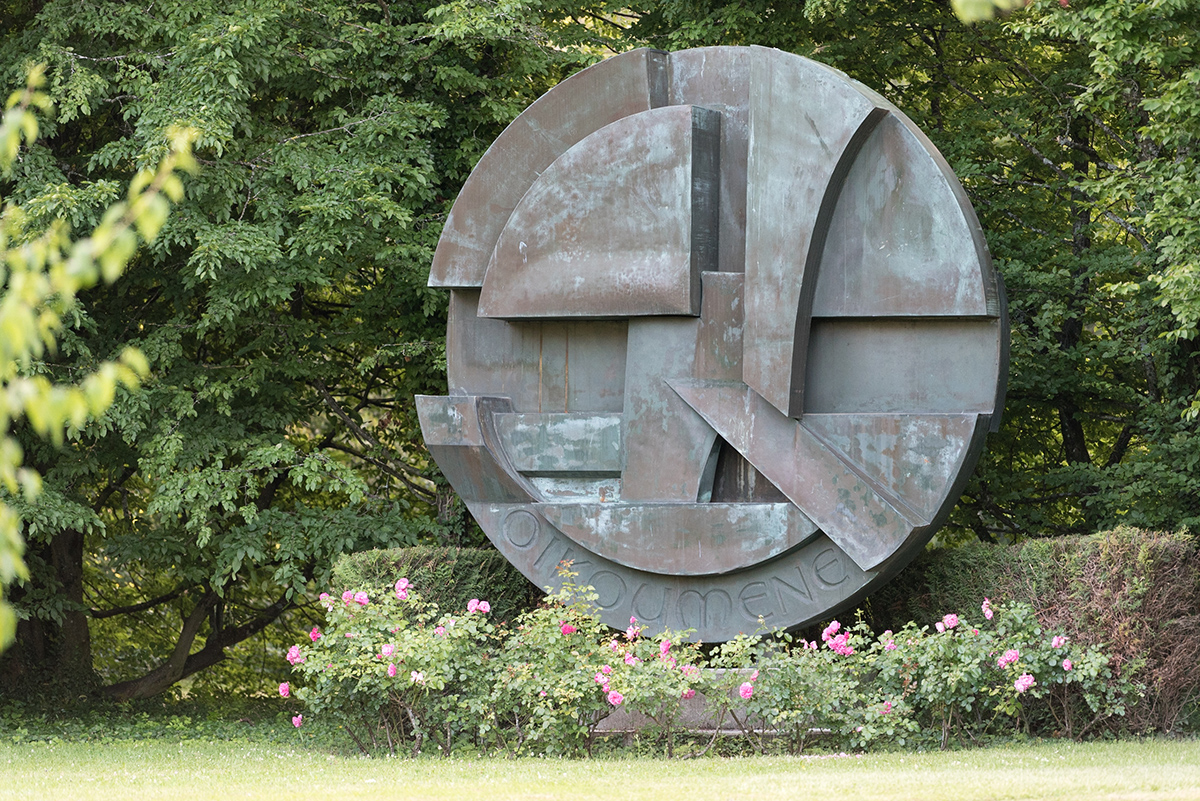
Original interview published on the website of the World Council of Churches:https://www.oikoumene.org Photo: Albin Hillert e Valter Muniz/CEC
[1] Deputy General Secretary of the World Council of Churches [2] Executive Director of the World Council of Churches
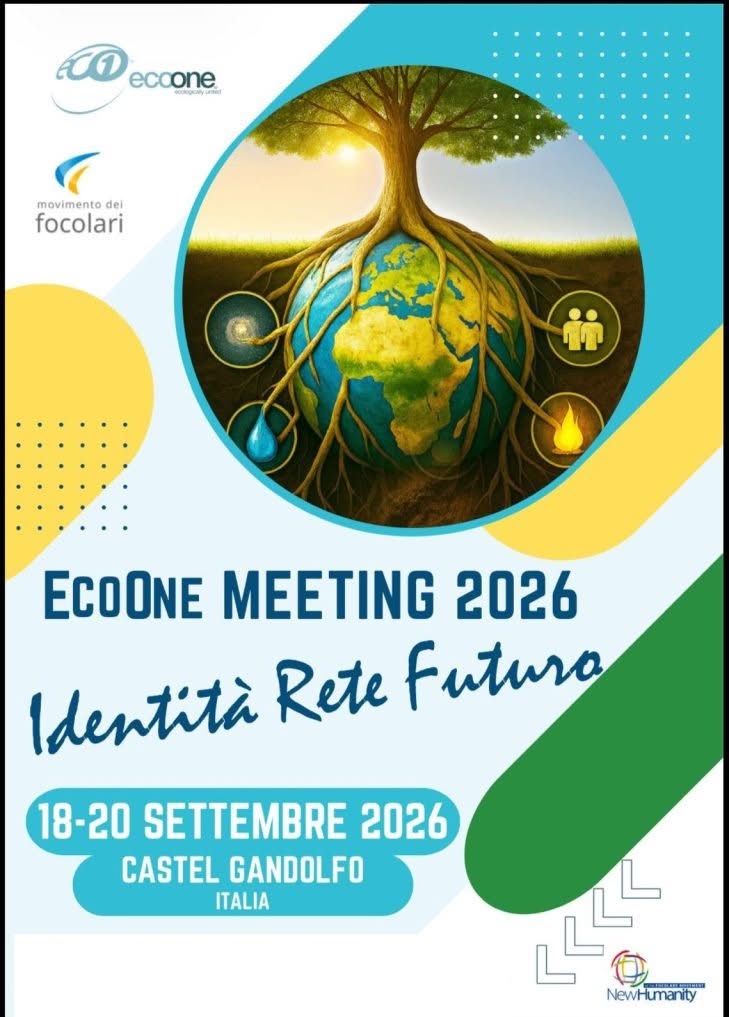
EcoOne, an expression of the Focolare Movement that brings together professionals, teachers, technicians, students and others passionate about ecology, has organized an international meeting to be held from 18th-20th September 2026 in Castel Gandolfo (Italy). Participants from all five continents will take part in three days of sharing, listening and dialogue on the care of creation.
Identity, Network and Future: these are the three key words that will shape the seminar, inviting the participants to reflect on who we are, how we are connected to each other and what goals can help us move forward together.
18th September, IDENTITY: “The cultural and spiritual roots of our commitment”.
19th September, NETWORK: “How can we respond to the challenge of the limits of the planet? Becoming agents and promoters of a culture of integral ecology”.
20th September, FUTURE: “Peace and the ecological challenge. Passing on a culture and practical pathways of relational sustainability”.
It is no coincidence that the event is taking place at this time of year. From 1st September-4th October, Christians around the world celebrate the Season of Creation, an ecumenical journey of prayer and commitment to caring for our Common Home. During this time the Church, together with other Christian communities, is invited to renew its commitment to Creation, guided by prayer, conversion and concrete acts of care.
Stefania Papa, Coordinator of EcoOne said, “The EcoOne Meeting was born from the desire to create an opportunity for encounter and dialogue between people with different experiences, skills and backgrounds, but united by their concern for the environment and the future of the planet. The goal is to bring together contributions from science, education, social engagement and spirituality, to build a dialogue capable of generating ideas, collaboration and concrete pathways. Today’s environmental and social challenges are all interconnected and require spaces for mutual listening, relationships and working together. This is why the Meeting also aims to be a place where experiences and good practice can be shared, networks can be built and existing collaborations strengthened”.
EcoOne has been promoting dialogue between science, ethics and sustainability for years, inspired by Chiara Lubich’s spirituality of unity and the integral ecology proposed by Pope Francis in Laudato Sì.
The Meeting will be a further step in this direction, a laboratory of dialogue and collaboration, where scientific reflection, care for the environment and human relationships can come together to generate new pathways to be built together. It will be a space where young people, educators, professionals and ordinary citizens can share experiences and explore ongoing projects, for the good of Creation.
Mabih, from Ivory Coast, shared one of the most moving stories in the 35-year history of the Economy of Communion.
Owner of Mabs and Smalls Kitchen, she told us how she went from being a traditional boss to becoming a facilitator of dignity after discovering in the Economy of Communion a way of life.
Mabih came to understand that, in a business economy based on communion, the main goal is not profit, but the person.
“When you put the human being at the center, the business does not suffer. It thrives.”
Audio in the original language. Activate subtitles and select the desired language.