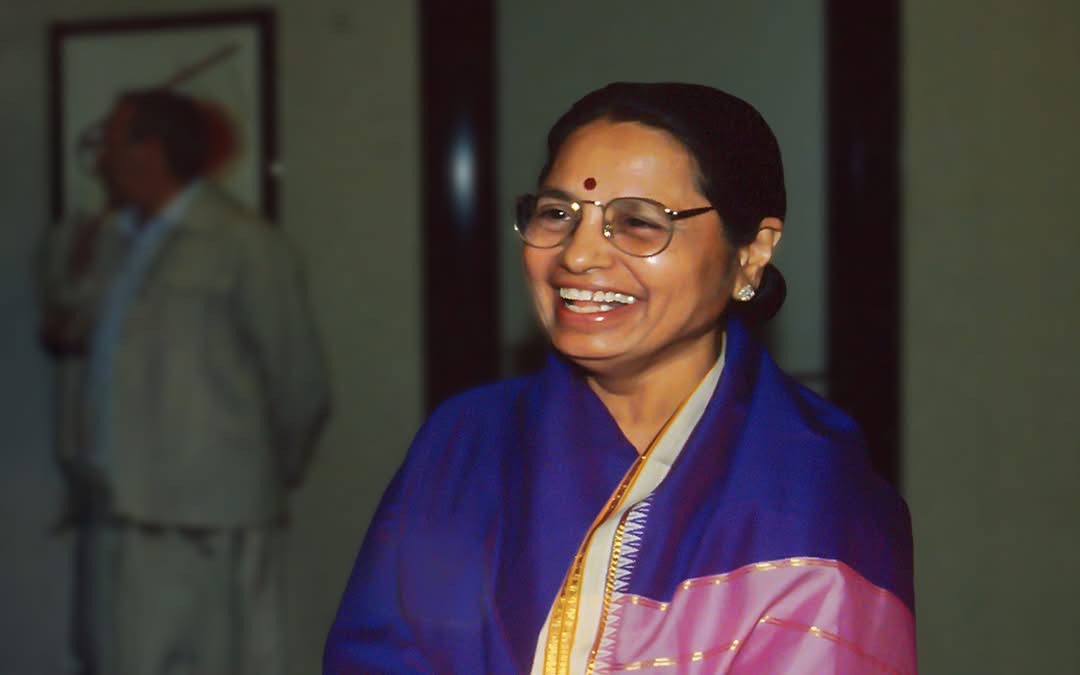
The news came suddenly and unexpectedly, on the morning of 10th August. Kala Acharya had just died on the campus of Somaiya University where she lived and where, at the behest of its founder, Shri Karamshi Jethabhai, she had spent forty years of her life. As Samir Somaiya, grandson of the founder and current President of this prestigious academic institution, defined her, Kala had become an institution in her own right through her presence and personality. In agreement with Dr. Shantilal Somaiya, who in the meantime had succeeded his father in the management of the Trust of the academic institution, she had established the Somaiya Sanskriti Peetham, an institution for the training of formal and informal teachers of moral and religious values. At the same time, she became deeply involved with Dr. Somaiya in interreligious dialogue, collaborating in the mid-1990s, with the St. Pius X Catholic Seminary in Mumbai and with various foreign professors and institutions, including some in Italy. In September 2000, a few months before Chiara Lubich’s first trip to India, Msgr. Felix Machado, Undersecretary of the then Pontifical Council for Interreligious Dialogue (today the Dicastery for Interreligious Dialogue), asked Marina Pracchia and Roberto Catalano, the co-responsibles of the Focolare Movement in India, to get in touch with Professor Kala Acharya. He considered her a sister and hoped she might be able to take part in some moments during Lubich’s visit. The first meeting in Vidhyavihar, on the vast campus of Somaiya University, was immediately very warm. Kala readily accepted the invitation to attend the award ceremony of the Gandhi Peace Defender Award, which Chiara Lubich received from the Shanti Ashram in Coimbatore, in early January 2001. It was in Coimbatore, just before returning to Mumbai, that Lubich met the Indian academic personally. They immediately understood each other. The next day, the founder of Focolare wrote in her diary: “Yesterday, on the feast of the Epiphany, I had a rather special meeting, perhaps with a person who has a design of God, Kala Acharya. […] she is an expert, she has explored Hindu-Christian dialogue, knows the Pontifical Council for Interreligious Dialogue well and has been personally received twice by John Paul II. When she came into the sitting room, she immediately said that she felt blessed…: “It is the love of God that comes to me. I’ll work along whatever line you give me. That’s a promise.” […] She wants me to meet a group of highly qualified people of various religions in Bombay: she said, “Your word must go directly to all religions. The meaning you give to love is extremely important”. There will be professors, students, “we all want to become the vehicles of this word of yours” ”.
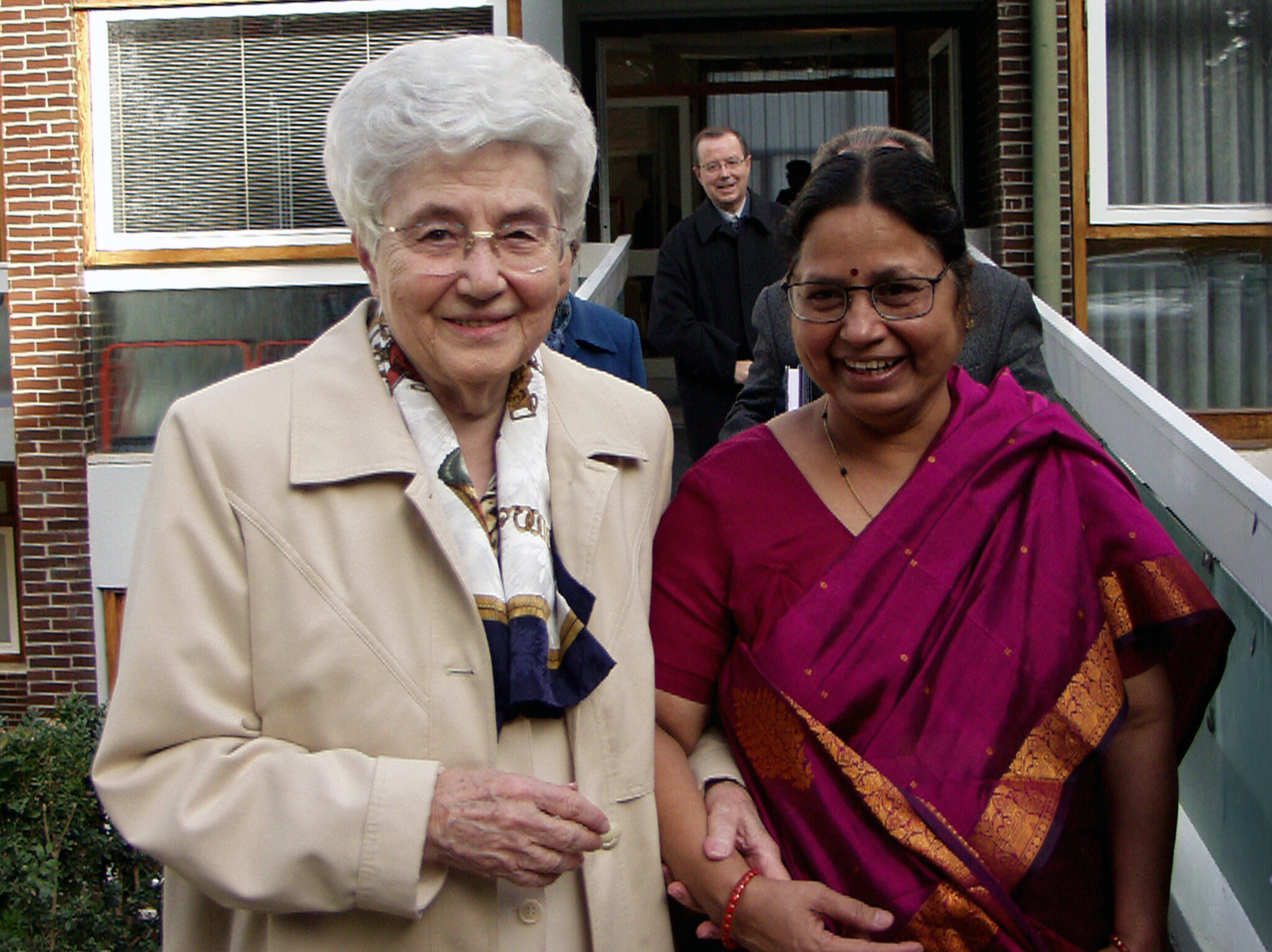
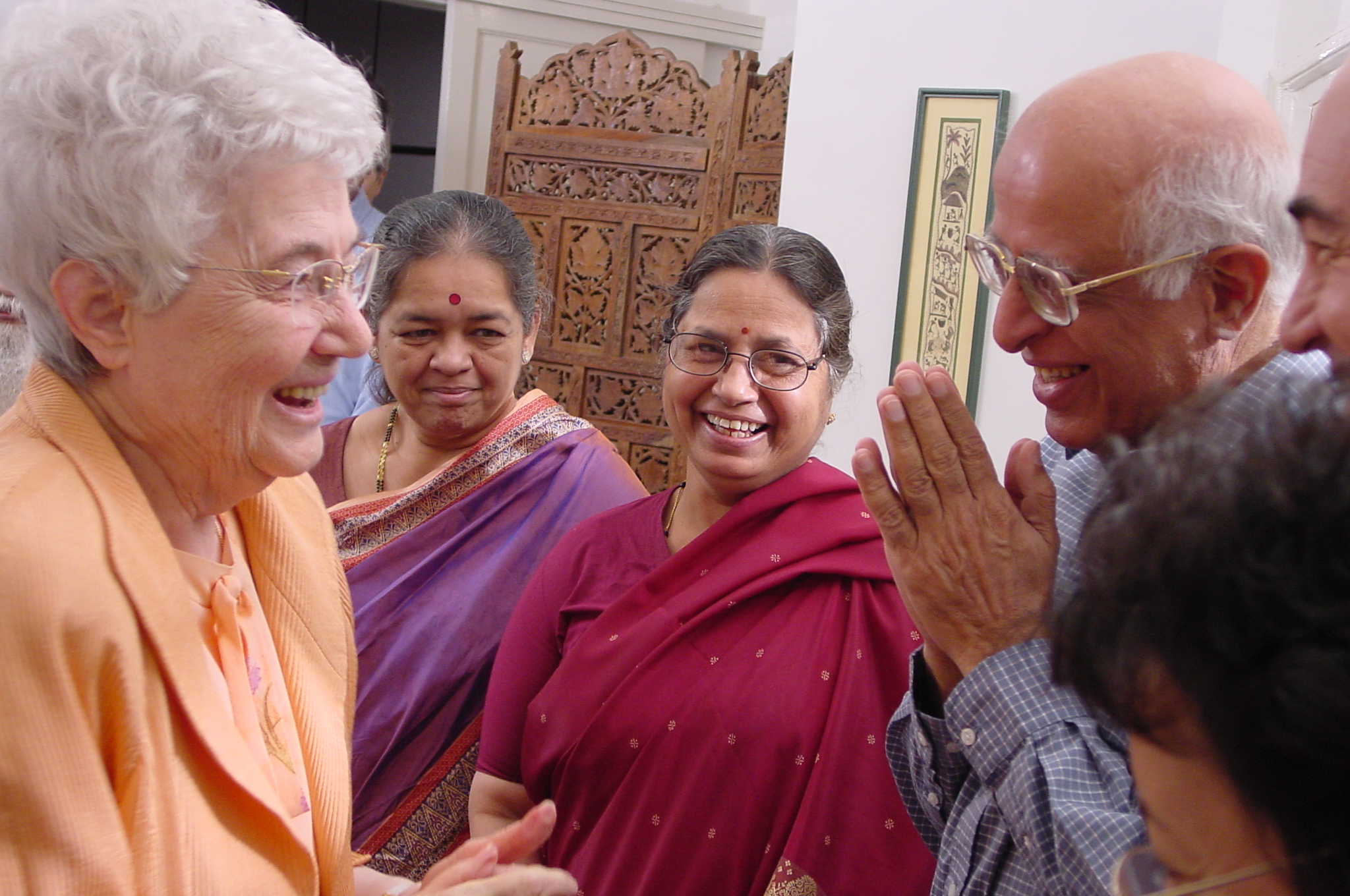
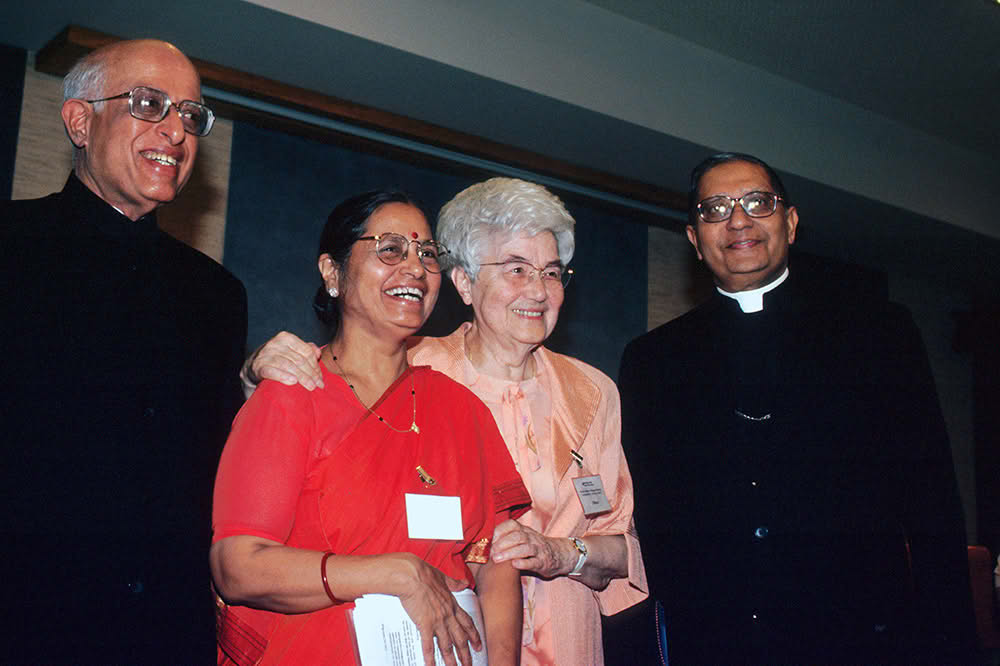
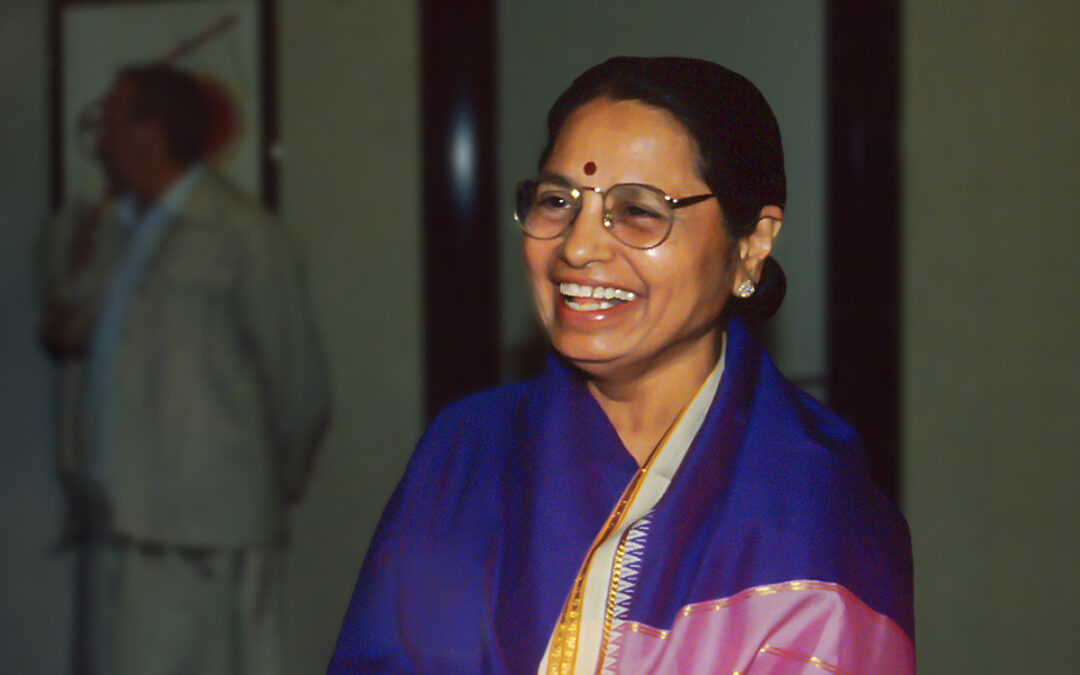
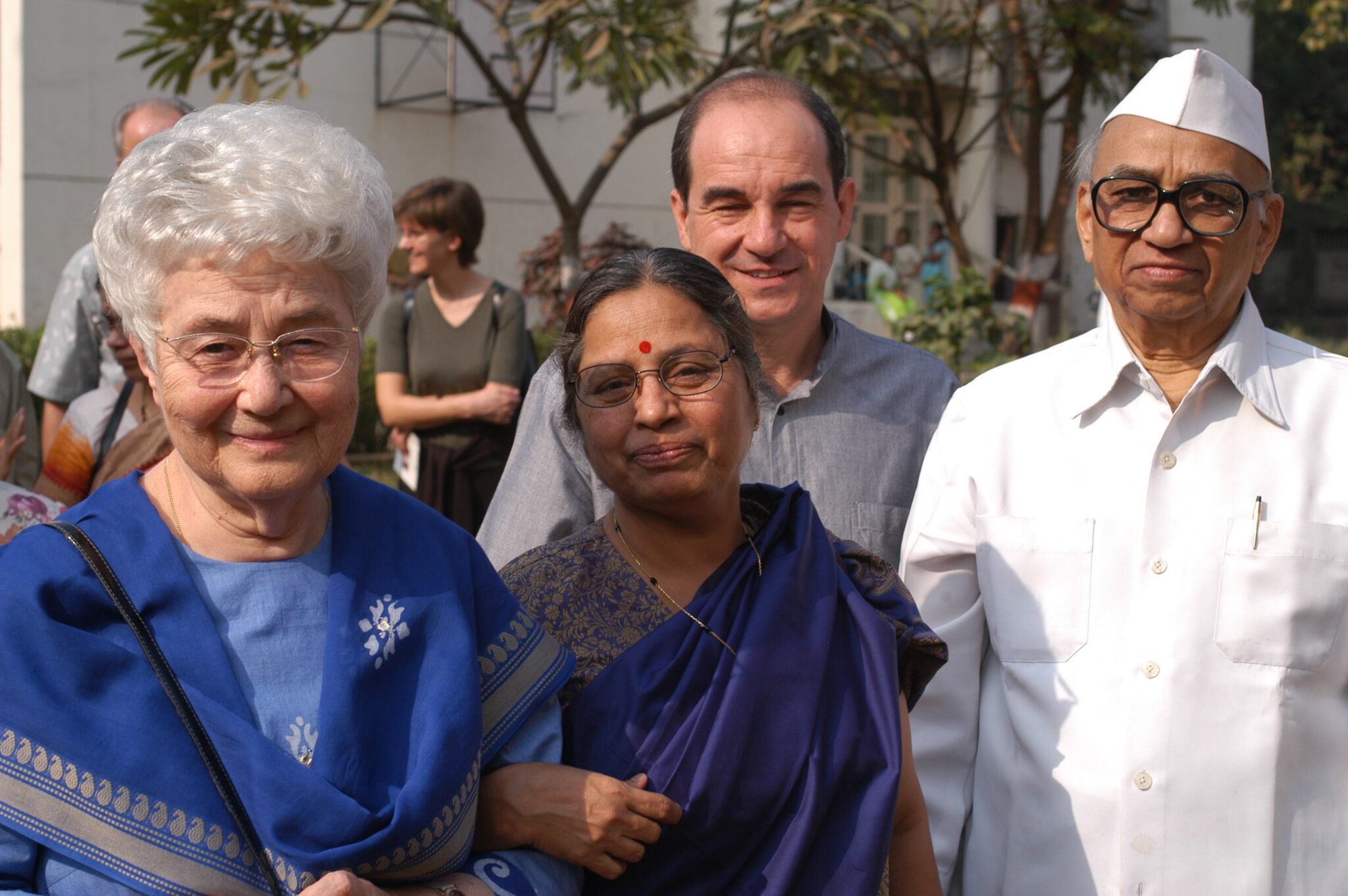
In the photos: From left: Chiara Lubich and Kala Acharya. In the second photo, between Chiara and Kala is Prof. Shubada Joshi, and on the right is Dr Shantilal Somaiya. In the third photo: Dr S. Somaiya, Kala Acharya, Chiara Lubich and Cardinal Ivan Dias of Bombay.
A few days later, in Mumbai, under a shamiana (a decorated tent) in the esplanade in the center of the large university campus, 600 people gathered to hear Lubich speak. She recounted her Christian experience and her yearning and commitment to dialogue. Shortly beforehand, Dr. Shantilal Somaiya had assured Chiara that he wanted to become a soldier at her command, to bring the spirit of unity and dialogue everywhere. It was the beginning of a unique season in the Focolare experience –not only because everything was always organized together with the new Hindu friends and the Vatican Dicastery for Interreligious Dialogue and with the Diocese of Mumbai. The Movement, for the first time in its history, opened itself up to interreligious dialogue at the academic level. This was largely due to Professor Kala Acharya who suggested that Chiara continue the friendship together with a series of symposia to reflect on shared themes. It was during the first of these that Lubich felt the inner urge to share her most intimate spiritual experience. The resonance among the Hindus was surprising and Chiara continued this experience of communion during her second visit to India in 2003, when she spent a morning together with about twenty of these academics to share very deep spiritual realities in an atmosphere of communion difficult to describe.
Chiara and Kala have always considered themselves spiritual ‘sisters’ and Kala continued, as much as she could, with great fidelity, to carry on the interreligious dialogue born from her relationship with Chiara. Along with other Hindus such as Minoti Aram and Suresh Uppadhyaya, she had grasped the prophetic significance of the charism, expressing it in these terms: “In Hinduismwe have three ways to get to God: bhakti yoga leads us to pray, Karma yoga leads us to act and jnana yoga leads us to think and meditate in order to come to know self and God. Chiara Lubich offers us a fourth way, the Prem yoga, the path of love for our brothers and sisters and among ourselves ”.
La notizia è arrivata improvvisa e inattesa, la mattina del 10 agosto. Kala Acharya si era appena spenta all’interno del campus della Somaiya University dove viveva e dove, per volere del suo fondatore, Shri Karamshi Jethabhai, ha speso quarant’anni della sua vita. Come l’ha definita Samir Somaiya, nipote del fondatore e attuale Presidente di questa prestigiosa istituzione accademica, Kala era ormai lei stessa una istituzione con la sua presenza e personalità. D’accordo con il Dr. Shantilal Somaiya, che intanto aveva rilevato dal padre il Trust che gestiva l’istituzione accademica, aveva dato vita al Somaiya Sanskriti Peetham, un istituto per la formazione di insegnanti formali e informali di valori morali e religiosi. Contemporaneamente, si era impegnata insieme al Dr. Somaiya nel dialogo interreligioso, collaborando già a metà degli anni Novanta, con il Seminario Cattolico St. Pius X di Mumbai e con vari professori e istituzioni straniere, fra le quali alcune anche italiane. Nel settembre del 2000, a pochi mesi dal primo viaggio di Chiara Lubich in India, Mons. Felix Machado, Sottosegretario dell’allora Pontificio Consiglio per il Dialogo Interreligioso (oggi Dicastero per il Dialogo Interreligioso), pregò Marina Pracchia e Roberto Catalano, corresponsabili dei Focolari in India, di mettersi in contatto con la professoressa Kala Acharya che considerava una sorella e che sperava potesse partecipare a qualche momento del viaggio della Lubich. Il primo incontro a Vidhyavihar, nel grande campus della Somaiya University, fu subito molto caloroso. Kala accettò immediatamente l’invito a partecipare alla cerimonia di conferimento del Premio Gandhi, Difensore della Pace, che Chiara Lubich ricevette dallo Shanti Ashram a Coimbatore, all’inizio di gennaio 2001. Proprio a Coimbatore, poco prima di ripartire per Mumbai, la Lubich incontrò personalmente l’accademica indiana: si capirono al volo. La fondatrice dei Focolari scrisse sul suo diario, il giorno successivo: «Ieri, giorno dell’Epifania, ho avuto un incontro un po’ speciale, forse con una creatura non senza un disegno di Dio, Kala Acharya. […] Colta, ha approfondito il dialogo indù-cristiano, conosce bene il Pontificio Consiglio per il dialogo interreligioso ed è stata ricevuta due volte personalmente da Giovanni Paolo II. Entrando nel salottino ha subito detto che si sente benedetta…: “E’ l’amore di Dio che viene a me. Lavorerò su qualsiasi linea mi darai. E’ una promessa!”. […] desidera che io incontri un gruppo di persone molto qualificate di varie religioni a Bombay: “la tua parola deve andare direttamente a tutte le religioni – ha detto – è importantissimo il significato che tu dai all’amore”. Ci saranno professori, studenti, “vogliamo tutti diventare i veicoli di questa tua parola”».
Nelle foto: Da sinistra: Chiara Lubich, Kala Acharya e dietro Roberto Catalano. Nella seconda foto, tra Chiara e Kala la Prof.ssa Shubada Joshi e a destra il Dr. Shantilal Somaiya. Nella terza foto: Dr. S. Somaiya, Kala Acharya, Chiara Lubich e il Card. di Bombay Ivan Dias.
Infatti, qualche giorno dopo, a Mumbai sotto una shamiana (un tendone decorato)nella spianata al centro del grande campus universitario, c’erano 600 persone ad attendere la parola della Lubich che raccontò la sua esperienza cristiana e il suo anelito e impegno per il dialogo. Poco prima, il Dr. Shantilal Somaiya aveva assicurato Chiara di voler trasformarsi in un soldato ai suoi ordini, per portare lo spirito dell’unità e del dialogo dovunque. Fu l’inizio di una stagione unica nell’esperienza dei Focolari – e non solo perché tutto fu sempre organizzato con i nuovi amici indù e insieme al Dicastero vaticano per il dialogo interreligioso e con la diocesi di Mumbai. Il Movimento, per la prima volta, nella sua storia si aprì ad un dialogo interreligioso anche a livello accademico. E questo fu il merito proprio della professoressa Kala Acharya che suggerì a Chiara di proseguire l’amicizia insieme con dei simposi per riflettere su temi comuni. Proprio durante il primo di questi simposi la Lubich avvertì la spinta interiore di partecipare la sua esperienza spirituale più intima. La risonanza fra gli indù fu sorprendente e Chiara continuò ancora questa esperienza di comunione durante il suo secondo viaggio in India nel 2003, quando trascorse una mattinata insieme a una ventina di questi accademici per condividere realtà spirituali molto profonde in un clima di comunione difficile da descrivere.
Chiara e Kala si sono sempre considerate ‘sorelle’ spirituali e Kala ha continuato, come ha potuto, ma con grande fedeltà, a portare avanti nel suo ambito il dialogo interreligioso nato dal suo rapporto con Chiara. Aveva colto – insieme ad altri indù come Minoti Aram e Suresh Uppadhyaya – la profezia del carisma che esprimeva in questi termini: «Nell’induismonoi abbiamo tre vie per arrivare a Dio: il bhaktiyoga ci fa pregare, il Karmayoga ci fa agire, lo Jnanayoga ci fa pensare e meditare per arrivare a conoscere Sé e Dio. Chiara Lubich ci propone una quarta via, il Premyoga, la via dell’amore al fratello e fra di noi».
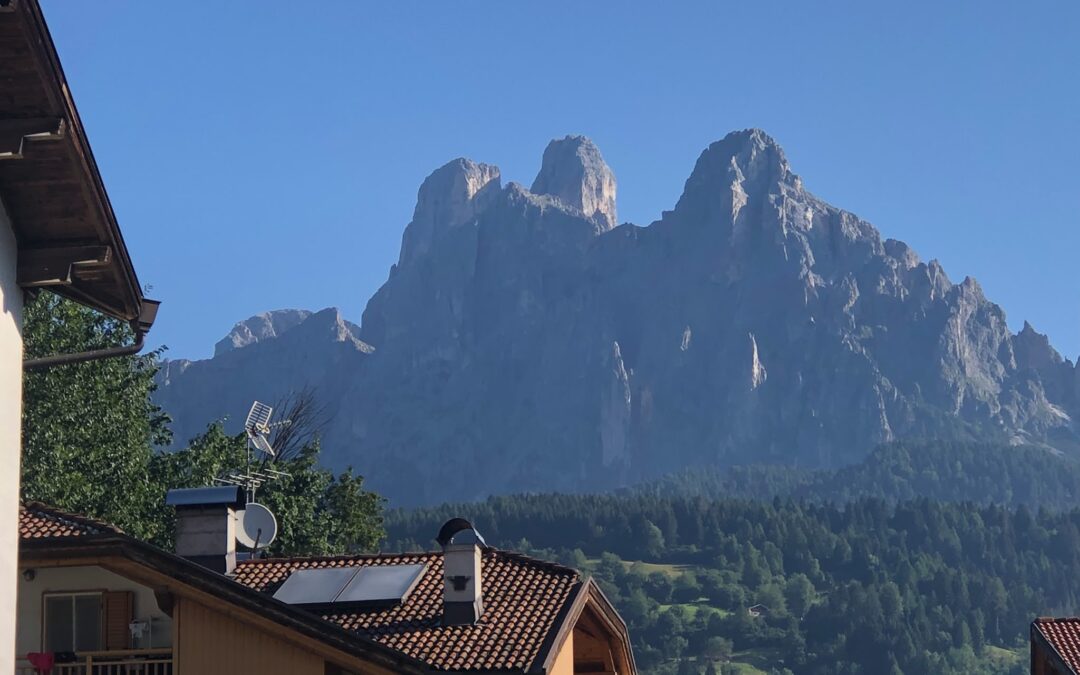
In 1949, Tonadico, a small village in the Dolomites in northern Italy, became a place of immense importance for the Focolare Movement. The mystical experience lived in those mountains by the founder of the Movement, Chiara Lubich, together with her first companions and the well-known Italian parliamentarian and journalist Igino Giordani, continues to shape the spirituality of the Movement throughout the world. Now, 77 years later, the Municipality of Primiero (Italy) and the Focolare Movement have for the first time, conferred the international prize “Tonadico – Città del Patto”. The award was given to Gerhard Pross of the YMCA in Esslingen, Germany. An Evangelical Lutheran, Gerhard is co-founder and former moderator of the ecumenical movement “Insieme per l’Europa”.
A Pact That Remains Relevant
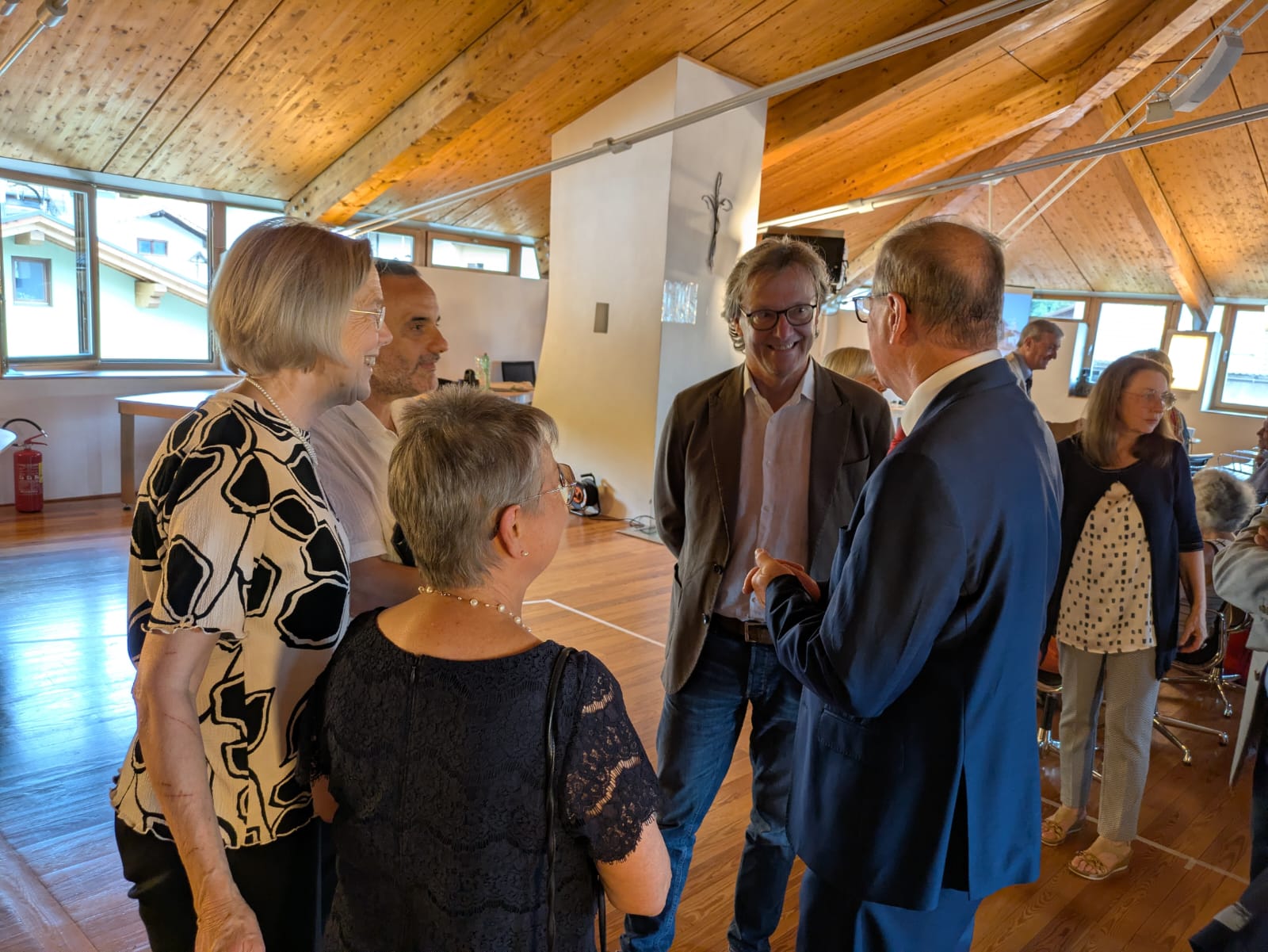
On 16th July 1949, Chiara Lubich and Igino Giordani made a “pact of unity” during a Eucharistic celebration in the church, of Tonadico giving rise to a mystical experience which became known as Paradise ’49. Soon after, Chiara Lubich’s companions joined this pact as well. During the award ceremony the Mayor of Primiero, Daniele Depaoli, emphasized that this “historic moment” remains much more than a simple memory. Depaoli said, in words also reported by Vatican News, that thanks to a spirituality that “penetrates the secular world, civil and political life”, this pact remains relevant today.
During the ceremony, the sociologist Bruno Turra explained the decision to award the newly established prize to Gerhard Pross from Germany. Turra said that Gerhard is a “relationship engineer”, a “master weaver of communities”.
An Ecumenism of Hearts
In his speech, Pross retraced the beginnings of the ecumenical movement “Together for Europe”, describing a meeting at the ecumenical centre of the Focolare Movement in Ottmaring (Germany), immediately after the signing of the joint declaration on the doctrine of justification by the representatives of the Roman Catholic Church and the Lutheran World Federation in Augsburg. There, about 50 leaders from different Christian churches and movements, including Chiara Lubich, prayed together and asked one another for forgiveness for past suffering. Pross recalled, “Afterwards, it was as if the heavens had opened and a sea of grace poured over us”. He had never experienced such a profound moment. There a “true ecumenism of the heart” was born.
There are no boundaries between Heaven and Earth
For him, it was a moment just as mystical as the pact between Chiara Lubich and Igino Giordani: “Here in Tonadico, heaven and earth came together, because Chiara Lubich’s mystical experience abolished the boundaries between heaven and earth”.
“Here is a summary of the event (of the 16th of July) that Chiara offers us, restoring its enchanting Gospel-based inspiration. When Igino Giordani (Foco) suggested (to Chiara Lubich) that they ‘bind themselves closely’ to each other in order to follow Jesus more closely – as Saint Catherine did with her followers – Chiara felt prompted to respond by inviting him to make a ‘pact’, in faithfulness to the Gospel principles to which she had learned to conform her life [1]:
“You know my life: I am nothing. I want to live, indeed, like Jesus Forsaken, who annihilated himself completely. You too are nothing because you live in the same way. So then, we will go to church tomorrow and I will say to Jesus-Eucharist who will come into my heart, as into an empty chalice: ‘On the nothingness of me may you seal a pact of unity with Jesus-Eucharist in Foco’s heart. And, Jesus, bring about between us the bond which is known to you.’ … ‘And you, Foco, do the same.’” (Translation of the Italian – verses 24 and 25 of the text of Chiara Lubich published in “Paradise ‘49”, Città Nuova, Rome 2026).
The narrative is concise and extremely simple. The event that then came as a gift, once the pact had been made and had borne witness, exceeds all human expectations. And in this form, it is also unprecedented in the history of Christian experience.
We could try to discern its meaning from what Chiara first of all tells Foco, in order to “explain to him” – as she wrote – what had happened. “Do you know where we are?” She begins with this question, inviting him to join her in opening the eyes of his soul to the scene that has unfolded through the pact. It is clear from this that the pact prepared the conditions for God’s grace to be made manifest: the mystical perception of the presence of Jesus in Chiara and Foco (and immediately afterwards in those to whom the pact is extended) becoming “one” – brought about in Jesus and by Jesus, through the lived Word and through the Eucharist. And it is so in each of them. Certainly, the lived and perceived identification of Chiara with Jesus, expresses the extraordinary grace common to all authentic mystical experiences attested to throughout the history of the Church. But what comes to light in the experience described here, is that this takes place for Chiara in the unity in and through Jesus, that she lived with Foco, and then gradually with the other people to whom the experience is communicated. To such an extent that they too are drawn into it.
[1] Here we have a specific description of the Christian experience brought about by the charism of unity: the “pact”. Whatever its origin in Chiara’s thought and practice, it is clear that the dynamic of “sealing a pact”, implies sharing with those involved in it, the fundamental focus of one’s existence in God and the decision to carry out his will together. In this way, the pact, among those who live it, becomes an expression of the pact with which God himself established a covenant with his people in the Old Testament, and as “once and for all” renewed it eschatologically in Jesus. Therefore, we see this as a “fundamental” aspect of the experience of Revelation. “Before then,” Chiara recalls in a footnote, “we had lived other pacts, such as the pact of mutual love. This had brought about a qualitative leap in our life, making us experience the presence of Jesus in our midst with the gifts of the Spirit he brings with him: peace, joy, light, strength. Then the pact of mercy (as we called the pact by which we focolarine took the commitment to see each other new every day, without remembering each other’s defects, as if we were meeting each other for the first time) helped us in perfecting our love for one another” (footnote 30). The pact of unity, inspired by Foco’s request and lived out according to the method described by Chiara, brings about a further and decisive “qualitative leap” – in keeping with the unfolding of the charism of unity as a gift from God – namely, that of the identification given and experienced with Jesus, and of finding oneself in the Bosom of the Father.
… Unity. What is unity? Is it possible to achieve unity?
Unity is what God wants from us.
Unity is the fulfilment of Jesus’ prayer: ‘That they may all be one. As you, Father, are in me and I am in you, may they also be in us’ (Jn 17:21).
But unity cannot be achieved only through our own efforts. It can be accomplished only through a special grace which the Father grants if he finds us prepared, in accordance with a precise and necessary pre-requisite.
That is mutual love lived out as Jesus commanded.
We must love one another as he wants, which is not – as we know – simply a spiritual friendship, agreement or just understanding one another.
It means that we should love one another as he loved us, that is, to the point of the abandonment: to the point of complete material and spiritual detachment from things and persons, so that we can make ourselves one reciprocally and perfectly.
By doing so, we will have done our part and we will be in a position to receive the grace of unity, which will not be lacking, which should not be lacking.
How thankful we should be at the thought of being called to this; what an incentive to do all we can in order to obtain this gift which is lacking wherever this is not lived.
We must remember that there is an added grace in our communitarian spirituality; that heaven can be opened to us in every moment; and if we do what it asks of us, filled with this grace, we can do much, very much for the kingdom of God.
Undoubtedly, it is this grace that explains the great expansion of our Movement and many wonderful achievements linked to it.
This is why, in the beginning, conscious of this extraordinary privilege, we expressed ourselves in this way:
‘Keep one idea fixed in your head. Was alway It s one single idea that made great Saints. And our idea is this: Unity’.
‘Let everything else crumble – Unity, never! … Always have this Fire burning among you. And don’t be afraid if it means dying. You’ve already experienced that Unity demands the death of everyone, to give life to the One! … Do this as your sacred duty, even though it will bring you immense joy! Jesus promised the fullness of joy to those who live Unity! …’
During the next month, let us make every effort to obtain this gift always.
And let us not seek it solely for our own happiness, but in order to be prepared for our typical form of evangelisation. You know it: ‘That they may be one … so that the world may believe’ (Jn 17:21).
The world has a great need of faith, it needs to believe! And we are all called to evangelise. One day, St Francis said to one of the brothers: ‘Let’s go out to preach.’ Then, tucking their hands inside the sleeves of their cloaks and with their eyes cast down they walked through the city preaching through their very being, mortification and total poverty.
Let us also go out to the world and launch our way of preaching. If someone observes two or more of us united (in the focolares, in the nuclei, in the units, in our meetings, or because we happen to be together) may they be struck by a ray of our faith and believe.
May they believe in love because they have seen it. Let’s get down to work. This is what the Lord wants from us. He wants it through our charism which has been engraved in our Statutes: unity is the premise that comes before every other will of God. Then we can also speak in order to spread the Gospel… but afterwards.
Chiara Lubich (Convesazioni, Città Nuova, Roma 2019, pp 522/4
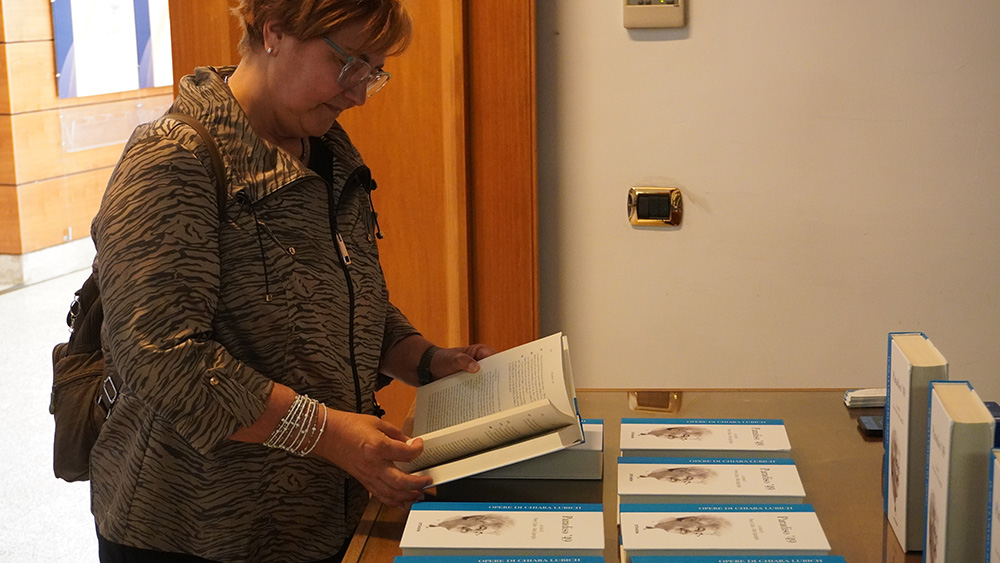
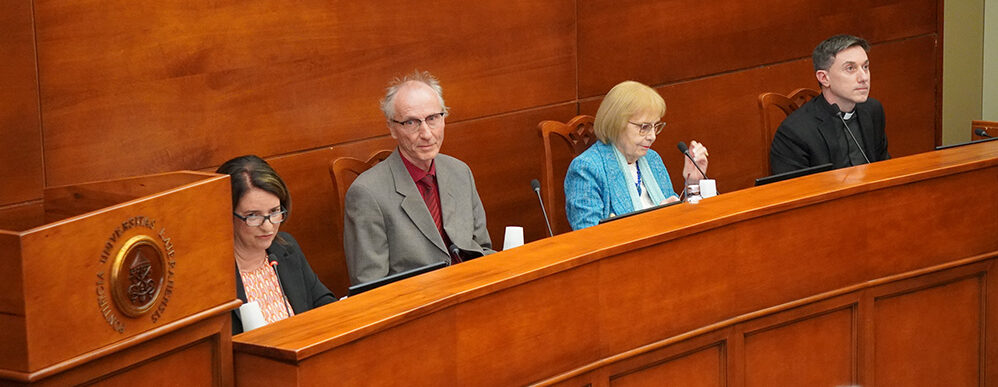
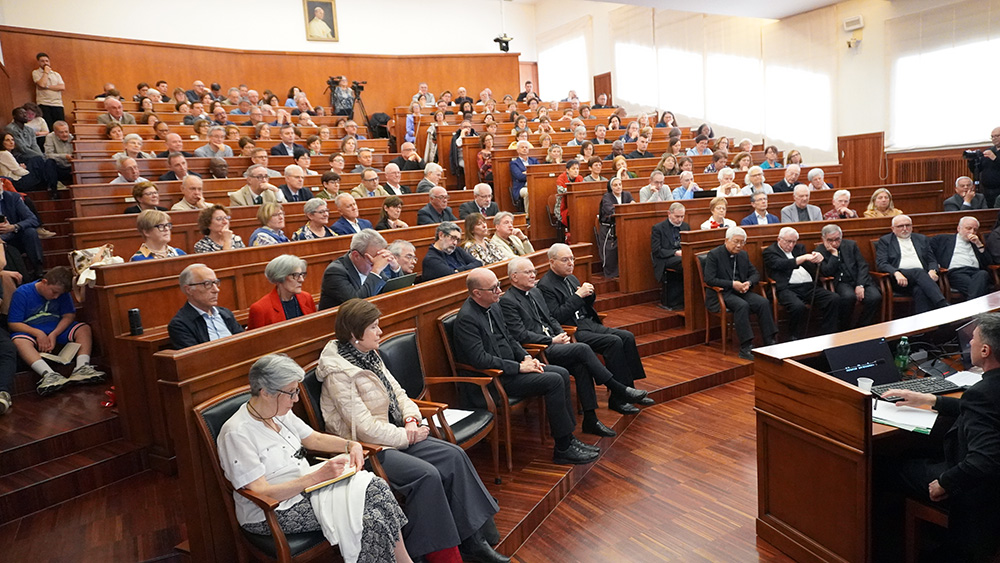
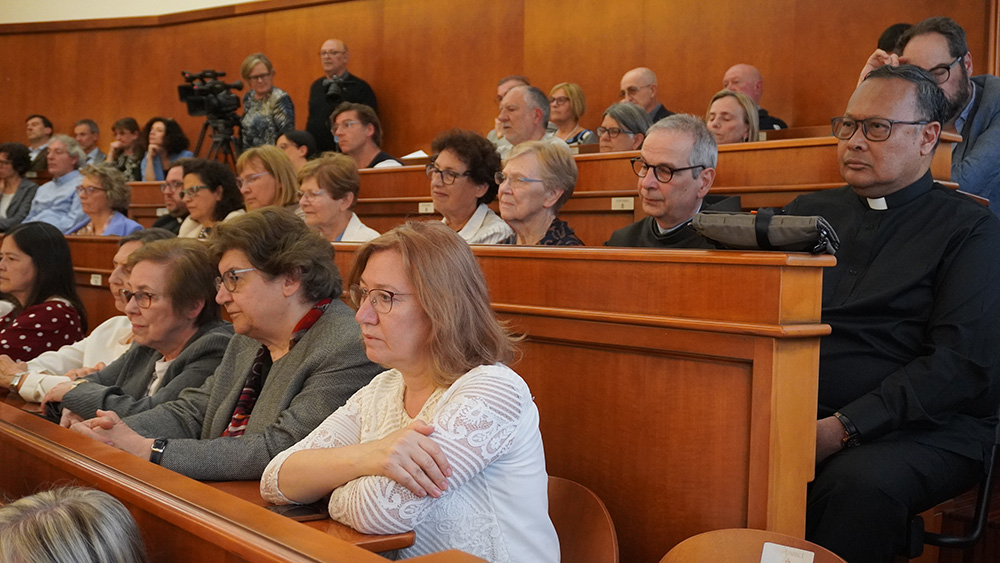
A full lecture hall, attentive, almost suspended in silence. This was the atmosphere in the Paul VI Hall of the Pontifical Lateran University (Rome, Italy) on Friday 22nd May, when Chiara Lubich’s Paradise ’49 was presented to the public for the first time.
It wasn’t simply a book launch. The widespread impression, heard in the corridors and in conversations among those present, was that this was a historical moment: for the first time, a text kept mostly private until now, was being openly offered to ecclesial and cultural debate, in a hall filled to capacity.
Welcoming those present, Anna Maria Rossi, speaking on behalf of the Chiara Lubich Centre – promoter of the series of Works by Chiara Lubich – immediately clarified the meaning of the event, recalling the extensive editorial process that led to the publication of the volume. “It is not an isolated text – she explained – but part of a broader journey, which tells the story of the emergence of a charism in the Church”.
The contents were introduced by speakers from different ecclesial and academic backgrounds. Alessandro Clemenzia, Dean of the Theological Faculty of Central Italy and an expert in Chiara Lubich’s spirituality, offered an important key to the book’s interpretation: “It is not a question of understanding what Chiara wrote, but what God wishes to say about himself through this experience”. A perspective that helped reveal the depth of the text without reducing it to a simple document.
Stefan Tobler, a Swiss evangelical theologian also involved in the reflection on the Charism of Unity, drew attention to the figure of the author: a woman who, through these pages, “offers the most intimate aspects of her relationship with God” sharing her experience in an authentic way.
Particularly anticipated was the contribution of Angela Ales Bello, philosopher and phenomenology expert, the only speaker external to the Focolare Movement. She clearly pointed out that mysticism is not something “strange” or esoteric, but “an illumination of reality lived in faith”. She also highlighted an original feature of Paradise ’49: an experience that involves not only the person, but also the community, almost a “we” that becomes a subject.
Brendan Leahy, Bishop of Limerick (Ireland) and, like Clemenzia and Tobler, also a member of the interdisciplinary study centre of the Focolare Movement known as the “Abba School”, intervened remotely. He highlighted the ecclesial significance of the text. Paradise ’49, he said, is not a systematic treatise, but can “inspire new perspectives” and help us understand the Church as a living and relational communion.
Throughout the meeting, alongside the great enthusiasm, there was also a certain caution: how can such an intense text be received without simplifying or misunderstanding it? The answer emerged several times, almost like a guiding thread: Paradise ’49 cannot be understood only by reading it but by letting oneself become involved in it.
Perhaps this was the deepest meaning of the day. With this publication, the Focolare Movement has taken a step towards greater openness: what was born as a lived experience is now being offered to everyone, not as an object to be analyzed, but as a proposal for life.