
The results of “risking it” in Argentina
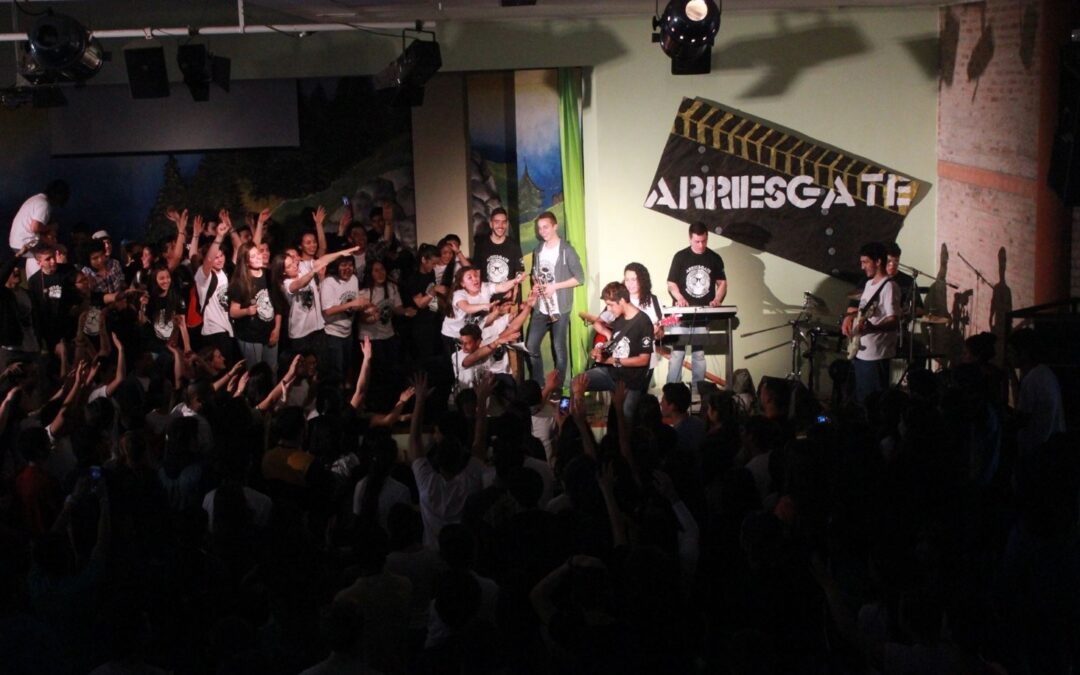
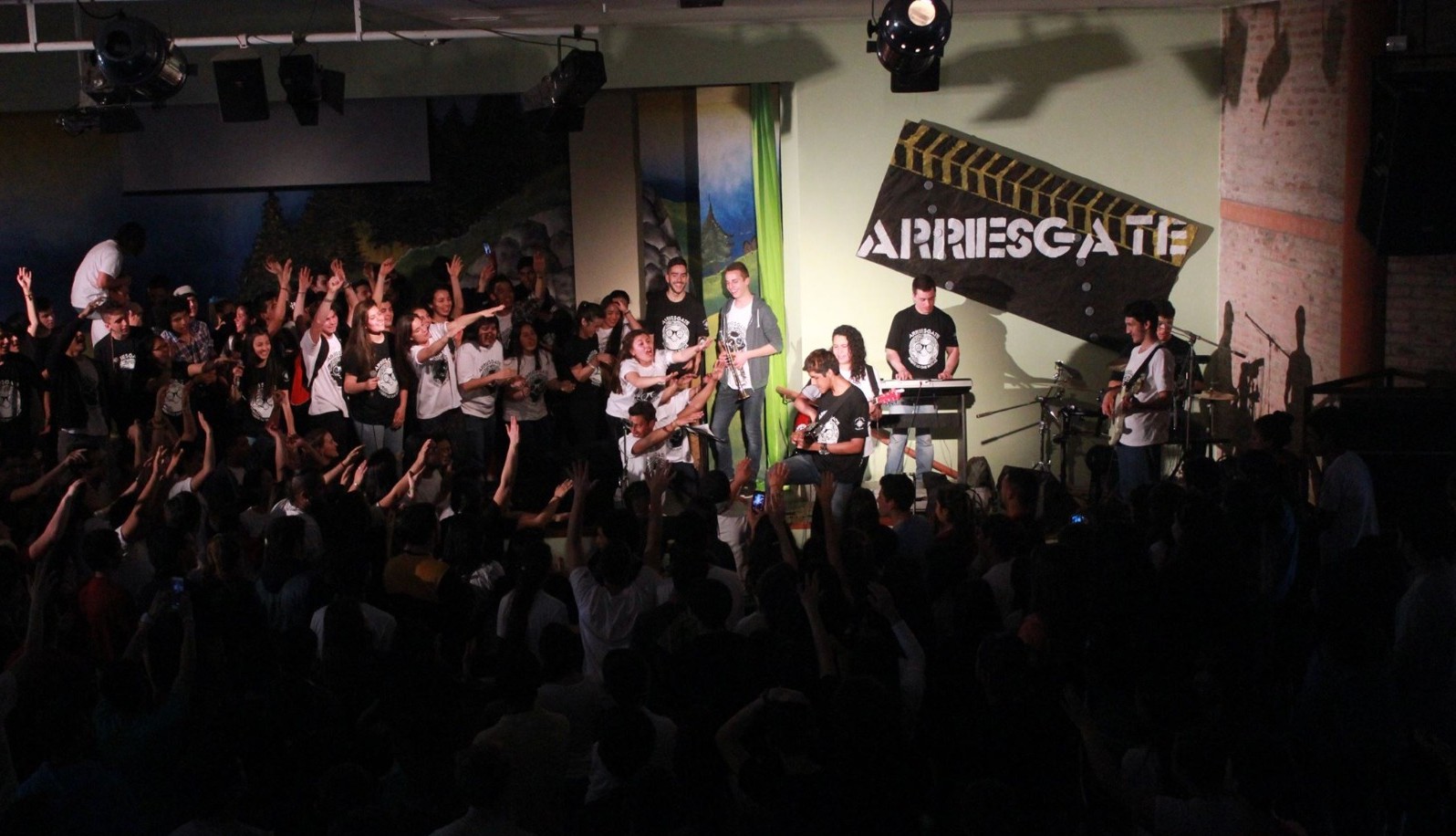 “This festival was an incredible experience! It did its job in my heart and it allowed us to enjoy a very beautiful atmosphere of real brotherhood that recharged the batteries!” “I realized that I can decide to stay inside the cave, or step out of the cave. I discovered how important it is for me to open myself and share with others what is taking place inside me.” “I saw so much vitality, joy and depth in these young people.” “It was a very nice experience. I leave with the certainty that it’s possible to live a different kind of life, that we’re not alone in the effort to be what we really want to be – and to take that risk.” These are only a few of the thoughts that were shared by the thousand young people gathered on September 24-25 for the Youthfest 2016 at the Focolare’s Permanent Mariapolis Lia in the pampas in Argentina. It has become a traditional event that is repeated every year, thanks to the creativity that young people are able to have when it comes to transmitting to their peers the ideals they live for. This year, more than a thousand young people arrived for the event from Paraguay, Uruguay, Chile, Brazil and many cities of Argentina. They were drawn by the title: “Risk it! What you’re looking for exists.” What did the title stand for? An experience of brotherhood, sharing the life of the Gospel for 48 hours, which is the main characteristic of this permanent Mariapolis of the Focolare Movement. Currently 85 young people from 17 countries live there with other families and adults. They share an experience and, through music, theatre and dance also put in common the problems that young people find themselves immersed in: family relations, school, successes and failures in life, addictions, painful moments and, above all, the encounter with a God who is near, who has a personal answer for each and everyone. But the idea didn’t end there: they tried to involve everyone in building a more united world, regardless of one’s religion or belief. This year’s program was a combination of theatre, music and testimonies that happened on stage, beneath the large emblem that stood at the hall’s entrancel. The sign contained a one-word challenge: RISK IT! The language chosen for conveying the experiences and putting together the theatrical pieces, was direct and personally engaged everyone. The songs that were sung with such energy and captivating rhythm, helped to express this commitment in seeking something great to live for. The outdoor program – like the tour of the Mariapolis, lunchtime, strolling – made room for more sharing among the Latin American young people who had demonstrated their desire and capacity to build a more united world, a society that is for everybody. It didn’t take long for the feedback to arrive: “From Paraguay I want to thank all of you who made us live such and unforgettable day. We’re filled with emotion and prepared to accept the challenge!” “This morning, while I was on the bus going to work,” writes another person who attended the event, “the days we spent together came to mind and the desire to live today well, to give that little extra, to risk it.” Source: Southern Cone website
LoppianoLab 2016: Embracing the cry of the least
 The title of this year’s edition of LoppianoLab was a challenge that was launched by the thousands of people, both in person and via live-screening, who took part in the event. While there is an Italy where the so-called absolute poor have increased by 130% in seven years, where every day its southern shores become a bridge to the hundreds of thousands of migrants fleeing poverty and wars – at the same time there is the desire to be involved: volunteers, associations, young people who want to experience what it’s like to work according to new business models that are able to meet the daily emergency. Involvement is the spirit behind those that brought their experiences and projects to LoppianoLab 2016, from the fields of economy, politics, welfare, immigration, communication, technology and instruction.
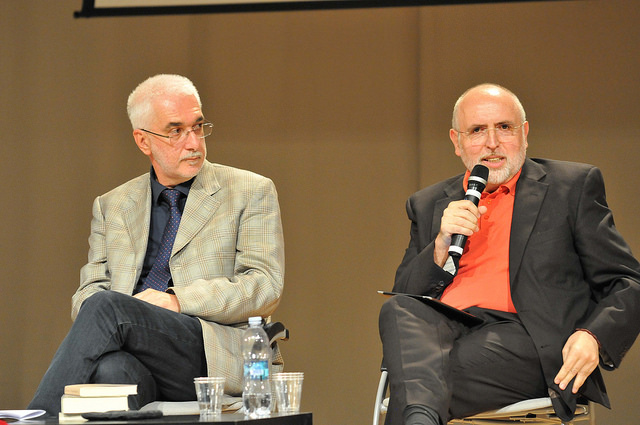
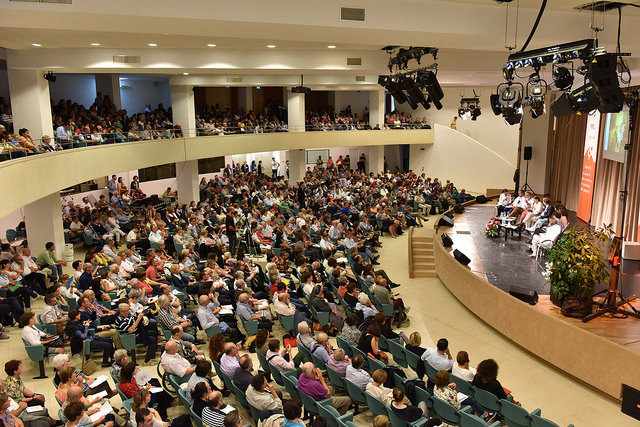
 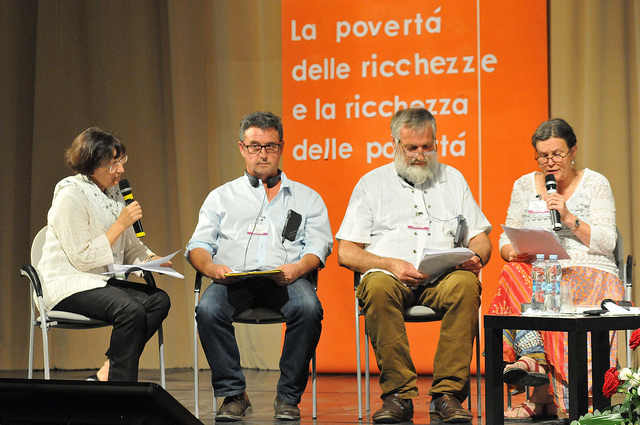 The project, which was promoted by Lionello Bonfanti Business Park, the Città Nuova Editorial Group, Sophia University Institute and the town of Loppiano, was begun in 2010 to be a national laboratory that would set in motion “those qualities that have made the Italians great, creativity and industriousness, welcome and solidarity, art and culture,” as Focolare president Maria Voce said in her greeting. Experts from the world of culture, politics and economy presented during the programme together with many other voices from civil society that presented projects from hundreds of associations, individuals and communities that form a close-knit network of people who are eager to translate ideas, projects and lifestyle into praxis. Three days, three focus groups to take on the challenges to peace: the challenge of techno-scientific innovation, development, and poverty. Two important anniversaries were also celebrated at LoppianoLab: the 25th anniversary of the Economy of Communion Project (EoC) and the 60th anniversary of the Focolare’s Città Nuova. Thirty multi-ethnic workshops, three via direct-streaming, along with workshops for children and teenagers: “Loppiano Kids and “Time to Give” with a series of meetings focused on topics related to poverty, solidarity and ecology; and “Loppiano Young” with performances and artistic exhibitions assisted by the international Gen Verde Band. Focolare co-president Jesús Morán offered some remarks at the end of the firest day. He spoke about three challenges that the world faces today: globalization, post-globalization, post-humanism. Also the humanitarian challenge of the sub-human, a challenge that calls for a “culture of resurrection,” in order to totally assume the suffering of the person that suffers. According to Jesús Morán, the question we should ask is how much space should be given in our own lives to the least, the “abandoned ones” of today Finally, during “The Wealth of the Invisible Poverty forum,” a proposal was launched to create an observatory on poverty that would create an information system to monitor the effects of the EoC around the world and study the results and methodologies of specific significant cases. See also: Città Nuova online Loppiano Economy of Communion
Anne: “My night has no darkness”
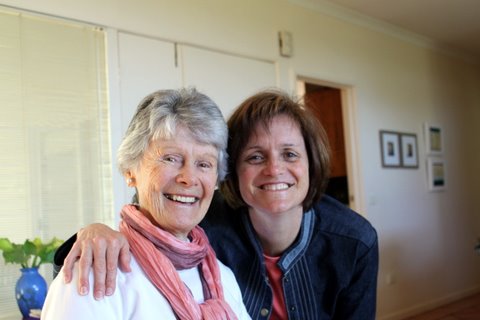
Anne with her mother, Eleanor.
 I remember my mother saying to me, ‘Be the first to love. When you go back to work tomorrow, be the first to pick up the phone and explain that you have a hearing loss, and say can you please speak slowly and clearly.’ Up to that point I didn’t want people to know that I had a hearing loss as I wanted to be normal like everyone else. The next day at work I heard the phone ring and in that moment I heard a voice within my heart saying to me, ‘Be the first to love’. For the first time in my life, I picked up the phone and informed the caller that I had a hearing loss. Surprisingly that person was so nice and understanding that it encouraged me to always pick up the phone. My work colleagues could see that I was always answering the phone, which meant putting the gadget on and off for every phone-call. Seeing this difficulty, they started to pick up the phone before me. It was like I had thrown a pebble in the water, causing a ripple effect. I had started to love first and then the others started to love me back. It became reciprocal.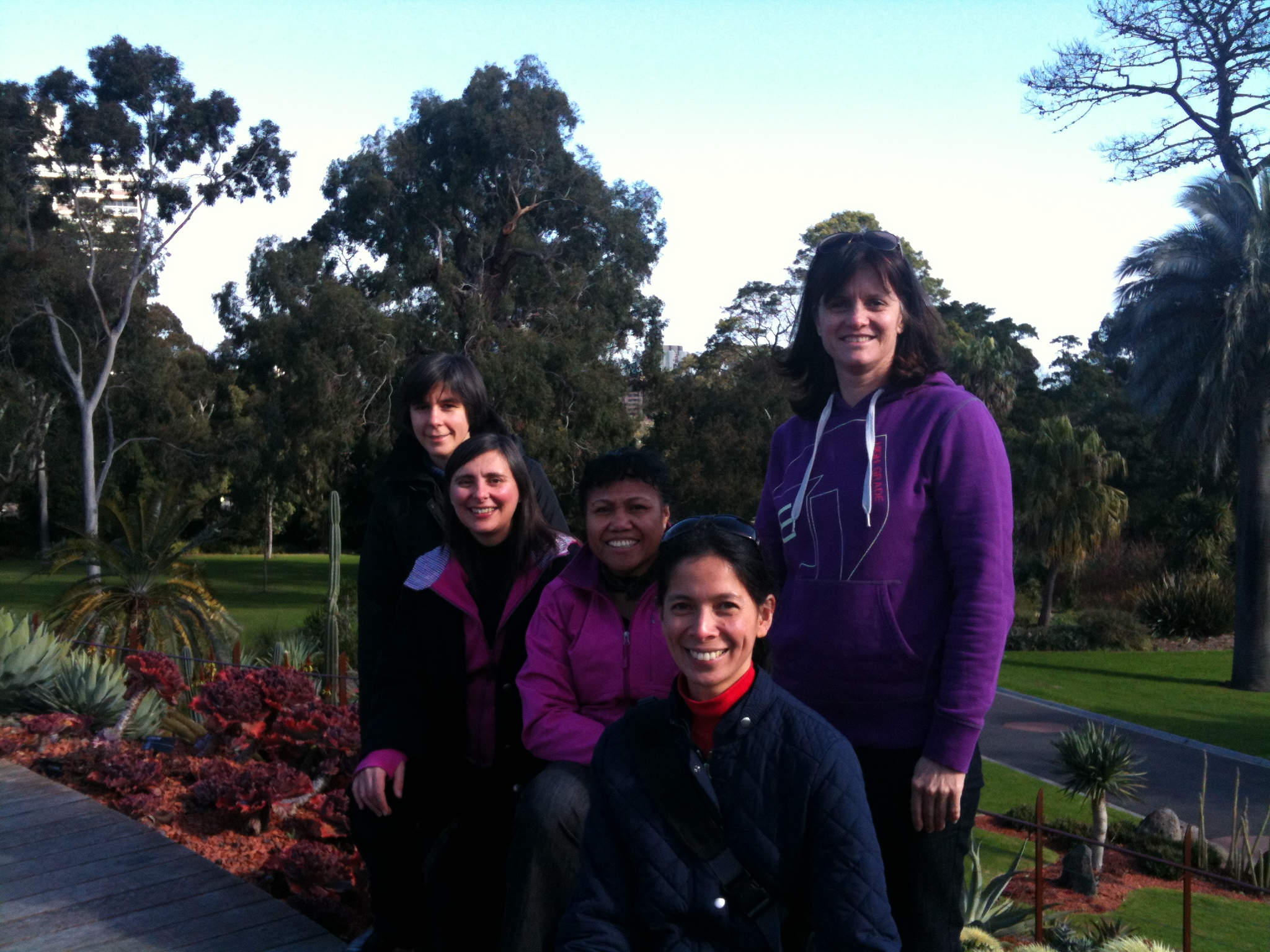
With Focolare friends in Melbourne
Experience shared at Health Symposium “Darkness to Light – Spirituality of Unity in Chronic Disease and Disability” Focolare Movement, Australia, July 2016
30th anniversary of the Mariapolis Centre in Castel Gandolfo
A bit of history: In 1982, John Paul II placed the Papal Audience Hall in Castel Gandolfo (Rome) at the disposition of the Focolare Movement. The refurbishment of the huge, empty building started. Through the contribution of all the members of the Movement around the world (even children), the International Mariapolis Centre was inaugurated in 1986 and has since hosted thousands of conferences. People from all over the world have attended congresses, symposiums, seminars and training courses, meetings for ecumenical and inter-religious dialogue. All these activities focussed on the one objective, that of contributing to universal brotherhood, which became tangible through living the life of the Gospel, through workshops and in-depth discussions, all of which took place in this embryonic “city of Mary”, in this “home”, as Chiara Lubich called it. Download invitation 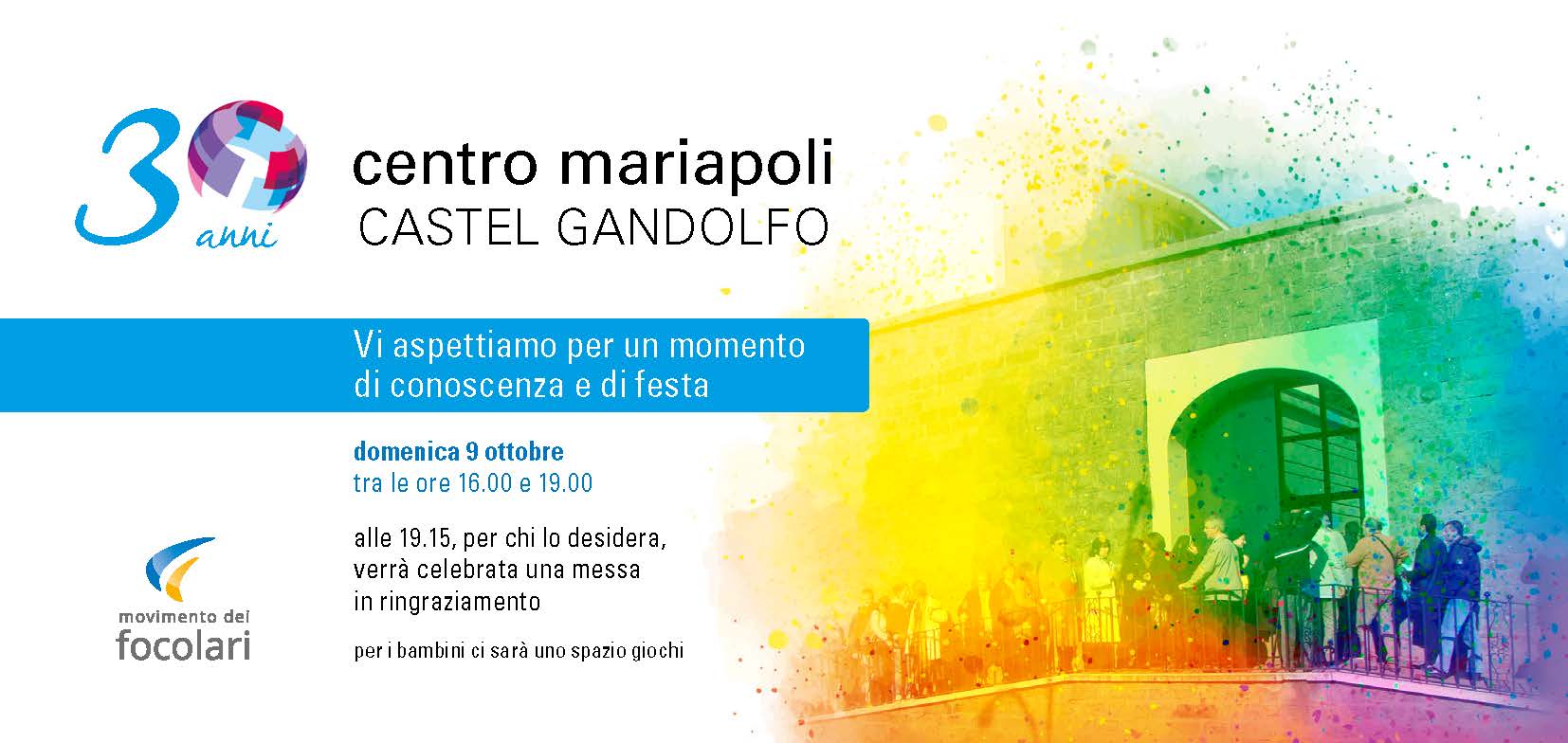
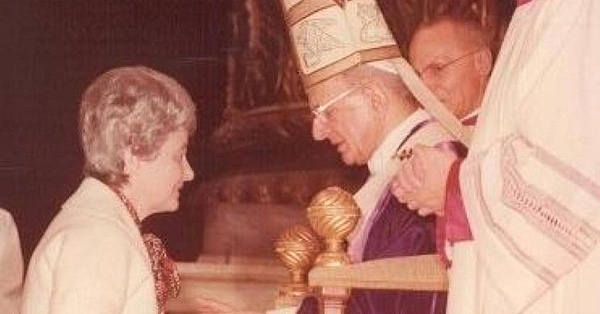
Pope Paul VI: Prophet, Apostle, Mediator
Catholic Church leaders, representatives of the Islamic world, civil authorities, representatives of associations and the people of Brescia and neighbouring cities filled the cathedral of the Italian city on the 23rd of September, for the conference on “Paul VI, a Spiritual Portrait“. The event included the testimony of Maria Voce, President of the Focolare Movement, in a speech read on her behalf by Rosi Bertolassi. Her speech touched on three aspects of Giovanni Battista Montini’s life and work as: prophet, apostle and mediator. The President of the Focolare first of all expressed the deep gratitude that bound the Movement she represents to Blessed Paul VI, who was “…one of the gifts God wanted to make to humankind in our time.” She recalled the time when the Church was studying the emerging Movement, saying, “When he became Pope he played a key role in discerning the charism of Chiara Lubich and in making possible what, at the beginning of the sixties, still seemed” impossible,” expertly identifying juridically appropriate ways to express the specific character of this new movement in the Church.” “Therefore”, she stressed, “Because he was “imbued with the Word, we saw the figure of Giovanni Battista Montini – Paul VI – in this triple dimension of prophet, apostle and mediator.” In the prophetic dimension, Maria Voce highlighted “his ability to open new paths with courage and wisdom, to break down walls and express the renewal of the Church which his soul craved for,” Examples were Pope Paul VI’s historic embrace of peace with Patriarch Athenagoras in January 1964 in the Holy Land; or when, in 1970, through an historic decision he raised two women, St Teresa of Avila and St Catherine of Siena, to the status of Doctor of the Church – a title previously only given to men; or when, in the 1975 Holy Year, he knelt to kiss the feet of the Orthodox Metropolitan Meliton. “Paul VI was truly the Pope of dialogue. This is how Pope John Paul II described him in Concesio during his pastoral visit in 1982, emphasizing his predecessor’s ability to dialogue with the whole of humanity.” Maria Voce also emphasized his apostolic dimension saying, “In Ecclesiam Suam (…) we perceive the thought and mind of the apostle whose name he had chosen, the name of the missionary apostle and the first theologian of Christ, the one who made himself all things to all people. Pope Paul VI did not spare himself so that the announcement of the Gospel could reach all nations.” In this respect, Maria Voce recalled his apostolic journeys “that brought him closer to the peoples of the world, making the Church more one and more ‘catholic’, as Paul VI liked to emphasize, in the etymological sense of the word. Particularly significant and universal in outlook was his historic and profoundly human speech delivered at the United Nations. I am pleased to recall once more his innovative inclusion of the laity in key areas of work of the Church; his confidence in the contribution of lay people’s ideas; and his recognition, in Octogesima adveniens, of the legitimacy of a variety of political opinions while remaining faithful to Gospel principles.” Finally, his ability to be a “mediator of the One Mediator“. After recalling his surprising letter to the Red Brigade which “flowed from his soul at the painful time when his friend Honourable Aldo Moro was kidnapped” Maria Voce affirmed his role as mediator and added, “Paul VI – in the footsteps of his Master – took upon himself the anguish and torment of the world, feeling it deeply as if it were his own. He bore the sin of the world, perceiving truly the weight of it and suffering profoundly, as could sometimes be seen in his face. In that way he manifested clearly the fatherhood of God, bridging the distance between heaven and earth, healing wounds, wiping away tears, bringing peace and unity.”