![Word of Life – May 2016]()
28 Apr 2016 | Non categorizzato, Word of
 Listen to the Word of Life
God has always wanted this: to dwell with us, his people. Already the first pages of the Bible show it as God comes down from heaven, walks in the garden and talks with Adam and Eve. Didn’t he create us for this? What does a lover want if not to be with the beloved? The Book of Revelation, which investigates God’s plan in history, gives us the certainty that God’s desire will be fully fulfilled. With the coming of Jesus, Emmanuel, ‘God with us’, he already started living in our midst. And now that Jesus is risen his presence is no longer limited to one place or one time, and he has spread it to the entire world. With Jesus has begun the building of a new and highly original community, a people made up of many peoples. God does not wish to dwell only in my soul, in my family, in my people, but among all peoples called to form one people. At the same time, the current experience of human mobility is changing the idea of what it is to be a people. In many nations, the people are made up of many ethnic groups. We are so different from one another in the colour of our skin, our culture, our religion. We often look at one another with distrust, suspicion or fear. We make war upon each other. And yet God is Father of all, and loves all and each of us. He does not want to live with one people (‘Ours, of course,’ would be our first thought) and leave the others behind. For him we are all his sons and daughters, a single family. Let’s make the effort, therefore, guided by the Word of Life this month, to appreciate diversity, respect the other, look at him or her as someone who belongs to me: I am the other, the other is me; the other lives in me, I live in the other. And let’s begin with those we share our life with every day. Like this we can make space for the presence of God among us. It will be he who constructs unity, who safeguards the identity of each people, who creates a new way of being society. In 1959 Chiara Lubich had already had this insight. She wrote a passage that is extremely up- to-date and an amazing prophecy: ‘If one day all people, not as individuals but as nations, would learn to put themselves aside… and if they would do this as the expression of the mutual love between states that God asks for, just as he asks for mutual love among individuals, that day would mark the beginning of a new era. For on that day…. Jesus will be alive and present among peoples … ‘Now is the time for every people to go beyond its own borders, to look farther. Now is the time to love the other countries as our own, to acquire a new purity of vision. To be Christians it is not enough to be detached from ourselves. The times we live in demand from the followers of Christ something more: the awareness of Christianity’s social dimension…. ‘And we hope that the Lord may have mercy on this divided and confused world, on peoples closed within their shells contemplating their own beauty – the only beauty that exists for them (though it is both limiting and unsatisfying). They strain to hold on to their treasures against all odds, the very treasures that could help other peoples who are dying of hunger. May the Lord cause all barriers to fall, and allow love to run uninterrupted through all lands, flooding them with spiritual and material goods. ‘Let us hope that the Lord brings about a new order in the world. Only he can make humanity a family and cultivate the unique characteristics of each people so that the splendour of each, placed at the service of others, may shine with the one light of life. This light of life in making beautiful each earthly country will make it the antechamber of the Eternal Country.’1
Fabio Cardi
1 Chiara Lubich, Essential Writings (New York and London, 2006), 231-2
28 Apr 2016 | Non categorizzato
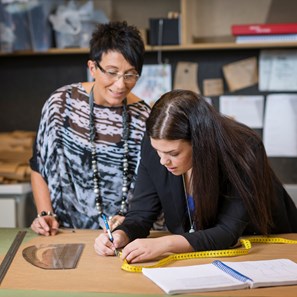
I slept in company of the mice “All I cared about was money, designer clothing, women and fun. After experiencing jail for heroin trafficking, I went back to the same life as before, surrounded by violence, drugs and alcohol. Around three years ago, some drugs and money were stolen from me by a person whom I considered my friend. Fed up with God, myself and the world, I let myself go. I slept in an abandoned house amidst the refuse, in the company of the mice. One day, without even asking who I was, a stranger invited me to eat at his house and cared for me with the attention of a brother. I felt urged to follow him into the church he went to and, for the first time, I experienced a feeling of peace. Afterwards I continued to go the church alone. For hours in that deep silence I learnt how to pray. My life changed, even though there were relapses. Jesus gave me the strength to gradually take hold of myself again. Now, as a member of a rehab community I try to return the help I received, by serving the needy.” (Samuele – Italy) The seamstress “Whenever she passed by our tailor shop she would give a sad glance at the clothing in the window. One day I invited her in. Her clothing was poor but in good taste. She returned other times, and I got to know her story. She had given up her job so that she could care for her parents. She was all alone and unable to practise her profession as a seamstress. I spoke with the owner of the shop and the woman was hired. Saying that she’s the best would be an understatement. I heard from several customers that they visit the shop more willingly when she’s there, because she makes them feel so welcome.” (J.B. – Argentina) Inculturating “There are many foreign children in my elementary school. It’s not easy to socialise with them, especially with one small group of gypsies. They interrupt class. They’re aggresive, and their parents are often in jail. One day, to give a hand to a colleague who was feeling desperate because she couldn’t manage to handle the situation, I took them into my classroom. Thinking of Jesus who was the model of meekness and patience, I prepare the best places for them in class, and I presented them to the students as tutors for the younger ones. Then, to make them the protagonists, I asked them to teach me something in the Rom language and we dedicated a portion of the lesson to it. Now they behave better and incultration is making some progress.” (E. – Italy)
26 Apr 2016 | Non categorizzato
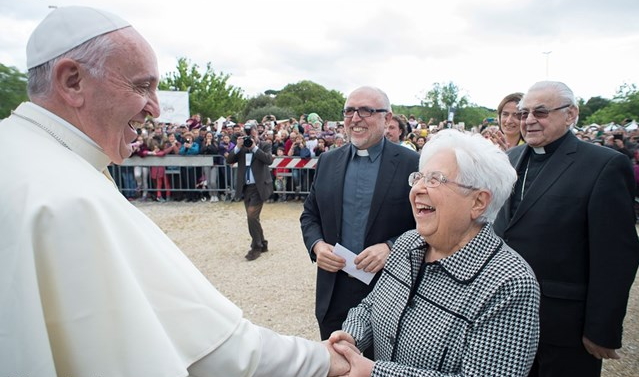
“It was the first time a Pope came to the Mariapolis and it reminded me of what I had heard Chiara Lubich say several times when describing the effect that the visits and the words of bishops had on her when they visited Mariapolises. She acknowledged them as “an anointing” different and weightier than those of others, whether they were theologians or saints. And she perceived that with the presence of a bishop the ‘city of Mary’ fulfils itself as the ‘city-Church’. This is what happened with the surprise visit of Pope Francis to the Earth Village event at Villa Borghese where, in collaboration with Earth Day Italy, the city of Rome was holding its Mariapolis. Now every Mariapolis in the world – and there are hundreds – will feel looked upon and loved in the same way. His off the cuff remarks seemed to say: you’ve taken me by the heart and I want to respond to what you’ve said to me. His clear and luminous words weren’t only an acknowledgement of the commitment and the deeds of the many people who spoke to him on stage; they also had the flavour of a programme for the future. His words kept returning to the same powerful image of the miracle of being able to transform the desert into forestland. I was struck by the way he acknowledged that what matters is to bring life, not make programmes and remain trapped inside them, but to go out and meet life as you find it, with its disorder and conflicts, without fear, facing the risks and welcoming the opportunities. You have to get close to it if you want to know the reality with your heart. Then the miracles happen: deserts, the most diverse sorts of deserts transform into forestland. Pope Francis possesses the power of the word. The images he uses are not easily erased from the heart or the mind. The Pope repeated several times that we do it together, with different people, groups and associations. He holds us to that and it gives him joy. The human spectacle at Villa Borghese was born from a question: Why not hold the Mariapolis right in the middle of Rome? Why not try to create a graft of fraternity with the city, a small but concrete ‘fraternity graft’ right on the streets of the city? We know that the city weeps because of many wounds and suffers from many weaknesses, but she also lives because of an unbelievable richness: the great good that is being done in her. When the Pope opened the Year of Mercy we thought of the many associations that are doing good in the city. Both religious and non-religious, they perform mercy. The encounter with Earth Day was almost by chance. Earth Day Italy works for the protection of Creation and for that integral ecology that is dear to Francis. It’s a process and exciting work that’s outside the normal scheme, on unimagined roads. Not without its difficulties, certainly, because we didn’t know one another and because we’re all different. But diversity is enriching, as the encounter with more than a hundred associations was. There was cooperation and bridges were built. Sometimes they’re very small things. One new friend told us: “Well, my association goes forward with the help of my pension. We don’t have logos or anything like that.” We wanted the Mariapolis this year to give witness to the good that that friend is also doing. Thus, the many virtuous underground cities contained in Rome emerged. The good is multiplying and a network is spreading that seems to concur with an intuition that Chiara Lubich put into writing in 1949. Encountering and loving Rome ‘many eyes would be illumined with His Light: tangible sign that He reigns there (. . .) reviving Christians and making this age that is so cold because it is atheist the Age of Fire, the Age of God (. . .) He’s not only a religious fact (. . .) And this separating Him from the entire life of men – a practical heresy of our time – subjugates man to something less than himself and relegates God who is Father to somewhere far from His children.”
Maria Voce
President of the Focolare Movement
Source (Italian): Osservatore Romano, 25 aprile 2016 Centro televisivo vaticano (Italian)
Press releases – SIF – Focolare Information Service
Pope Francis’s words
24 Apr 2016 | Non categorizzato
“We had said we wanted to see only Jesus in our neighbour, to deal with Jesus in our neighbor, to love Jesus in our neighbor, but now we recall that a neighbor has this or that defect, has this or that imperfection. Our eye becomes complicated and our being is no longer lit up. As a consequence, erring, we break unity. Perhaps that particular neighbor, like all of us, has made mistakes, but how does God view him or her? What really is that person’s condition, the truth of his or her state? If our neighbor is reconciled with God, then God no longer remembers anything, he has wiped out everything with his blood. So, why should we go on remembering? Who is in error at that moment? I who judge or my neighbour? I am. Therefore I must make myself see things from God’s viewpoint, in the truth, and treat my neighbor accordingly, so that if, by some mishap, he or she has not yet sorted things out with the Lord, the warmth of my love, which is Christ in me, will bring my neighbor to repentance, in the same way that the sun dries and heals over many wounds. Charity is preserved by truth, and truth is pure mercy with which we ought to be clothed from head to foot in order to be able to call ourselves Christians.”
Source:Chiara Lubich, Essential Writings, New City Press, New York 2007, pp. 100-101
21 Apr 2016 | Non categorizzato
20 Apr 2016 | Non categorizzato
Promoted by the Youth for a United World, “High resolution – Rule of fire for Peace” will be a dedicated peace day. This event began in Portugal in 2002, and since then has been held on 1 May biannually. It has always involved thousands of Portuguese youths, and also those of various nationalities. In 2016, “high resolution” invites the youth to become protagonists of fraternity and builders of peace without compromises. Through music, choreographies, testimonials and Expo events, they will present the actions that have been launched, with the aim of furnishing concrete answers and giving suggestions on how to proceed in this direction. This year, the programme will also include various workshops that will discuss the theme of peace in various fields such as ecology, art, intercultural dialogue, economy, sports, communication, science and technology. This day is part of the international United World Project that targets universal brotherhood as the paradigm of human relationships, promoting the identification, preparation and dissemination of actions that have already started at global level, in favour of fraternity. Invitation for 1 May 2016
