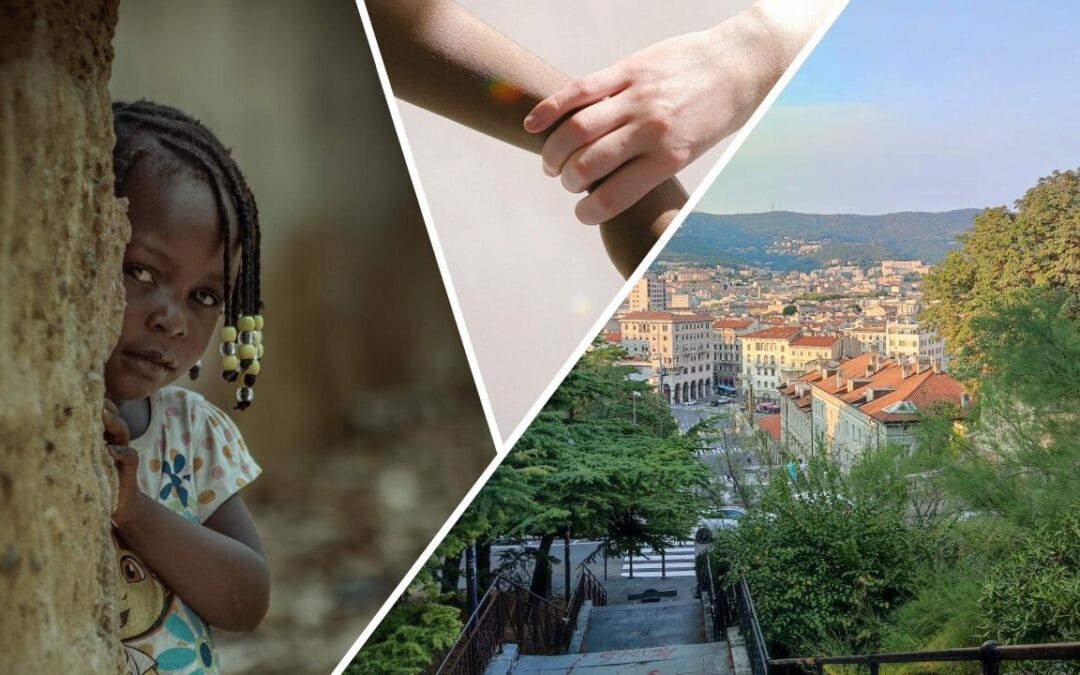
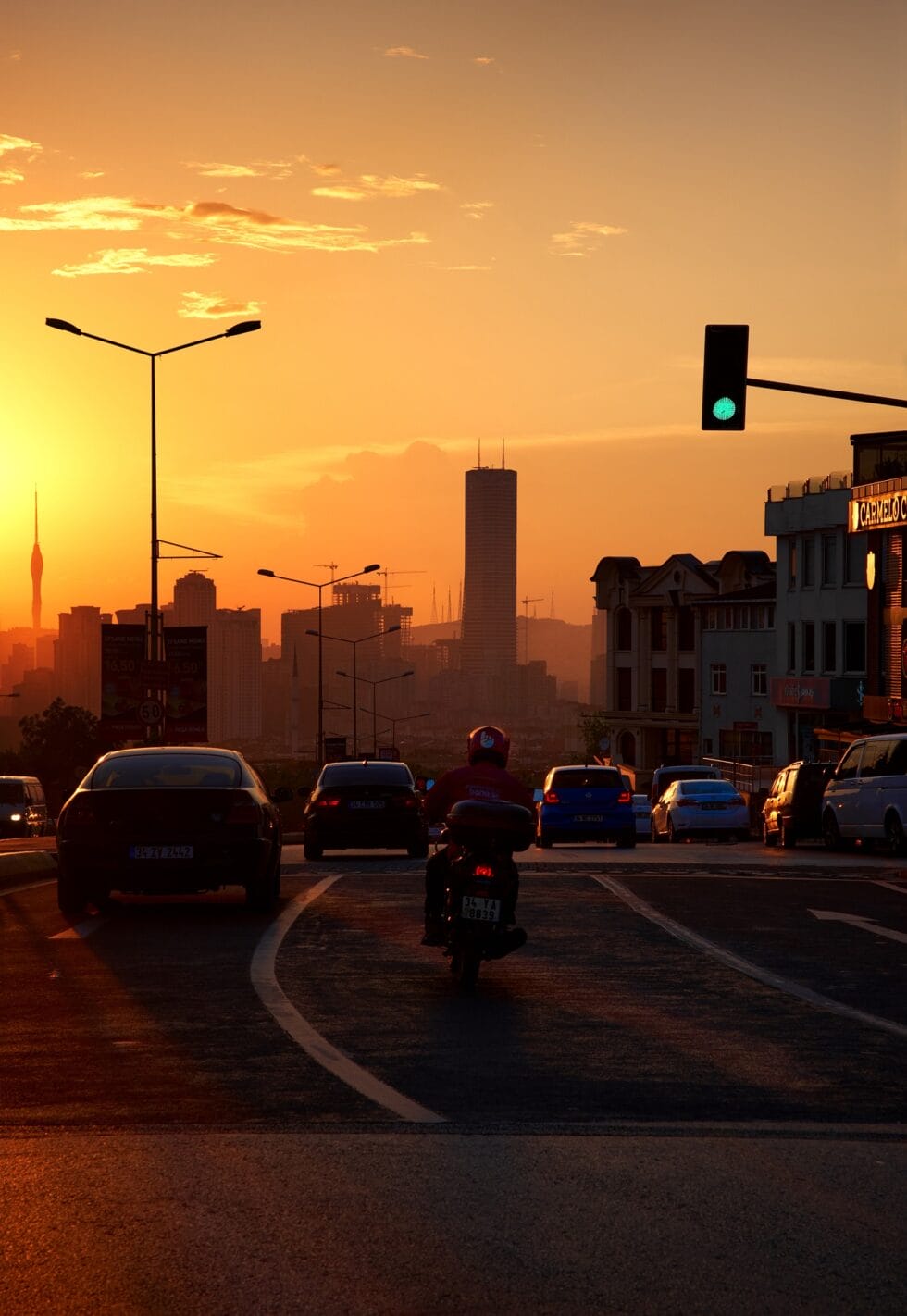
Trieste is a city located in north-eastern Italy, on the border with Slovenia. Historically, it represents a crossroads of cultures, languages and religions. Today it is one of the main entry points to Europe for migrants following the Balkan route. They come with a burden of suffering, wars and persecutions.
In Trieste, the Focolare Movement community collaborates with other institutions to welcome migrants.
Claudia, from the local community told us, “The biggest problem is the perception of the problem itself. It is not an emergency, an unmanageable invasion as it is often portrayed but it is a structural phenomenon that is the reality of our historical present. A continuous flow of incoming people who, if properly welcomed, can enrich our city and our country. If the migratory phenomenon is not understood and addressed in appropriate ways, it will inevitably generate distrust, fear, impatience, rejection”.
Last autumn, in anticipation of the cold weather, the Bishop of Trieste, Archbishop Enrico Trevisi, expressed a wish to open a shelter as a concrete response to the reception of migrants. Together with other Catholic associations and individual citizens, some Focolare members responded to the Bishop’s appeal by volunteering. Claudia said, “For us it is not just a charitable service but an opportunity to meet a brother or a sister who needs to be loved in many details: by giving a smile, offering a meal or exchanging a few words. Often these brothers and sisters tell us pieces of their story, their sorrows and their hopes. They show us photos of their children but we also have a laugh and simply spend time together. Some of us have also looked after some migrants more closely for example by accompanying them to a hospital appointment or helping them prepare a CV for a job application”.
Sandra from the Focolare community added: “We try to get to know the migrants, their stories and their needs. This gives rise to experiences that have seen us involved in helping beyond our shift at the shelter and these experiences encourage us to continue. The shifts allow us to work with the other volunteers and to discover that even though many of them are not part of any associations or involved in parish life, they were happy to respond to the Bishop’s appeal”.
Claudia said, “Relationships grow slowly and are a sign of unity for the local Church. This experience, combined with the recent Italian Catholics’ Social Week[1], which took place in Trieste and was attended by Pope Francis, will bring great life to this border city of ours”.
A guest of the diocesan shelter said, “In Trieste I met the best volunteers, people who do not stop at distributing food. Satisfying the hunger of the needy and treating the wounds of the sick are noble tasks because they are the most urgent and essential. However, human beings have other extremely important needs, for example their emotional and spiritual health, which are symptoms of the state of their soul. This is not an individual or minor issue, it is what makes the difference between actions that have a momentary impact and those that persist and permeate the entire society. The best volunteers are so because they are aware that the needy are not just recipients of charity, we are people with stories worth listening to. They know every migrant mourns their lost roots, while also harbouring a hope that crashes against the walls of the system and an incessant struggle for survival. The best volunteers are moved by this suffering humanity and are encouraged to listen to our stories, despite the language barrier. They teach Italian or learn Spanish, use technology, give up their personal time, invest their energy in the common good and dream of a community in which we can all offer the best of ourselves”.
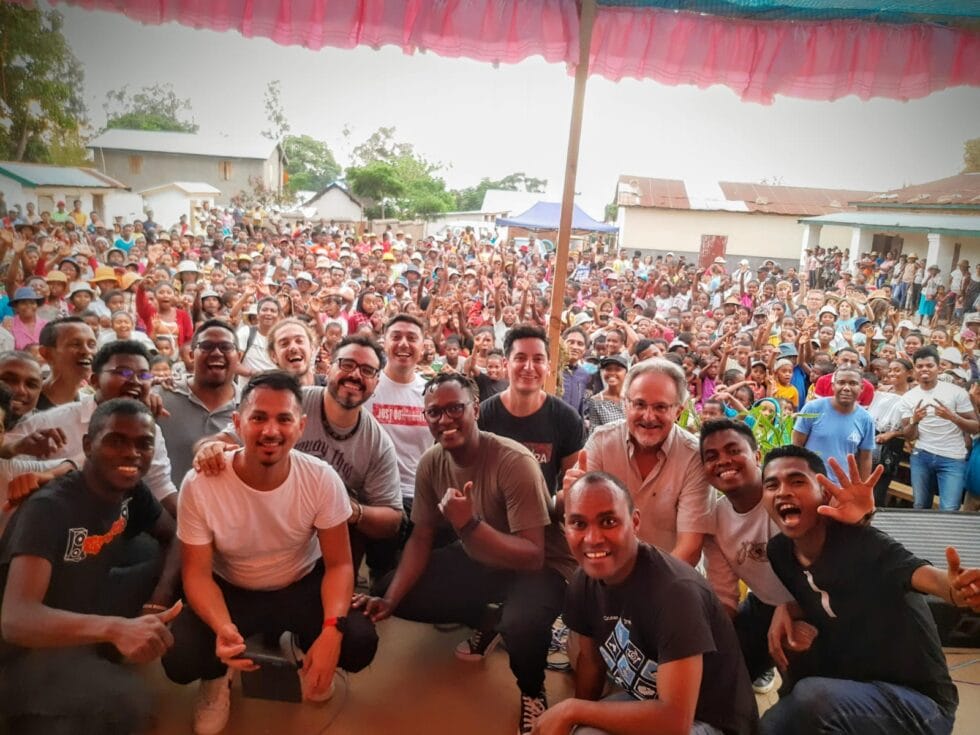
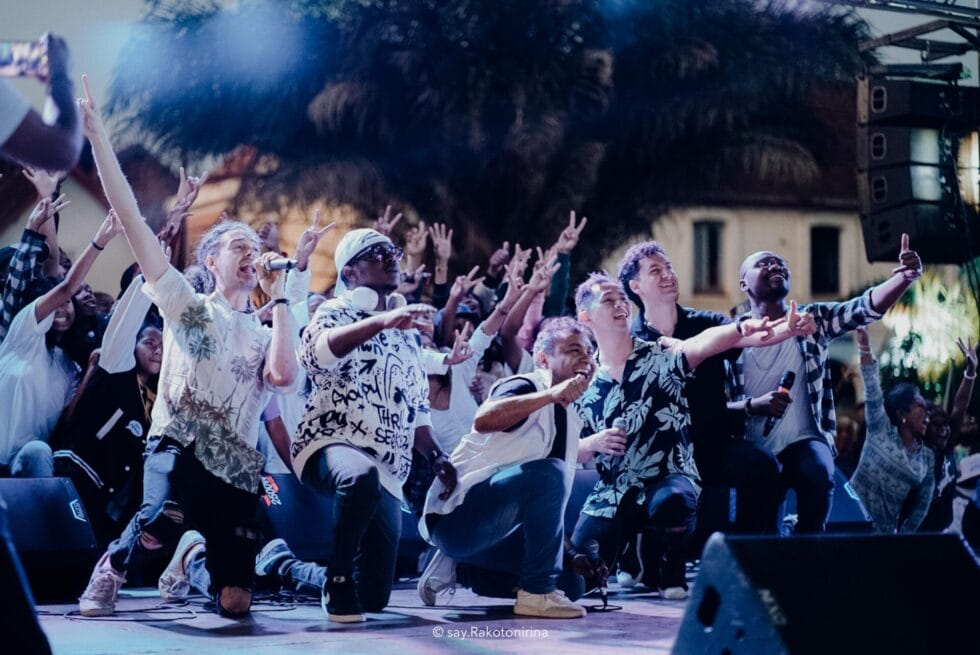
The Gen Rosso international band recently visited Madagascar, performing eight shows in seven cities. They travelled extensively across this beautiful island to spread a message of peace and fraternity through music and dance.
The 950 kms journey from the capital, Antananarivo, to Toliara in the extreme south took two days.
Valerio Gentile, spokesperson for the band, told us, “The community of the Focolare Movement in Tolear welcomed us with a big celebration, gifting us traditional headgear and necklaces and expressing their joy through traditional dances and songs. We performed with a local group, the Choeur des Jeunes de Saint Benjamin, at a well-known restaurant in the city; that was the beginning of our tour in Madagascar”.
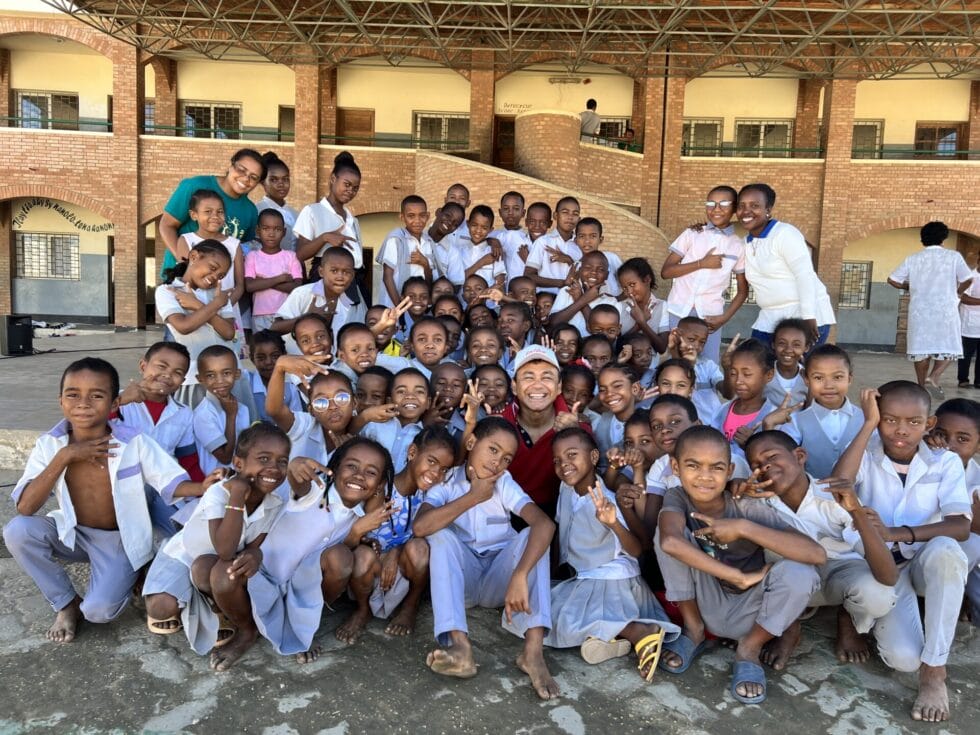
The next day Gen Rosso held workshops at the Don Bosco School, which culminated in a concert in the amphitheatre. One girl, moved to tears, said, “It was the best day of my life,”. And a young teacher added: “You have brought out real values for us to live by; I feel that I have to live my life according to the aims expressed in your songs and that we shared with you during the workshops.”
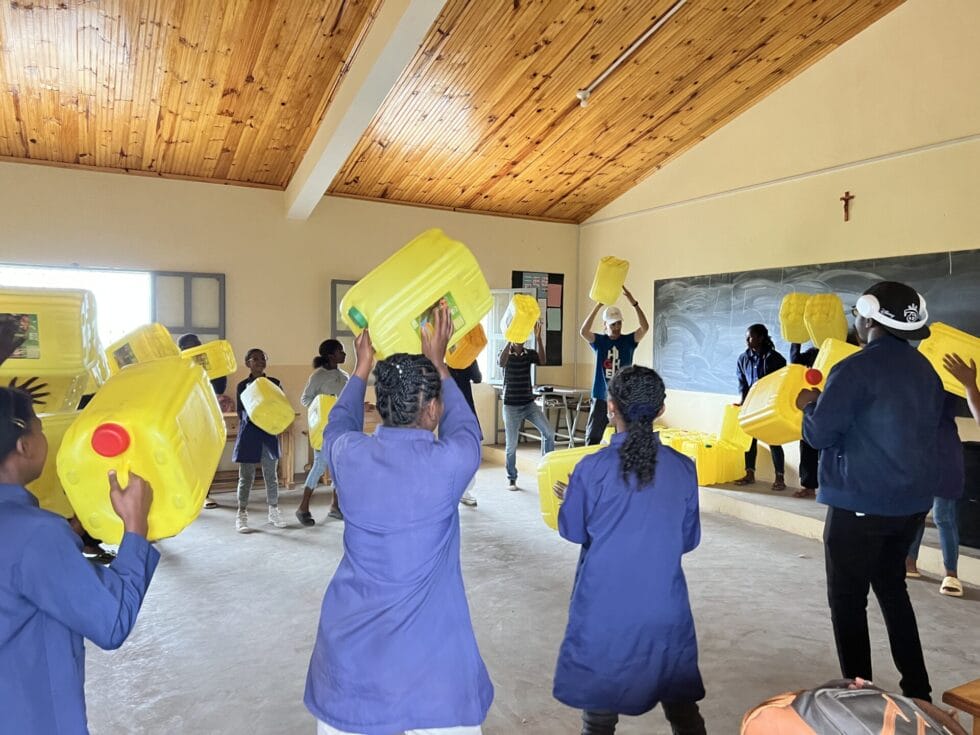
Valerio elaborated on the workshops, highlighting an innovative percussion session using recycled plastic bottles and yellow barrels, commonly used in Africa as water and oil containers. These became improvised musical instruments, turning the session into an environmental action promoting planet protection.
Another significant event took place at the École Père Barré School, where 300 high school students joined Gen Rosso on stage. In the introduction, the participants were invited to live out a saying during the workshop: “make space for love”.
Adelson of Gen Rosso began by saying, “We are not here to put on a show for you, but with you for the whole city”.
The final concert at the Jardin de la Mer came all too soon. It was opened by the Choeur des Jeunes de Saint Benjamin. However, an unexpected power cut interrupted the performance. When the power returned, Gen Rosso resumed, and the young audience participated enthusiastically.
A second blackout occurred at sunset, plunging the area into darkness.
Valerio explained, “We decided to improvise with torches. Several youth groups from the workshops performed, showcasing creativity and joy. The young people of Toliara were the true stars of the show!”
One participant remarked, “Thanks to Gen Rosso, we discovered our resilience,” echoing sentiments about uncovering life’s authentic values, talents, and the right direction to take.
Valerio shared, “These words encouraged us for our final event in Antananarivo at the Fanovozantsoa School. In just a few hours, the young people were ready to sing, dance—hip-hop and Latin American—and perform percussion. The concert on May 18th was a resounding success, filled with applause, hugs, and selfies. It was an unforgettable moment etched in everyone’s hearts.”
he tour concluded with a Mass for Pentecost in Akamasoa, near the City of Friendship, a community established 30 years ago by Argentine missionary Father Pedro to help the poor through job opportunities, education, and health services.
Valerio reflected, “We celebrated with a colourful Mass in the morning and a joyful show in the afternoon in the outdoor amphitheatre. The concert brought together families, young people, the elderly, and children, delivering a message of hope to build a new society based on love.”
On behalf of the band, Valerio concluded, “Thank you, Madagascar, for your millions of hearts beating every day with solidarity, resilience, simplicity, serenity, lightness, humility, joy, and peace. From now on, you ‘travel’ with us as a gift to take to the world!”
At the traffic light Once a week I take a trip from my town to a larger city to meet with friends with whom I share the same ideals. I try to take extra money with me to help people who ask for alms at traffic lights. Last week, on my way home, I stopped at a red light and was approached by a young man ready to clean my windshield. I rolled down my window and while looking for money to give him I told him not to clean it because he would not make it before the light turned green.
He looked at me and said, “Can you give me a little more? I need to buy some chicken for my children.” I answered yes. In fact what I was giving him was not going to do him much good. He took the money and said, “Will you let me earn it? I promise I will do it quickly.”
Almost without waiting for my response, he started cleaning the windshield, finishing just before the traffic light turned green. Immediately afterwards he approached the window of the car and, with a happy face, shaking my hand, thanked me and wished me well. As I drove home, I thought about what had happened and realized that small gestures sometimes edify us and teach us more about ourselves than the people for whom we do them. I know that God is everywhere, but it never occurred to me that He was waiting for me at a traffic light. (S. Z. – Argentina)
In prison For dealing drugs I had ended up in juvenile detention, but where I continued to receive visits from Valerio, my teacher from when I was in school. And that could not leave me indifferent. In life, I had been involved with bad people who I thought were my friends, but not with Valerio: he loved me without any interest. Moreover, he would tell me stories of other boys, who had made a different choice from mine, gospel facts. One day a new “guest” arrived in my cell: a boy so dirty he was smelly. The cellmates began insulting him, spitting on him, intimidating him to go wash up. Since he had no soap, no towel, and no spare clothes, I intervened in his defense and gave him my clothes, soap, and towel. He went to take a shower and peace returned. This experience was the beginning of a turning point. I thought that because of everything I had done, love had disappeared inside me. Instead it was like a seed that, more alive than ever, was beginning to blossom. (T. – Italy)
Edited by Maria Grazia Berretta
(taken from The Gospel of the Day, Città Nuova, year X- no.1 May-June 2024)
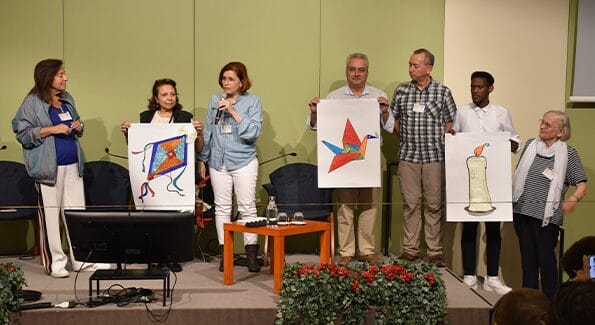
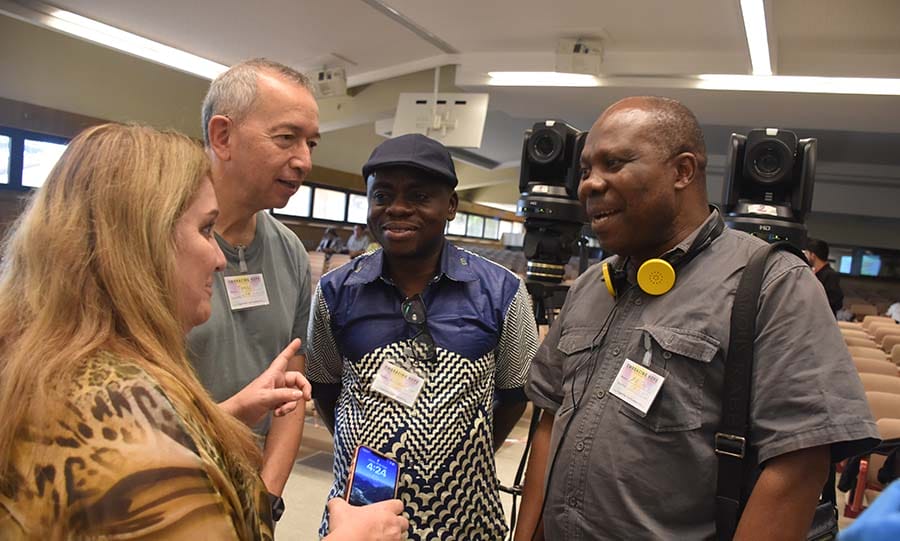
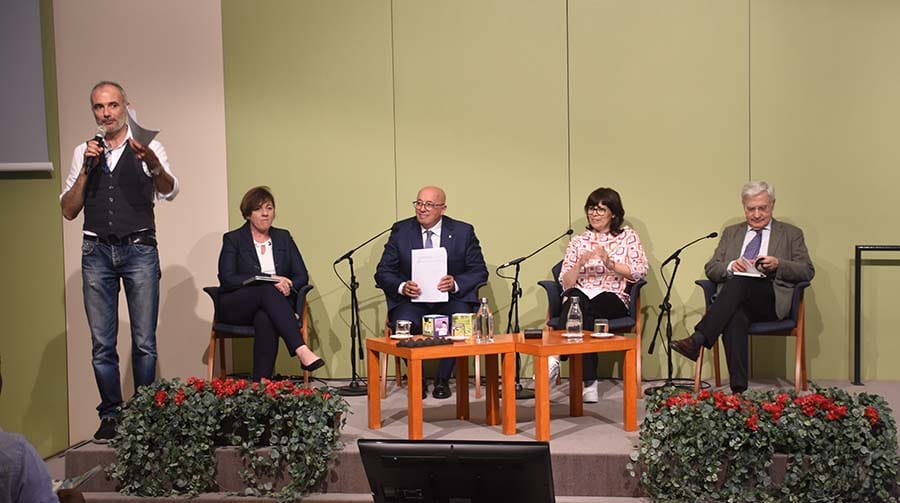
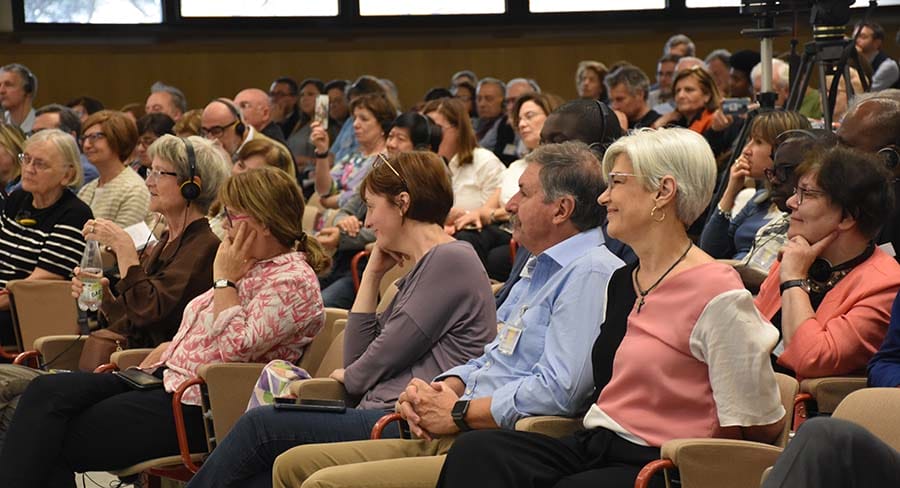
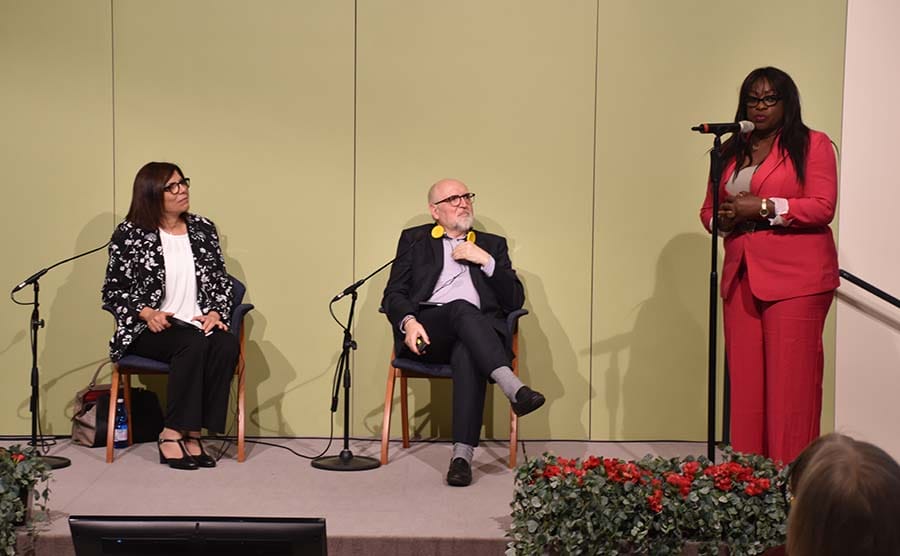
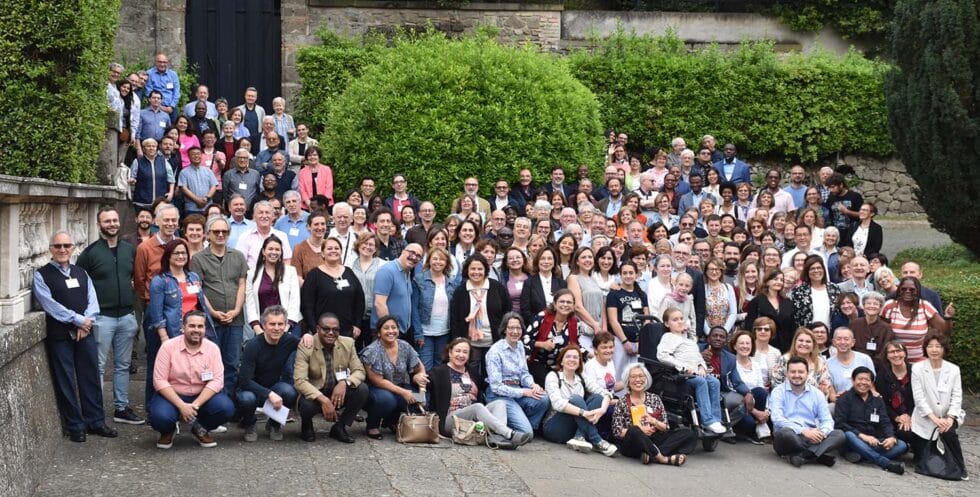
“Embracing Hope.” With this wish, about 200 people from the Americas, Africa, the Middle East, Asia and all over Europe met at the Mariapolis Center in Castel Gandolfo (Rome) from May 16 to 19.
They are the contact persons of the Umanità Nuova, movement, the social expression of the Focolare Movement, New Humanity the NGO with consultative status in the United Nations, along with representatives of disciplines that dialogue with contemporary culture, the contact persons of Ragazzi per l’unità and of AMU (Action for a United World), the NGO that deals with special projects and development.
Also in attendance was a delegation of very young high school students who are part of Living Peace International, along with young ambassadors for peace, such as Joseph,
from Sierra Leone, who narrated how at the age of six he was recruited as a child soldier and has now become a young peace leader.
For some time now, these various social expressions -each with its own characteristics and goals- have been working together to help provide concrete responses to the burning issues and expectations of the contemporary world: “Together for Humanity” is their new name. Taking up the Pope’s invitation to the Focolare Movement during a private audience on Dec. 7, 2023, which was to “be artisans of peace in a world torn apart by conflict,” they wanted to dedicate the meeting precisely to peace.
An experience of listening, communal reflection and concrete planning, carried out in the eight communities distinguished by areas and passions. A journey that will continue with the Genfest in Brazil next July, intertwine with the United Nations Summit for Future in September 2024, and with the event in Nairobi with the youth and cities of the world, on the occasion of the 80th anniversary of the United Nations. During the meeting, those present, with the help of experts and testimonies, professors, diplomats, social and cultural actors, and organized citizens, reflected on the issue of what is peace, if it is indeed possible to achieve it and by what means.
So many touching experiences from countries in conflict. From Syria, they recounted the brutality of the war they have been experiencing since 2011, aggravated by the embargo affecting an exhausted population. AMU projects such as RESTART, which supports micro businesses with loans and personalized mentoring, have helped slow constant migration processes. Christiane, from Lebanon, despite the situation in her country, characterized by very high inflation and high emigration rates aggravated by the impacts of the war in the Middle East, did not give up: she set up with her husband a productive enterprise for family support and to also help other artisans and rural producers sell their products. The productive initiative also extended to Egypt. From Congo, the fruits of the school for training leaders for peace were presented. A graduate of this school, Joëlle, a journalist and a presidential candidate of the Republic of Congo, launched her presidential platform with the values of peace and social justice. Youths from Ukraine greeted those present with a video, and so did some youths from Bethlehem, Pakistan, Cuba, and the Philippines. The “Together for a New Africa” (T4NA) project for African youth interested in changing the continent was presented: trained hundreds of youth and involved another 9,000 youth in an experience that reached 14 African nations. The same is being done in Mexico with the National Agenda for Peace, in the United States with courageous conversations against racism.
There is a need for true peace and human rights education as well as the need to name conflicts, exploring their reasons, trying to resolve them with a community strategy that listens to diverse and plural positions which precedes and accompanies every negotiation. It has been said that peace is not only the absence of war. Not everything that is called order is peace. It is not ideological: it is not pacifism. It is the condition in which each person can think and realize his own future. But we need to learn dialogue as a methodology, with which to be willing to lose something for the greater good. This is basically the reason for which perhaps negotiations are not progressive and even international organizations do not seem to be able to handle the crisis. Dialogue, trust, local and global networks, inter-generation, community. We start from here, from these key words, encouraged also by Margaret Karram and Jesús Morán , President and Co-President of the Focolare Movement, who were present on the final day. This is the road to peace, to which we want to contribute concretely, and together.
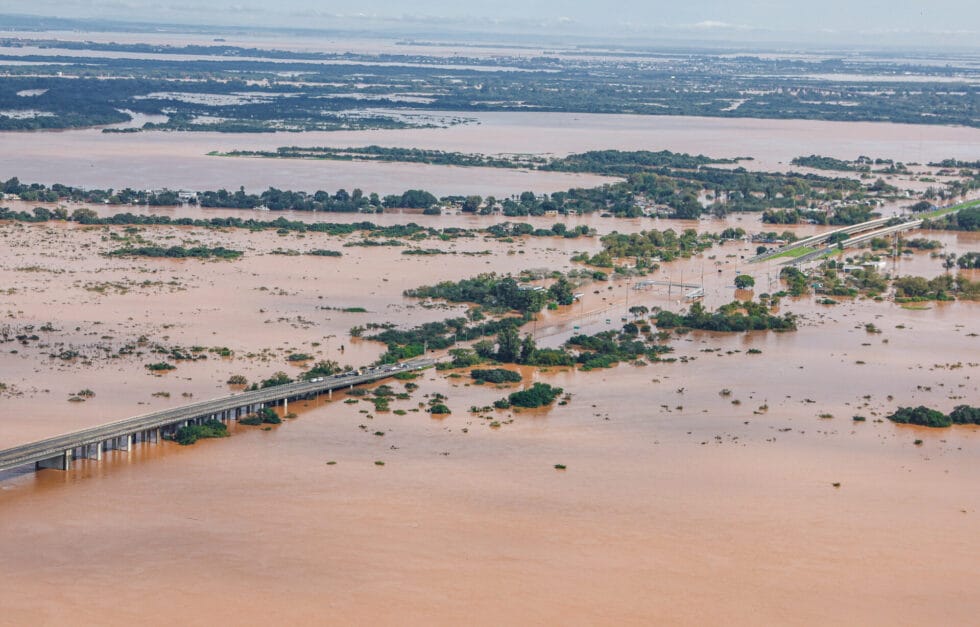
The heavy rains that have been lashing the south of Brazil since early May 2024 have caused heavy flooding and landslides in 425 municipalities in the state of Rio Grande do Sul, directly affecting 1.5 million people and, so far, causing 108 deaths and almost 130 missing.According to the latest official report, 232,675 people are still displaced from their homes, of whom 65,573 are taken in shelters.The most worrying situation is in the metropolitan area of Porto Alegre, where entire cities and neighbourhoods have been under water since Friday 2 May, with water supply problems and power outages. According to weather forecasts, heavy rains are expected in the coming days, which will further worsen the situation of this natural disaster.
The Emergency Coordination of the Focolare Movement has launched an extraordinary fundraising campaign in support of the population of the State of Rio Grande del Sud, Brazil, through Action for a United World ETS (AMU) and Action for New Families ONLUS (AFN). The contributions transferred will be jointly managed by AMU and AFN in coordination with the Focolare Movement in Brazil in order to provide the people affected by the heavy flooding with basic necessities for food, medical care, and housing. In Brazil you can donate to the following account: Banco do Brasil Agência: 2665-4 Conta Corrente: 39.322-3 Pix: acaoemergencial@anpecom.com.br Associação Nacional por uma Economia de Comunhão CNPJ: 07.638.735/0001-94 From other countries you can donate online AMU: https://www.amu-it.eu/campagne/emergenza-inondazioni-in-brasile/ AFN: https://afnonlus.org/#donaora
or by bank transfer to the following accounts: Action for a United World ETS (AMU) IBAN: IT 58 S 05018 03200 000011204344 at Banca Popolare Etica Codice SWIFT/BIC: ETICIT22XXX Action for New Families ONLUS (AFN) IBAN: IT 92 J 05018 03200 000016978561 at Banca Popolare Etica Codice SWIFT/BIC: ETICIT22XXX Reason for payment: Flooding emergency in Brazil
Tax benefits are available for such donations in many EU countries and in other countries around the world, according to different local regulations.Italian contributors will be able to obtain deductions and allowances from income, according to the rules for non-profit organisations(more…)
On 13 April, the CERAP University Institute in Abidjan, Côte d’Ivoire, hosted a symposium on the Economy of Communion entitled: ‘The gift revolution: a new paradigm for the African economy’. On April 13, 2024, the Cerap University Institute in Ivory Coast hosted a vibrant symposium focused on the Economy of Communion (EoC). Attended by 146 participants, primarily from the esteemed Economic Faculty of this University, the event provided a platform for stimulating discussions and fresh insights into alternative economic models. Against the backdrop of today’s prevailing economic norms, marked by a culture of consumption rather than contribution, attendees eagerly engaged with presentations from distinguished speakers. Father Bertin Dadier and Madame Julie Bodou Kone took center stage, illuminating the transformative potential of the EoC as a complementary force within our existing market framework. Their presentations delved into the foundational principles and values that underpin the EoC, fostering a deeper understanding among participants. Despite initial skepticism, robust exchanges ensued, with attendees seeking to unravel the practical implications of this innovative approach. One of the highlights of the symposium was the unveiling of the Chocomabs EoC enterprise, offering a tangible example of how these principles can be translated into action. As attendees delved into the case study, a palpable sense of enthusiasm and curiosity permeated the room, underscoring the relevance of such initiatives in today’s society. Steve William Azeumo, coordinator of Action for the Economy of Communion in Central Africa, delivered a powerful presentation. Azeumo emphasised the crucial role of incubating EdC entrepreneurs, offering convincing examples from Cameroon to illustrate his point. He also stressed the importance of fostering and promoting such enterprises in society, symbolising their importance with the seven colours of the rainbow. Looking ahead, the momentum generated by the symposium is poised to catalyze tangible change. Plans are underway to establish an EoC Club at the university, providing a platform for ongoing exploration and collaboration among the EoC Commission, students, and faculty members. In essence, the EoC symposium at Cerap served as a catalyst for dialogue, challenging conventional thinking and laying the groundwork for a more inclusive and sustainable economic future. Source: EoC