Chiara Lubich: “Divine Mercy”
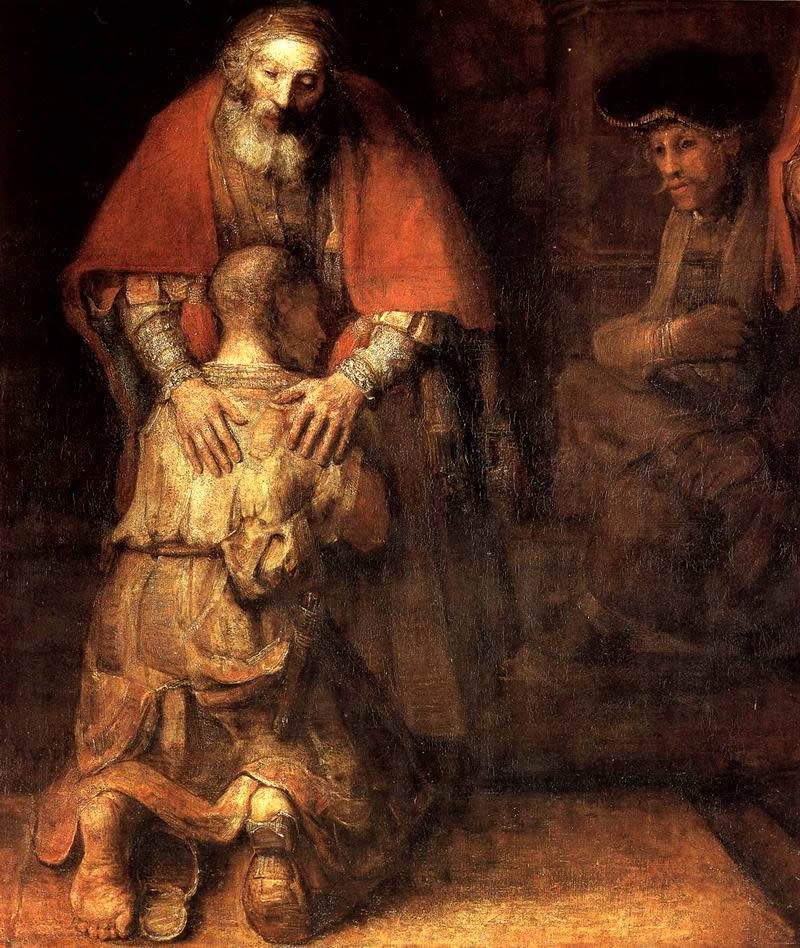
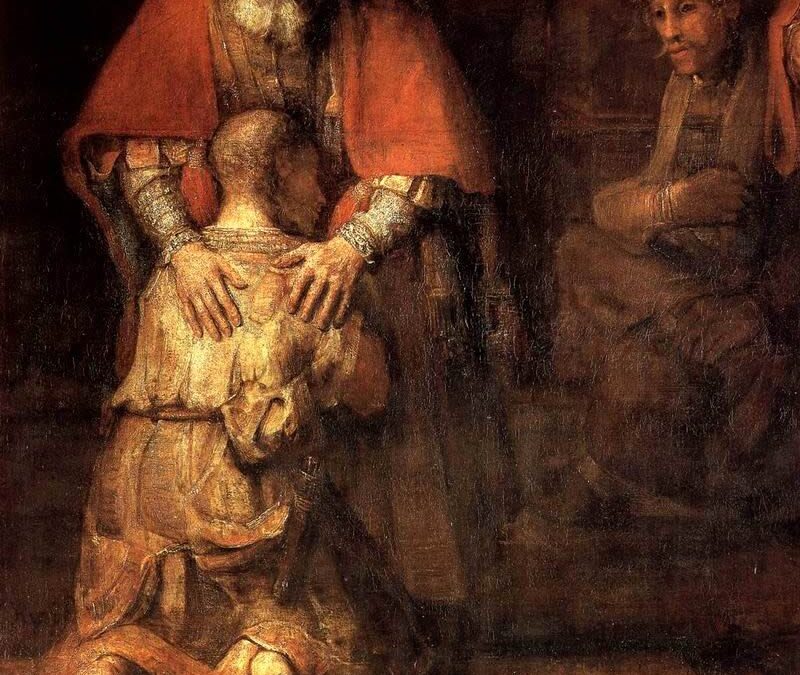
“The Return of the Prodigal Son” by Rembrandt

“The Return of the Prodigal Son” by Rembrandt
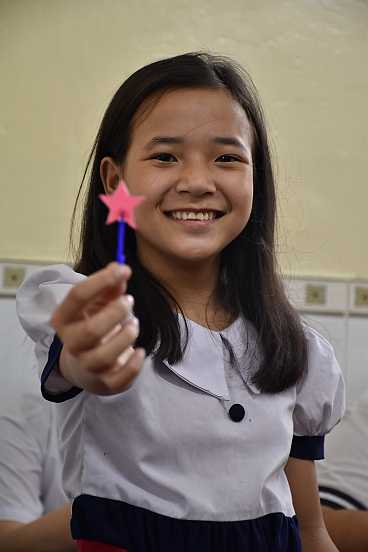
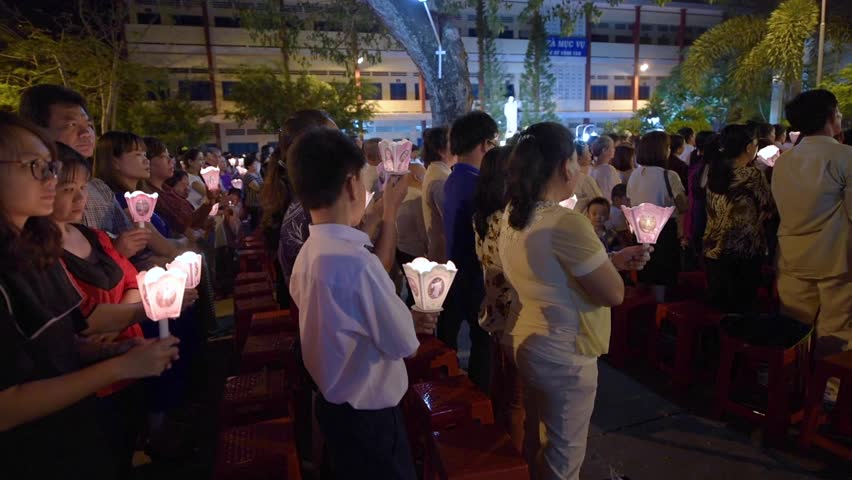 Easter is now over: today is Easter Monday and it’s a normal working day. It’s really hot and the rain is menacing the skies. It is only the Christians who are feasting. Here and there one can hear the cheering and the cries of Alleluia seeping out from the homes. And yet I’m in a Communist country. But as one goes out of the church, the streets are filled with the incredible sound of motorbikes blocking the traffic. The police in front of the cathedral have to direct the traffic. In order to take part in the Easter Triduum, one has to arrive 30 minutes before to find a place. In church I leave the bag on the bench and nobody touches it. I look at the people: many children, young people, couples and the elderly with their sober but smiling faces. I think of Europe, of the half-empty churches even on feast days. In these parts, even at 5 o’clock in the morning of any day, children, even small ones, together with the adults are in the first rows to sing. Here, everyone knows the prayers and the hymns by heart. In Saigon every corner is swarmed in a disorderly and nearly savage life. Yet, there is a lot of faith, perhaps as in no other Asian city. Because here faith comes at a cost. Everything costs in Vietnam. Some time ago I made a journey by bus, five and a half hours with a throng of people and in the heat. At a certain point quintals of Indian maize were loaded onto the bus among the travellers, dragged underfoot into the baggage compartment. The people started to scream whilst the driver and his assistant shouted at them to shut up. A lady near me who felt embarrassed at seeing me in that confusion, told me: “Life here is hard. Don’t forget it if you want to live here”. I don’t know that lady’s name and perhaps I’ll never see her again. But those words opened a new dimension within me. Life, theirs as well as mine, has to pass through pain, weariness, suffering, to then flow with joy. I understood her this way. From that day everything in me was simplified. Like everybody, I experience joy, but also pain and fatigue. I am one of them. I’m not even considered special because I’m a foreigner, but just one among many foreigners. The story of that Man who hung from a cross, similar to those of many people I meet each day, reminds me of the words of that lady. I can find it in the poor who have nothing, in the sick man with a tumour, with bones jutting out from his ribs, who has no money to cure himself. Or in that lady, Giau, 64, who though poor, adopted a Down Syndrome child who had been literally thrown out by the parents. And yet, it’s Easter. Even for the Rohingya refugees, living between Myanmar and Bangladesh. It’s Easter in North Korea which seeks peace after having fired missiles. It’s Easter amongst the allied troops who are preparing for the umpteenth drill. It’s Easter for the children of Xang Cut, in the delta zone of Mikong, where the water is still infested through Agent Orange, thrown by the allies 40 years ago. And it’s Easter for the children of Saigon, gathered from the streets and given education by the teachers of Pho. They will have something to eat thanks to their heroic love. Even here, in the midst of many challenges, dangers, widespread pollution and an overwhelming sense of hopelessness, someone continues to smile, because they are loved and helped by a friendly hand. This is Easter: taking care of others, relieving their pain, sharing their tears. The world, the other, belongs to me. And my happiness passes through that of others, of many others.
 Sports and peace have been a winning combination since ancient times, when an “Olympic truce” was put in force during the games that were celebrated in honor of Zeus. All public and private hostilities were put on hold in order to safeguard the athletes and spectators who had to cross enemy territories in order to reach Olympia. The International Day of Sport that will be celebrated April 6 will be held on the same day that, in 1896, saw the reopening of the Olympic Games for the modern era, once again in Greece. This emphasizes the value and relevance of this year’s Day of Sport. Paolo Cipolli is the director of Sportmeet, an international network of athletes and sports professionals. Since 2002 it has been dedicated to and contributed toward developing a sports culture that is focused on peace, development and universal fraternity. “Sport, which some sociologists have defined as an ‘imitation of war’ or ‘war without shooting,’ can still represent an element of reconciliation despite its combative content,” says Cipolli. “Through a process of catharsis, purification through conflict and the element of competition, controlled by the rules of the game, sports holds great potential for relationships.” The recent Winter Games are a great example. “What happened at PyeongChang was truly surprising,” says Cipolli. “At first, the choice of a venue near the border of the two Koreas, especially during a time when there were escalating tensions, seemed ill-fated. And yet, the miracle of sport occurred, and the Olympics showed themselves to be not only an extraordinary chance to change the expectations of a breakdown, but also a surprising opportunity to bring the two countries closer. It was a miracle that threw a curve ball at international politics,” he says. “This has happened before. Many times in recent history, sports became an opportunity to ease tensions. I remember that famous game of ping pong between China and the United States in 1971.” Sportmeet, which began within the Focolare Movement, promotes values of holistic personal growth and peace within the world of sports. What are its goals? “What moves us is the drive to bring our spiritual legacy, Chiara Lubich’s ideal of unity, into this area. We support the positive experiences that exist, recognizing everything good that the history of sport has brought about to date. We also hope to grow awareness that sports has great possibilities for developing fraternity. “Recently we had the opportunity to promote and participate in the first Via Pacis Half Marathon in Rome. We will continue to work in partnership with various religious communities and sports institutions for the next marathon, to be held on September 23.” The reality of limitations runs through all our lives, whether individually or collectively. It is a mold we all come through, with disadvantages, difficulties and social hurdles, both physical and psychological. How does sports address this? “The experience of sports contributes to an understanding of limitations that goes beyond its specific area of expertise. By its very nature, sports is a contest with limitations. Promoting participation prepares us for differences, opening pathways to integrate and overcome any political, religious, ethnic or social barriers.” What’s next? “We are organizing an international conference around these themes, to be held April 20–22 in Rome. It will be open to those working in the field of sports and others, in order to learn about and promote good practices. “On the main day, April 21, there will be an ‘Earth Village’ at Villa Borghese, where we will get together with participants from the Eco-One conference entitled ‘Nature breaks limits.’ We’ll take an interdisciplinary approach to limitations. “It will be a roaming conference between the Corviale neighborhood, which is on the geographic and social margins of the city, and central Rome. It will be a chance to see the difficulty, vulnerability and the ‘margins’ and realize that they are limits to recognize. “They make us more human.” Chiara Favotti
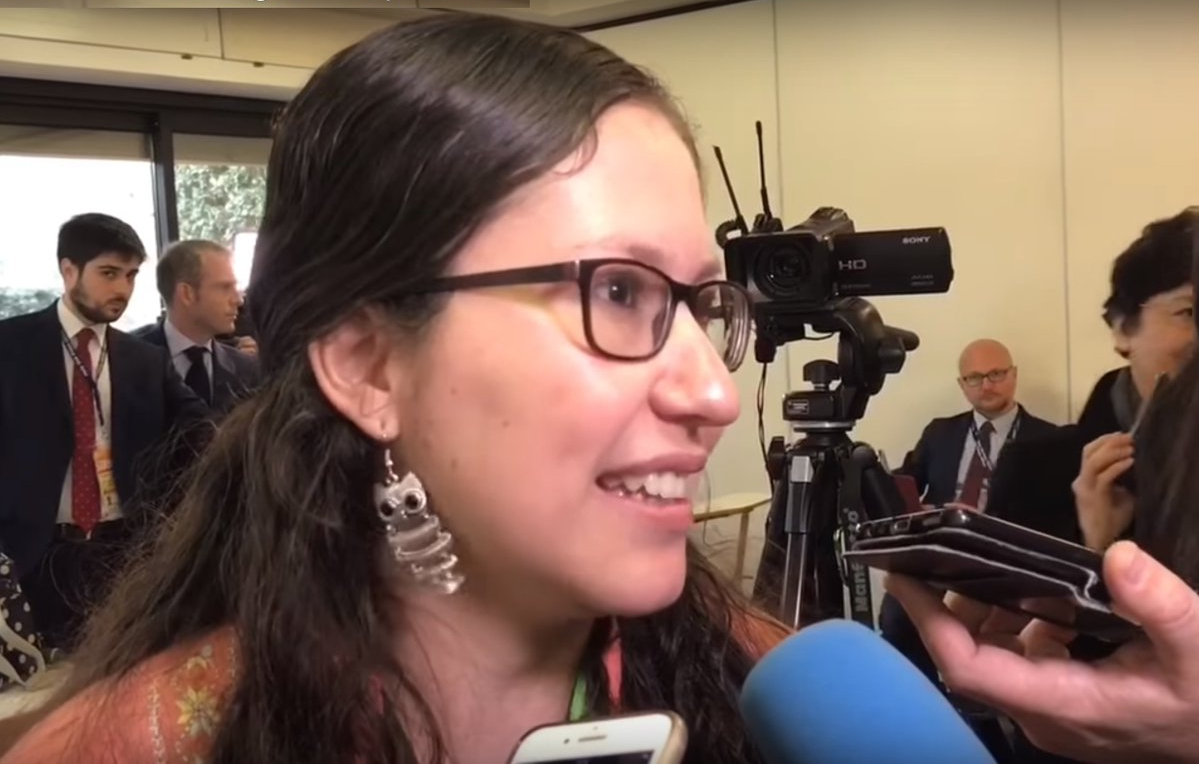 “You will be taken seriously,” the Pope ensured. How many times have the young people in this society felt they are not being considered, heeded, and taken seriously? “They may not take us seriously because they fear that our lack of experience may lead us to make mistakes in all fields. The truth is we may still have a lot to learn, but on the other hand we have something the adults don’t have, and that is our youthfulness here and now, a different experience from what they have lived. We certainly need their experience but we have this plus factor which they don’t have. The young people, however, must not fall into useless criticisms of the adults, trying to destroy the other, but instead, try to cultivate a deep inter-generational dialogue and without judgments. The young people and the adults have specific features that offer the possibility of fruitful and mutual enrichment: the adult person rejuvenates and the young mature.” So, besides the experience of dialogue with the young people of other Churches, faiths and convictions, you have also established a dialogue between generations… “In reality the two dimensions are not separate, and the religious dimension should not be distinct from our humanity and our daily lives; it would be a mistake to distinguish spiritual life from normal life. Instead, transcendence is part of man, and understanding that we are limited and seek the answers by going beyond our own selves is an anthropological issue, typical of our being human. Inter-generational dialogue is a fact because there are people of different ages. Humanity renews itself and within this fact there is also a spiritual aspect which is typical of all ages, in adults as in children.
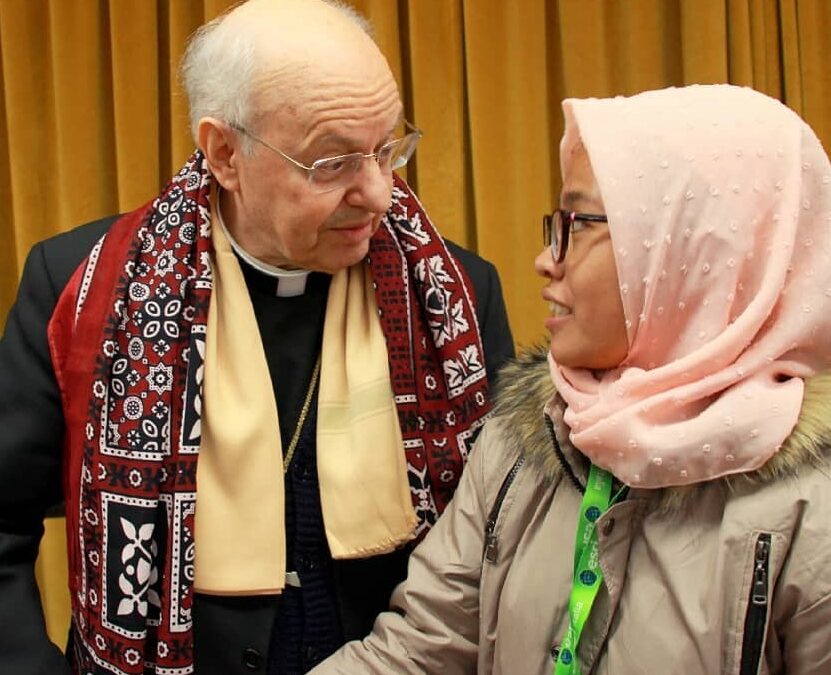
 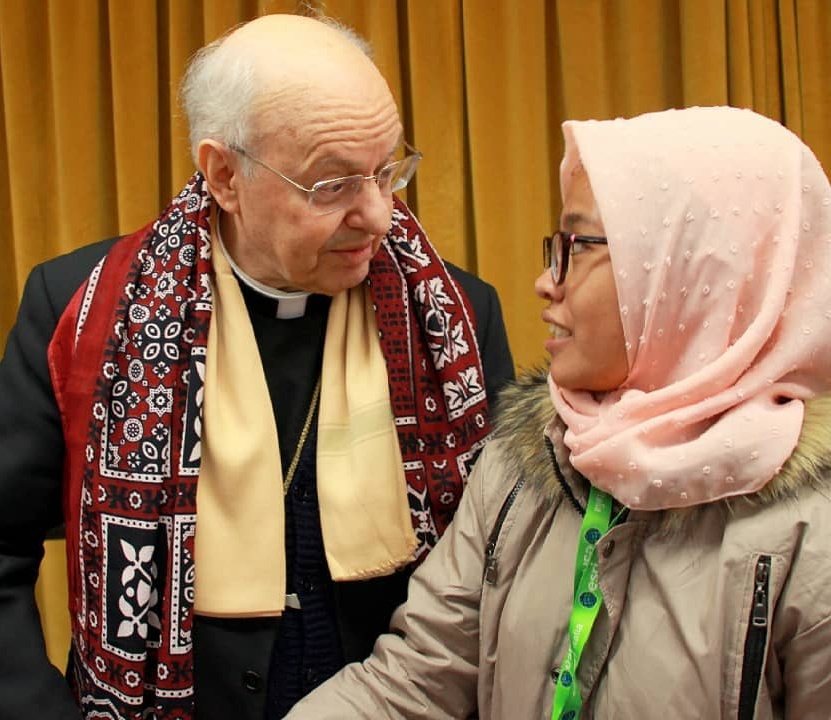 The Pope wanted this Synod on the young people to also be a synod for the young people, with and of the youth. Did you really feel like protagonists? “Very much so, and we were moved by this total openness, firstly of the Pope, and of the Church. His representatives who were there to keep up with us did not interfere: Cardinal Lorenzo Baldisseri and Bishop Fabio Fabene were there to listen to us. In them I saw the figure of Mary who creates total silence and makes room so that the Word could be born, a painting in the background, a precious silence that makes the Word emerge. They were there to listen both during the work session as in recreational moments and when we asked them questions they answered, otherwise they remained silent. In their faces we saw the reflection of the things on which they agreed and those which hurt them and this helped us to find that balance the Pope spoke about on the first day: speak up with daring but be humble if you make mistakes and ask for forgiveness. This happened when we were drawing up the final document, when some may have used overly critical language, but slowly we found this balance, also because their presence helped us. So, certainly we also felt the support of the adults of the hierarchical Church. Not everything was perfect but that’s life.” What impressed you upon completion of the works? “Once the final document was approved I heard the young people of various countries – one from the Samoan isles, an Asian, an African, a European and a Latin American – say that this document reflects what the young people are today. These are the same things my friends think, and the same questions we ask ourselves, and I was really glad because this was the reason for our meeting: to be able to talk of themes that otherwise would not have been faced. It’s true that not everyone agreed with everything, since there are different nuances in every region, however, the main problems and questions, and the experience in pursuing in-depth meaning is reflected in the document with all the contradictions that arose; even if some think in one way, others in a completely opposite way, the quest and aspirations were the same. So I was pleased to see that this 5-day working session, the 300 young people from all over the world and their situations essentially reflect what the young people are today, whether in the Middle East, Asia and in Africa. We are aware that this is a historical moment for the Church, not only because it is the first time it has opened out to listen to the young people in this manner, but also because from now on we will not be able to proceed without taking this meeting and all that has emerged into consideration. It is a start and we are happy to have been part of it.” Read the entire document
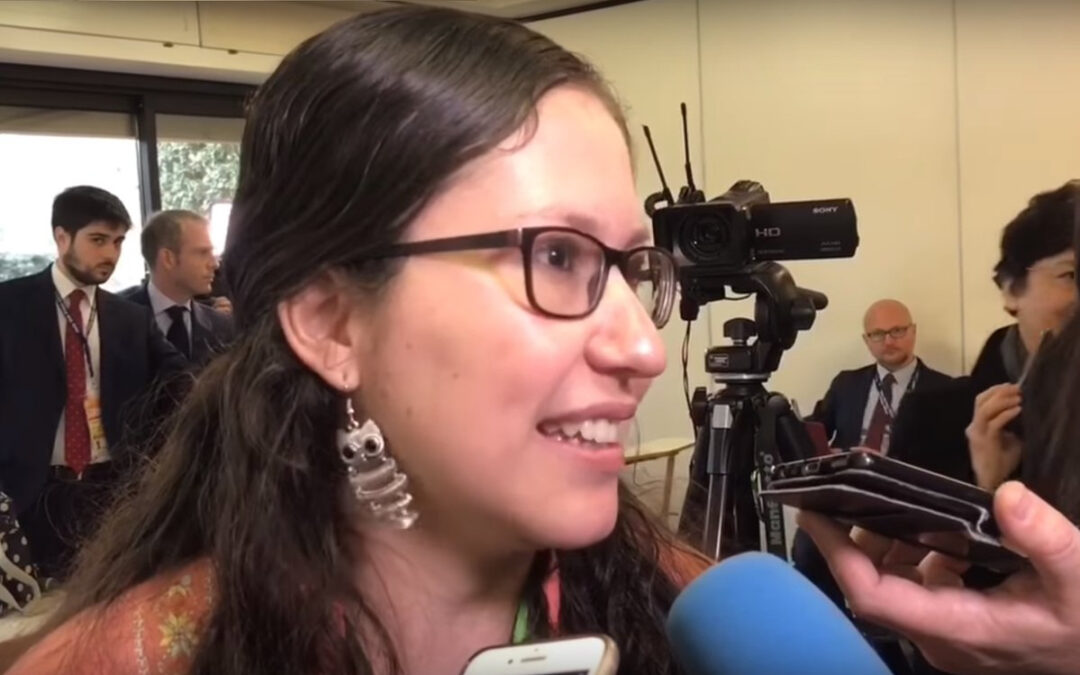
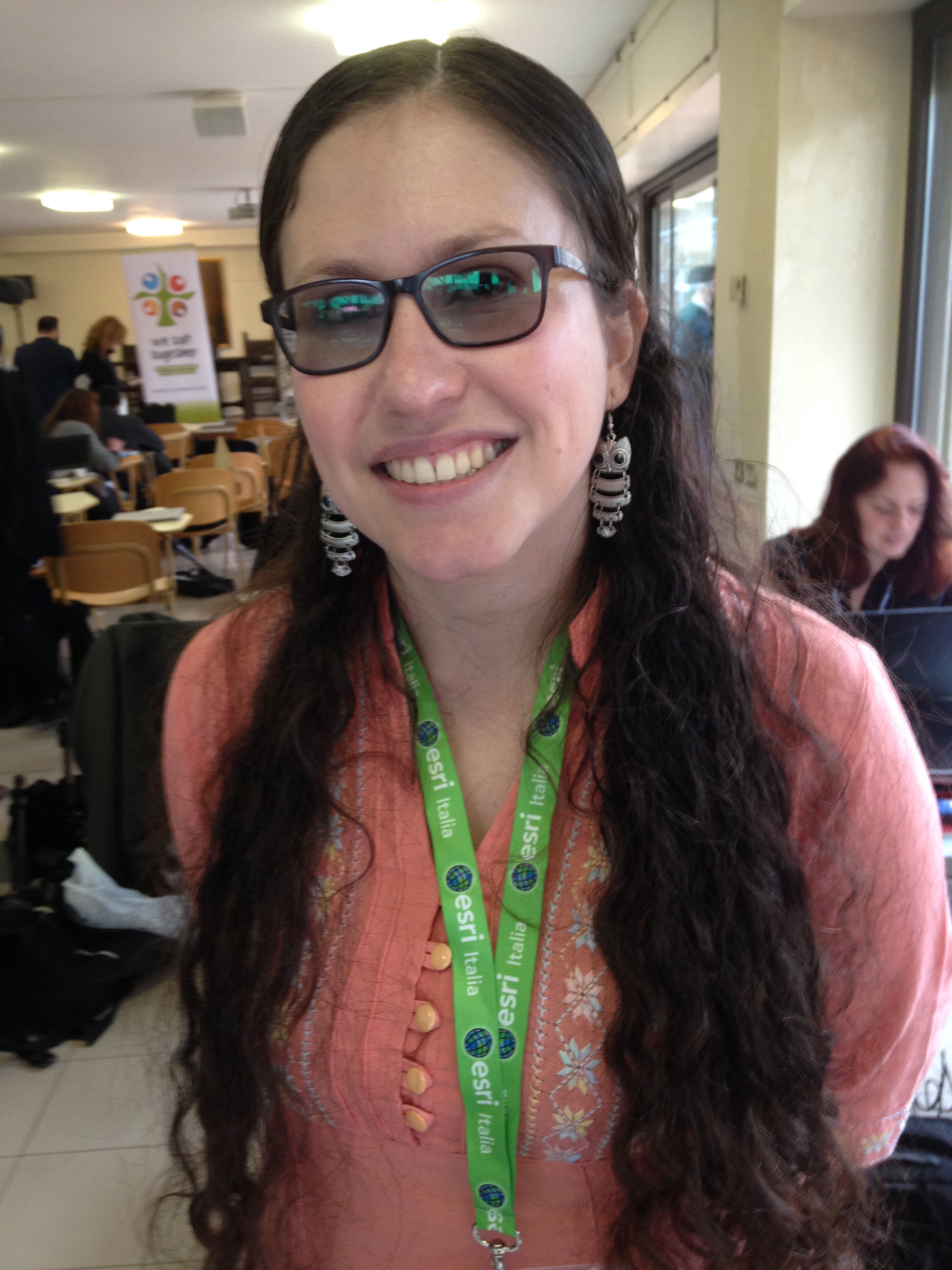
Noemi Sánches from Paraguay
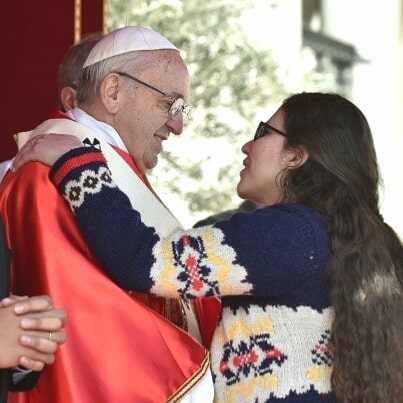 The Pope invited you all to speak up with courage and “cheekiness”. What are some of the the more difficult topics that you anticipate you will be dealing with? “Some very timely and, perhaps, problematic such as homosexuality. Then there was a request for a more concrete stance on migration, refugees and wars. These topics reach beyond mere dogmatism, the family in the traditional sense and how to live it today when it is not like exactly like that. We never asked for a change in the doctrine, but how to understand it to the end in order to live it it out in today’s society. Perhaps this is already being done, but not in a way that is reaching the young people.” At the Pre-Synodal meeting you were among the representatives of Focolare young people from around the world. What are the young people asking of the Church and what are they proposing? What experiences do they have that they can present as a model to others? “Based on the experience in Rome among young people from so many backgrounds, faiths and cultures, with whom we haven’t only spoken but also lived together, shared meals together and enriched one another, the young people from the Focolare – who have the charism of unity, which means dialogue – have proposed that these kinds of gatherings continue abroad among people of all backgrounds. This experience, in fact, helps us to realize that the other person is another me, and that we have the same questions in our hearts, the same challenges, which we approach in different ways, that are also an enrichment for all of us. So each of us as something to give, and it’s a giving that provides a wider vision, a more complete and enriching experience. Together we can arrive at the point of providing concrete answers to the problems we all experience.” That is a valuable witness in times that are so marked by prejudice and indifference, when it’s easier to build walls and fences than bridges, or reaching out to someone who is different. How was this counter-current proposal received? “By the grace of God, within the Focolare Movement we’ve been living this way for many years and have been holding these kinds of meetings. But even in this space provided for us by the Church for the young people, our proposal was listened to with much joy and satisfaction by people who don’t even know of the Movement and live in different ways. When the time came for concrete proposals, in my group, I proposed that we apply this model of relationship even when we confront other topics, always with this dynamic of openness to everyone, in which everyone lives and takes part together, discovers themselves and one another more. All of the young people immediately agreed. It was unanimous. But we had to acknowledge that there were older and bigger people who listened in and made comments, but I could see in them – not a refusal – but a bit of fear, the fear that the tendency to “go out” towards the other would make them to lose their own identities. However, the young people who had had some experience with this dynamic, immediately realized that you don’t lose your identity, but you enrich it. Obviously, your religious identity has to be carefully form and deepened, but you can give that identity and, when you do, you make room for the other. The young people who lived it, understood it and wanted it. In this sense, we lived out what Pope Francis had said to us at the beginning: You young people have to dream the dreams of the old, but also prophecy, that is, go beyond the dream. And I think that what we lived in Rome was a translation of that exhortation into real life. We wanted to be Church and we realized that to do that we had to go beyond the traditional structures. The Church is universal, so we have to be open to all, welcoming all and reaching all, in order to become more fully what we already are.” Read the full document:
Evicted We had been evicted and had to be out of the apartment within a month. Rents in the area were quite high. The only thing left for us to do was to look outside the city, hoping to find something that would match our means. We began to involve our friends and acquaintances in the search, but we didn’t come up with anything. We prayed, as we had had done before, with a lot of trust in God. Right towards the end of the month we heard of a family that was leaving a second-floor apartment. We tracked down the owner who lived in another city and explained our situation to him. He took our word on it and accepted our proposal, saying: “Move in. When I come we’ll draw up the new contract.” It seemed unbelievable to find an apartment in the same building and not having to make a big move. We remembered Jesus’s words: “Everything is possible for one who has faith.” (Italy) Optimism I have a difficult character and that’s why I found myself alone at a certain age, after a few attempts at marriage or living in community. A priest had suggested that I help out taking care of a spastic boy, so that the mother, a widow, could attend to some business. I began to visit and saw that, in spite of their hard circumstances, they were always happy and putting on a feast for anybody that went to visit them. Slowly, a new optimism began to enter in me. I discovered that the root of the serenity in that family was their life that was all based on the Gospel. And their attitude was contagious. (Slovakia) The Shrub All because of a bush that, in my opinion, my husband had planted in the wrong place, there was a little upset between us. As I cooked with my soul in confusion, I tried to entrust myself to God and, little by little, I became calm. I thought that I would suggest to my husband that we plant the shrub in a pot, and look for a better place to plant it. It seemed like a good idea to him. We apologized to each other and went to buy the vase. Then we planted it in a better spot. Now, when we look at our shrub, it reminds us that what matters the most in our relationship is that we love one another, and be disposed to give up our own ideas in order to make the other happy, so that God can shine between us. (Switzerland) Not only my physical health After the bone marrow transplant I was well for a long period until I had a relapse and a second transplant was needed. During moments of anguish, I said to myself that I had to give all my worry to Our Lady. When I did it with my heart, I felt a deep peace. At first I prayed all the time to get well. But then I realized that God wanted to draw me to himself precisely through the illness. So, instead of praying only for my physical health, I began to ask for the grace to be able to draw closer to God. (USA)

Father, we praise you with all your creatures. They came forth from your all-powerful hand; they are yours, filled with your presence and your tender love. Praise be to you! Son of God, Jesus, through you all things were made. You were formed in the womb of Mary our Mother, you became part of this earth, and you gazed upon this world with human eyes. Today you are alive in every creature in your risen glory. Praise be to you! Holy Spirit, by your light you guide this world towards the Father’s love and accompany creation as it groans in travail. You also dwell in our hearts and you inspire us to do what is good. Praise be to you! Source: Pope Francis, Encyclical Letter Laudato Si’ on the care for the common home (A Christian Prayer for creation, 246)
 |
| Today more than ever, while new conflicts are starting in various parts of the world, and tragic events of all kinds make our hopes for peace seem vain, we want to affirm our faith in the Man-God, who died and rose again for all people, and to lead the world to its destiny of unity. He is our hope and our joy. I send Easter greetings to all of you, personally and on behalf of the Focolare Movement. I pray that the spirit of the Risen Lord be born and reborn every day in us and amongst us, according to Jesus’ promise, “For where two or three are gathered in my name, I am there among them” (Mt 18:20). Happy Easter everyone!
Maria Voce |
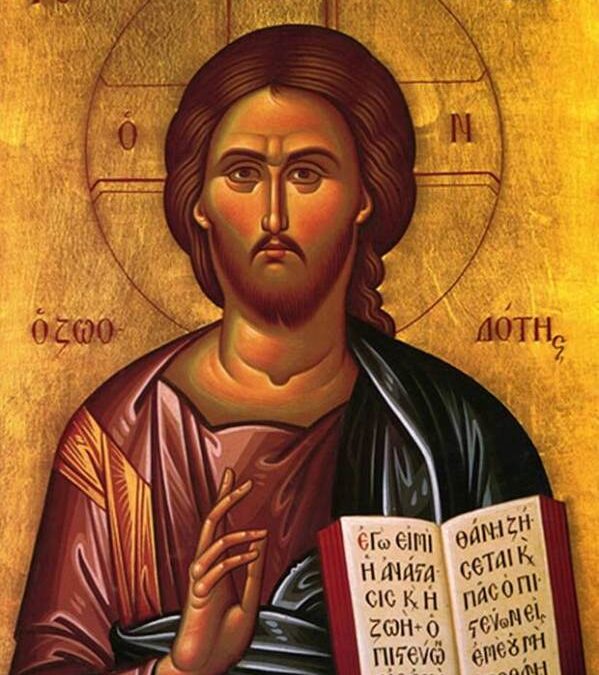
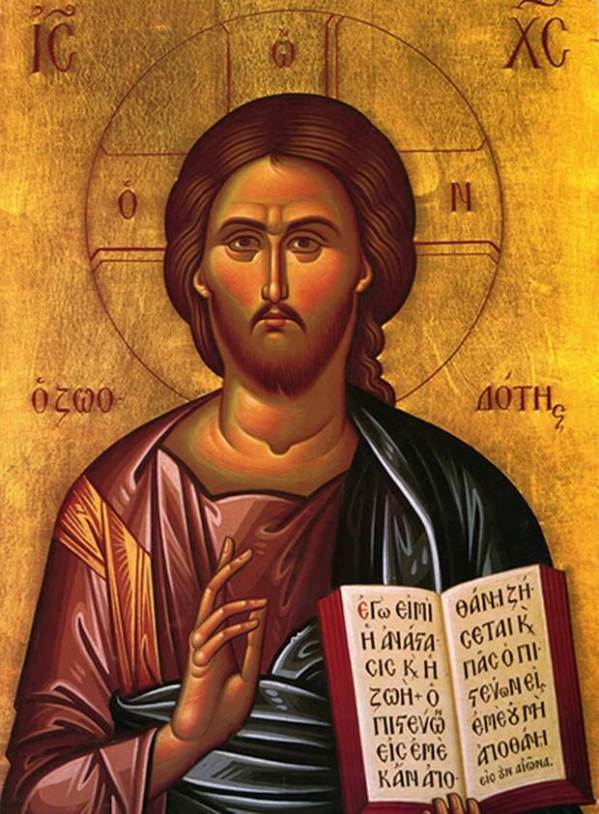 It’s the triumph of the Risen Jesus whom we know and relive personally, in our own small way, after having embraced him forsaken; or when truly united in his name, we experience the effects of his life, the fruits of his Spirit. The Risen Lord must always be present and living in us. The world is waiting for people who not only believe in and love Him one way or another, but people who are authentic witnesses. The world is waiting for people who can truly say, as Mary Magdalene said to the apostles after seeing Jesus near the tomb, those words that we know but which are always new: “We have seen him!” Yes, we have discovered him in the light with which he enlightened us; we have touched him in the peace with which he filled us; we have heard his voice in the depths of our heart; we have rejoiced in his incomparable joy. Source: Chiara Lubich during a telephone link up. Castel Gandolfo, Rome, 20th April 2000.
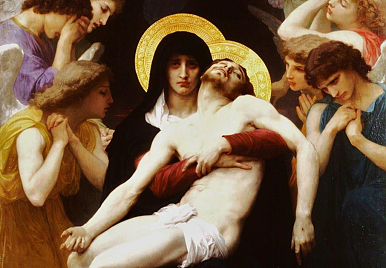
“Mary is alone. Alone with her dead son-God. Is it an unspeakable depth of anguish, an infinite agony? Yes, it is, but she remains standing, thus becoming a sublime example and monument of all virtues. She hopes and she believes. During his life, Jesus had spoken of his death but also of his resurrection. Others may have forgotten his words, but she never forgot them. She kept these words in her heart, along with others, and meditated on them (cf. Lk. 2:51). Therefore, she doesn’t give in to suffering: she waits.” Source: Chiara Lubich during a telephone link up. Castel Gandolfo, Romea, 20th April 2000.
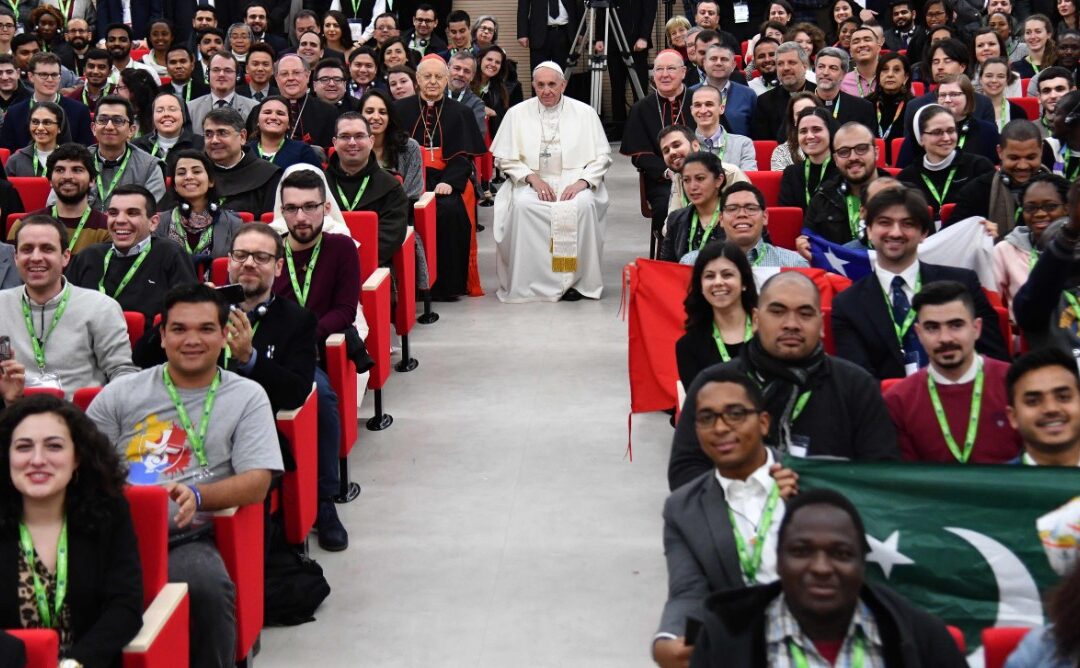
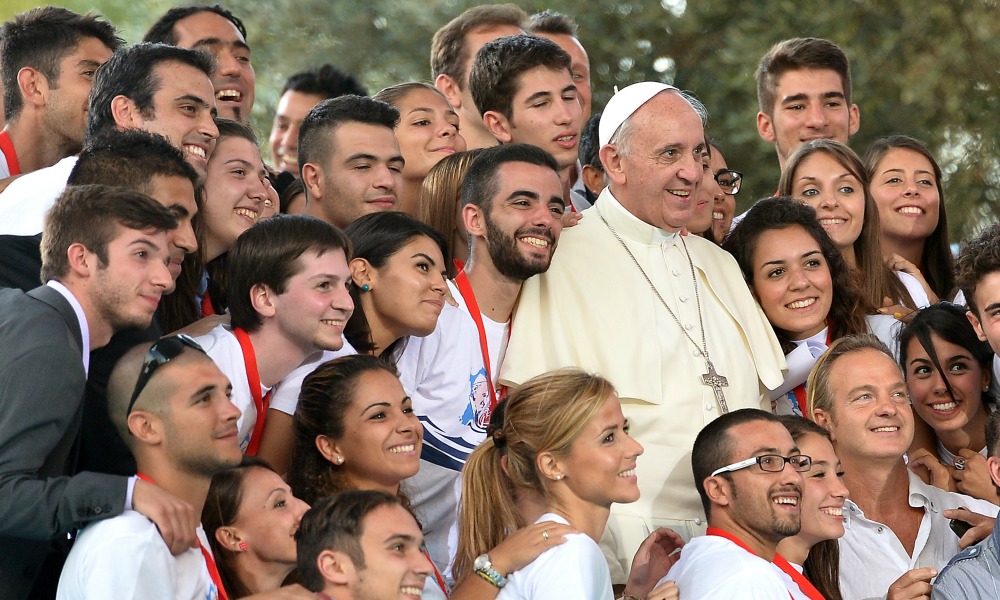
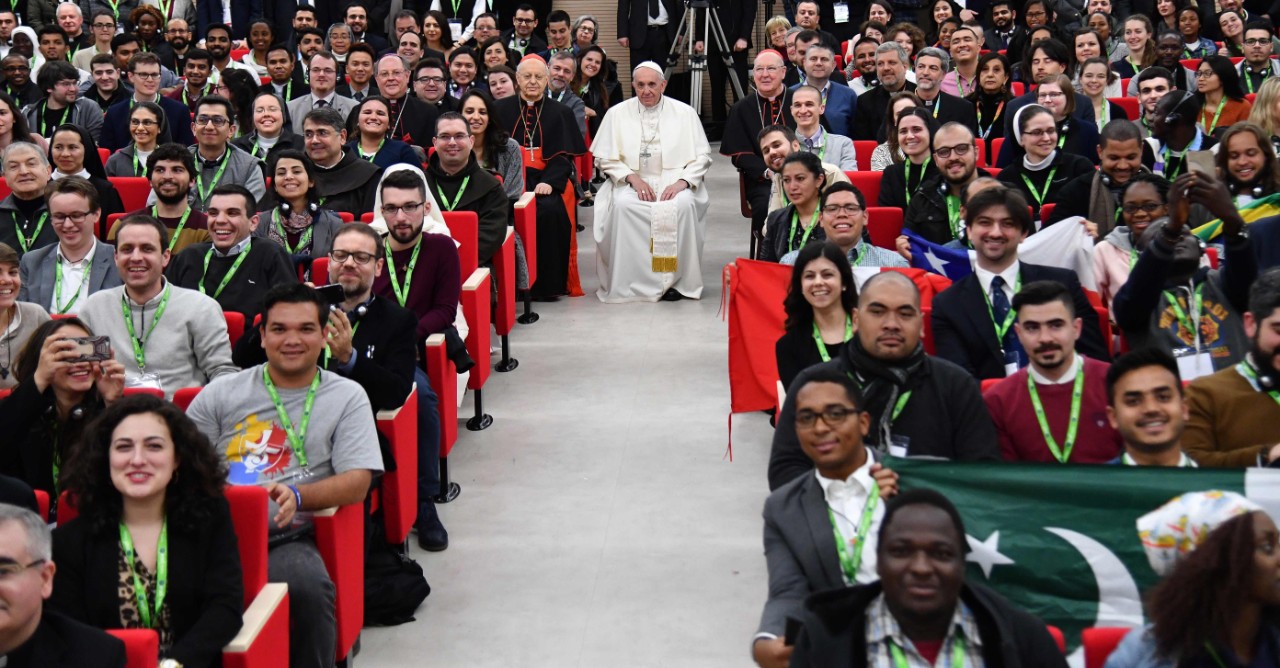 Young people want to find “peace, love, trust, equality, freedom and justice” in the Church. They also search for security, the capacity to listen, consideration, readiness to welcome the contribution of others. These are young people from every corner of the globe, belonging to different faiths, having different beliefs, coming from different social, economic and cultural backgrounds. Even young people who “do not follow traditional religions or say they are religious” but who are “open to spirituality” and want to work for others and for the common good are looking for a guide to provide direction and meaning in life. The young people themselves shared these ideas at a meeting that took place in Rome from March 19th -24th: this meeting was a preparation for the XV Ordinary Synod of Bishops on “Young people, the faith and vocational discernment” that will take place in October 2018. It was Pope Francis himself who wanted this Synod. The 300 young people present for the preparatory meeting and another 15 thousand linked up by web told the Church – gathered to listen in this way for the first time ever – all about their hopes and challenges and what they would like to find in those who are God’s ministers. They also spoke of what they are looking for in society as a whole. They shared their experiences and offered their suggestions to help ensure that the message of the gospel reaches an increasing number of young people, that it is expressed in the right way and with an attitude that is humble and open to dialogue. At the invitation of Pope Francis who asked the young people to speak openly and to be “cheeky” enough to ask difficult questions, they said very clearly that they wanted “attractive role models who are genuine and who do what they say”, “real witnesses who speak the gospel with their lives”, “men and women who can speak with passion about their faith and their relationship with Jesus and encourage others to draw close to him.” They want the Church to be welcoming, merciful, humble, human, inclusive, coherent, believable, “able to empathise with all the young people in the world” and show “tenderness” towards people to “don’t believe in following certain standards.” They are looking for “rational, critical responses to complex questions” such as sexuality, “addiction, marital and family breakdown” and to “the big social problems such as organised crime, human trafficking, violence, corruption, exploitation, murder of women and destruction of the natural environment.” They admit to not having a single, unified vision about complex issues such as migration and welcoming refugees even though there is “a universal duty to care for the dignity of every human being.” They also feel that there is little agreement among young people – neither within the Church nor in the broader world – about controversial issues such as “contraception, abortion, homosexuality, living together, marriage and even how the priesthood is understood.” Nonetheless, even the young people who do not share in the Church’s teaching still “want to be part of it.” Furthermore, they are shocked by the current “political, social and economic instability” and ask the Church to be “solid and with a preference for those who are struggling on the margins of society.” They want a sure guide because “simple answers are not enough.” They also expect the Church to acknowledge the mistakes it has made, all that it has failed to do and even its most painful wounds. This is the only way they can believe and trust the Church. Young people ask to be more involved in decision making, to be given responsibility and leadership roles in a broader context such as parish groups. They also feel that women should be involved more, that there should be more possibility for them to use their talents. They want the Church to be present and to search for them in the social and virtual worlds that they inhabit – in the bar, on the sports field and in social media. They also want to know more about the sacraments and to attend both large-scale events such as the World Youth Day as well as small ones in the diocese and parish. They want to be included, to be part of a group – “even a small local group where we can ask questions and share our Christian life is so important in nurturing and preserving our faith.” In conclusion, they are young people looking for their vocation in the world and for the meaning of life. They care for and cultivate their own spirituality – and almost always – see the Church as a great partner. Now it is up to the Church, as it has said itself, to take notice of what they are saying. The next appointment is in October at the Synod Assembly but, in the meantime, the Pope has said, “You will be taken seriously.”
Claudia Di Lorenzi
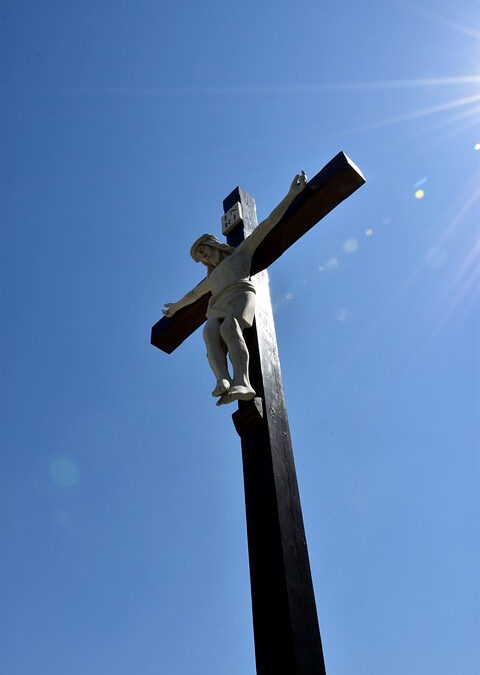
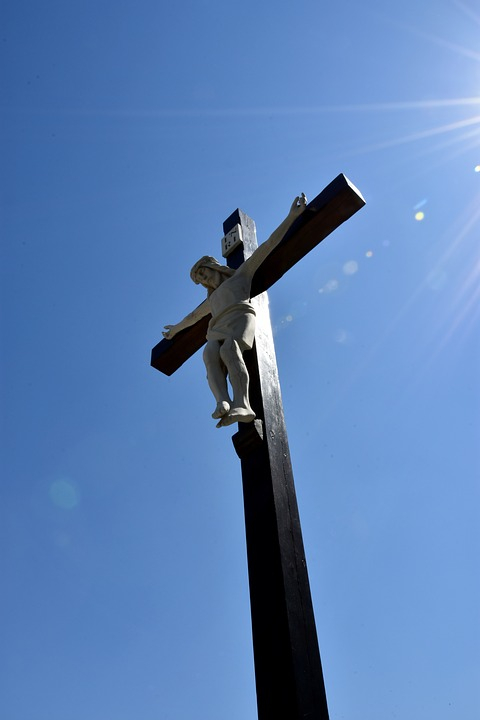 “I’ve recently written a book about him called “The Cry”. I dedicated it to him with the intention of writing it also on your behalf, on behalf of the whole Movement “as – and this is the dedication – a love letter to Jesus forsaken”. In it, I speak of him who, in the one life given to us by God, one day, a particular day that was different for each of us, called us to follow him and give ourselves to him. It’s clear then – and I say this in the book – that what I want to say in those pages cannot be considered as a talk, albeit one that is personal, familiar in tone and deeply felt. Instead it wants to be a song, a hymn of joy and especially of gratitude to him. “He had given everything: the life he lived with Mary, in obedience and in the difficulties of daily life. He had given three years of preaching and three hours on the cross, from which he forgave his executioners, promised Paradise to the good thief, and gave his Mother to us. Only his divinity remained. “His union with the Father, his sweet and ineffable union with God, had made him powerful on earth as the Son of God and majestic on the cross. Yet there, the awareness of God’s presence had to sink into the deepest recesses of his soul so as not to be felt any longer. It had to separate him in some way from the One with whom he had said he was one”, and make him cry out: “My God, my God, why have you forsaken me?” (Mt. 27:46).″ Source: Chiara Lubich during a telephone link up. Castel Gandolfo, Rome, 20th April 2000.
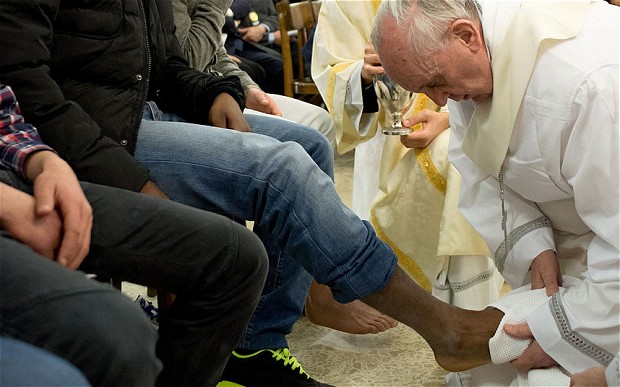
Today, then, the word is Love. Holy Thursday is the day on which, over the years, we have often experienced the sweetness of a special union with God. It reminds us of the abundance of love that heaven poured out over the earth. This Love, first of all, is in the Eucharist given to us on this day. This Love is in the priesthood, which is a service of love and enables us to have the Eucharist. This Love is in unity, which is the effect of love and for which Jesus implored the Father: “That they may all be one, as you … and I” (cf. Jn. 17:21). This Love is in the new commandment which he revealed on this day before dying. “Just as I have loved you, you also should love one another. By this everyone will know that you are my disciples, if you have love for one another (Jn. 13:34-35). This commandment enables our life here on earth to be modelled on that of the Holy Trinity. Source: Chiara Lubich during a telephone link up. Castel Gandolfo, Romea, 20th April 2000.
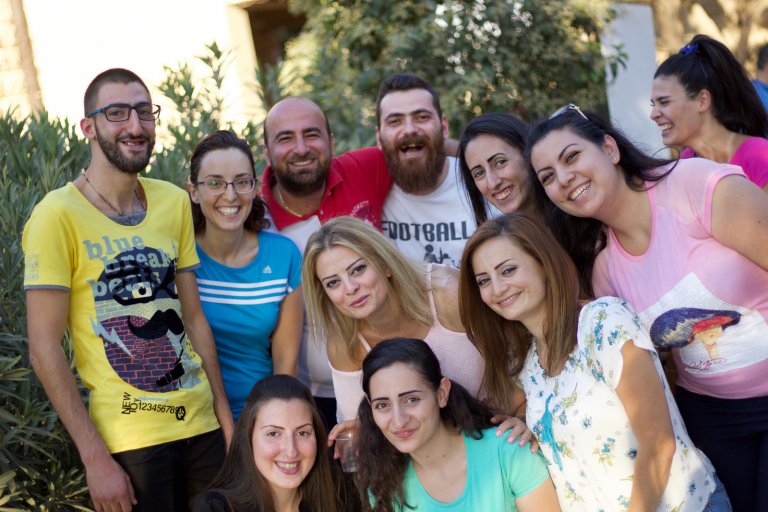
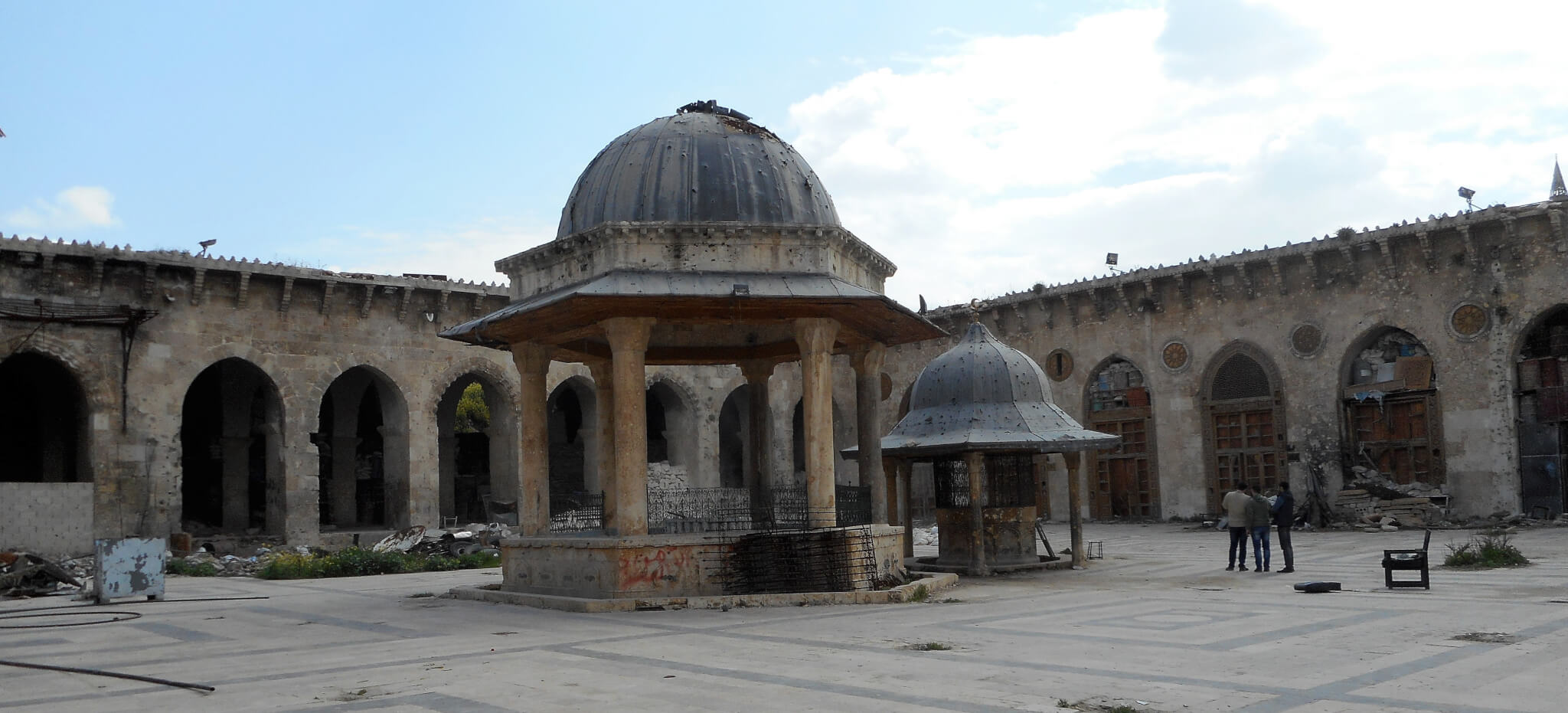 “September flew by. I had taken a taxi with some other people who resided in the town. We we were leaving the city that had welcomed me: Aleppo. I was among the few – perhaps the only – foreigner that had chosen this place for vacation. The taxi crossed the city, an expanse of neighbourhoods completely destroyed. How many dead were buried beneath those ruins? The driver didn’t seem to think about that as he sped along the street that led south in the direction of Homs. From there he would proceed in the direction of Beirut. After two and a half hours we were able to make out the first houses that was left standing. It was difficult to believe. I was welcomed for a month by the Focolare community. When I arrived at the door of a church, someone said to me: ‘Here you will find real Christians,’ words I had never heard spoken before. But now I understand. I saw for myself how the focolare is the place in which everything is shared: the Providence that comes from around the world, with tables full of clothes, and so forth; but mostly the joys and sorrows of daily life… Here, for years, the only support was the Word of the Gospel, the God of love. How the beginnings of the Focolare history returned to my mind, when Chiara Lubich would describe them saying those words that I heard so many times: ‘It was war time and everything crumbled!’
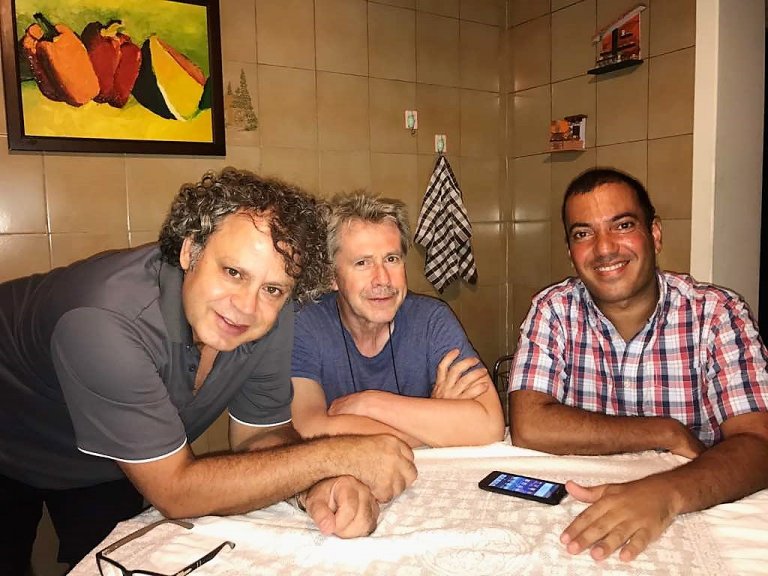
Bernard (centre), with Freddy (left) and Murad (right) in the Focolare centre of Aleppo.
The price paid by the population during the war was high, too high: many, many dead, then the diseases, depression, trauma, isolation, lack of education and instruction, work training and all the abandoned children… the list would be too long. I always posed a question to the local people: ‘What do you think is important in facing the future?’ I thought the answer would be ‘rebuilding our houses and resuming productive activities.’ But instead, to my great surprise, the answer I heard most was ‘a great spiritual strength, capable of making new life to be born even here.’ Thank you Robert, Pascal, Freddy and Murad. Thank you Ghada, Lina Chris, Maria Grazia, Maria and Zeina for your life and witness. Now you have a special place in my heart.” Compiled by Gustavo Clariá
for ages 4-8 | for ages 9-17 | Print | Audio
These words are part of a long dialogue Jesus had with the crowd around him. They had seen the sign that he had performed in the multiplication of the loaves and followed him, perhaps just wanting more material help. Starting from their immediate needs, Jesus gradually brings the conversation around to his mission: he was sent by the Father to give humanity true life, eternal life, which is the life of God himself, who is Love. As Jesus walked along the roads of Palestine, he took an interest in all the people he met, not shying away from their requests for food, water, healing and forgiveness. On the contrary, he met all their needs and gave hope to everyone. That is why he could then ask all who heard him to take a further step, to accept the life he offered, to be in relationship with him, trust him and believe in him. Commenting on this sentence of the Gospel, Chiara Lubich wrote in the magazine Città Nuova in 1991: “Here, Jesus responds to people’s deepest aspirations. They have been created for life and seek life with all their strength. But their great mistake is to look for it in other people and in things that, being limited and passing, cannot give a genuine answer to their aspirations … Only Jesus can satisfy their hunger. Only he can give life without end, for he is the Life.” “Very truly, I tell you, whoever believes has eternal life.” Christian faith is primarily the fruit of a personal encounter with God, with Jesus, who wants nothing more than to have us share in his very own life. Faith in Jesus means following his example of not being wrapped up in ourselves, in our fears and limited plans, but rather to focus our attention on the needs of others. They may have real needs arising from poverty, illness and marginalization, and above all they need to be listened to, accepted and welcomed. In this way, through the life we are living, we will be able to share the love we have received as a gift from God with others. To strengthen us on our journey, he has also left us the great gift of the Eucharist, a sign of a self-giving love that enables others to live. “Very truly, I tell you, whoever believes has eternal life.” Often, during the day, we place our trust in people around us. It may be the teacher who teaches our children, the taxi driver who takes us to our destination, the doctor who treats us … We cannot live without trust, and trust is increased by knowing one another, through friendship, by a relationship deepened over time. How then can we live the Word of Life this month? Continuing her commentary, Chiara invited us to renew our complete choice of Jesus: “We already know how to do this by putting his words into practice with fresh commitment. His words remind us of many specific aspects of life. For example, are we meeting a neighbor? ‘You shall love your neighbor as yourself’ (Mt 22:39). Are we suffering? ‘If any want to become my follower … then they should take up their cross’ (Mt 16:24), and so on. “If we do so, the words of Jesus will be a source of light, and he will come to us with his truth, his strength and his love. Our life will become more and more life with him, doing everything with him. We will no longer be afraid even of the physical death that awaits us all, because with Jesus true life has already begun in us, the life that never ends.” Letizia Magri
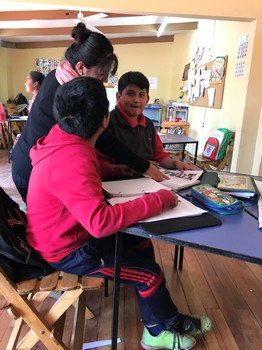
 Green and friendly Ireland is full of excellent schools for students of all ages to learn English. Language Learning International (LLI) is no exception. Various kinds of study vacations are available with cutting edge learning techniques, family programs, culture, sport and entertainment, along with internships in France and Spain for Irish students. What distinguishes the educational approach of this school, which was founded in 1989 by Eugene Murphy in Dublin, is the quality of the relationships with the students in a welcoming atmosphere and a sensitive look towards the personal characteristics of each individual. But there is something else. The LLI, with its over 2 thousand students every year, is a representative of the Economy of Communion (EoC) in the training sector. The following experiences were drawn from the EoC website. “A boy showed up at summer camp with Asperger Syndrome, which we didn’t know anything about until he arrived. The first lodgings were not very appropriate for him, because they weren’t able to meet the particular needs of the youngster. They tried moving him to another family, but the difficulties began again. Even though the summer is a very intense season, in the business we want to be sure to ensure just and serene treatment for anyone comes, so we looked for another alternative until we were able to find an elderly woman who was happy to host the boy, being very familiar herself with the syndrome that her grandson also suffered from. Everything turned out positive for everyone: The student was able to take full advantage of the experience and return home happy in the evening. And the person in charge of relations with the family declared that the presence of the boy in the program had filled the entire season with value!” “Great atmosphere at the English course, in the classroom and excellent relationships established; one of the tests to be prepared, however, was an individual oral presentation. Suddenly a 15-year-old boy approached Eugene Murphy, the school’s founder and expert trainer. He told her that he would be unable to do it because of his stuttering. Eugene talked to other trainers and they decide to reassure the boy by doing the test privately. In the end, the teachers encouraged him to share the experience with others anyway, the young man agreed and, between his own emotion and the general emotion, the test concluded with a long applause from the class. It was then discovered that the boy had not spoken until the age of 7 and that performance in public turned out to be a sort of miracle that made him and his parents incredibly joyful”. LLI Director, Cathy Young, tells about a new project that has involved the school in an adventure of openness with a geographic region that is quite far from Ireland: “We wanted to undertake a Economy of Communion project that focused on education. On the United World Association website, we learned of a fantastic project in Bolivia, called Fondazione Unisol, which offers support to several of the poorest families in Cochabamba. We made contact and have put together a project that will finance the purchase of new books and portable computers, furnish new desks and chairs for classrooms, and support the work of two teachers”. “This reciprocal exchange,” says Cathy, “is one of the most beautiful aspects of our collaboration, and it helps us to live better in our daily work environment.” At LLI the students have a live learning experience of the meaning of many words, but the first is sharing. Chiara Favotti
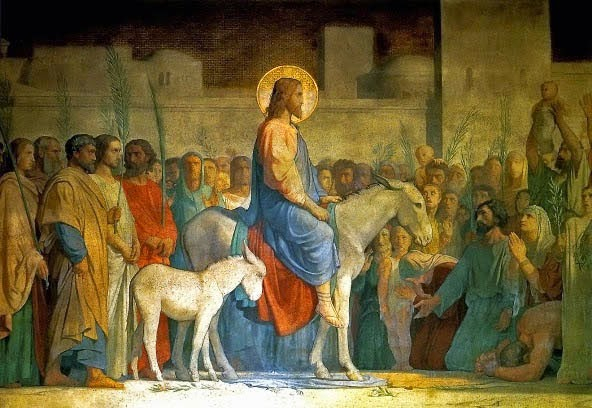
“In you, O Lord, I take refuge, I will never be put to shame” (Ps 71:1). This is how the already seriously ill bishop, Klaus Hemmerle, began his last homily at the Dome Church of Aachen, Germany. It was late 1993. “God, you hold me with your strength just as I am. God, you hold the world just as it is. God, you hold this neighbor with your strength just as he is.” To be held up by this God who descended in the kenosis, who stripped himself of everything and took on the form of a slave – this is the only way that the door of hope can be reopened in us: welcoming Him who first welcomed us, letting ourselves be carried by Him. Believing that we are held up by Him: This is the eye of the needle through which we receive the thread of hope that is slipped through it. This God can truly give us hope. This is where our Church with all its errors and weaknesses, with all its requests and its too large and too small challenges, can be something extraordinary: a community of people that believe in the fact that they have been welcomed and supported, a community of people that support one another, in which each one holds up the other.” From “Klaus Hemmerle, innamorato della Parola di Dio” – Città Nuova Ed, 290-291.
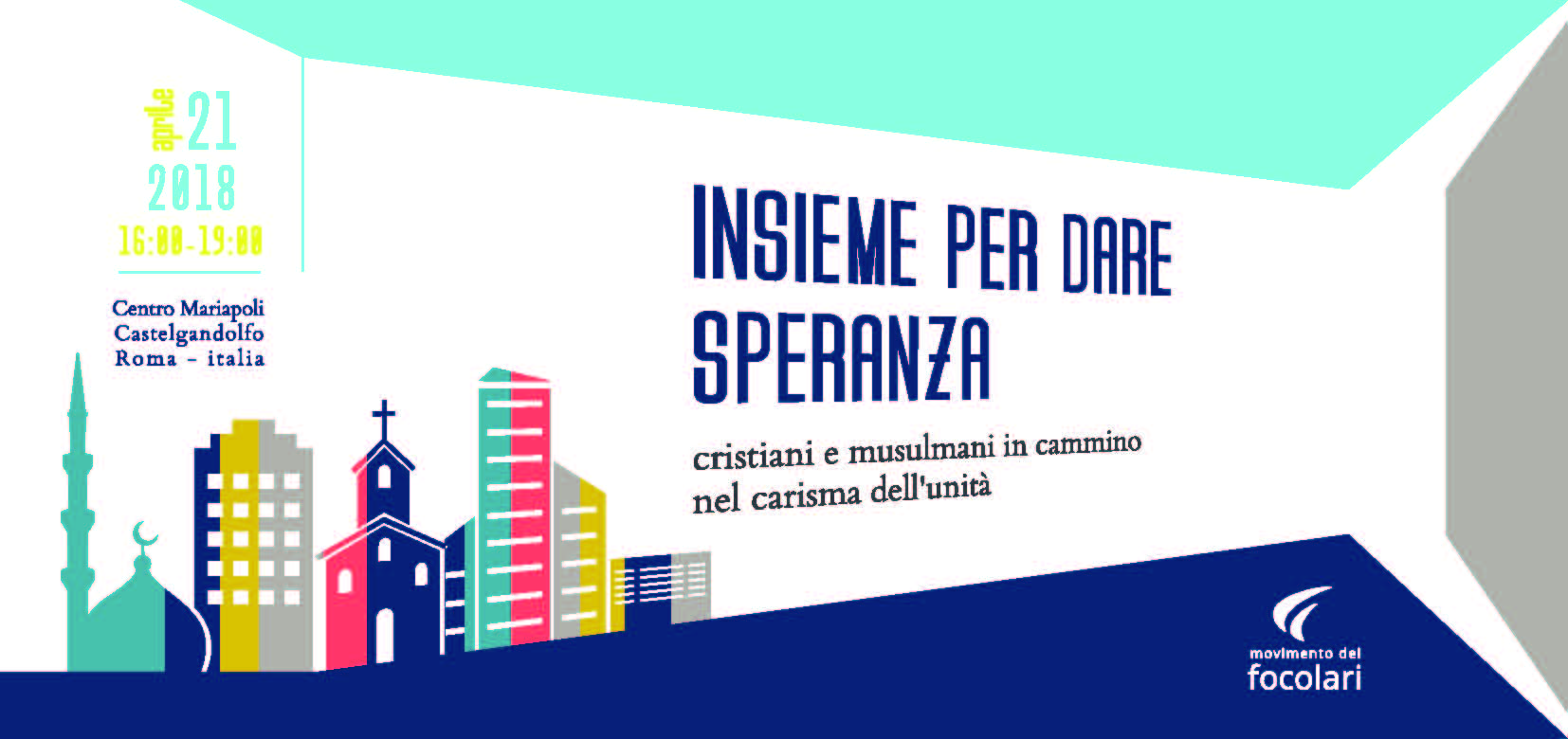 Christians and Muslims on the march, in the charism of unity “What is impossible to thousands of isolated and divided individuals, seems to become possible for people who have made mutual love, mutual understanding and unity the essential motive of their life.” (Chiara Lubich to a group of Muslims, December 7, 2002 in Madrid, Spain) Promoted by the Focolare Movement’s Centre for Interreligious Dialogue, an open gathering will be held on the afternoon of April 21, 2018, from 16:00 until 19:00. The event will take place within the context of some days of sharing between Muslims and Christians which has grown into very solid dialogue and fraternity. Reflections and experiences will be offered from around the world that began and developed within the light of Chiara Lubich’s charism of unity. The common hope is to offer some glimpses of hope inside the complex and often painful situations today’s world is going through. The event will take place at the Mariapolis Centre of Castelgandolfo, Italy. For information: congressoaprile18@focolare.org
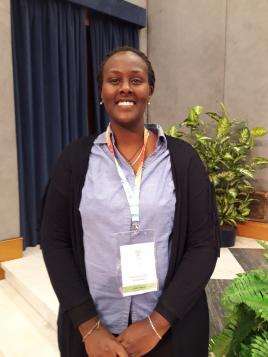
“I saw in the Pope, enthusiasm in listening. He asked us to speak up with courage, with no filters, freely, and this is what we do. The Church is at our disposal, and we are certain that the Synod in October will bear many fruits.” Stella Nishimwe comes from Burundi, is a member of the Focolare Movement, and represents her country in the pre-Synodal assembly. “I was struck by what Pope Francis said yesterday. He’s a special person who lives with the people of God and really knows the reality of the world. Together with the population he wishes to seek solutions, starting from the aspects of life. From the Synod, I expect a new path of the Church with the youth will arise, where the young people will feel the common responsibility in the progress of the Church.” Nishimwe then spoke of the conditions of the young people in her country: “They live in poverty, in the uncertainty of the future, with an elevated unemployment. With this Synod I see a Church that listens, walks with us, shares the difficulties which the youth undergo in different countries, under contexts of war, poverty and unemployment. These situations will be difficult to change, but at least we can try together and in so doing experience what it means to be a Church, a sole family.” Fonte: SIR https://www.agensir.it/quotidiano/2018/3/20/pre-sinodo-giovani-nishimwe-burundi-ho-visto-nel-papa-lentusiasmo-dellascolto/
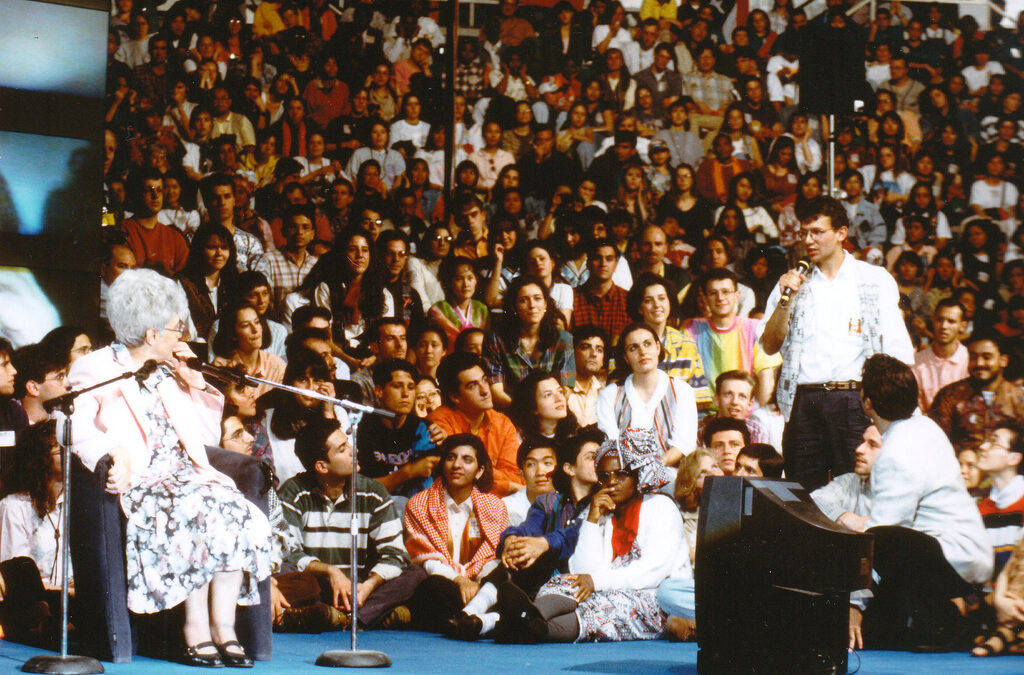
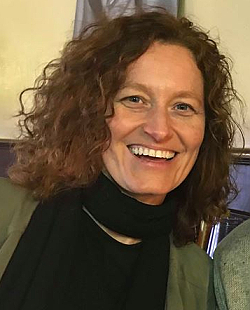
Michelle Sopala
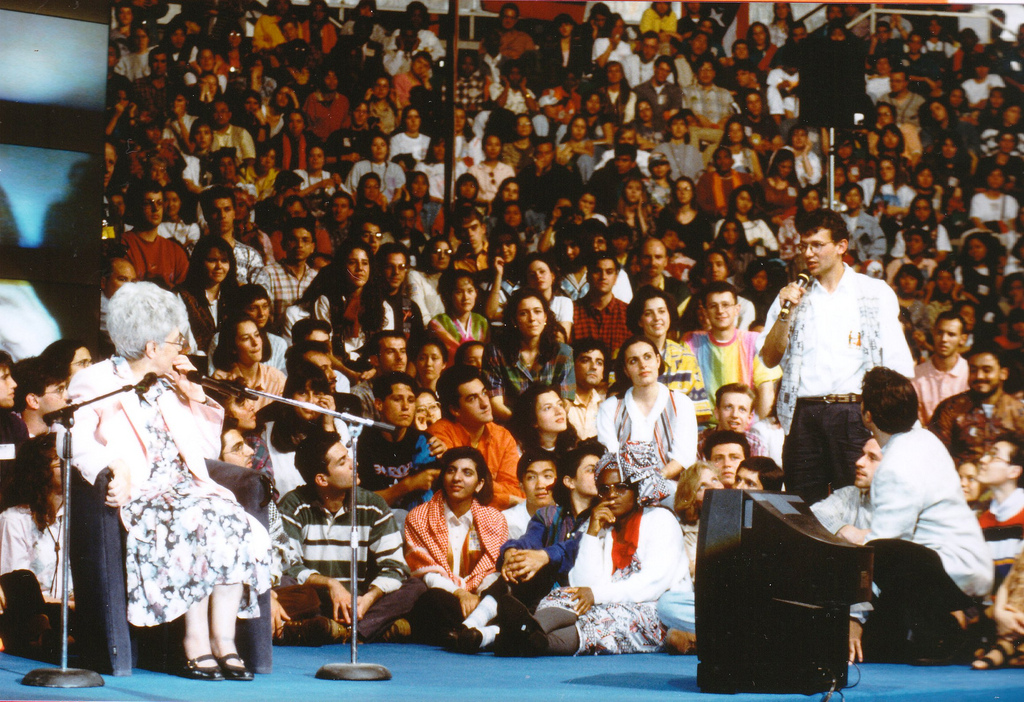 And now for the Genfest, itself! Even though it was a life-changing event in all its aspects, I can’t hide it: for me the highlight was the meeting with Chiara. I don’t know if the other 12 thousand young people in the arena felt the same, but I felt like Chiara was talking to me, and me alone. When Noel asked her the final question, «Chiara, from the bottom of your heart, what would you like to say to us young people?», her answer rang out like a war-call that still rings in my ears. With a super-astute intuition and understanding of what the young heart yearns for, she quoted St. Catherine who had told her disciples not to be satisfied with small things because “God wants them big!”. «You, young people – she said, with a conviction that went straight to the heart – don’t be satisfied with crumbs… with small joys… but aim high and seek the fullness of joy: that joy that comes from living out unity!» Hmm. For better or for worse, that’s been my experience ever since. “Unity”? A deep word that I’m still discovering after these 23 years. But that “fullness of joy”? Yep! I’ve found it! Oh! …and by the way, our performance was chosen. Take a look. Hope you like it! Michelle Sopala
https://youtu.be/LX6rNkyGjoE
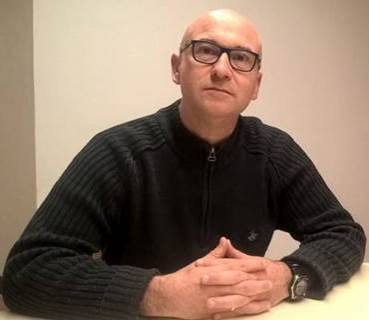
Jonathan Michelon
https://twitter.com/twitter/statuses/976421224095076352
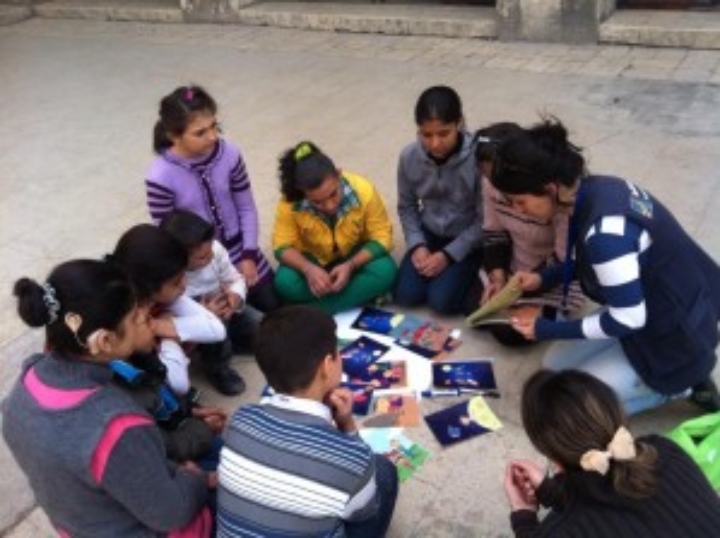
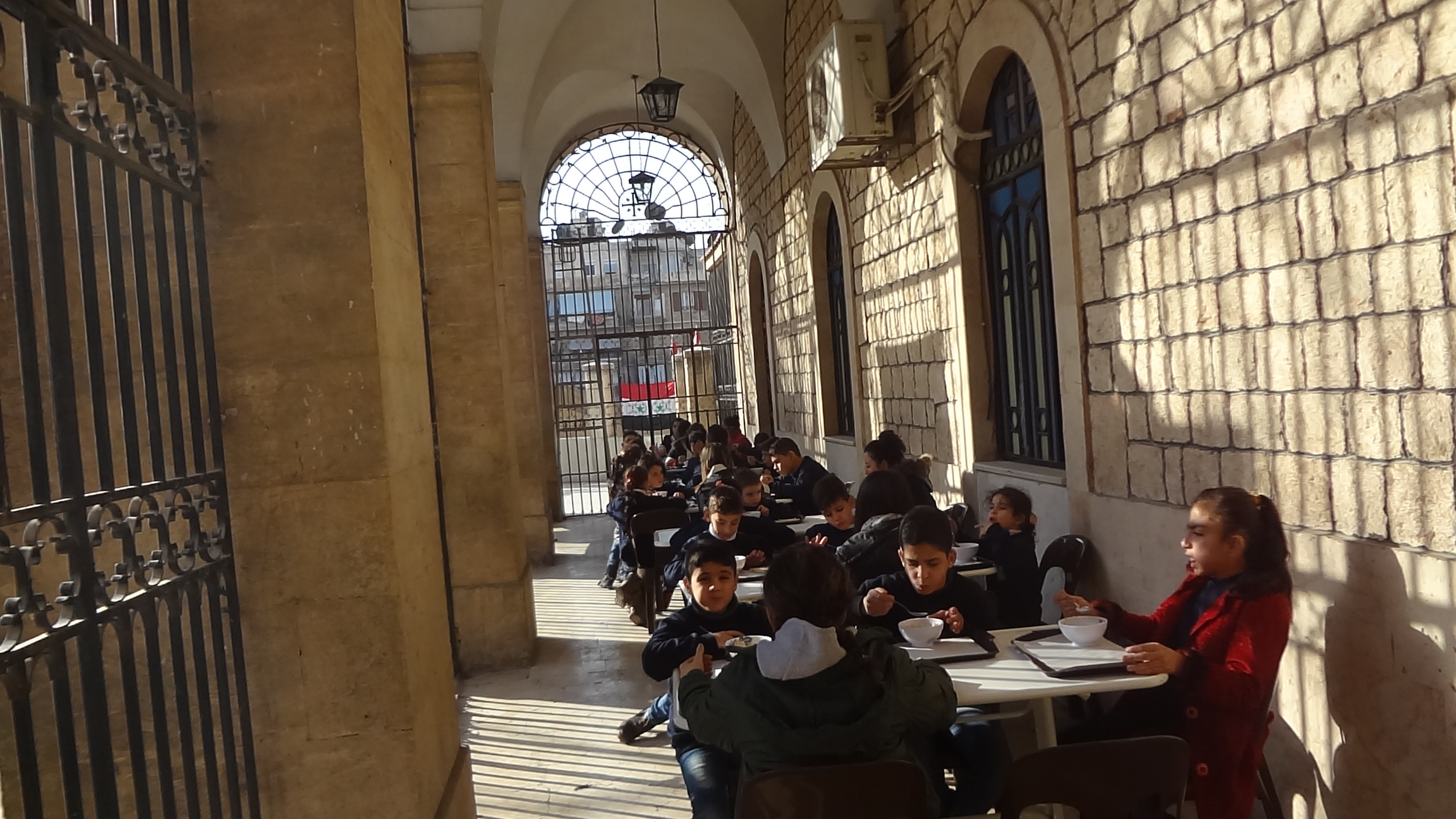 The story of Jean and Vivian is a story of love, hope and courage. They met in Aleppo, Syria, in 2000 while belonging to the Focolare Movement. Vivian is a widow with a one year-old son who is totally deaf. Jean is a carpenter and socially active. Their common commitment to living the Gospel and bringing the ideal of a united world to humanity brought them closer and, in 2003 they got married and have four children. Vivian’s first son, Marc, was the motivation behind their adventure. Because of his need for special care, Vivian went to Lebanon where Marc would later follow and stay at a centre run by the Focolare: “It’s really a foretaste of Heaven,” he says. “Living the Gospel in daily life accompanies the whole educational process. The children grow up in this oasis of peace and develop their talents while overcoming their handicap. The dream began to grow in me of setting up an institute myself, in my own city of Aleppo.” Jean supported him in his venture and, in 2005, their small centre was begun. Other larger ones would follow with larger capacity for up to ten children, all from poor families who couldn’t afford the cost. The centre was always in deficit: “Whenever we needed something,” Jean recalls, “we’d go in front of the crucifix and hand over our needs to Him. Providence arrived right on time every time.” The breakout of the war in 2011 brought much death and destruction. Jean lost his carpentry, the centre wasn’t having any financial input and many were living on help from the Church and humanitarian organizations. Many left the country and, even though Jean and Vivian were tormented at the thought, they bought tickets to go. But one thing became clearer and clearer in their hearts: they couldn’t leave “their” deaf children and destroy that dream that had come true with so much effort. “On the night before our departure, I stepped into church,” Jeans says, “I had a deep conversation with Jesus, face to face, man to man. He seemed to speak in my heart and asked me not to go: what would the children now? I felt him posing this tragic question to me. I put my children in His hands. I went home and Vivian and I decided to rip up the tickets and stay in the city forever to be a help to the people who needed us.” “We were hopeful that God would accompany and support us in all our future projects and especially in our family,” echoed Vivian, “and that’s what happened.” Now the centre is their second home, their children also take part in the life of the group and Jean works full time “This community has widened our hearts. There is no longer boy or girl, student or teacher, healthy or handicapped, Muslim or Christian. We live in the one love and beneath the same gaze of a God-Love, incarnate, living in our midst.”
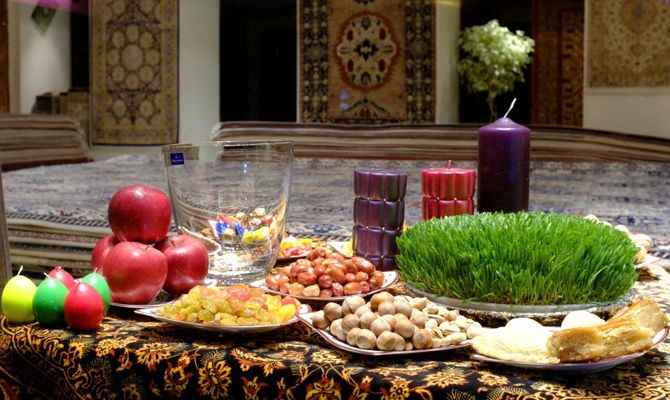
The celebration of the Persian New Year coincides with the vernal equinox which marks the beginning of spring, on 21 March, day in which many countries of Asia and Eastern Europe celebrate the feast of Nawroz (literally “new day”) proclaimed the international day of the United Nations which in 2009 was officially registered as an Intangible Cultural Heritage of humanity. Nawroz is an ancient, happy and joyous feast, estimated to be celebrated by 300 million people. Connected to the idea of the rebirth of nature, it is pervaded by a rich symbolism and promotes values of peace, reconciliation, solidarity between generations, friendship among families, peoples and communities.
Could it be that there are still prejudices based on the colour of the skin despite the great achievements of the last century? Many steps have been taken, but work needs to be done to completely eliminate all forms of inequality. On 21 March, the International Day for the Elimination of Racial Discrimination, established in 1966 by the United Nations, reminds us of the massacre in Sharpeville, South Africa, which occurred on 21 March 1960. On that day, perhaps the bloodiest in apartheid history, the police opened fire on a crowd of black citizens protesting against a measure of racial segregation which was imposed on them. About 70 of them remained lifeless on the ground. In these days, campaigns in support of integration and against all forms of discrimination, hatred and violence perpetrated for racial reasons are organized in various parts of the world. The protagonists of these initiatives, as always, are the young people.
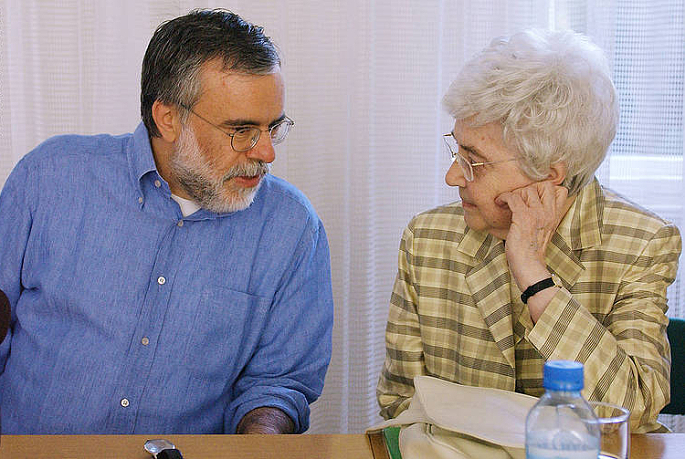
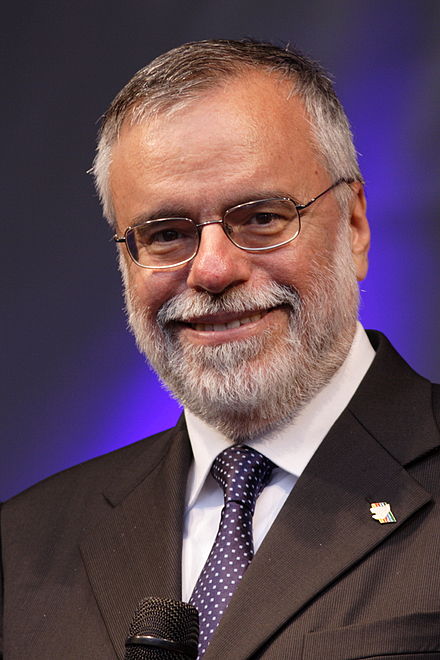 We meet Andrea Riccardi, founder of the Community of Sant’Egidio, at Castel Gandolfo, not far from the Mariapolis Center there. It feels like a holiday, since hundreds of people (in the end they will count close to 2,000) are flowing toward an event on the occasion of the 10th anniversary of Chiara Lubich’s passing. Outside the door of the small hall where we meet, there are many festive voices. “Ten years later, as we return to Chiara Lubich, it is not a return to the past, like archeology,” says Riccardi. “It’s not even a sentimental memory, as people can have for someone who was important in the Church. “But,” he confides, “It is certainly something important in my life.” He mentions the pivotal years in Europe, when democracy was returning after a century-long interruption, when the walls and iron curtains were being dismantled. “I think that Chiara’s message is even more relevant today than it was during the Cold War or in 1989. Today, in this global world, her message speaks of the common destiny of all of us, of the unity of peoples and the human family. Yet it is not a sociologist’s typical message, but a profound one, given that Chiara was a woman who was able to summarize as well as go into depth, to analyze and communicate simply. “Today we need a message of unity, because this global world is not united spiritually. Patriarch Athenagoras, a great friend of Chiara, said, ‘The world is unifying, but there is no spiritual unity.’ “And Chiara tells us that this world can be united, rich with poor, those nearby with those far away, those native to a place with those who have just arrived. Chiara also tells us,” Riccardi adds, “that we, mere men and women, the young and the elderly, that you too, can change the world. “Chiara was a friend to great people and appreciated by great people. I think of her friendship with John Paul II, who called her his ‘peer, his equal in age.’ But Chiara also showed that the world can change through the least of us who has faith. Like Mary with the Magnificat. “She helped me to understand the value of a charism, because Chiara recognized in me, in the Community of Sant’Egidio, a charism. She had a deep sense of people and experiences of Church.” Riccardi concludes: “For me Chiara is also a very dear memory of a profound friendship. She was a friend, a friend in the small things, in the attention she gave when she invited you to her table, in the phone calls, in taking care of you. “She was also someone who saw accurately in important moments for the Church. I think of, for example, of when John Paul II met with ecclesial movements. Chiara said, ‘This was a flash of inspiration from the Pope, a point of arrival that must also become a new point of departure.’ “Today my affection is accompanied with prayerful thoughts with Chiara, for Chiara.”
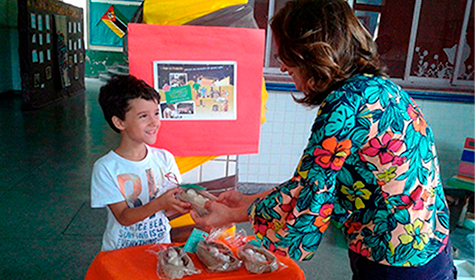
A letter of thanks was sent to the gen4 worldwide, with the publication of the balance statement of the initiative “They’ve dislodged Jesus,” undertaken each year by the children of the Focolare Movement during the Christmas season. Last Christmas, thanks to the offers gathered by the sales of the chalk statues of “babes” portraying Baby Jesus, the gen4 with the support of the adults and in some cases also of local institutions, collected 3,627.60 euro that were allocated to eight projects in Brazil, Mexico, Colombia, Venezuela, Peru, Argentina, Burundi, Uganda and Syria. In addition to this, a donation was allocated to medical care, foodstuffs and schooling material for four projects in the Central African Republic, Cameroon, Egypt and Iraq. What comes to the fore, beyond the figures, is the “culture of giving” from which the gen4 draw inspiration.
Foto: Pixabay
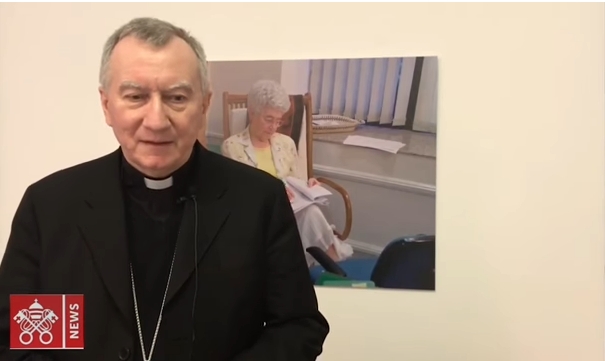
A great spiritual force capable of drawing crowds of different ages, social backgrounds, cultures: this is what animated Chiara Lubich and the fruits are still seen today, even in the Church. Cardinal Pietro Parolin, recalling the obedience and docility shown by the Focolare towards the Church – even in the most difficult moments – remarked how the Pontiffs, from Paul VI onwards, always gave their support and encouragement to the Movement. “A constant commitment to communion within the Church, in ecumenical dialogue and in striving to build the human family”, Benedict XVI spoke in the telegram sent on the occasion of Chiara’s funeral, whose “existence”, he continued, “was spent listening to the needs of contemporary society in full fidelity to the Church and to the Pope “. The specific contribution that Chiara has offered to the Church, according to the Vatican Secretary of State, Cardinal Parolin, is having deepened and brought to the fore the “Marian profile of the Church, as well as the apostolic one” and the strong and innovative call to unity: “May all be one for the world to believe”, built and made possible by the “secret” of mutual love found in the “Golden rule” that Jesus himself taught us in “not doing to others what you would not want done to you“.
Christians are not allowed to despair; they’re not allowed to accept defeat. Their homes can fall apart, their wealth can be lost, but they get up and continue to fight against all adversaries. Lazy spirits, nestled in their comfortable ways, become frightened at the idea of a struggle. But Christianity will be around for as long as faith in the Resurrection resists. The Resurrection of Christ, which inserts us in Him and makes us sharers in His life, obliges us to never despair. It gives us the secret for getting up again after every knock down. Lent is also an examination of conscience, through which we can consider what is buzzing around in the depth of our soul and of our society in which Christianity has become business as usual for many of us, without any pulse or impetus, like a sail without wind. Lent prepares us for the Resurrection of Christ, which is the reason for the rebirth of our faith, hope and charity: the victory of deeds over negative tendencies. Easter teaches us to overcome our mournful passions in order to be reborn, each one of us, in a unity of affections with our neighbor and with every population, in a harmony of good works in order to establish ourselves in the kingdom of God. This is translated into a social constitution that has authority, laws and sanctions, actions in favour of the good of the people. It reaches to Heaven, but passes through the world. And it is modelled on the Divine Order. It’s law is the Gospel that contains unity, solidarity, equality, paternity,service, justice, rationality, truth, the battle against the abuse of power, against enmity, error, stupidity… Seeking the kingdom therefore means seeking the happiest conditions for the free expression of the life of individuals and of society as a whole. The reason is obvious: Wherever God reigns, the human person is like a son of God, a creature of infinite value who treats others and is treated by them as a brother [or sister]. And he treats them as he would like to be treated. The goods of the earth are shared in a brotherly way. Love and forgiveness flow. Barriers don’t matter, because they don’t have any meaning within the universality of love. Putting the kingdom of God first, therefore, means raising the goal of human life. Those who seek first the kingdom of Man, seek a goal that is subjected to rivalry and dispute; whereas, the Divine objective draws people higher than their fights, and unites them in love. Then, within that unification, in that higher vision of the things of the earth, matters such as eating, clothing and enjoying take on the right proportions. They’re coloured with new meaning, are simplified in love, and you have the full life. Also in this sense Christ has conquered the world for us. Igino Giordani. Le feste, S.E.I. (Società Editrice Internazionale), Turin, 1954, pp. 110-125.

Foto: Pixabay
If you are between 16 and 29 years of age, you can contribute to the next pre-synod Meeting to be held in Rome from 19 – 24 March. How? Through the site www.synod2018.va. From the site you will be able to sign up on the Facebook group under one of the 6 languages. Within these groups the members will have the chance to express their own ideas on the themes proposed by questions – that will “launch” the discussion of the youths present in Rome – each of which will be matched with a hashtag. In the end, a final document will be drafted with these ideas, containing the view points and proposals that emerged, and will be presented to the Synod Fathers who will gather in Assembly in October 2018 on the theme “The youth, faith and vocational insights.”
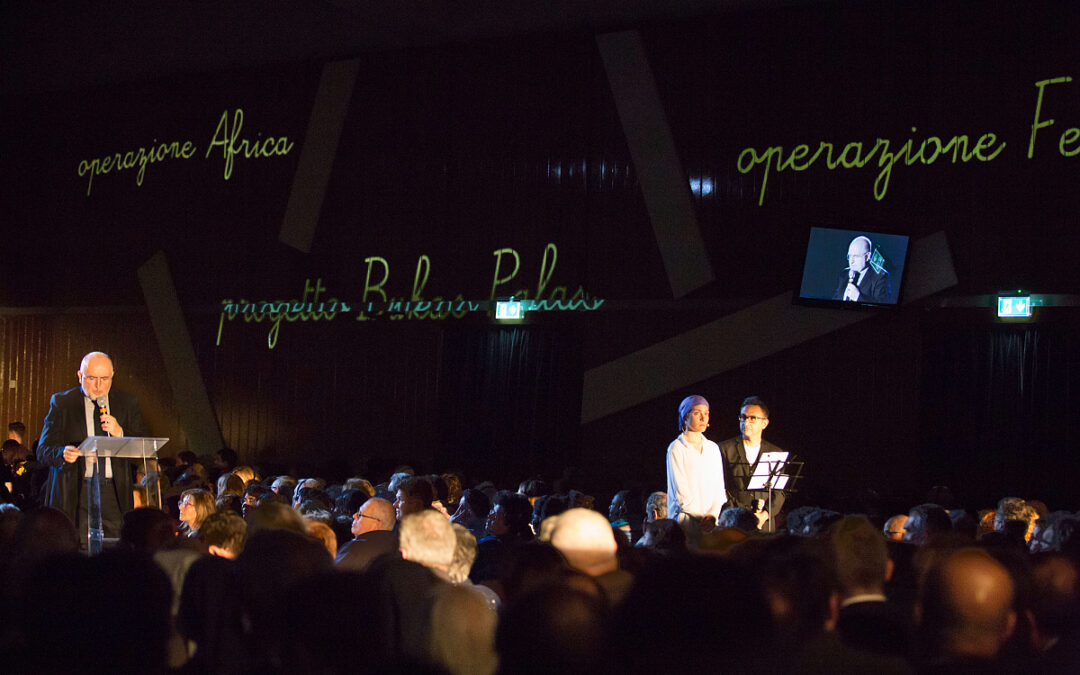
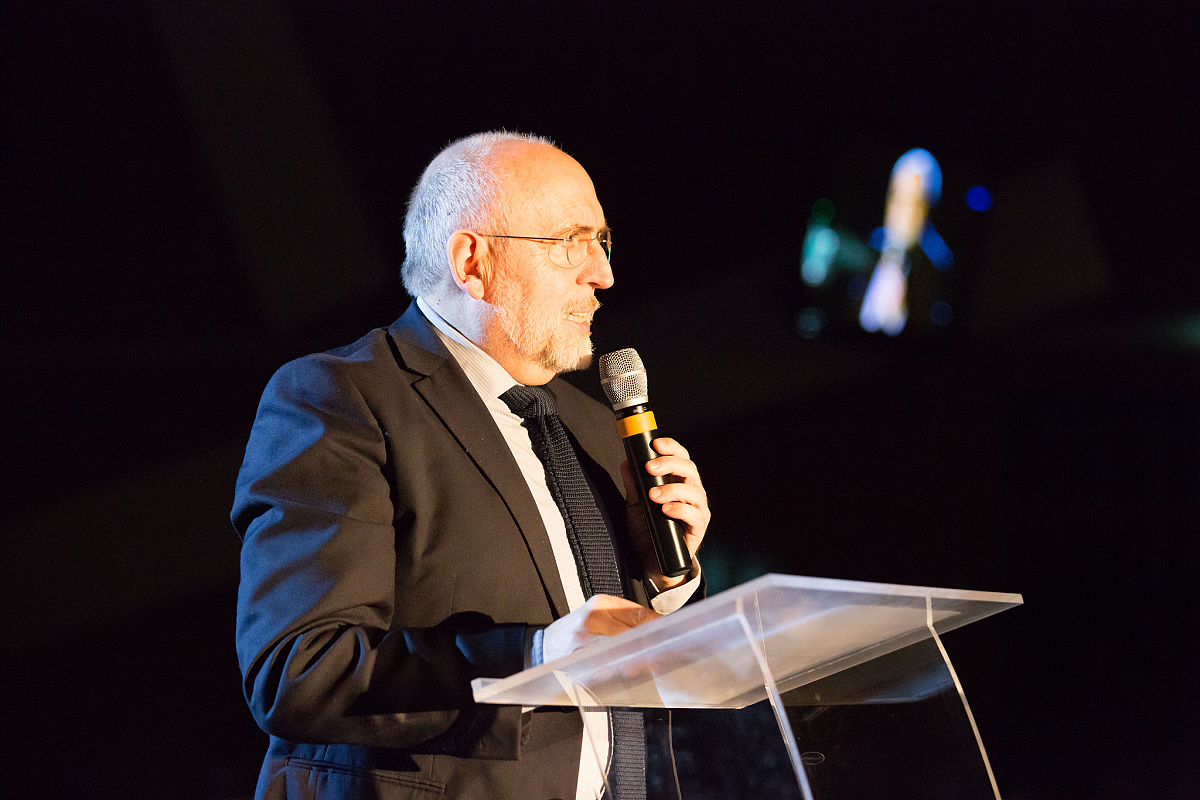 “… On your day, my God, I will come toward you… I will come toward you, my God (…) with my wildest dream: to bring you the world in my arms.” 1. The address given by Jesús Morán, co-president of the Focolare Movement, starts with this citation of the theologian Jacques Leclercq on the occasion of the event ‘The Great Attraction of Our Times’. We are once more astonished by the prophetic vision for society of this extraordinary woman whose ideal of “May they all be one” (Jn 17:21), started out from her own city of Trent and reached the whole world. Morán starts with a story of the protagonist of a fable, who lives with other personages thought of but then discarded by the authors of the stories, destined to live on another planet. He reflects on the role of the prophets: they are as big as they are small or they make themselves so in the eyes of human beings. Discarded by them, mocked, often killed, they are chosen by God to do that which nobody else can do. The prophets are in fact, the little people of God: this is where their greatness lies, even if sometimes they seem to be living “on another planet”. As we know, the word ‘prophet’ comes from the Greek and indicates not so much those who foresee the future but the mouthpiece, the messenger of God. In the Bible we also find prophetesses2. The prophets of Israel spoke to the people in the name of God; and everything could become an object of their words, because the word of God knows no limits. [….] In the midst of the historical context of her time – which evoke, in fact, not only the story of the prophets, but also biblical wisdom and the wisdom of ultimate goals – there manifests in her, a specific charism, that of unity, which led her to aim clearly and decisively towards universal brotherhood.”
 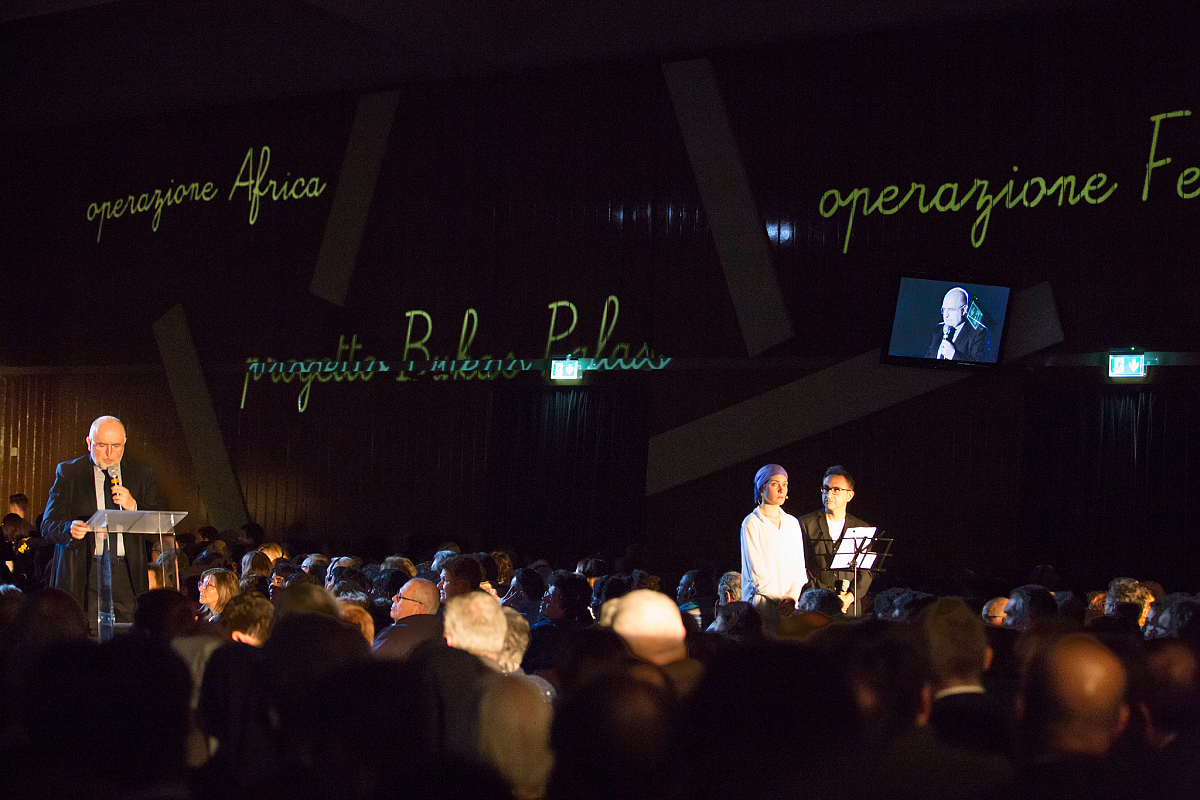 Morán underlines that in some of her notes of December 1946, “one can see the key pillars in Chiara Lubich’s prophetic vision for society. She, in fact, was not a social reformer, just as Jesus wasn’t. Chiara’s dream, in effect, aims much higher and more profoundly, and that is to the anthropological and theological foundation underlying every kind of social reform: universal family and unity as envisaged by the man-God, Jesus.” “This is why we could say,” Morán explains, “that the first social project that Chiara founded was in fact the first community of the Focolare that began in Trent immediately after the war. This community took the Acts of the Apostles literally (Acts 2, 42-48); they practised a radical communion of goods and did all they could to care for the poor and the thousands of suffering people the war had left in its wake. This underlying experience has never been lost. Indeed it is the inspiration behind all the activities and social projects that have been undertaken over the years by Chiara herself and all those who, in following her, have made their own the Ideal of unity. In all of this Chiara’s human and ecclesial genius is clear.” Even we, continues Morán, “have a story in front of us. Chiara is that author who has taken us out of anonymity to make us protagonists of a dream; we are all protagonists, nobody excluded.” Citing Guislain Lafont, the great Domenican theologian who, in a summary of the philosophy of Pope Francis, he speaks about the “principle of littleness” (salvation comes from below rather from above). Jesús Morán concludes: “Chiara knew how to magisterially apply this principle of littleness in the work of a real social change which she set in motion, with and from the paradigm of unity. This is her greatness.” 1 J. Leclercq, cited in W. MÜHS, Dio nostro Padre, 365 pensieri sulla paternità di Dio, Rome 1998, p. 64, published in: C. LUBICH, Il grido, Città Nuova, Rome, pp. 129-130. 2 Cf. 2 Re 22, 14; Lc 2, 36.
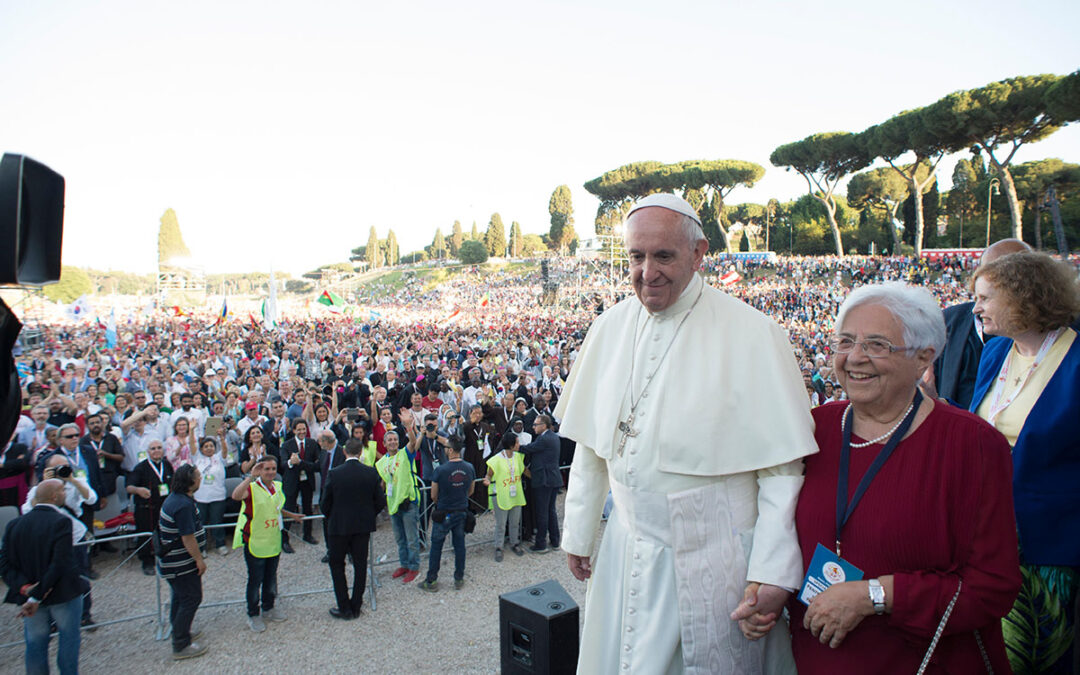
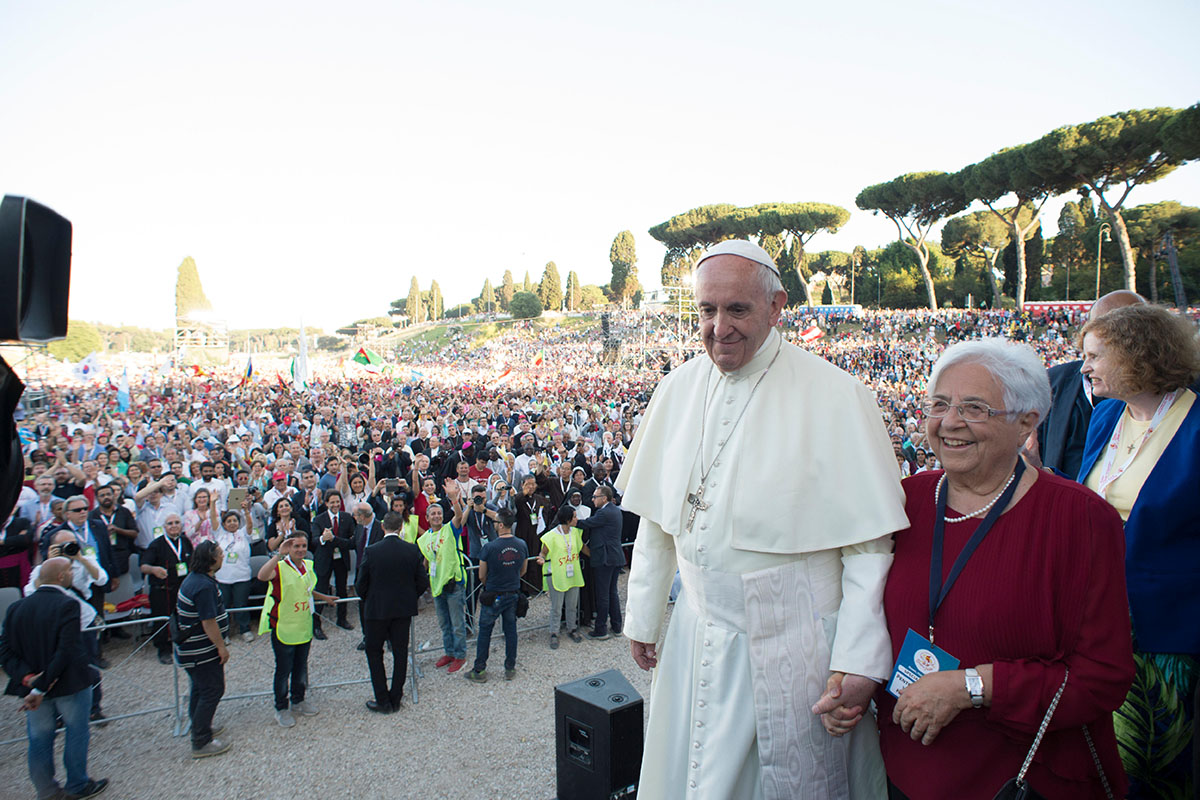 “Five years of enlightening and fruitful pontificate.” Maria Voce’s greeting to Pope Francis, in the name of the Movement’s communities worldwide, was full of joy and gratitude. She assured him of the Movement’s renewed commitment to “bring the proclamation of the Gospel to men and women in the most varied situations” and “ that we shall always be faithfully by your side, cooperating with all our strength in proclaiming God who loves the world so much. We assure You of all our love and prayers.” Maria Voce commented: “We feel privileged to be able to live in this time when the Spirit, through the Pope, is calling the Church to a twofold path: a return to a life rooted in the Gospel and a new focus on the signs of the times, which invite all Christians to reach out to all men and women. The Pope himself is a remarkable example of this.

Our new Facebook profile in Portuguese is online: Facebook em Português | @ focolare.org.pt As with other languages, the Facebook profile in Portuguese will also propose, every day, the “Thought for the Day”, the Word of life, articles published on the site, but also other information, news and events – especially those in Portugal and Brazil – with the possibility of interacting with many people who believe in a more fraternal world. Invite your friends to visit and follow our page. Spread the ideas and values that can contribute to the construction of a more united world!
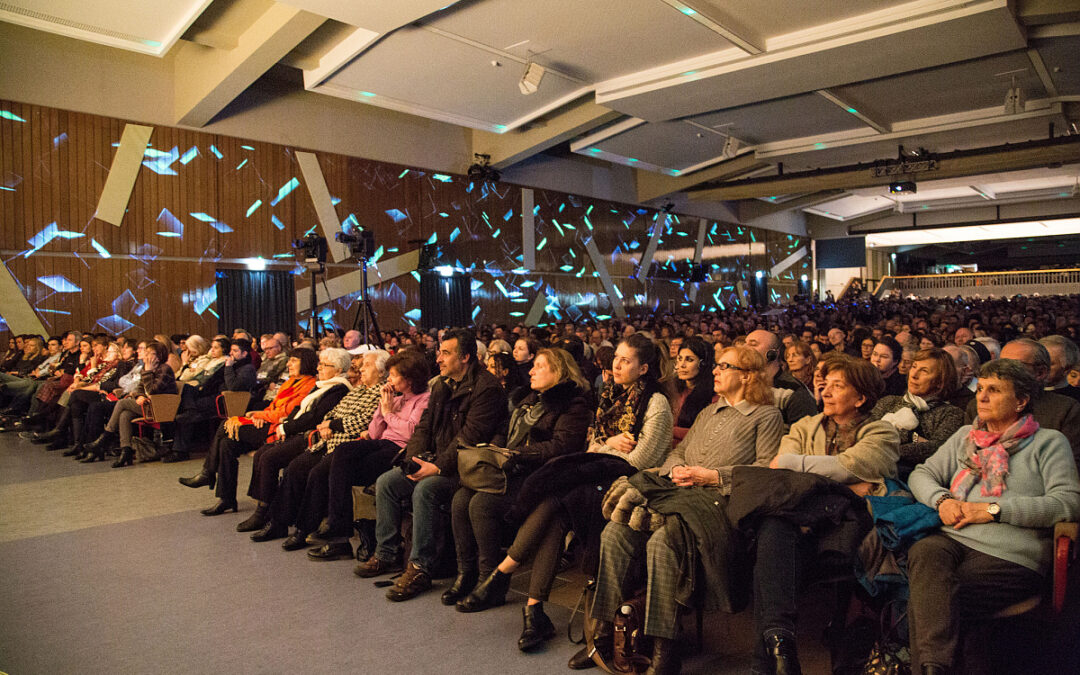
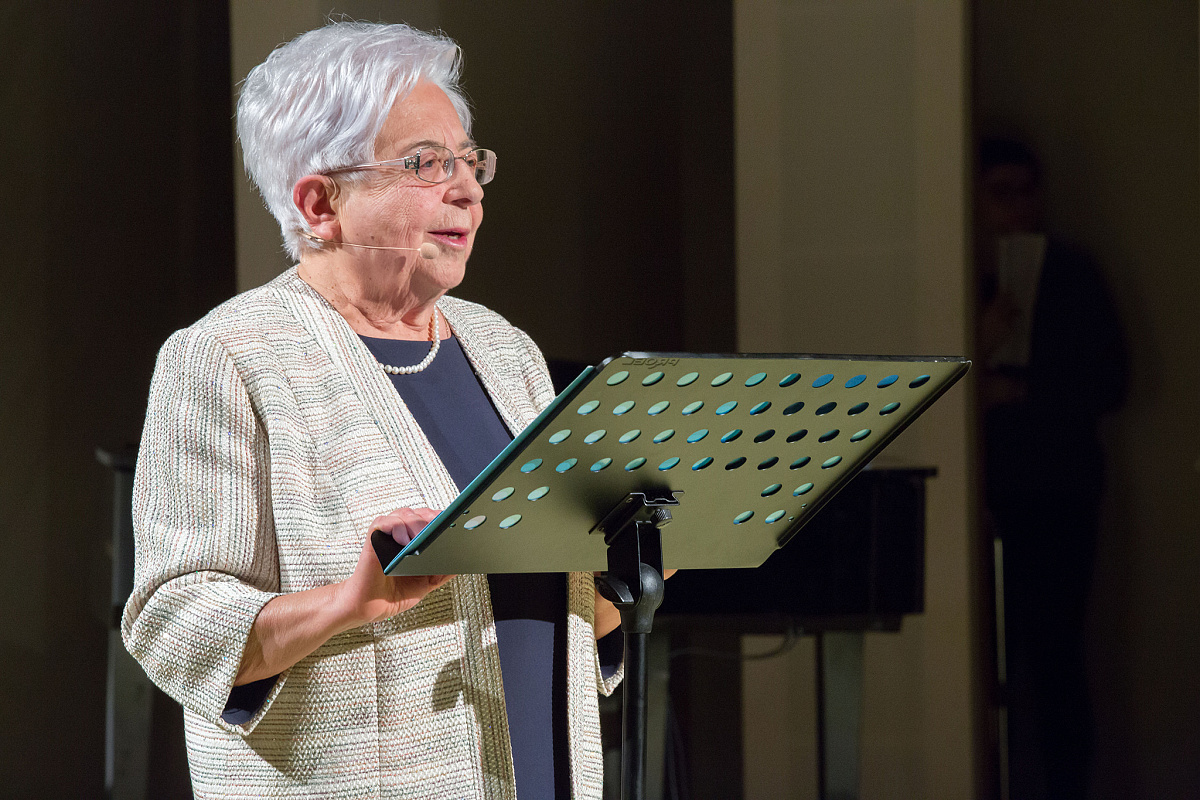
Photo © CSC Audiovisivi
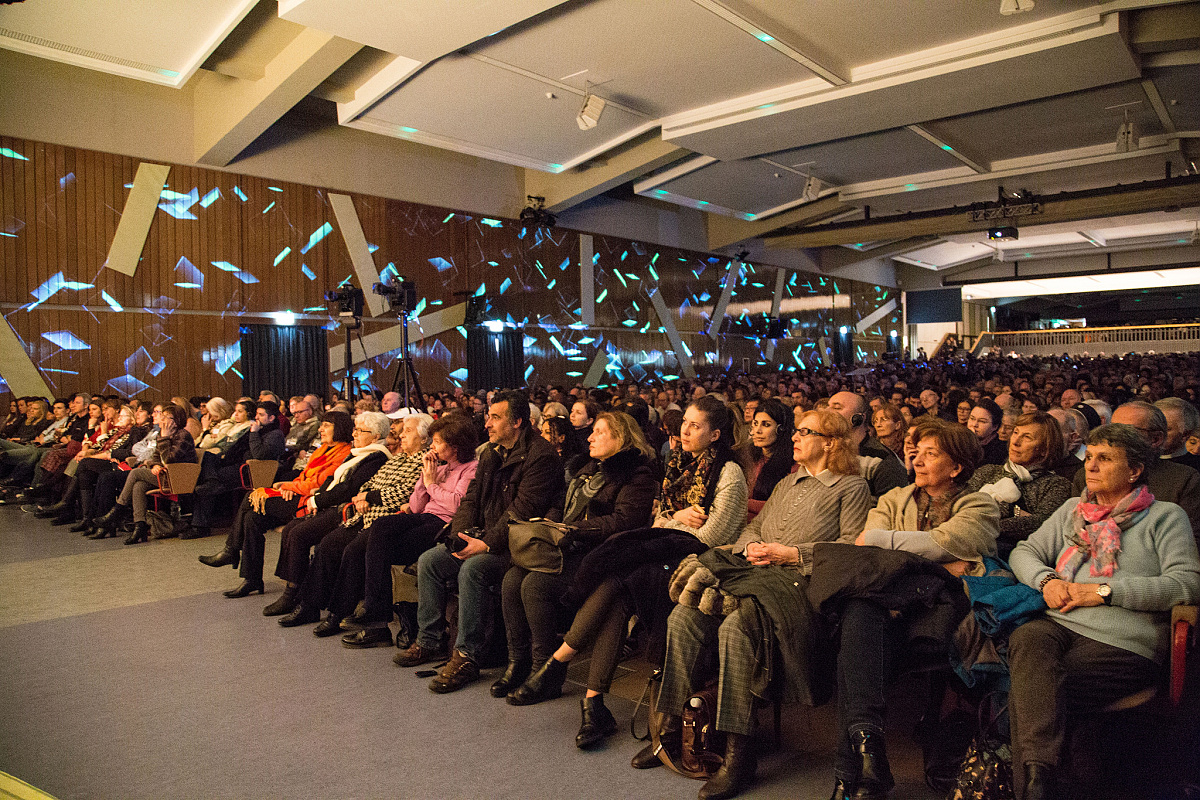
Photo © CSC Audiovisivi
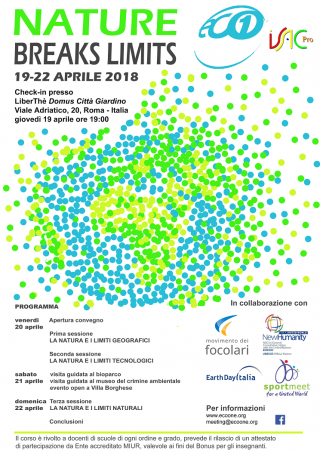
The international convention “Nature breaks limits” will take place at the “I Gigli della Montagna” Conference Hall (Via Monte Senario, 81 – Rome, Italy). We shall reflect on how the confines – geographic, natural, technological – can become launching pads for the sustainable future of the human race and the environment. Per information: http://www.ecoone.org/it/convegni/convegno-2018.html
At the closing of the Winter Olympics last 9 March in Pyeong Chang, a grand inaugural ceremony of the 12th edition of the Winter Paralympic Games was held, and which will last up to 18th. March. In accordance with the International Committee, the Paralympic Games are held every four years, in the same city as that of the Winter Olympics, with the participation of physically disabled athletes. As Pope Frances underlined, if “sports can cast bridges between countries in conflicts and give a valid contribution to prospects of peace among peoples,” the Paralympic Games “even more attest to the fact that through sports, one’s own handicaps can be overcome,” thanks to the “example of courage, constancy, determination in not allowing oneself to be won over by limitations” given by the athletes. “Sports appears to be a big school of inclusion, but also of inspiration for life and commitment to the transformation of society.” The first Winter Paralympics were held in Sweden in 1976. Like the summer Games, they owe their existence to the tenacity with which some doctors, especially the English Ludwig Guttmann, were able, with their methods, to help the veterans of WWII to find in sports competitions an opportunity to rehabilitate themselves and find their own role in society.
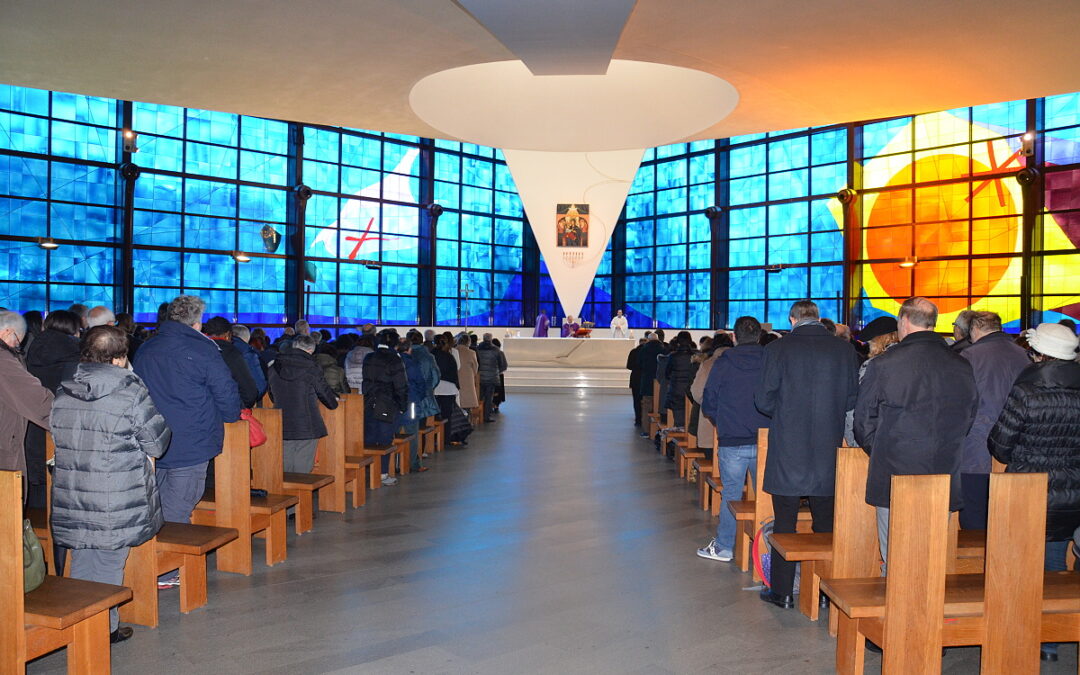
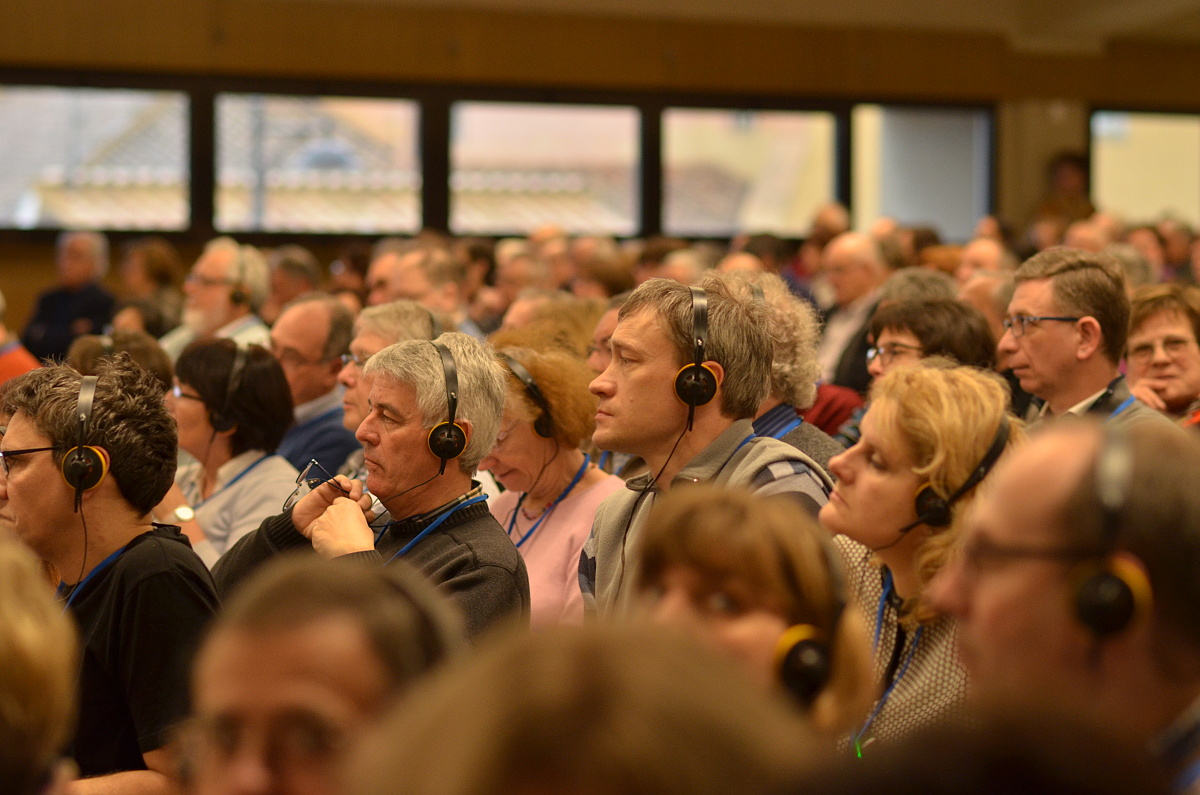 I was there too, with my husband, at the congress for volunteer couples, 600 persons, 14 languages. It was a representation of society, with participants from 5 continents. But let’s start from the beginning. The day before I had a look at the program. I knew that being the 3rd March, there would be at the same time an event dedicated to the tenth anniversary of the death of Chiara Lubich at the congress. And on the other days? The life of the family and the couple, made up of many facets, was to be at the centre of various in-depth moments, with the guide of experts. We have been married for nearly twenty years and we have two children aged 18 and 16 years. Having overcome the tunnel of sleepless nights, of nappies and child centres, having finished the phase of elementary and secondary schools, of geography charts to colour in, and of repeating the story of ancient history, we are sailing through the adolescence of our children and through ours as parents, in search of a serene present and of a future that one uncovers day by day. A web of affections, difficulties and obstacles, amazement in the face of innovation, suffering for the sad events, at times humiliation and the pulling up of our sleeves to start again, but also joys, social passion, a taste for the beautiful, openness towards new things and those unforeseen, racing through difficulties amidst the thousand duties of each one of us. A normal family, at any rate. I read the program and felt a little disappointed. The insistence on the theme regarding the “couple” suffocated me. What about the world? The reality of our times? Art, culture, social relations? Will we be concentrating on looking ‘inside’, to analyze ourselves once again, after so many years? I am a volunteer, used to looking “outside” rather than “inside”, to dream big, to be in close contact with reality and share people’s trials, trying to offer a helping hand, as Chiara Lubich has taught us, to build a more united world. I found the first day of the meeting hard to digest. After all my husband wasn’t there because of work. And in the evening, I confess, I willingly left for the inauguration of an exhibition at the Vittoriano, in the centre of Rome, as a way of refreshing my mind. A little disillusioned I faced the second day, this time as a couple. I tried to reset my thoughts and get more involved, with all my being. I discovered that my husband was making the same effort. This altered attitude helped us to take in the talks that followed with new eyes. It was like for the first time we were receiving insights to inwardly renew our ‘yes’, pronounced many years ago together with our family, the stone on which even we compose society, in this historic moment. I cannot be a good Mum and a professional and give my little contribution if it does not come from the relationship with my first and only companion in life, from the renewed unity among us. How can a house stay upright if its foundations are not deep, solid, strong, healthy?
 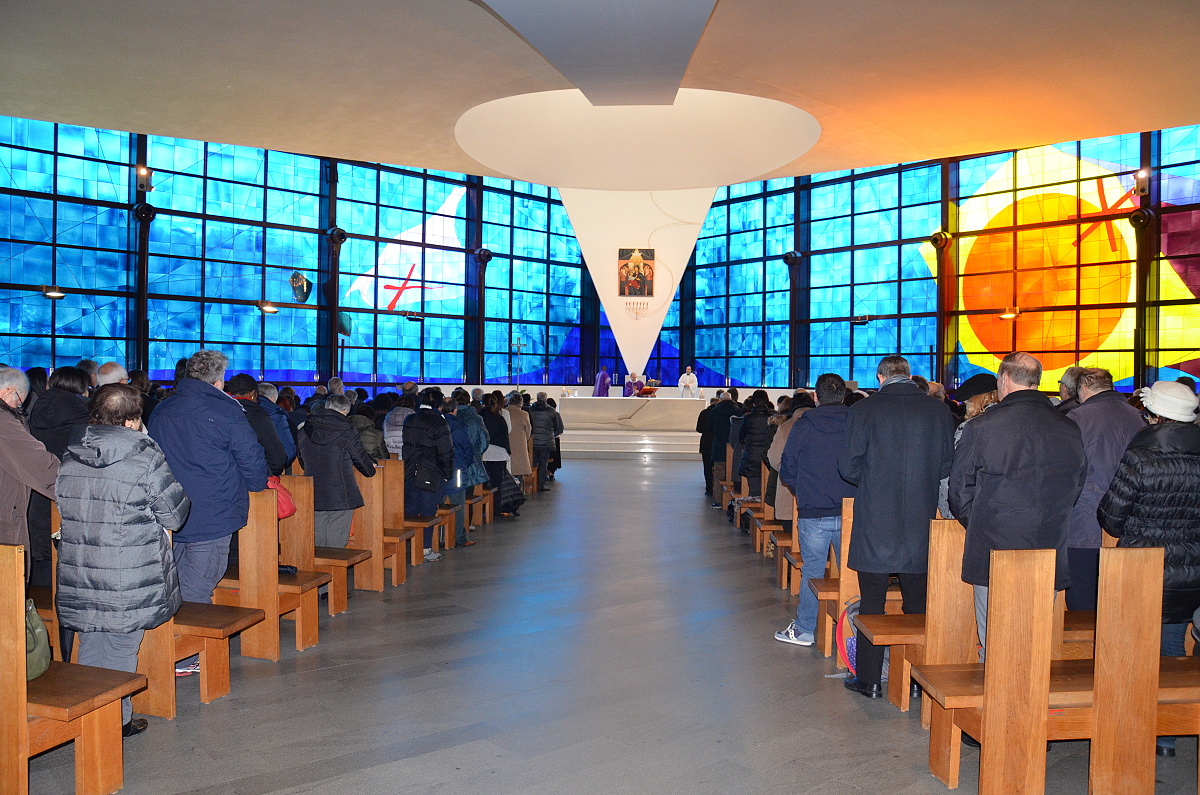 On the third day, together we solemnly renewed our ‘yes’ forever, before the sacred image of Our Lady at the Shrine of Divine Love. It was not a formal act but one that was substantial and free, in the presence of 598 witnesses. In the afternoon, whilst the hall was slowly filling up where the event of the tenth anniversary was to take place, I sat by chance next to two of the participants. They were a couple attending the congress like us. I had not yet seen them. There were a few presentations. I came to know that they had lost a son two years ago. Out comes a photo of him: a splendid boy, with light-coloured eyes, a brown beard. He was only 25 years, in the prime of life. The mother’s eyes welled up with tears. I perceived in that mother the semblance of the Mother, figured in Michelangelo’s Pietà. That’s what a family is: a bulwark, a rock, a heroic foundation of society, without which everything can collapse. It was necessary to stop and focus on the couple. It was indeed necessary. Chiara Favotti
Lord, give me all who are lonely … I have felt in my heart the passion that fills your heart for all the forsakenness in which the whole world is drifting. I love every being that is sick and alone. Even the suffering of plants causes me pain … even the animals that are alone. Who consoles their weeping? Who mourns their slow death? Who presses to their own heart, the heart in despair? My God, let me be in this world the tangible sacrament of your Love, of your being Love; let me be your arms that press to themselves and consume in love all the loneliness of the world. Chiara Lubich – Essential Writings” New City Press, New York, 2007 p. 81
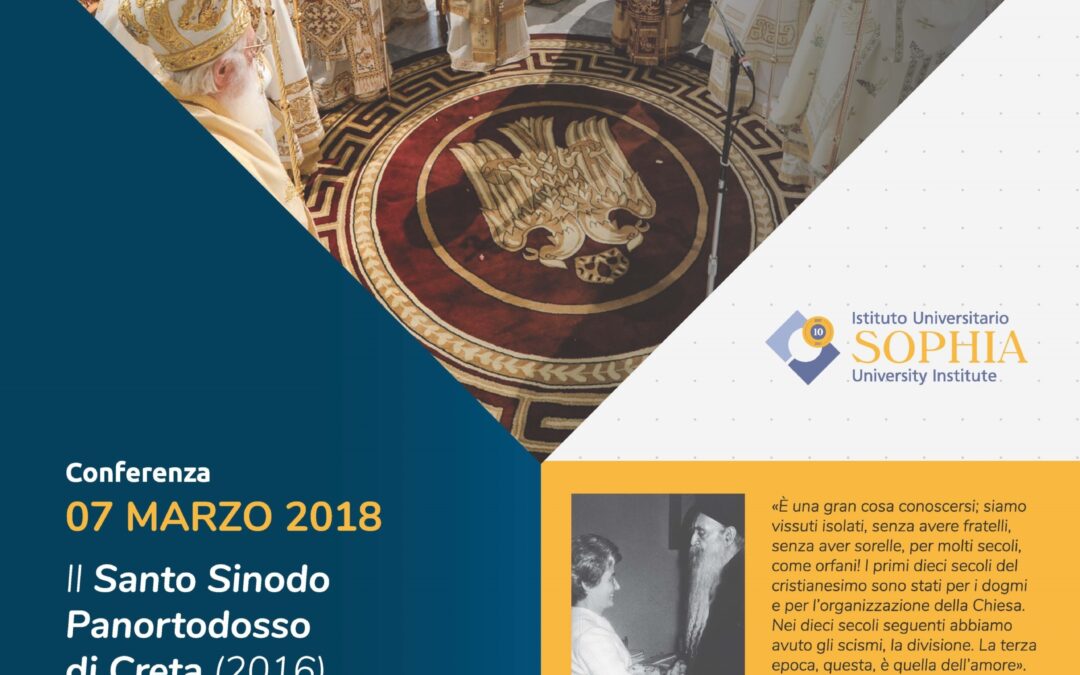
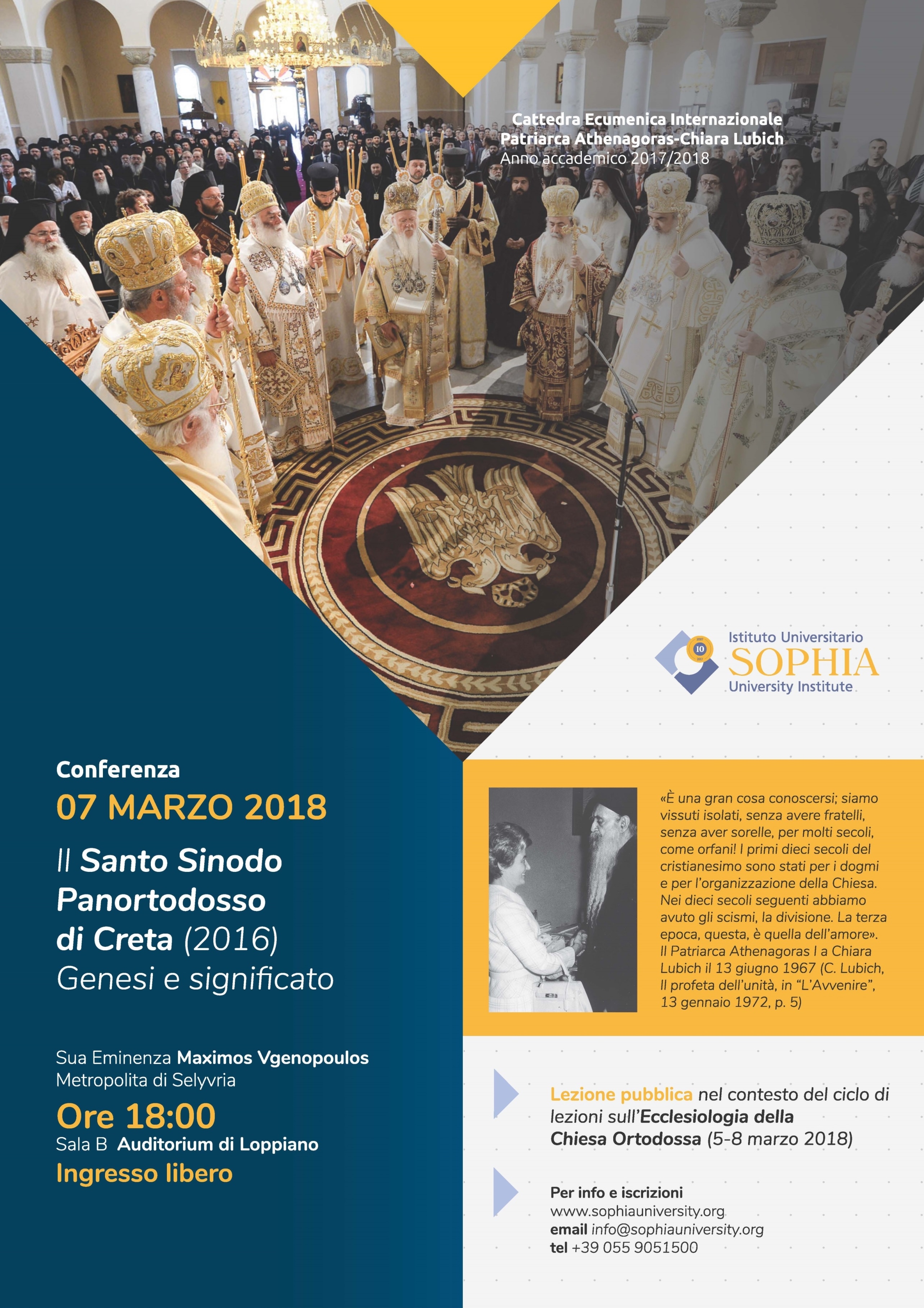 The Patriarch Athenagoras – Chiara Lubich Chair of Ecumenical Studies at the Sophia University Institute has launched its first course. The official inauguration of this international Chair of Ecumenical Studies took place last December14, at the Sophia University Institute of Loppiano, when both Pope Francis and the Ecumenical Patriarch Bartholomew I sent messages of best wishes and encouragement. The first set of lectures, on “The Ecclesiology of the Orthodox Church”, will be held from the 5 to 27 March. His Eminence Maximos Vgenopoulos, Metropolitan of Selyvria and Prof. Piero Coda are the co-directors of the course. This Chair, unique in the international and cultural academic scene, came into being 50 years after the first meeting between Patriarch Athenagoras I and Chiara Lubich. It wants to manifest and focus its attention on the legacy that emerged from that meeting, when the Patriarch confided to Chiara: “It is great getting to know each other; for many centuries we have lived in isolation, without brothers and sisters; we have lived like orphans! The first ten centuries of Christianity were centred on dogmas and the Church’s organization. In the ten centuries that followed we had schisms and division. The third epoch, the present one, is that of love ”. In his opening speech on March 5, Piero Coda, the Dean of Sophia, referred to the specific methodology of the Institute, which is based on the commitment to live mutual love as defined by Jesus’ new commandment. And he affirmed: “We want to prepare ourselves with competence and awe to be servants and witnesses of an ecumenism that gushes from the Trinitarian love, source, pattern and goal of unity in the richness and beauty of diversity. This is the only way that empowers us to receive reciprocally the gifts drawn from the priceless treasures of our Churches’ Traditions and offered to each other. This is the only way we can bridge with love the distances that still separate us. T his is the only way we can enrich ourselves reciprocally; the only way that, with the help of God’s grace, we can achieve full and visible unity”. When one considers the political, social and religious instability in Middle East countries and in the Mediterranean region, this Chair assumes cultural and social importance on an international level, even through the opportunities of study and research it offers to the young generation. Its specific aim is to study the cultural meaning, to review the historical stages and analyse in depth the existential and social implications of the ecumenical journey towards full unity among Churches, while exchanging spiritual, theological and cultural wealth of Christians, both in the East and West. Besides, it wants to offer academically qualified courses to those interested in contributing, through thought, dialogue and life experience, towards promoting unity between the Orthodox Church and the Catholic Church. And thus offer a service towards the encounter between peoples and cultures.
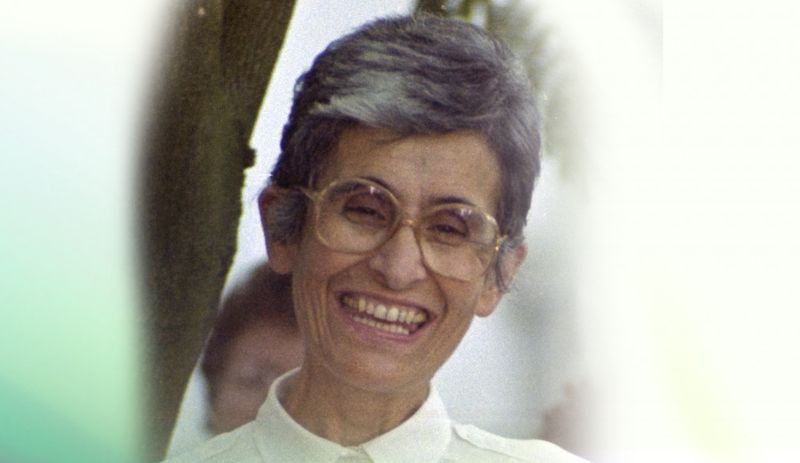
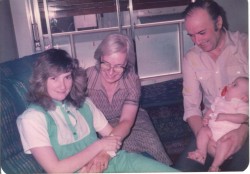 María Cecilia Perrín was a sunny-natured Argentinean girl born in Punta Alta (Buenos Aires) in 1957. After being engaged for two years, she and Luis married in 1983 and she lived intensely with the desire to set solid Christian roots to the emerging family. Two years later, while she was pregnant she was diagnosed with cancer. With the support of her husband and the family, she chose not to heed the suggestion to undergo a “therapeutic abortion.” She died at the age of 28 after the birth of the baby girl. As she expressly requested, her remains were interred in the Mariapolis Lia (O’Higgins, Buenos Aires), a place of joy and hope. Her reputation of sanctity, heroism in accepting her illness, the example of Christian life, and the many graces that have been granted through her intercession started off the cause of her beatification on 30 November 2005.
 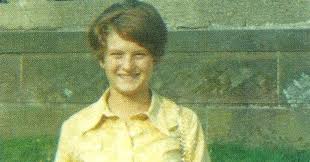 Maria Orsola Bussone, born in 1954 in Vallo Torinese, northern Italy, was a generous, open and sportive child. At the age of 11 she participated with her family in a meeting of the parish Movement in Rocca di Papa. She wrote to Chiara Lubich: “I want to love always, be the first to love, without expecting a return. I want to let God use me as He desires and do all I can, since that is the only thing in life that matters.” On 10 July 1970, at 15, while participating as an activities coordinator in a summer camp, she died of an electric shock while drying her hair with a hairdryer. Her fame of sanctity spread and many people went to her tomb to pray for her intercession. Her diary and letters revealed her deep spirituality. The construction of the parish Centre to which she contributed was named after her. On 17 December 2000 the diocesan phase of the cause of beatification ended. On 18 March 2015 Pope Francis authorised the promulgation of the decree which declared her a Venerable.
 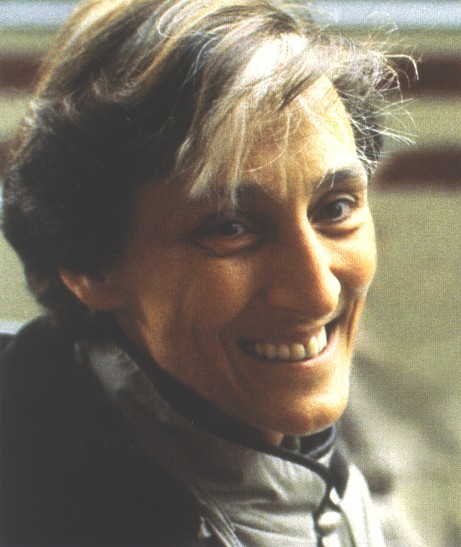 Margarita Bavosi, born in 1941, is the third child of a wealthy family of Buenos Aires (Argentina). She lived a happy life until she was ten, when her mother suddenly passed away. The acute pain pushed her to ask the Virgin Mary to take her place. The meeting with the charism of unity was the answer to her desire for sanctity. She donated her life to God in the focolare, and was known to all as “Luminosa.” She spent some years in Brazil, Argentina and Uruguay, and became the co-director of the Focolare Movement in Spain. At 40 she felt an unexplainable physical decline, and only after three years received a precise prognosis. Soon she was unable to move about but continued to build relationships, taking to heart the motto of St. Aloysius Gonzaga “I shall keep on playing my game.” The night of 6 March 1985, amid the amazement of those present, she said “Here I am Jesus, I have always tried to do everything in your presence.” On 22 November 2008 the diocesan phase of the canonisation phase closed. The center of the Focolare of Madrid and the international town close to New York were named after her. Renata Borlone was born on 30 May 1930 in Aurelia (Civitavecchia, close to Rome). She was raised in a non-practicing but united family, and when she was 10, witnessed the explosion of World War II. Thirsting for truth, she sought it in studies. She enrolled in the Faculty of Chemistry, since she was a science enthusiast. At 19 she came in contact with the evangelical life of some of the first focolare women who had just moved to Rome, and through them, she felt the certainty that God is love! At 20 she entered the focolare and for 40 years served the Work of Mary, with roles of responsibility in Italy and abroad. In 1967 she arrived at the Training School Loppiano where she spent 23 years constantly focused on reaching sanctity. At 59 she was found to have a serious illness and the few months that remained were an acceleration in her thrust toward God. Despite her suffering she transmitted joy and a sense of sacredness and up to the last moment repeated, “I want to testify that death is life.” On 27 February 2011 the diocesan phase of the beatification process closed. Chiara Favotti Also see: Alfredo Zirondoli, “Luminosa continued to play. Profile of Margarita Bavosi,” Città Nuova, Rome. Giulio Marchesi, Alfredo Zirondoli, “A silence that became life. The life of Renata Borlone”, Città Nuova, Rome.
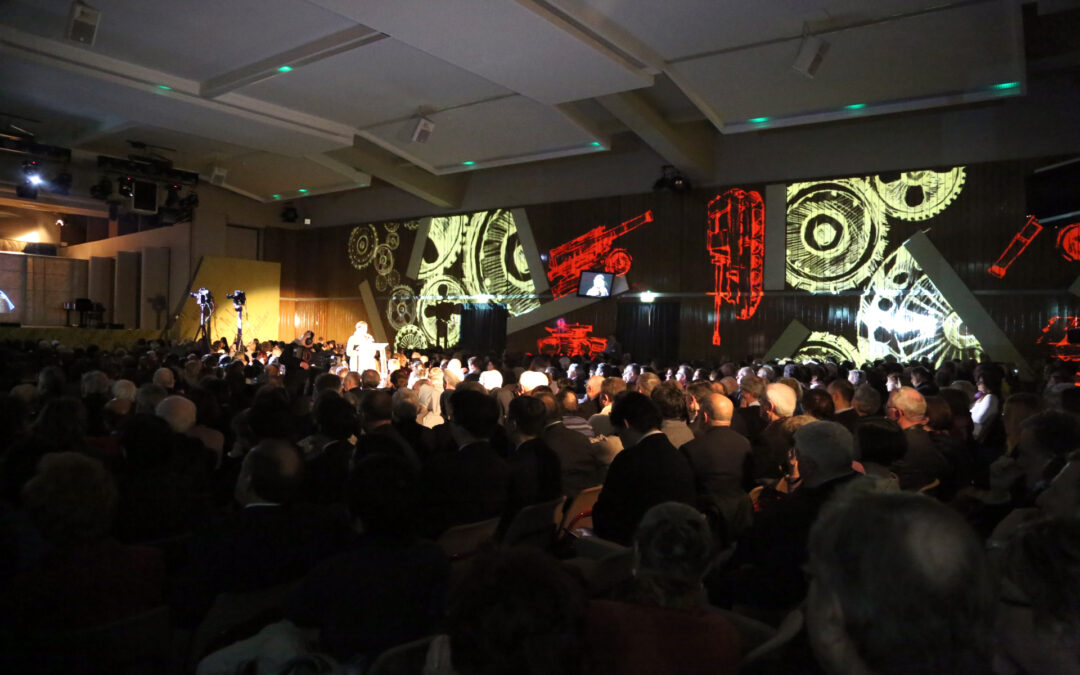
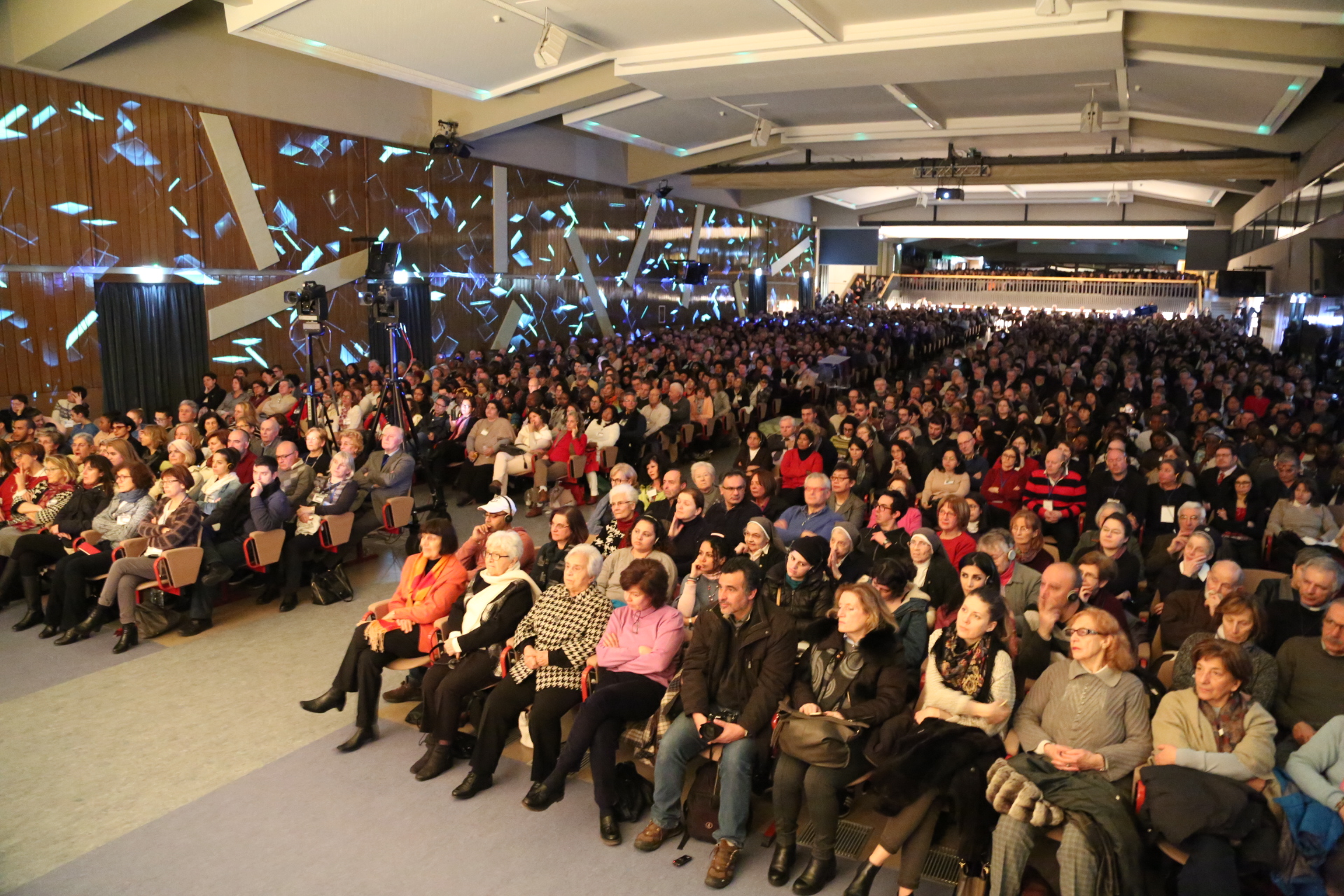
Photo © CSC Audiovisivi
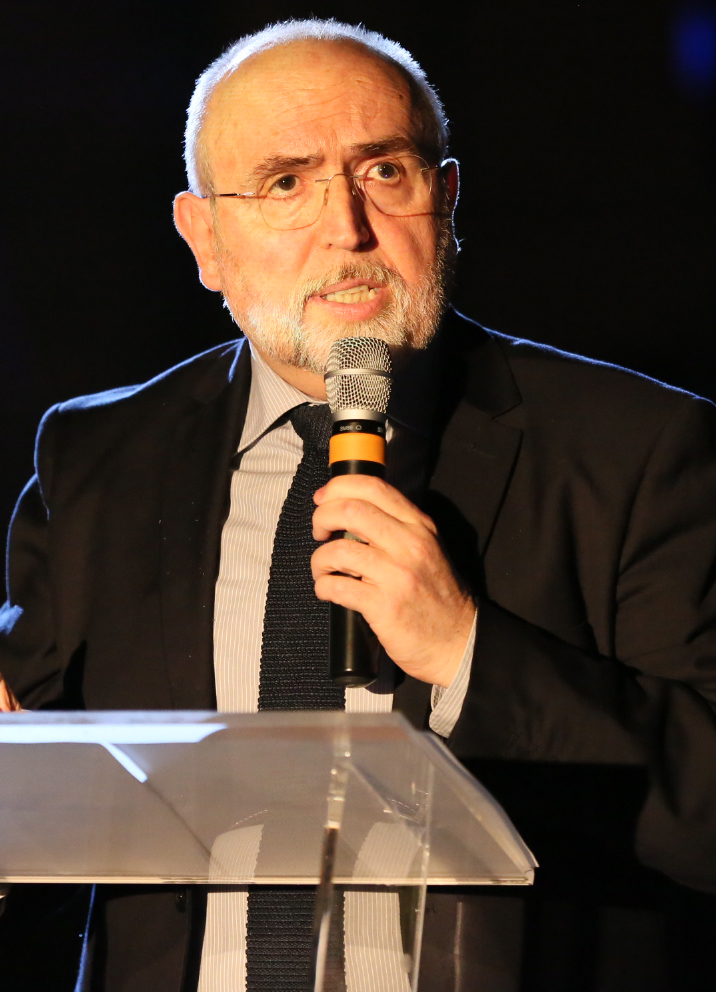
Jesús Morán. Photo © CSC Audiovisivi
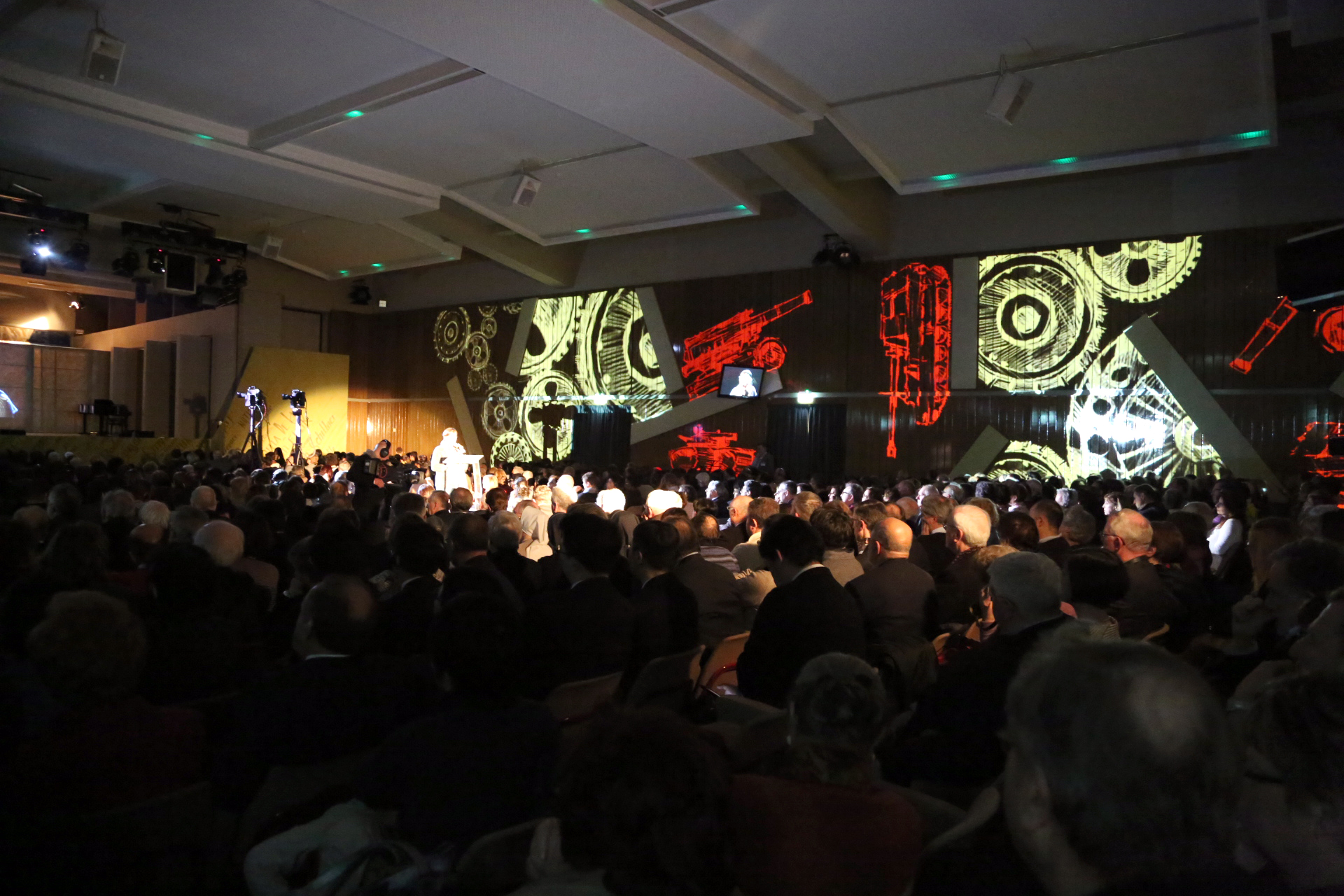
Photo © CSC Audiovisivi
The Department of Political, Social and Communication Sciences of the University of Salerno and the Social-One research network, under the auspices of the Sociological Theories and Social Transformations Section of the Italian Association of Sociology (AIS) and in partnership with 11 universities and research institutes in Italy and worldwide, promote the conference “Sociological Imagination and Social Promotion: the category of “agapic action” to interpret the changes and to imagine new futures”. The aim of the conference is to investigate all the perspectives of analysis and action which have been raised by the members of the agapic action in the context of human and social disciplines with the hypothesis that the concept may offer new interpretations and perspectives of interventions for the promotion of a pluralistic society based on equality, inclusiveness and particularly dialogue. The conference focuses on four areas, which will be analyzed both from the scientific and academic point of view within the panels, and from the point of view of action-intervention, through the collection of best practices, which will be exhibited within of the Social Expo. The areas are: 1) Protagonist communities, sharing cultures and grassroots movements 2) Cooperation and dialogue in the field of macro-social actions 3) Relationships, inclusion and well-being in social policies 4) Plurality, dialogue and identity processes Official languages in plenary sessions: Italian, English, Spanish. The Scientific Committee of the international conference is coordinated by Gennaro Iorio (University of Salerno) and composed by:
For information: Social-One online Download invitation
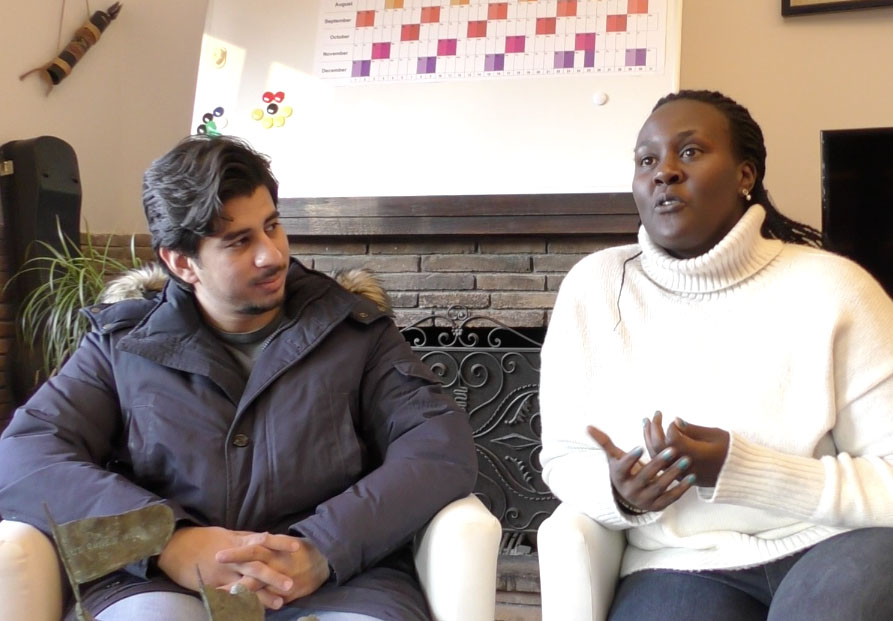
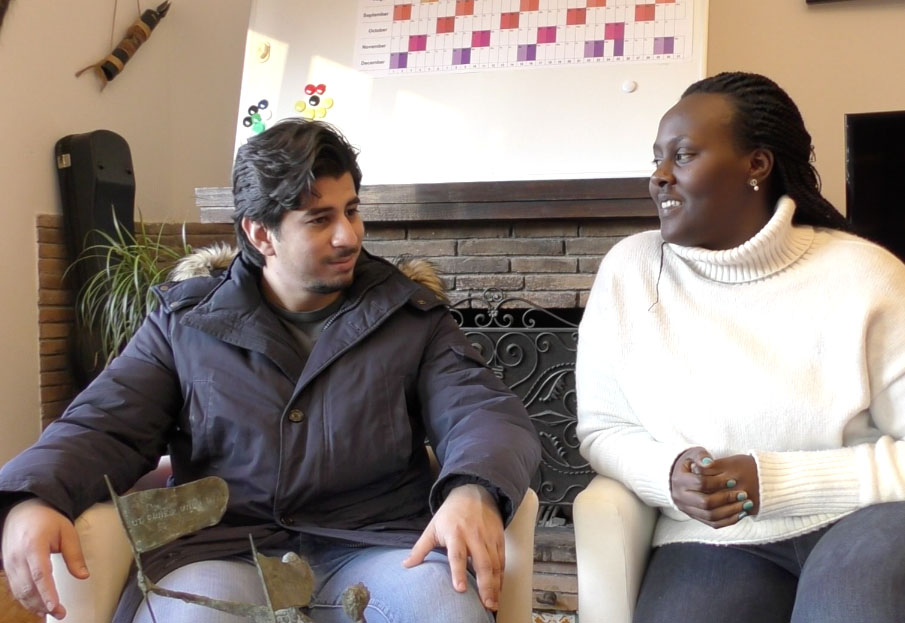
Nelson Vanegas and Stella Marilene Nishimwe
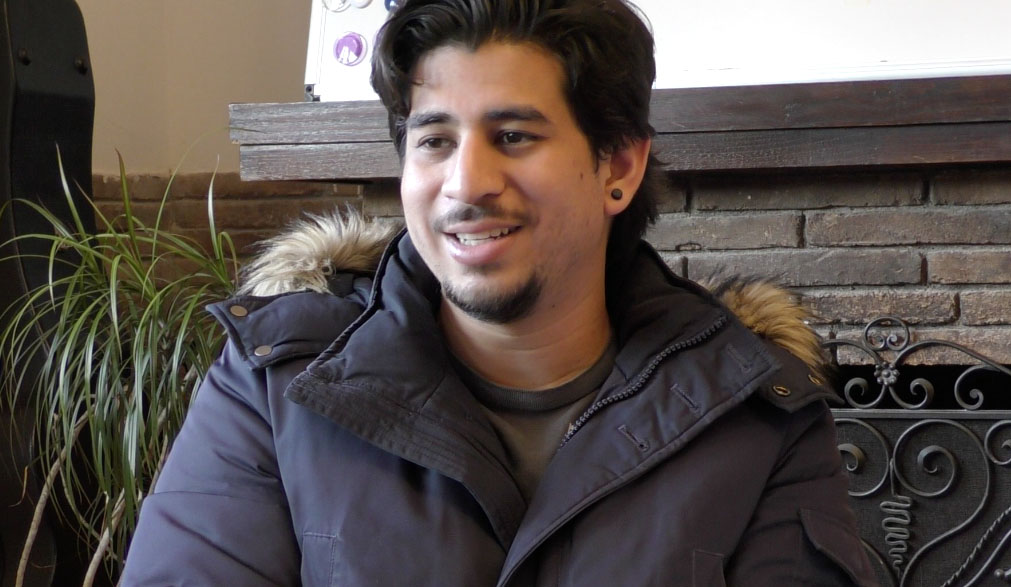 What is the situation of the youth in your country? “In Salvador.” answered Nelson, “the general situation of the youth differs from inside and outside the cities. Life outside is more difficult, services are lacking, and education is guaranteed only up to the compulsory education. Despite this the youth have huge aspirations and greater determination to make their dreams come true.” Marilene explained: “In Burundi we are undergoing a serious political crisis. Unemployment is sky high and also is uncertainty for the future. The youths often leave the country to seek other prospects elsewhere.” At the meeting, they say, they will carry out the role of facilitators of the linguistics groups in Spanish and French. “It will be our chance to do our part, a small contribution – Nelson added – but we shall do it with all our hearts.” And Marilene: “Through the synod’s official site (www.synod2018.va) and the social network connected, all the youths will be able to let their voice be heard and send proposals, as also those who cannot participate directly.” Speaking about communication, beyond the fears with which adults often regard the youths, as to the risk of detaching themselves from “reality” and immersing themselves in a virtual hub, what does communication mean for you? “Times have changed–Nelson answered – we are immersed in technology which effectively helps to bridge distances. But we have to try to make it possibly more humane. Cell phones and tablets draw people closer but communicating “face to face” with those who we really see before us is another thing altogether. In this sense we, the youth, can take the first step.” Marilene added: “For authentic communication we have to think of “what” we communicate.” In his message for the youth day, which will end the pre-synod Meeting, Pope Francis mentioned the “fears” of the youth. “Often the youths are scared of going forward, to make choices from which they cannot turn back. “Personally,” Marilene explained, “I try to live God’s will in the present moment. Each one has his own story, and I entrust myself to Him.” Nelsno continued: “In such a materialistic world, often the message the adults pass to the youths concerns studying, working, earning, or buying a nice house. The dialogue between the first and second generation is important, but it should not destroy one’s dreams. Together, our energy and their wisdom can do a lot.” Being listened to means taking up some responsibilities. “It is a big responsibility to speak out for the youth. It’s an opportunity offered by the Church which wants to dialogue with all, and not only with the Catholics. It’s here that we Gen can offer our experience, because we have already started to walk together, with Christians of other faiths and also with agnostics. This is why I would call all the youths, also from afar, to participate! Let’s make our voice be heard.” Chiara Favotti
https://vimeo.com/258422297 The President of the Focolare Movement shared a few points from her talk, explaining that – as Chiara Lubich herself said – Mary, the Mother of God, is the form and model of social action in the Movement. Maria Voce: I see Chiara always at my side, not with my eyes of course, but I feel she is always with me. Often people ask, do you draw inspiration from what Chiara said? Actually, I say no. I don’t draw inspiration from what Chiara said, I draw inspiration from her and ask myself: what would Chiara say now? What would Chiara do now? What answer would she invent for this problem that has come up? I try to listen to the Holy Spirit, seeking to do so with the same attention and depth as she did, and then I act. Chiara told us that she understood Mary in a very special way when she discovered her greatness as the mother of God. She discovered a Mary whom she herself said she had never known before: not the little child or the pure young girl from Nazareth, nor the simple housewife, but a Mary so great that God had chosen her to be the mother of his son, of the Word of God made flesh, so of God himself. This Mary, who was pleasing to God because of her humility, can give him glory through what he works in her. In her he works the great things that God wants to do: equality among all the brothers and sisters in the human family; a just distribution of goods in the world; that all people should be able to use the goods that God created for everyone; that all should recognise one another as brothers and sisters. Mary knows how to do this because she is a mother. I believe the characteristics of the social works arising from Chiara’s charism have, precisely, the characteristic of having been done by a mother who loves her children and who wants their greatest good. Above all, she wants them to be united among themselves, bound together by mutual love and that this love should underpin their relationships in society. Therefore, a new society animated by Gospel love, with a mother who is Mary.
“This is the great attraction of modern times: to penetrate to the highest contemplation while mingling with everyone, one person alongside others. I would say even more: to lose oneself in the crowd in order to fill it with the divine, like a piece of bread dipped in wine. I would say even more: made sharers in God’s plans for humanity, to embroider patterns of light on the crowd, and at the same time to share with our neighbor shame, hunger, troubles, brief joys. Because the attraction of our times, as of all times, is the highest conceivable expression of the human and the divine, Jesus and Mary: the Word of God, a carpenter’s son; the Seat of Wisdom, a mother at home.” Published in “Chiara Lubich: Essential Writings”, New City Press, Hyde Park, New York, 2002, p 169.