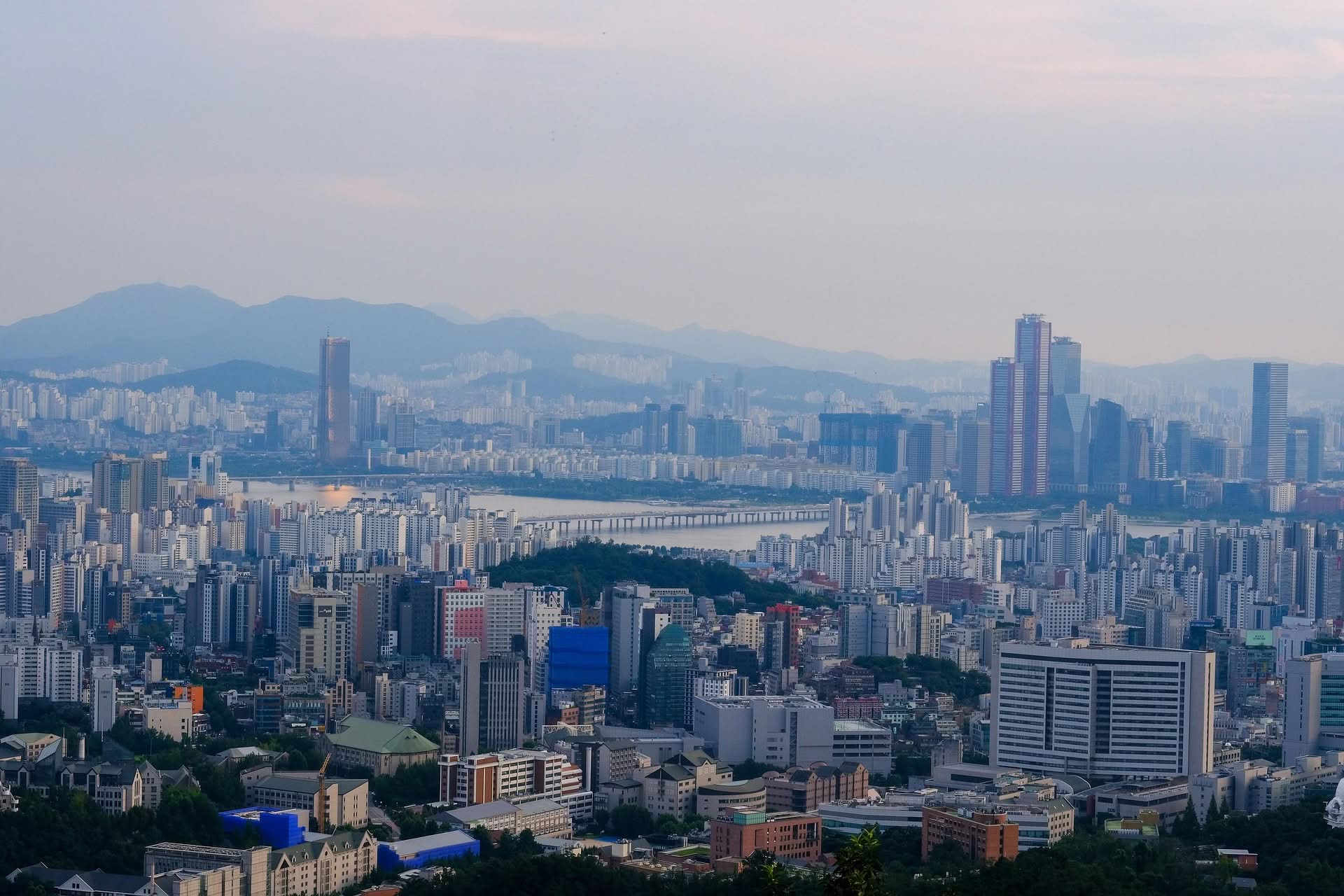
From 3rd-8th August 2027, Seoul, Korea, will host the World Youth Day (WYD) with the theme “Take courage: I have conquered the world!”(Jn. 16:33). This is only the second WYD to be held in Asia following Manila (Philippines) in 1995 and it will be the first to take place in a country with a non-Christian majority.
On 3rd August, one year before the start of the great event, the official anthem entitled Confidite, ego vici mundum was unveiled. Two versions have been proposed: the first, a more formal orchestral and choral arrangement the second, a contemporary pop version. The song communicates a clear message: even when faced with disappointments or fears, the Lord is always close to young people.
In addition, a Global Tree Planting Campaign, called Breath of life, has been launched, inviting young people to plant shrubs in their own countries. The initiative follows what was happened in Lisbon (Portugal) during the previous WYD in 2023 and is inspired by Pope Francis’ encyclical “Laudato Si ‘”.
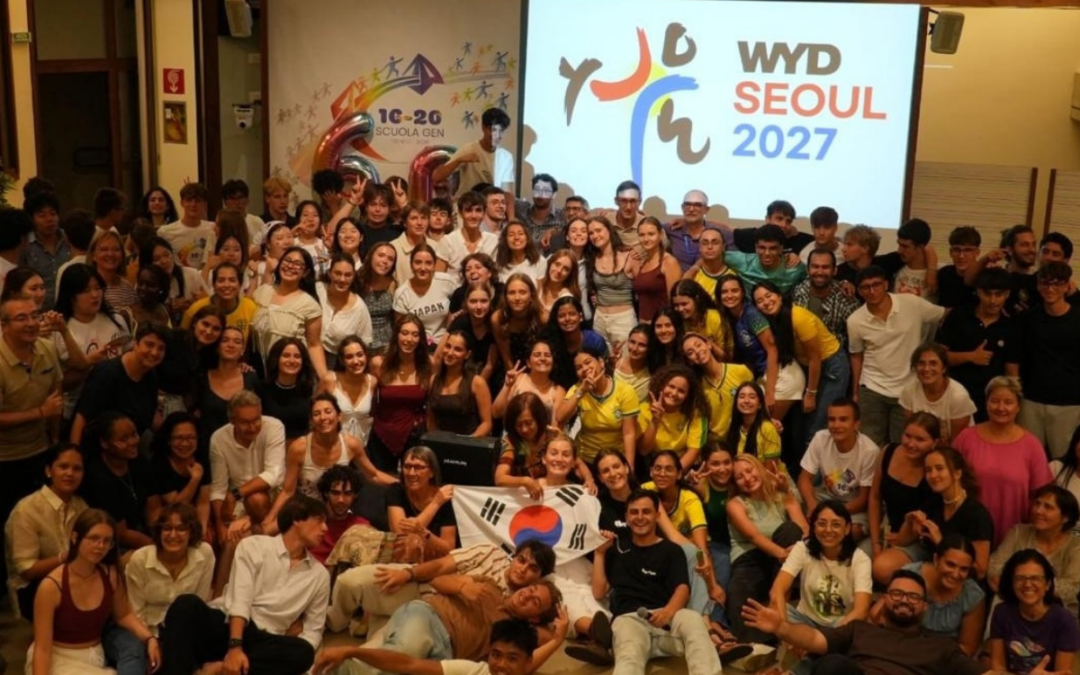
Young people from the Focolare will also participate in the WYD. An international school for young people aged 16 to 20 was recently held in Trento (Italy) where the invitation of the Korean participants to the WYD in Seoul was enthusiastically welcomed. The coming year now marks the beginning of a journey of preparation in many countries, as Focolare youth prepare to live WYD with courage and hope, working for a world of peace and unity.
Foto: Pixabay
Farrell: Preparing together for WYD
Cardinal Kevin Farrell, Prefect of the Dicastery for the Laity, the Family and Life, told the Vatican media, “In its forty-year history, World Youth Day has grown ever richer thanks to the faith, enthusiasm and active participation of young people and local Churches”. To the Bishops and those responsible for youth ministry around the world, Cardinal Farrell renewed his invitation to accompany the young people on their journey towards Seoul 2027, “making the most of these resources in their preparation, helping them experience the pilgrimage as an authentic encounter of faith, ecclesial communion and a personal meeting with Jesus”.
Five patron saints
As is tradition for every WYD, five patron saints whose lives and spirituality offer inspiring examples of Christian witness, have been chosen as models of faith for young people. For 2027, the local organizing committee has chosen five: John Paul II, the founder of World Youth Days; Andrea Kim Taegon, the first Korean Catholic priest and a symbol of faith and courage; Francesca Saverio Cabrini, patron saint of migrants, born in Sant’Angelo Lodigiano (Italy) and who died in 1917 in Chicago, the birthplace of Robert Francis Prevost; Josephine Bakhita, the Sudanese woman who was freed from slavery, became a nun and bore witness to a faith transformed through suffering; Carlo Acutis, the fifteen-year-old Italian canonized on 7th September, 2025, a modern example of evangelization in the digital world.
The Cross, the Marian icon and the volunteers
The two symbols of WYD, the Cross and the Marian icon, arrived in South Korea in December 2025 and the following month began a national pilgrimage, through the dioceses of the country. “We will do everything possible – underlined the Metropolitan Archbishop of Seoul and President of the Organizing Committee, Monsignor Peter Soon-taick Chung – so that WYD 2027 is a celebration of hope and a witness to hospitality and solidarity”.
Meanwhile, in Seoul, many volunteers are already at work. About 400 young people are supporting the local organizing committee. They have been prepared using the texts of Pope Francis’ post-synodal apostolic exhortation “Christus Vivit” and through the method of Conversation in the Spirit. They currently are helping with the organisation of events, logistics, training of other volunteers, and communication.
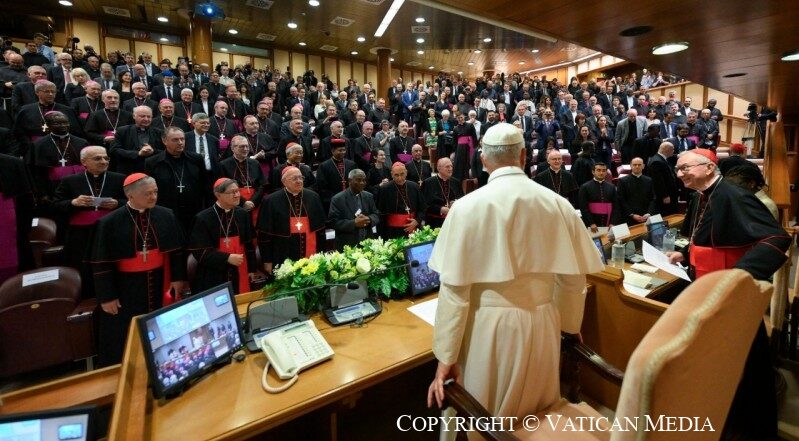
It was a morning that marked a significant moment in the history of the Church. On 25th May 2026 in the Synod Hall in the Vatican, Pope Leo XIV presented his first encyclical Magnifica Humanitas, on safeguarding the human person in the time of Artificial Intelligence. It was the first time that a Pope was present in the Hall where his magisterial document was being presented to the public.
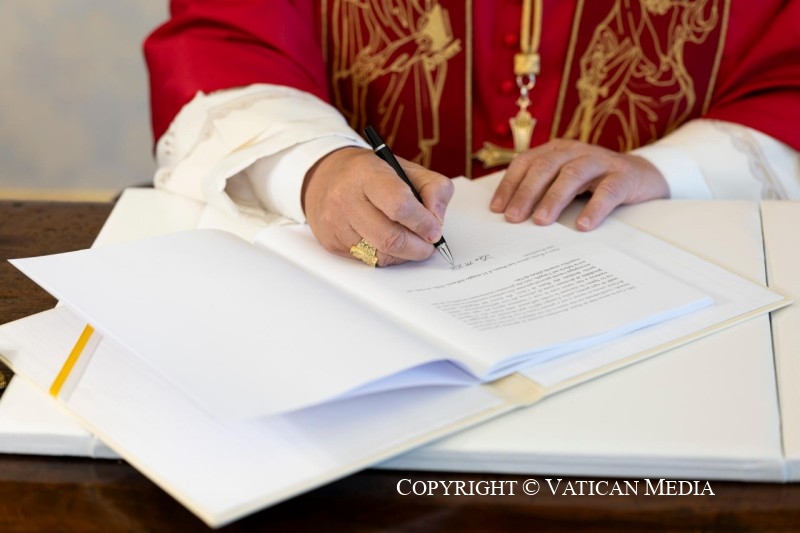
The encyclical was signed on 15th May, the 135th anniversary of the promulgation of the encyclical letter Rerum Novarum by Pope Leo XIII, who recognized in the industrial transformations of his time a profoundly human and social issue. This encyclical defends the human person in today’s time of Artificial Intelligence (AI) and calls for new urgent reflections on the role and future of technological progress.
After the interventions of experts and theologians, the Pontiff spoke. He focused on the “gravity of the moment” we are living through, which is a cause for concern in the Church which is called to “interpret new things in the light of the Gospel and the dignity of the person”. He explained that the document was born “from listening” to scientists and engineers who “work with sincere enthusiasm on technologies capable of alleviating immense suffering; listening to political leaders and public officials who have persistently sought just regulations; listening to parents and teachers deeply concerned about the future of the young generations”. He used strong words: “Artificial Intelligence must be disarmed. The expression is strong, I know”, Leo admitted, “but it was chosen deliberately because this moment needs words capable of attracting attention, awakening consciences and indicating ways forward for humanity”.
The Pontiff recalled that for some time “the Church has worked in favour of nuclear disarmament, as a service to peace and to the dignity of the human family”. Likewise, “Artificial Intelligence today also needs to be disarmed, because like nuclear energy, it must be at the service of all and of the common good. (…) Decisions about technology must never be separated from conscience and responsibility”. “But when technology weakens our critical sense, it is peace itself that is at risk. Disarming, however, is not enough. We must build.” Together.
The encyclical
“Magnifica Humanitas is the culmination of 10 year’s work of the Holy See,” said Msgr. Paul Desmond Tighe, secretary of the Dicastery for Culture and Education during the press briefing. In 2016 a French priest began to study some topics related to communication and technology. “In San Francisco (USA) he met some experts who wanted to inform the Holy See about technological developments that could influence the future of the world, Tighe continued, “For these scientists it was important to have the perspective of wise voices, so they sought collaboration with the Holy See”, leading to a synergy based on mutual listening
Christopher Olah, Co-founder of Anthropic (USA), one of the world’s leading artificial intelligence companies, also spoke at the Vatican presentation: “We need an every larger part of the world, religious communities, civil society, scholars and governments, to do what His Holiness has done here: to take all this seriously, to carefully observe events as they unfold and help guide them in a better direction. Today is only the beginning of a long collaboration between those of us who are building this technology and those who can see what we ourselves cannot see from the inside”.
Divided into five chapters, plus an introduction and a conclusion, Magnifica Humanitas starts from a central thesis: technology is not an “antagonistic force with respect to humanity”, nor is it “in itself an evil”. The Pontiff affirms that “injustices do not arise only from the wrong choices made by individuals, but also from structures, mechanisms and from economic and cultural structures that produce inequality”. This also applies to new technologies.
Leo’s concern focuses on the power that when concentrated in a few hands, “tends to become opaque and to escape public control”, bringing with it the risk of distorted development “which generates new dependencies, exclusions, manipulations and inequalities”. Here attention is directed toward those who control platforms, infrastructures and digital data.
Pope Leo XIV reiterated once again that there is no such thing as a “just war”. He called for the use of Artificial Intelligence in warfare to be subjected to the strictest ethical constraints because “there is no algorithm that can make war morally acceptable”.
We need “a politics that does not abdicate its responsibility”. The truth must be expresses through an “ecology of communication” opposed to fake news. The Pope indicated some elements: transparency in the content-selection algorithms, protection of personal data, serious journalism based on argument and verification, a new awareness in the “correct and critical” use of AI and the integration of knowledge.
In concluding the letter, the Pontiff invited the faithful to inhabit new technologies in the light of the Gospel, following “a sober and demanding path of Christian life”, so that even in the time of AI everyone can give witness to “the beauty of a magnificent humanity inhabited by God”.
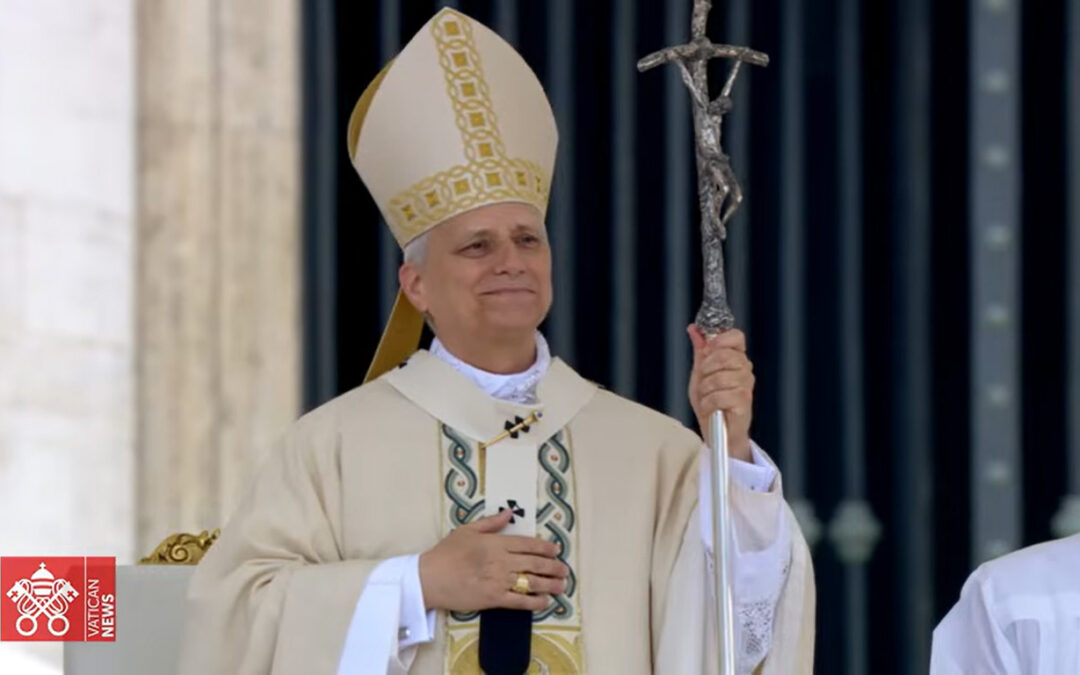
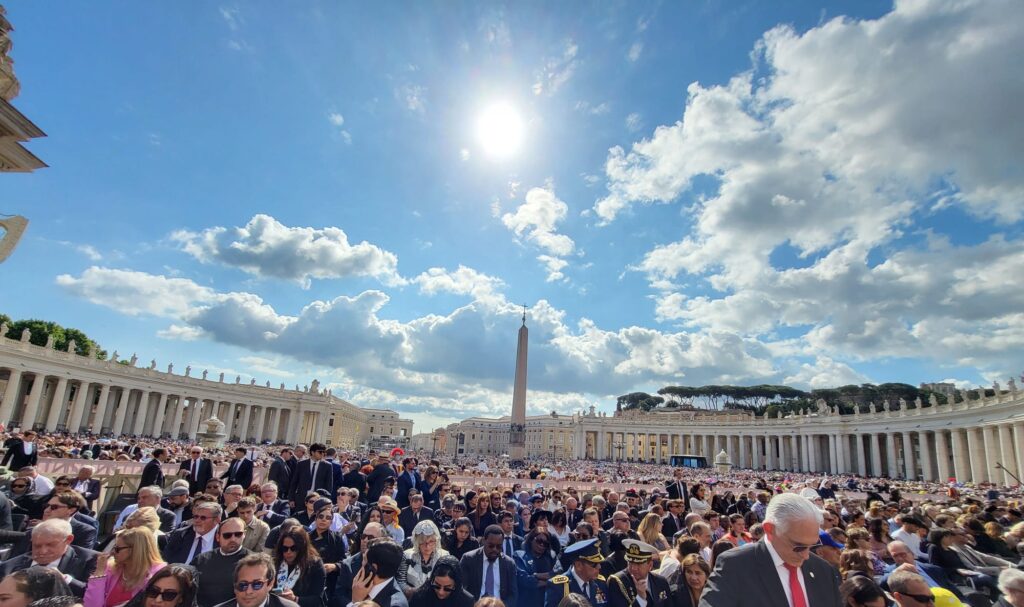
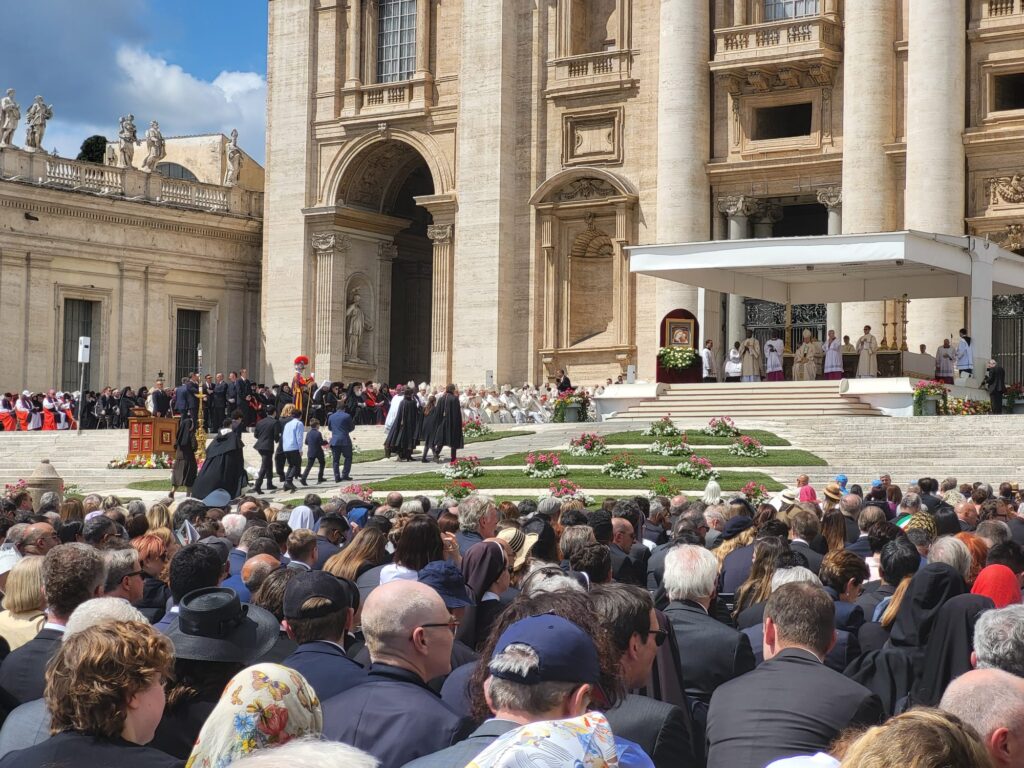
Over 150 delegations from all over the world attended Pope Leo’s inaugural Mass: political leaders, heads of Christian Churches, representatives of different religions and over 200,000 faithful from all over the world. It took place in St. Peter’s Square on 18th May. The new Pontiff wanted to begin by meeting the pilgrims, traveling around the Square and along the Via della Conciliazione in the Pope-mobile, in a long, joyous and emotional greeting. He then paused at the tomb of Peter, of whom he is now the successor, before commencing the Eucharistic celebration.
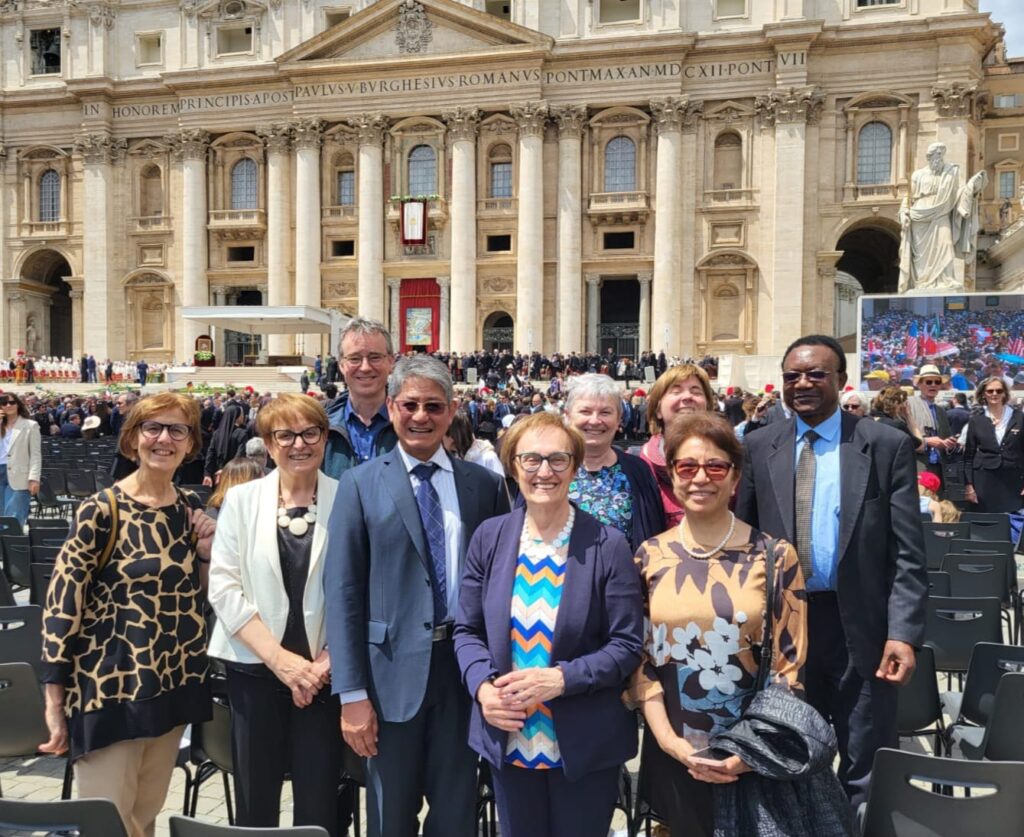
A group from the International Centre of the Focolare attended in representation of the President of the Movement, Margaret Karram and the Co-President Jesús Morán who are currently in the United States.
Silvia Escandell (Argentina), Focolare Central Delegate, described the moment, “This was an experience of the universality of the Church. I felt that Pope Leo XIV, surely also thanks to his charism, draws together this profound diversity into unity. I was impressed by how he immediately used two words, ‘love and unity’ and how his entire address followed this theme . I was also moved when he referred to Peter, to whom Jesus said to cast the nets, and how the Pope called us to do so again, knowing these are the nets of the Gospel, which goes out to meet every person. It seems to me a sign of great hope, for the Church and for humanity ”.
Photos: St. Peter’s Square crowded with the faithful, a moment of the celebration and the group from the Focolare International Centre.
Ray Asprer (Philippines), also Central Delegate of the Focolare Movement, said, “For me today was a powerful experience of progressing towards a united world. . Seeing the entire square filled and above all, listening to the Pope’s appeal expressing his vision of a Church as an instrument of unity, I felt that this was exactly what we were living there, in all its solemnity, but also as a real experience. We were standing together from all over the world, gathered around the Pope who proclaimed that the Church’s mission is love and unity. I felt a call to unity as a sign of the times ”.
Chiara Cuneo (Italy), Councillor at the International Centre of Focolare and co-responsible for Dialogue between Movements and new Communities within the Catholic Church, also spoke of hope, saying.“In this world, in this dark time, hope is a light that guides us. During the Mass I thought that, sometimes, it takes the desert, to allow you to see the sprouts of hope. And today is one of those shoots: something is growing ”.
“The words of the Pope about walking together were very inclusive. He really mentioned everyone, we were all included, absolutely everyone“.
“She concluded, “I was able to greet some Founders and Presidents of various Church Movements. It was a moment of celebration, joy and renewed hope for everyone. We all felt the desire to continue this journey together, truly wishing to love one another more and more, just as the Pope said ”.
Enno Dijkema (Netherlands) Councillor at the International Centre of Focolare and Co-Responsible for the Centre for Christian Unity, added, “There were also many leaders of other Christian Churchesand the Pope clearly said that he wants to be in dialogue with everyone and that he wants to be a servant of the unity of the Church of Christ.I was very movedwhen he spoke of his ministry and described it not as being above all, but below, as love, as service that brings joy and faith to all Christians and to the whole world. In front of so many heads of State it seemed to me a beautiful testimony, a meaningful indication of ‘power’ understood as love, as service ”.
On 25th November 2023, Margaret Karram, President of the Focolare Movement, was appointed Member of the Dicastery for the Laity, Family and Life. Pope Francis has appointed 11 new Members of the Dicastery for the Laity, Family and Life, for a five-year period. They include the President of the Work of Mary (Focolare Movement), Margaret Karram. She is one of the men and women, single and married, engaged in different fields of activity and from different parts of the world who will represent and enrich the universal face of the Church, alongside those already in office. The other new members are: Archbishop Josep Ángel Saiz Meneses of Seville, Spain; the Reverend Andrea D’Auria, F.S.C.B., director of the International Centre of Communion and Liberation; the Reverend Luis Felipe Navarro Marfá, Magnificent Rector of the Pontifical University of the Holy Cross in Rome, Italy; the Distinguished Benoît and Véronique Rabourdin, international heads of Amour et Verité della Communauté de l’Emmanuel; Joseph Teyu Chou and Clare Jiayann Yeh, respectively lecturer in the Department of Public Financeof the National Chengchi University in Taipei, Taiwan and founder and director of the Marriage and Family Pastoral Centerof the Chinese Regional Bishops’ Conference; Professor Ana María Celis Brunet, president of the Consejo Nacional para la Prevención de abusos y acompañamento de víctimas,of the Episcopal Conference of Chile; Professor Maria Luisa Di Pietro, director of the Centre for Research and Study on Reproductive Health of the Catholic University of the Sacred Heart in Rome, Italy; Professor Carmen Peña García, lecturer in marriage law at the Facultad de Derecho Canónico dell’Universidad Pontificia Comillas in Madrid, Spain. The new members, whose appointment was published on 25th November 2023 in the Bulletin of the Holy See Press Office, join those previously appointed and all those still in office. The updated list can be consulted on the website of the Dicastery for Laity, Family and Life on the “Members and Consultors”page.
The wide embrace of Bernini’s colonnade is not able to contain the crowd of people who belong to as many as 56 new communities and ecclesial movements; a tiny representation of the approximately 80,000,000 Catholics, for the most part lay people, who make up this immense people. It’s the first time that they are meeting all together with the Pope. An enormous multicolored garden: this is the way someone described St. Peter’s Square on that sunny afternoon of May 30. The presence of members of the various movements, who with their specific charisms contribute towards making the Church beautiful, alive, and credible, constituted a surprising and remarkable display of unity in diversity. A reality witnessed to by founders of four of the most widespread movements: Chiara Lubich, Kiko Arguello, Jean Vanier, Luigi Giussani. Their charisms draw life from the same Spirit; it is a unity in diversity, demonstrating Christian life as a reflection of the Trinitarian mystery. « …numerous charisms are always born in the most important moments of the life of the Church. I’m thinking of the Council of Trent. … Today then, I would say that the Holy Spirit …, blowing in the same direction, puts the accent on different notes, because the life of the Church is like a symphony, a great concert; many instruments are needed, the greatest number of voices are needed». (Msgr. Piero Coda) Therefore, a wide variety of charisms are at the basis of the many new ecclesial movements, supported and encouraged by the Pope as the providential answer of the Holy Spirit to the challenges at the end of this millennium. In his address Pope John Paul II does not hesitate to affirm that what happened in the Upper Room in Jerusalem 2,000 years ago, is being renewed this evening in St. Peter’s Square. «With the Second Vatican Council, the Comforter recently gave the Church … a renewed Pentecost, instilling a new and unforeseen dynamism. … You, present here, are the tangible proof of this “outpouring” of the Spirit». (Pope John Paul II) In speaking of the journey taken so far by the movements, Pope John Paul II sees them now on their way toward a new stage of ecclesial maturity in which their strong common announcement is a valid alternative to the secularized culture which encourages and promotes models of life without God.«It constitutes a precious capital for the entire mission of the Church. Its founder did not say in vain that the witness of unity is “so that the world may believe.” The missionary fecundity of the movements will be potentiated if this witness of unity in diversity shines forth so that the world may believe».(GusmánCarriquiri) A witness of unity among all the movements in view of the new evangelization: Chiara expressed this need to the Pope.
«We know that the Church, and you too, desire full communion, unity among the Movements, and this has already begun. We want to assure you, Your Holiness, that, because our specific charism is unity, we will make every effort to contribute, with all our strength, towards fully accomplishing it». (Chiara Lubich)
This commitment assumed by Chiara corresponds to the aspirations of all the leaders of other movements.

 Therefore, a wide variety of charisms are at the basis of the many new ecclesial movements, supported and encouraged by the Pope as the providential answer of the Holy Spirit to the challenges at the end of this millennium. In his address Pope John Paul II does not hesitate to affirm that what happened in the Upper Room in Jerusalem 2,000 years ago, is being renewed this evening in St. Peter’s Square. «With the Second Vatican Council, the Comforter recently gave the Church … a renewed Pentecost, instilling a new and unforeseen dynamism. … You, present here, are the tangible proof of this “outpouring” of the Spirit». (Pope John Paul II) In speaking of the journey taken so far by the movements, Pope John Paul II sees them now on their way toward a new stage of ecclesial maturity in which their strong common announcement is a valid alternative to the secularized culture which encourages and promotes models of life without God. «It constitutes a precious capital for the entire mission of the Church. Its founder did not say in vain that the witness of unity is “so that the world may believe.” The missionary fecundity of the movements will be potentiated if this witness of unity in diversity shines forth so that the world may believe».(Gusmán Carriquiri)