The third and final day of the Raising Hope Conference unfolded with new keynote addresses, moments of reflection, prayer, music, and a defining moment: participants’ contributions and commitments, presented as key pillars for climate justice action.
On the website raisinghope.earth/action/ conference participants, both in person and online, were invited to share their own commitments: How will you respond to the cry of the earth and the cry of the poor? These People-Determined Contributions (PDCs) are a bold global civil society initiative to present the pledges of individuals and grassroots communities towards ecological transformation.
Raising Hope water will reach COP30
The moving opening ceremony led by Pope Leo XIV last Wednesday, 1 October—when he blessed a block of ice from Greenland—reached its culmination this afternoon as participants collected the melted water to take to their homes and communities.
Dr. Lorna Gold, Executive Director of the Laudato Si’ Movement, expressed with emotion: “A block of ice blessed by the Pope has gone viral these days. Now this blessed water will become something very powerful, because it will be carried to COP30 in Brazil.”
Each participant was able to take a bowl containing some of this blessed water—partly from the glacial ice, mixed with water from rivers across the world that had been offered by representatives at the start of the conference. This was not just a gift, but a sign of the urgency of the climate crisis, marked by the hope carried through the Pope’s blessing.
Returning to the heart and raising our voices
Another highlight of the closing day came when Dr. Lorna Gold presented some of the commitments made by participants. Among the most significant were the power of collaboration, the importance of alliances, the call to return to the heart, and the promotion of the Laudato Si’ Animator Program developed by the LSM.
She emphasized the importance of implementation: “We cannot wait for others to act. We must implement the changes that are within our hands,” Dr. Lorna affirmed. She encouraged participants to raise their voices together in Belém, Brazil (next COP), where a new alliance for the non-proliferation of fossil fuels will also be launched.
Giving thanks for 10 years of the LSM
A deeply moving moment came as participants gave thanks for the ten-year history of the Laudato Si’ Movement, founded in January 2015. Dr. Lorna Gold recalled meeting co-founder Tomás Insua in that same year and being struck by his passion and energy to spread the values of the encyclical.
“The most extraordinary thing about our movement is joy,” she declared, urging everyone to “bring this joy to COP30.” She recalled Pope Francis’s words inviting us to “sing along the way,” because “our concern must not take away our joy or our hope.”
Yeb Saño, Chair of the Board of the Laudato Si’ Movement, urged participants to engrave into memory what had been lived during the conference so that “all these reasons push us out of bed every morning.” “We have a lot of work ahead, but Pope Leo is on our side. It’s not about rushing forward, but about moving together.”
Laudato Si’ for courageous communities
The morning opened with a keynote by Kumi Naidoo, Chair of the Fossil Fuel Non-Proliferation Treaty, who described himself as a “prisoner of hope.” He stressed that we must care for our environment because “there are no jobs or humans on a dead planet.”
“Catholic communities, through Laudato Si’, have shown courage,” Naidoo said, encouraging all to act with wisdom and faith, with a sense of urgency. “Hope is not love; hope is resilience, hope is a mission.”
The resilience of peoples
The next panel, titled “Faith and Shared Mission for a Resilient Planet,” was moderated by Josianne Gauthier, Secretary General of CIDSE (Coopération Internationale pour le Développement et la Solidarité). Key topics included financing for developing countries and resilience as the driving force to move forward.
Dr. Maina Vakafua Talia, Minister of the Interior, Climate Change and Environment of Tuvalu, noted that while her native language has no word for resilience, her people have learned to “move from vulnerability to strength” after enduring multiple climate catastrophes. She also emphasized the importance of spirituality in building a resilient future.
Dr. Svitlana Romanko, founder and director of Razom We Stand, spoke of her country, Ukraine, and how fossil fuel dependency as a consequence of war has devastated its people. She stressed that resilience is what keeps them standing today, together with renewable energy and green economies, proving that living on clean energy is possible.
Mons. Robert Vitillo, from the Dicastery for Promoting Integral Human Development and the Laudato Si’ Action Platform, contributed with a reflection from the Gospel: “We are taught about solidarity, and we must shift perspective to translate it into action in our commitments.”
Listening to the peripheries
In the afternoon, the final panel was moderated by Bianca Pitt, founder of the Women’s Environment Network and co-founder of SHE Changes Climate. It revolved around what our hearts tell us about the experience of these past days.
Catherine Coleman Flowers, MacArthur Fellow and advocate for environmental health, member of the boards of the Natural Resources Defense Council, shared how people on the margins are the ones who suffer the most and are least heard.
Bishop Ricardo Hoepers, Secretary General of the National Conference of Bishops of Brazil, reflected on his country’s diversity and how it is necessary to step out of our comfort zones to broaden our horizons: “My dream for Brazil is to unite Laudato Si’ and Fratelli Tutti; and for nature and human beings to hold the same importance: nature is the space God has given us to live as brothers and sisters.”
And Margaret Karram, President of the Focolare Movement, stated: “I am convinced that the only way to bring about lasting change is to embrace love as the guiding principle of our ecological action. In Laudato Si’, the word love appears seventy times! A powerful indication of a path on which everyone and all of us are invited to walk. An invitation to journey from an authentic human fraternity — such as we have experienced in these days — toward a cosmic fraternity .”
Before concluding, participants joined in a final session of prayer and reflection, led by members of Trócaire. After presenting a video summary of the three-day journey, all were invited to recall the most significant moments and to solemnly commit to continuing the path, advocating for our common home.
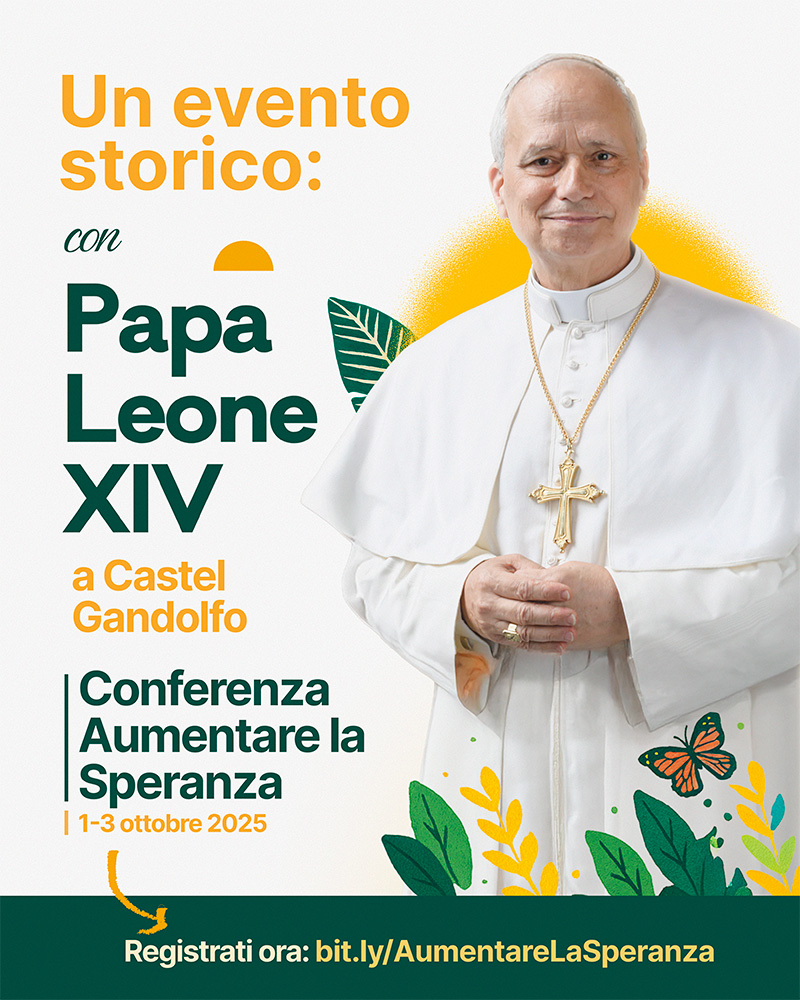
From October 1–3, 2025, Castel Gandolfo (Italy) will host the international conference “Raising Hope for Climate Justice”, a historic gathering to mark the tenth anniversary of the Laudato Si’ encyclical and to foster a global response to the climate and ecological crisis from the perspectives of faith, politics, and civil society.
The event will feature His Holiness Pope Leo XIV, alongside prominent leaders such as Brazil’s Environment Minister Marina Silva and former California Governor Arnold Schwarzenegger, along with bishops, international agency officials, indigenous leaders, climate and biodiversity experts, and civil society representatives. Over three days, the conference will include keynotes, panel discussions, spiritual moments, and cultural events that highlight both the progress made since Laudato Si’ and the urgent steps needed ahead of COP30 in Brazil.
“In a time marked by global challenges and deep wounds, our commitment for unity and peace cannot exclude a pursuit of climate justice that places human dignity and care for creation at its core.” This is the declaration of Margaret Karram, the President of the Focolare Movement, who is one of the event’s partners. She continues, “As Focolare Movement, we want to collaborate with everyone, in protecting and safeguarding our common home, and with a new responsibility we want to live closeness to the poor and solidarity among the generations for a sustainable future.”
The event will be held in person at Castel Gandolfo and streamed live, enabling thousands of people and media outlets worldwide to follow the main messages and join the global conversation.
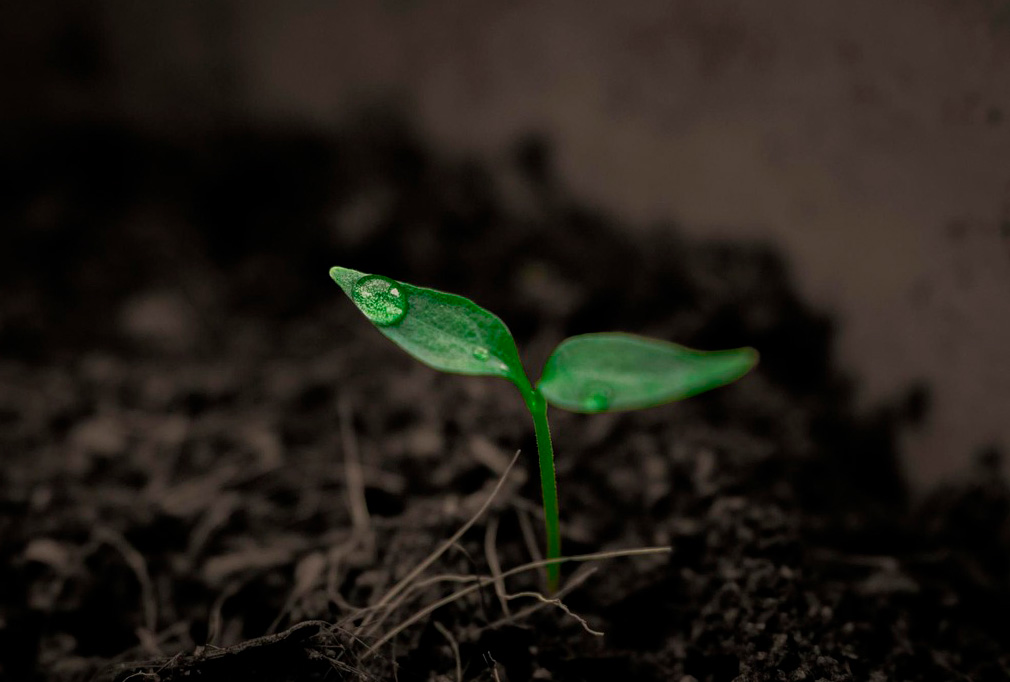
I don’t know if this has ever happened to you but sometimes, after a large forest fire, when everything is burnt, bare, covered in ash, lifeless, you can spot a small plant sprouting – right there, where everything seemed dead. When I notice this, I feel something beautiful: where life seemed to have ended, nature is stronger. It grows, triumphs, lives, even when it seems impossible. It is in those moments that I understand how wonderful it is to live on a planet capable of regenerating itself, despite its wounds.
But for how much longer will it be able to do so?
On 2nd July, the Message of the Holy Father Leo XIV for the X World Day of Prayer for the Care of Creation which will be celebrated on Monday, September 1, 2025 was published. It is entitled Seeds of Peace and Hope. What a splendid legacy Francis left us with his Encyclical Laudato Sì published ten years ago: so current, important and precious. And I find it very beautiful that Pope Leo takes up this legacy by highlighting the month dedicated to the Care of Creation (1st September-4th October), which begins with this day of prayer.
But what does this Message actually declare?
Returning to the example of the forest fire, Leo XIV reminds us that, “Seeds are buried in the earth, and there, to our wonder, life springs up, even in the most unexpected places, pointing to the promise of new beginnings”. Then he addresses us, inhabitants of this world, reminding us that “in Christ we too are seeds”. Not only that, but “seeds of Peace and Hope”.
This is a strong and clear invitation to live the ecumenical initiative of the “Season of Creation” from 1st September-4th October. It is a month of initiatives to invent, prepare and implement so as to pay every more attention to the care of our “common home”, which we all inhabit, regardless of our differences. Pope Leo says, “Together with prayer, determination and concrete actions are necessary if this “caress of God” is to become visible to our world”. Further on he says, “we seem incapable of recognizing that the destruction of nature does not affect everyone in the same way. When justice and peace are trampled underfoot, those who are most hurt are the poor, the marginalized and the excluded. (…)By working with love and perseverance, we can sow many seeds of justice and thus contribute to the growth of peace and the renewal of hope”.
Everyone is called to participate: individually or in groups, in associations, organizations, companies… why not? Each with their own ideas, their own commitment.
In his Message, Pope Leo XIV writes: “The Encyclical Laudato Sì has now guided the Catholic Church and many people of good will for ten years. May it continue to inspire us and may integral ecology be increasingly accepted as the right path to follow. In this way, seeds of hope will multiply, to be “tilled and kept” by the grace of our great and unfailing Hope, who is the risen Christ”.
And what does the Pope do? He begins himself by promoting these initiatives first. He established, for the first time in the history of the Church, a “Mass for the Care of Creation”, made official through the Decree on the Mass pro custodia creationis. Pope Leo XIV used this new form already on 9th July, 2025 during a private Eucharist that he celebrated at the Borgo Laudato Sì, during his stay at Castel Gandolfo (Rome). From now on, anyone can ask to celebrate a Mass with this intention, to be faithful stewards of what God has entrusted to us: in our daily choices, in public policies, in prayer, in worship and in the way we inhabit the world.
The title Seeds of Peace and Hope today appears as a disarming prophecy. Perhaps they are the only two words that, in this dark time for humanity, continue to make sense. They are words that allow us to start again, to sow and to believe that that fresh grass will continue to grow even where the land seems scorched and dead. Actions like these make me understand that all the Churches do not change their minds about the essential questions for the life of humanity. And above all, that they do not stop thinking about the future of the new generations.
On Oct. 4, the day of St. Francis of Assisi, ends the period of the Season of Creation, a period in which it is proposed to deepen dialogue with God through prayer, associated with concrete actions for the care of the planet. The Focolare Movement has always supported the initiative by participating and organizing events in various parts of the world. Here are some initiatives from the Season of creation 2024.
In Leonessa, at the center Italy, a nature walk was held. The event, entitled Breaths of Nature: together for our planet, was attended by young and old alike. The group of participants departed from the Capuchin friars’ monastery, led by the friars themselves together with the forest police, the Italian Alpine Club and Prof. Andrea Conte, astrophysicist and Italian coordinator of EcoOne, the Focolare Movement’s Ecology network. The excursion culminated at a spring, where Prof. Conte led an evocative meditation on the journey of a carbon atom in the environment. Conte then showed how to turn ordinary waste into tools for scientific experiments, demonstrating how science can be fun and affordable for everyone.
Following this, topics such as environmental awareness, the effects of climate change and the importance of education for sustainability were discussed in depth at the town’s Auditorium. Prof. Luca Fiorani, from the EcoOne International Commission, offered an in-depth analysis of Pope Francis’ encyclical Laudato Si’, the concept of integral ecology and relational sustainability. The large attendance and the attention shown by those in attendance is proof of a growing interest in environmental issues and a growing awareness of the importance of taking action to protect our planet.
In Oceania, this is the fourth year that the Focolare community has contributed to ecumenical prayer for the Season of Creation. “We have been praying and witnessing through various actions of caring for our common home,” they recount. ”This prayer service is our effort to give hope to our vast area that stretches 7,000 km from Perth, Western Australia, to Suva, Fiji, the largest island nation in the heart of the Pacific. This was followed by a reflection by Jacqui Remond, co-founder of the Laudato Si’ Movement and professor at the Australian Catholic University, who spoke about the need to change hearts for ecological conversion.
Archbishop Peter Loy Chong of the Archdiocese of Suva in Fiji could not join them because he was welcoming Pope Francis in Papua New Guinea. But he sent a message emphasizing in particular the importance of the word “Tagi,” which means “the cry of the peoples of Oceania.” It is the cry of the small Pacific islands in the face of climate change, which has not yet affected the world. Or rather: the world has not yet listened deeply to the voices and particularly the cry of the people of Oceania.
Various experiences followed such as the creation of an Aboriginal reconciliation garden at the Mariapolis Center in St Paul. Horticulture students and their teachers who use the center for their classes were invited here. They are all migrants and were very interested in learning about the important indigenous food plants.
Young people from Sydney, Canberra and Melbourne, on the other hand, joined with an Aboriginal elder for a walk in the countryside where they learned how to relate to and care for creation.
In Mexico, a course was held on ecological conversion and spirituality, an open dialogue for the care of the Common Home. It was an initiative of the Evangelii Gaudium Mexico Center, Sophia ALC University together with the Focolare Movement. Five online sessions – one each week during the Season of Creation – by Prof. Lucas Cerviño, focolarino theologian and missiologist. 87 participated from different Latin American countries, from Mexico to Argentina. Here are some of the themes addressed: the ecological crisis and conversion; metamorphosis of the sacred and spirituality; God is love as a fabric of life in love; listening to the cry of the earth and the poor as love for Jesus forsaken and crucified; unity looked at as cosmic fraternity to care for the Common Home; Mary as Queen of Creation and the presence of Mary’s mystical body.
Finally, in Italy, in the city of Padua, the “Path of the 5Cs of Laudato Sì” was inaugurated thanks to the network Nuovi Stili di Vita made up of civil, religious, and lay associations-including the Focolare Movement-that care about promoting lifestyles that are moderate and respectful of nature, sustainable economy, and that stimulate communities with initiatives and proposals to achieve the common good together.
The 5Cs path was installed at a flowerbed where in 2011 the five Ecumenical Churches, (Catholic, Orthodox, Lutheran, Methodist and Evangelical), celebrated the Day for the Custody of Creation by planting five beech trees together. It was preceded by a short concert by a young singer-songwriter from Vicenza who communicated to us the sensitivity and dreams of today’s youth toward a future of hope.
The 5Cs highlight five terms taken from Pope Francis’ encyclical: custody, conversion, community, care, change. The event was lived with intensity and was a spur for resolutions of concrete commitment to achieve a better, more just and equitable world, in harmony with the Earth we inhabit.