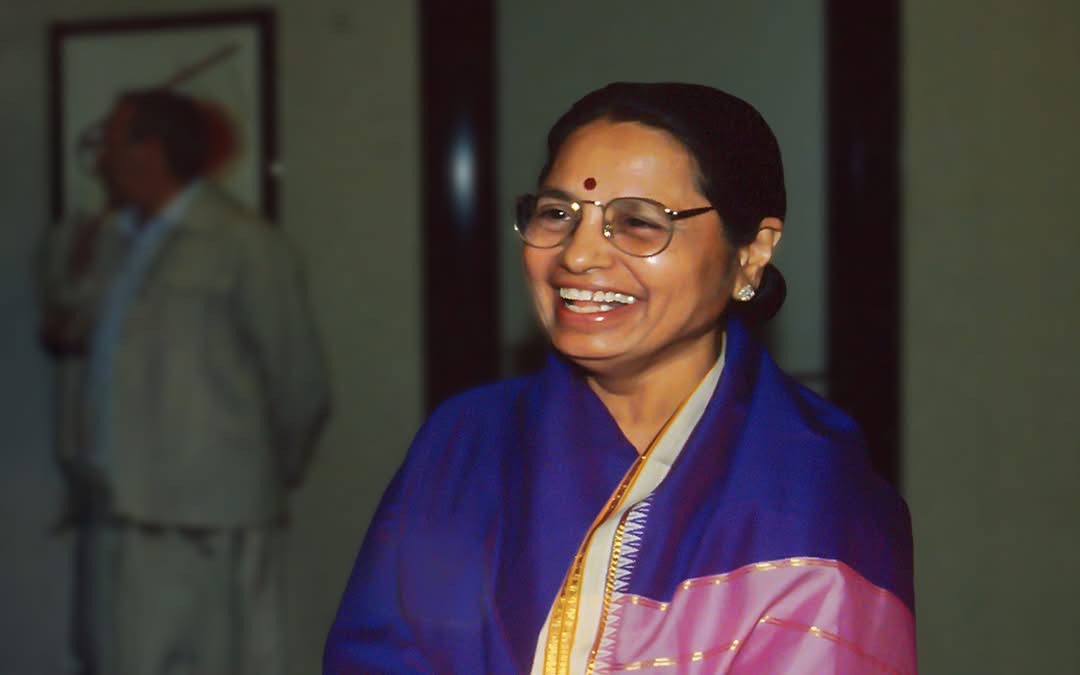
The news came suddenly and unexpectedly, on the morning of 10th August. Kala Acharya had just died on the campus of Somaiya University where she lived and where, at the behest of its founder, Shri Karamshi Jethabhai, she had spent forty years of her life. As Samir Somaiya, grandson of the founder and current President of this prestigious academic institution, defined her, Kala had become an institution in her own right through her presence and personality. In agreement with Dr. Shantilal Somaiya, who in the meantime had succeeded his father in the management of the Trust of the academic institution, she had established the Somaiya Sanskriti Peetham, an institution for the training of formal and informal teachers of moral and religious values. At the same time, she became deeply involved with Dr. Somaiya in interreligious dialogue, collaborating in the mid-1990s, with the St. Pius X Catholic Seminary in Mumbai and with various foreign professors and institutions, including some in Italy. In September 2000, a few months before Chiara Lubich’s first trip to India, Msgr. Felix Machado, Undersecretary of the then Pontifical Council for Interreligious Dialogue (today the Dicastery for Interreligious Dialogue), asked Marina Pracchia and Roberto Catalano, the co-responsibles of the Focolare Movement in India, to get in touch with Professor Kala Acharya. He considered her a sister and hoped she might be able to take part in some moments during Lubich’s visit. The first meeting in Vidhyavihar, on the vast campus of Somaiya University, was immediately very warm. Kala readily accepted the invitation to attend the award ceremony of the Gandhi Peace Defender Award, which Chiara Lubich received from the Shanti Ashram in Coimbatore, in early January 2001. It was in Coimbatore, just before returning to Mumbai, that Lubich met the Indian academic personally. They immediately understood each other. The next day, the founder of Focolare wrote in her diary: “Yesterday, on the feast of the Epiphany, I had a rather special meeting, perhaps with a person who has a design of God, Kala Acharya. […] she is an expert, she has explored Hindu-Christian dialogue, knows the Pontifical Council for Interreligious Dialogue well and has been personally received twice by John Paul II. When she came into the sitting room, she immediately said that she felt blessed…: “It is the love of God that comes to me. I’ll work along whatever line you give me. That’s a promise.” […] She wants me to meet a group of highly qualified people of various religions in Bombay: she said, “Your word must go directly to all religions. The meaning you give to love is extremely important”. There will be professors, students, “we all want to become the vehicles of this word of yours” ”.
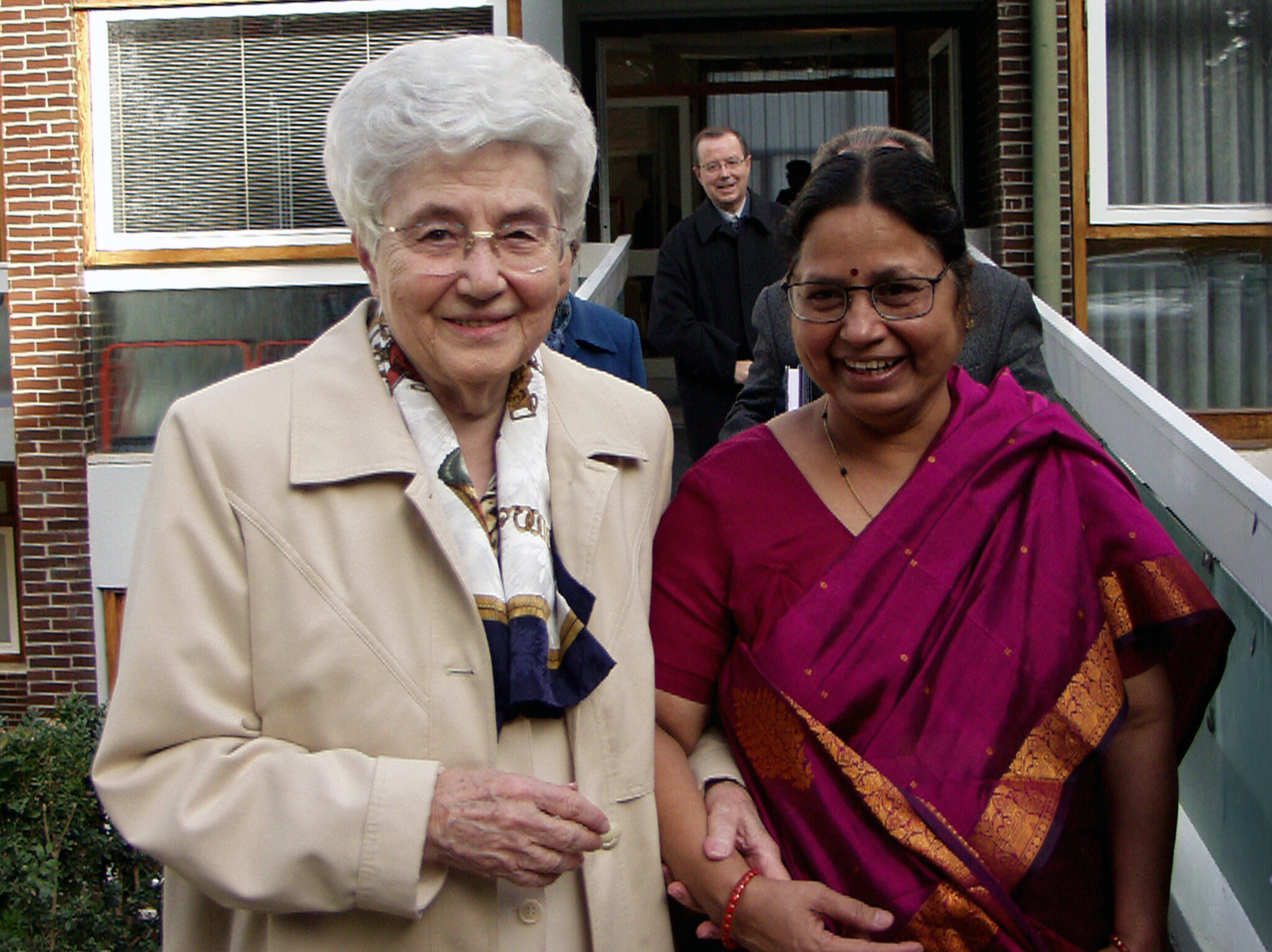
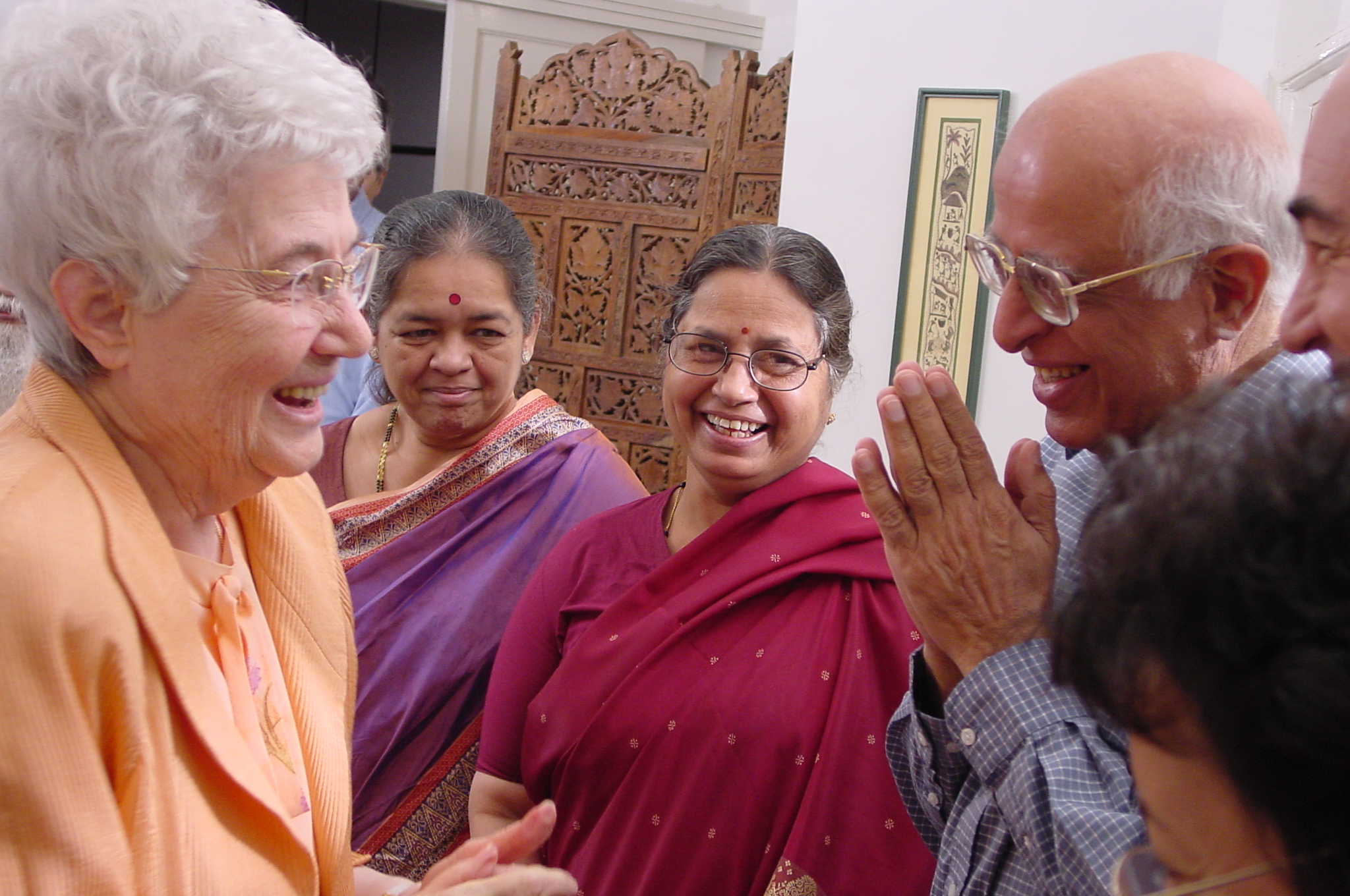
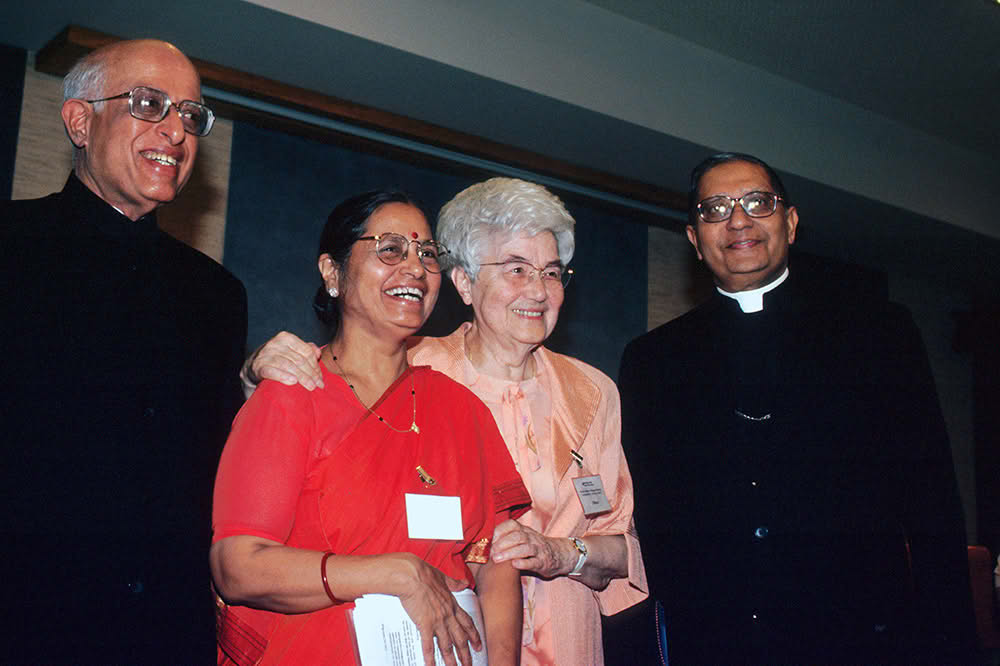
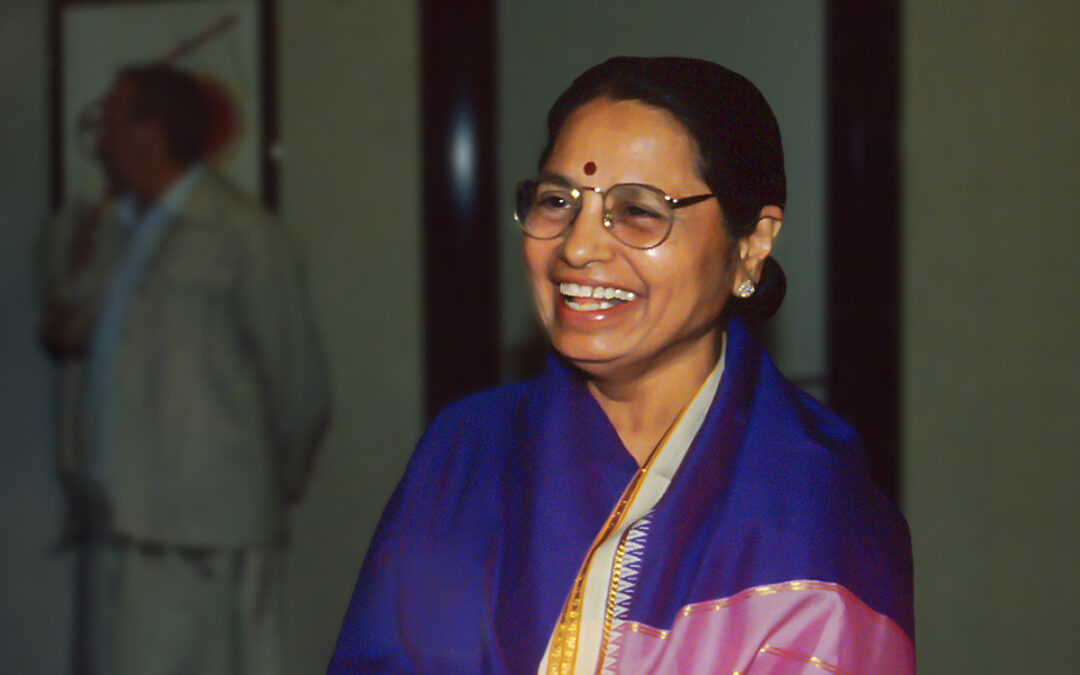
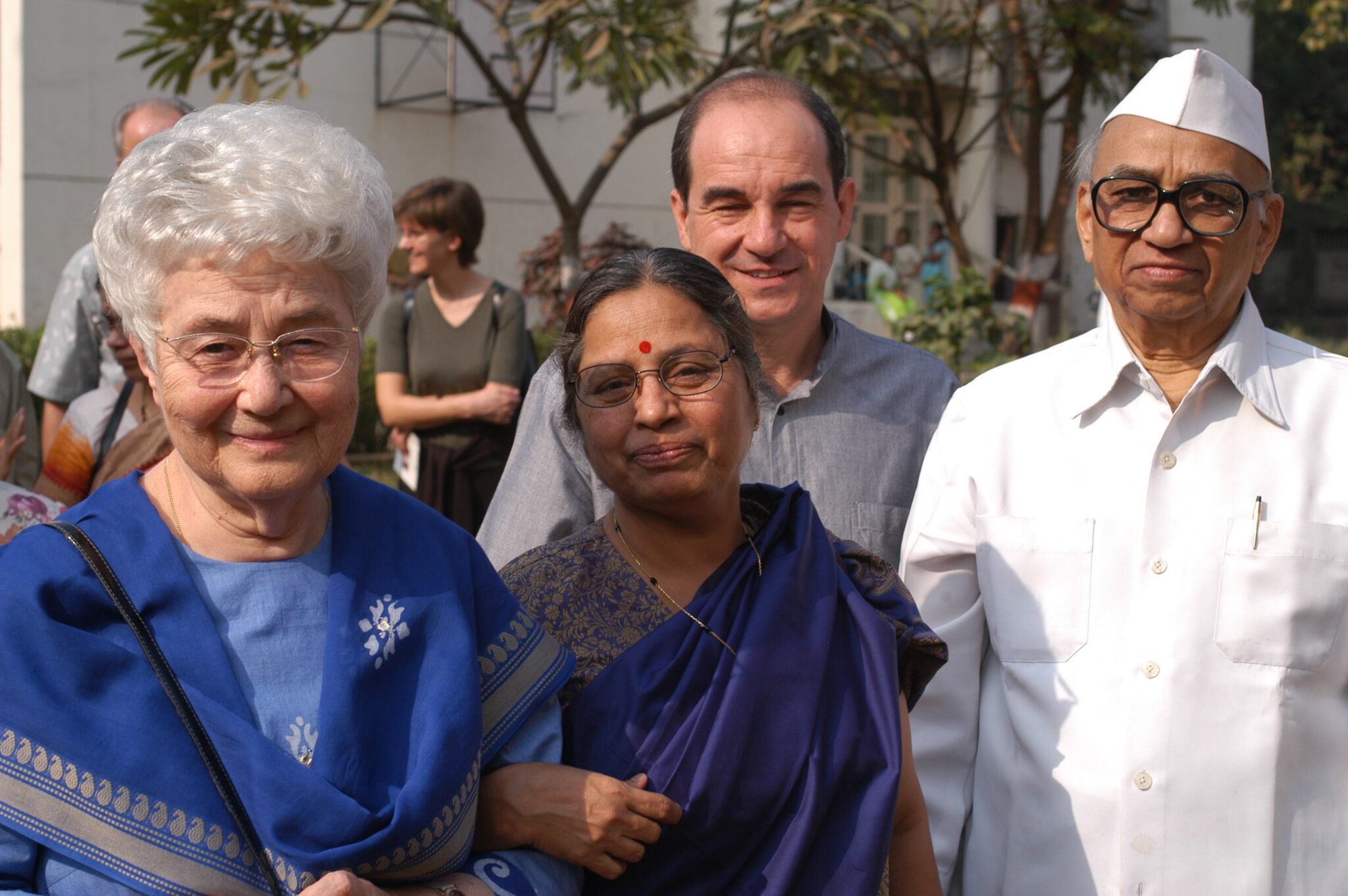
In the photos: From left: Chiara Lubich and Kala Acharya. In the second photo, between Chiara and Kala is Prof. Shubada Joshi, and on the right is Dr Shantilal Somaiya. In the third photo: Dr S. Somaiya, Kala Acharya, Chiara Lubich and Cardinal Ivan Dias of Bombay.
A few days later, in Mumbai, under a shamiana (a decorated tent) in the esplanade in the center of the large university campus, 600 people gathered to hear Lubich speak. She recounted her Christian experience and her yearning and commitment to dialogue. Shortly beforehand, Dr. Shantilal Somaiya had assured Chiara that he wanted to become a soldier at her command, to bring the spirit of unity and dialogue everywhere. It was the beginning of a unique season in the Focolare experience –not only because everything was always organized together with the new Hindu friends and the Vatican Dicastery for Interreligious Dialogue and with the Diocese of Mumbai. The Movement, for the first time in its history, opened itself up to interreligious dialogue at the academic level. This was largely due to Professor Kala Acharya who suggested that Chiara continue the friendship together with a series of symposia to reflect on shared themes. It was during the first of these that Lubich felt the inner urge to share her most intimate spiritual experience. The resonance among the Hindus was surprising and Chiara continued this experience of communion during her second visit to India in 2003, when she spent a morning together with about twenty of these academics to share very deep spiritual realities in an atmosphere of communion difficult to describe.
Chiara and Kala have always considered themselves spiritual ‘sisters’ and Kala continued, as much as she could, with great fidelity, to carry on the interreligious dialogue born from her relationship with Chiara. Along with other Hindus such as Minoti Aram and Suresh Uppadhyaya, she had grasped the prophetic significance of the charism, expressing it in these terms: “In Hinduismwe have three ways to get to God: bhakti yoga leads us to pray, Karma yoga leads us to act and jnana yoga leads us to think and meditate in order to come to know self and God. Chiara Lubich offers us a fourth way, the Prem yoga, the path of love for our brothers and sisters and among ourselves ”.
La notizia è arrivata improvvisa e inattesa, la mattina del 10 agosto. Kala Acharya si era appena spenta all’interno del campus della Somaiya University dove viveva e dove, per volere del suo fondatore, Shri Karamshi Jethabhai, ha speso quarant’anni della sua vita. Come l’ha definita Samir Somaiya, nipote del fondatore e attuale Presidente di questa prestigiosa istituzione accademica, Kala era ormai lei stessa una istituzione con la sua presenza e personalità. D’accordo con il Dr. Shantilal Somaiya, che intanto aveva rilevato dal padre il Trust che gestiva l’istituzione accademica, aveva dato vita al Somaiya Sanskriti Peetham, un istituto per la formazione di insegnanti formali e informali di valori morali e religiosi. Contemporaneamente, si era impegnata insieme al Dr. Somaiya nel dialogo interreligioso, collaborando già a metà degli anni Novanta, con il Seminario Cattolico St. Pius X di Mumbai e con vari professori e istituzioni straniere, fra le quali alcune anche italiane. Nel settembre del 2000, a pochi mesi dal primo viaggio di Chiara Lubich in India, Mons. Felix Machado, Sottosegretario dell’allora Pontificio Consiglio per il Dialogo Interreligioso (oggi Dicastero per il Dialogo Interreligioso), pregò Marina Pracchia e Roberto Catalano, corresponsabili dei Focolari in India, di mettersi in contatto con la professoressa Kala Acharya che considerava una sorella e che sperava potesse partecipare a qualche momento del viaggio della Lubich. Il primo incontro a Vidhyavihar, nel grande campus della Somaiya University, fu subito molto caloroso. Kala accettò immediatamente l’invito a partecipare alla cerimonia di conferimento del Premio Gandhi, Difensore della Pace, che Chiara Lubich ricevette dallo Shanti Ashram a Coimbatore, all’inizio di gennaio 2001. Proprio a Coimbatore, poco prima di ripartire per Mumbai, la Lubich incontrò personalmente l’accademica indiana: si capirono al volo. La fondatrice dei Focolari scrisse sul suo diario, il giorno successivo: «Ieri, giorno dell’Epifania, ho avuto un incontro un po’ speciale, forse con una creatura non senza un disegno di Dio, Kala Acharya. […] Colta, ha approfondito il dialogo indù-cristiano, conosce bene il Pontificio Consiglio per il dialogo interreligioso ed è stata ricevuta due volte personalmente da Giovanni Paolo II. Entrando nel salottino ha subito detto che si sente benedetta…: “E’ l’amore di Dio che viene a me. Lavorerò su qualsiasi linea mi darai. E’ una promessa!”. […] desidera che io incontri un gruppo di persone molto qualificate di varie religioni a Bombay: “la tua parola deve andare direttamente a tutte le religioni – ha detto – è importantissimo il significato che tu dai all’amore”. Ci saranno professori, studenti, “vogliamo tutti diventare i veicoli di questa tua parola”».
Nelle foto: Da sinistra: Chiara Lubich, Kala Acharya e dietro Roberto Catalano. Nella seconda foto, tra Chiara e Kala la Prof.ssa Shubada Joshi e a destra il Dr. Shantilal Somaiya. Nella terza foto: Dr. S. Somaiya, Kala Acharya, Chiara Lubich e il Card. di Bombay Ivan Dias.
Infatti, qualche giorno dopo, a Mumbai sotto una shamiana (un tendone decorato)nella spianata al centro del grande campus universitario, c’erano 600 persone ad attendere la parola della Lubich che raccontò la sua esperienza cristiana e il suo anelito e impegno per il dialogo. Poco prima, il Dr. Shantilal Somaiya aveva assicurato Chiara di voler trasformarsi in un soldato ai suoi ordini, per portare lo spirito dell’unità e del dialogo dovunque. Fu l’inizio di una stagione unica nell’esperienza dei Focolari – e non solo perché tutto fu sempre organizzato con i nuovi amici indù e insieme al Dicastero vaticano per il dialogo interreligioso e con la diocesi di Mumbai. Il Movimento, per la prima volta, nella sua storia si aprì ad un dialogo interreligioso anche a livello accademico. E questo fu il merito proprio della professoressa Kala Acharya che suggerì a Chiara di proseguire l’amicizia insieme con dei simposi per riflettere su temi comuni. Proprio durante il primo di questi simposi la Lubich avvertì la spinta interiore di partecipare la sua esperienza spirituale più intima. La risonanza fra gli indù fu sorprendente e Chiara continuò ancora questa esperienza di comunione durante il suo secondo viaggio in India nel 2003, quando trascorse una mattinata insieme a una ventina di questi accademici per condividere realtà spirituali molto profonde in un clima di comunione difficile da descrivere.
Chiara e Kala si sono sempre considerate ‘sorelle’ spirituali e Kala ha continuato, come ha potuto, ma con grande fedeltà, a portare avanti nel suo ambito il dialogo interreligioso nato dal suo rapporto con Chiara. Aveva colto – insieme ad altri indù come Minoti Aram e Suresh Uppadhyaya – la profezia del carisma che esprimeva in questi termini: «Nell’induismonoi abbiamo tre vie per arrivare a Dio: il bhaktiyoga ci fa pregare, il Karmayoga ci fa agire, lo Jnanayoga ci fa pensare e meditare per arrivare a conoscere Sé e Dio. Chiara Lubich ci propone una quarta via, il Premyoga, la via dell’amore al fratello e fra di noi».
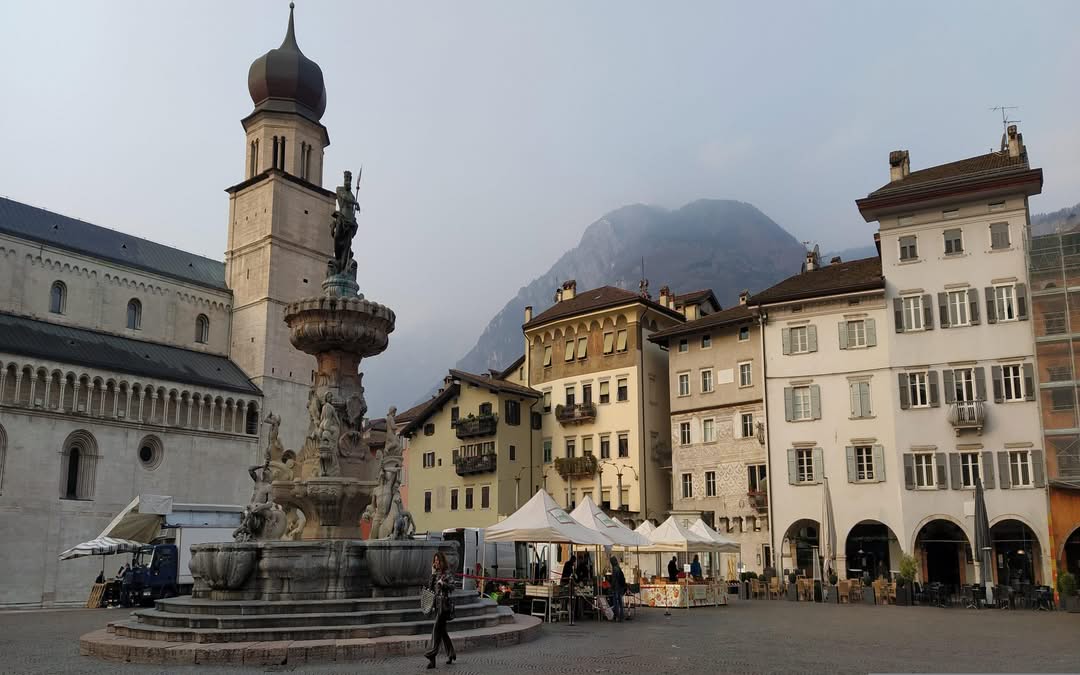
Margaret Karram and Roberto Almada met with the community in Trent (Italy) on the 25th of May 2026. They emphasised the importance of living unity together in a new way, through a genuine conversion. It was an opportunity to remain rooted in the present and look to the future.
The great scientist Louis Pasteur once said: “To know how to wonder and question is the first step the mind can take towards discovery.”
Luigi Ballerini, a children’s author and psychotherapist, also reminds us of this and his work is the inspiration that lies behind this article. [1] He wrote: “After all, wonder is nothing more than a form of trust […] It is the idea that there is still a world to discover, to understand and to encounter. This explains why the loss of wonder is so serious: without it, life becomes flat, reduced to the repeatedly gazing wearily and no longer seeing anything. […] If we lose our capacity for wonder, we do not become more realistic or efficient; we simply lose the chance to be stirred by reality, to recognise that we ourselves can continue to change and improve through what we encounter.”
A sense of wonder reminds us that not everything depends on us. It is an invitation to embrace each moment with an open heart, to recognise what life is trying to tell us and to be grateful for it. A sense of wonder evokes amazement – that extraordinary ability children have to open themselves up to life and relationships; these dimensions are fundamental to the human condition and for millenia have been key to the adventurous development of human thought. They teach us to step back from our own perspective in order to reach out to the people who may be waiting for us, who share our daily struggles and our hopes.
Today, the challenges posed by social media and artificial intelligence seem to be stifling this capacity for awe and wonder: have we already seen everything there is to see? Above all: are we becoming desensitised to everything that happens? It is often the small and seemingly insignificant actions that are capable of rekindling that sense of wonder.
To be amazed means keeping alive the capacity to marvel, to learn from new experiences and to recognise the value of the people and situations we encounter, without resigning ourselves to indifference when we meet with pain and suffering. It means having the courage to look at reality with attention and openness, putting ourselves in others’ shoes and offering a listening ear and support without judgement. It also means caring for those who are living through important or complex situations.
There are so many everyday stories of hardship, of illness, of lives that seem lost or meaningless: yet there is always a chance that the ending has not yet been written. In families and in care settings, we are often amazed to see signs of the most powerful revolution of all – that of a greater love that produces outcomes that are very different from what is expected. Let us allow ourselves to be vulnerable and humble and so be amazed by what happens. Let us share these moments of awe and wonder with other people and so impact upon our relationships and society in the future.
THE IDEA OF THE MONTHis currently produced by the Focolare Movement’s “Centre for Dialogue with People of Nonreligious Beliefs”.It is an initiative that began in 2014 in Uruguay to share with non-believing friends the values of the Word of Life, i.e. the phrase from Scripture that members of the Movement strive to put into practice in their daily lives. Currently, THE IDEA OF THE MONTH is translated into 12 languages and distributed in more than 25 countries, with adaptations of the text according to different cultural sensitivities. www. dialogue4unity.focolare.org
In the first chapter of his Gospel, Luke presents us with the only passage in the New Testament in which the main characters are two women, Mary and Elizabeth.
Elizabeth lived in a village near Jerusalem, about 150 km from Nazareth. Immediately after receiving the angel’s announcement that she would become the mother of Jesus (Lk 1:26–38), Mary sets out on a long journey to visit Elizabeth. We do not know the details of the route; we only know that she hurried towards the hill country. But why did she go there?
Mary went to share her joy with someone who, like her, had received a grace from God and had conceived a child. She wanted to be close to Elizabeth and help her during the final months before the birth of her baby. This is the story of two women and two experiences of pregnancy when conception seemed impossible. Who better than Mary could understand Elizabeth and share this time with her? The song of the Magnificat springs from their encounter.
My soul magnifies the Lord.
In his commentary on the Magnificat, Martin Luther wrote, ‘Her words are an expression of great love and profound joy; this explains why her life and soul are raised up in the Spirit. Mary does not say: “I magnify God”, but “my soul” does so. It is as if she is saying my whole life and my senses are, as it were, upheld by God’s love […]’ [1]
The verb ‘to magnify’ or to make great, reveals a feeling of joy that emerges from the discovery that God is even greater than one might have expected. This joy is echoed by profound humility and a deep sense of gratitude and appreciation.
Ermes Ronchi points out, ‘The Magnificat is Mary’s gospel, it is her good news that reaches all generations’. [2] This young woman from Nazareth repeats ten times that it is “He who has done…”’. This seems like a new Decalogue, a new set of ten commandments that overturn the logic of the world.
It comes naturally to ask whether we have retained a sense of wonder and amazement in our daily lives and in our prayer regarding all that God has done and continues to do. Without openness and wonder as we encounter what is new and full of surprise, faith may become a weary prayer that gradually fades away and turns into nothing more than a social habit [3].
My soul magnifies the Lord.
Mary’s canticle is not merely a prayer of personal praise but a prophetic statement, characterised by a constant reference to passages from Scripture, which indicate God’s deepest desires for the future of humanity [4] To praise him means to stand alongside the least in society and to believe that the world can and must change.
The words of this hymn invite us to understand God’s saving intervention in our personal and communal history because they refer not only to our individual lives but to the entire universe. They extend from the present moment to the new heavens and the new earth that the social revolution of the Gospel inaugurates.
My soul magnifies the Lord.
The Magnificat invites us to transform our lives into a living form of praise by recognising the “great things” that are happening every day. It invites us to join with Mary in proclaiming that God is faithful, that his mercy extends from generation to generation and that his kingdom of justice and love is already being fulfilled among us.
Chiara Lubich had grasped this revolutionary dimension of Mary’s canticle when she wrote to a group of young people: “Read the Magnificat and you will find there the first and most powerful page of Christian social teaching. Who and when will make these words into reality?” [5].
The question remains open and challenges us. God’s intervention should not remain confined to the intimacy of the heart but must be manifested in our relationships, in life together and in the fabric of society for generations to come.
Edited by Patricia Mazzola & the Word of Life Team
[1] Martin Luther, commentary on the Magnificat 1520