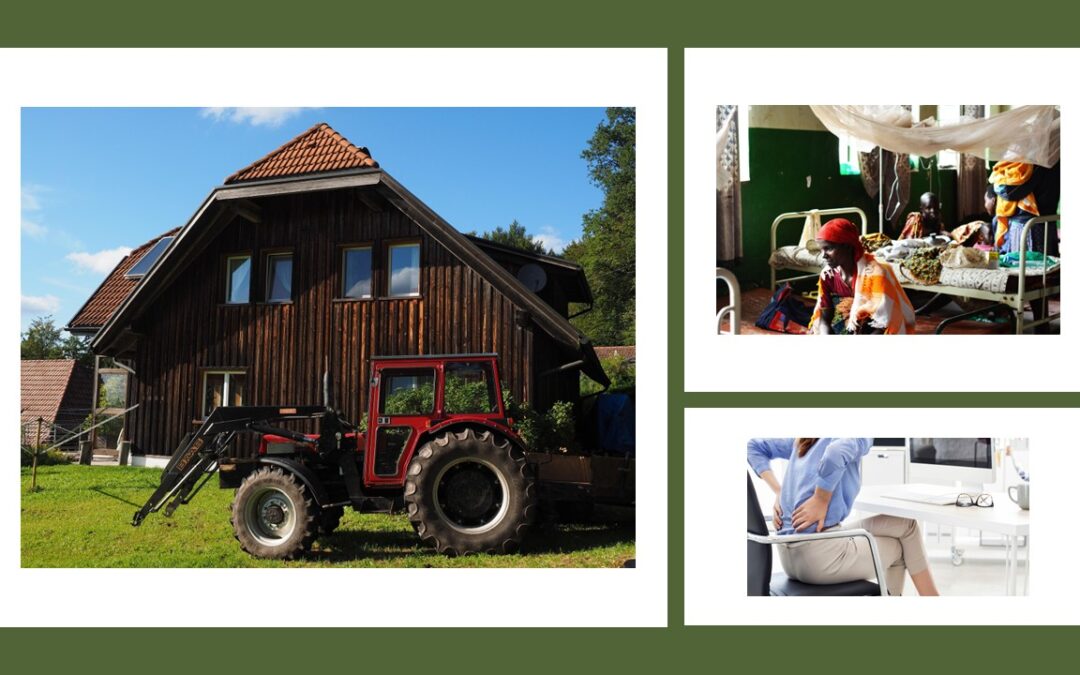
I was 16 years old when I began to live the words of Jesus: “Love your neighbour as yourself… Whatever you did to the least of these you did to me.” I started with those close to me: giving up my seat to someone who had none, remaking the bed for the girls I shared a room with, listening to someone…and also at home, where it could be more difficult. Joy grew within me and many questions found answers. When some friends wanted to know the reason for my change, I invited them too to live the adventure of loving everyone, without distinction. So we began to share our few possessions, our time and our talents. We sought to help the poor and in particular we became involved in raising funds for the construction of a hospital and a school in Cameroon. Thinking of the great debt the West owed Africa, this seemed right to us. This full and beautiful life, dedicated to God and to others, opened me to later to hear and respond to the words of Jesus: “Come and follow me.”
(Aurea – Italy)
Is God jealous?
I knew that the Bible speaks of a jealous God in Exodus, when it tells how His people turned to idols. But I too once had a small experience of this. I was going through a period in which God was not really at the centre of my life; I was caught up in many things, various activities and I confess I had neglected Him. Then one day I found myself confined to bed with severe back pain. I could not move at all without experiencing intense pain. This continued for several days due to sciatica that started in my back and ran down my whole leg. In those difficult moments I remembered Jesus crucified and forsaken, who had certainly suffered more than I had. I recognised Him and understood that even this was His way of drawing me back. He was “jealous” in the sense that He wanted me with Him. He had always been with me, as He is with all of us -it was I who had stopped being with Him. That experience helped me get back on my feet, not only physically, but also spiritually.
(F. – Belgium)
An Economy of Communion business
I am so certain of God’s love that I want to share this certainty with as many people as possible. In this way, groups were formed in my village and nearby valleys where we help one another to live the Gospel. But there is more – I and some friends made many sacrifices to start an agricultural business along the lines of the Economy of Communion (EoC), a global business and social model which allocates part of its profits to helping people in need and creating new jobs for them; another part is used to strengthen the company, improve product quality and ensure sustainability in the market and a third part supports the formation of people with a new economic mind-set based on fraternity and solidarity. Over the years I have experienced God’s providence many times! For example, when the courgette harvest unexpectedly increased, or when buyers offered more than I intended to ask. But above all, in working this way I feel God closer and this gives me the encouragement to continue along this path.
(L.F. – Italy)
Curated by Maria Grazia Berretta
taken from *Il Vangelo del Giorno*, Città Nuova, year XII – no. 4 – July–August 2026)
“Young people of the world, unite”: this is the invitation that Chiara Lubich extended to the younger generations 60 years ago, so that each one could answer God’s call to live for unity in a practical way. Today, this mission remains as relevant as ever and, in these extremely troubled times, continues to be a way ahead that often goes against the current. It refuses to let hatred and division have the last word. It means to journey as a family with hope and action, with a constant desire to live for a united world.
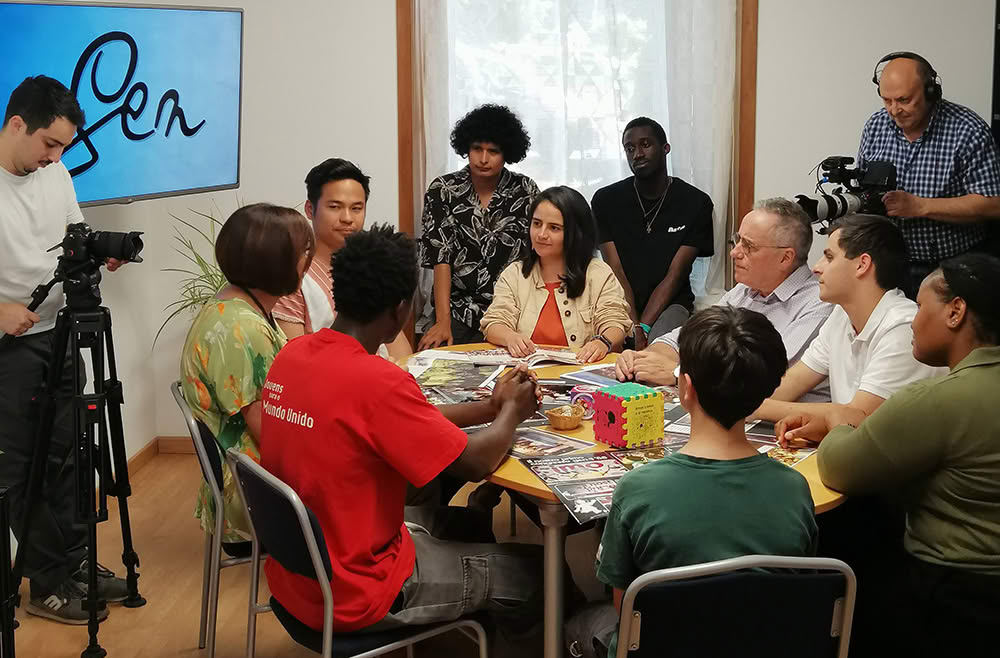
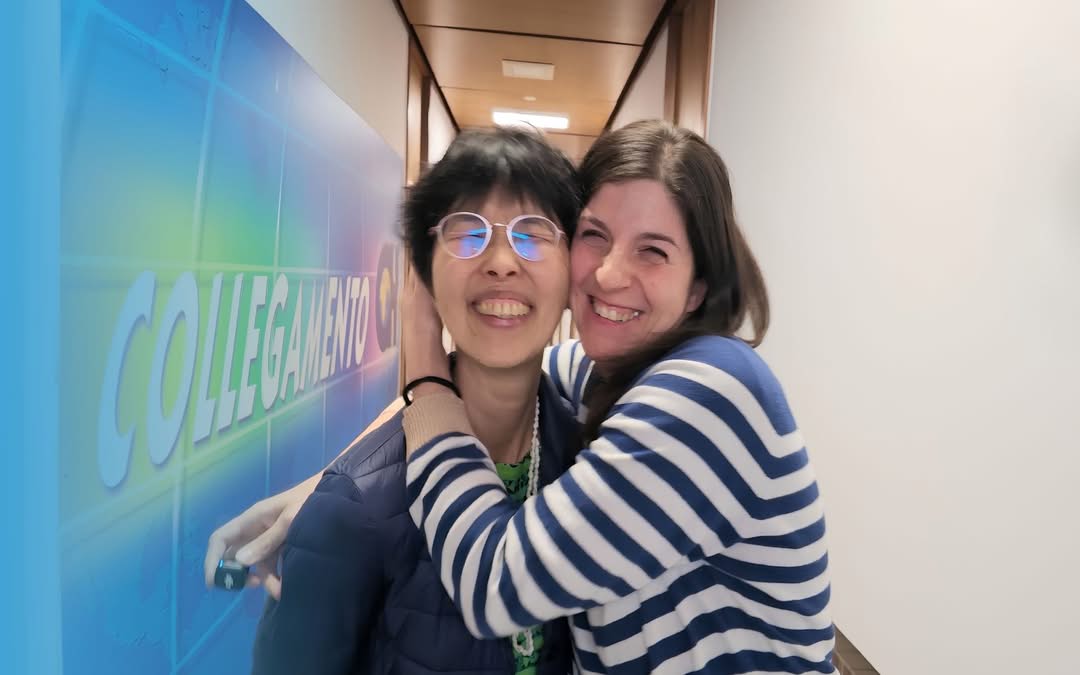
A new space created to get to know one another and to share in a direct and informal way. A moment dedicated to sharing news, stories and initiatives, so we can discover what’s happening at the International Centre and in different parts of the world and we can also strengthen our sense of community.
In this first episode, we’ll start at the International Centre (Rocca di Papa, Rome), the heart of the Focolare Movement’s governance, and after a few interesting facts, we’ll get to know some of the Councillors better – those who have completed their term of office following the General Assembly in March 2026.
Let’s get started!
Turn on subtitles and choose your desired language
If we are attentive to the world around us, we realise that it is often the clamour of different views and opinions that prevails. Everyone wants to have their say and there is a proliferation of forums for debate in which it seems as though everyone knows everything. However, we do not always find genuine wisdom there; on the contrary, there is sometimes a risk of encouraging superficiality, ignorance and gradual cultural impoverishment.
Faced with this scenario, what truly deserves to be heard? There are words and Words. What distinguishes them? We can call them Words with a capital W — whether written or spoken — which, once embraced, have the power to transform us. These are words that express wisdom because they offer a key to understanding human existence, the desire for transcendence and the relationships that bind human beings to one another and to nature. As Rabindranath Tagore, the Indian poet, philosopher and writer, writes: ‘Words that come from the heart, go to the heart.
The Word does not belong to a particular era, place or religion. Xavier Melloni, an anthropologist and theologian observes that for some people, the Word is inspired by the Holy Spirit whilst for others it is the fruit of the enlightenment of the conscience. But how can we recognise the Word that conveys value?
‘We might say that the Word enables us to open up to others, to give of ourselves, and pausing in silence, go beyond our own being towards an always greater depth. The true Word generates life[2]. This is how the Word, understood in the broadest sense, frees us from the constraints to which we are subjected; it does not depend on hidden interests and it is not coercive but it becomes idolatry when it ceases to be wise.
Nonetheless, the Word may have a different resonance within each of us, even when it is expressed in the same way. How we receive it is closely linked to whatever we are experiencing and our stage of life. Superficiality, excessive self-suffiiciency and indifference are obstacles that prevent the Word from bearing fruit within us and, through us, in others.
The wise Word becomes a fixed point of reference on the journey through life. Sometimes it offers us answers; sometimes it raises new questions; it allows us to view things from a different perspective and to open up to dimensions of reality that we were previously unable to perceive. The Word sets us free and leads us to experience what is truly essential to our existence. Only the authentic Word, the Word of wisdom, can transform the way we think and act. When we welcome and live by it, it helps us to give greater meaning to our lives, to live deeper relationships and to build a more humane and fraternal society together.
Jordi shares his thoughts: ‘Every encounter with the Word is personal and intimate. My encounter with the Word came after years centred on work and technology. Reading books from various fields – biographies, novels, philosophy, etc. – reawakened in me a search for wisdom to make sense of life’s big questions, to sustain my existence and to understand why the Word manifests itself in such diverse and seemingly contradictory forms. On this journey, I came to know the wisdom of Chiara Lubich, expressed in a fresh and vibrant reinterpretation of the Gospel and borne out by an inspiring way of life. Despite its confessional nature, this wisdom has proved capable of resonating with people who, like me, have no religious convictions, and of drawing them into the path of fraternity.’
This month, let us nourish ourselves with words of wisdom, make them our own and transform them into life. And, if we have the opportunity, let us share the fruits they bear with those who, like us, are on a journey. In this way, we will build together a more humane and meaningful way of living together.
[1] This expression is taken from an address given by Jordi Illa at the International Conference for People of Non- Religious Convictions, 2013, entitled “The Word.”
[2]Xavier Melloni, Vers un temps de síntesi, FragmentaEditorial, Barcelona, 2011, p. 55.
THE IDEA OF THE MONTH is currently produced by the Focolare Movement’s “Centre for Dialogue with People of Non religious Beliefs”. It is an initiative that began in 2014 in Uruguay to share with non-believing friends the values of the Word of Life, i.e. the phrase from Scripture that members of the Movement strive to put into practice in their daily lives. Attualmente L’IDEA DEL MESE viene tradotta in 12 lingue e distribuita in più di 25 paesi, con adattamenti del testo alle diverse sensibilità culturali. dialogue4unity.focolare.org
Jesus had spoken in parables to a large crowd on the shores of Lake Tiberias, and then he turned to his disciples and explained the deeper meaning of all he had said.
The central theme in the story he had told is the Word of God which is likened to a small and fragile seed. Stones, thorns and birds may prevent it from sprouting, taking root and producing ripe ears of corn but the wise sower knows of its surprising vitality.
Through these images, Jesus revealed the relationship between humanity and the Word that God offers in abundance. Although there are people who welcome the Word, there are others who, for various reasons, let it fall to the ground without bearing fruit. In fact, superficiality and materialism sometimes dominate the human heart and threaten the miraculous supernatural life that God would like to kindle within us.
We too, like the disciples, are invited by Jesus to enter into the humble mystery of God’s love and, at the same time, are personally called upon to decide what kind of ‘soil’ we wish to be.
The seed falling on good soil refers to the person who hears the Word and understands it: this person bears fruit and yields plentifully.
Listening and understanding seem to be the secret that makes us resemble receptive soil where the seed of the Word can express its power and bear good fruit.
Willingness to listen is very precious because, from a spiritual perspective, it creates space for the life of God, whose mercy always precedes us and who has the patience of the sower who knows and respects the time it takes for the seed to ripen.
Chiara Lubich wrote, ‘God’s words enlighten not only our minds but our entire being from within because they are light, love and life. They bring peace – the peace that Jesus calls his own: “my peace” – even in moments of turmoil and anguish. They offer joy even in the midst of the pain that sometimes grips the soul. They give strength especially when we are dismayed or discouraged. They set us free because they open the way to the Truth… If we wish, we can develop a passionate love for the Word of God and welcome it attentively when it is proclaimed in churches or we read, study or meditate upon it… But above all, we are called to live it… By living a single word of Jesus, we live the whole Gospel. He reveals his whole being in every word. He comes to live within us… and enlightens our way of thinking, acting and all we desire in all aspects of our lives [1].
The seed falling on good soil refers to the person who hears the Word and understands it: this person bears fruit and yields plentifully.
Wambil from Mexico tells us: ‘There was a time when I felt trapped in a deep hole. I was in an abusive relationship and tried to escape and sort everything out on my own. I was influenced by social media and all the world offered me – and so I often chased after things not guided by God. Despite all my efforts, I felt empty and without a purpose in life. I knew that love is a universal language. When I started volunteering, I found a sense of fulfilment that could only come from God. Over time, I discovered a place where I could listen to his word and grow in my relationship with him. I am deeply grateful.’
Even when we feel like barren, stony ground, it is the Word itself that is effective as the prophet Isaiah reveals: ‘As the rain and the snow come down from heaven, and do not return to it without watering the earth and making it bud and flourish… so is my Word that goes out from my mouth. It will not return to me empty but will accomplish what I desire and achieve the purpose for which I sent it.’ (Is 55:10–11).
We are sustained by this hope and in this time dominated by fears and tensions, we can also nurture trust in the women and men with whom we share our lives. By believing in their capacity to bear good fruit and creating opportunities for listening and dialogue, we will walk together towards a better future marked by fraternity.